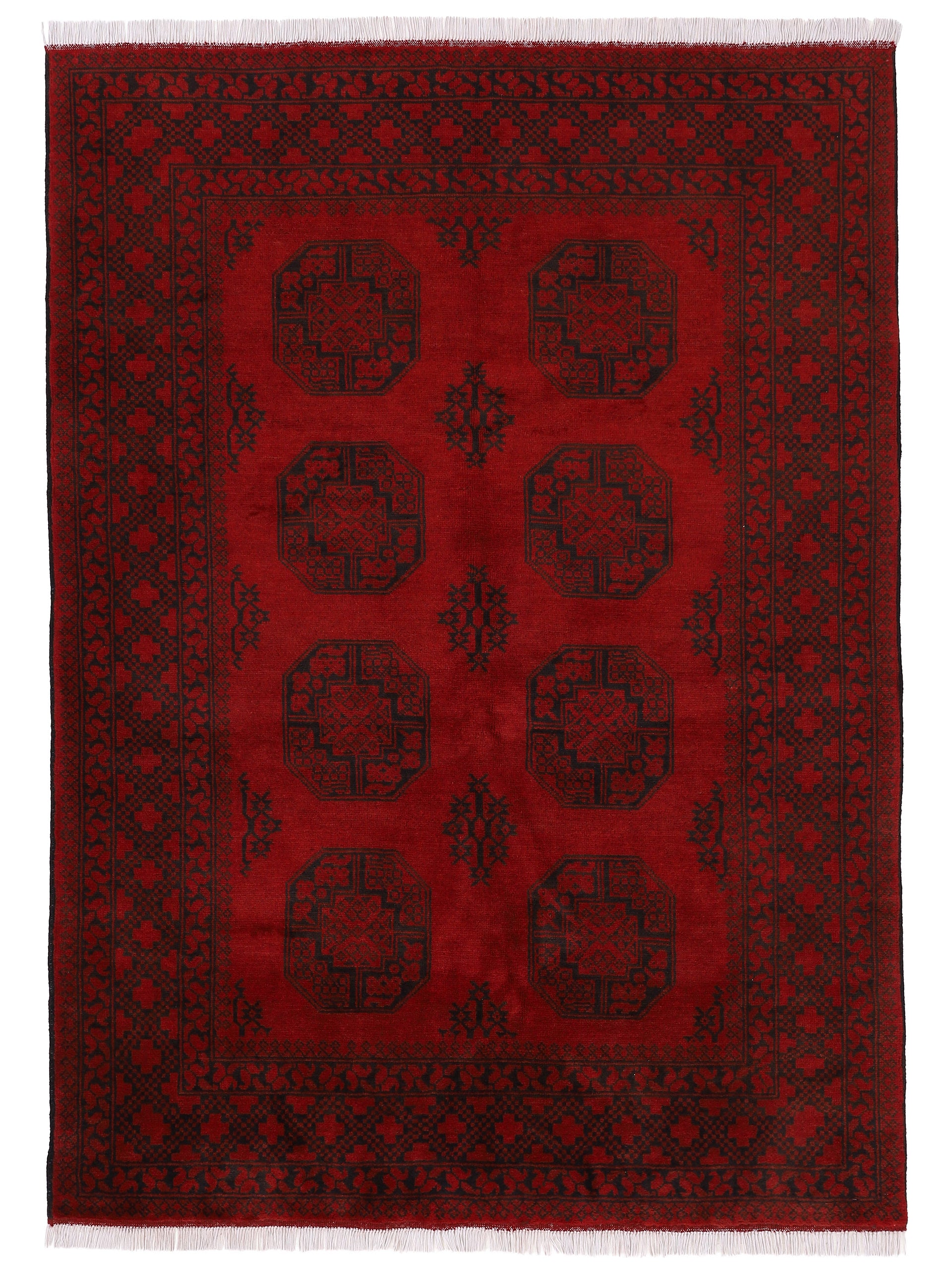
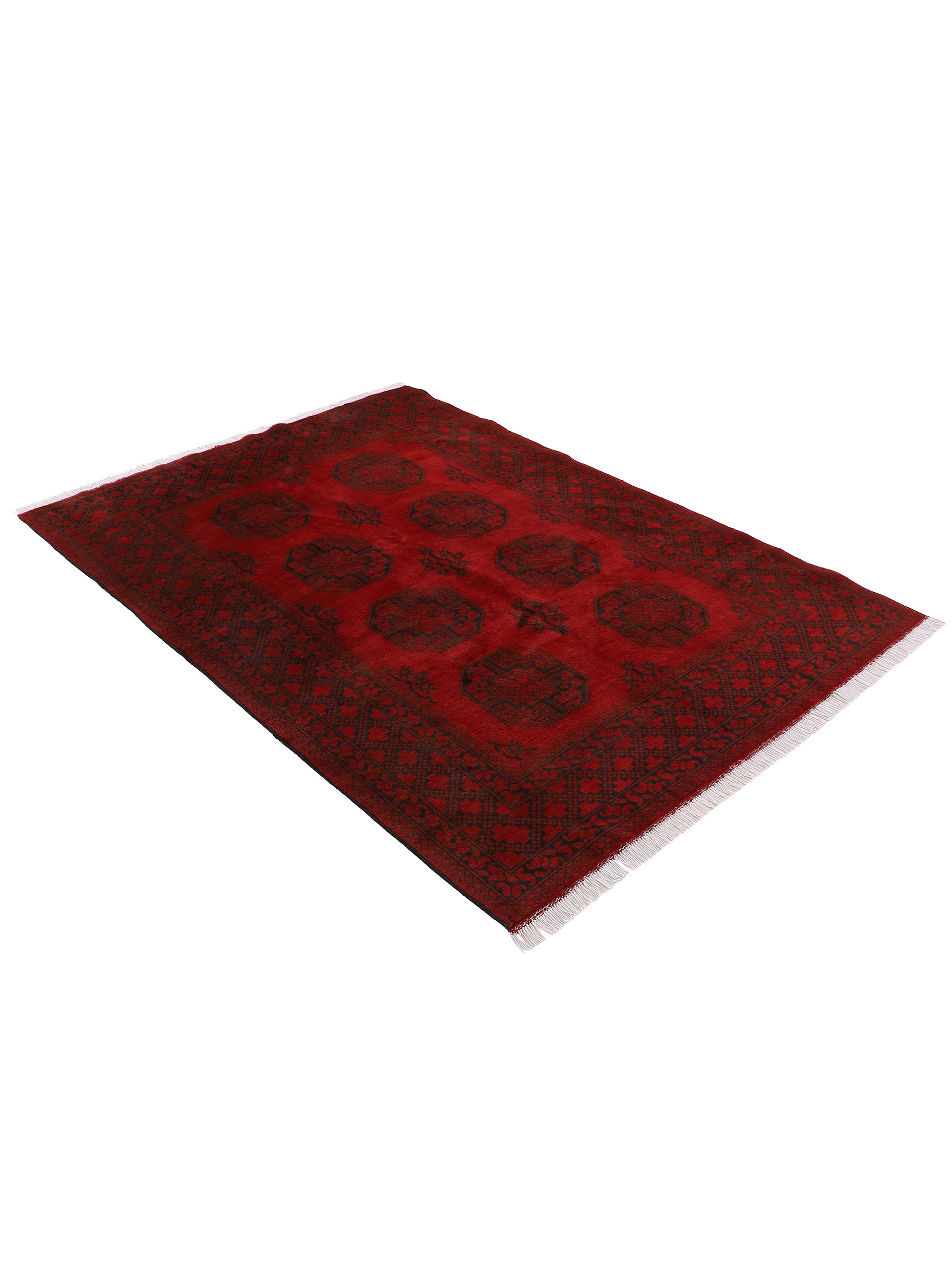
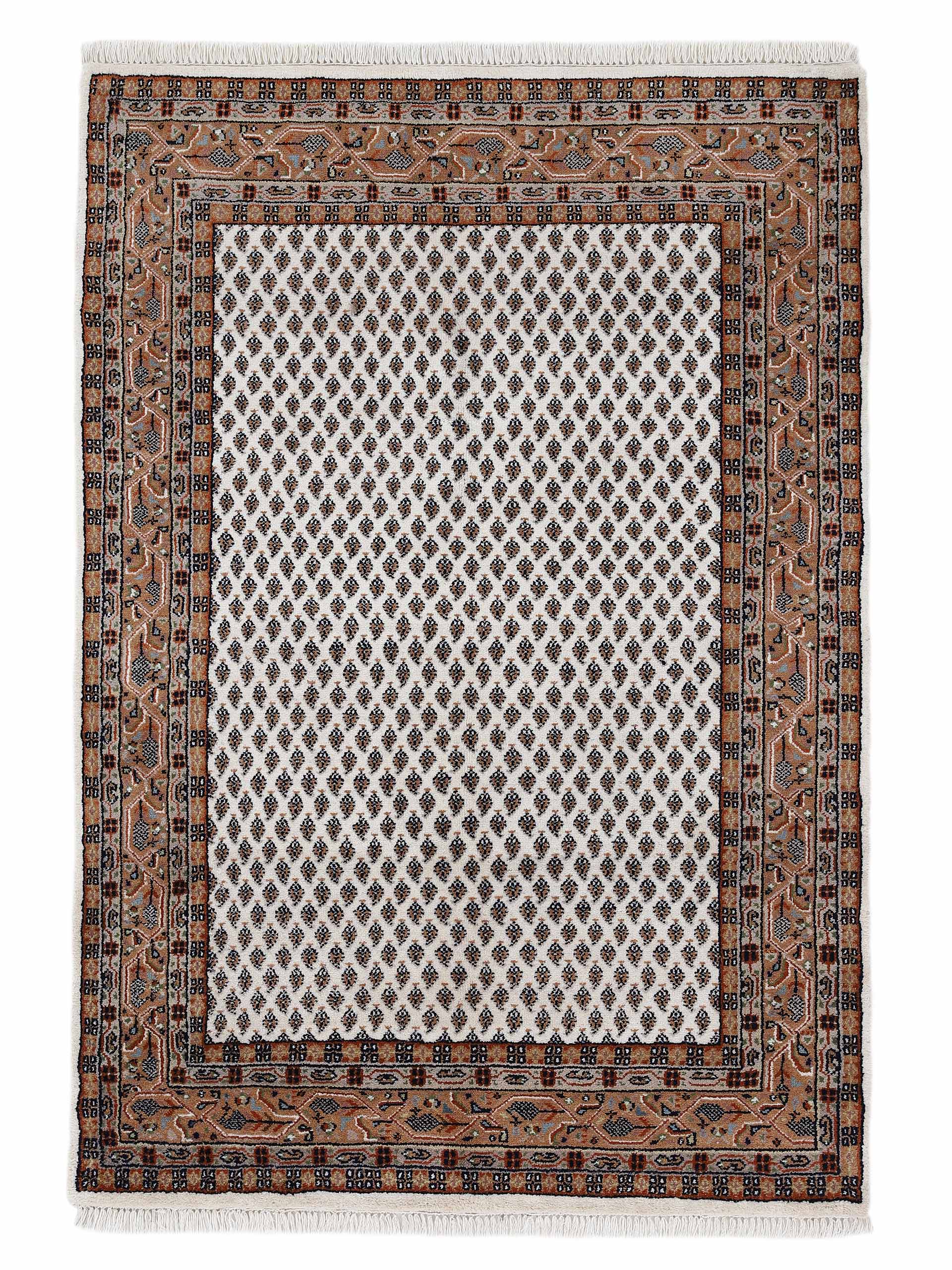
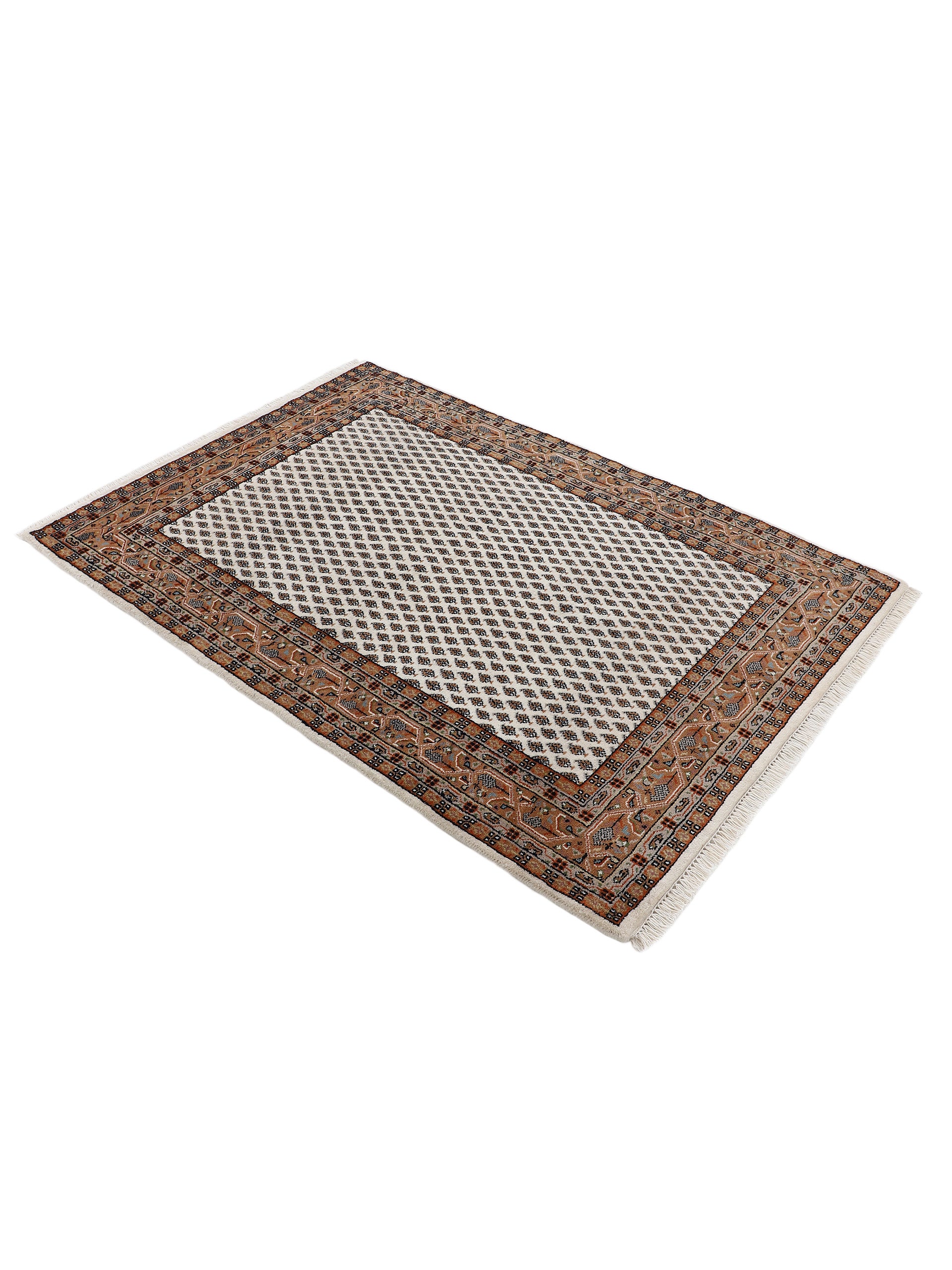
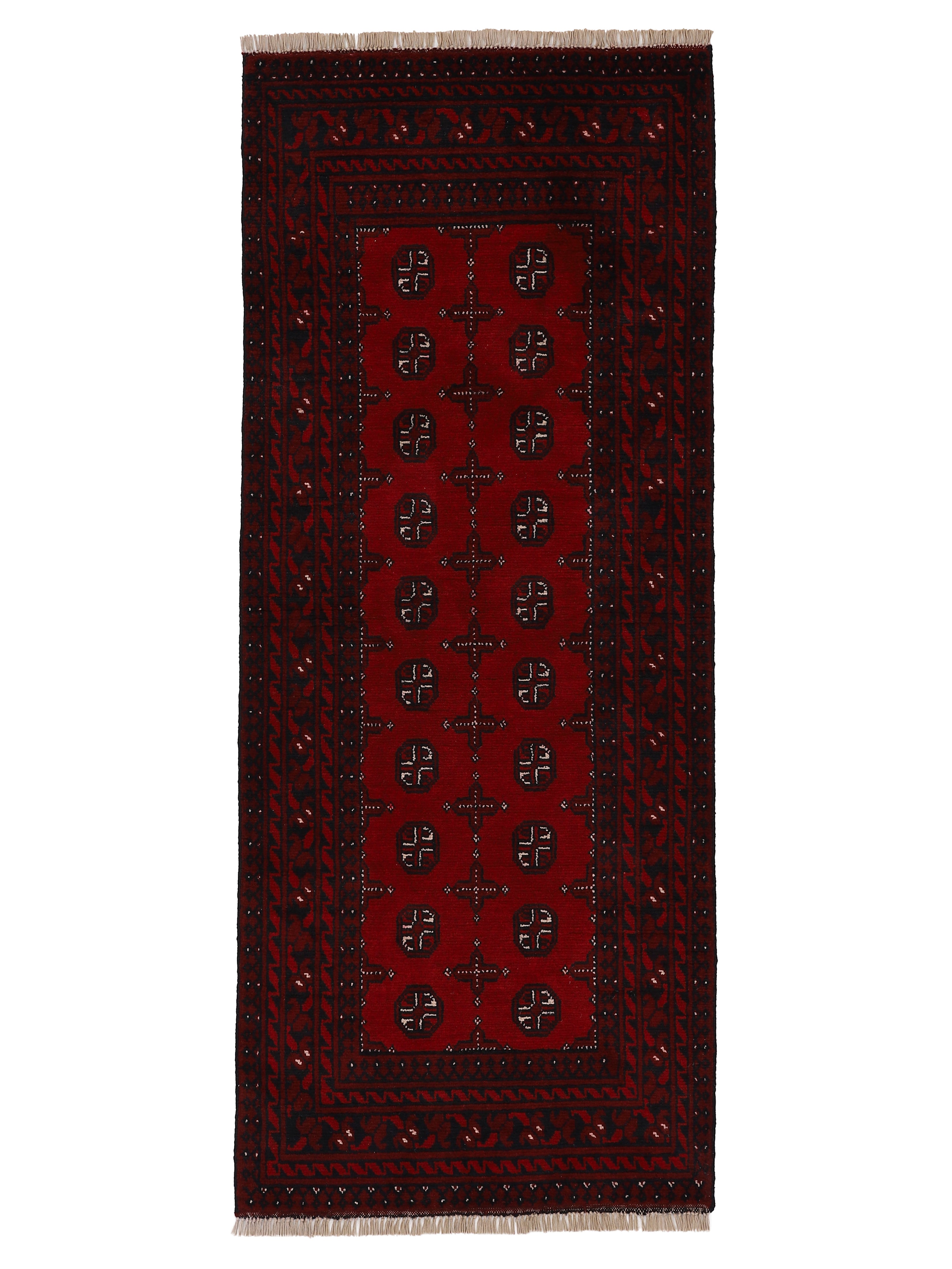
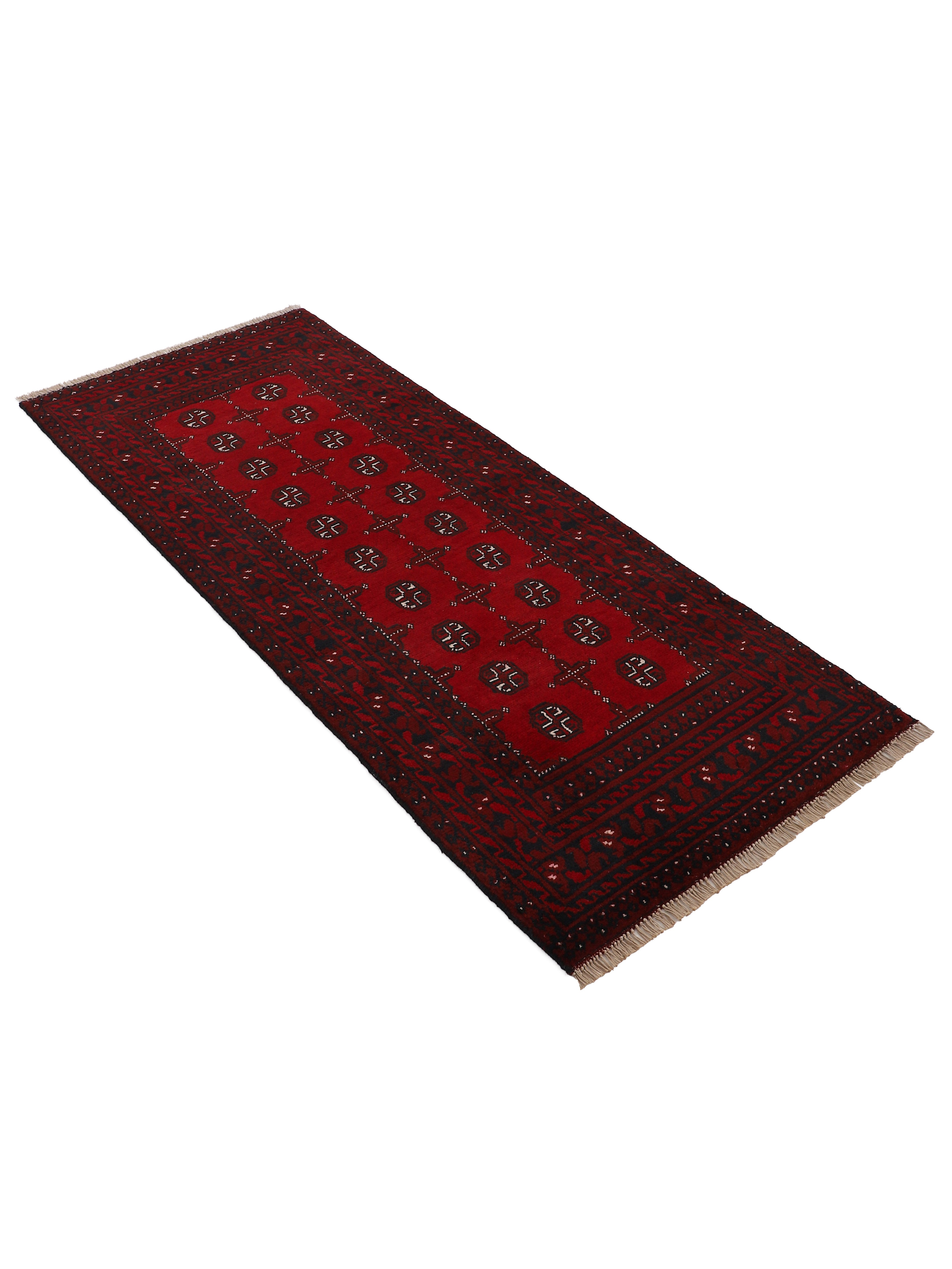
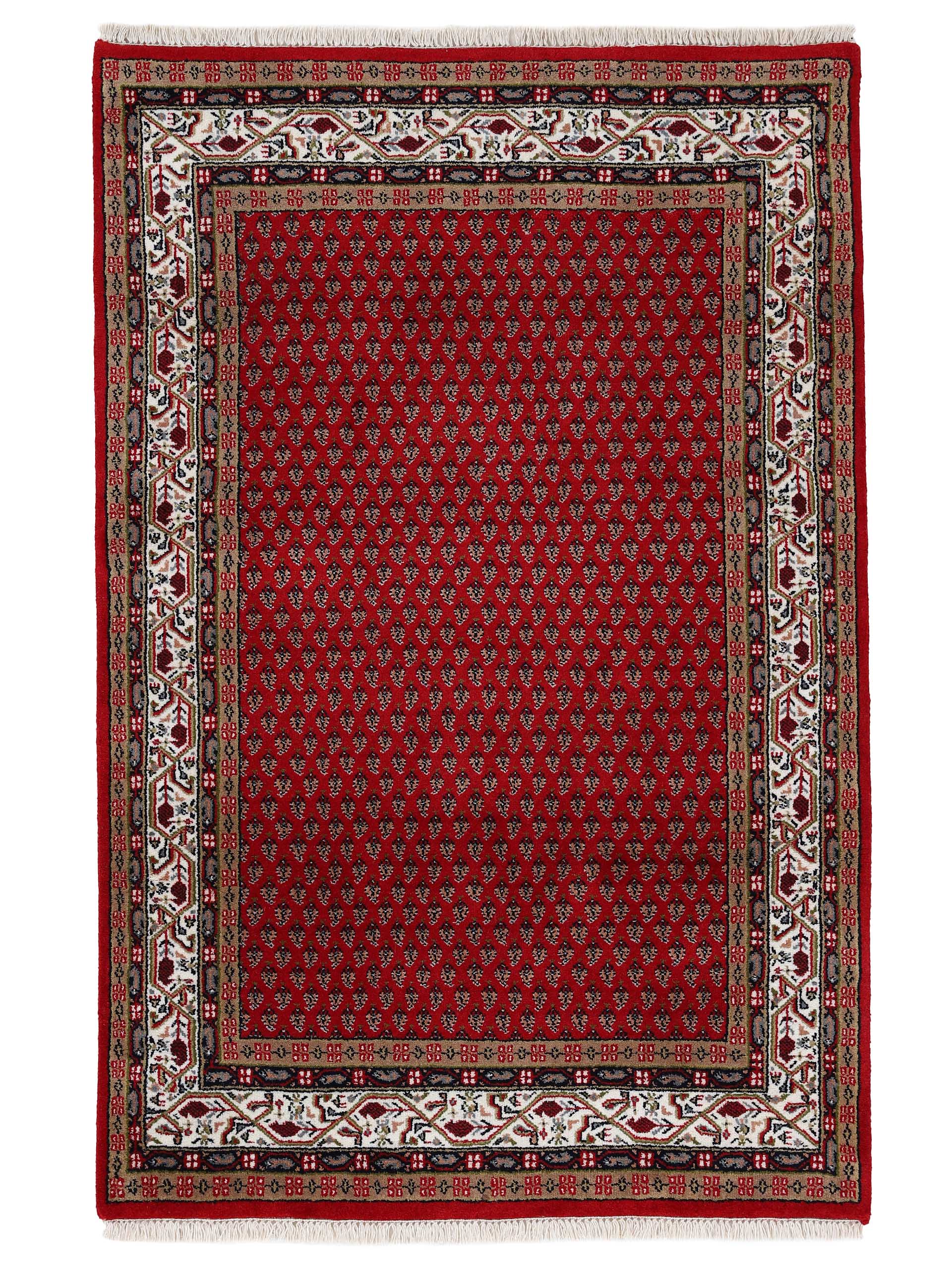
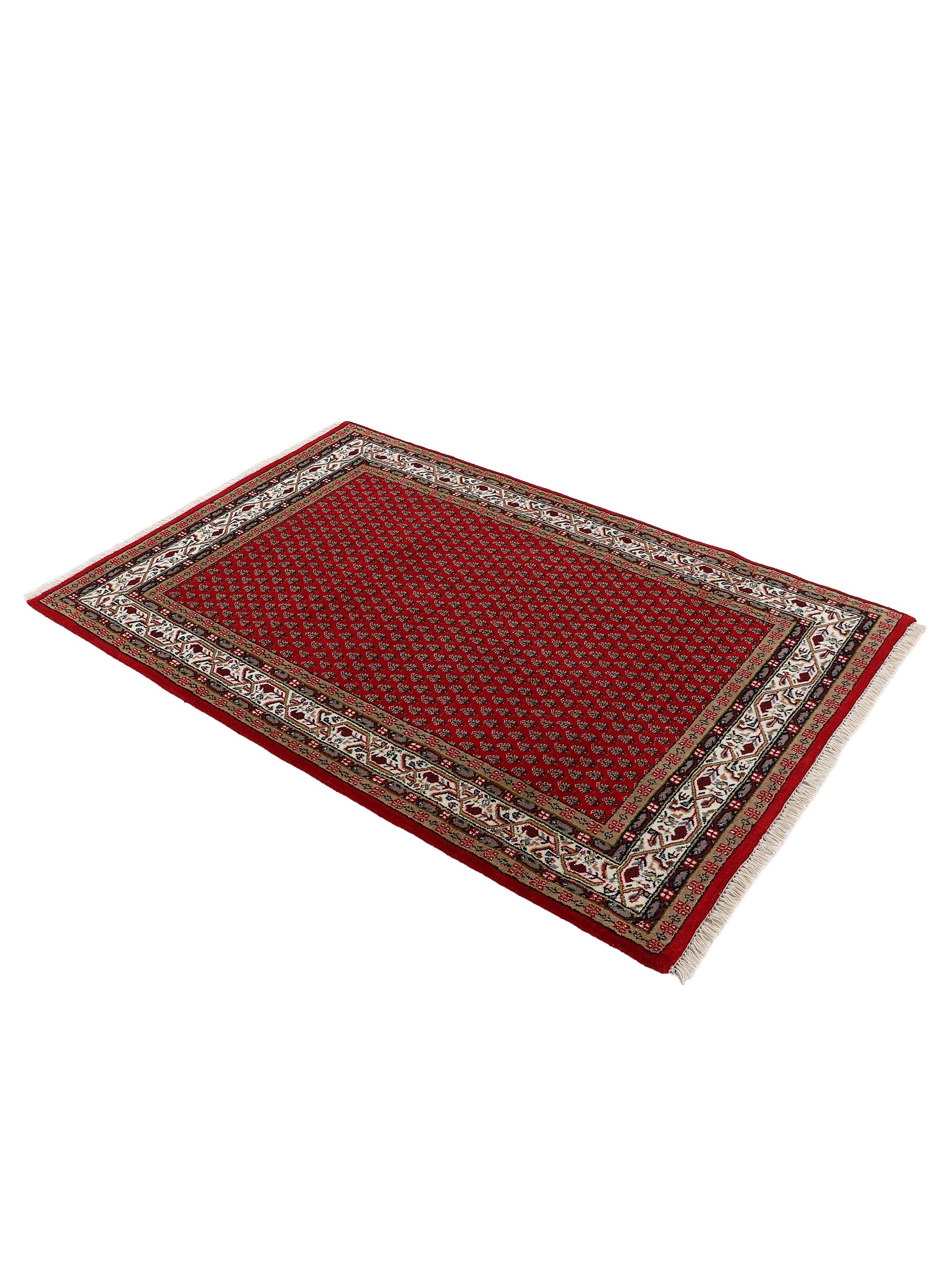
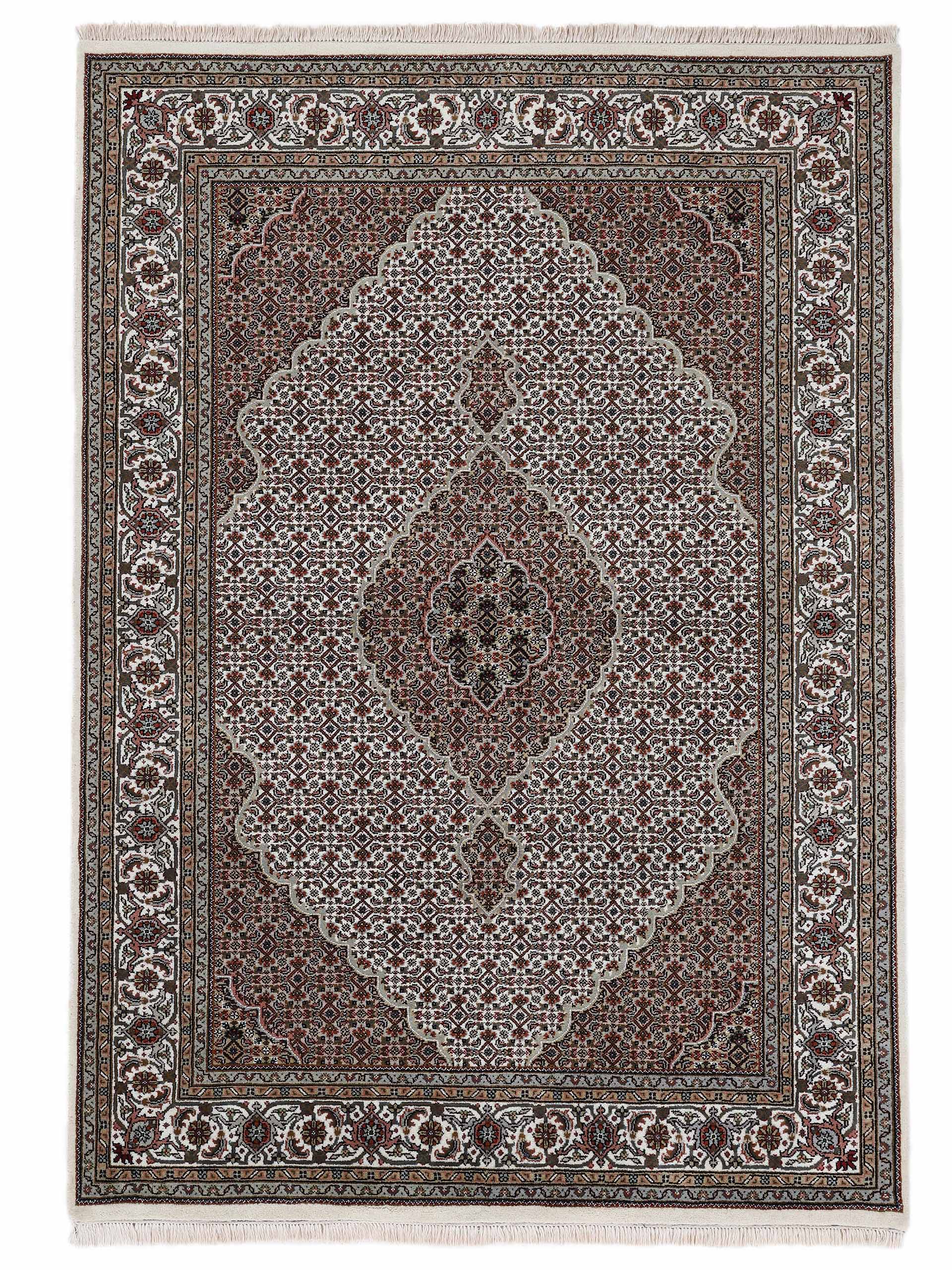
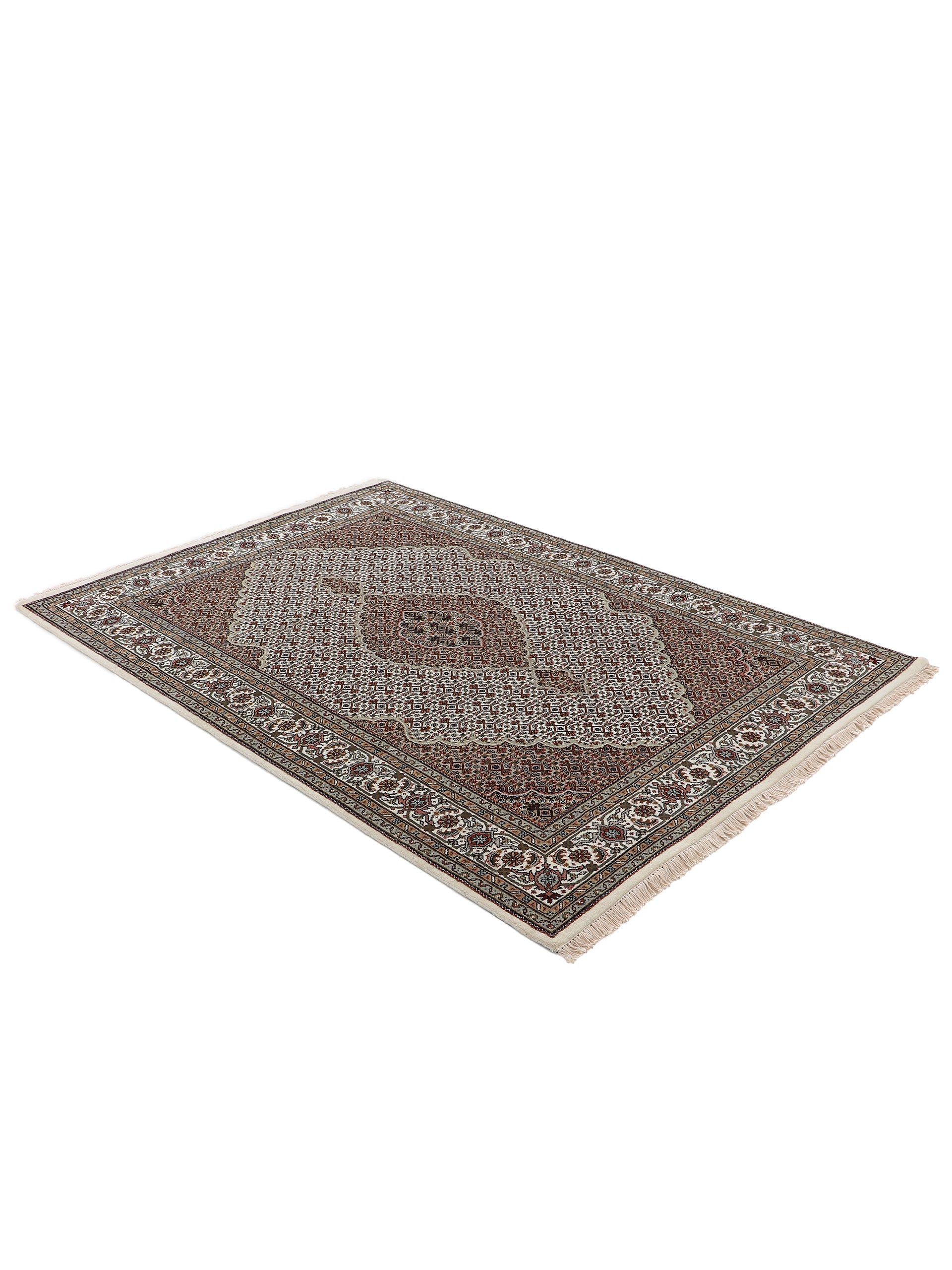
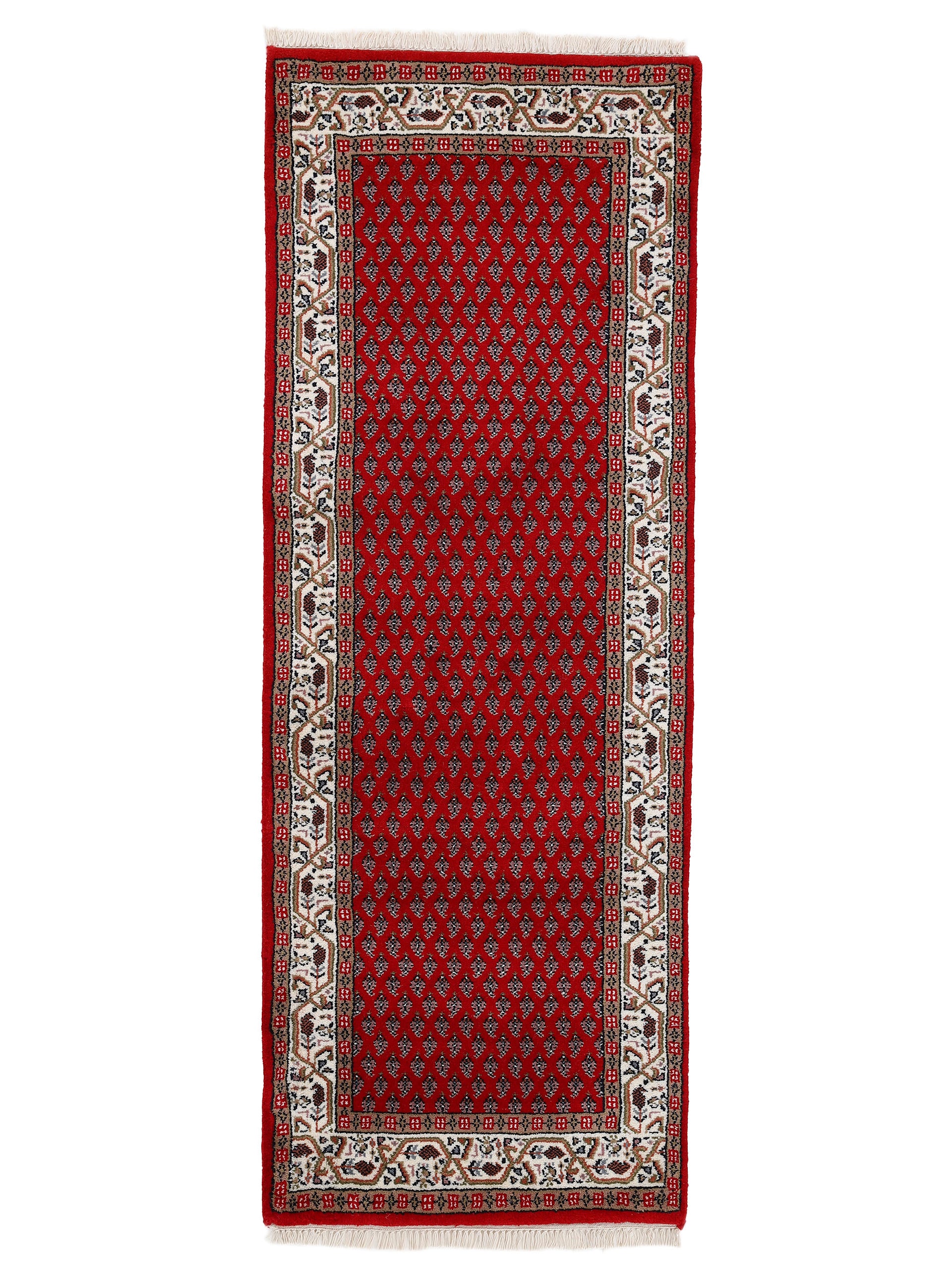
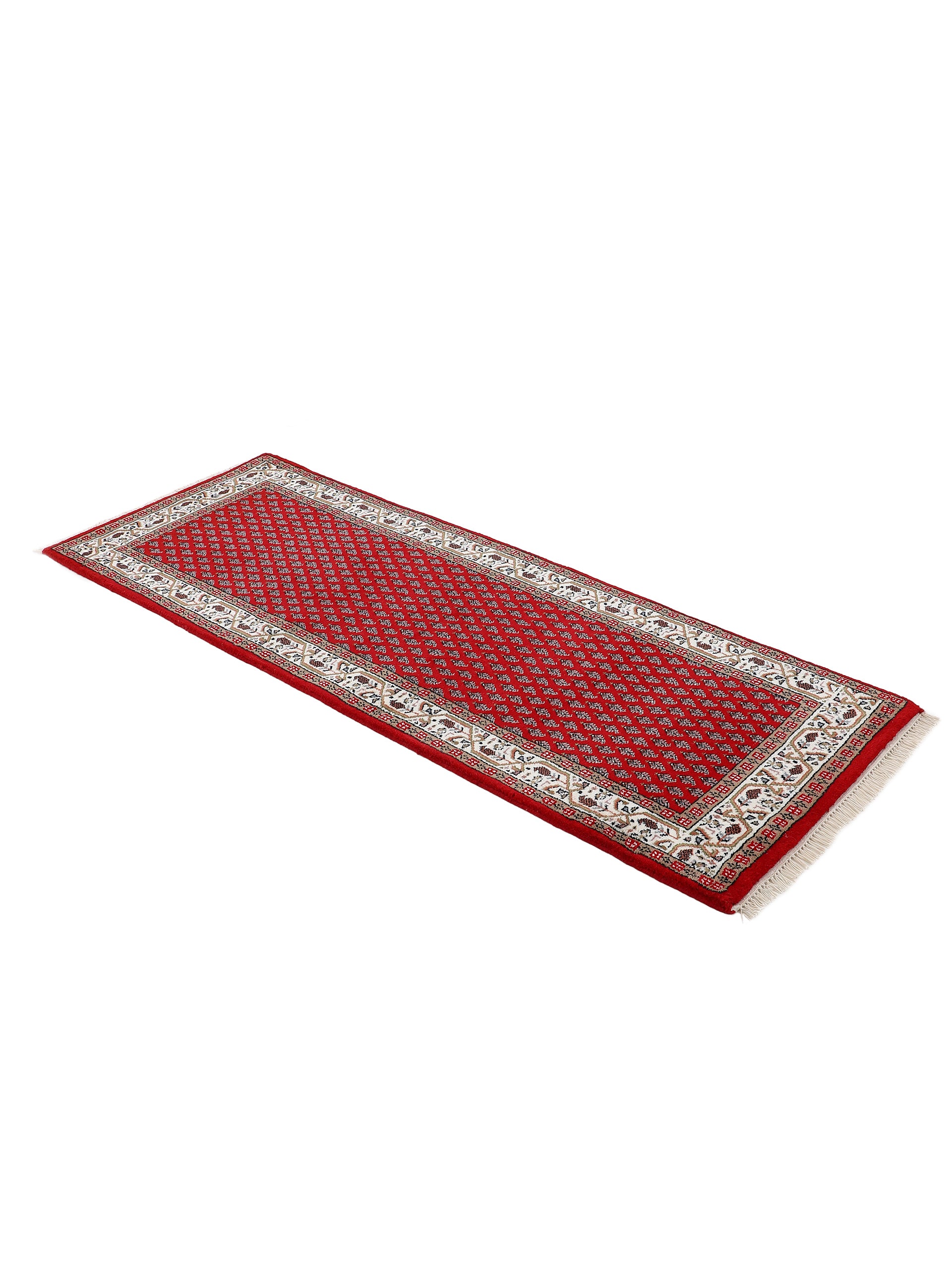
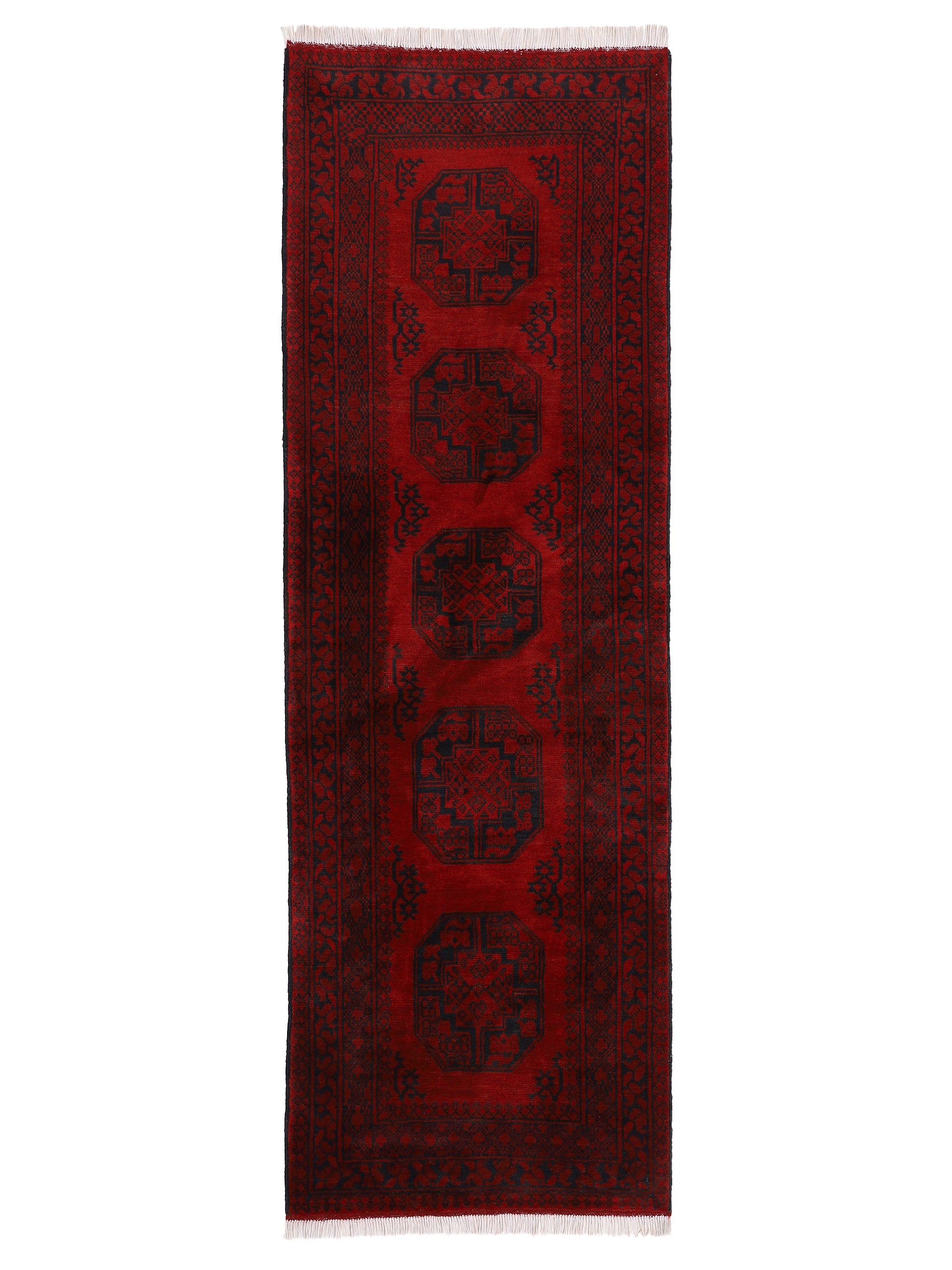
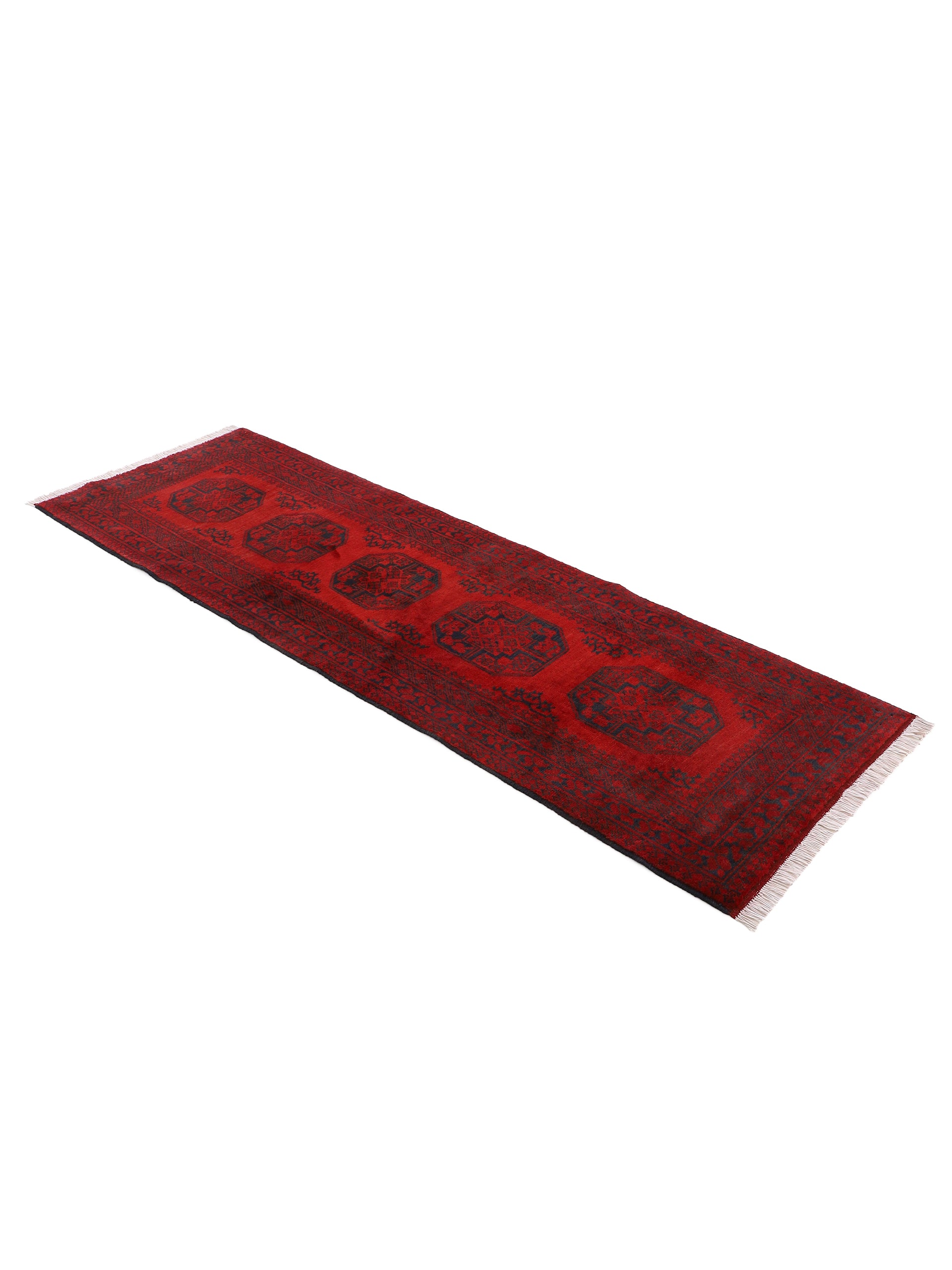
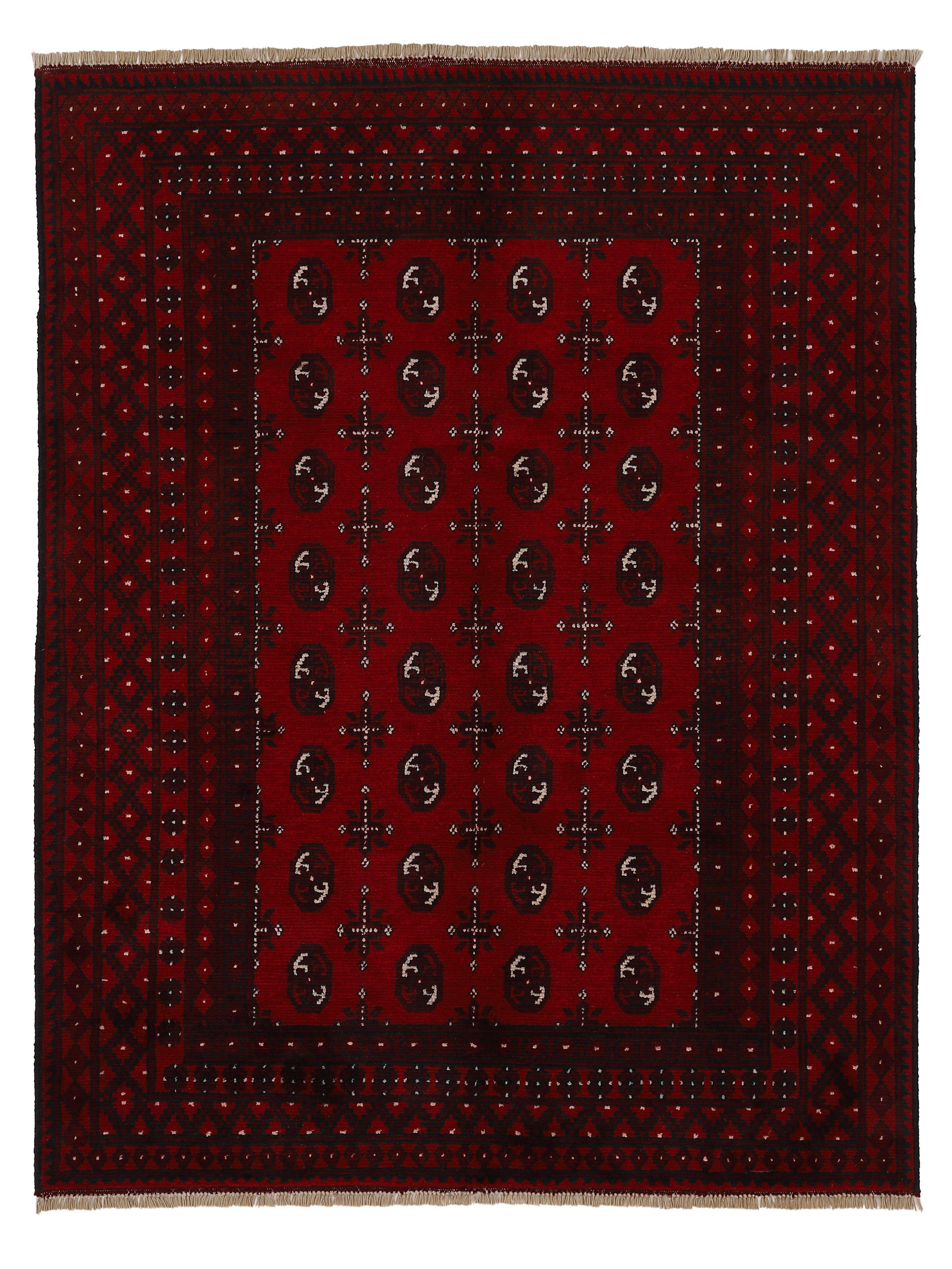
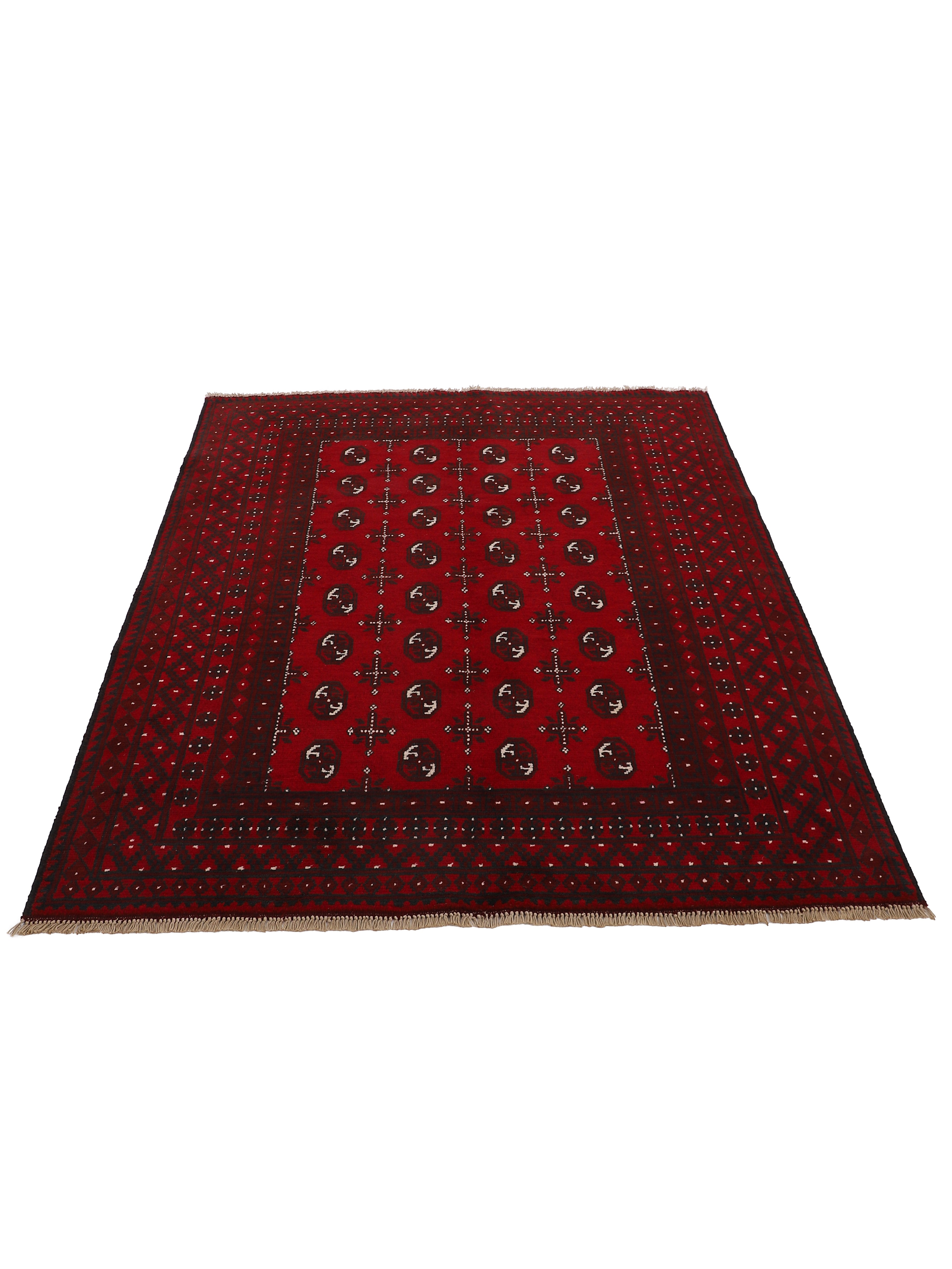
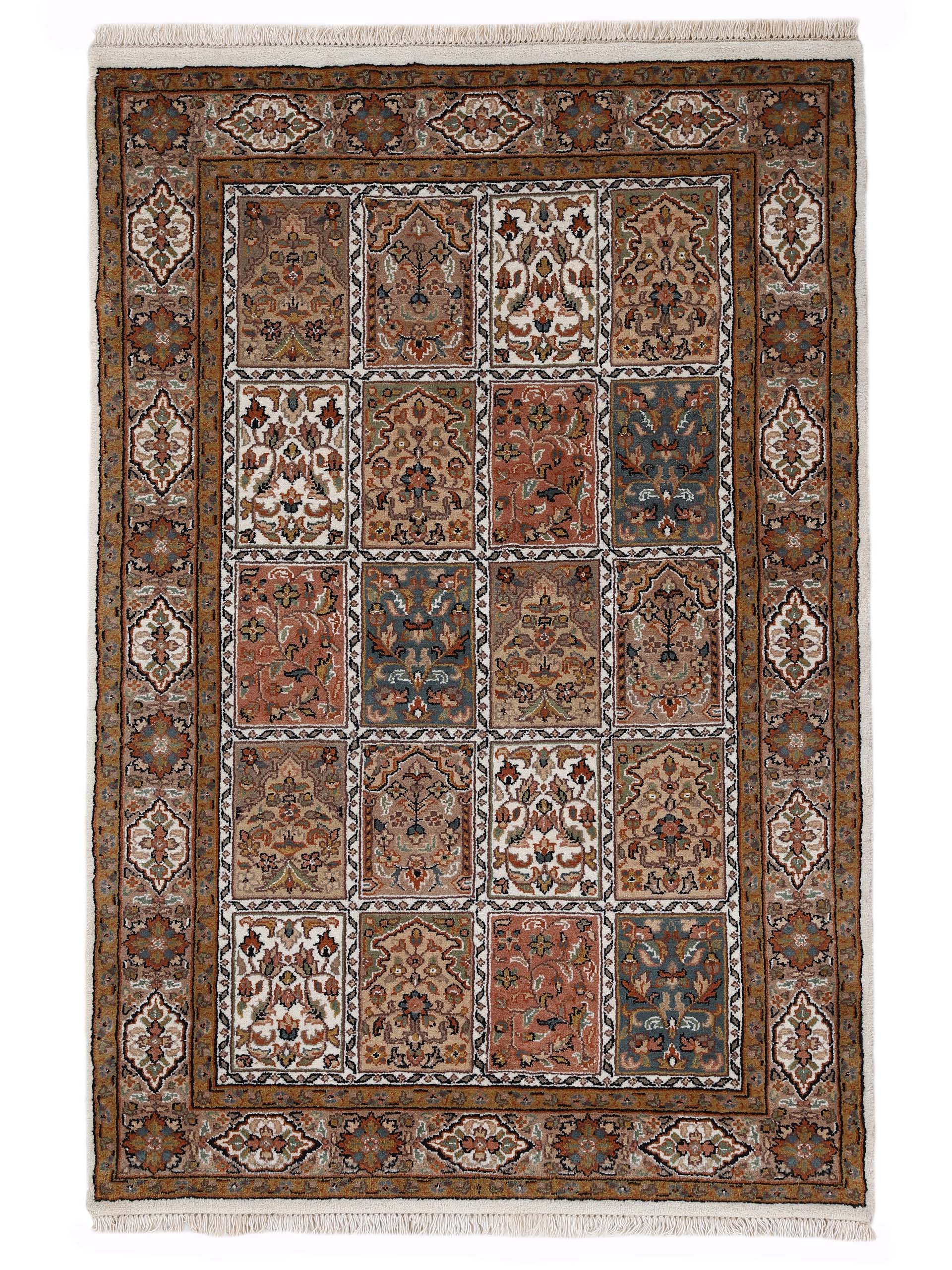
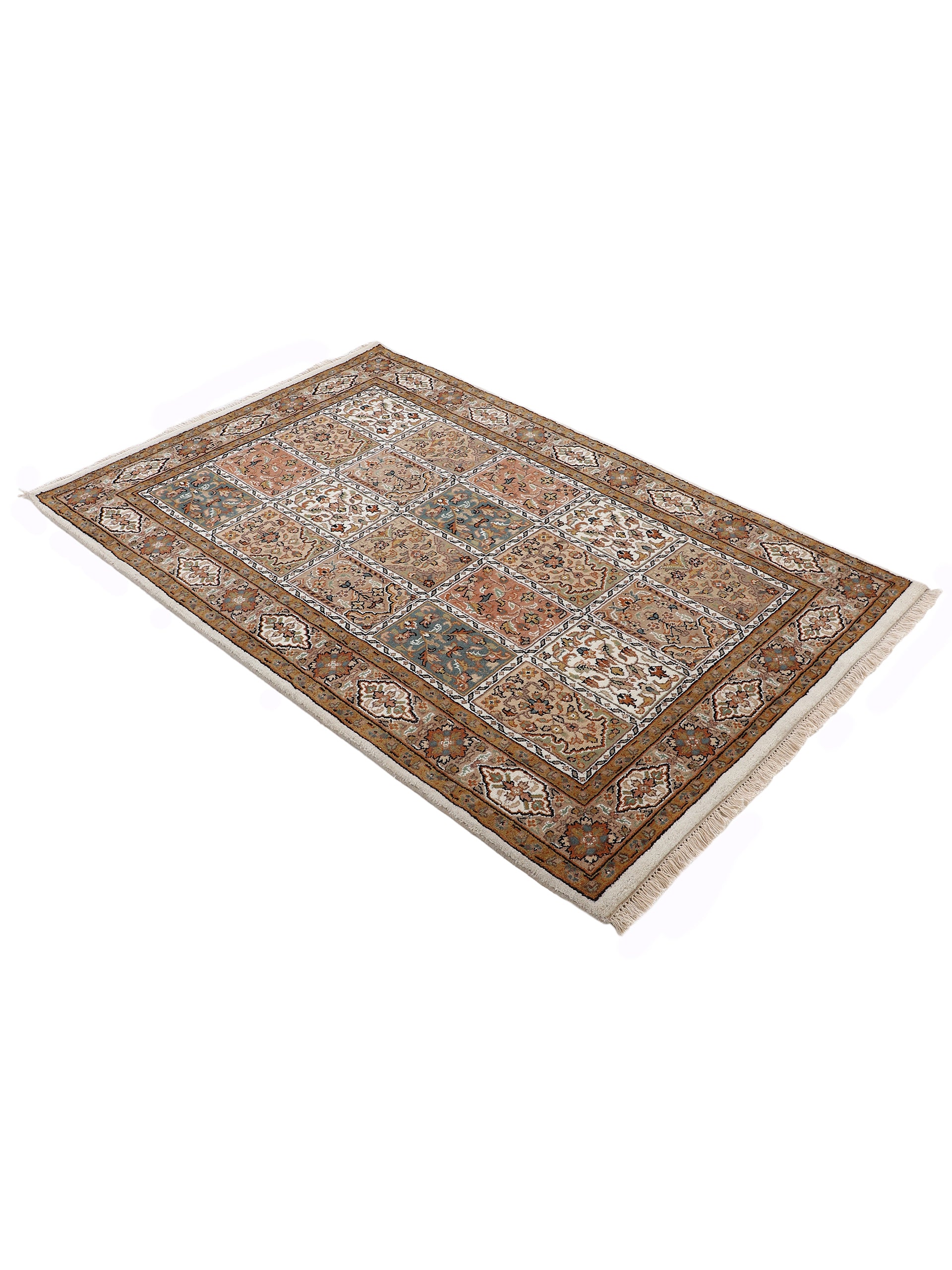

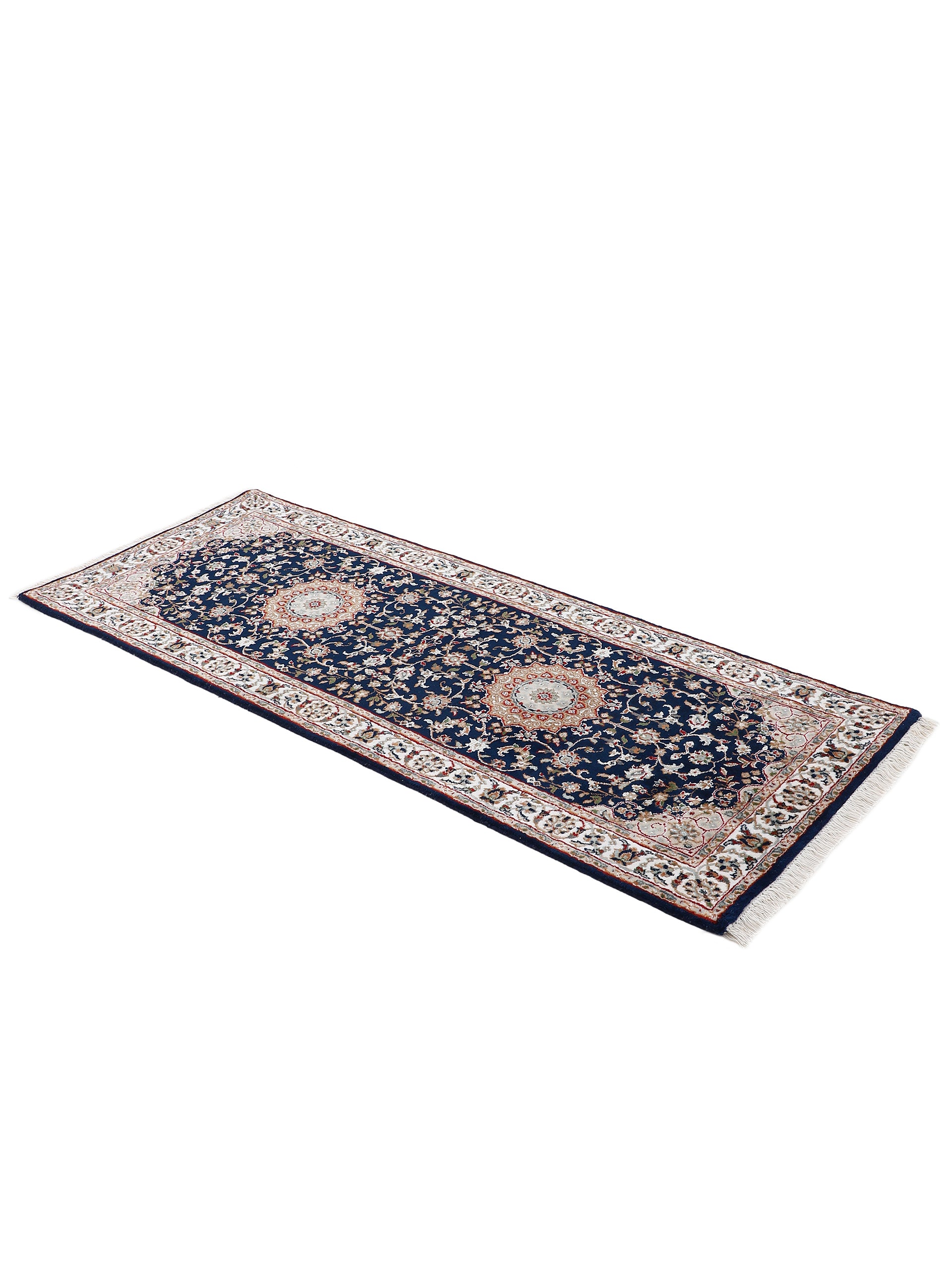
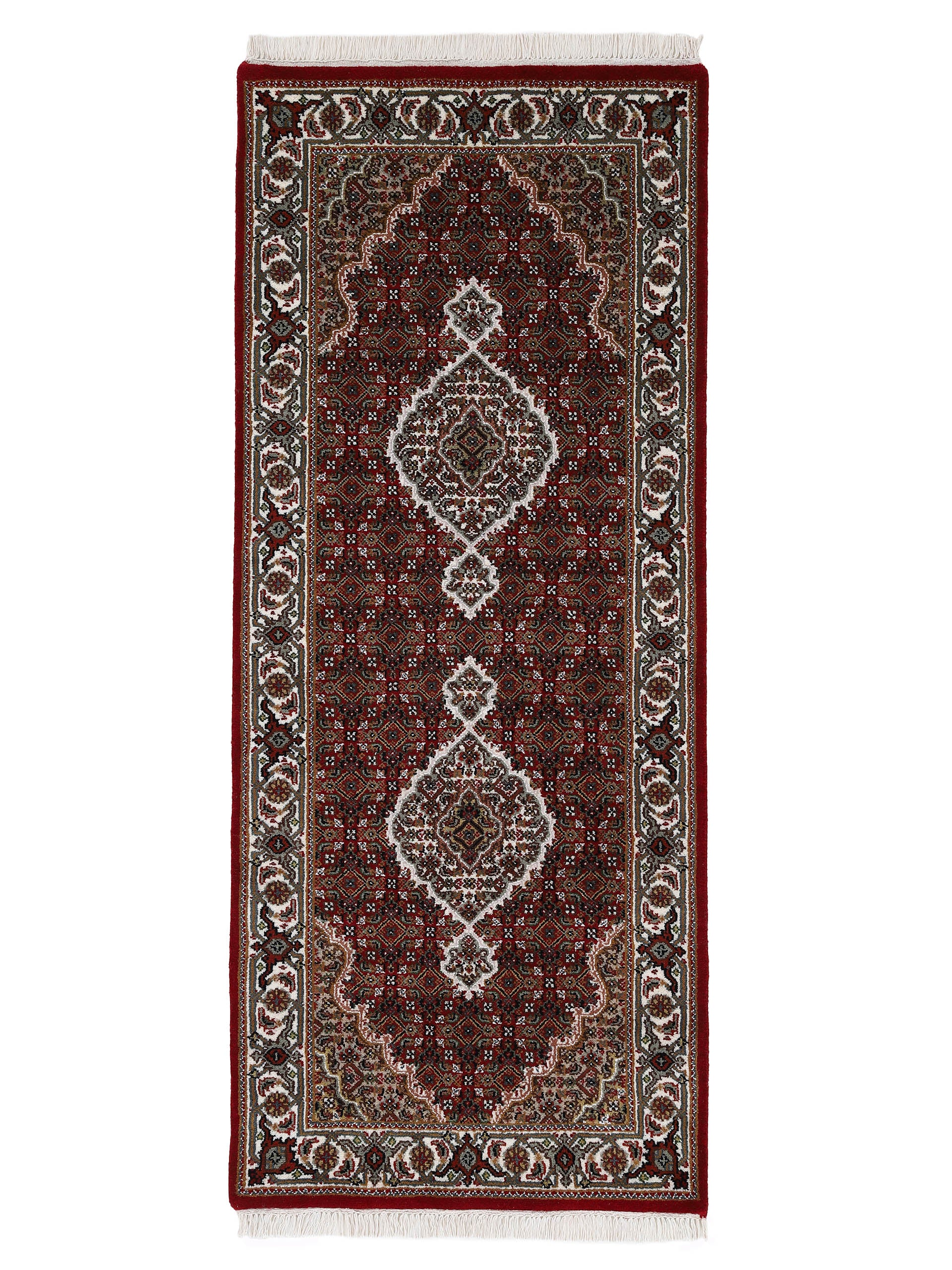
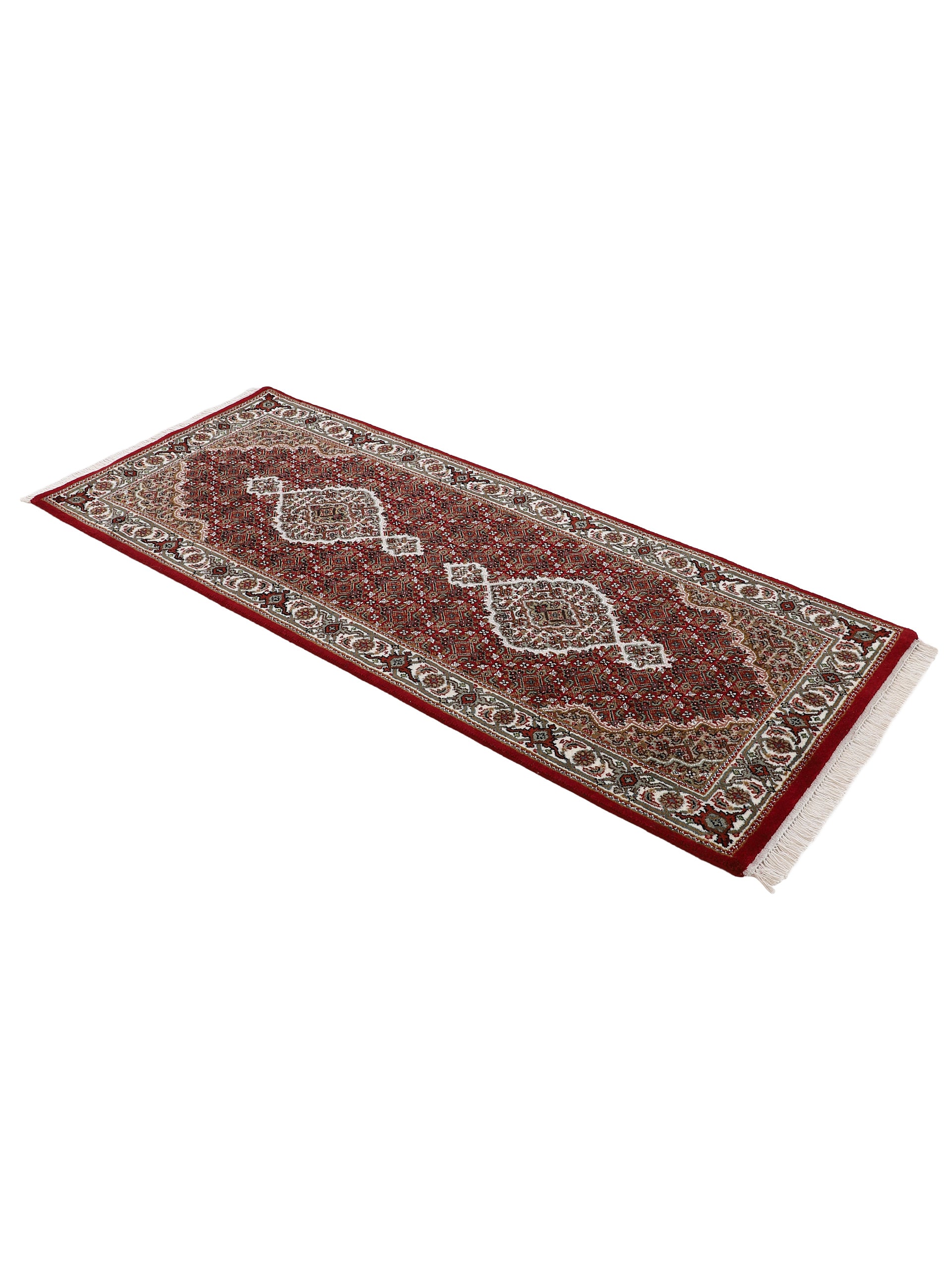
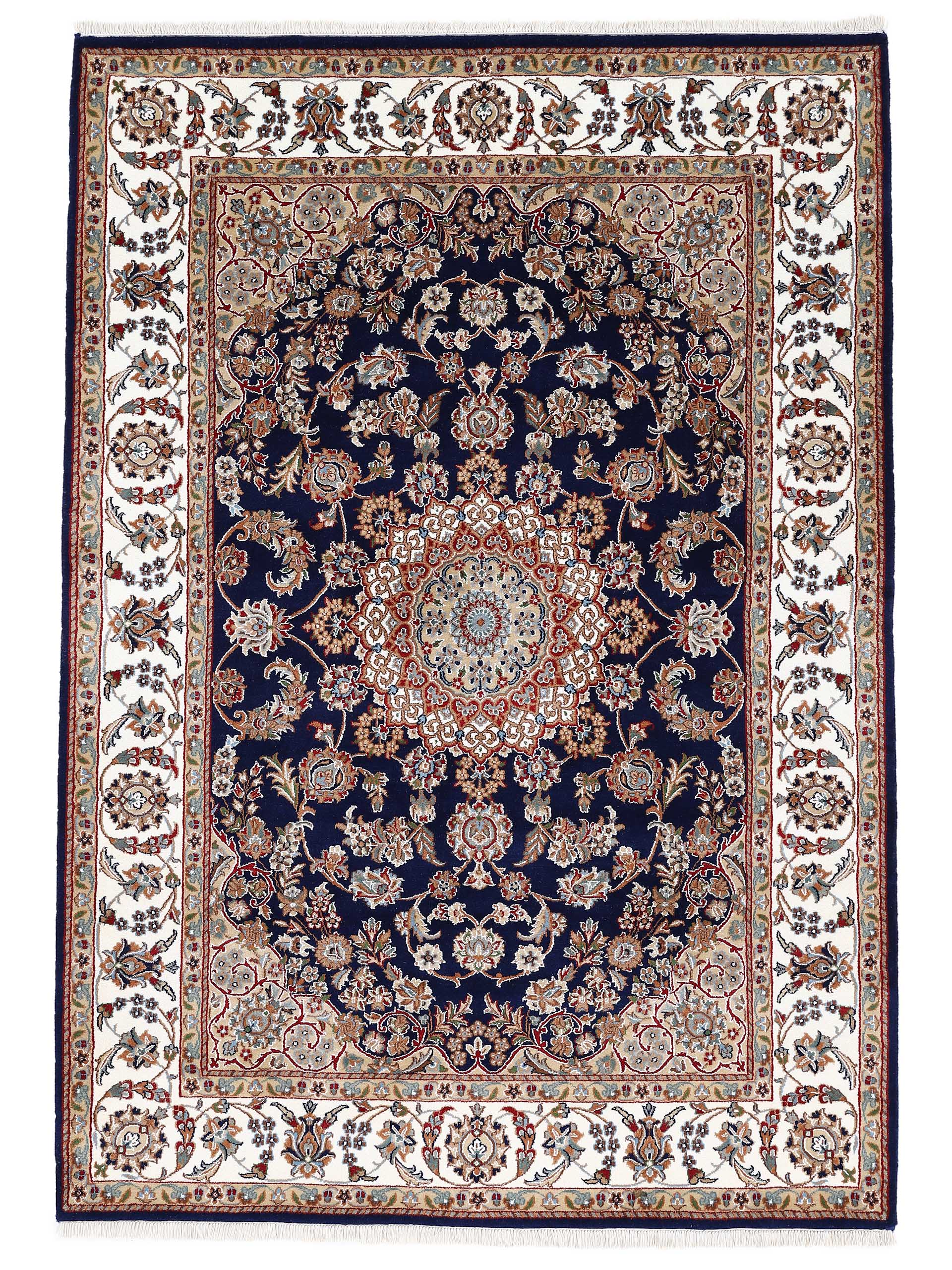
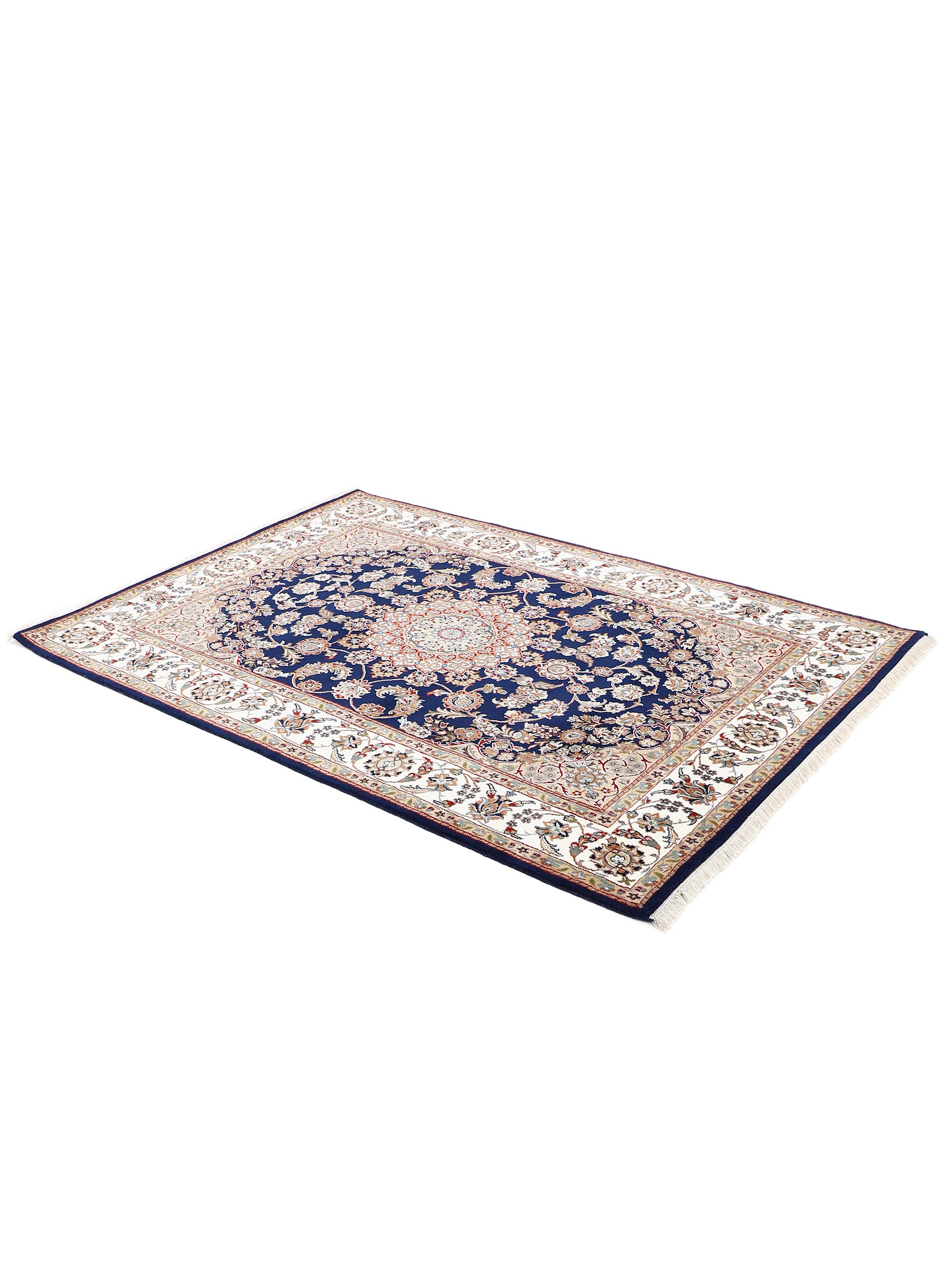
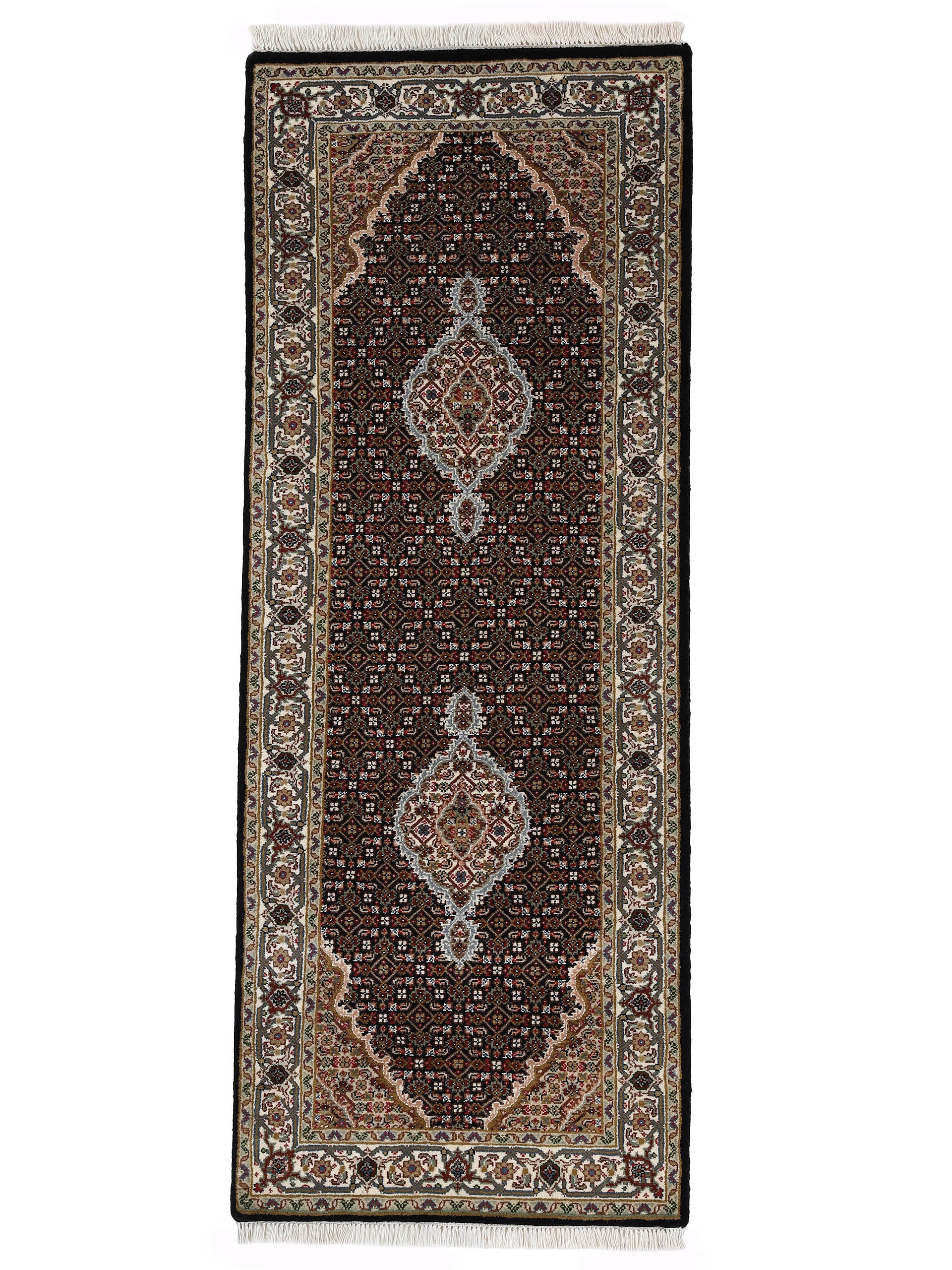
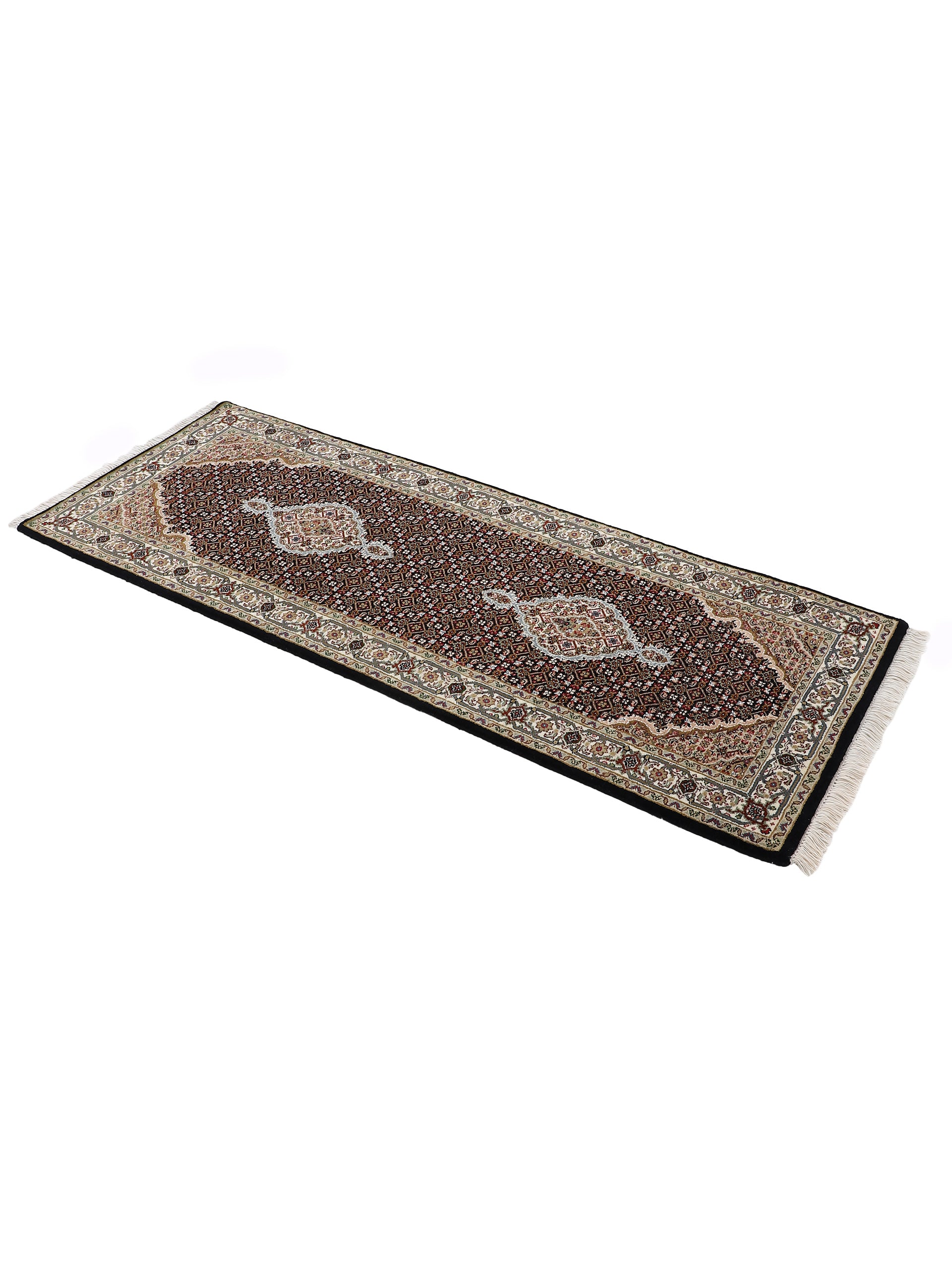
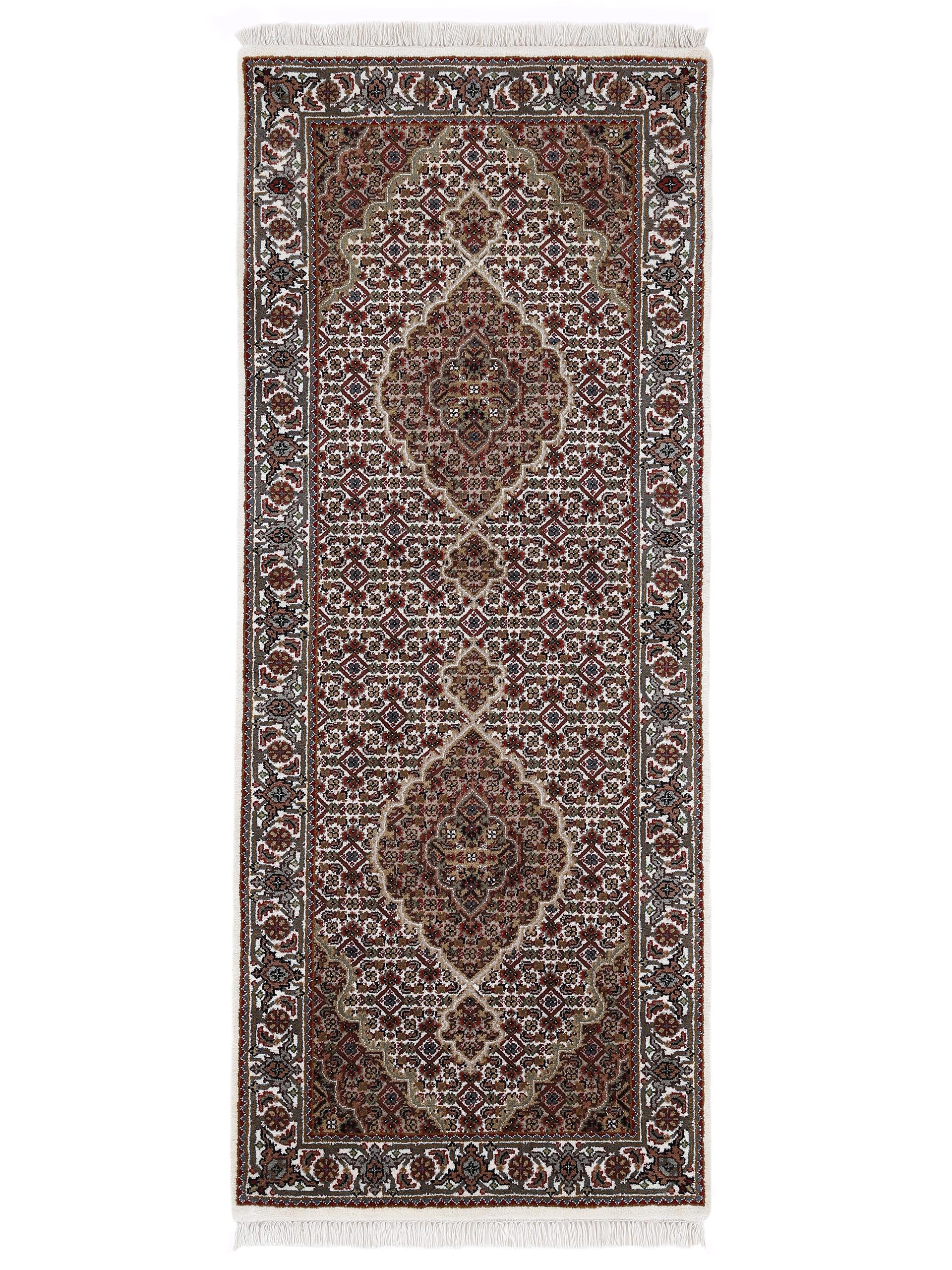
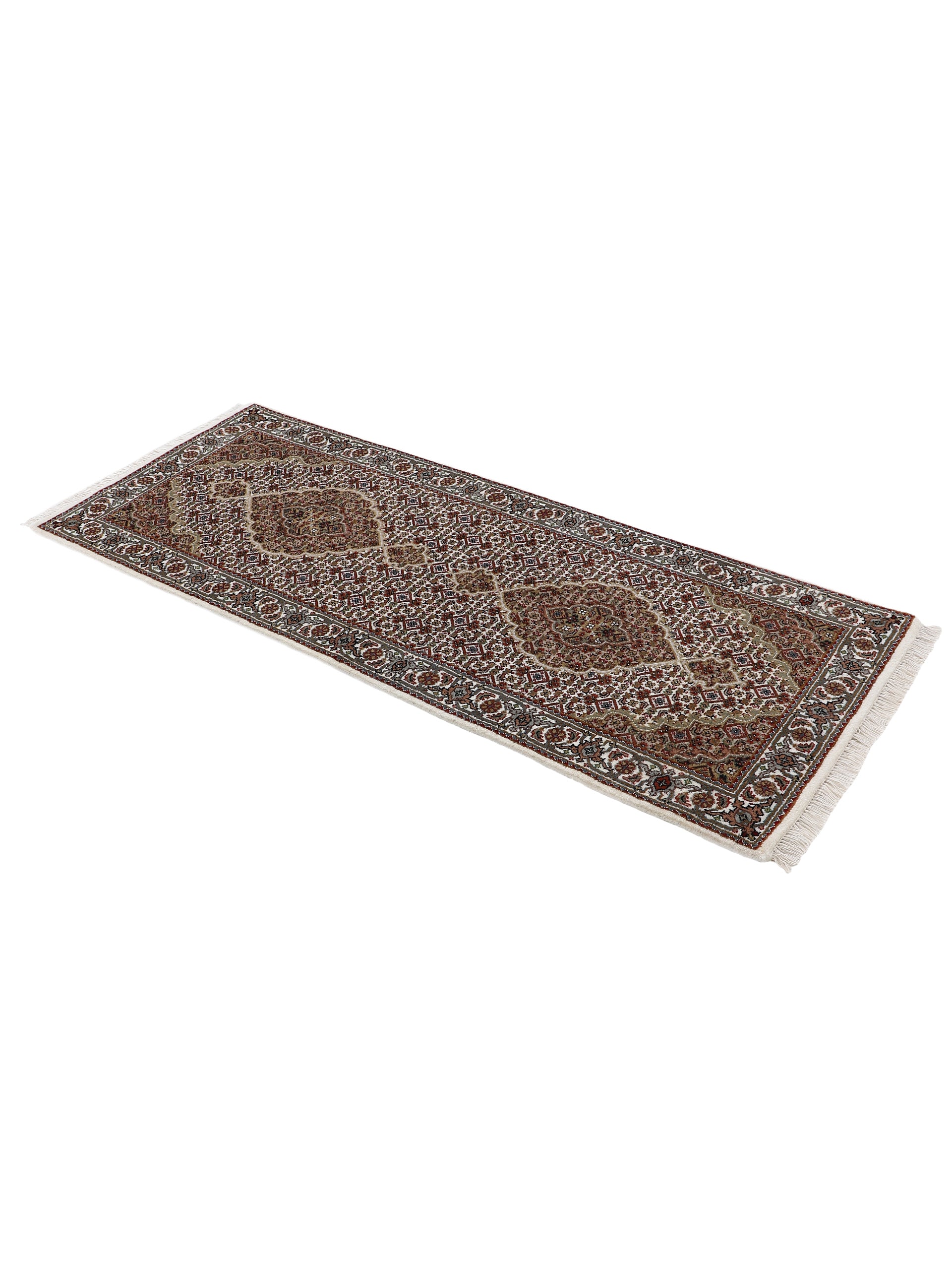
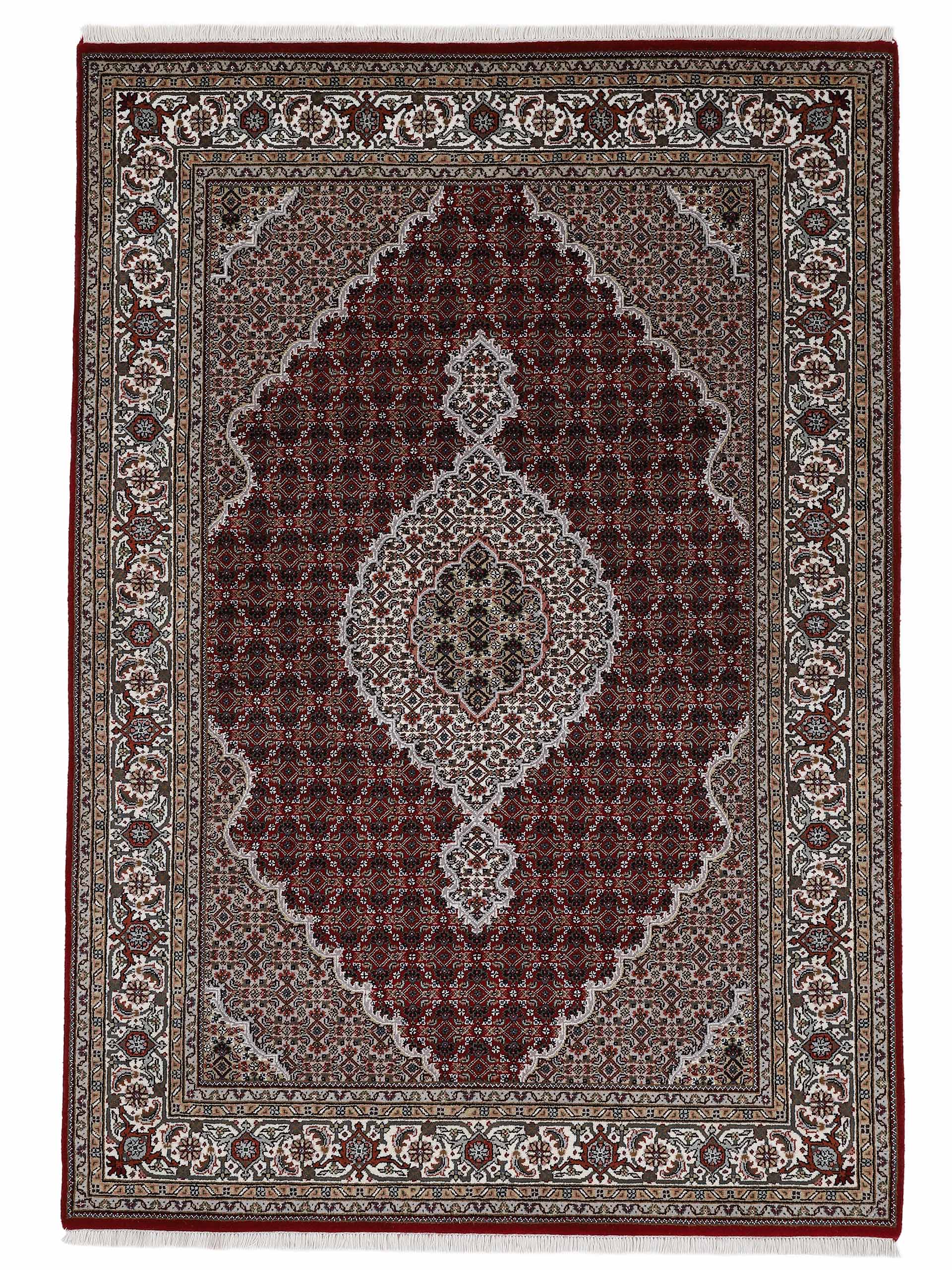
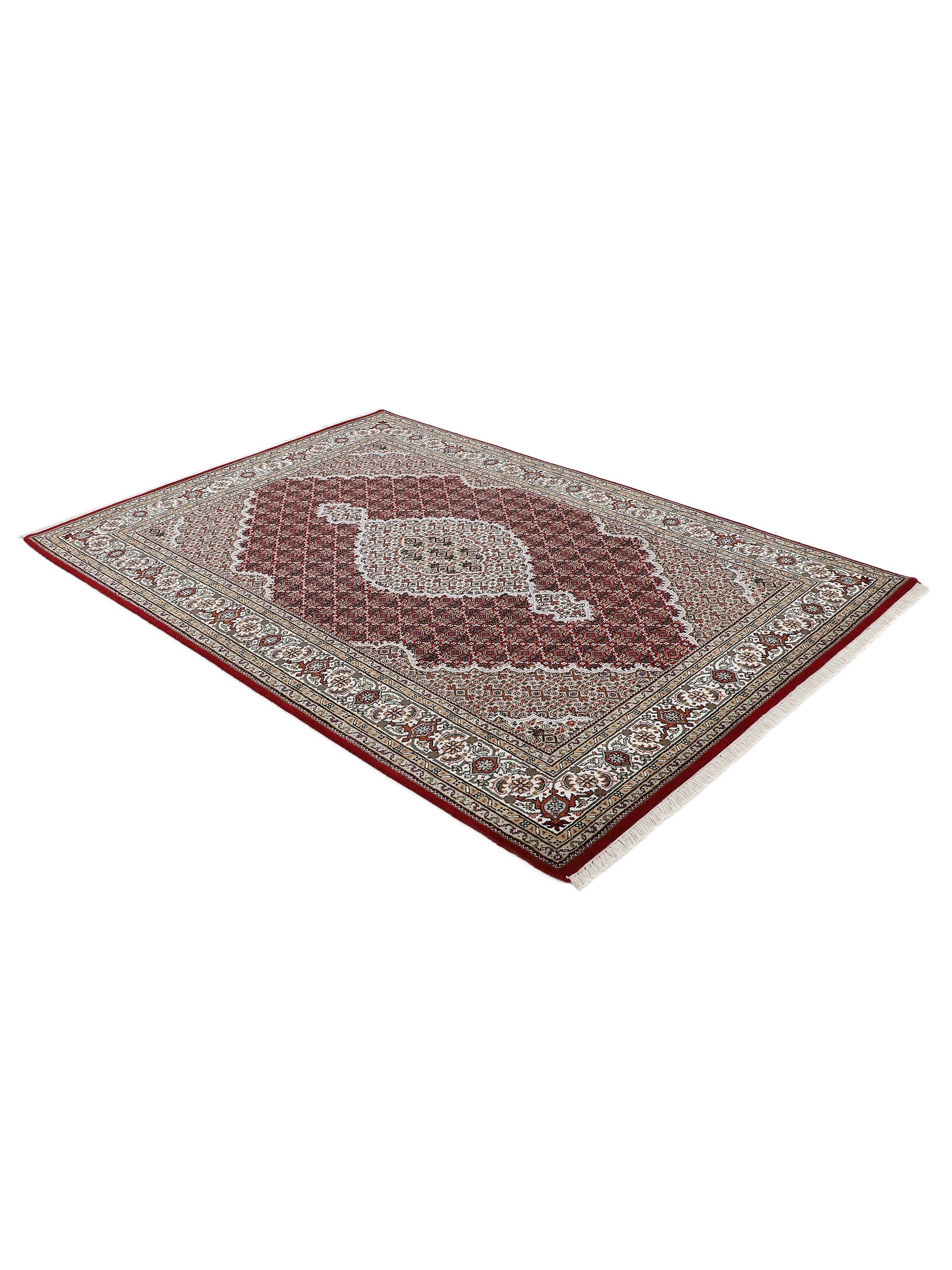
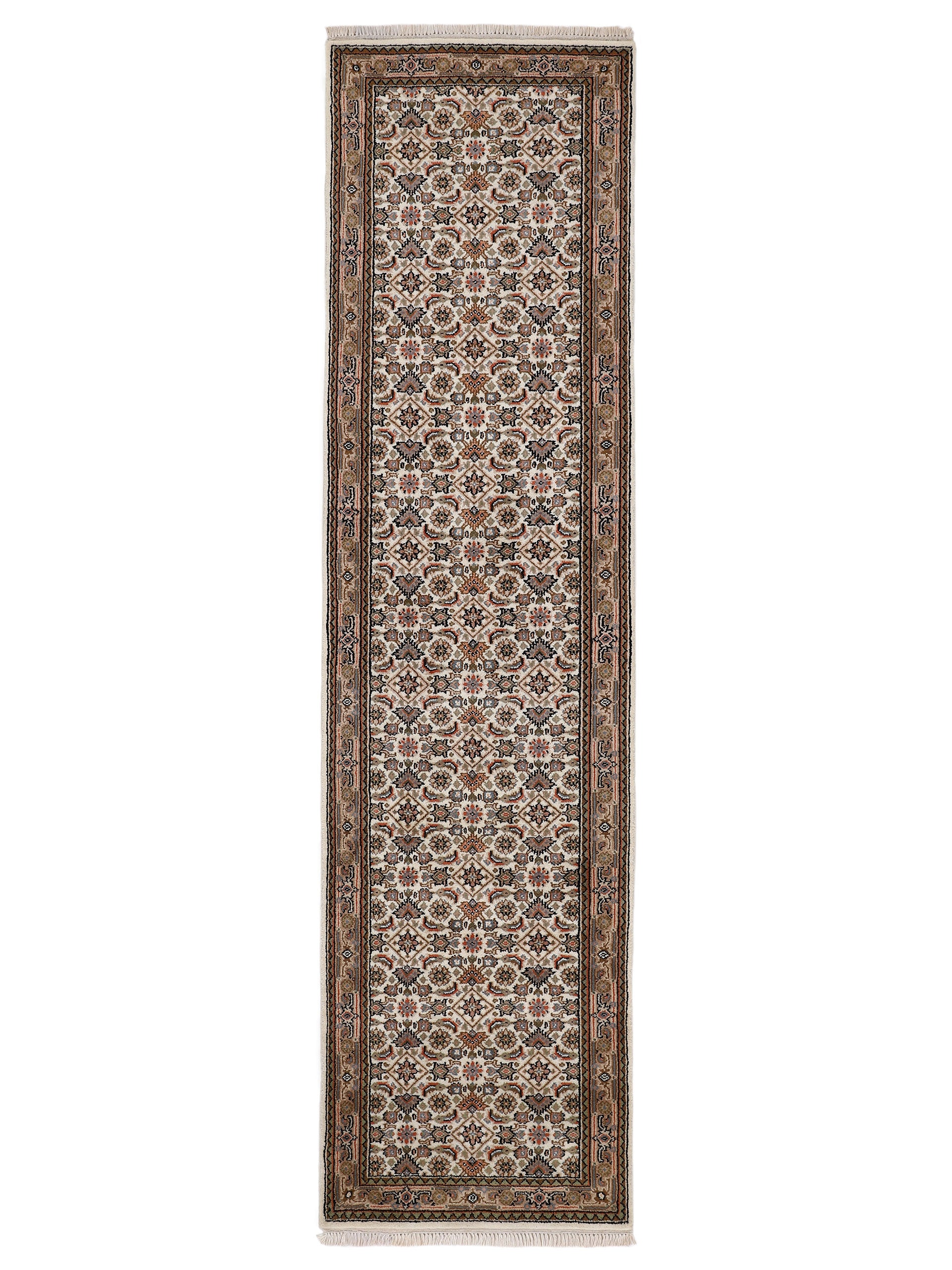
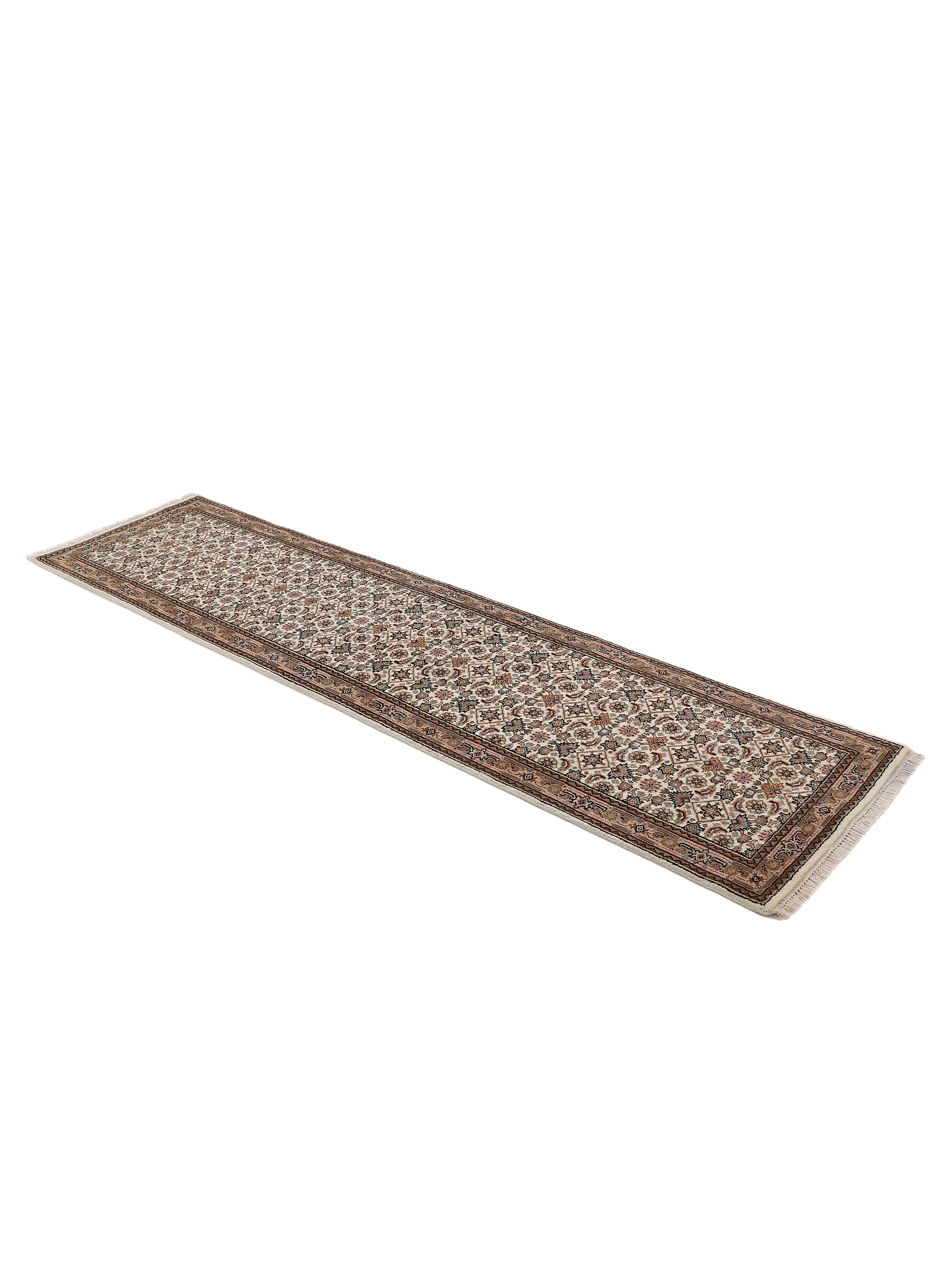
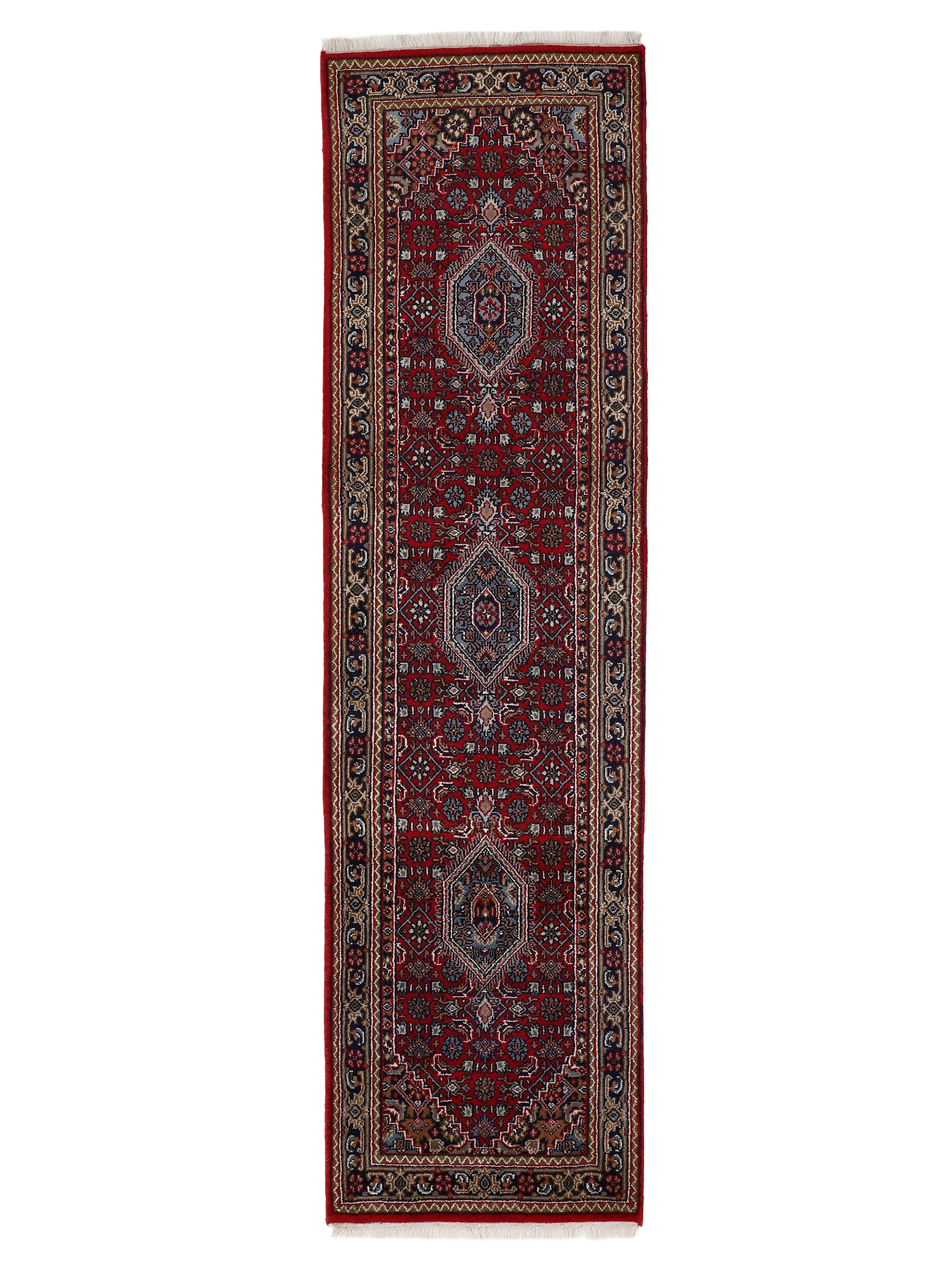
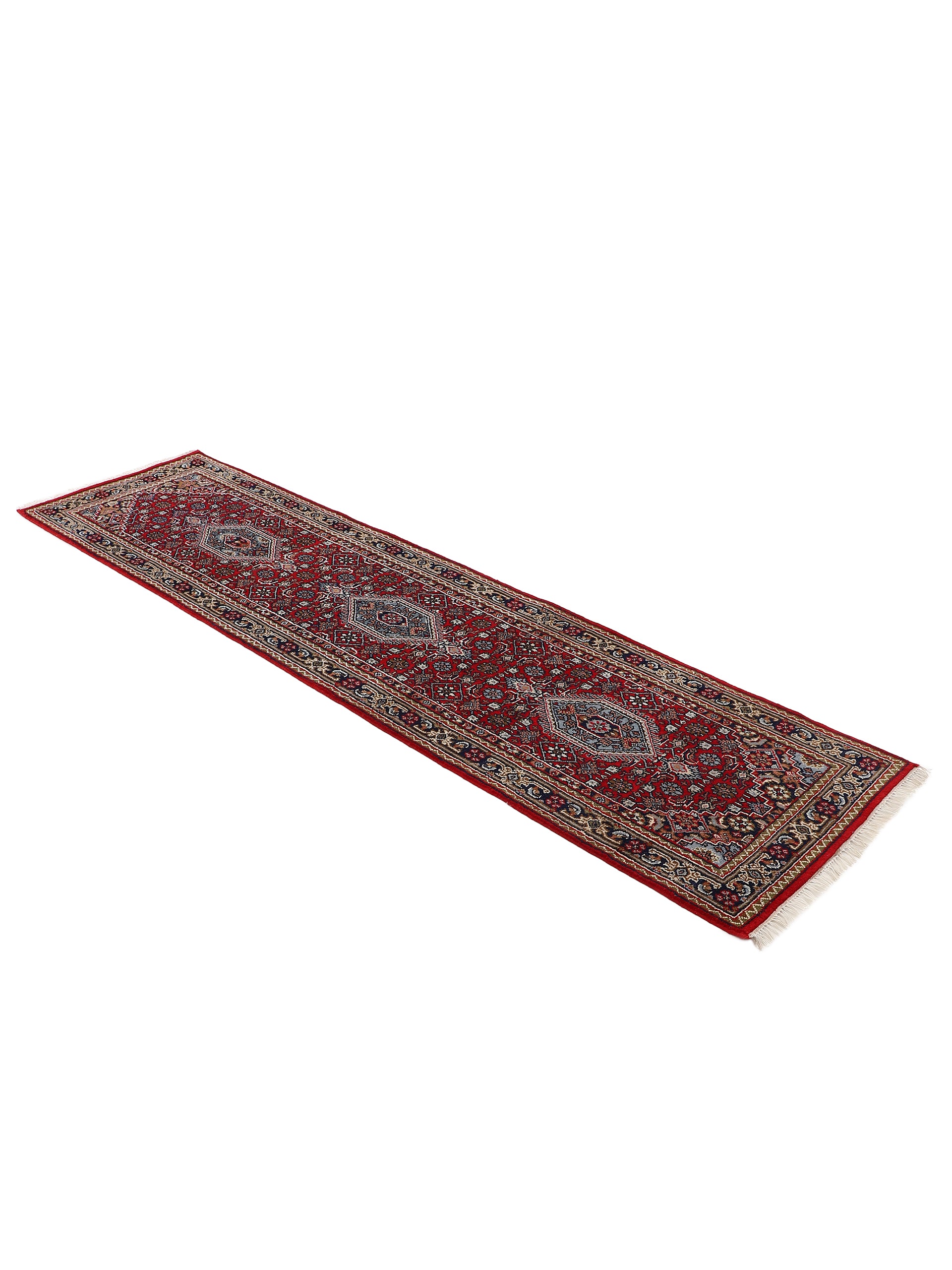
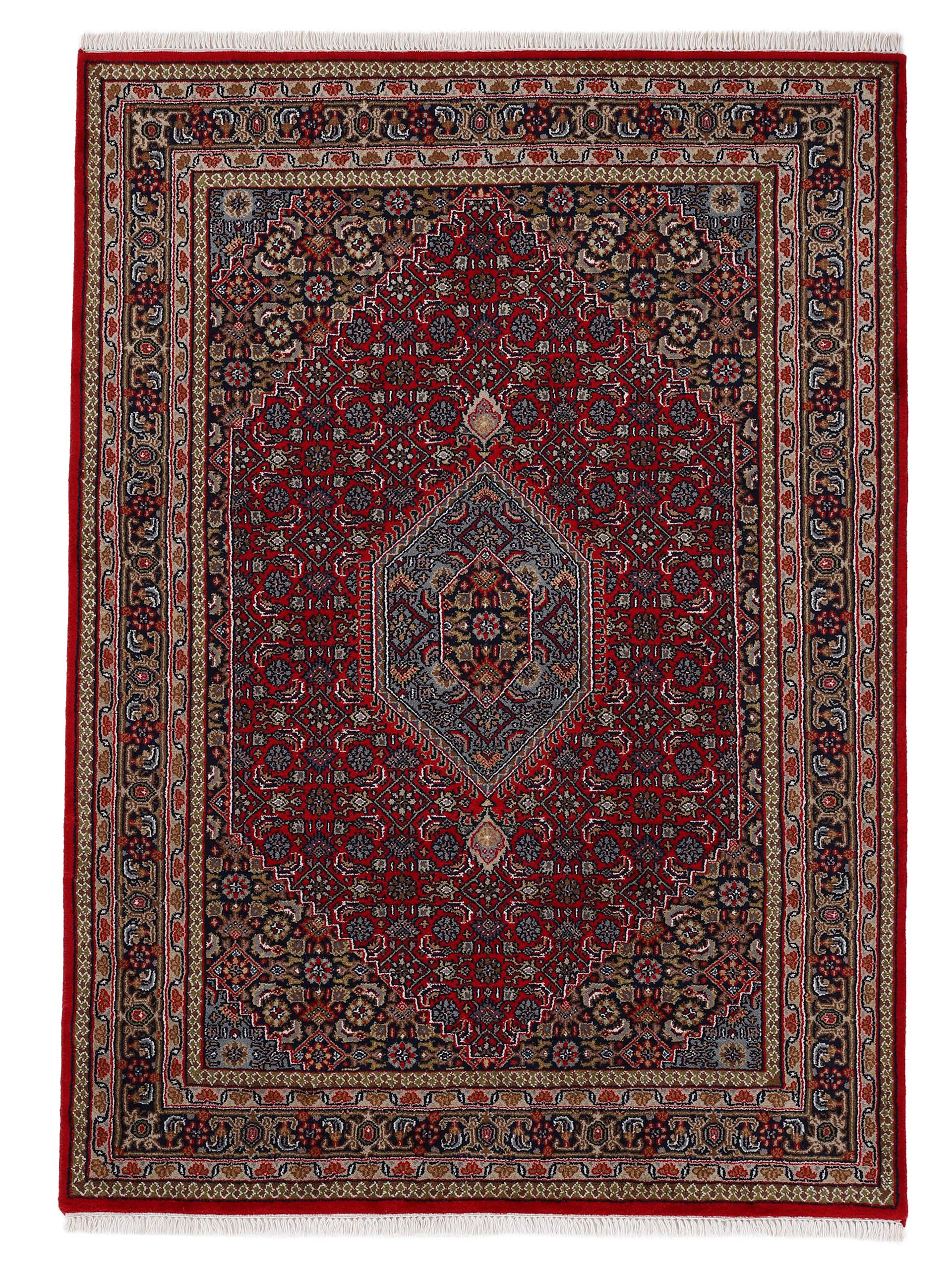
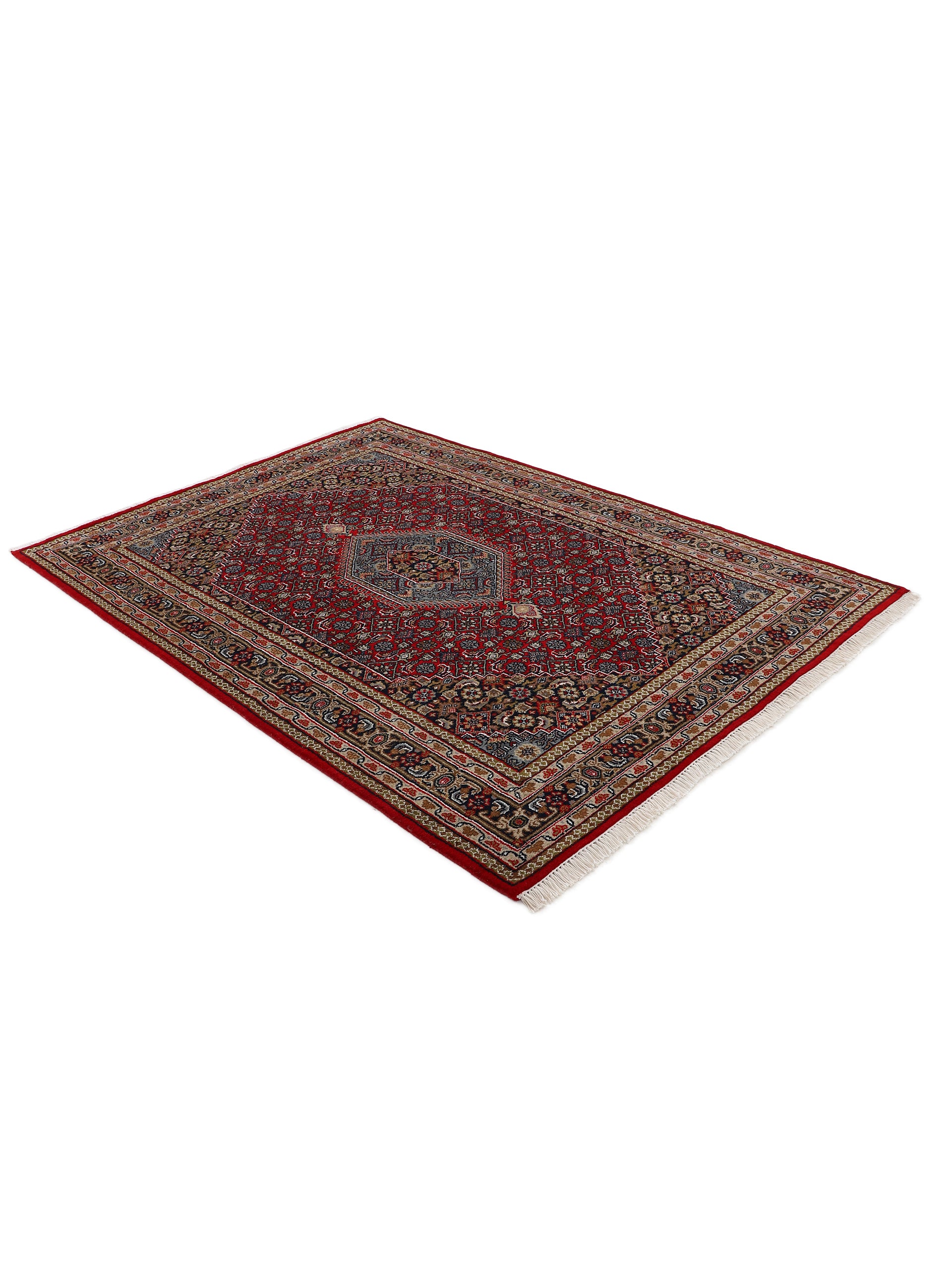
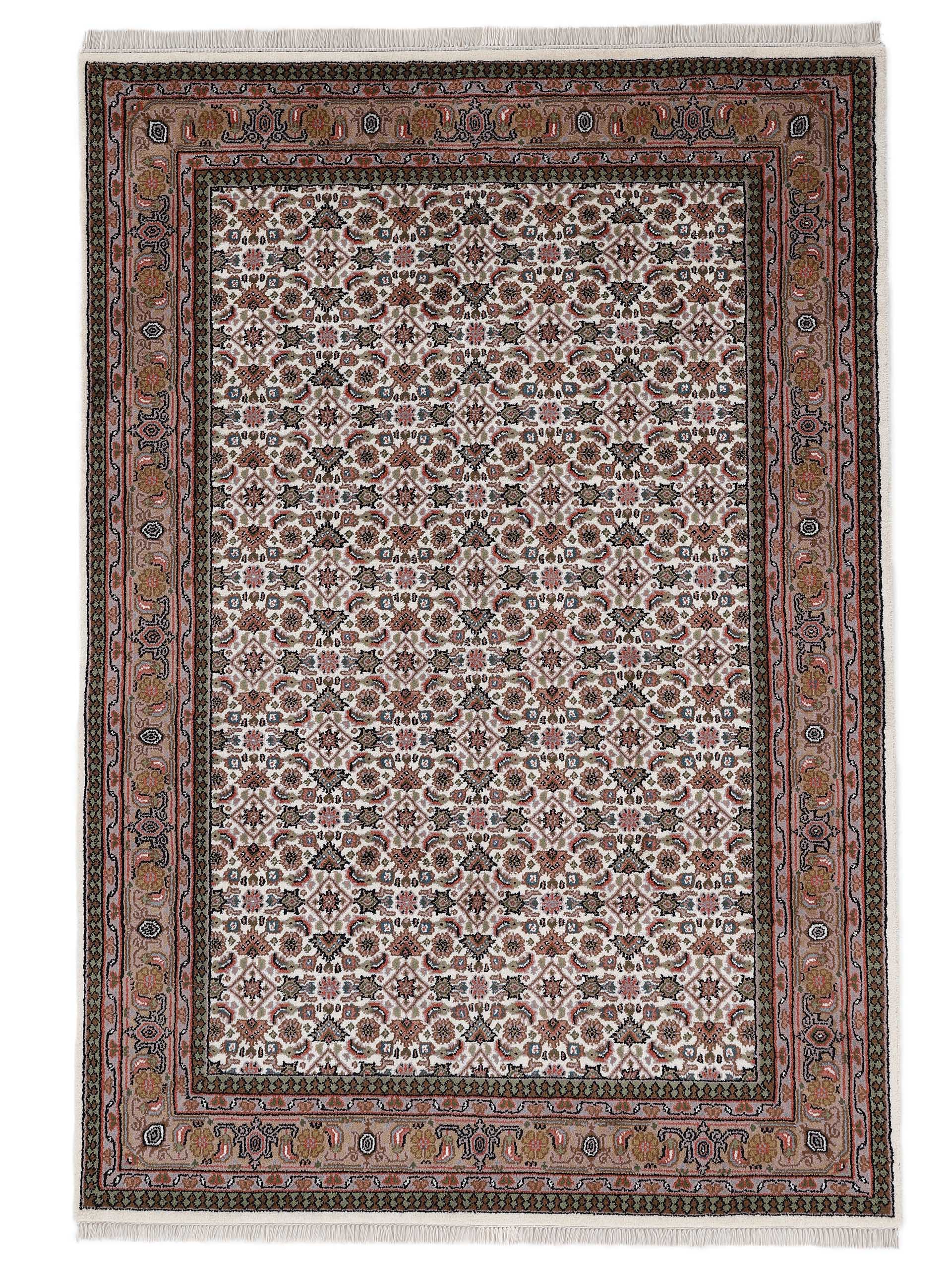
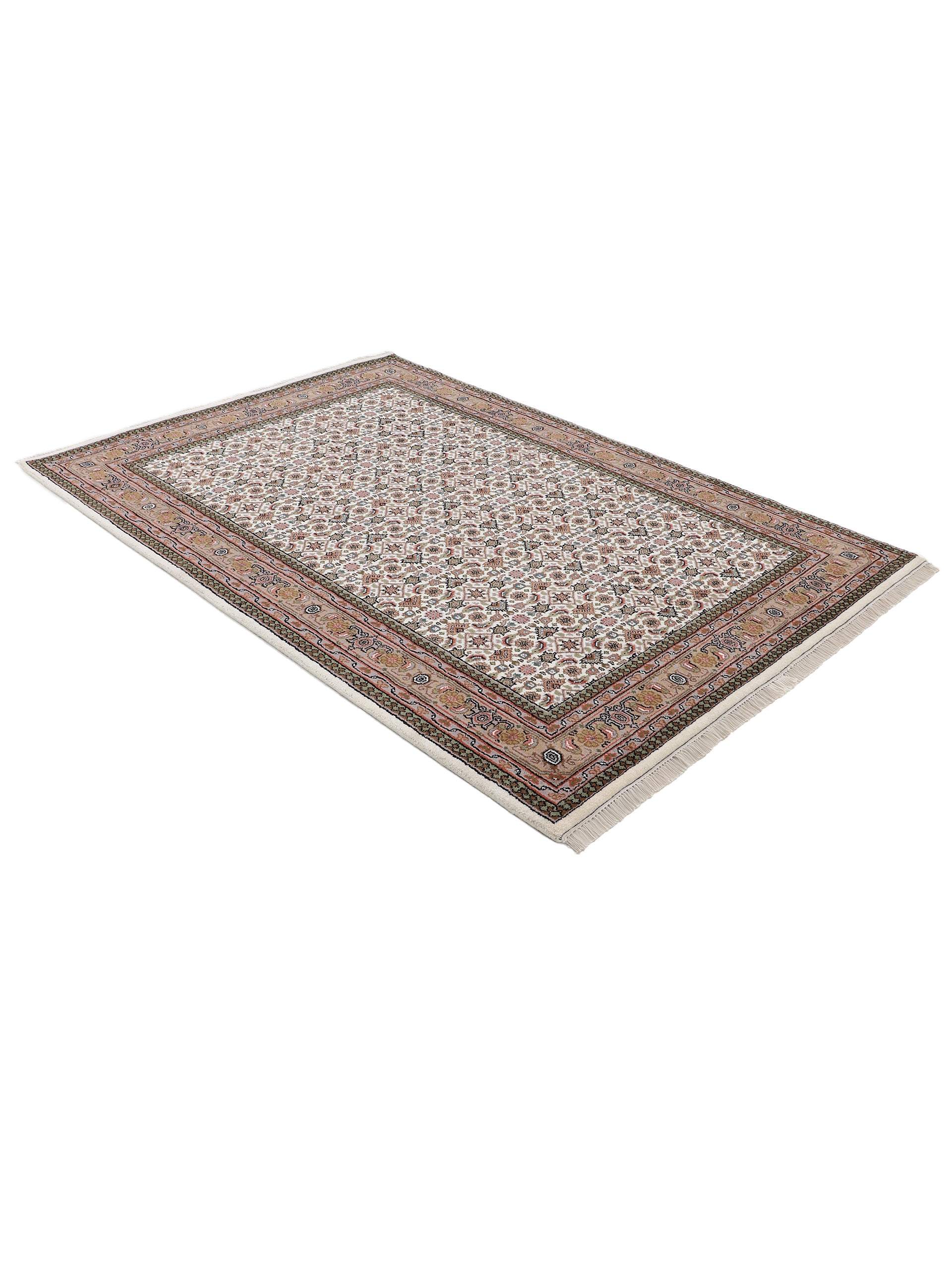
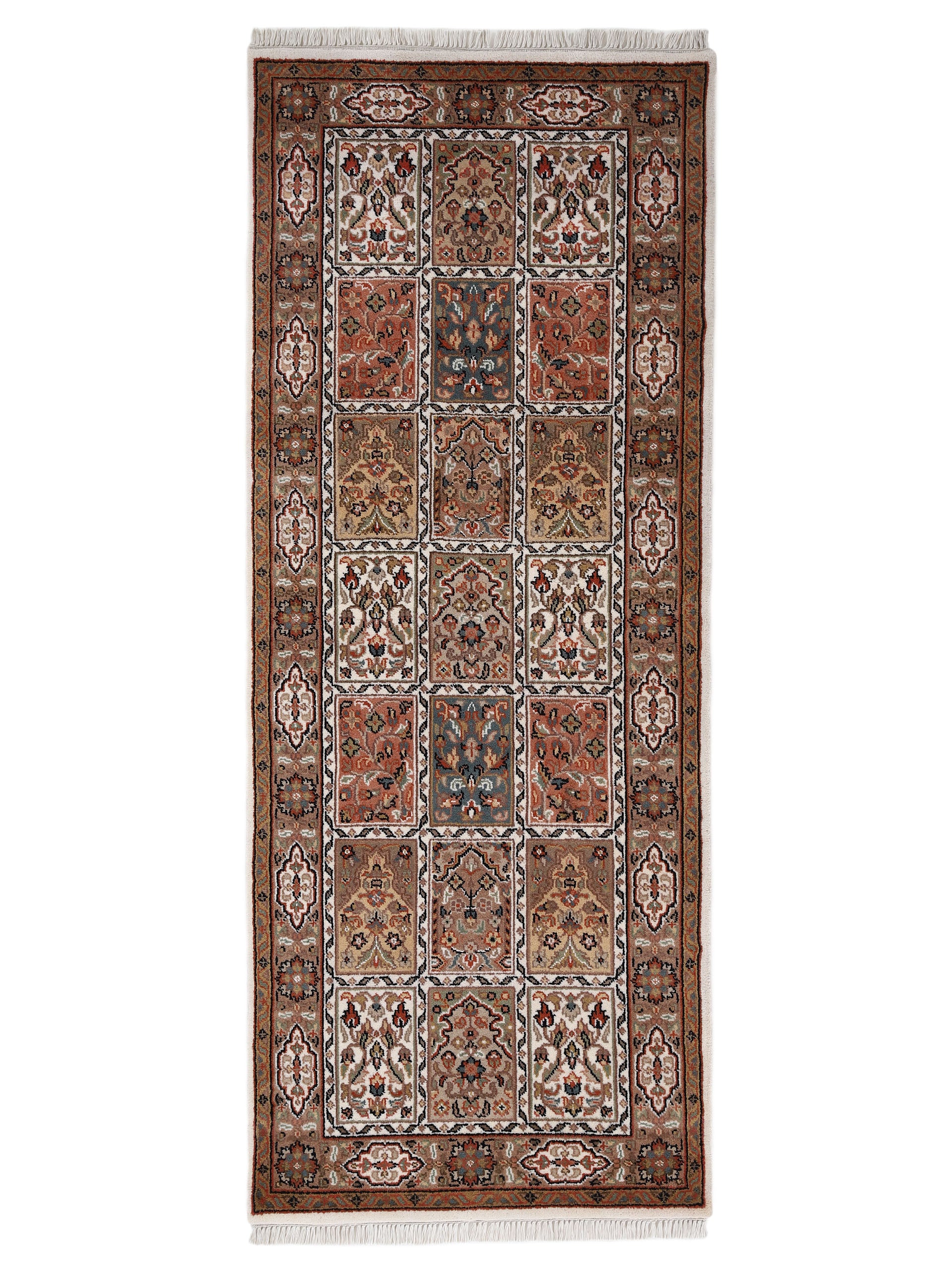
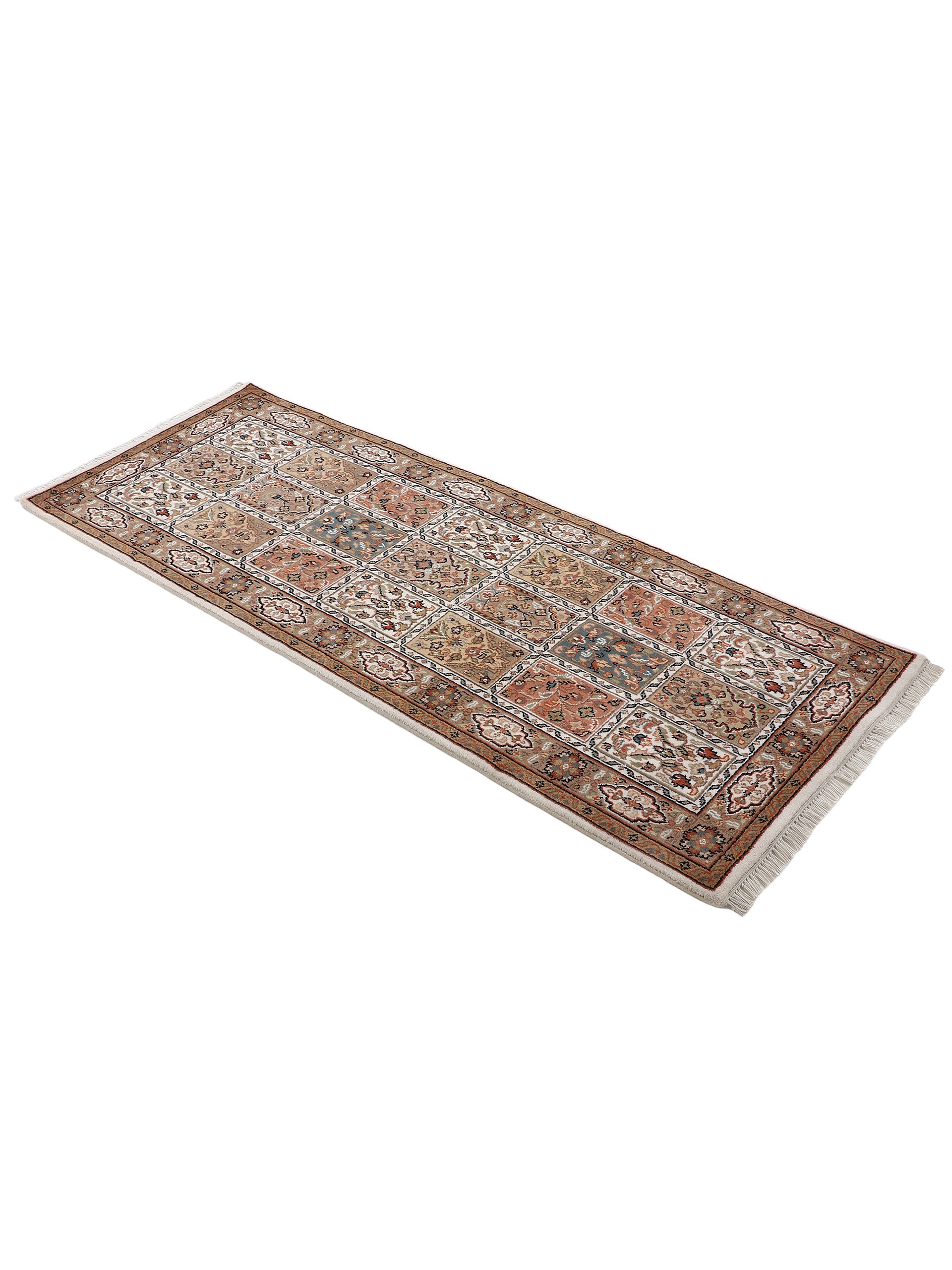
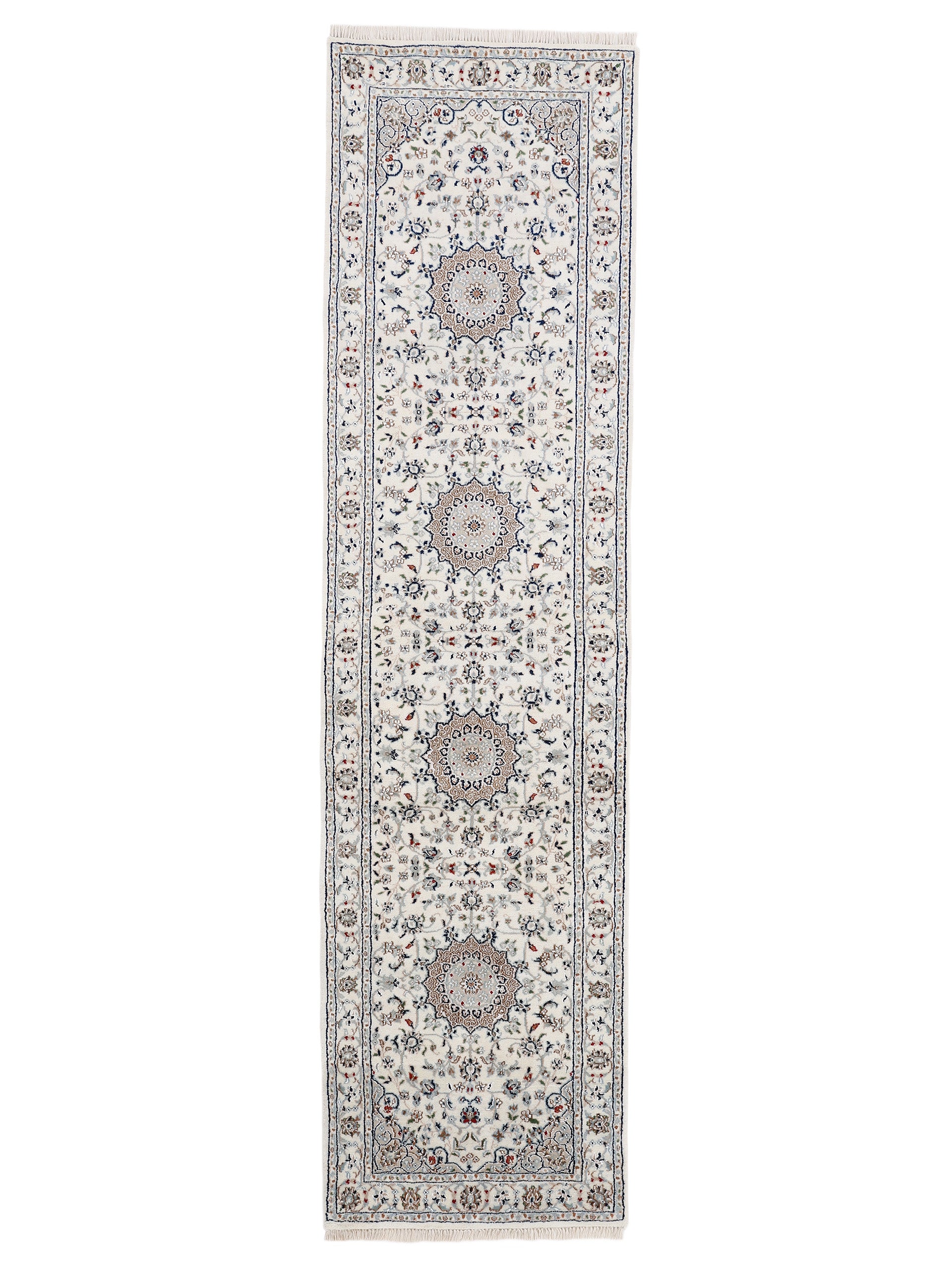
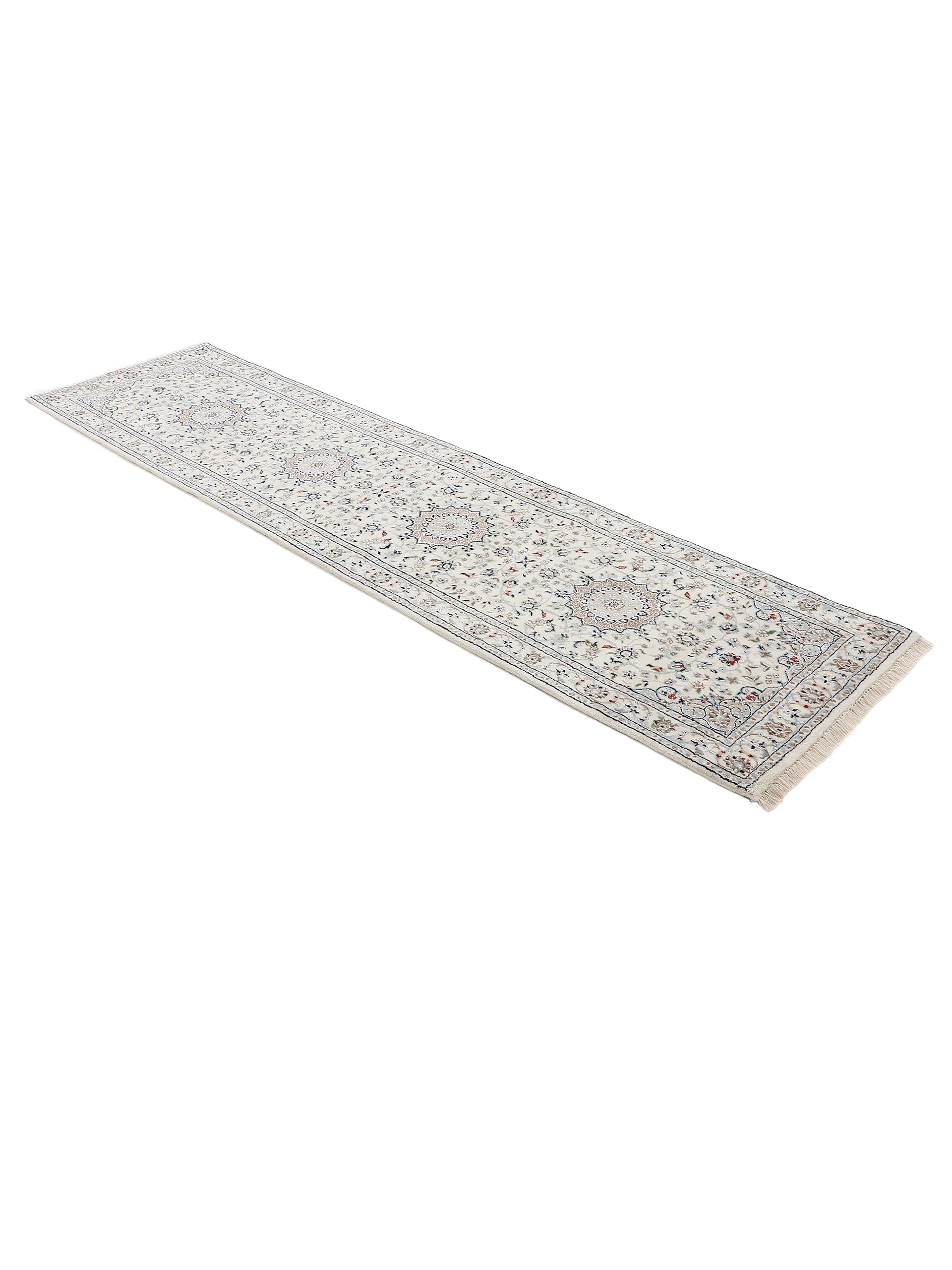
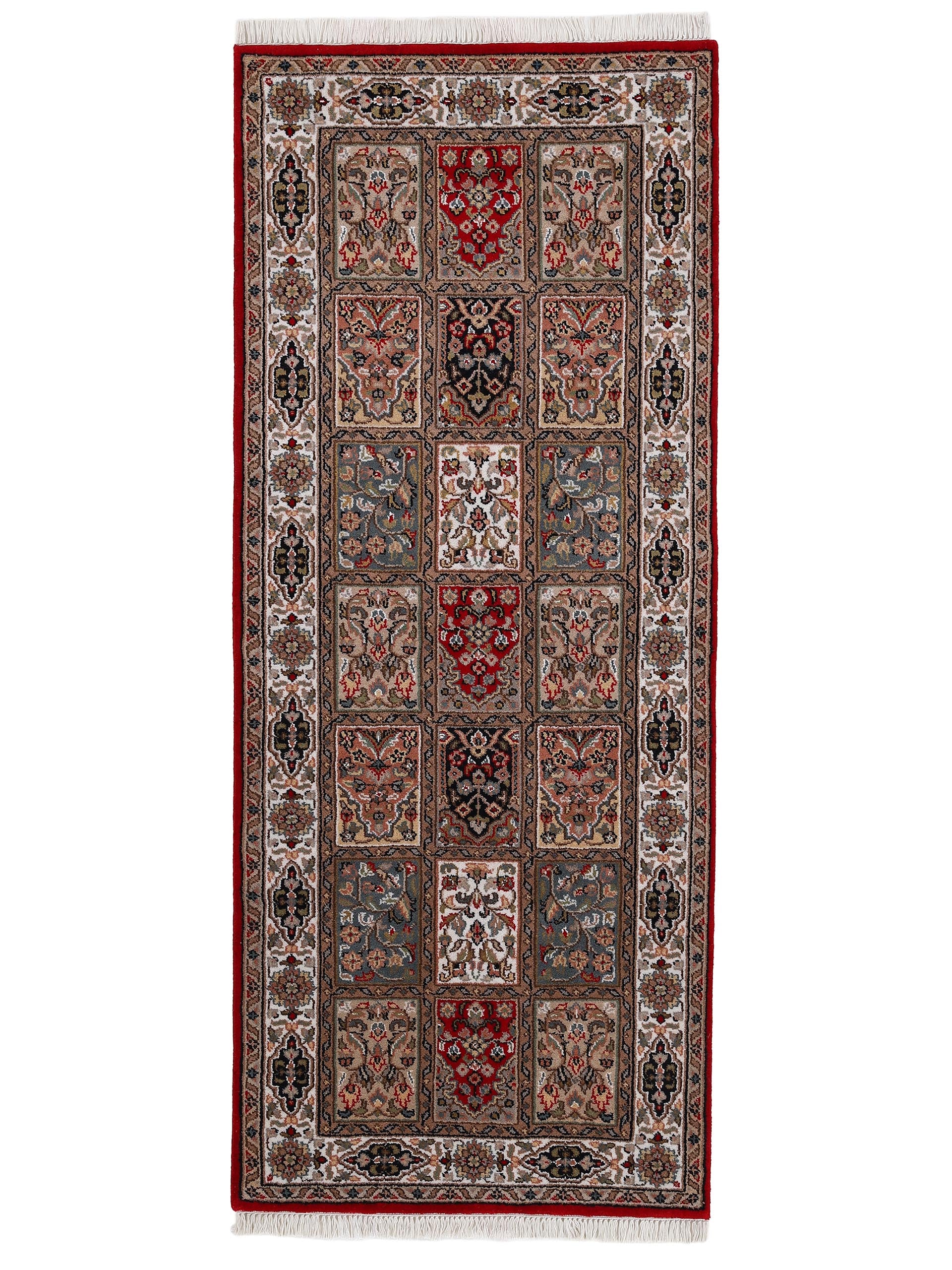
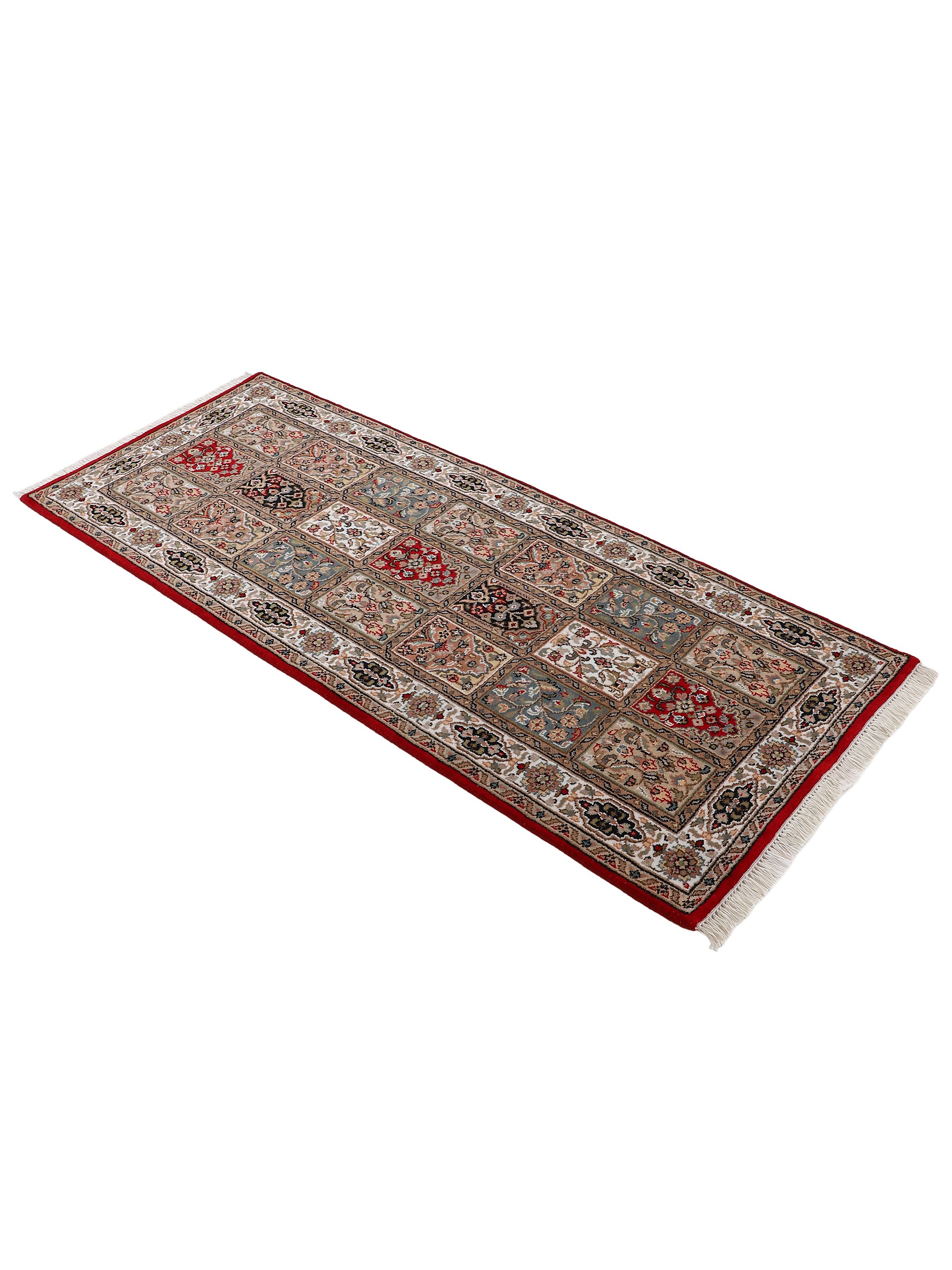
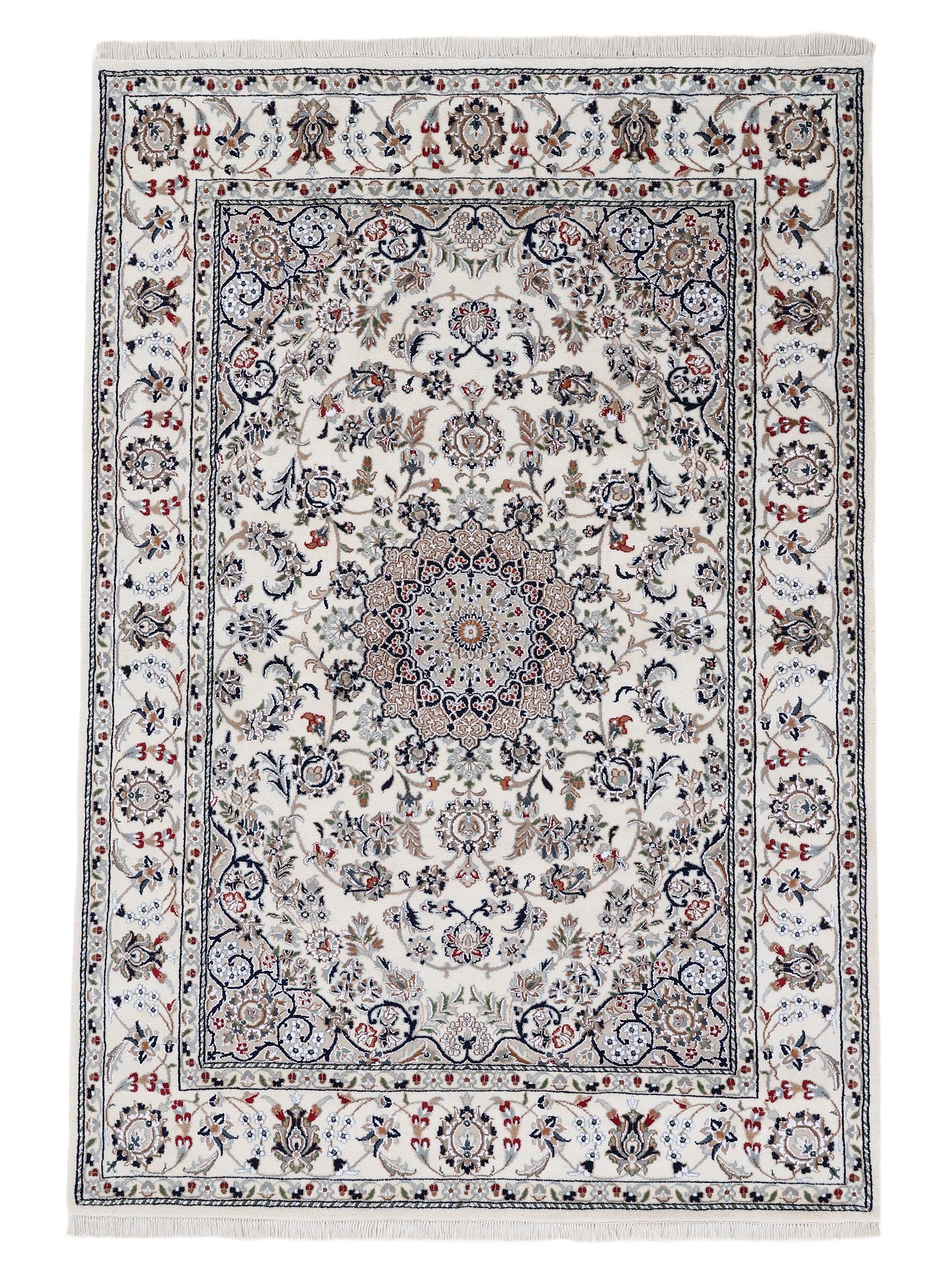
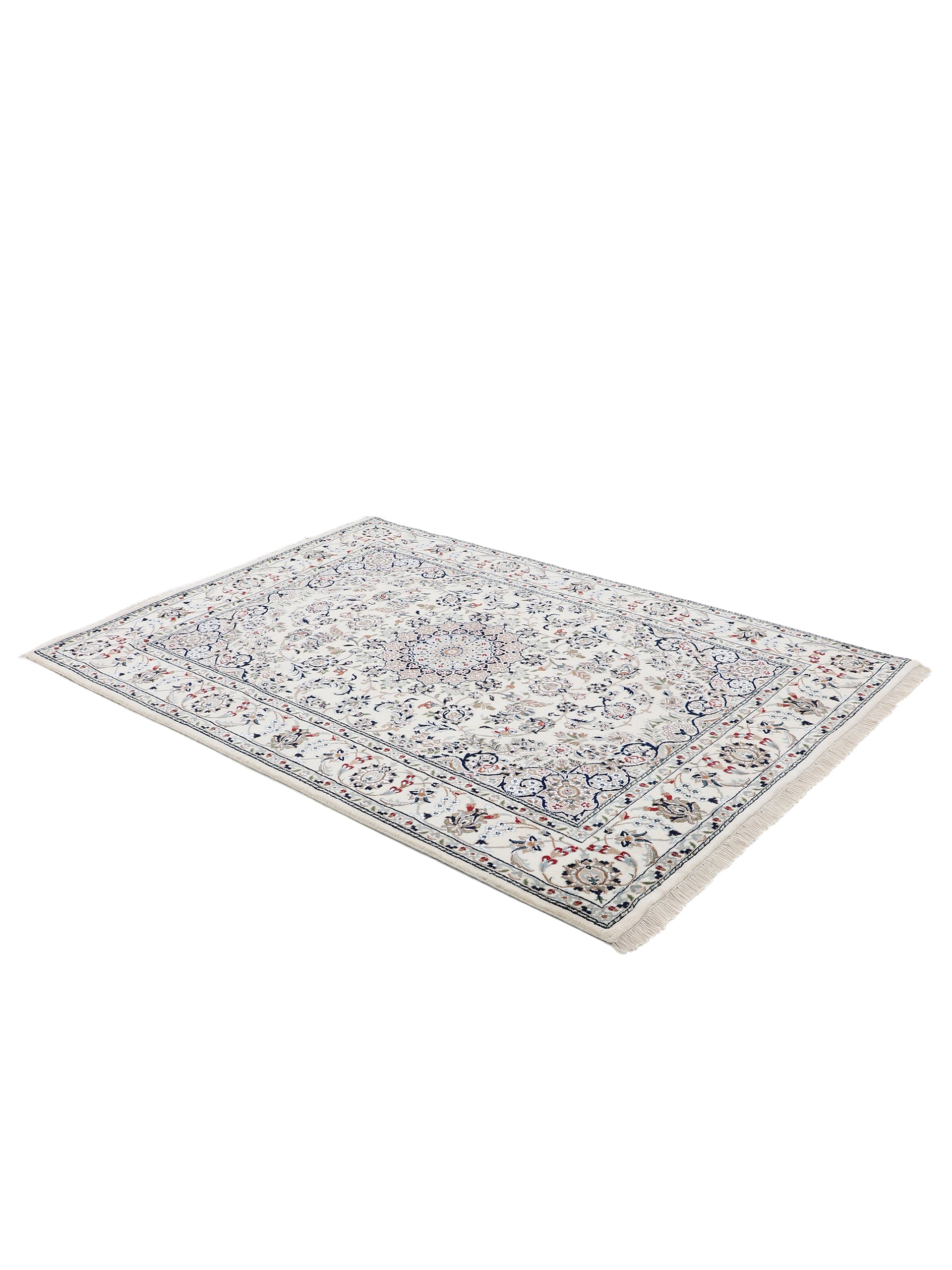
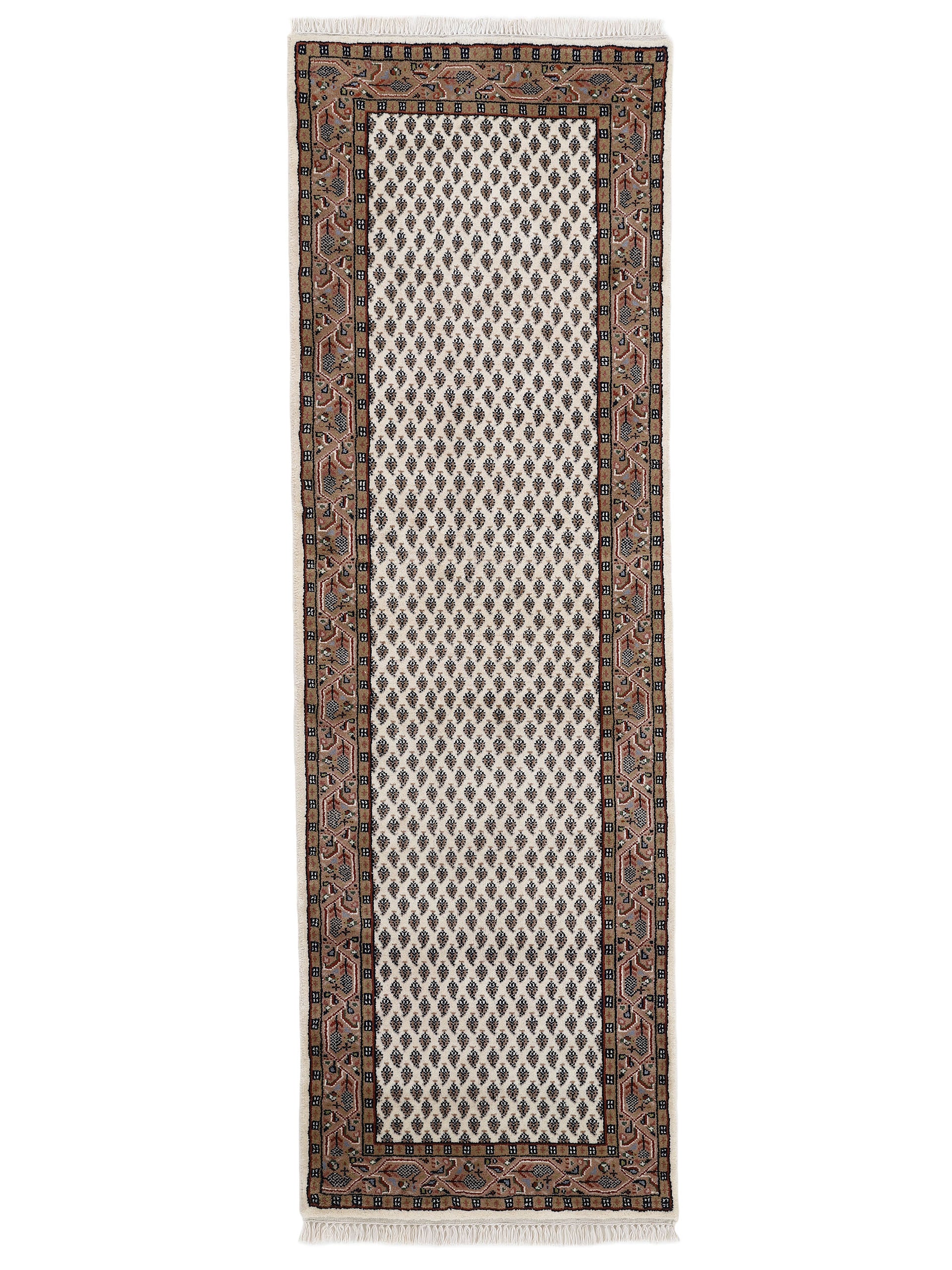
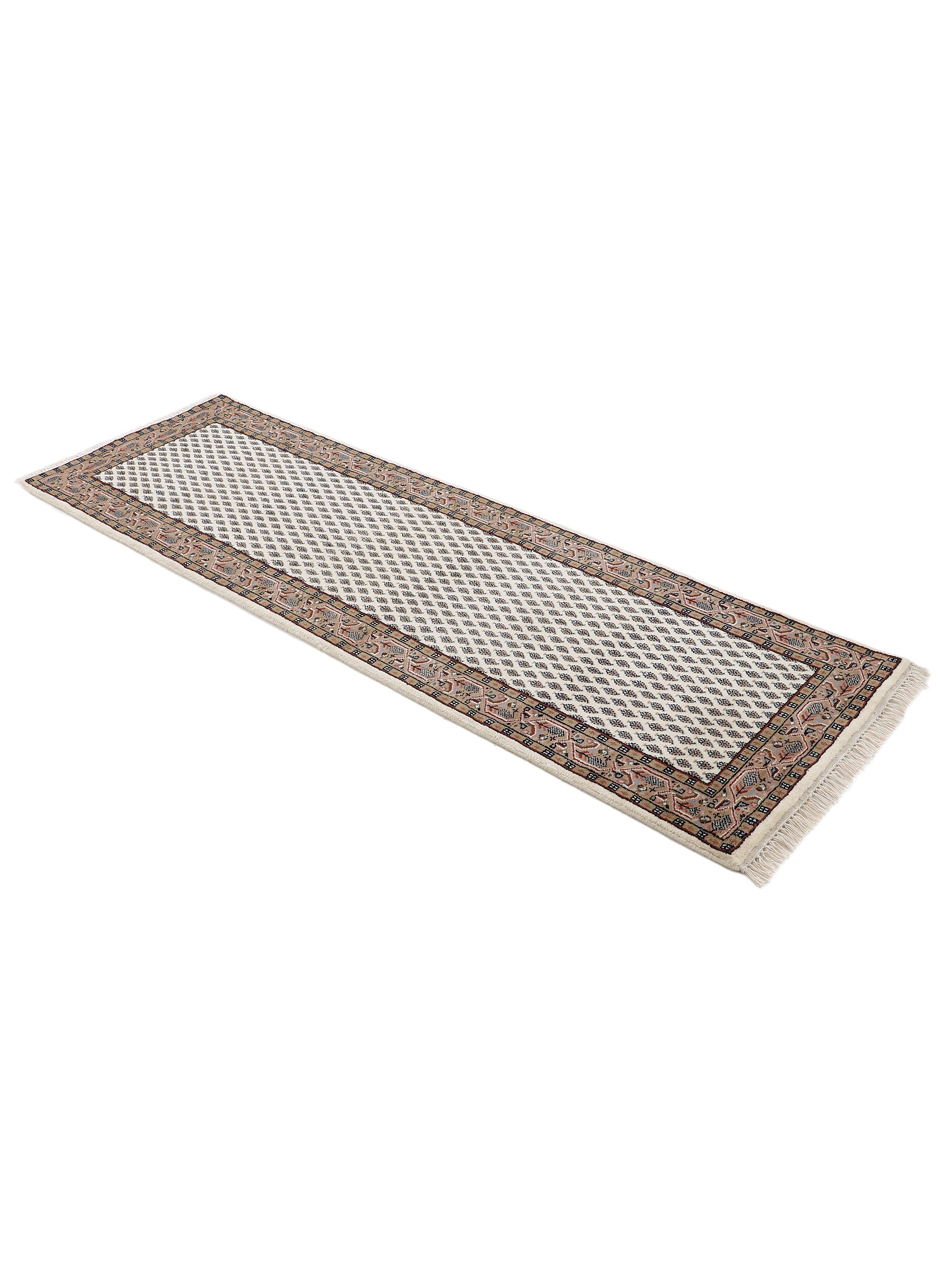
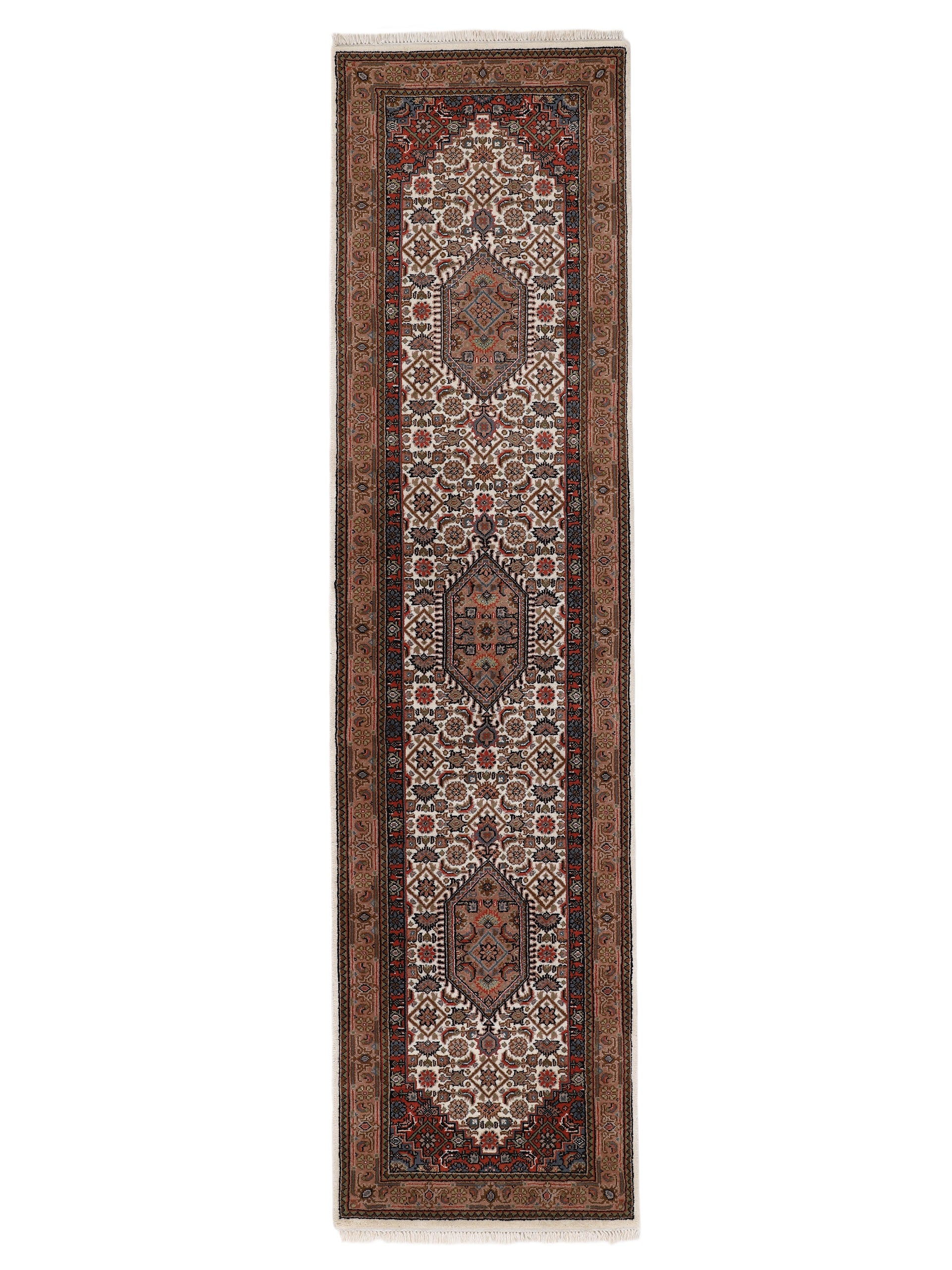
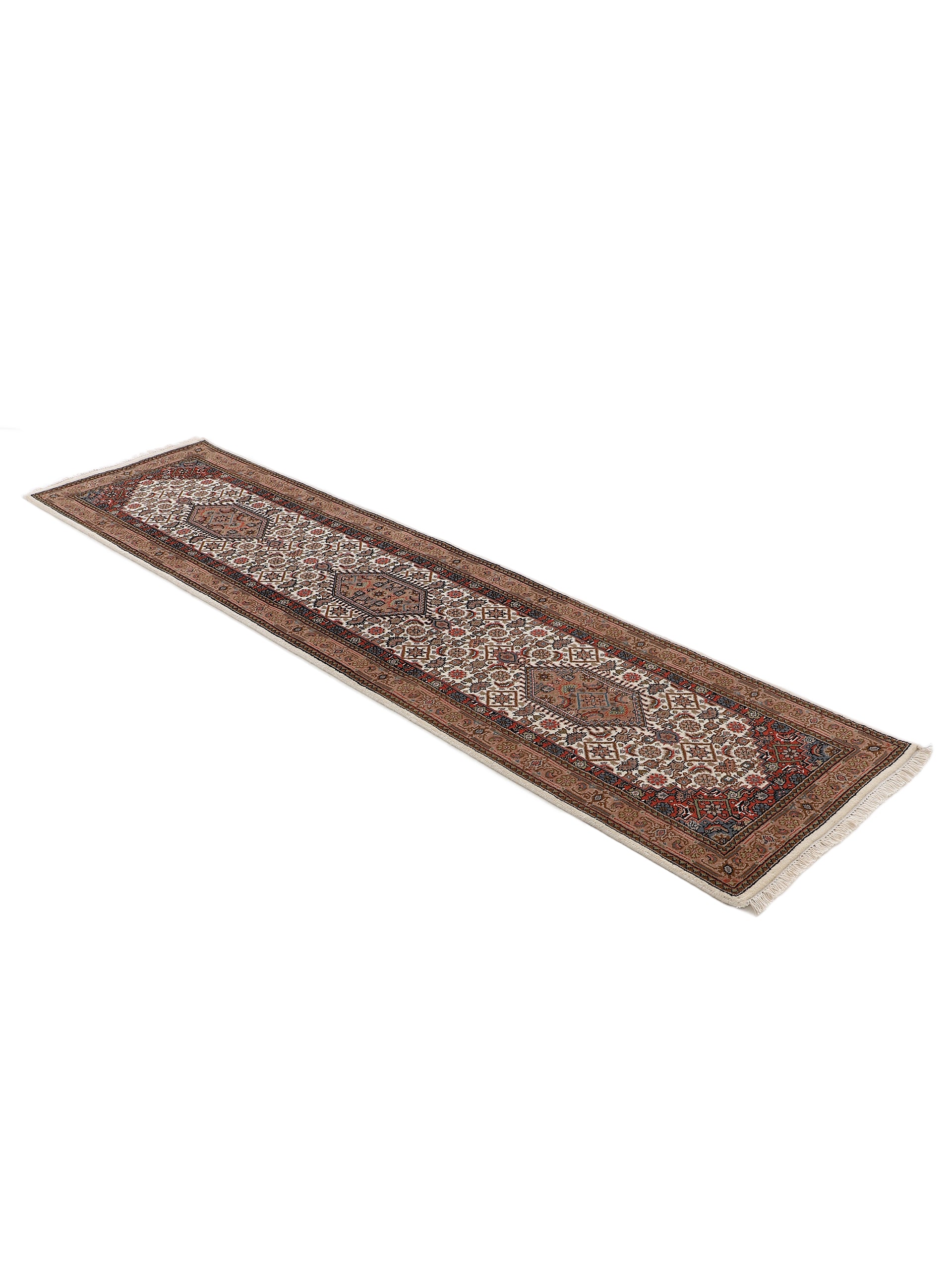
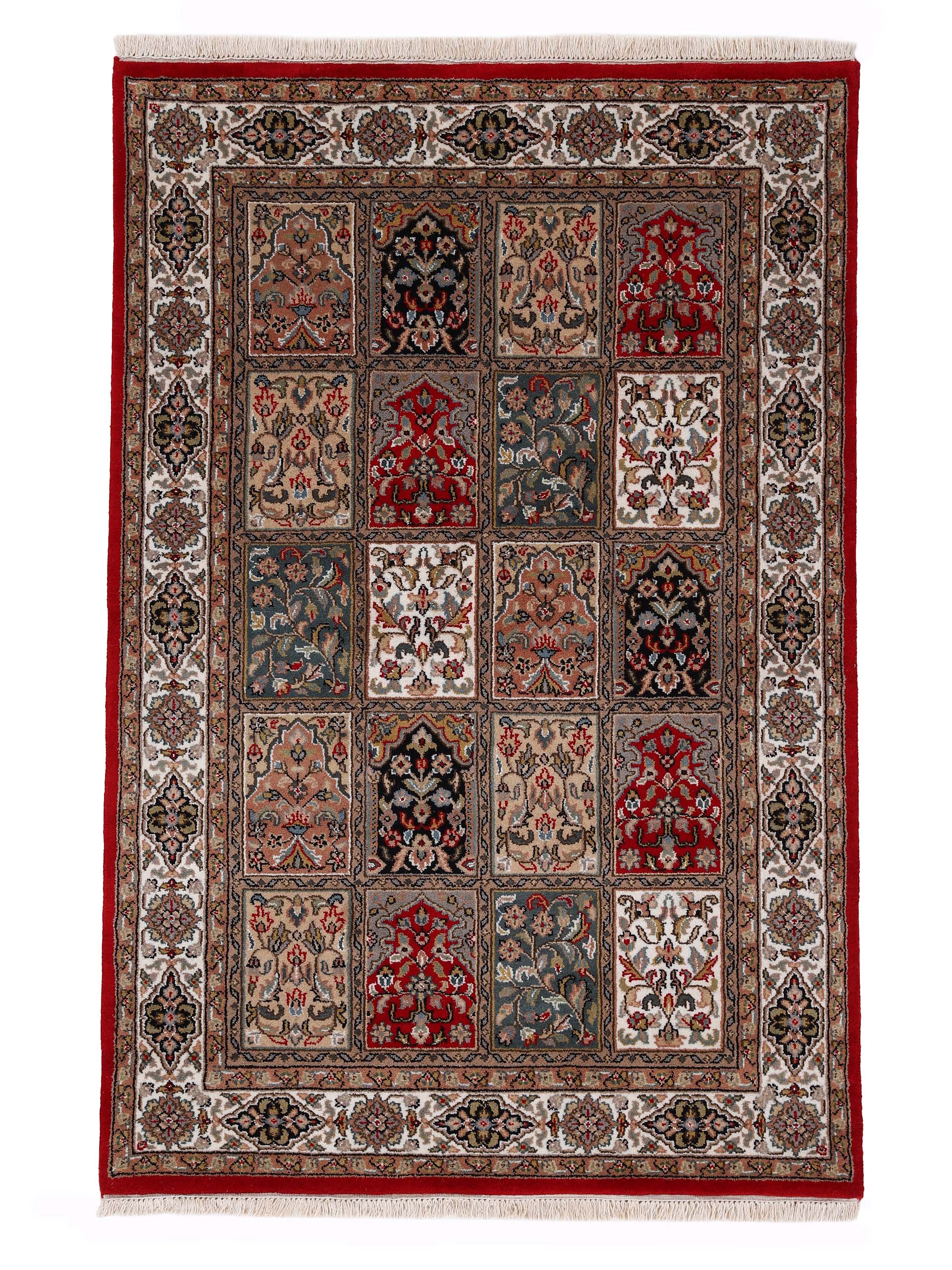
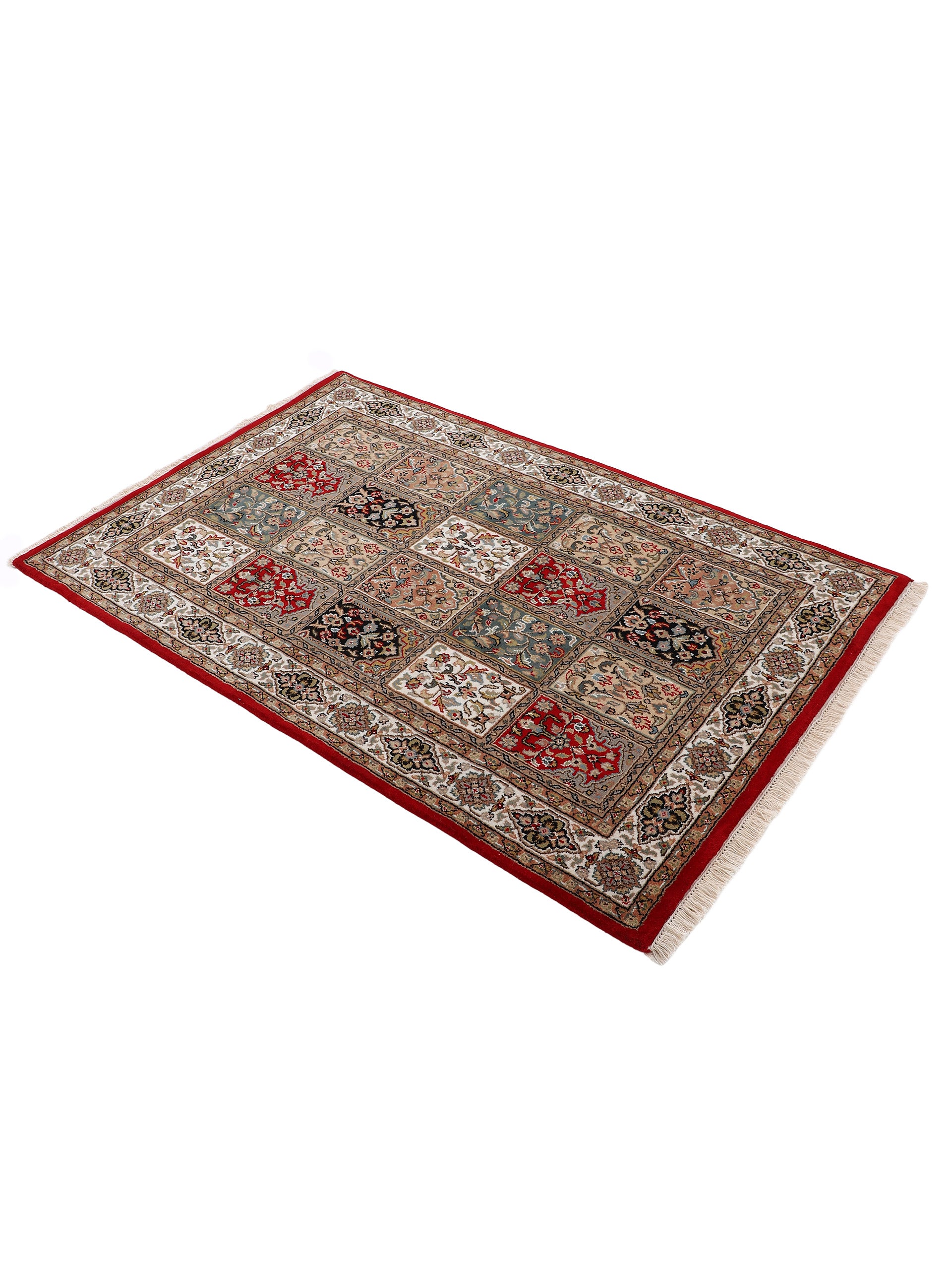
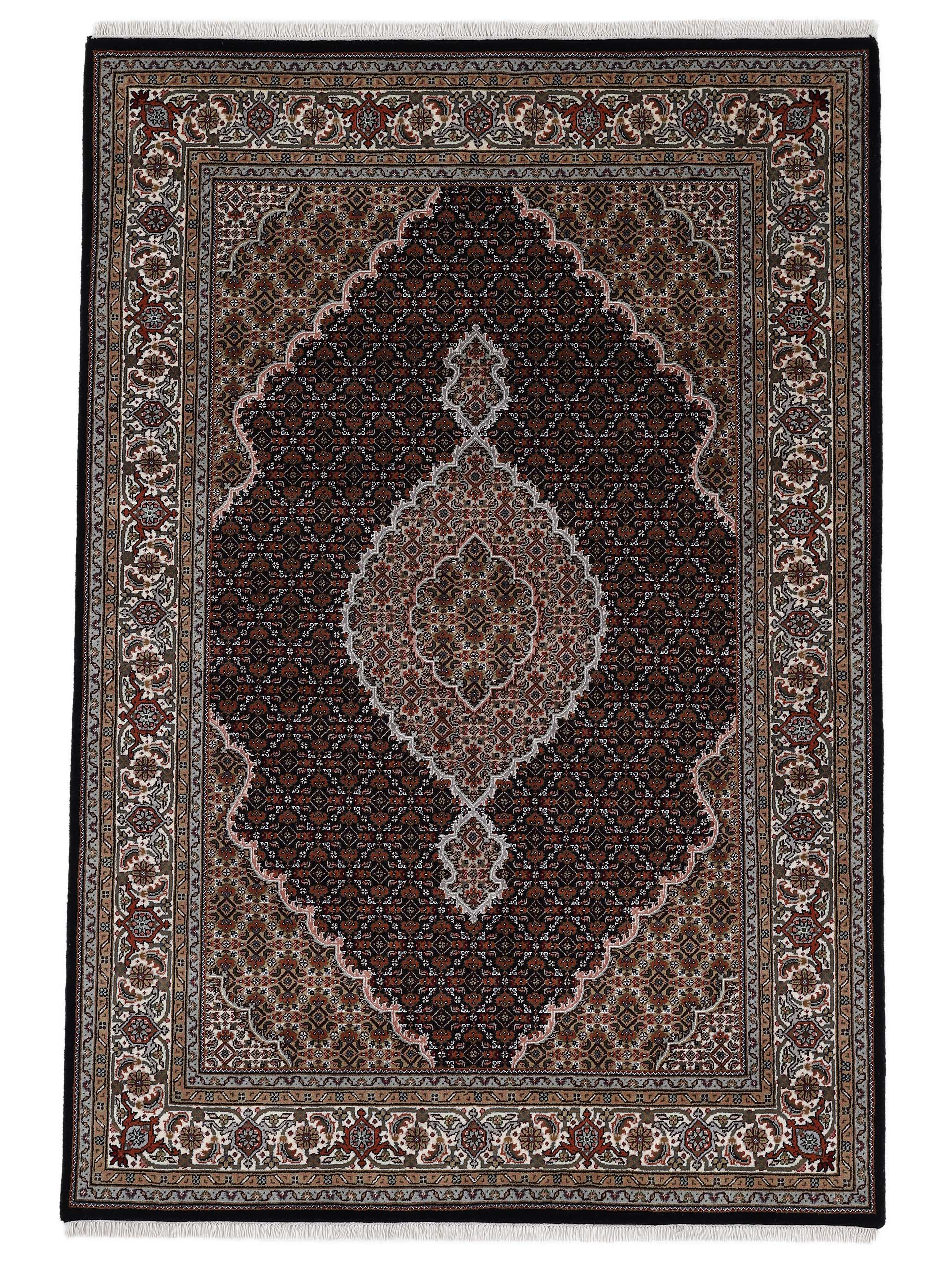
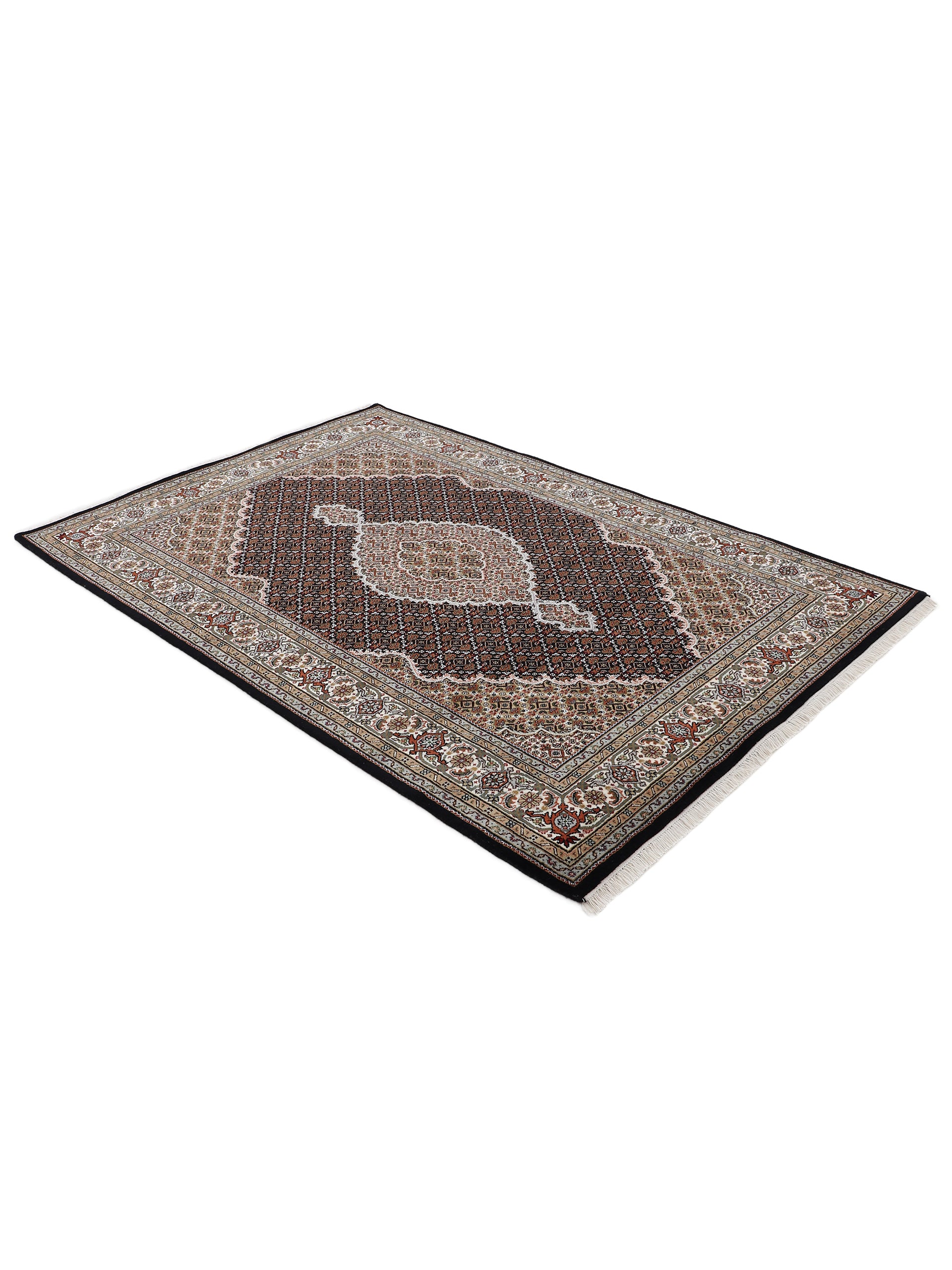
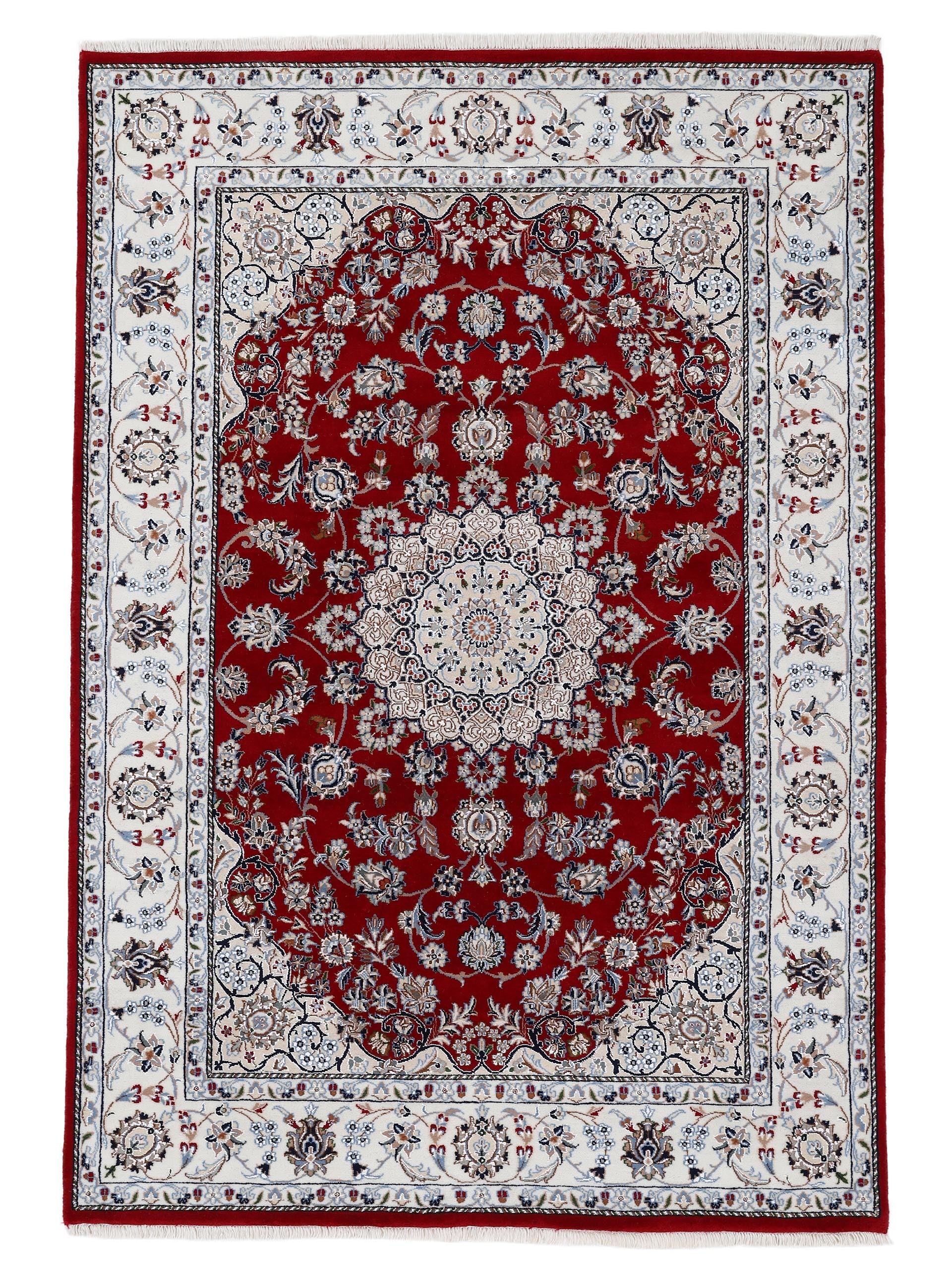
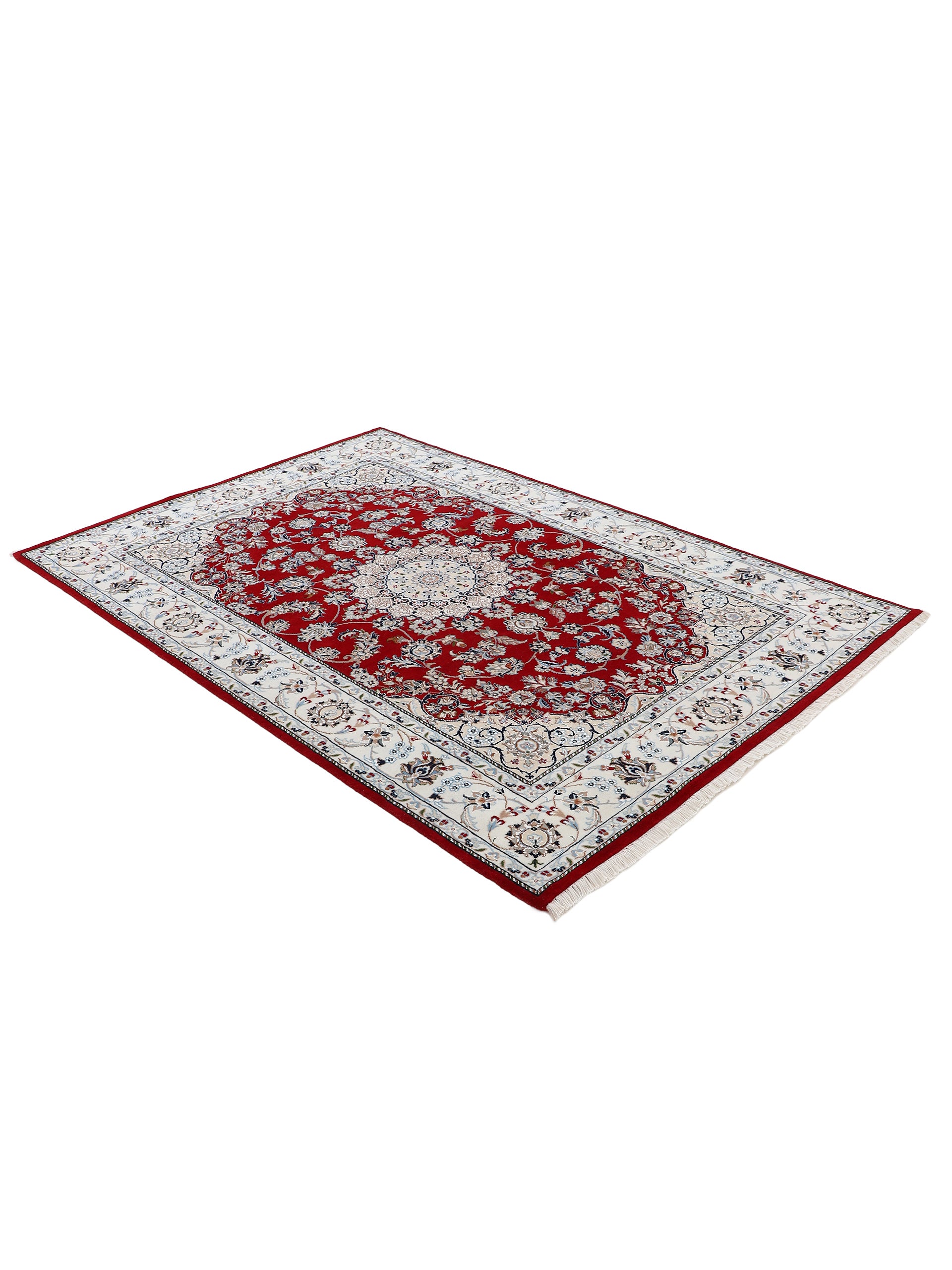
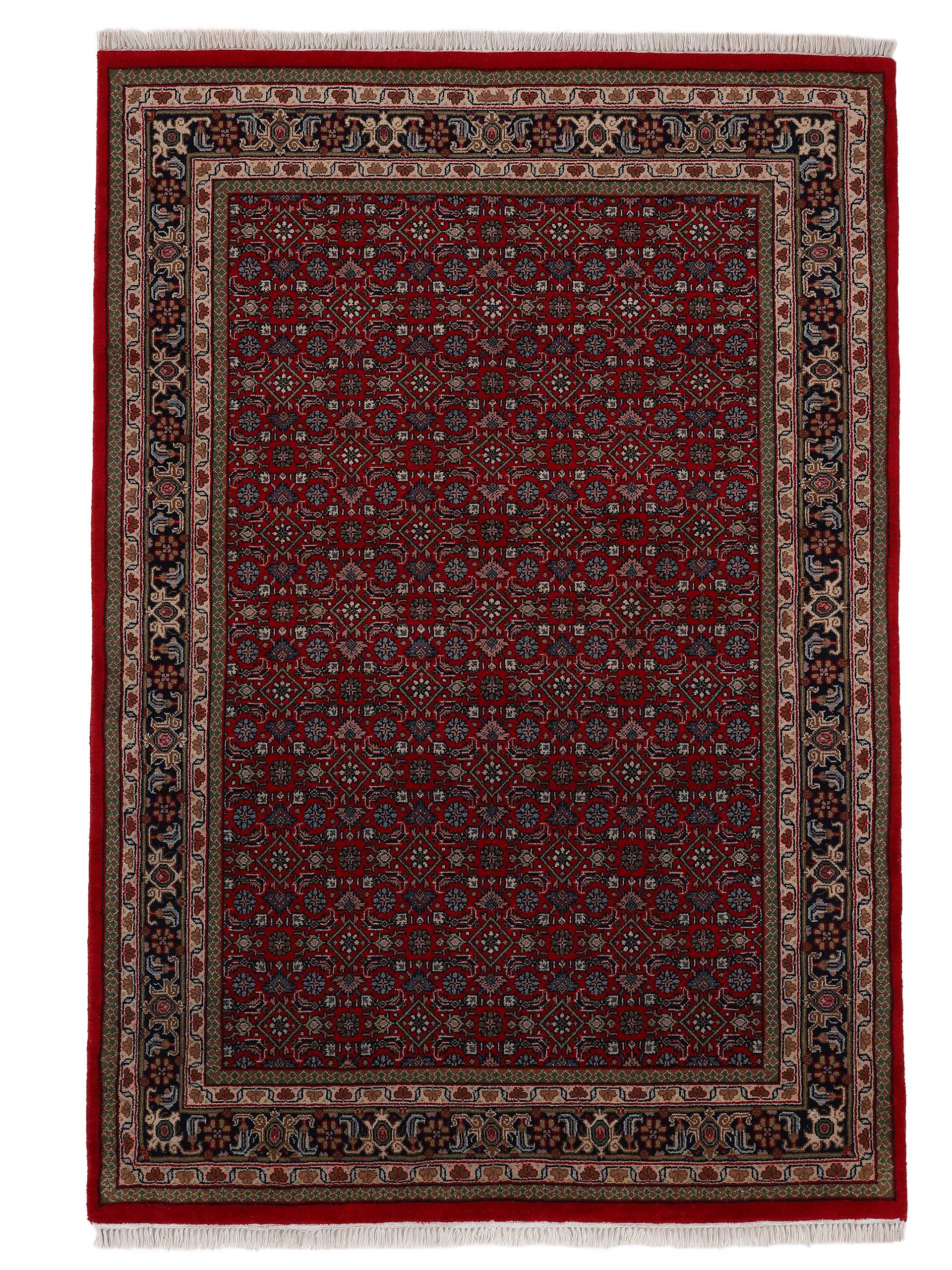
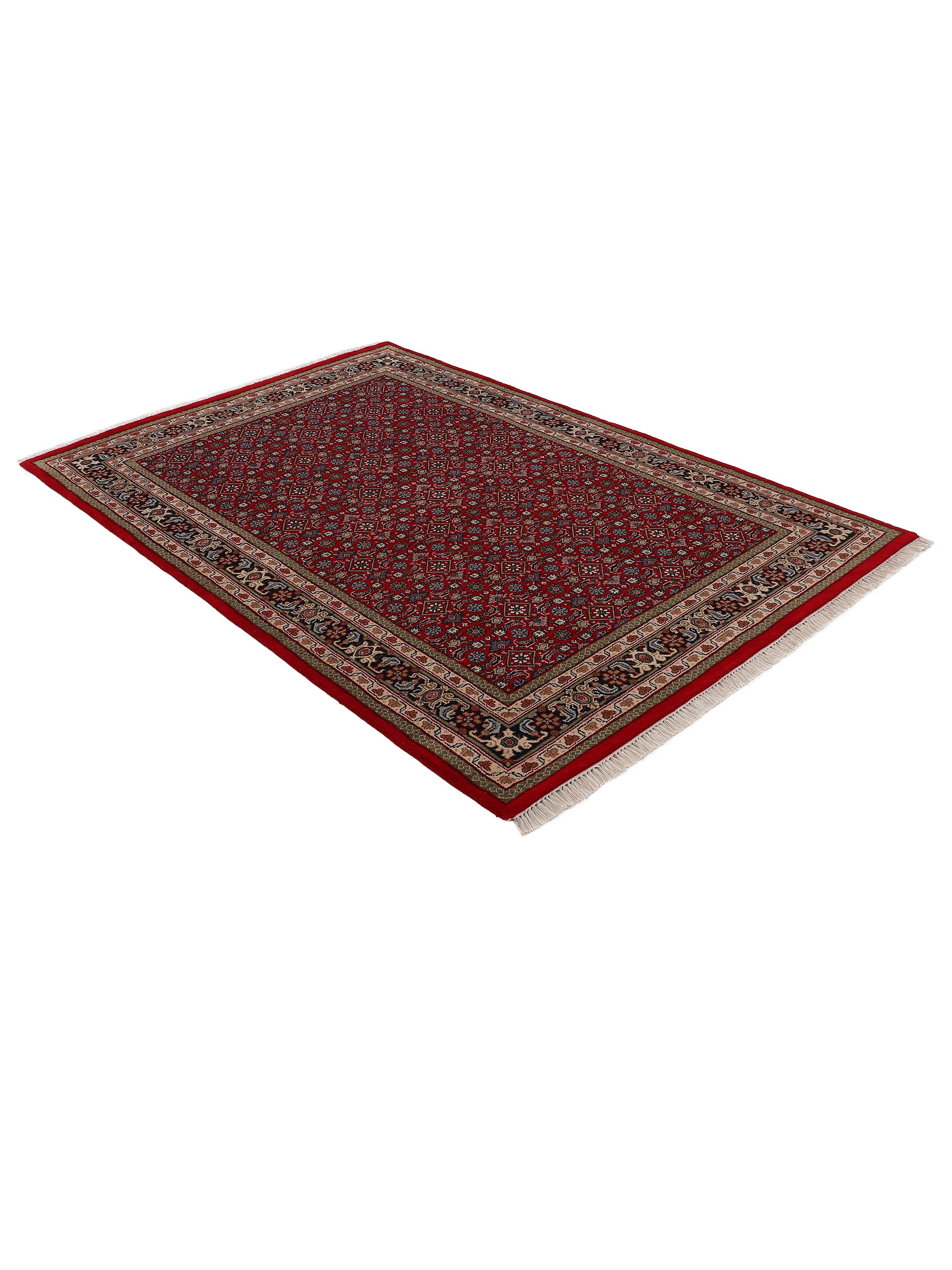
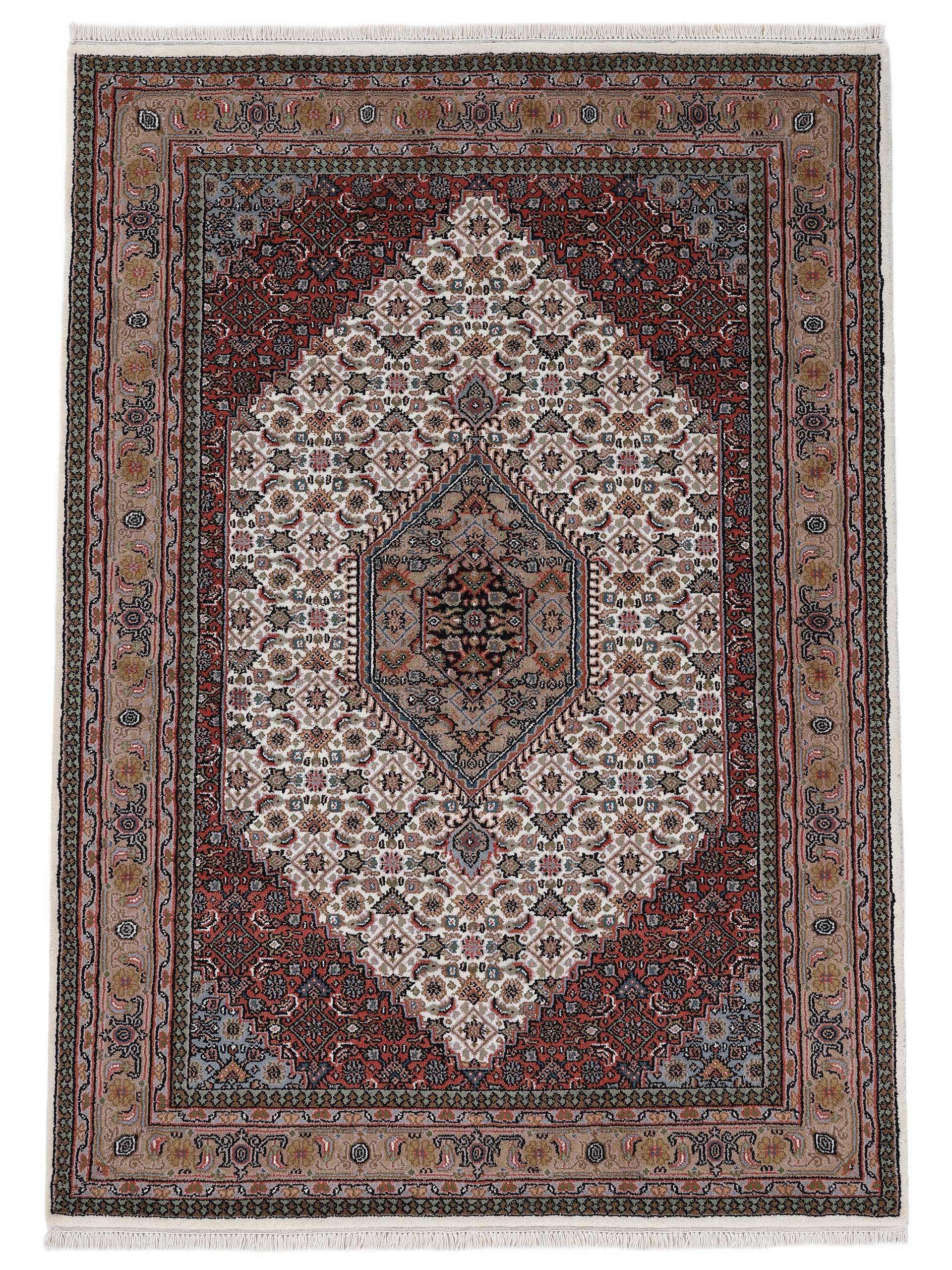
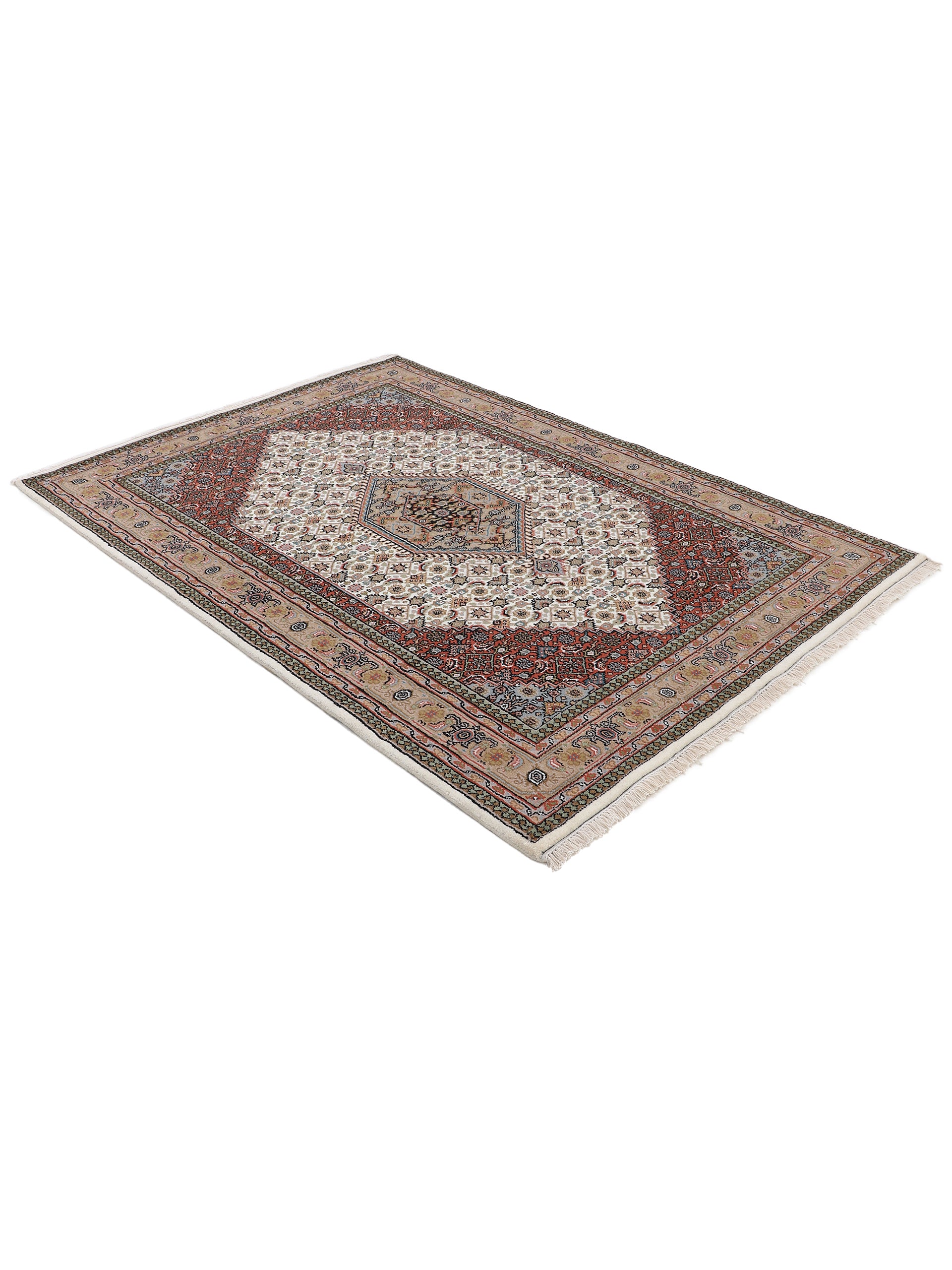
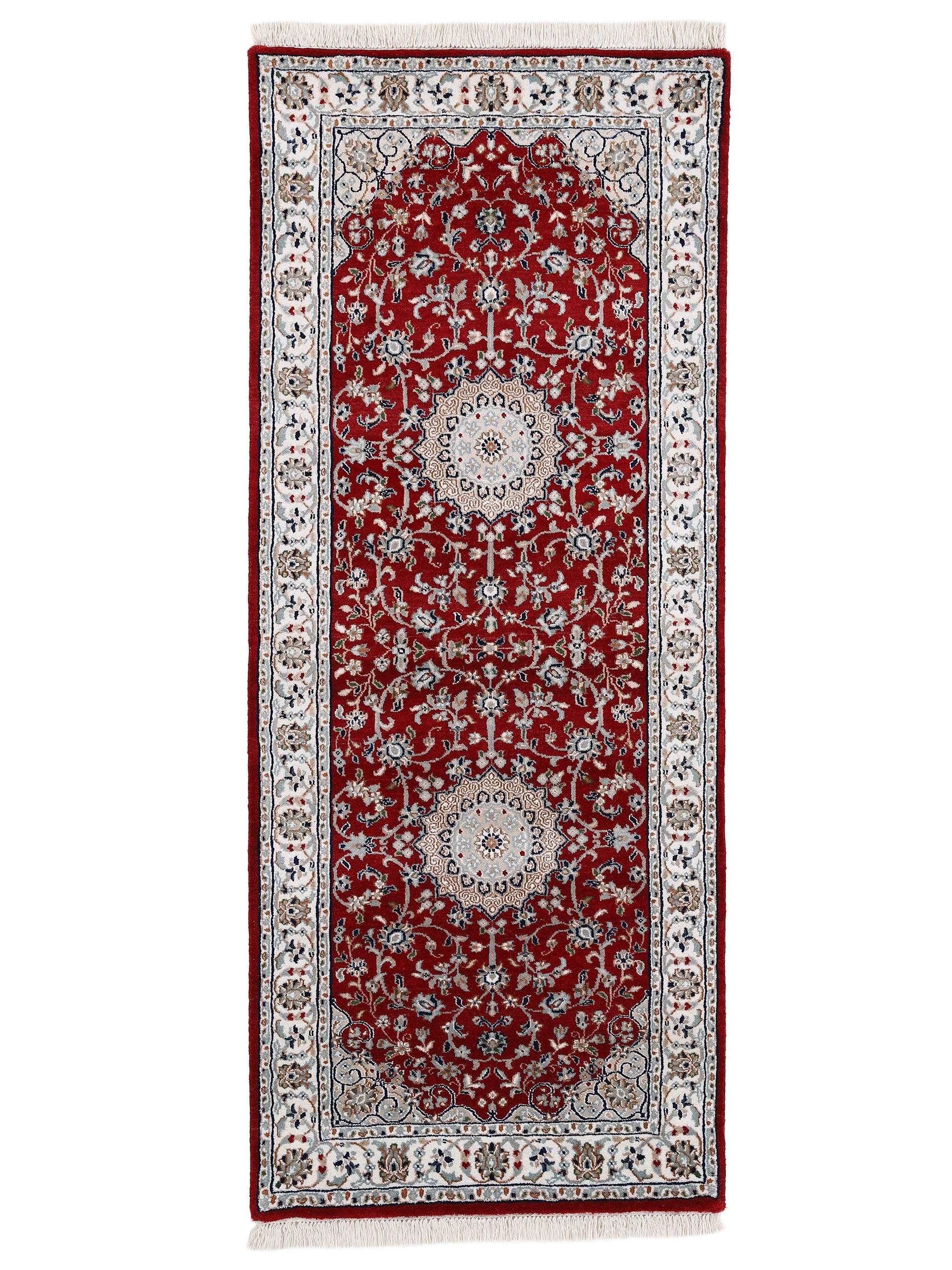
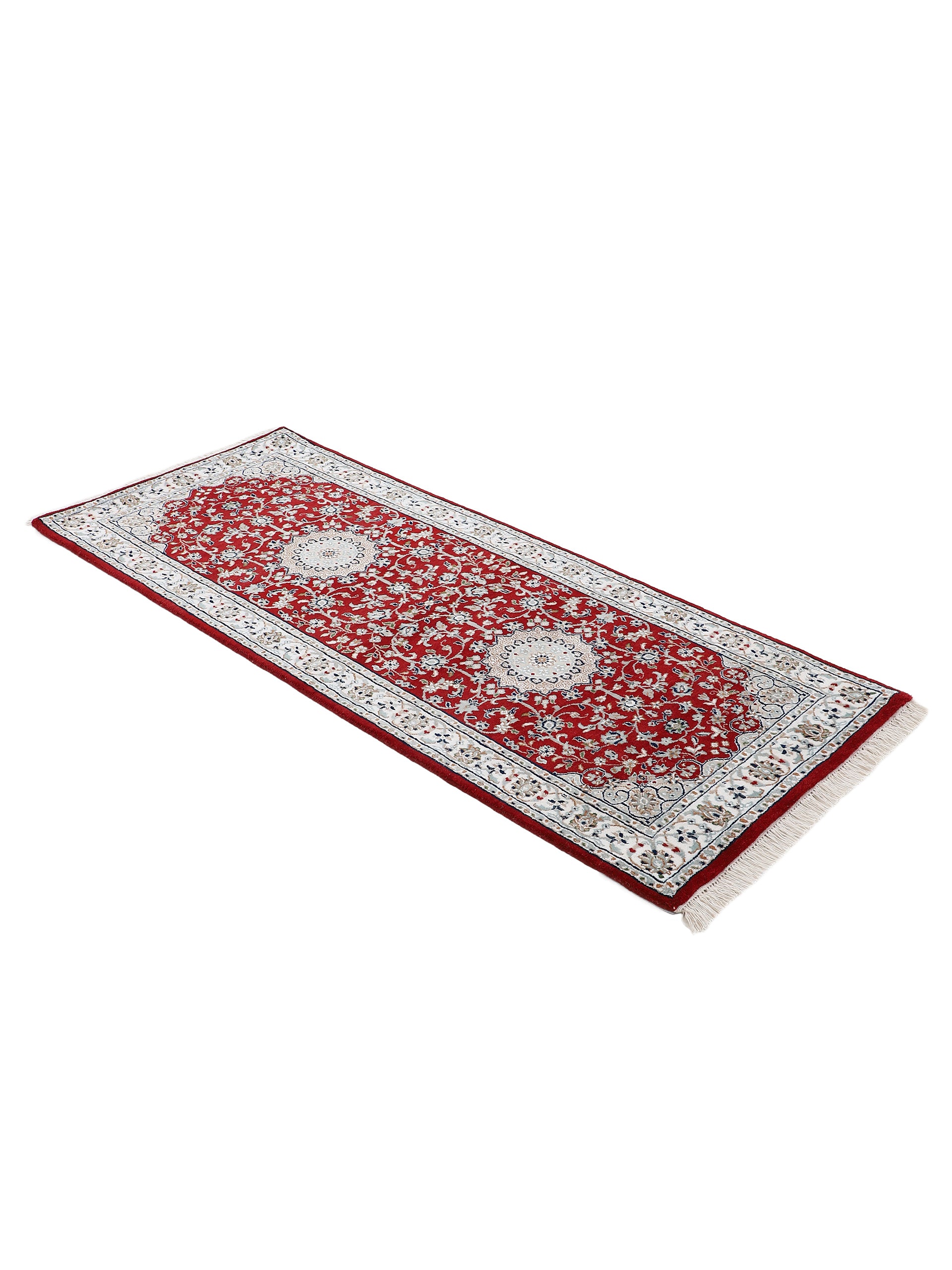
Knot by knot, that is how these rugs come about, and it takes time. Each strand of pile is looped around the warp threads by hand and then cut, so the pile sits firmly in the foundation. Every oriental rug we sell is hand-knotted from 100% wool, either as a rectangle or as a runner. Red and cream dominate. A few designs come in blue or black.
The range is compact, but the sizes reach a long way:
Small
Typical sizes 60 x 90 cm, 70 x 140 cm, 90 x 160 cm
Where it works beside the bed, at the entrance, in front of the fireplace
Medium
Typical sizes 120 x 180 cm, 140 x 200 cm, 170 x 240 cm
Where it works under a coffee table, in the bedroom
Large
Typical sizes 200 x 300 cm, 250 x 350 cm, 300 x 400 cm
Where it works under the sofa group or the dining table
Runner
Typical sizes 80 x 200 cm to 80 x 400 cm
Where it works hallway, landing
An Oriental Rug in the Living Room
In front of the sofa, a large size carries the whole room. At 200 x 300 cm or 250 x 350 cm, the sofa and armchairs stand on it with at least their front feet, and the pattern has space to unfold. Almost every design is available as a large oriental rug in 200 x 300 cm. One design knotted in Afghanistan stops at 200 x 290 cm.
Red pieces feel warm and go well with wood and leather. A red oriental rug can even handle a white wall without pictures, because it brings enough pattern of its own. More sizes for this room are among our rugs for the living room.
The small sizes suit the spot by the fireplace, beside the bed or just inside the front door. In a plain bedroom, one small piece often gives the room character without you changing anything on the walls. In a hallway with a chest of drawers, 70 x 140 cm fills the space in front of it nicely and still leaves room to walk past.
Dining Table and Hallway
A short pile helps here. Most designs lie very flat, so chairs move easily. Dents from table legs? With wool they recover over time.
All round, the rug should reach about 60 cm beyond the table edge. For a 90 x 160 cm table that means roughly 210 x 280 cm, so a 250 x 350 cm piece leaves some margin. Crumbs will still fall. Vacuum without a rotating brush and dab stains with a slightly damp cloth instead of rubbing. The natural lanolin in wool helps, since it keeps a lot on the surface.
Every pattern also comes as an oriental runner rug, most of them 80 cm wide. Leave 10–20 cm of floor free at each end. A patterned runner takes the severity out of a long, narrow hallway. At the front door, where dirt from the street arrives, small marks and footprints disappear into the pattern, and because the pile is so short, sand comes out again quickly. A few designs, including runners knotted in Afghanistan, have a slightly deeper pile.
Is It a Persian Rug?
The pattern names come from Persia, where cities and regions gave their names to the designs. According to the product details, our rugs are knotted in India, with one design from Afghanistan. So you won't find a Persian rug in the strict sense here, meaning a piece knotted in Iran. If you are after Persian style rugs in the UK, hand-knotted in that tradition, you are in the right place.
Several designs use hand-spun wool. The yarn thickness varies a little as a result, and the colour looks livelier across the surface.
Contrasts work well. Classic patterns often look stronger next to simple furniture than in a room already full of detail. A cream piece on light oak with a grey sofa in front is a calm combination, and the pattern still plays the lead.
Prefer oriental patterns with a worn look? Then see our vintage rugs. Flatwoven and graphic, our kilim rugs are another route. The gabbeh comes from Persian nomads, but ours are handwoven rather than knotted and have a deeper pile. You will find them under gabbeh rugs. Knotted and woven designs in the same material sit together under wool rugs, a handy place to compare an oriental wool rug with everything else.
Frequently asked questions
Do hand-knotted rugs shed?
A little in the first weeks. It settles after a few rounds with the vacuum.
Why does my rug look slightly different from the photo?
Every knot is tied by hand, so pattern and edges vary slightly. With hand-spun wool the shade also shifts a little. It belongs to the character and is not a fault.
Should I turn it now and then?
Yes, once or twice a year. Sunlight and footsteps then spread more evenly across the surface.
Do you have runners longer than 3 metres?
Yes. Several patterns come as runners of 350 or 400 cm.
Is the pile high?
No. Most designs lie very flat and a few sit a little higher, which keeps vacuuming quick.