

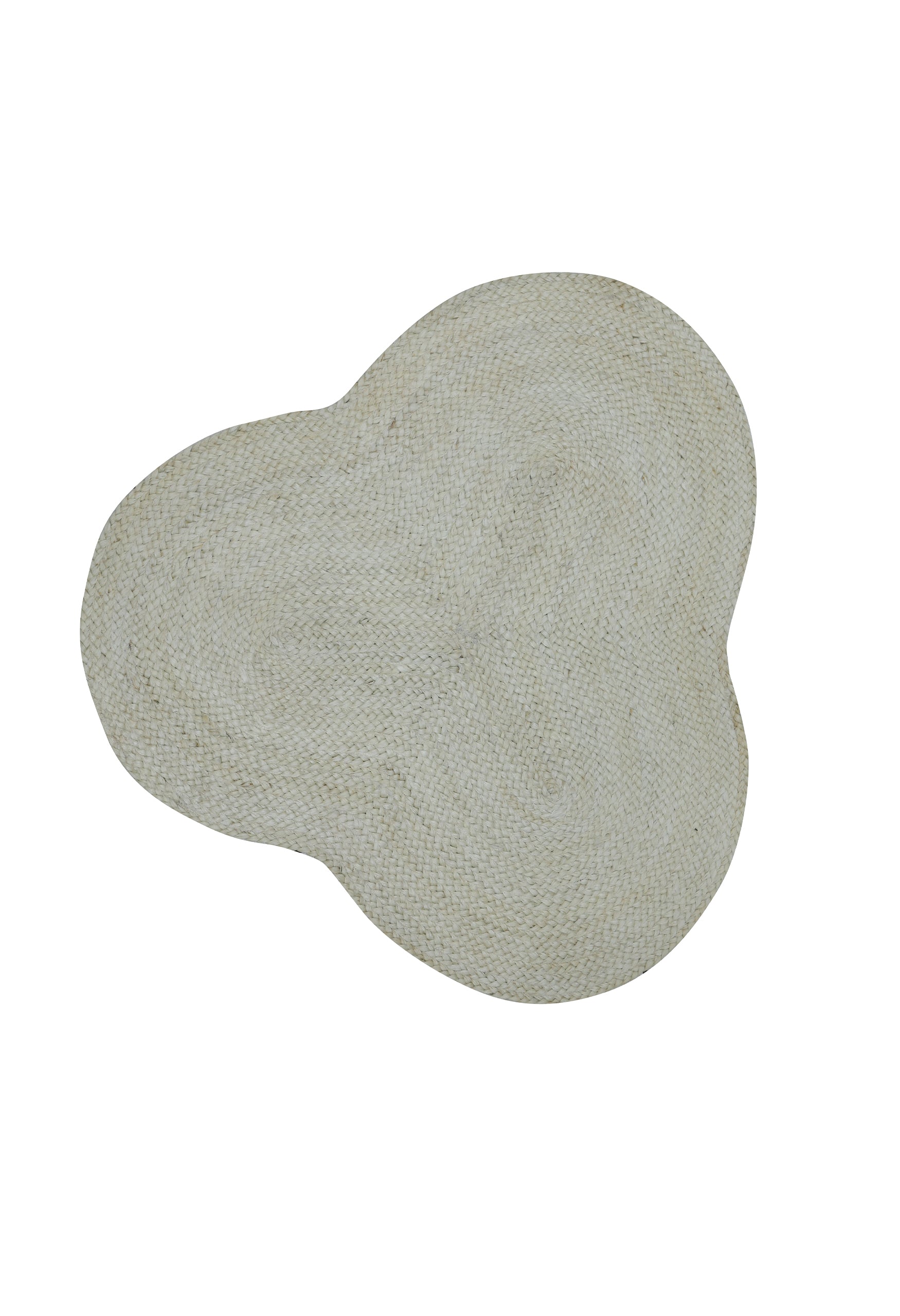


Not every room needs corners. Under a round dining table, in a bay window or in front of a reading chair, a circle follows the way you move instead of working against it. A round rug also breaks up rooms full of straight lines, and in small spaces it leaves more floor visible. Ours range from Ø 60 cm to Ø 300 cm and come in five materials.
Round rug sizes
Which diameter goes where:
- Ø 60–80 cm, small circle rugs beside the bed, next to an armchair or as a little play island
- Ø 90–120 cm for a reading corner, a side table or the entrance
- Ø 150–160 cm under a coffee table with two armchairs, or in a children's room
- Ø 200 cm under a round dining table of up to about Ø 80 cm
- Ø 250–300 cm, large round rugs for a big table or a whole seating group
Under a dining table the circle has to be big enough for the chairs to stay on it when pushed back. As a rule of thumb, add about 60 cm on each side to the diameter of the table. A table of Ø 80 cm gives you roughly Ø 200 cm. One of Ø 120 cm needs more like Ø 250 cm, and with wide carver chairs a full 300 cm.
Flat is practical here. Chairs glide more easily on short pile and crumbs vacuum up quickly, which matters with small children who drop half their lunch. Before you order, lay a piece of string on the floor in the diameter you have in mind and set the chairs as they stand every day. That tells you more than any table of sizes. With an extending table, measure it extended, or the outer chairs end up half on the bare floor at Christmas.
Ø 120 cm and Ø 200 cm are the most common sizes, closely followed by Ø 80 cm. The middle ground has a page of its own under 160cm round rug.
Material and placement
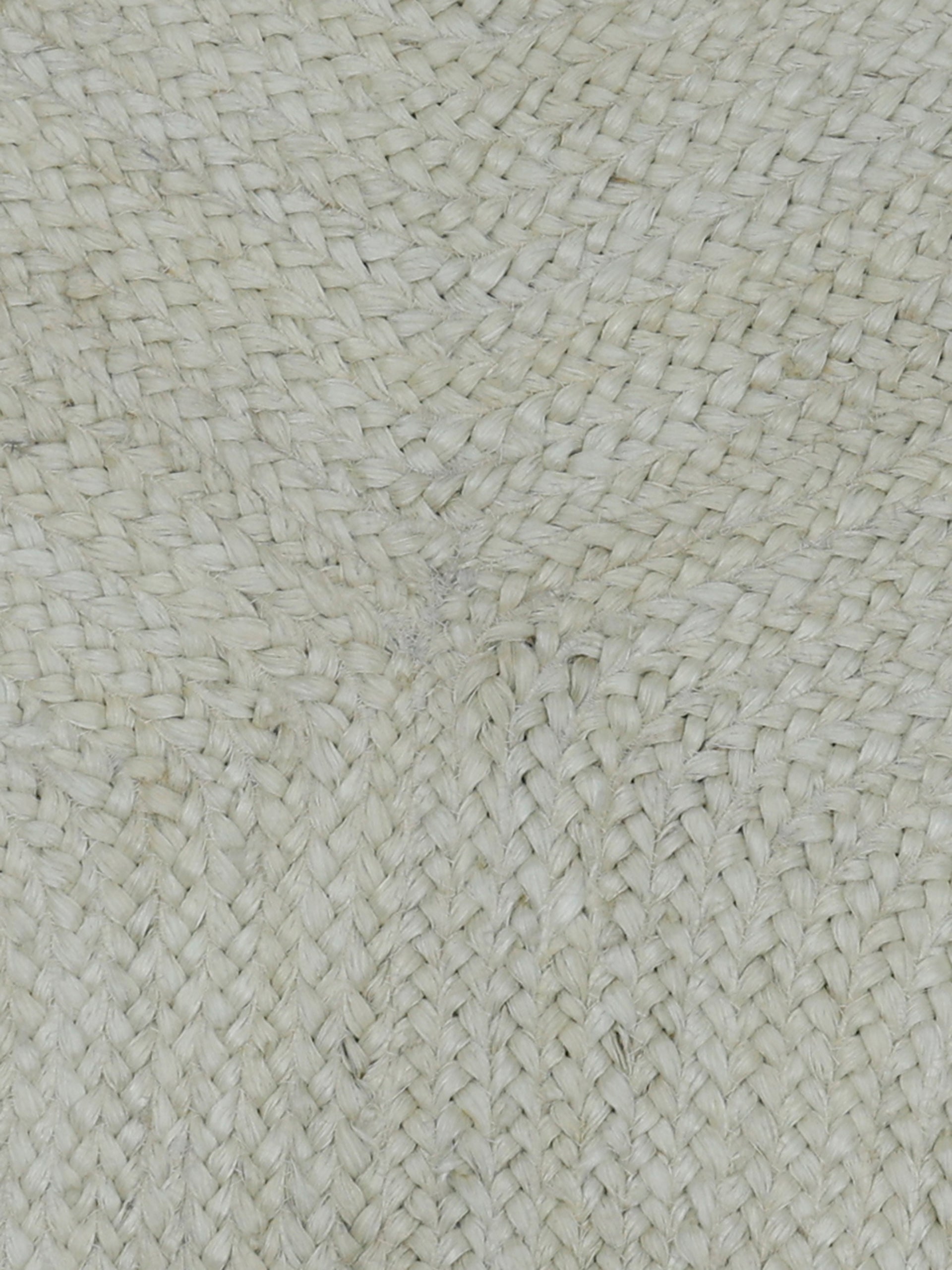
Wool warms and muffles footsteps. Our round wool rugs are handwoven with a fuller pile, which makes them lovely beside the bed. Jute brings texture, with a short or a thicker pile. A jute rug round in shape goes well with wood and rattan, and there are more on our round jute rug page. The sisal-look version is 80% jute and 20% cotton, with a felt backing and PVC nubs that grip smooth floors according to the product data.
The flattest option is a cotton kilim. Synthetic high pile is the fluffy one, and viscose adds a soft sheen. How do they feel? Jute is firm and textured, wool soft and dense. Cotton lies thin and flat. High pile gives noticeably when you step on it.
Under a round coffee table the circle makes a calm centre point, and it works with an angular sofa too as long as it has a clear middle. Sizes that suit round rugs for living room seating are on our living room rugs page. In kitchens and entrances a small, flat circle is easier, because street dirt does not sink deep into the fibres, and nobody trips over a corner.
Outdoors works as well, with a round outdoor rug in flat polypropylene. If a circle is too short for a bench or a long coffee table, an oval rug sits in between.
Beige and cream are the most frequent colours. A beige circle stays quietly in the background. Red or blue add a highlight, and a black round rug holds a seating area together visually.
Frequently asked questions
Does a round rug make the room look bigger?
Often more open, because the corners stay free and more floor shows. What matters is that the diameter suits the furniture.
Will it slip on wooden floors?
That depends on the back. The sisal-look version has nubs underneath. For the others an anti-slip underlay cut slightly smaller than the rug does the job.