


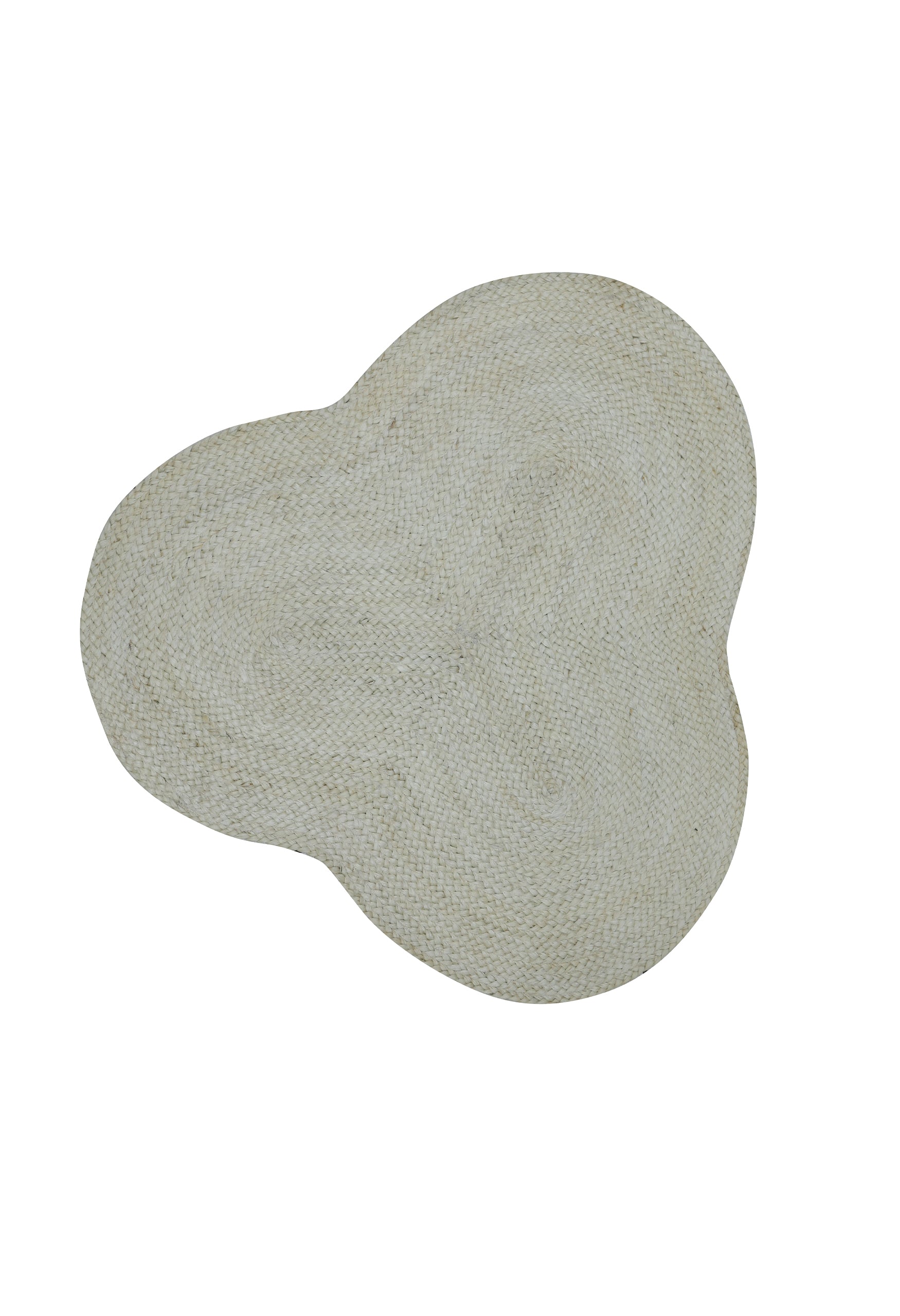
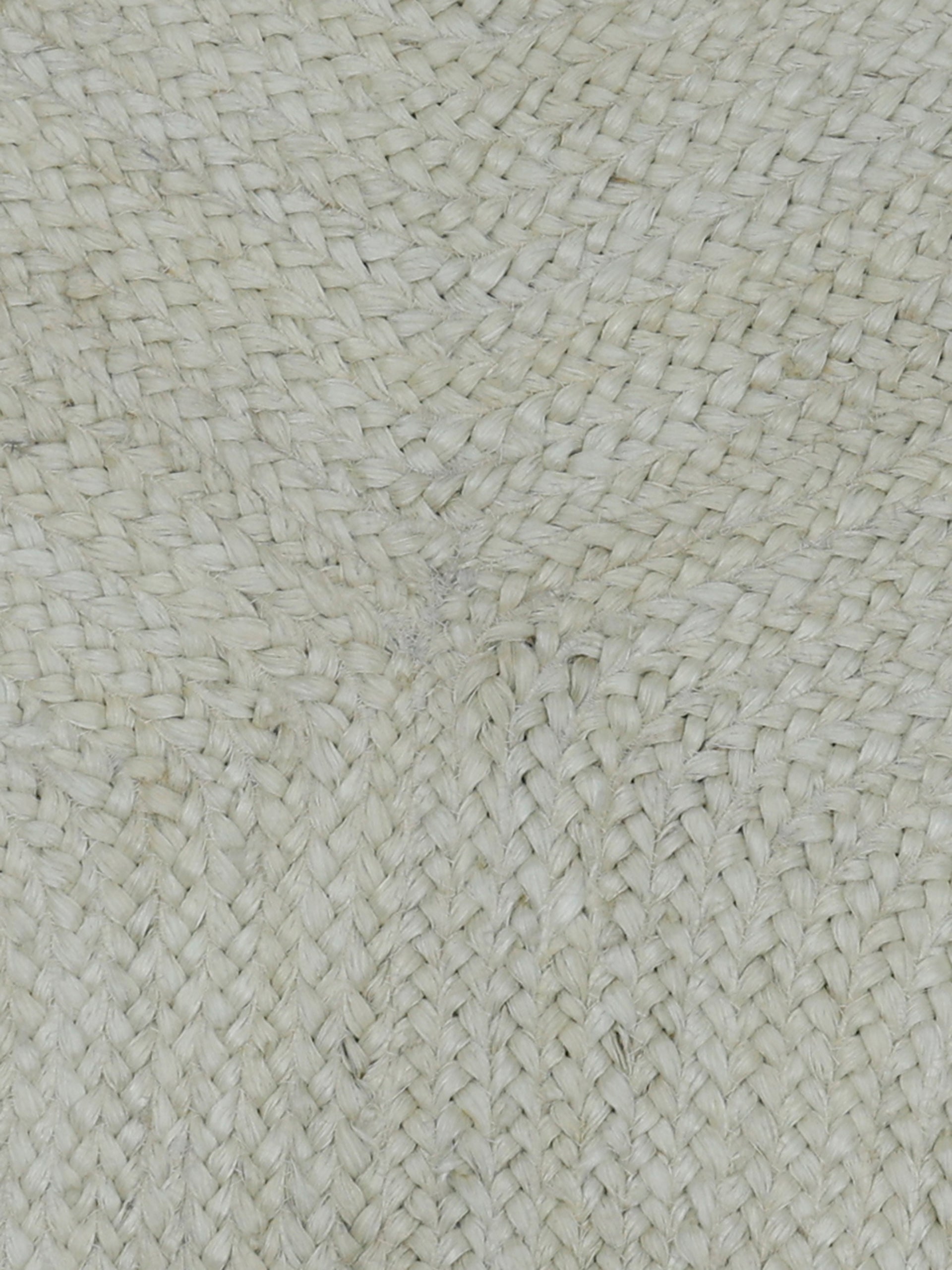


Jute comes from the stalks of the jute plant. The fibre grows back quickly and is biodegradable. It feels a little rough, but never hard. All 36 of our jute rugs are handwoven, and you can pick from five shapes.
The shade varies slightly from piece to piece. Small irregularities in the weave come with handwork. If you want a completely uniform surface, natural fibre will disappoint you.
That coarse weave looks lively without feeling busy. It shows at its loveliest on pale floorboards next to rattan and linen. In a plain Scandinavian room with white walls it takes the edge off all that strictness, and in a country kitchen it is simply at home. High-gloss furniture is a harder match.
Round, oval or a jute runner
Round is the most common shape here, with 13 designs. At Ø 90 or Ø 120 cm a round jute rug fills a reading corner. From Ø 200 cm it can take a round dining table and its chairs. Every round jute rug we stock is gathered on one page, while round rugs in other fibres have their own collection.
Seven designs are oval. An oval picks up the curve of a sofa or an oval table and softens the room. Hall and landing get five jute runners to choose from. Square? Two.
Which jute rug size do you need?
Rectangular sizes start at 40 x 60 cm. Most lines come in 80 x 150, 120 x 170, 140 x 200 and 160 x 230 cm. Beside the bed, 60 x 110 or 80 x 150 cm is plenty, whereas under a coffee table 140 x 200 or 160 x 230 cm fits better.
Searching for a large jute rug of 200 x 300 cm? Choose 200 x 290 cm, which 16 designs offer. If you need an extra large jute rug for a big lounge, that is also where most of the choice lies. Our page of rugs for the living room explains how sofa, coffee table and rug should relate.
Natural shades clearly dominate. Beige leads with 12 designs and light brown follows with 9. Taupe and anthracite look cooler, and one design even comes in white. Colour only appears in the striped jute designs, which bring in blue, turquoise or orange.
How does jute feel underfoot?
Our jute rugs differ mainly in pile height and in how the fibre is mixed.
100 % jute
Shapes rectangular, round, oval, square, runner
Works well under chairs, in the hallway
100 % jute
Shapes round and oval
Works well by the bed, in front of the sofa
80 % jute, 20 % cotton, striped
Shapes rectangular and runner
Works well where you want some colour
Pure jute with a short pile lets chair legs glide more easily. The thicker round and oval designs are softer on bare feet, so they belong next to the sofa or the bed. In the striped blend the runner lies flattest.
Living with natural fibre
Vacuum jute regularly with a smooth nozzle, because a rotating brush pulls fibres out. Some loose fluff comes away in the first weeks. That settles. Mop up any liquid straight away with a dry cloth and treat the spot only slightly damp, then let it dry properly.
Jute does not cope well with wet floors. For that reason we would never sell it to you as an outdoor rug for a balcony or patio. A jute rug in the kitchen is fine in a dry corner, well away from the sink. Turn it every few months and it will wear evenly.
Sisal feels firmer and rougher. Our sisal rugs have that strong look but are in fact woven from 80 % jute and 20 % cotton, which makes them a good fit for a busy entrance. Would you rather have a silky sheen than a coarse texture? Then a viscose rug is worth a look. Designs made from reused fibres sit among our recycled rugs.
Frequently asked questions
Does jute smell at first?
A slight natural smell is normal for this fibre. Air the room well for the first few days and it fades.
Does a jute rug shed?
A little at the start. Vacuum more often in the first weeks, after that the fluff mostly stops.
Can I put jute under the dining table?
Yes, as long as the chairs still stand on it when pushed back. On a short pile the legs slide more easily than on the thicker round and oval designs.