What you walk on every day
Wool, jute, sisal, cotton or synthetic fibres. How each material feels, where it works best and how to look after it.
Wool
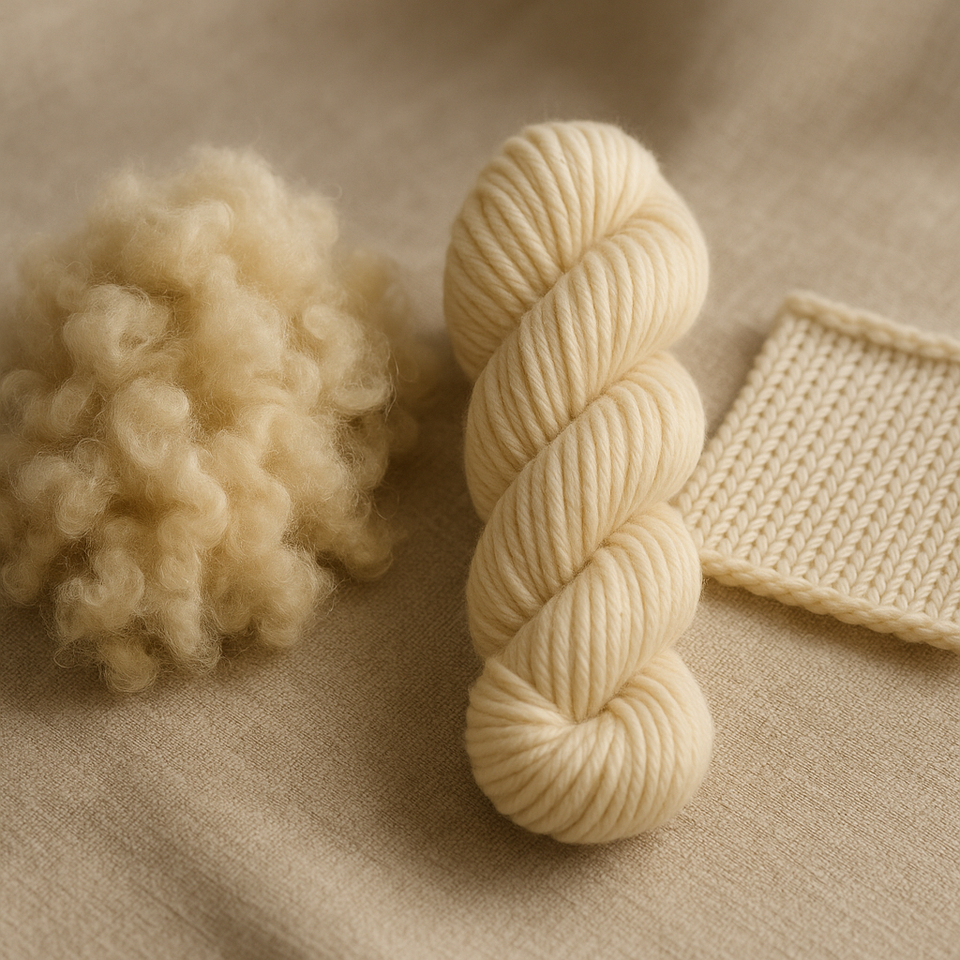
Crimped and springy. The pile bounces back after being walked on, and the natural wool grease, lanolin, stops dirt and spills sinking in straight away. Of all the materials, it's the warmest underfoot.
Shop wool rugs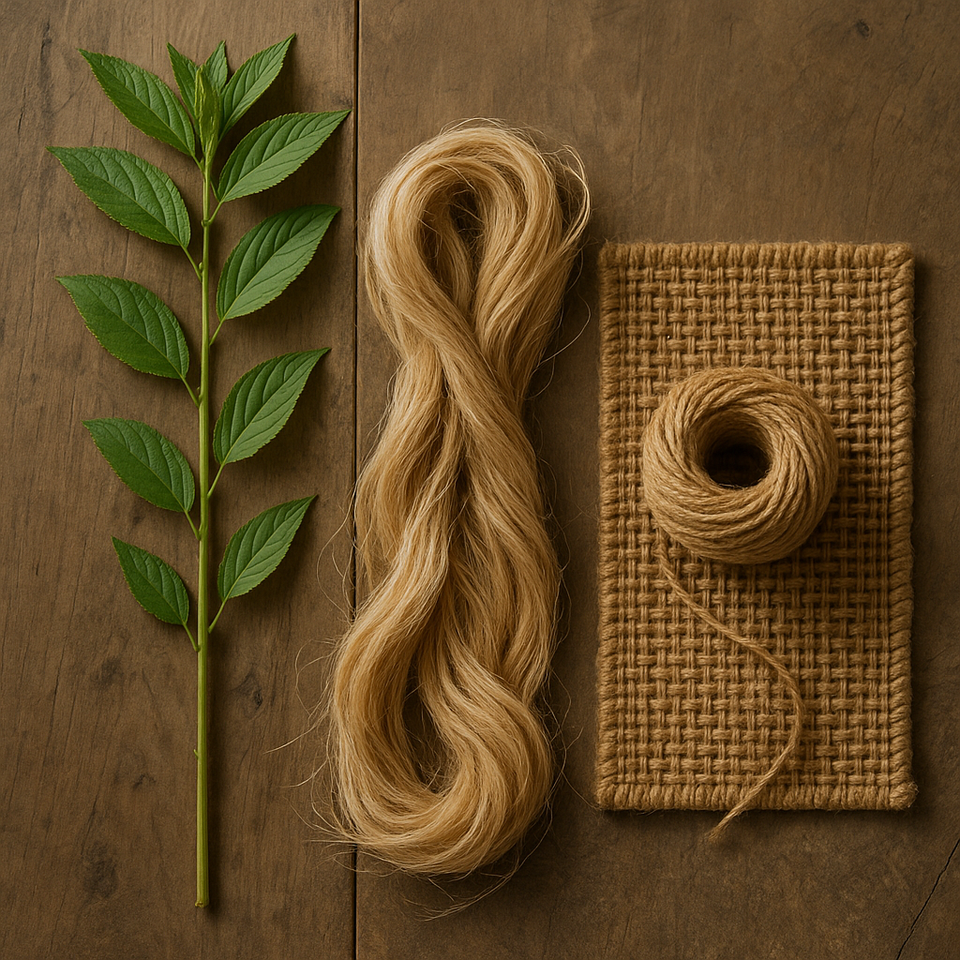
Jute
Long fibres from the stem of the jute plant, coarse and hard-wearing, in the sandy shade of coffee sacks. Copes with a lot in a living room or home office.
Shop jute rugs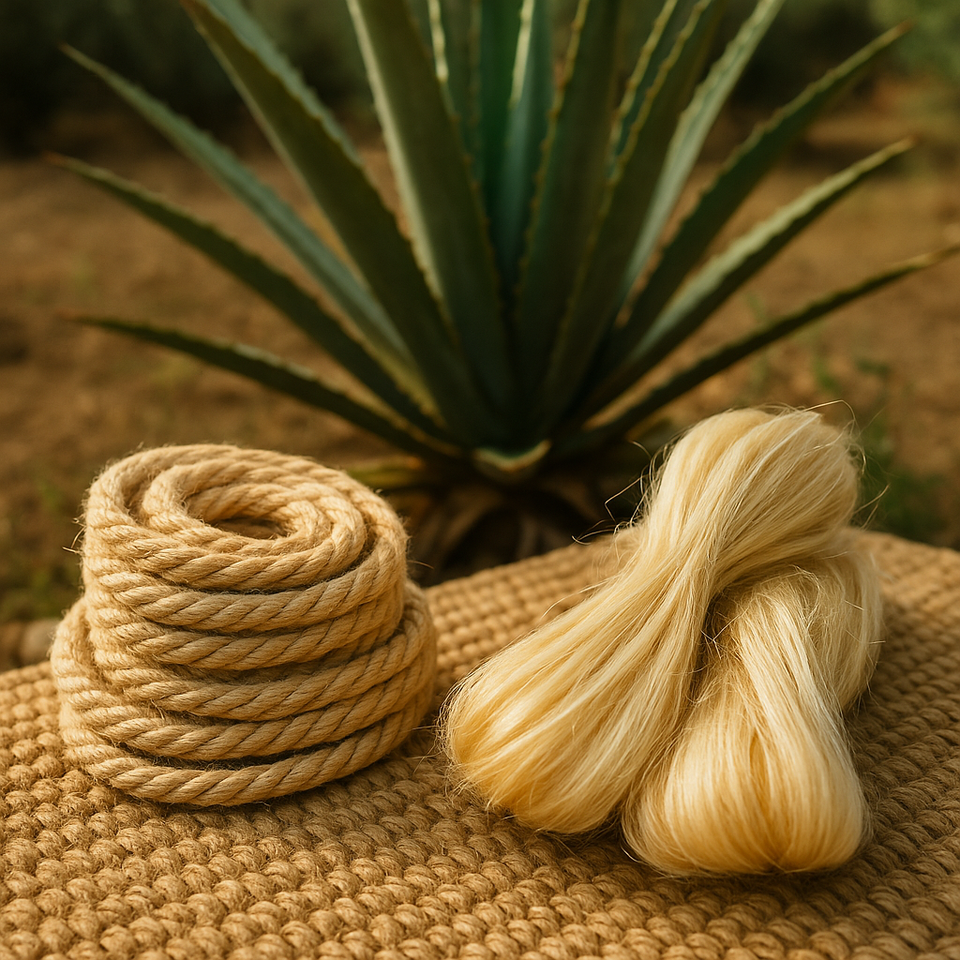
Sisal
Sisal comes from the leaves of the sisal agave. The fibre is firmer and smoother than jute, has a slight sheen and is very hard-wearing. That's why real sisal often ends up in hallways and offices.
Our sisal rugs have a sisal-look weave, made from 80% jute and 20% cotton. They look like sisal and feel softer underfoot.
Shop sisal rugs
Cotton
A smooth, light yarn that takes colour well. Mostly flat-woven and not scratchy, so it suits kitchens and kids' rooms.
Shop cotton rugs · Machine washable rugs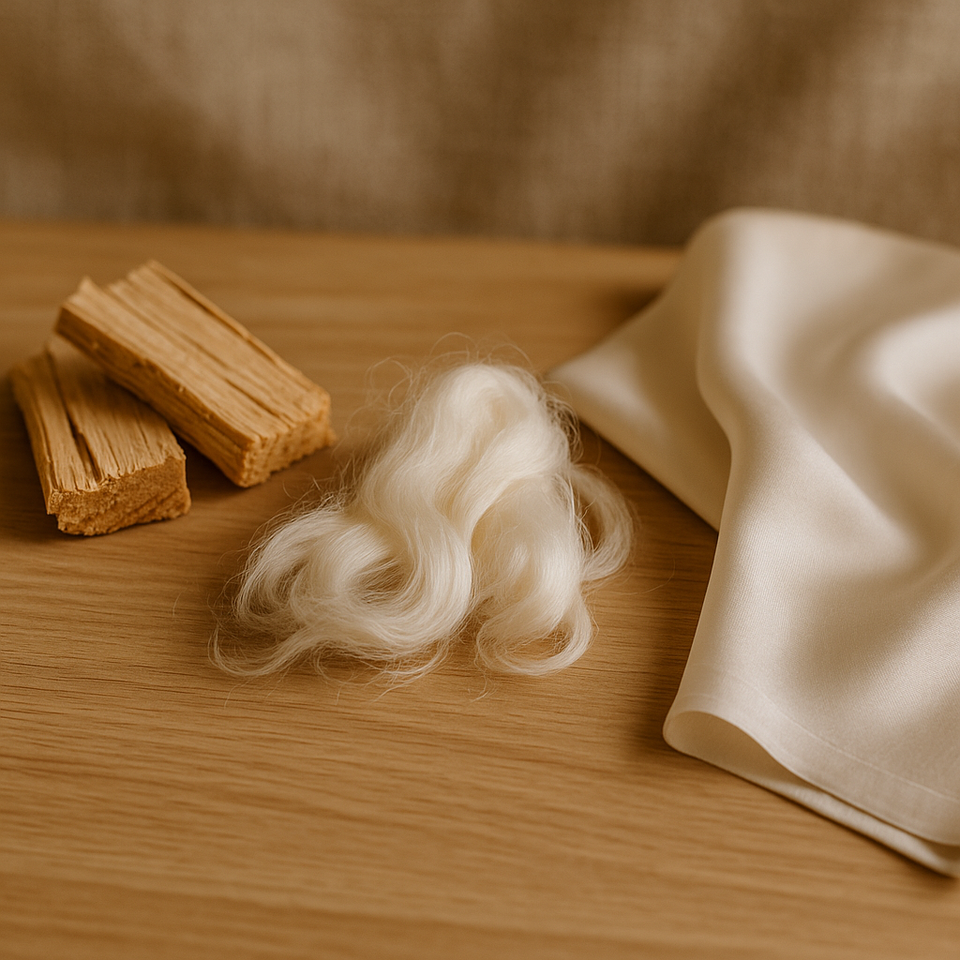
Viscose
Wood cellulose spun into yarn. Cool, smooth, with a silk-like sheen. Stroke it against the pile and the surface looks darker.
View viscose rugsSilk and Tencel
Just for reference, we don't currently stock either of them.

Silk
A natural fibre from the silkworm's cocoon. Very fine and glossy, usually used as an accent in the pile of a rug. Sensitive to water and sunlight.
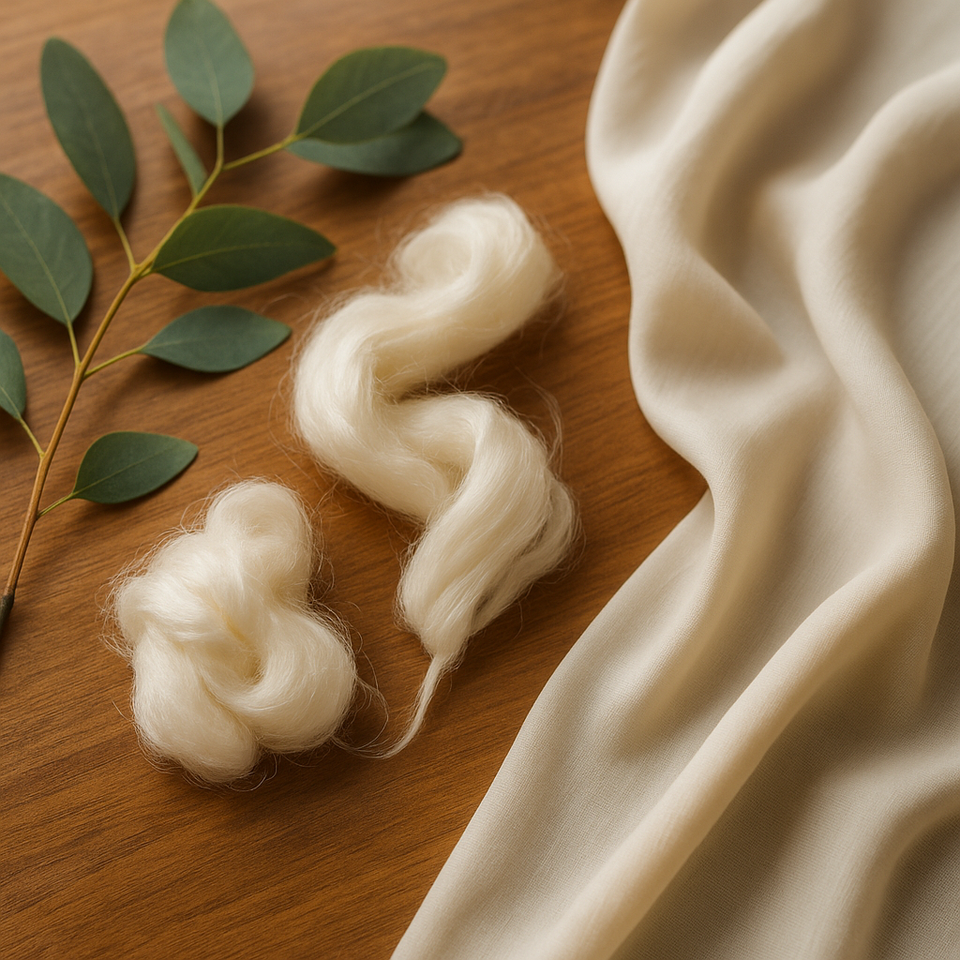
Tencel (lyocell)
A fibre made from wood cellulose like viscose, but produced in a closed loop. Soft, with a subtle sheen and a bit more hard-wearing than viscose.
Synthetic fibres
Easy to look after, though each has its limits.
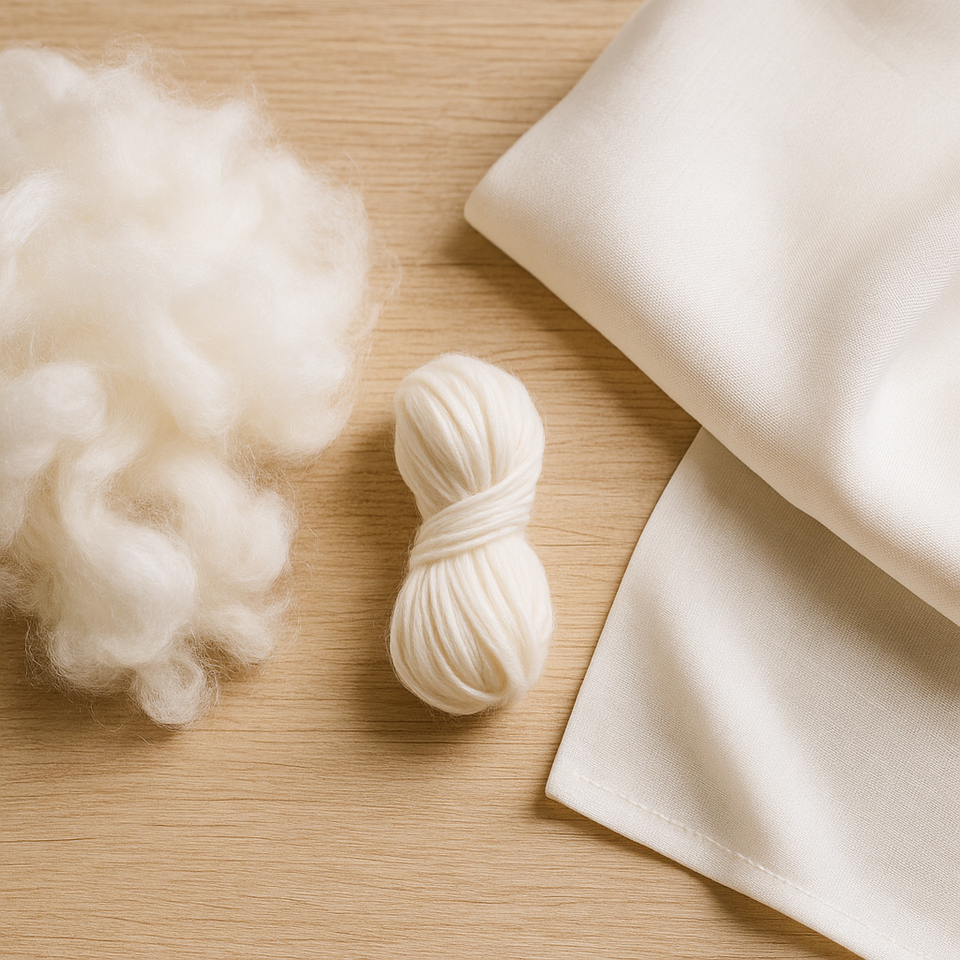
Polyester
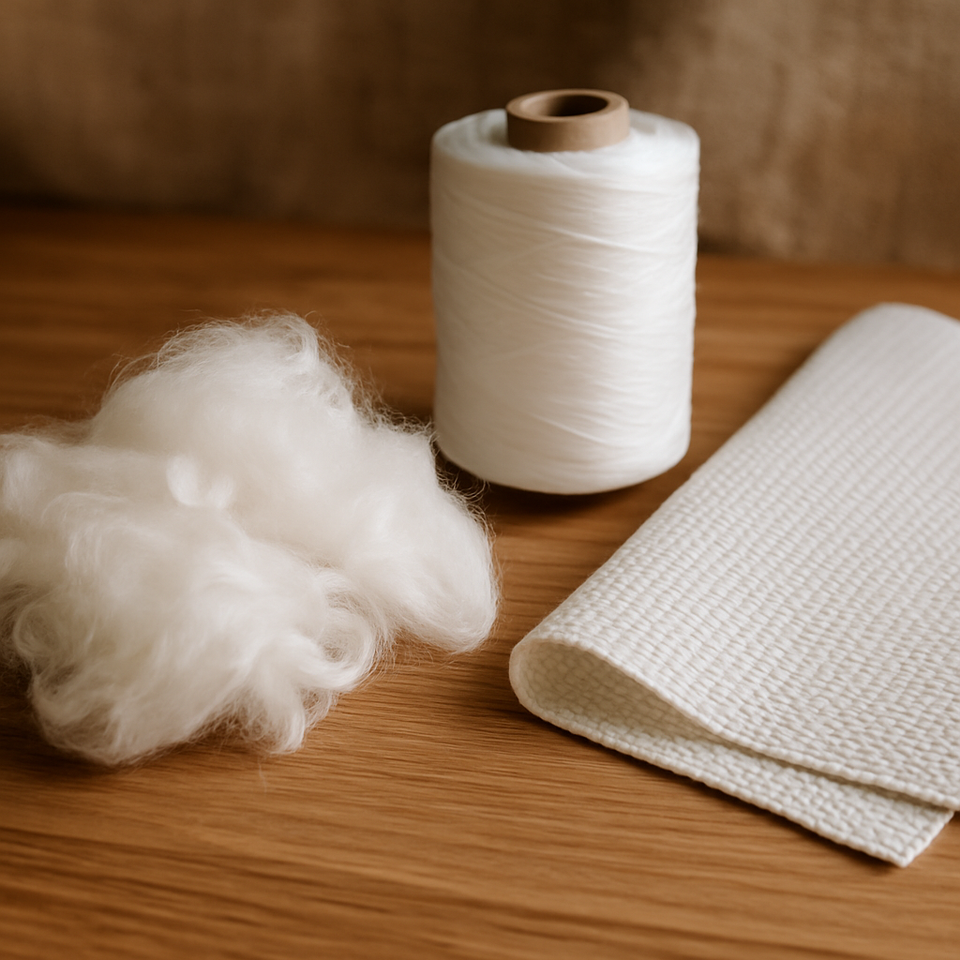
Soft and colourfast. When spun very fine, it's called microfibre.
Take care with heat and chair legs.
Polypropylene
Barely absorbs water and hardly fades. Handy in the kitchen and in a children's bedroom.
Take care with hot pans.
Recycled PET
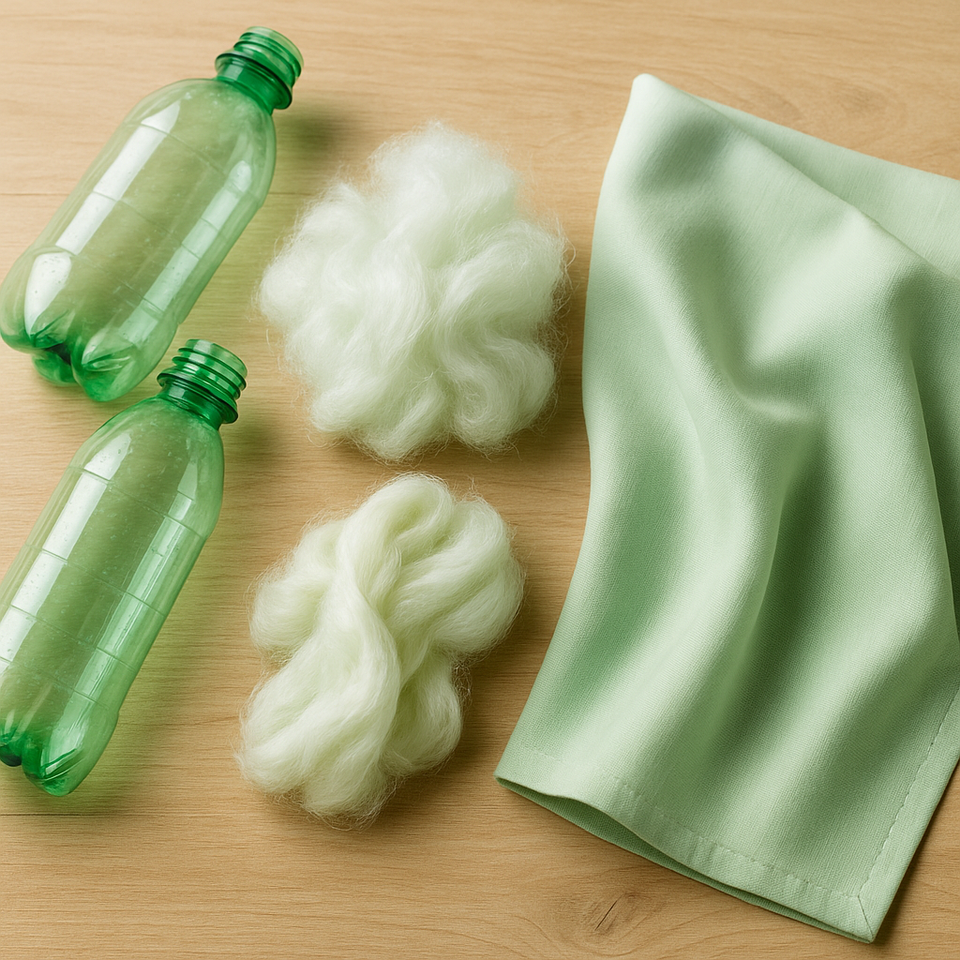
Melted-down bottles, spun into new yarn. Behaves like polyester.
Recycled doesn't mean biodegradable.
Which material for which room?

Natural fibres

Wool
Wool usually comes from sheep. The fibre is crimped and springy, so the pile bounces back after you walk on it, and furniture leaves fewer lasting dents than on synthetic fibre. The natural wool grease, lanolin, stops dirt and liquid soaking in straight away. Some of our wool rugs are made from hand-spun wool, so the yarn isn't the same thickness everywhere.
How can you spot wool? It feels warm and has a bit of grip, rather than being smooth.
New wool rugs shed fluff for the first few weeks. That's normal. Constant damp, on the other hand, doesn't suit wool. Vacuum regularly and blot stains with lukewarm water instead of rubbing. The only rug of ours that can go in the washing machine is the Lia machine washable wool rug.

Cotton
Cotton grows as the soft fibres around the seeds of the cotton plant. Spun, it makes a smooth, light yarn that takes colour well. Cotton rugs usually lie flat. They don't scratch. In small sizes you can lift them to vacuum or shake them out outside. Some of our rugs are made from recycled cotton, where fabric offcuts are spun into new yarn.
You can recognise it by its soft, matt feel.
Stains are cotton's weak spot. Coffee or red wine soak in quickly, and it springs back less than wool, so walkways show wear sooner. Blot stains straight away with an absorbent cloth. The only one of ours you can wash is the Kelim Chindi Uni, at 30 °C.

Jute
Long bast fibres are extracted from the stem of the jute plant. They are coarse and strong, with that warm, sandy colour you know from coffee sacks. A jute rug lies flat and stands up to a lot in a living room or study.
The typical look is a golden brown with a slight sheen. Underfoot, jute is firmer than wool, and some people find it scratchy.
It doesn't cope with damp. Water leaves dark marks, and jute that stays wet for a while can turn musty. So it doesn't belong in the bathroom, not even as a bath mat. Fine fibres shed at first. Vacuum without the brush and blot up spills straight away with kitchen roll.

Sisal
Sisal comes from the leaves of the sisal agave. The fibre is harder than jute, holds its shape very well and has a light, creamy tone. Real sisal rugs are tightly woven and feel rough underfoot.
We don't sell a rug made from pure sisal. What we call sisal-look at jaloom is made of 80 % jute and 20 % cotton. The weave is reminiscent of sisal. The feel is softer.
You can spot real sisal by its smooth, almost wiry fibre.
Neither of them likes water. Liquid leaves marks that are hard to remove. Vacuum regularly, blot stains dry and look after sisal-look like jute.

Silk
Silk is obtained from the cocoons of the silkworm. The thread is very fine and smooth and reflects light so strongly that silk rugs shimmer lighter or darker depending on the angle. Silk is mostly used in hand-knotted rugs, either for the whole pile or for individual outlines in the pattern. We don't currently stock it.
Viscose looks similar and is often used as a substitute. A burn test on a single thread shows the difference, because silk is a protein and viscose is cellulose. Silk smells like burnt hair, viscose like paper.
Silk is sensitive to water and sunlight. It has no place in a hallway or under the dining table. Leave cleaning to a professional rug cleaner.
Synthetic fibres

Polyester
Polyester is a synthetic fibre made from crude oil. It's soft, barely absorbs moisture and holds colour very well, so even strong shades stay rich for a long time. When the yarn is spun very fine it's called microfibre, and these rugs feel especially soft.
You can recognise polyester by its slight sheen and its smooth, slightly slippery feel. Stains stick to it less than to cotton. Blotting with water and a little mild washing-up liquid is usually enough.
And its limits? Polyester doesn't hold its shape as well as wool, dents under chair legs tend to stay visible, and in dry air from the heating it sometimes builds up static. Heat damages it.

Polypropylene
Polypropylene absorbs almost no water. Spilled drinks stay on the surface, and you can blot them up before they soak in. The colour is added during manufacture, all the way through, so it hardly fades. That helps in the kitchen and the kids' room.
Polypropylene is made from crude oil. It's lighter than polyester, cheaper than wool, and feels smooth and slightly waxy to the touch.
Its weak spots are heat and pressure. A hot pan can melt the fibres, and on busy walkways the pile flattens faster than wool. Clean it with water and mild washing-up liquid. It's still plastic.

Viscose
Viscose is made from cellulose, usually from wood, and spun into yarn industrially. It feels cool and smooth and shimmers much like silk, which is why it's often used as a cheaper alternative.
Stroke it against the pile and the surface turns darker. That's a quick way to recognise a viscose rug.
It's delicate. Water makes the fibre swell, leaving marks and dull patches. Where there's a lot of foot traffic the pile lies down in one direction, and because viscose hardly springs back afterwards, lighter pathways appear. It's well suited to the bedroom. Only blot stains up dry.

Tencel
Tencel is a brand name for lyocell. Like viscose, the fibre is made from wood pulp, but using a different dissolving process. Lyocell has a similar sheen, but it's stronger than viscose when wet. That's the key difference. We don't currently stock Tencel rugs.
Visually, you can hardly tell Tencel and viscose apart. Only the material details make it clear.
Lyocell doesn't like lasting damp either, and it can flatten with heavy foot traffic. So care for it as you would viscose: low suction and careful blotting.

PET
PET is the plastic that drinks bottles are made from. Chemically it's one of the polyesters. For recycled PET, used material is melted down and spun into new yarn.
In a rug, PET behaves like polyester. It's soft, colourfast and barely absorbs moisture, so stains blot up easily. To the naked eye there's no difference from new polyester. Only the material details tell you whether it's recycled.
Recycled doesn't mean biodegradable. In the end it's still plastic. Under heavy furniture the pile can stay permanently dented, and PET copes with heat as badly as any synthetic fibre.