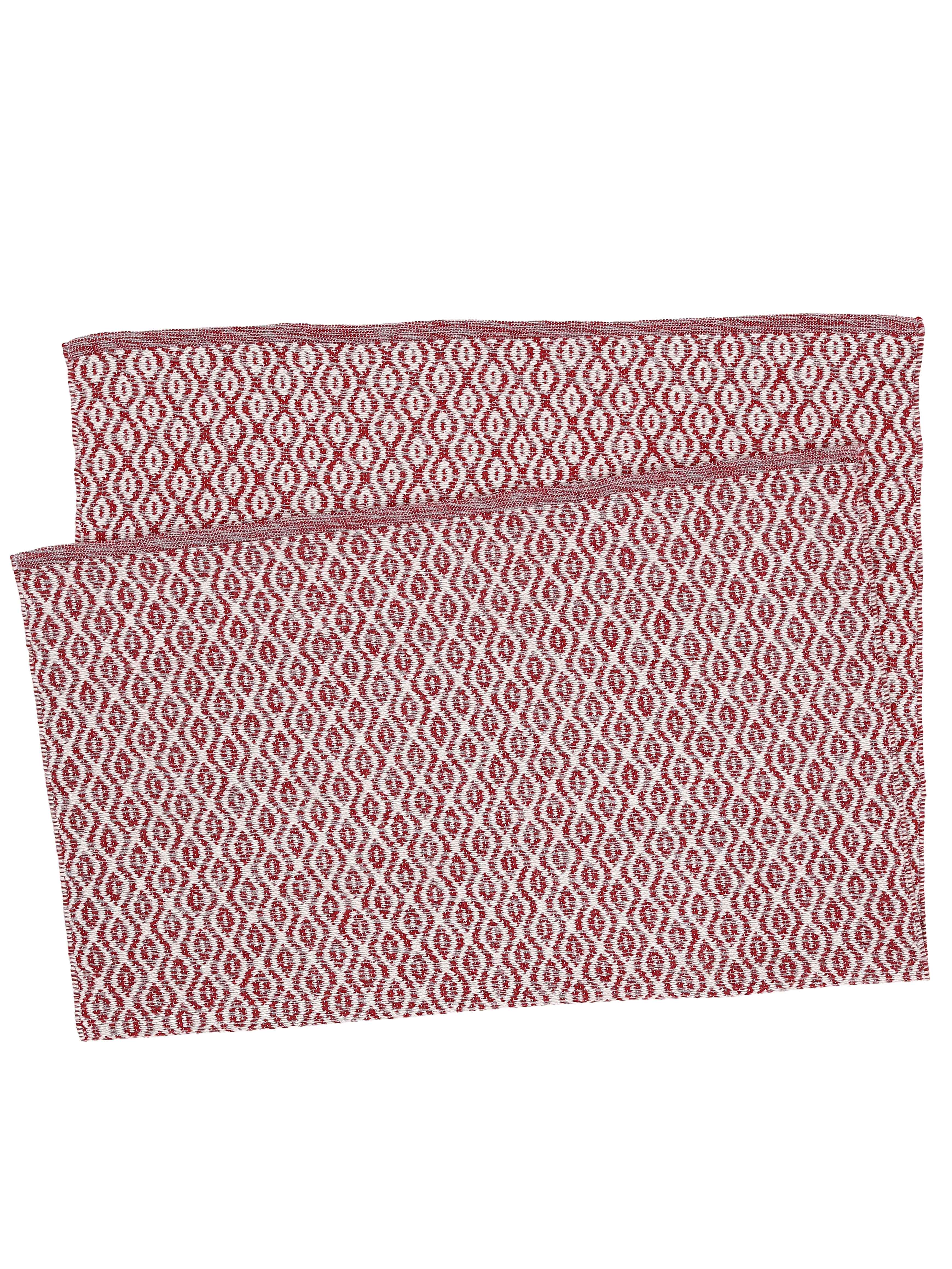
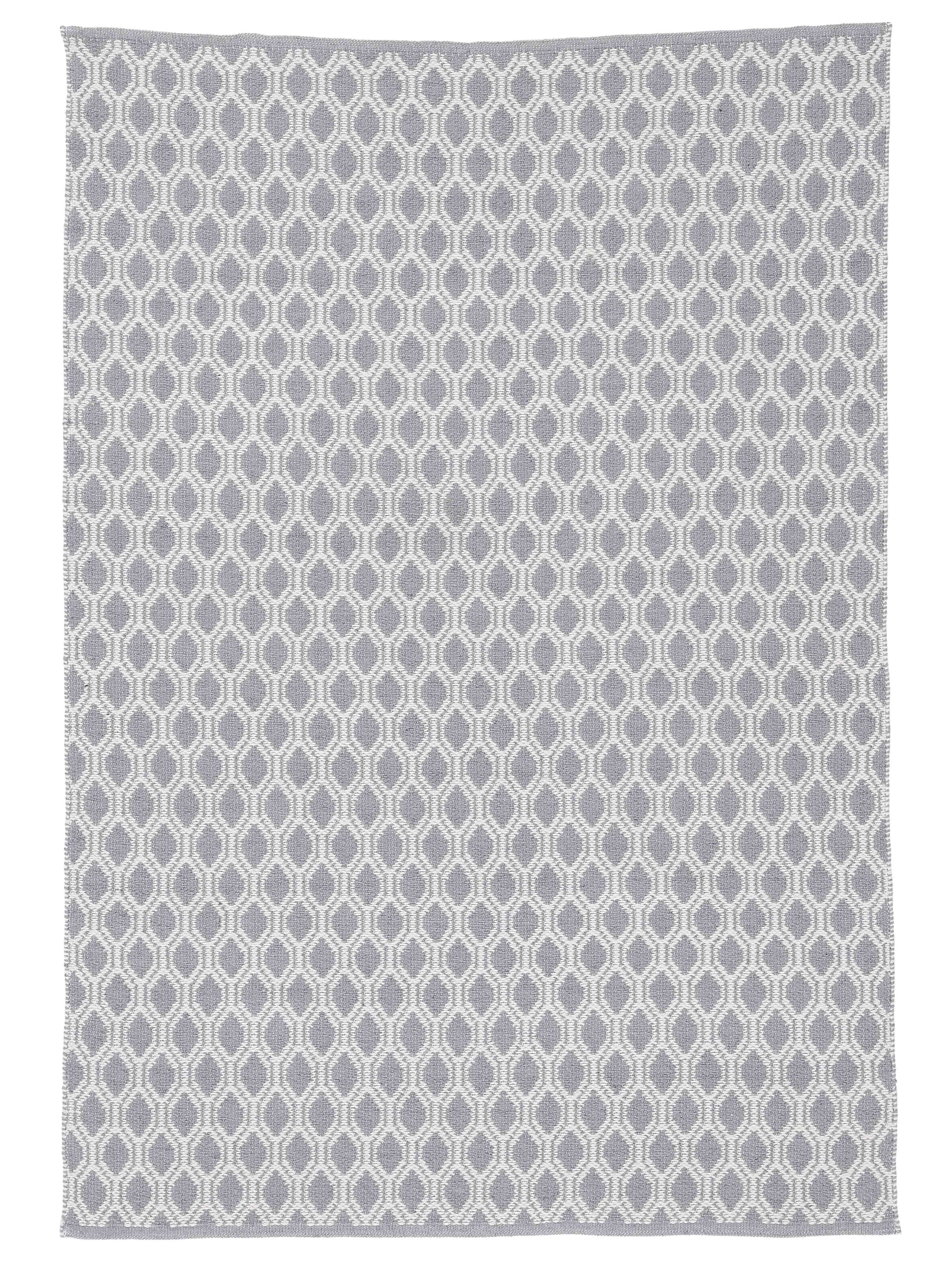
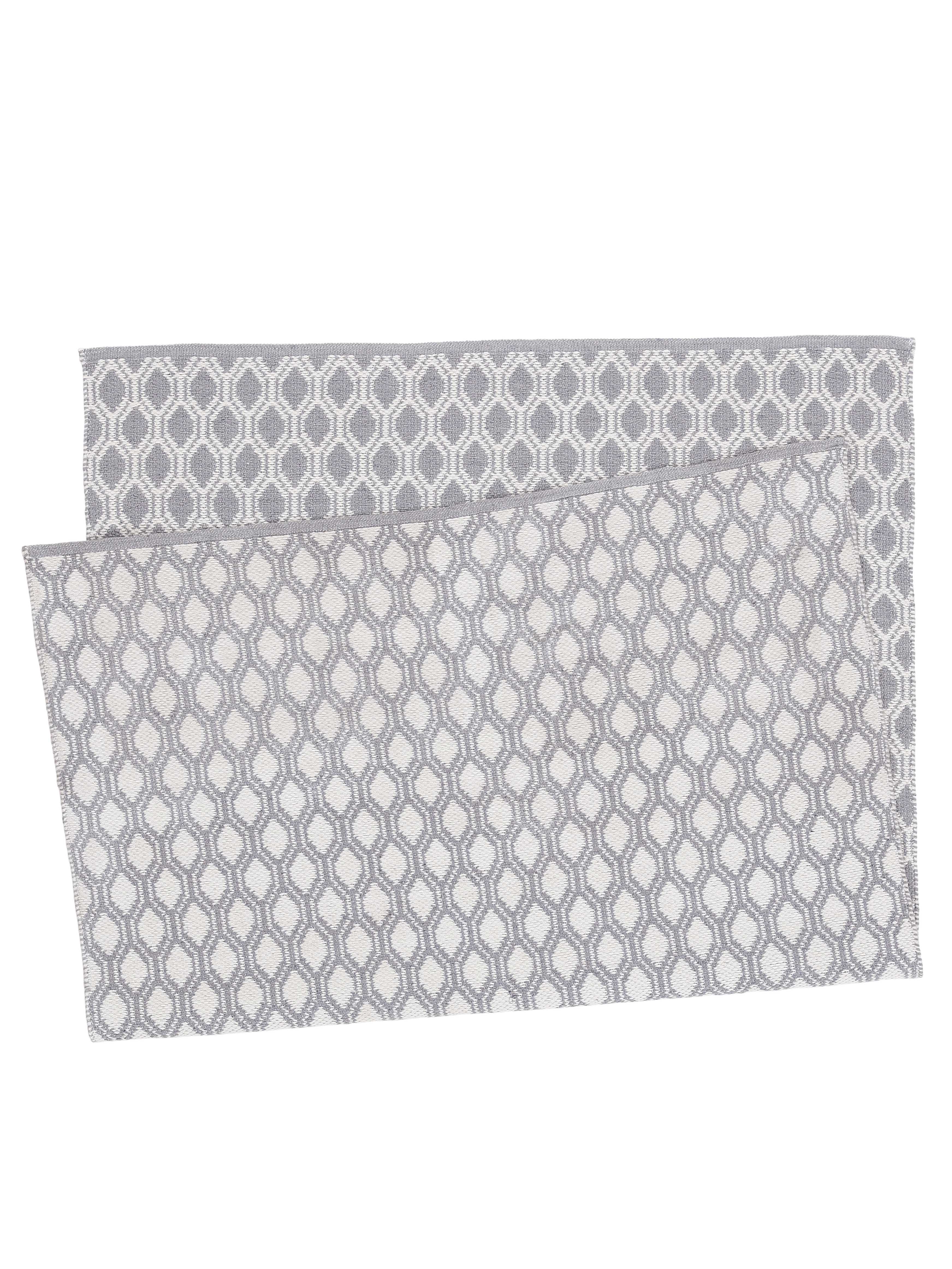
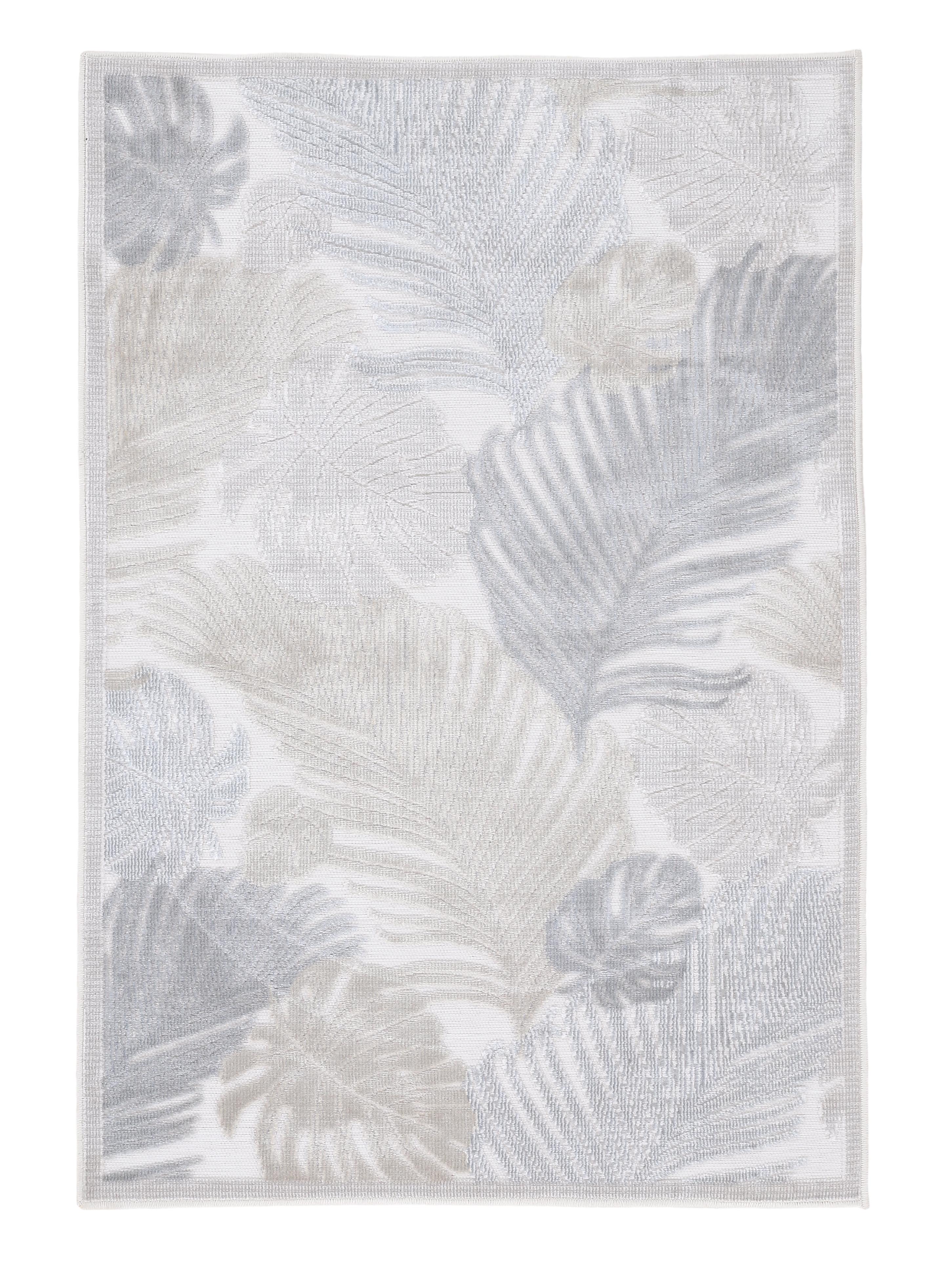
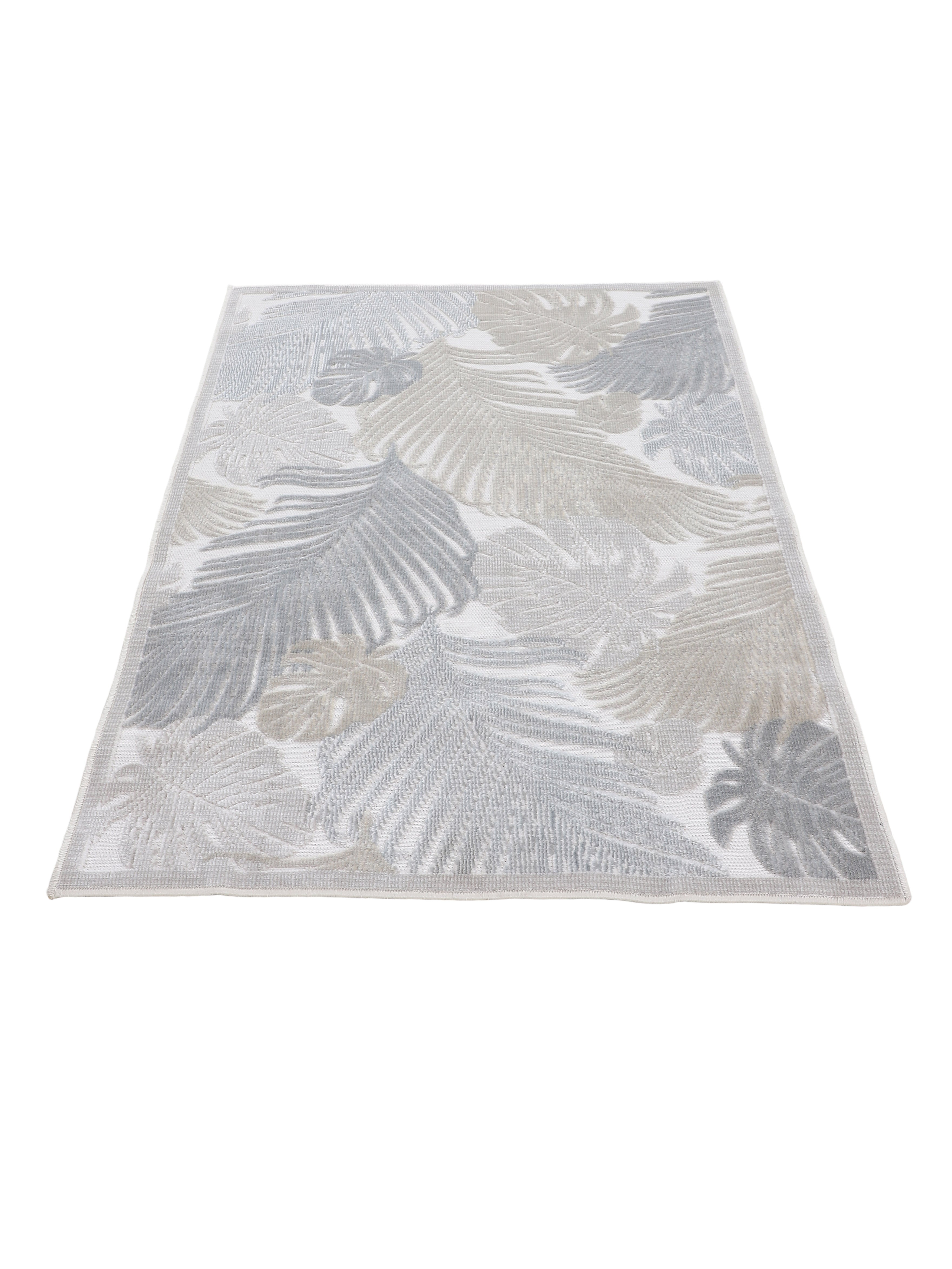
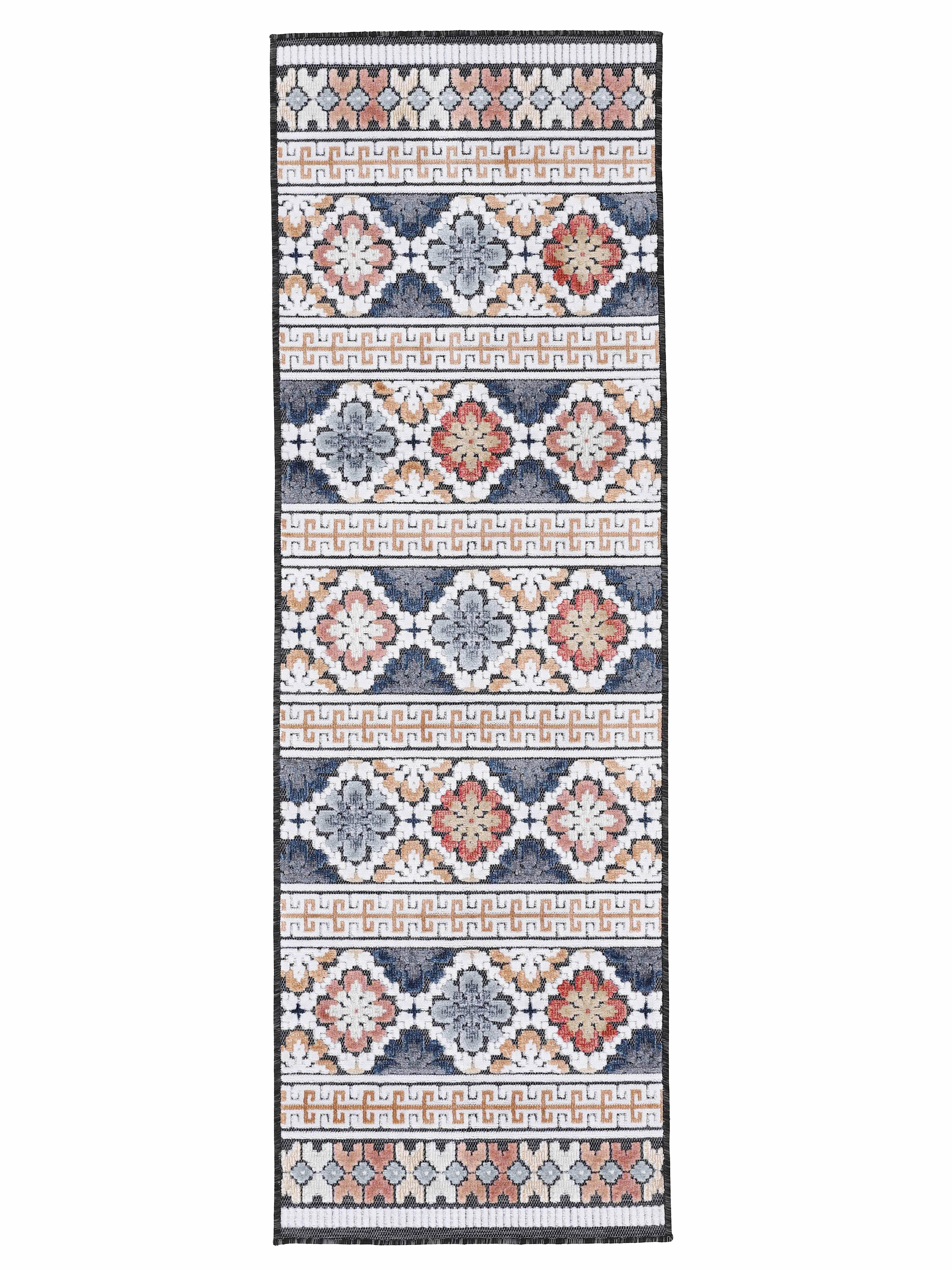
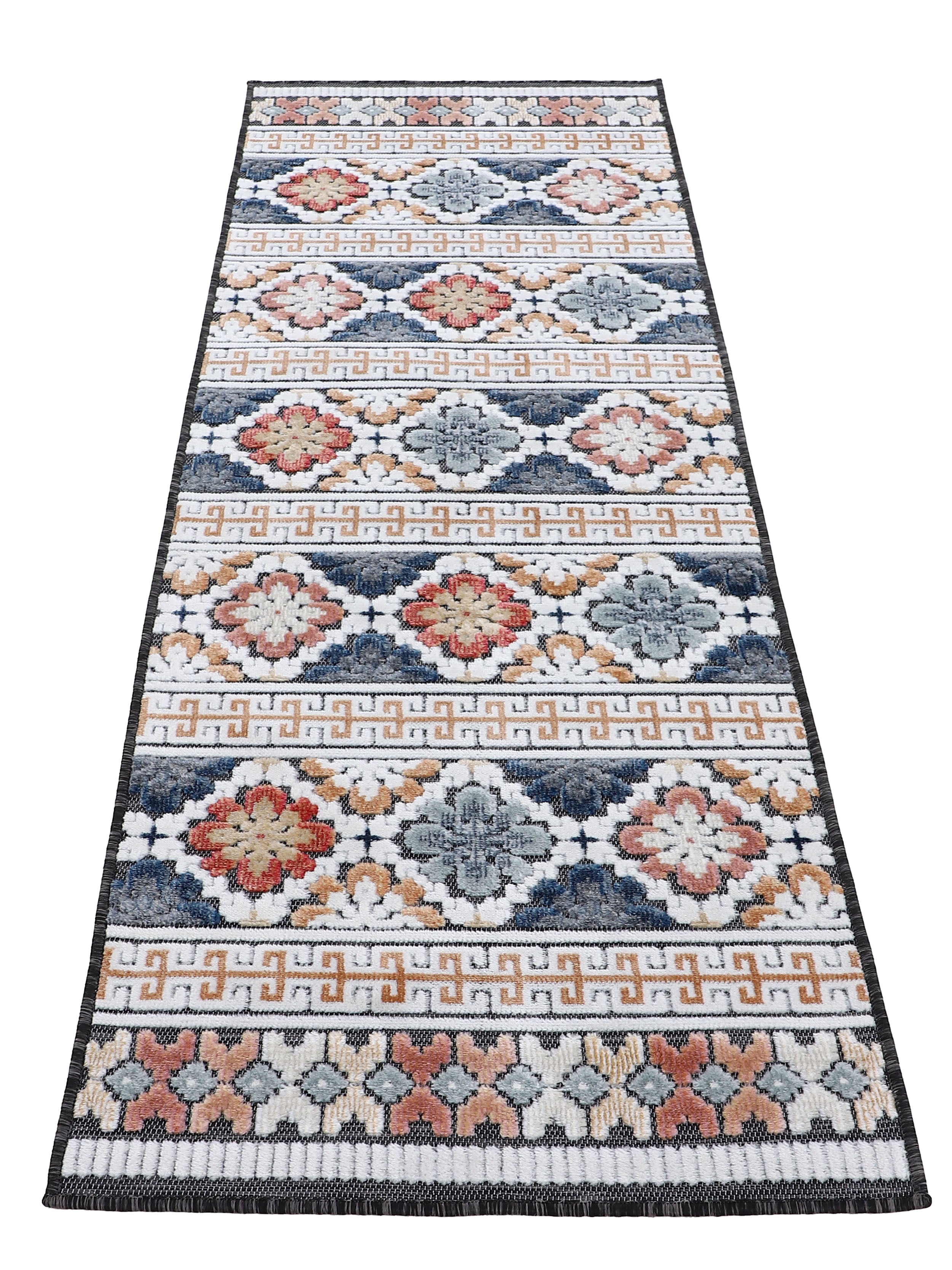
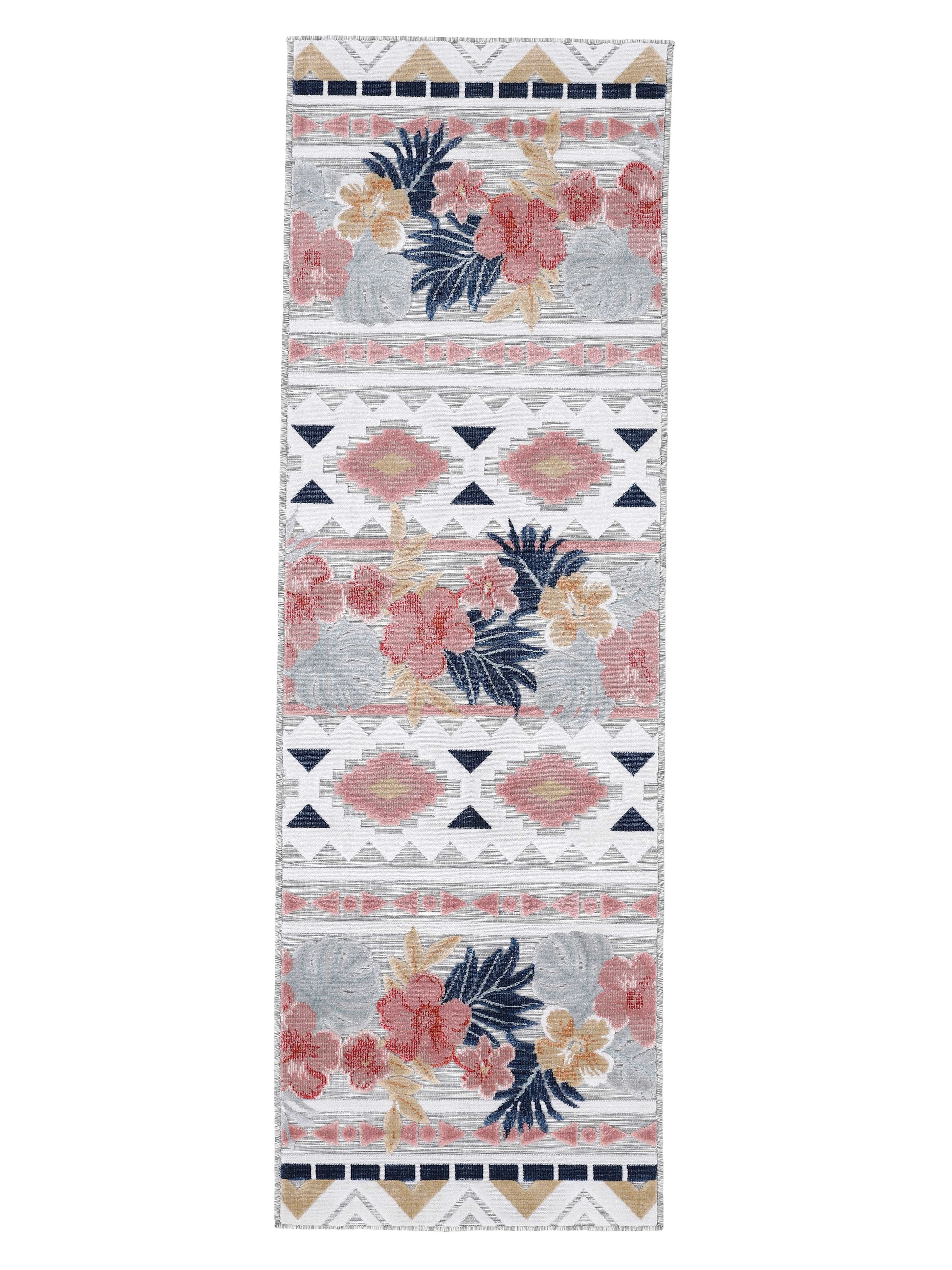
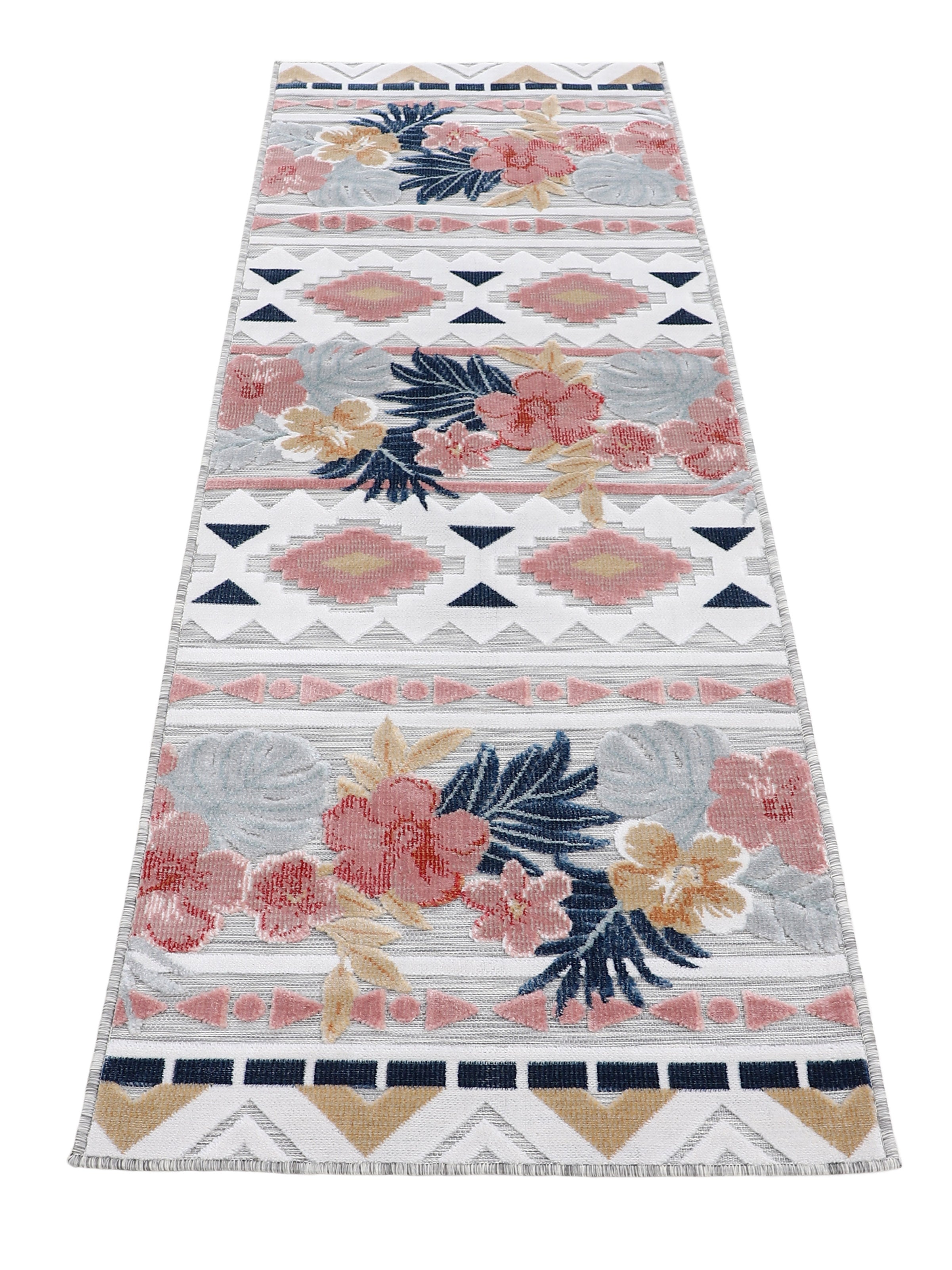
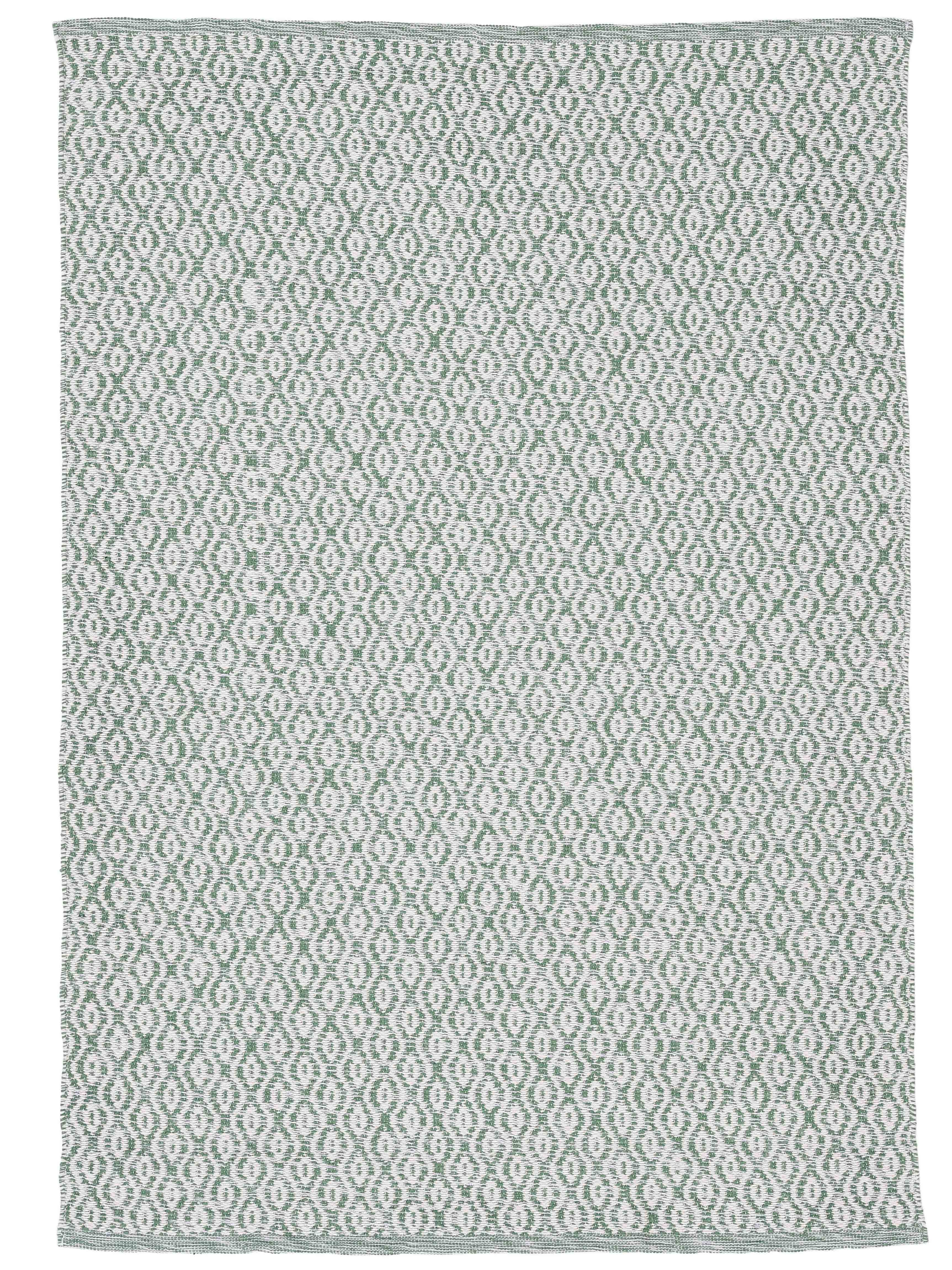
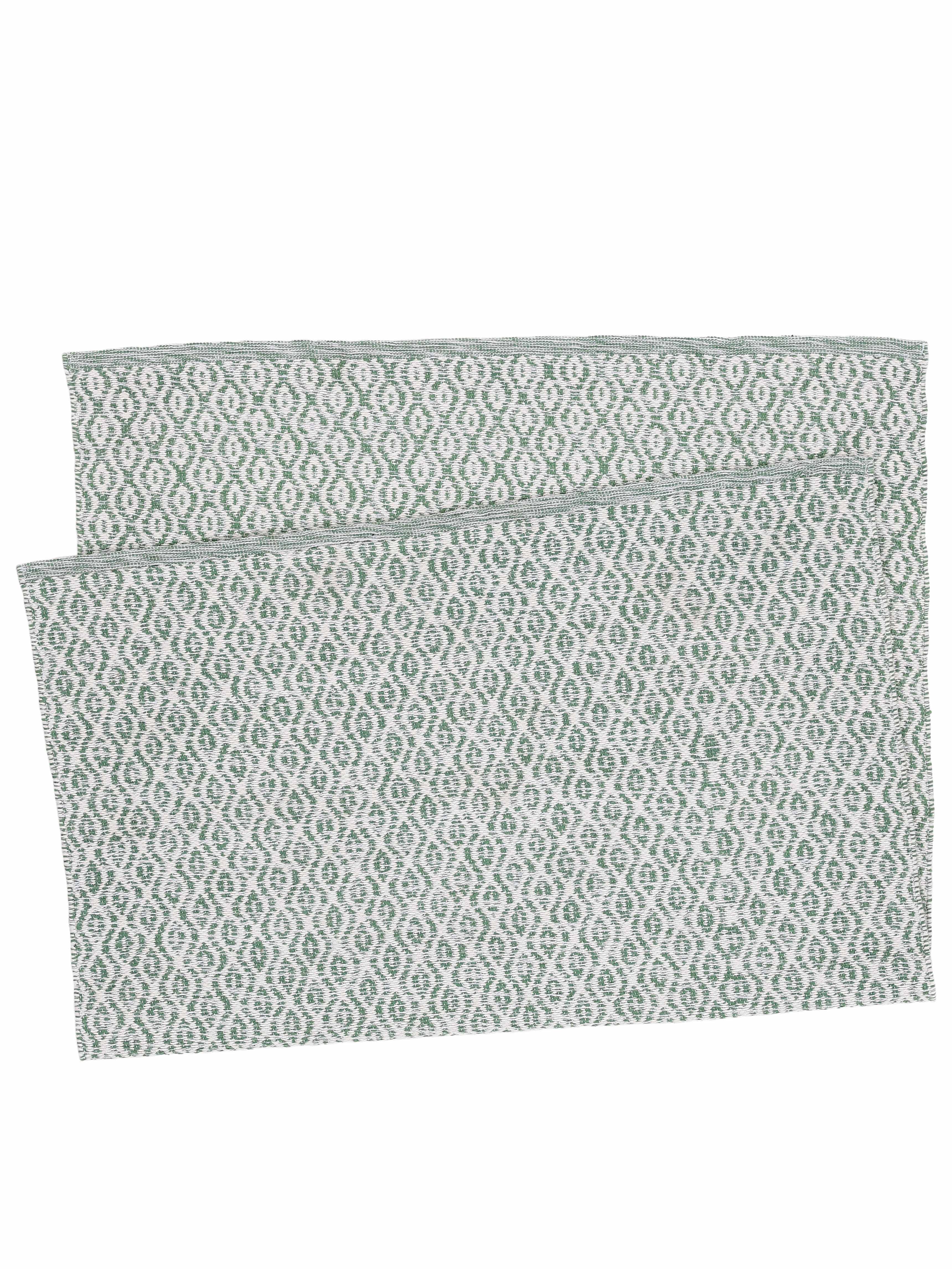
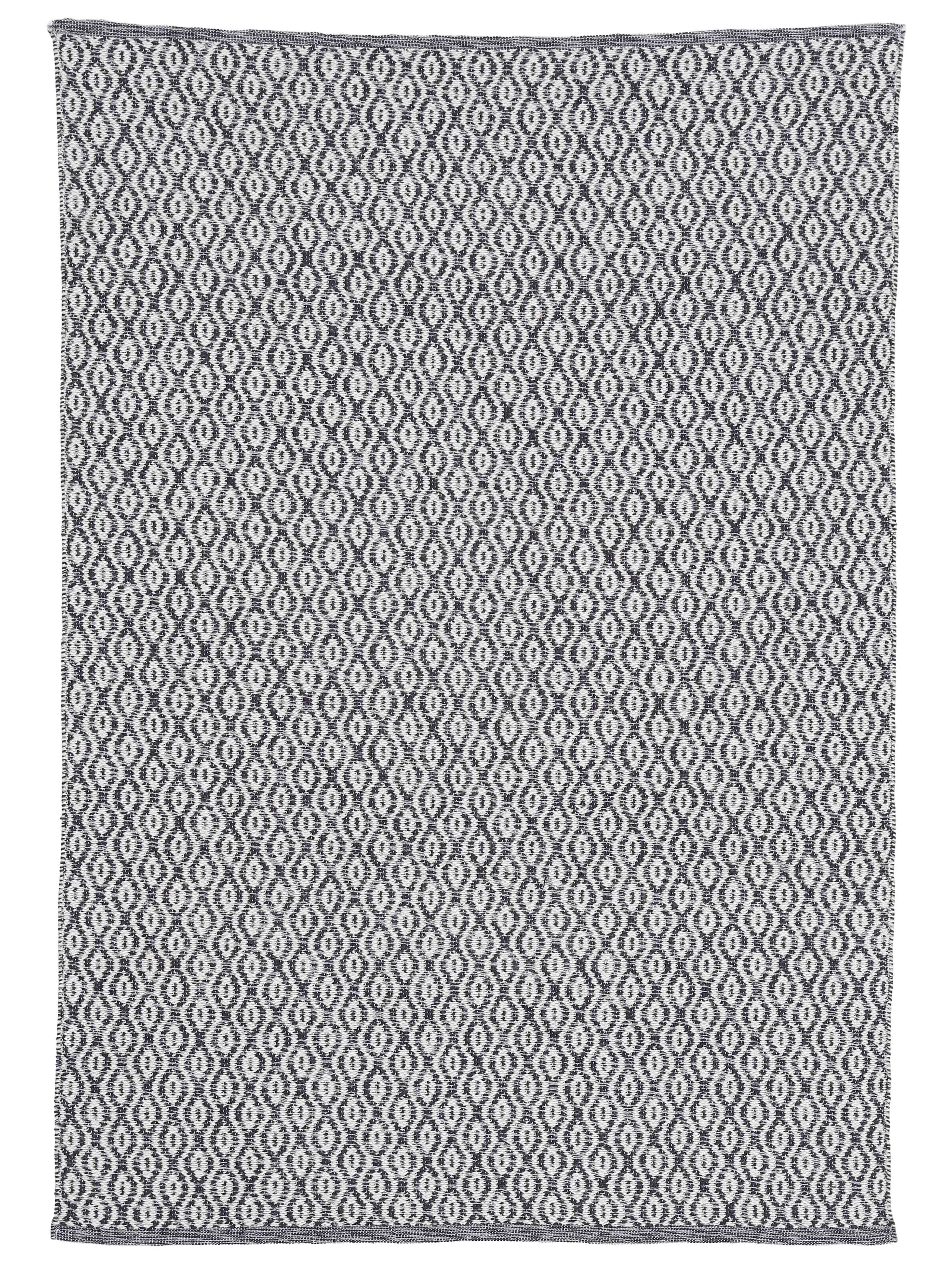
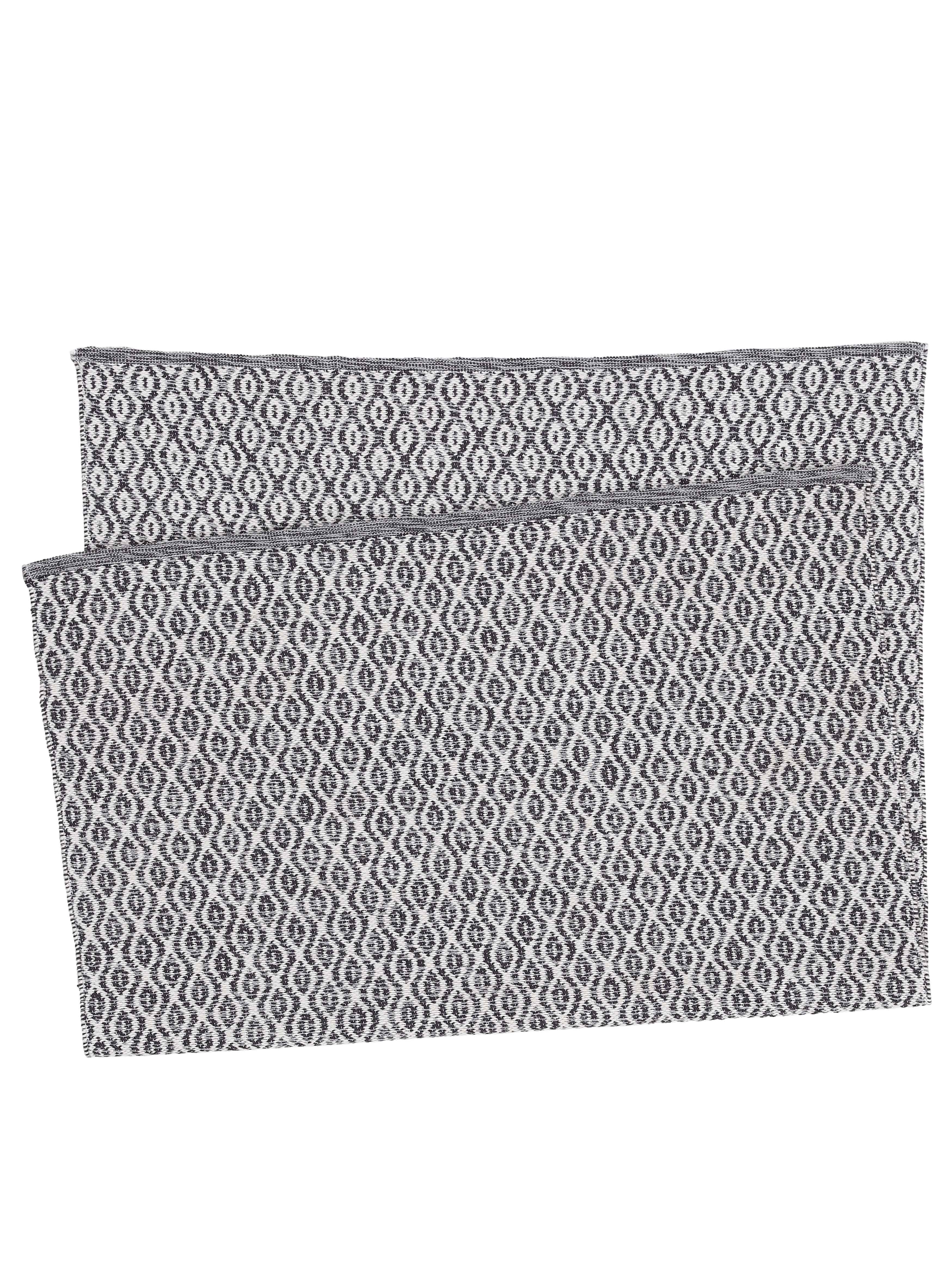
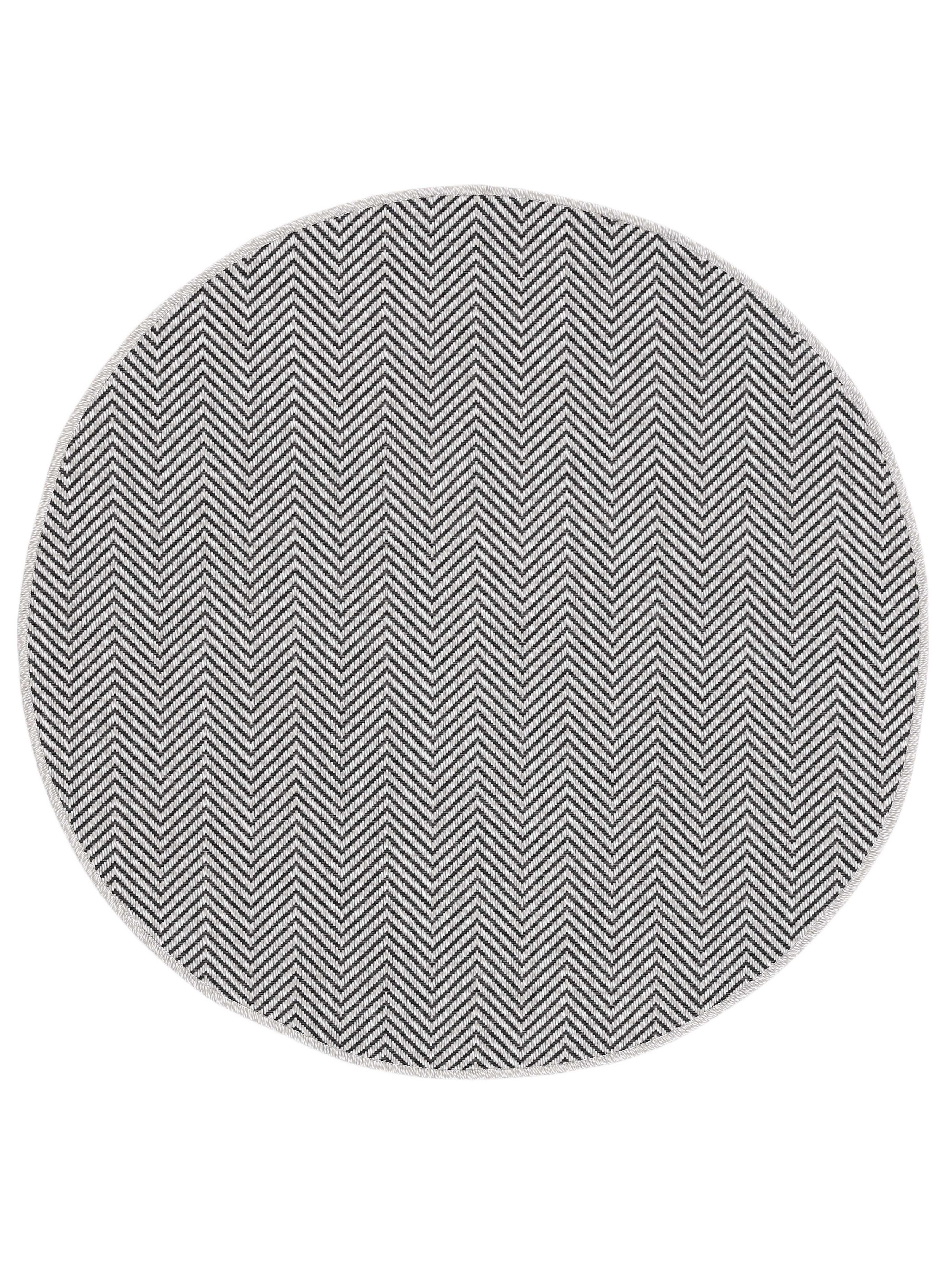
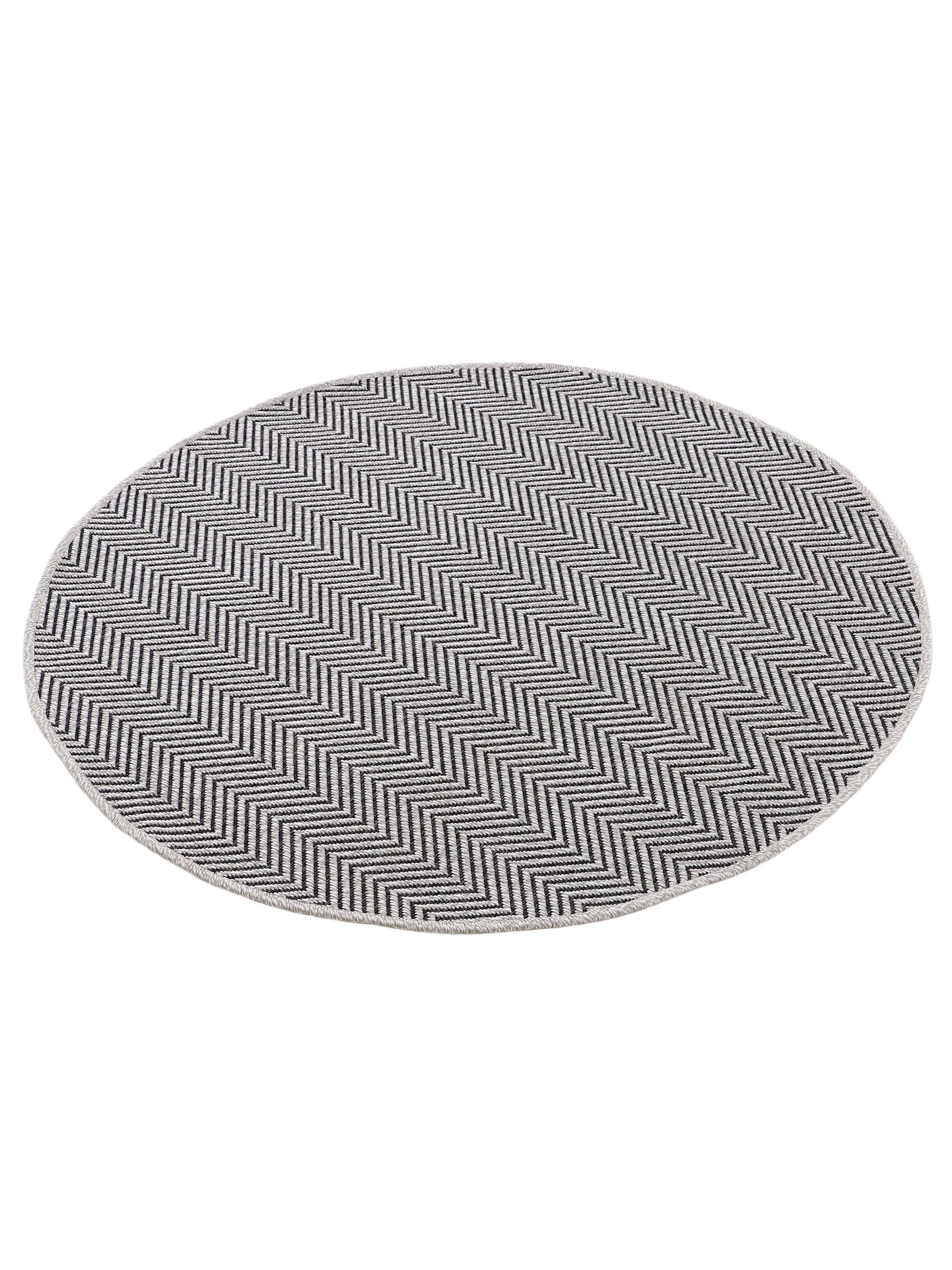
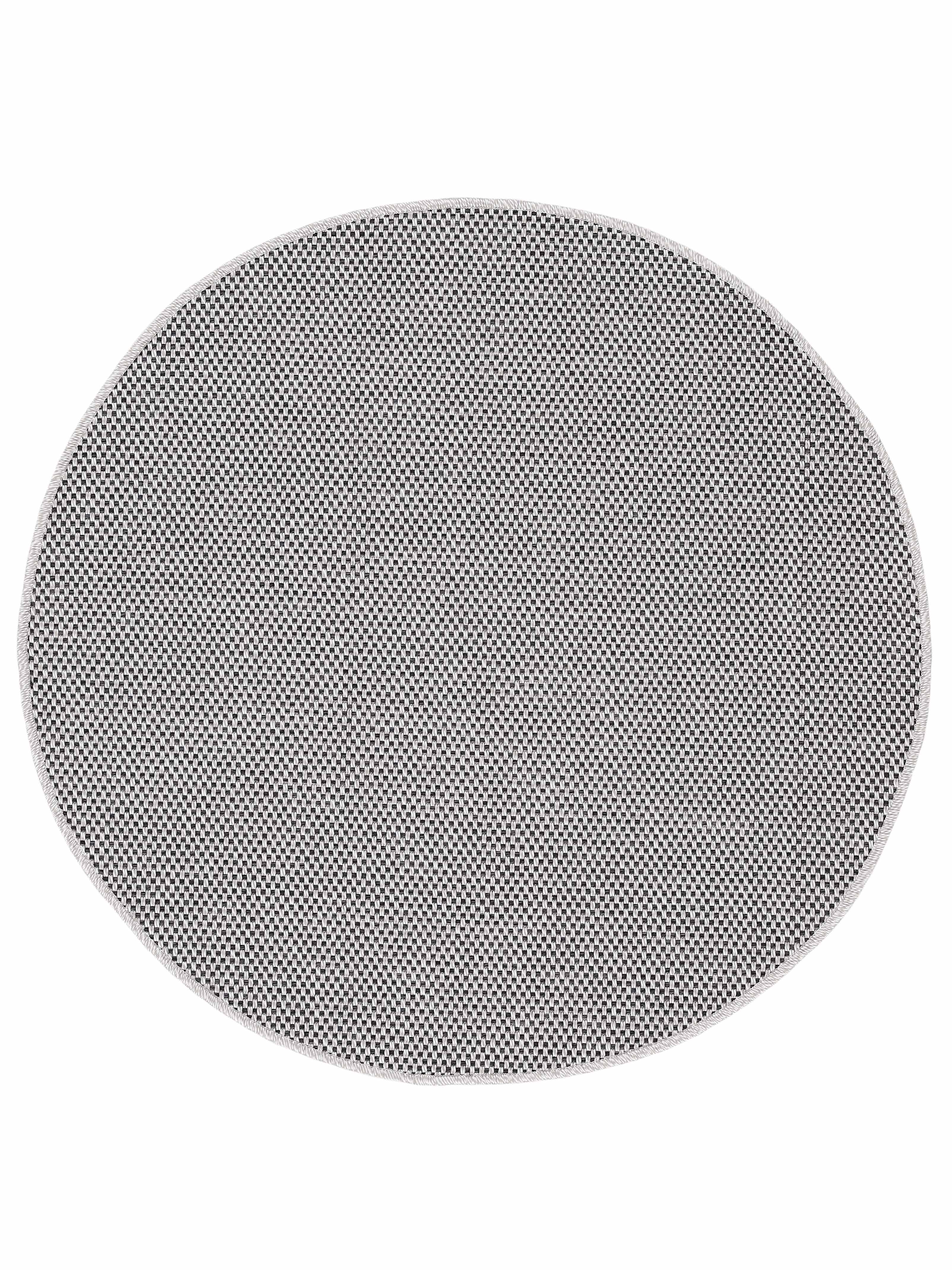
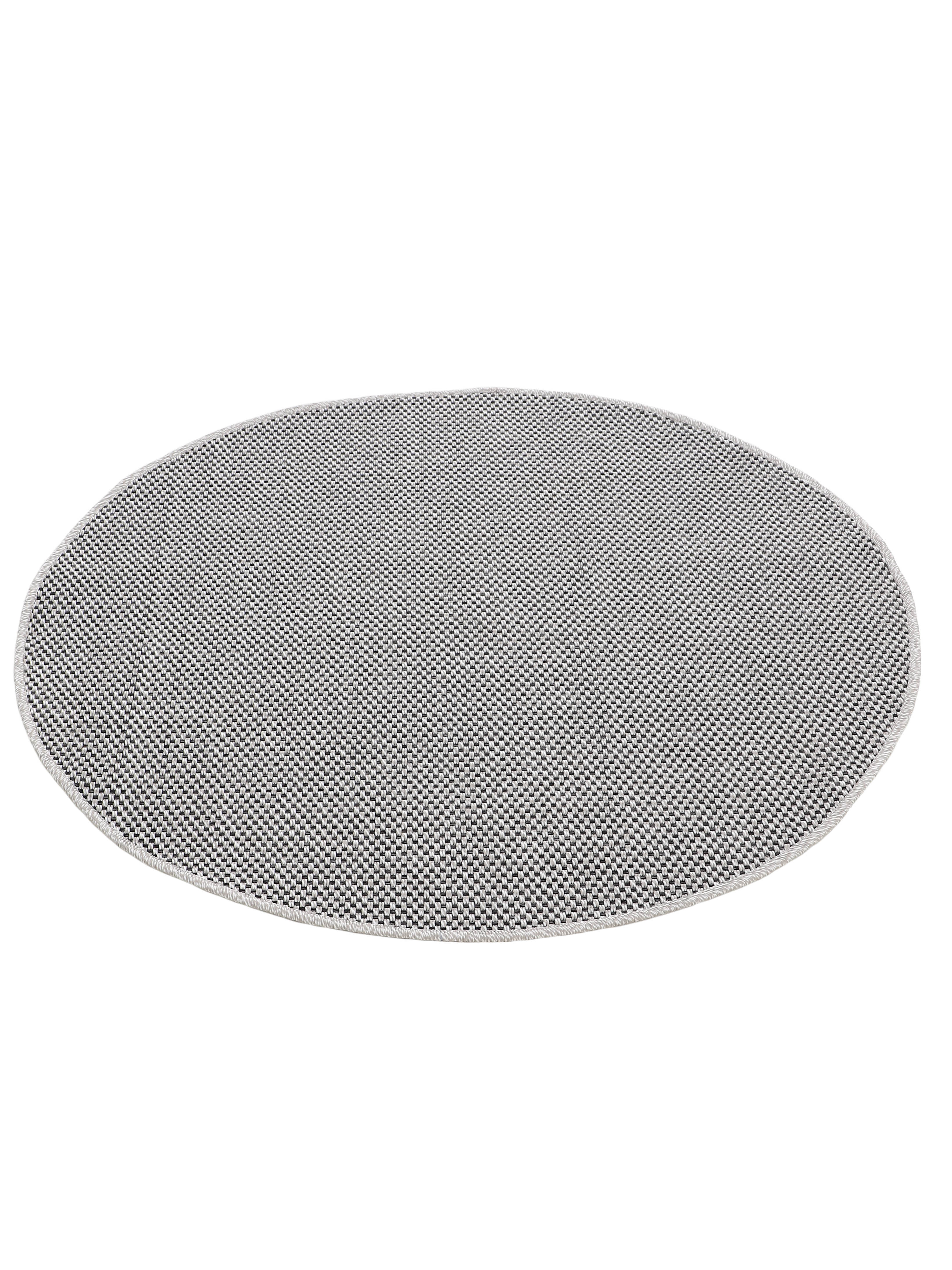
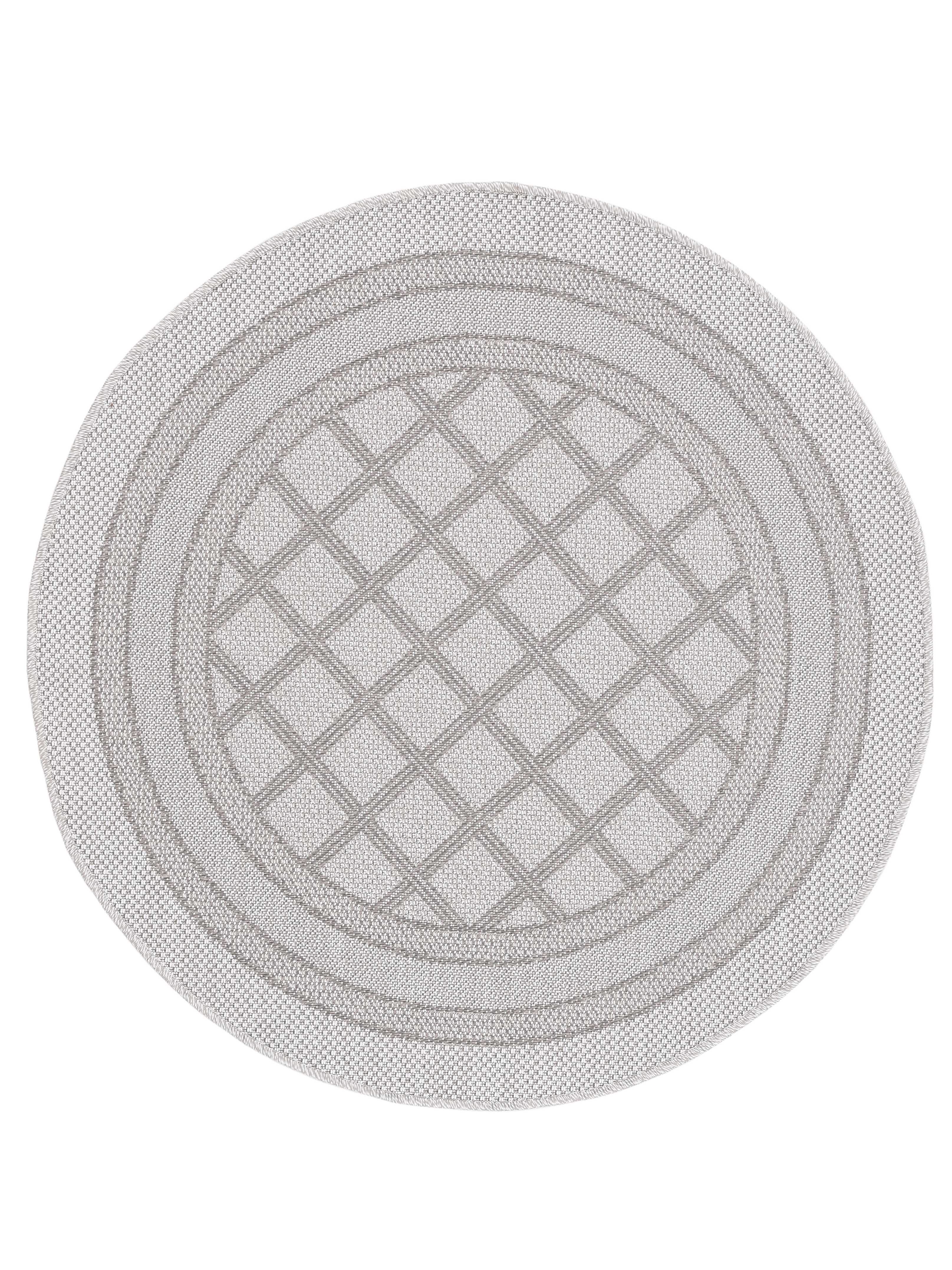
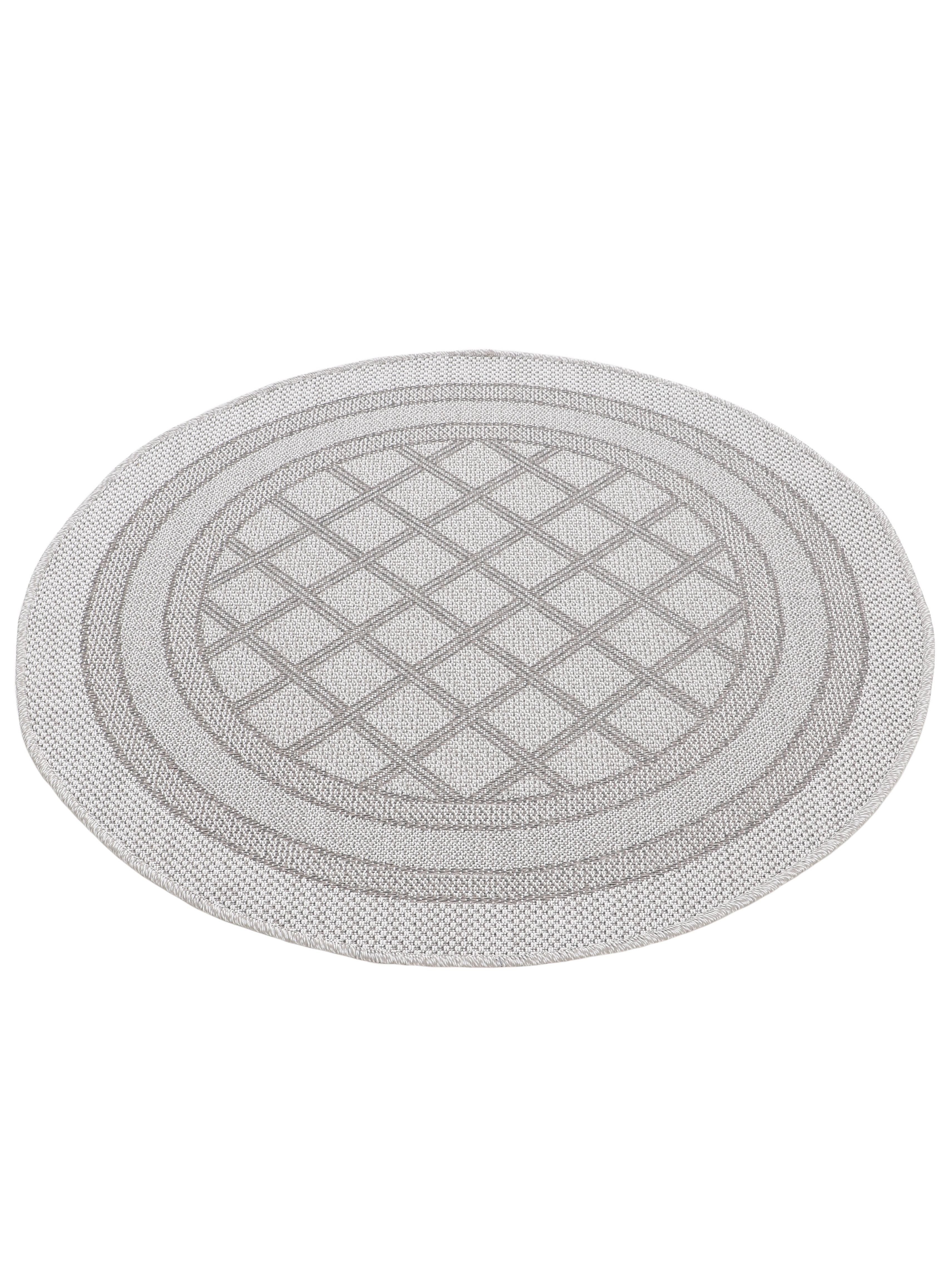
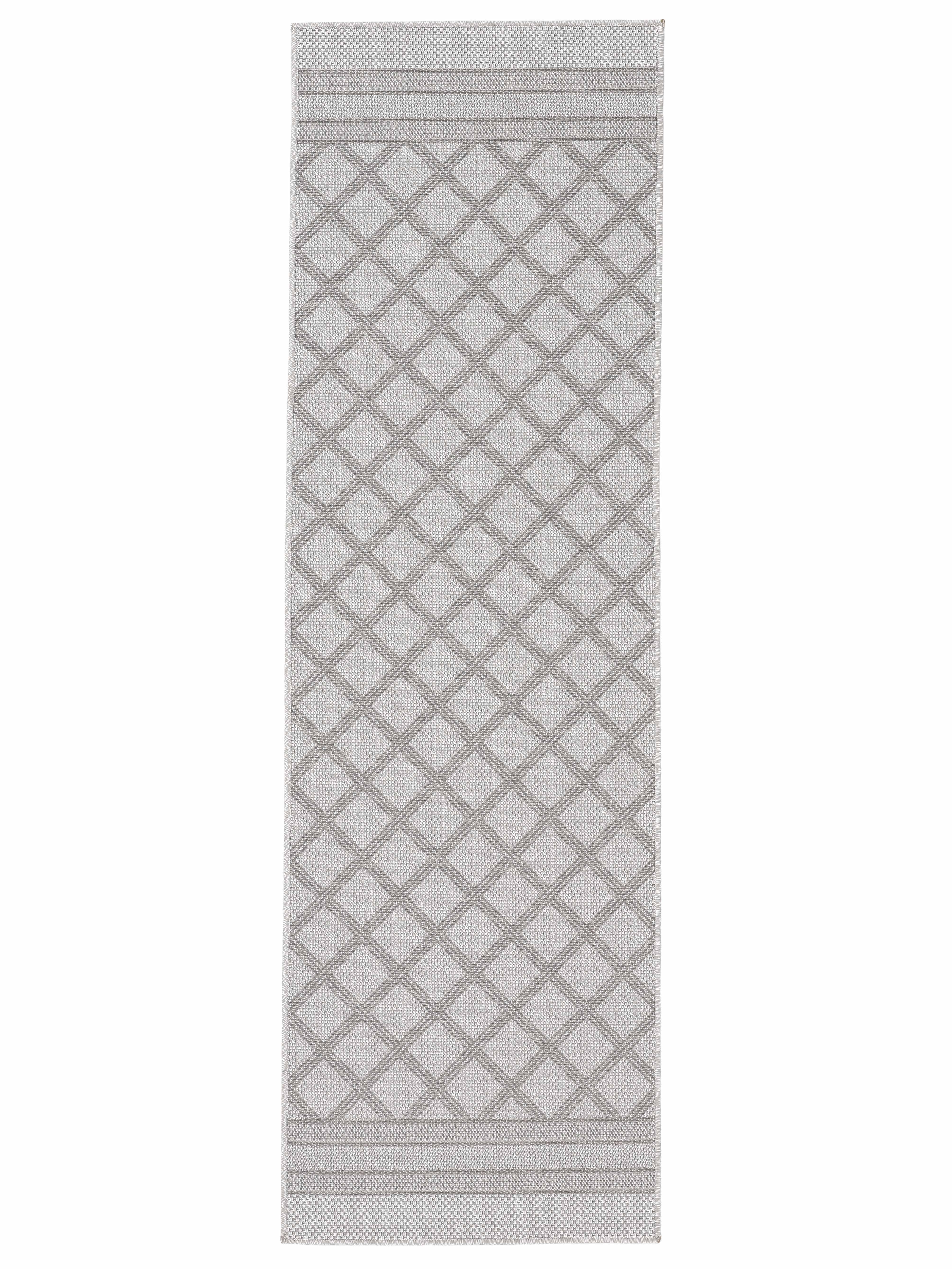
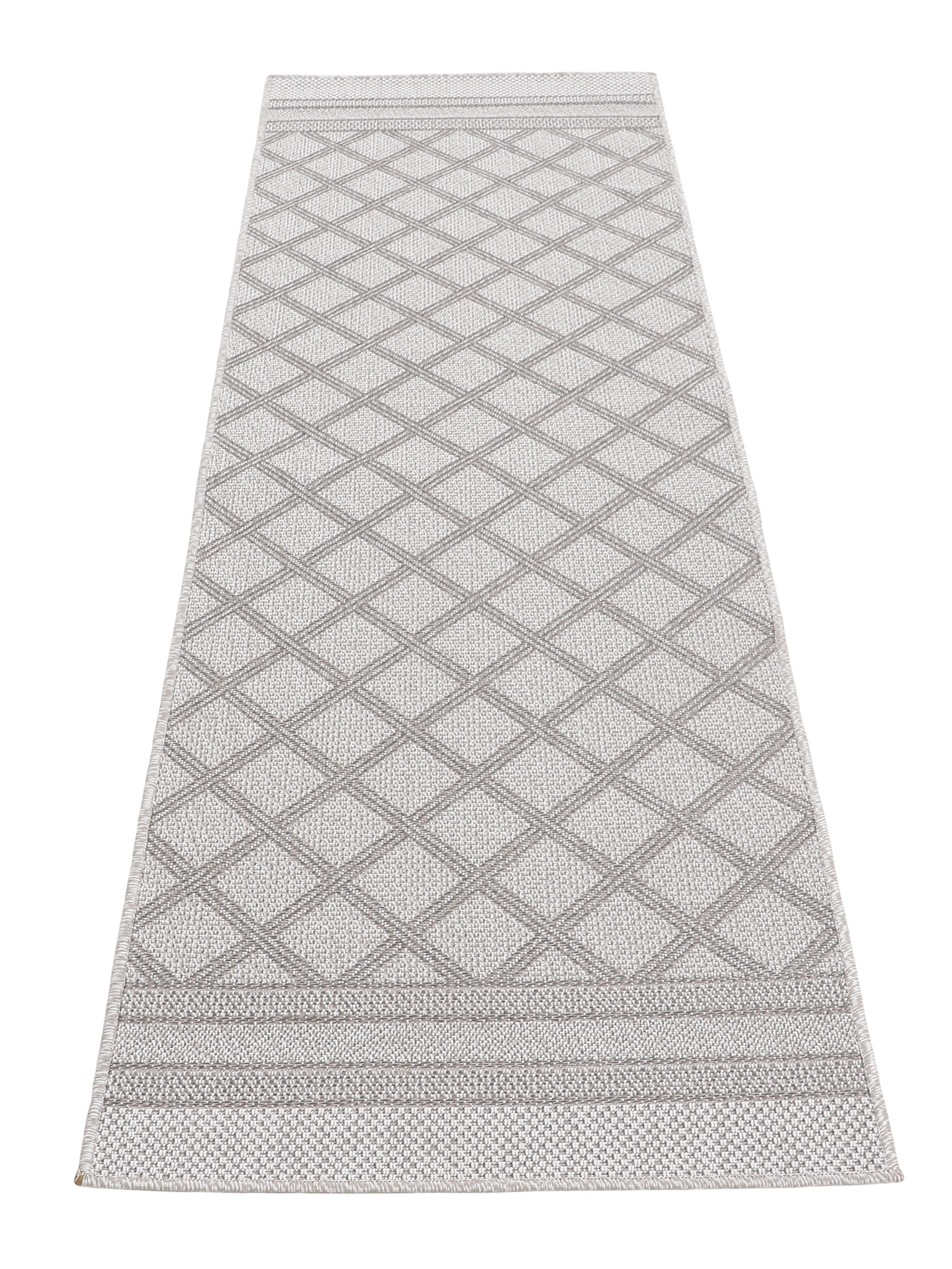
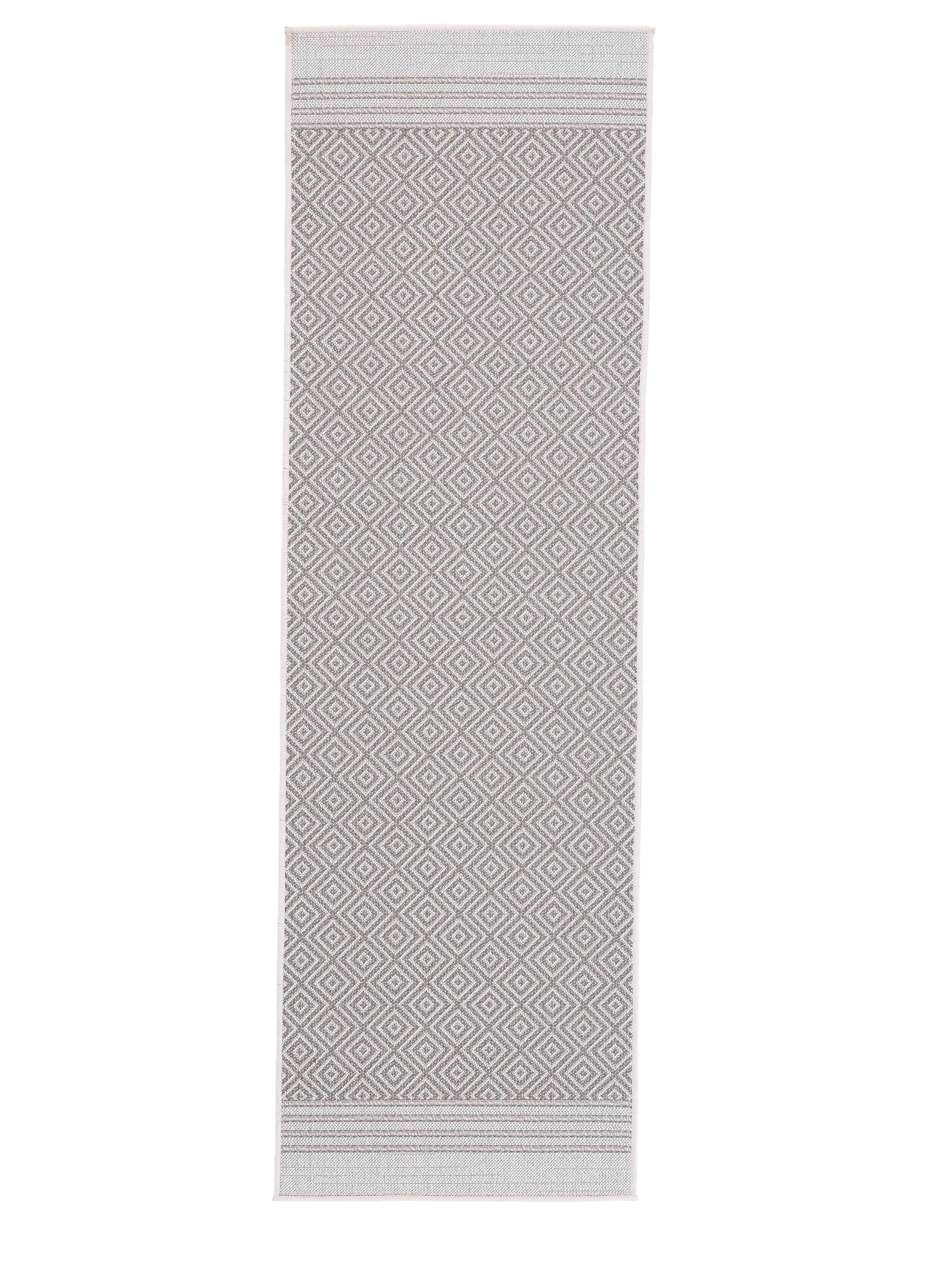
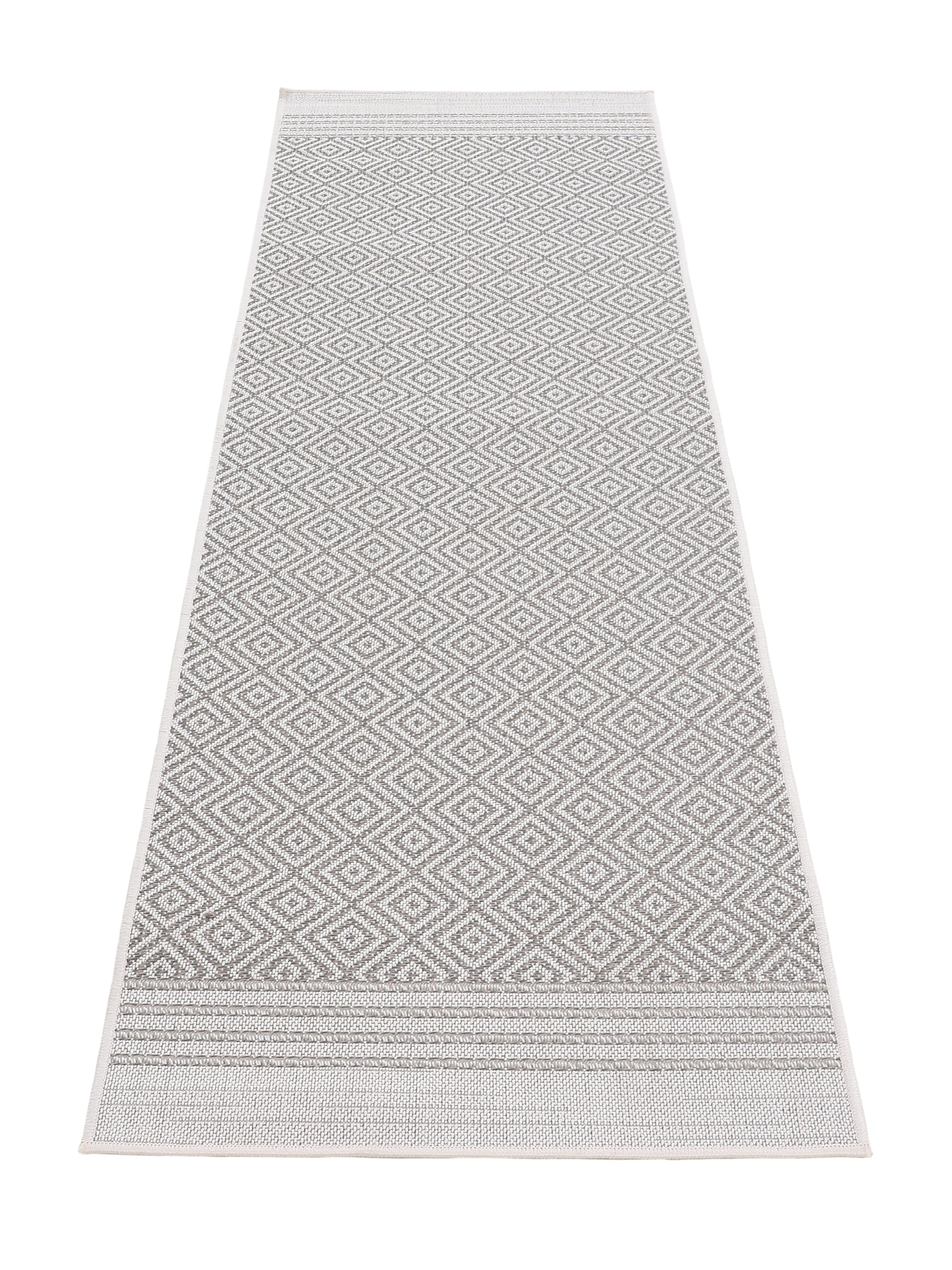
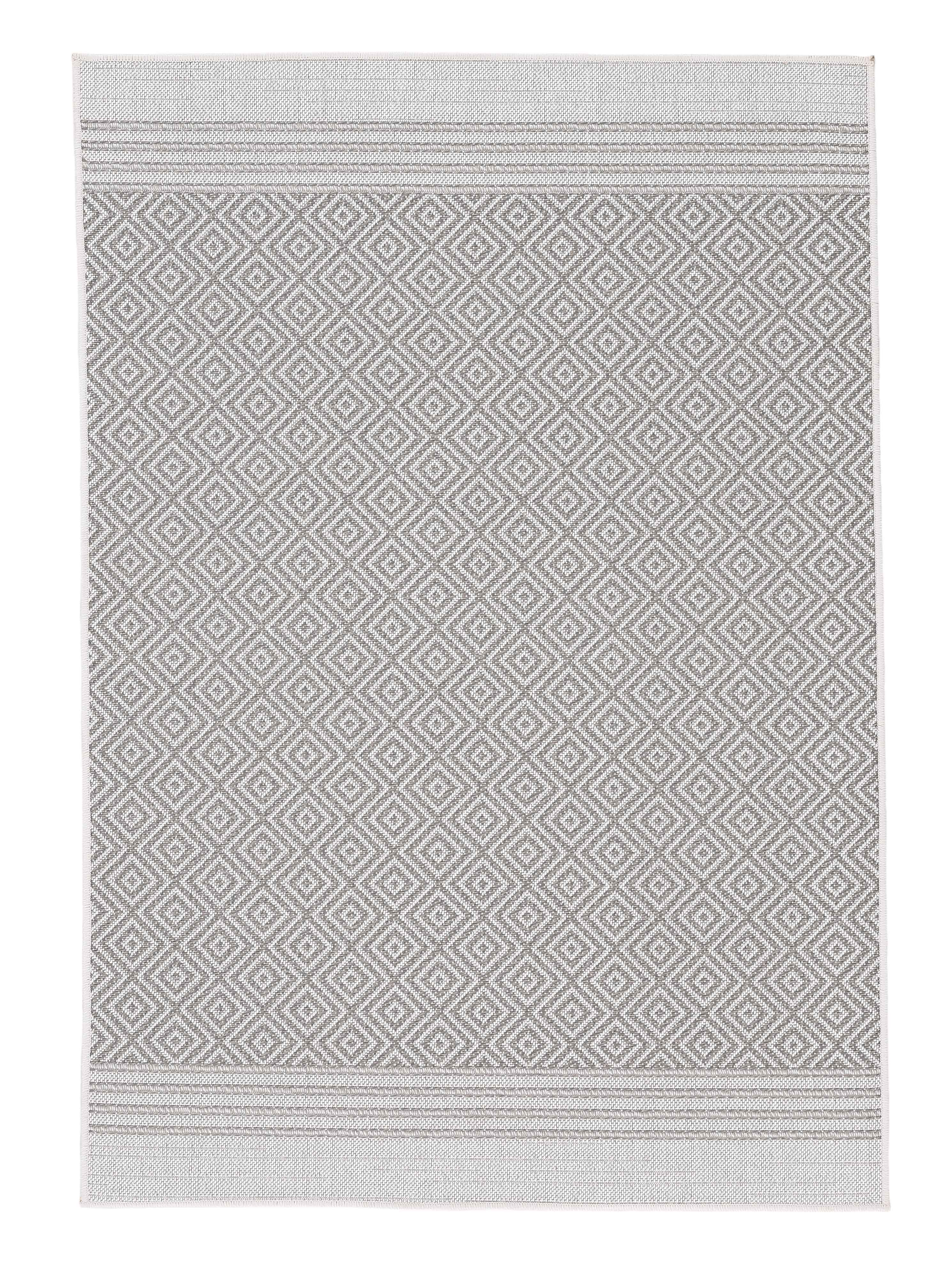
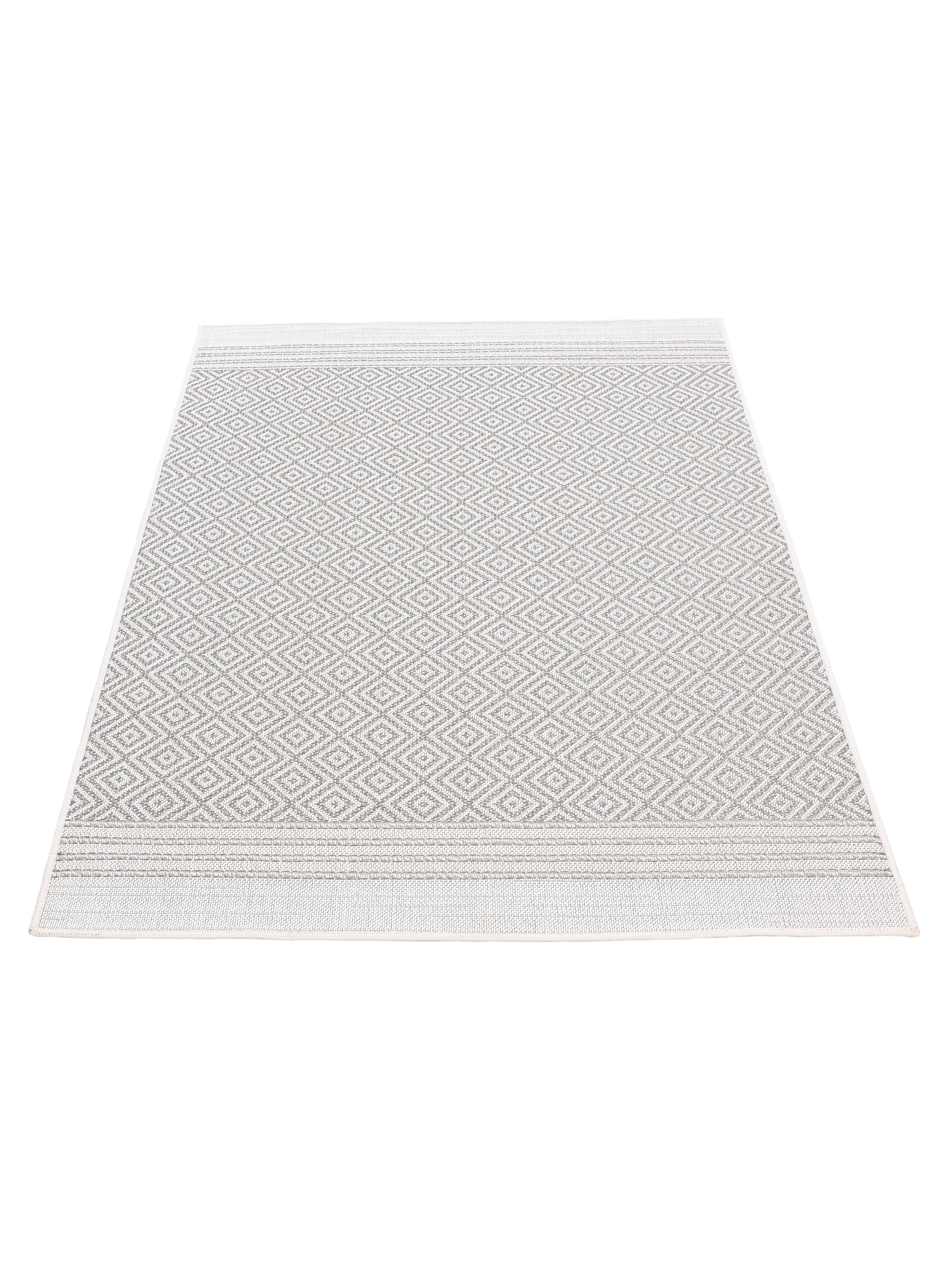
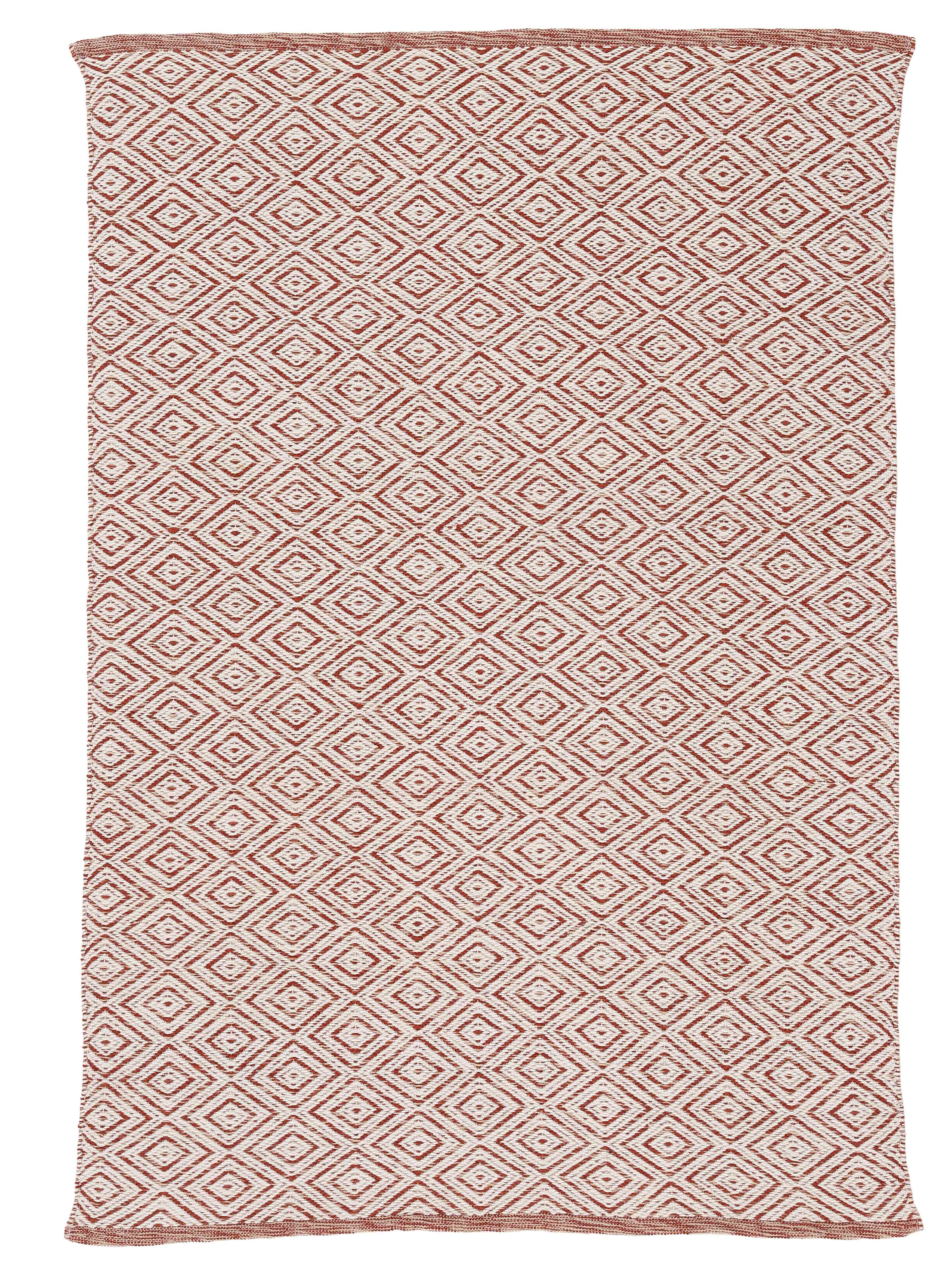
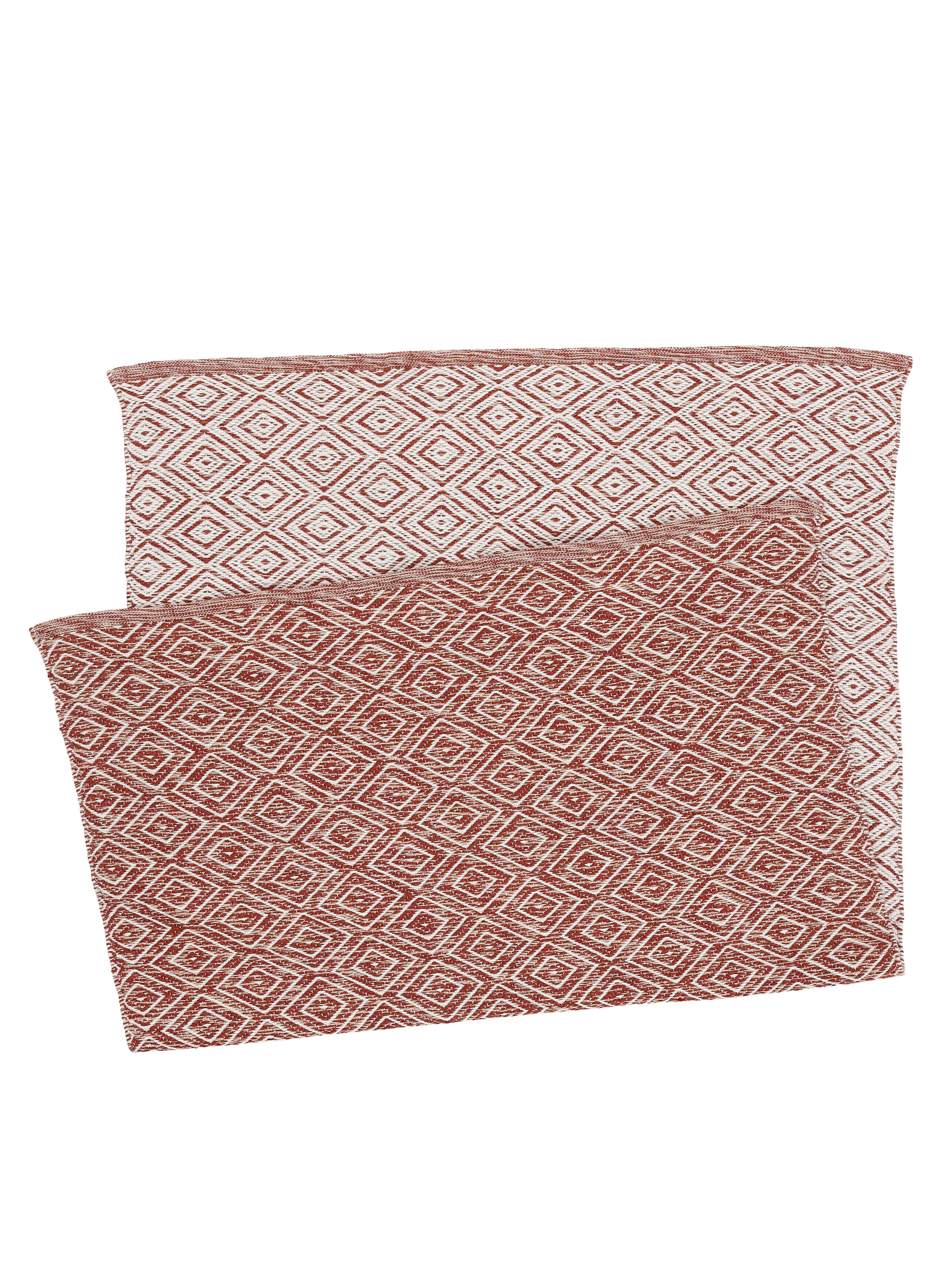
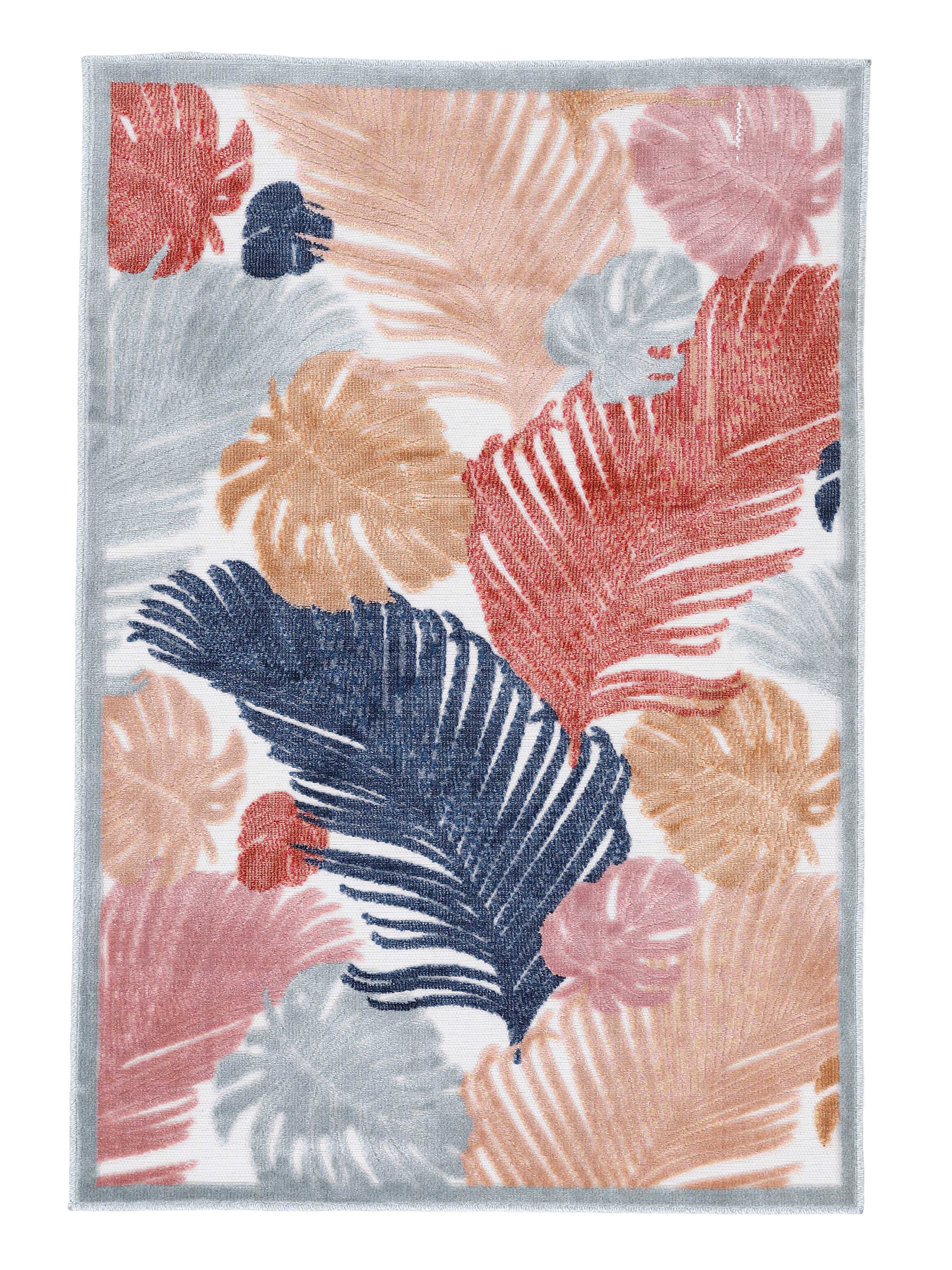
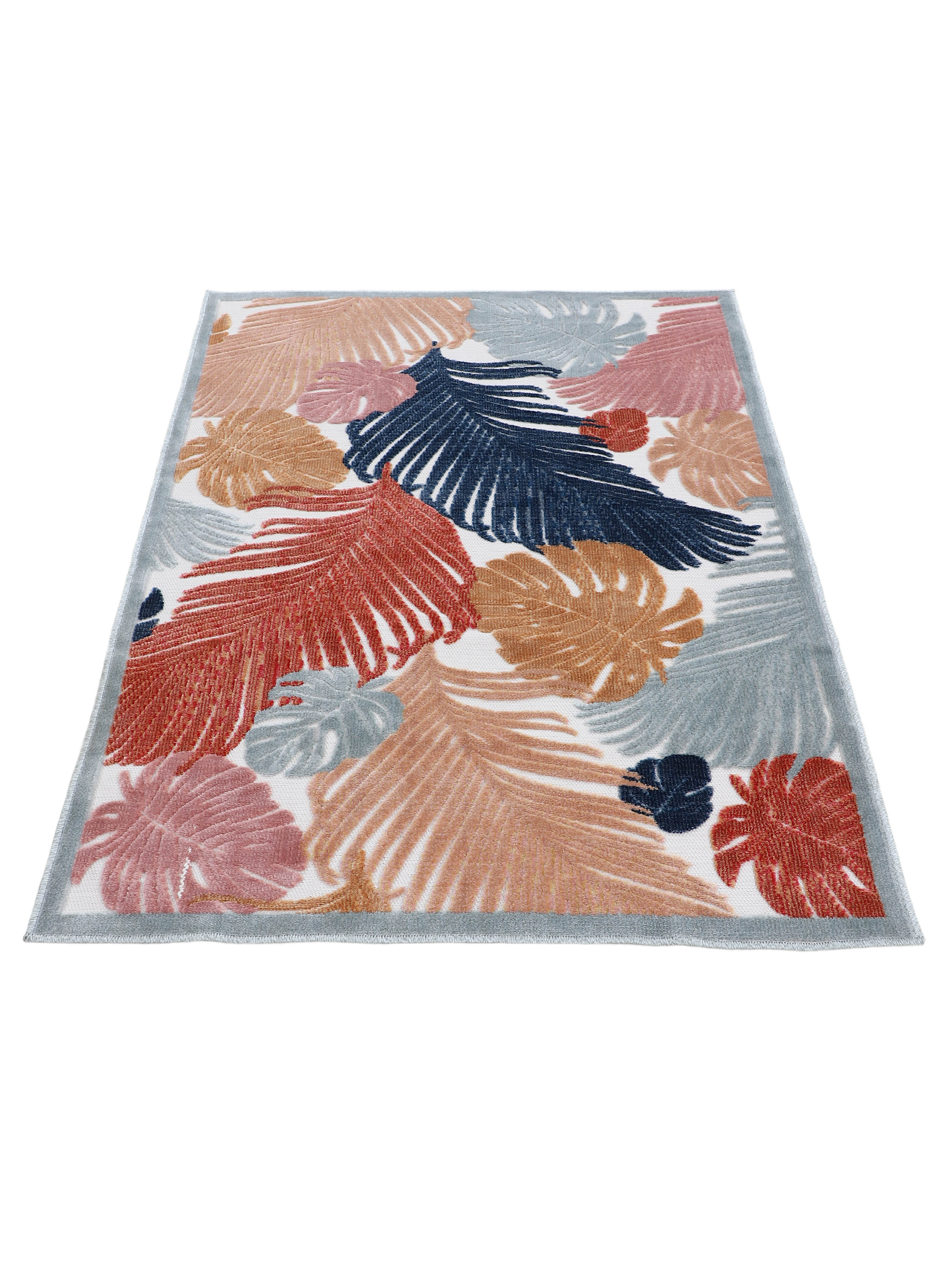
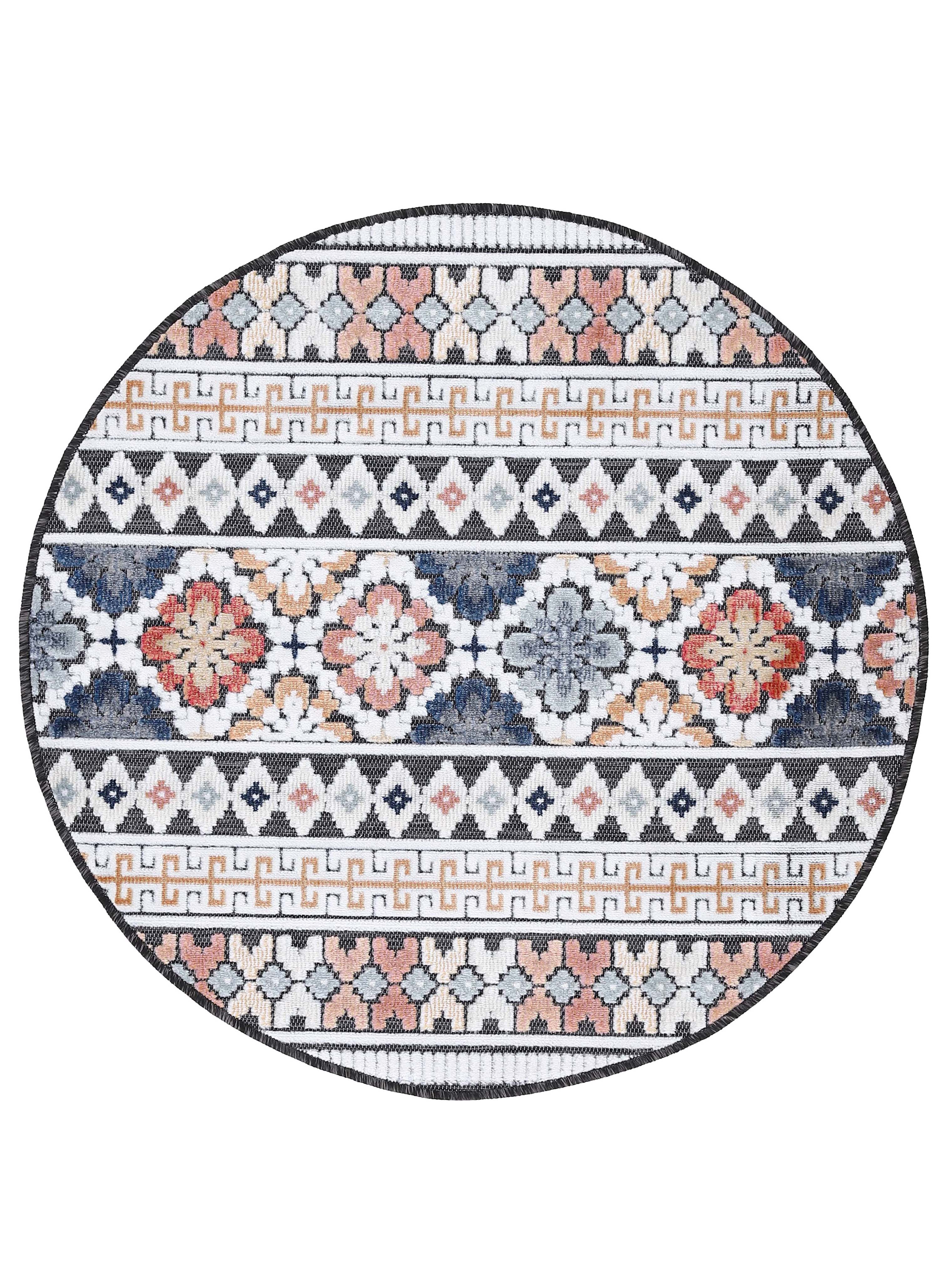
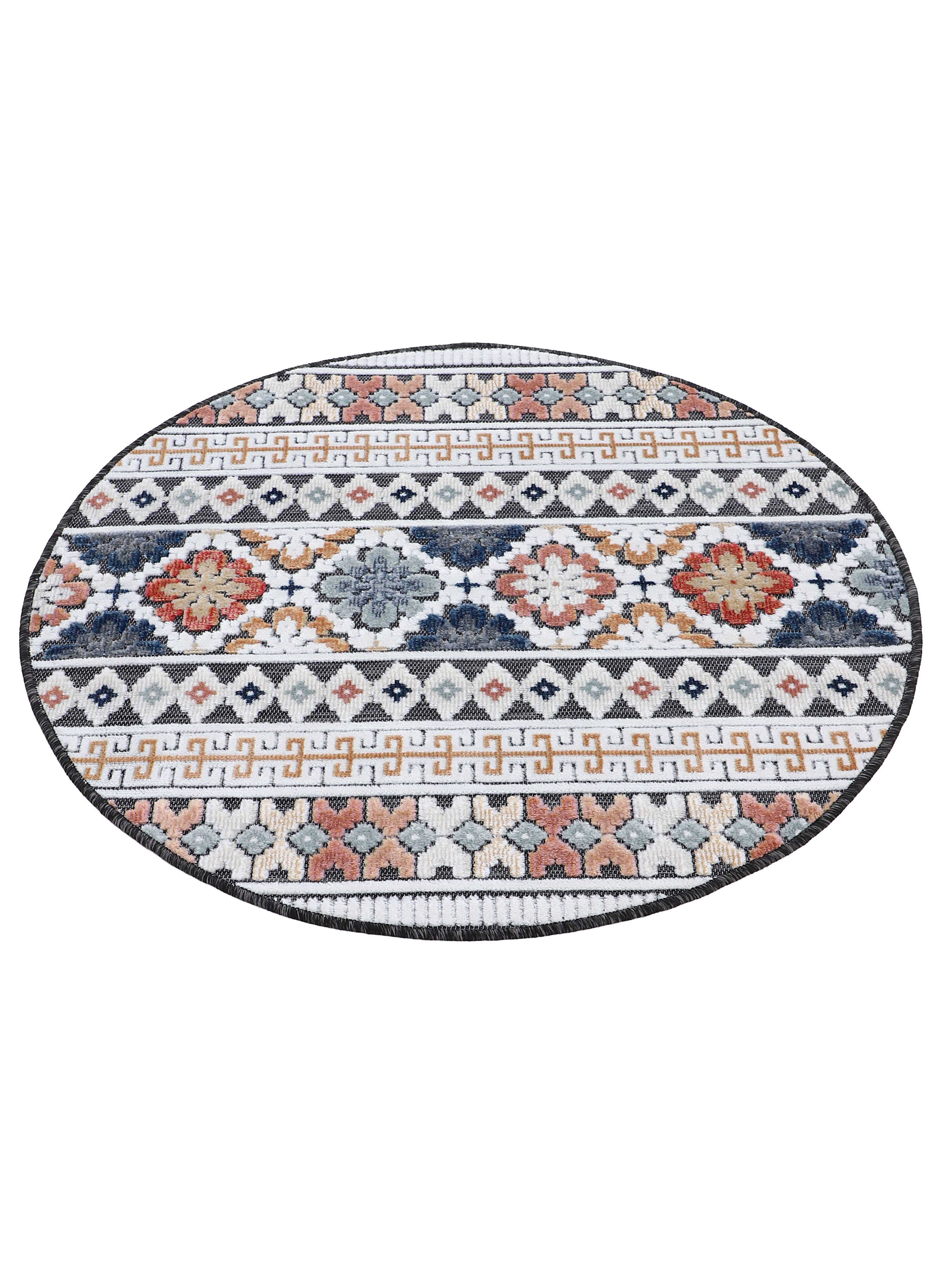
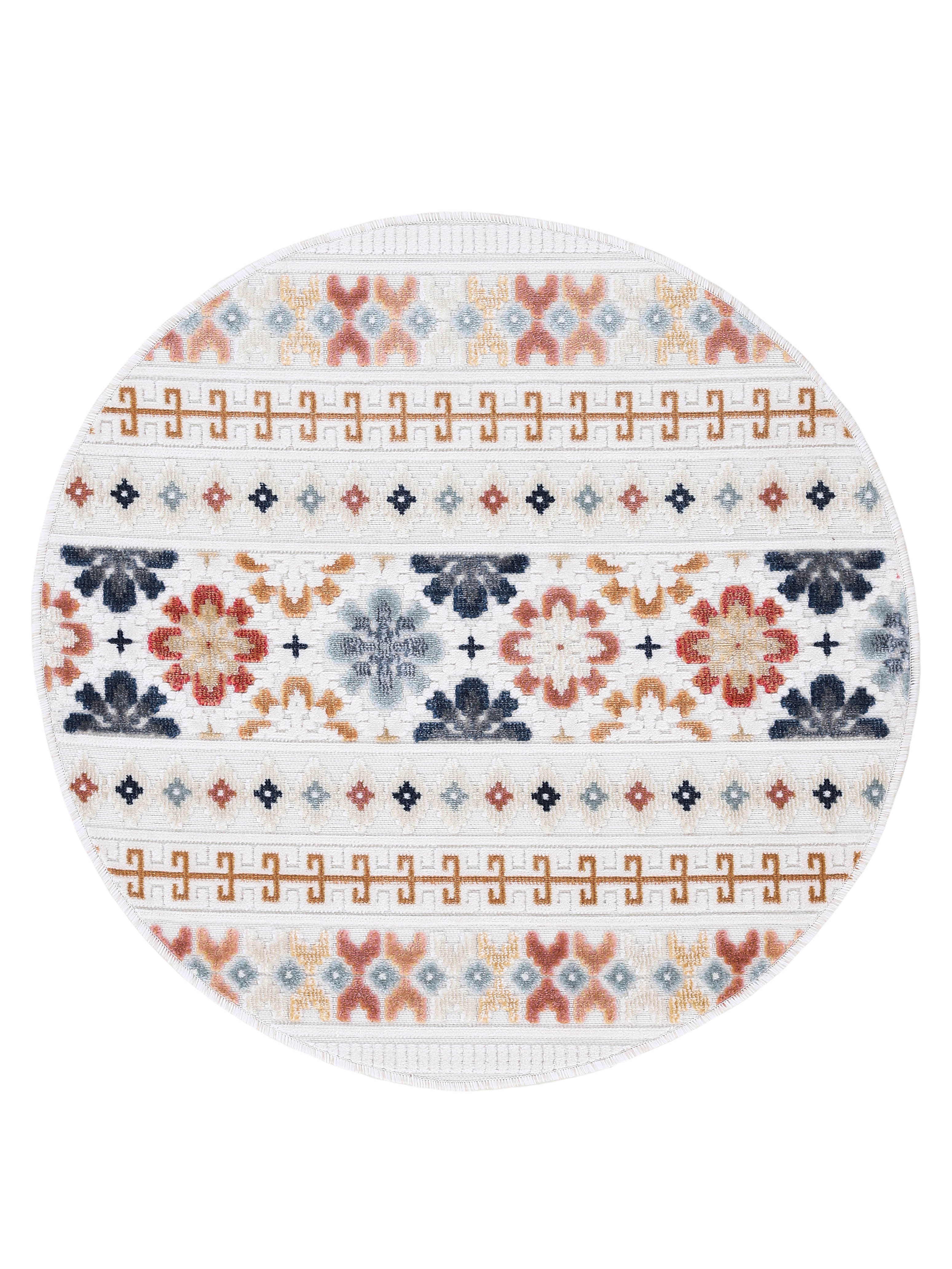
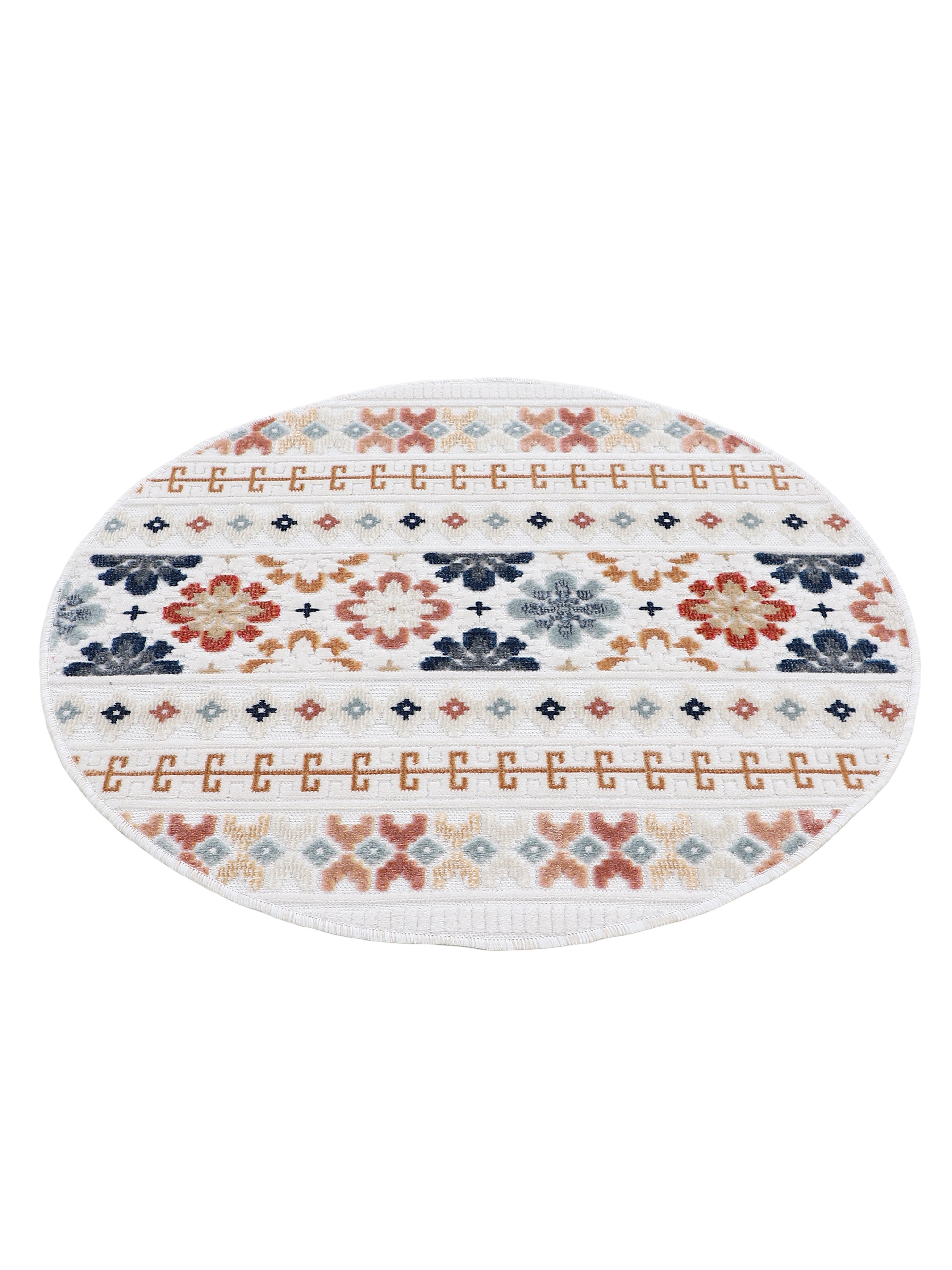
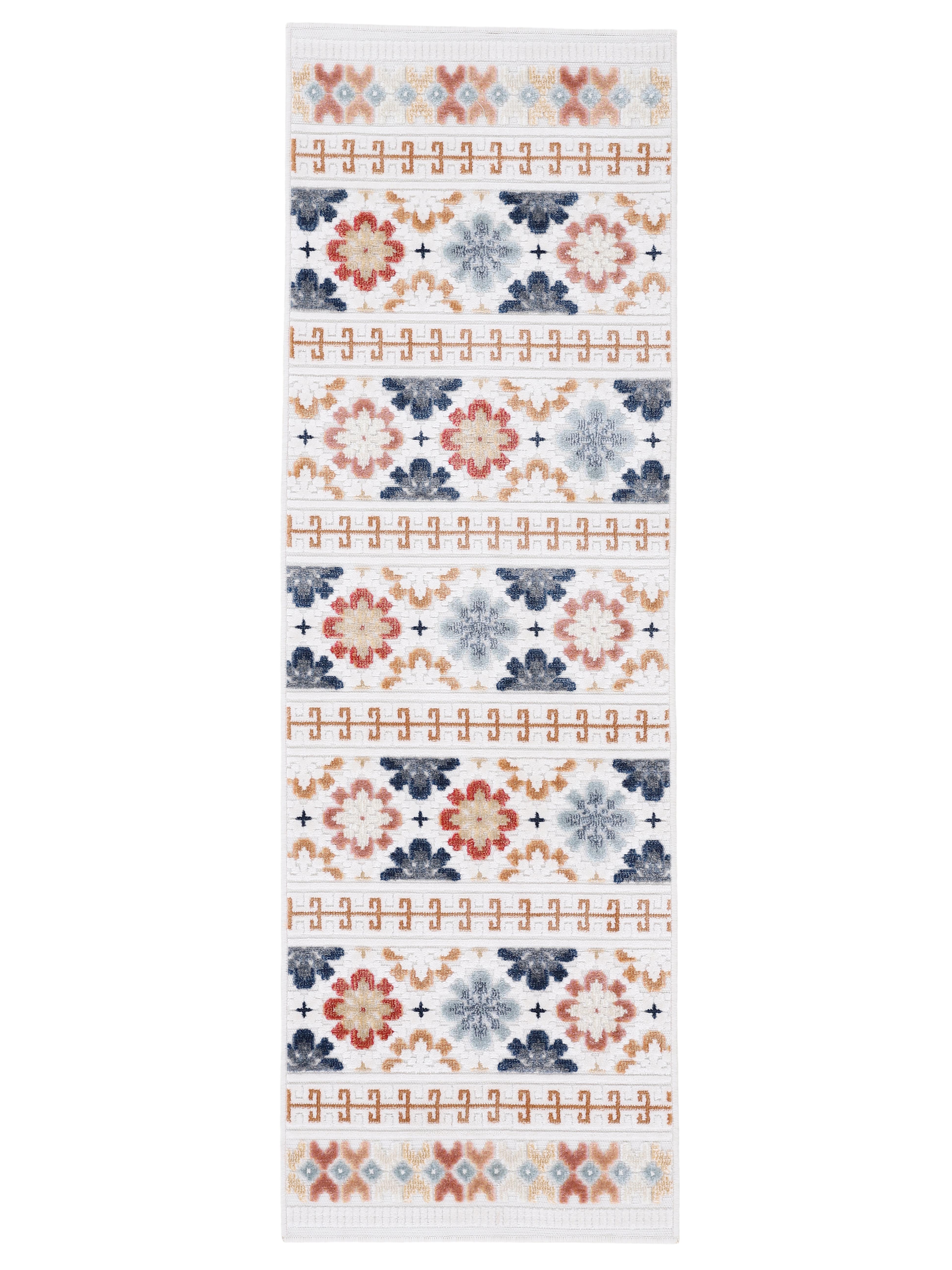
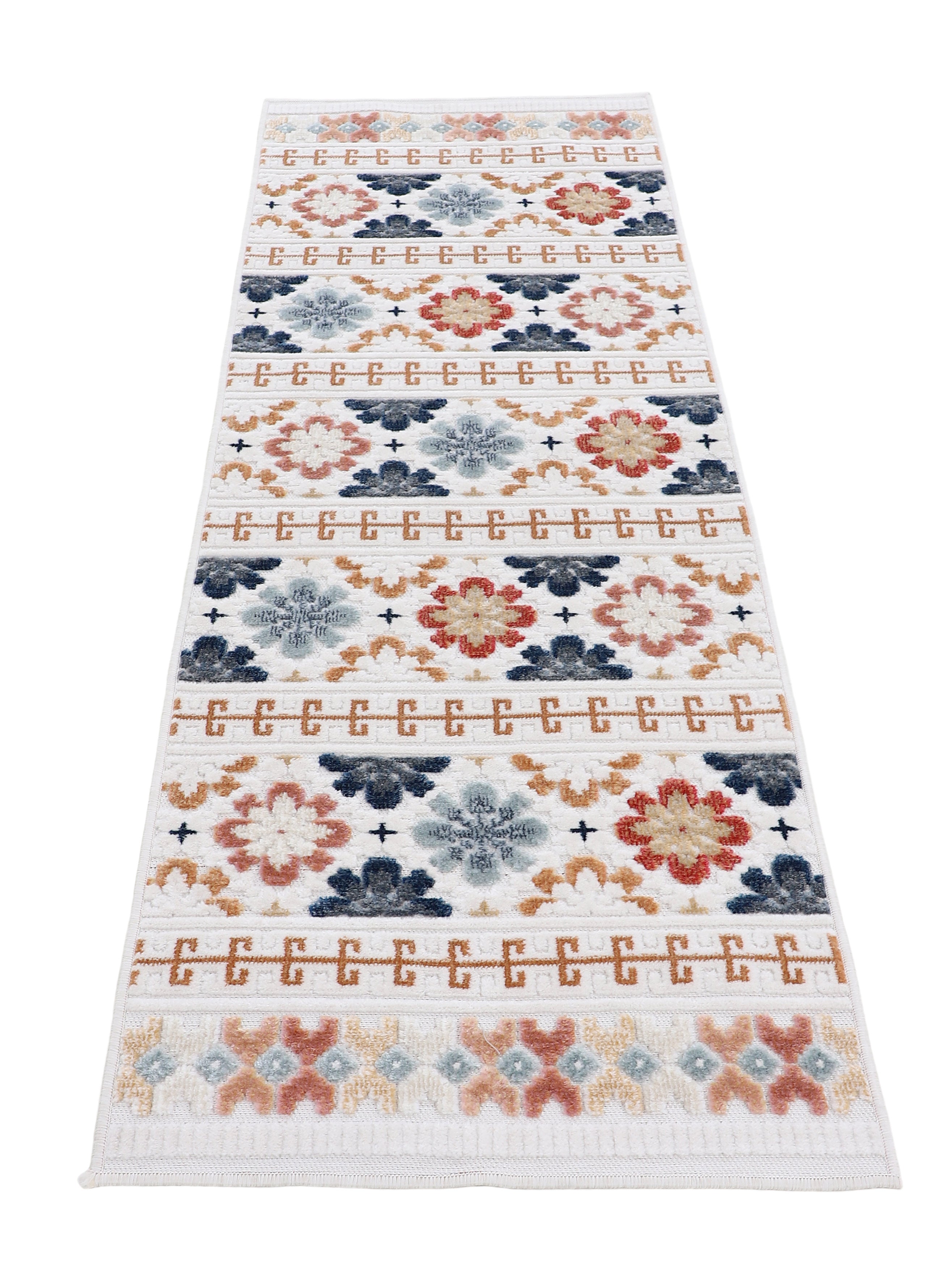
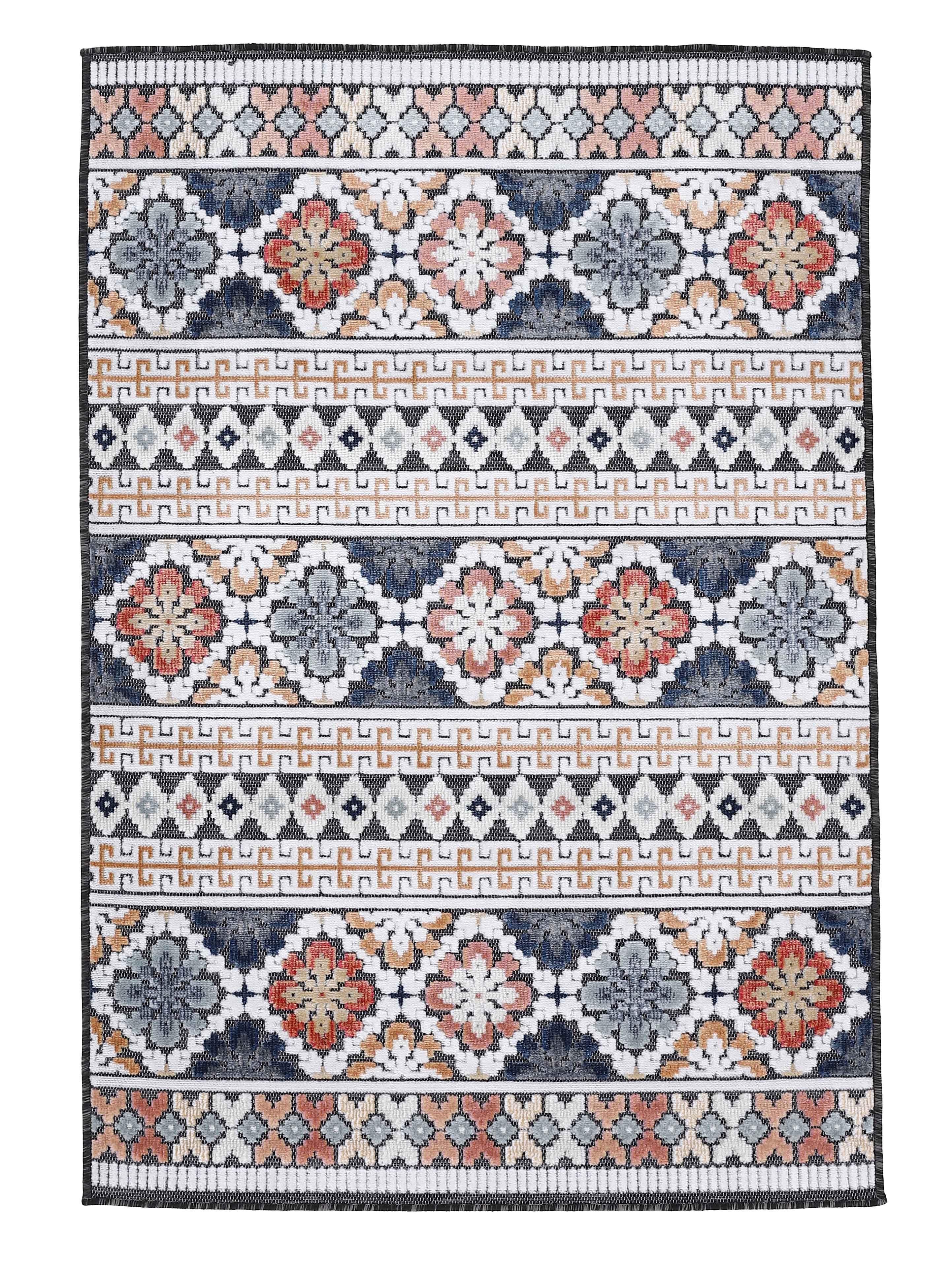
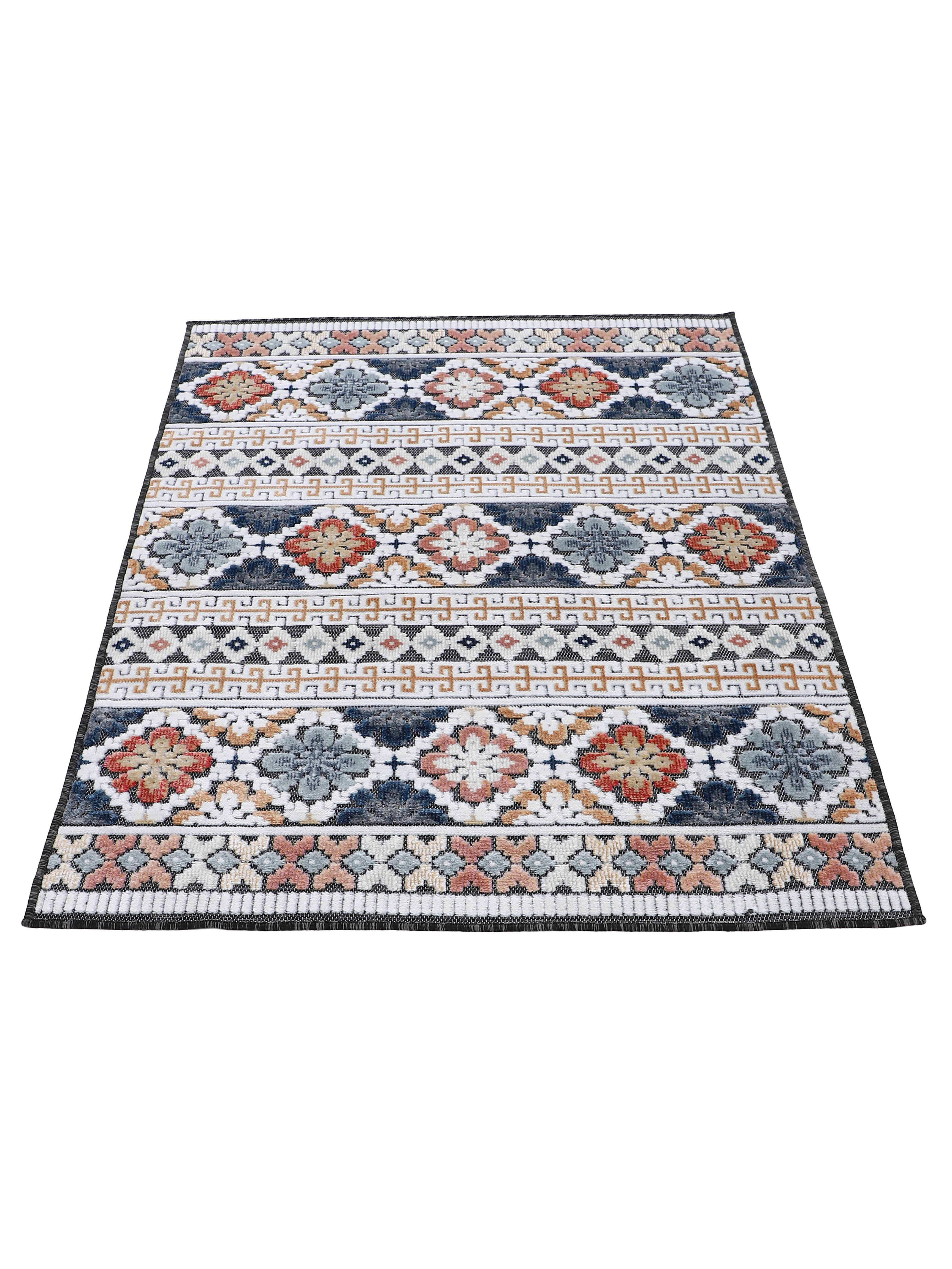
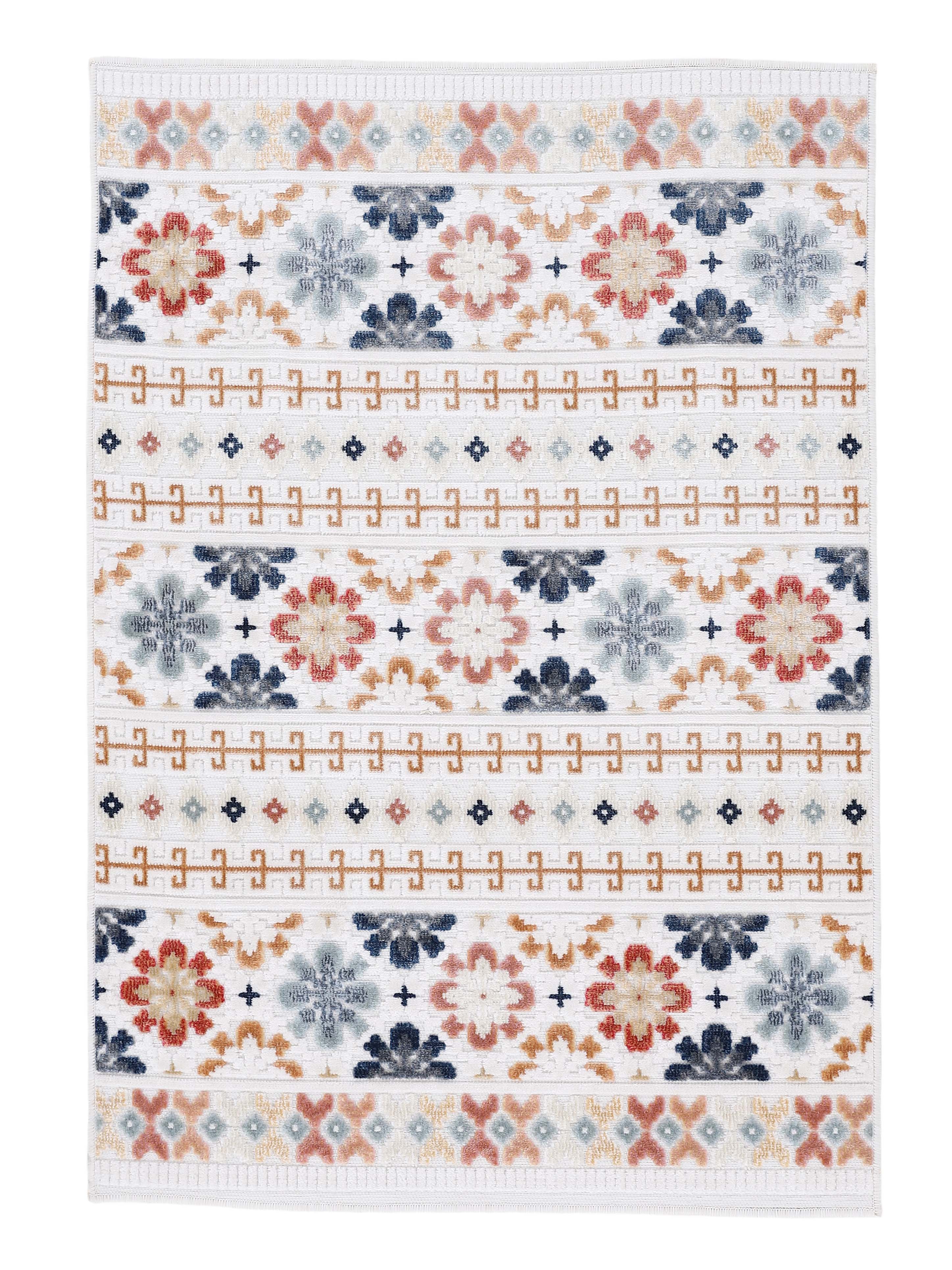
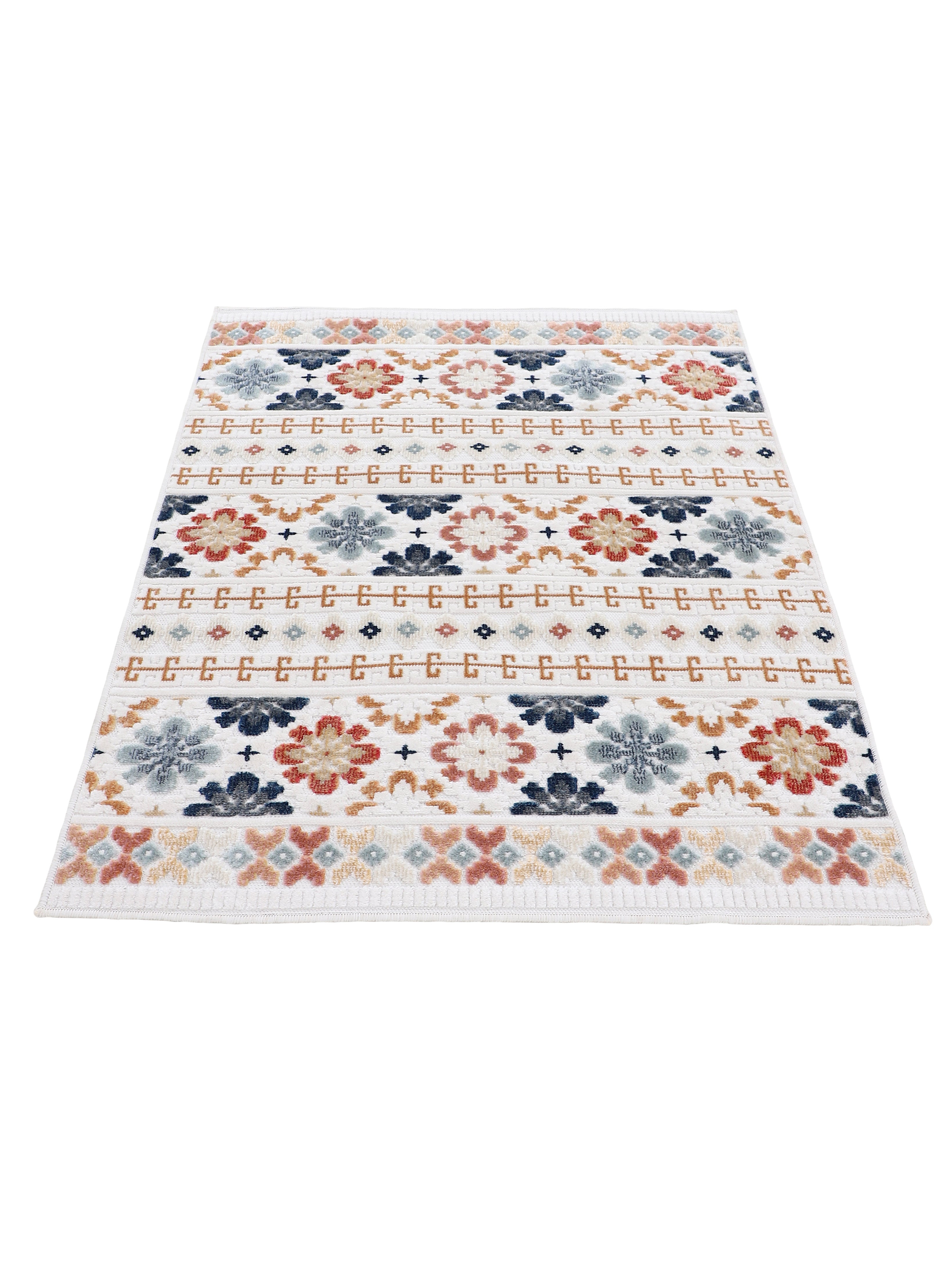
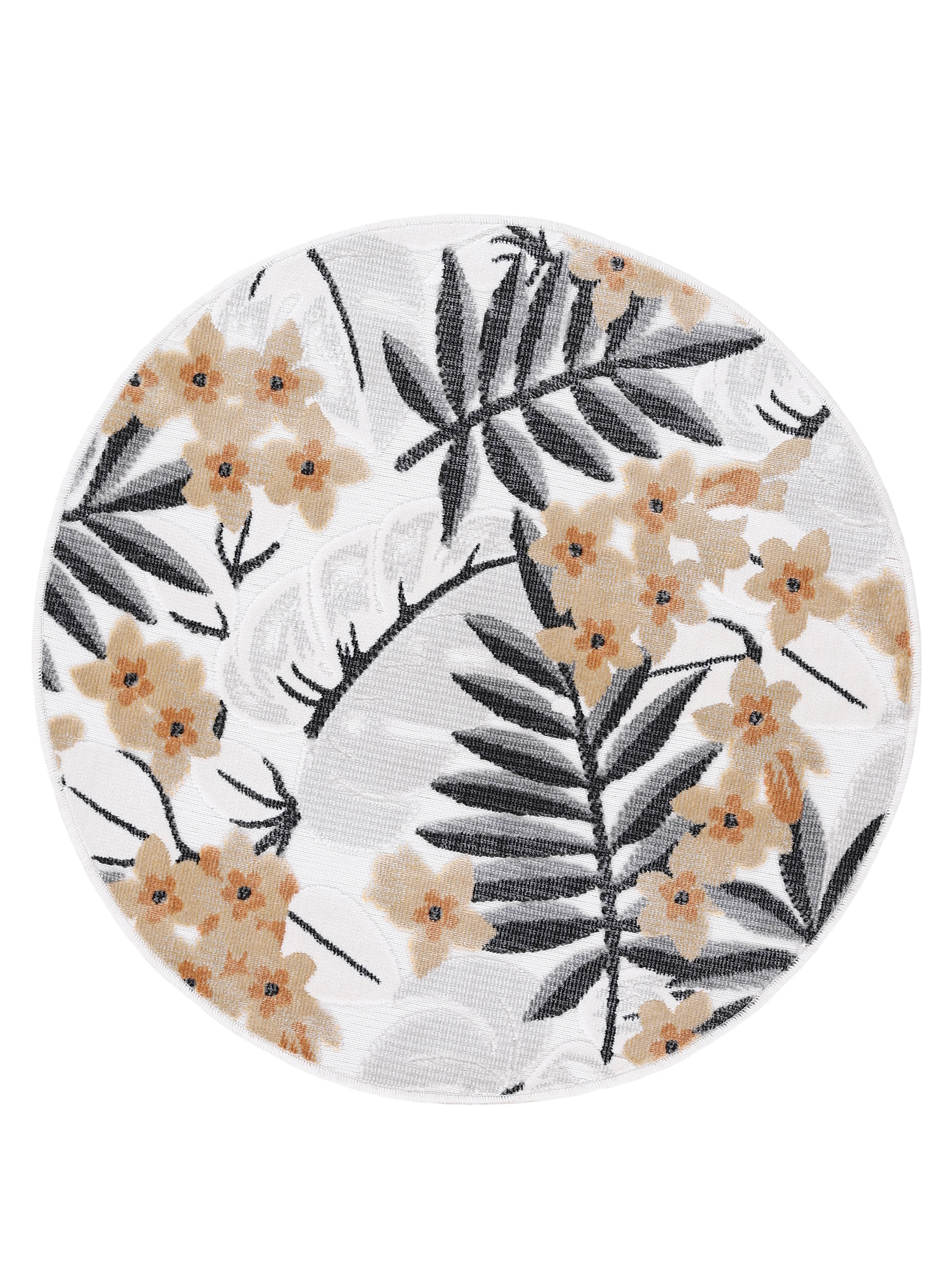
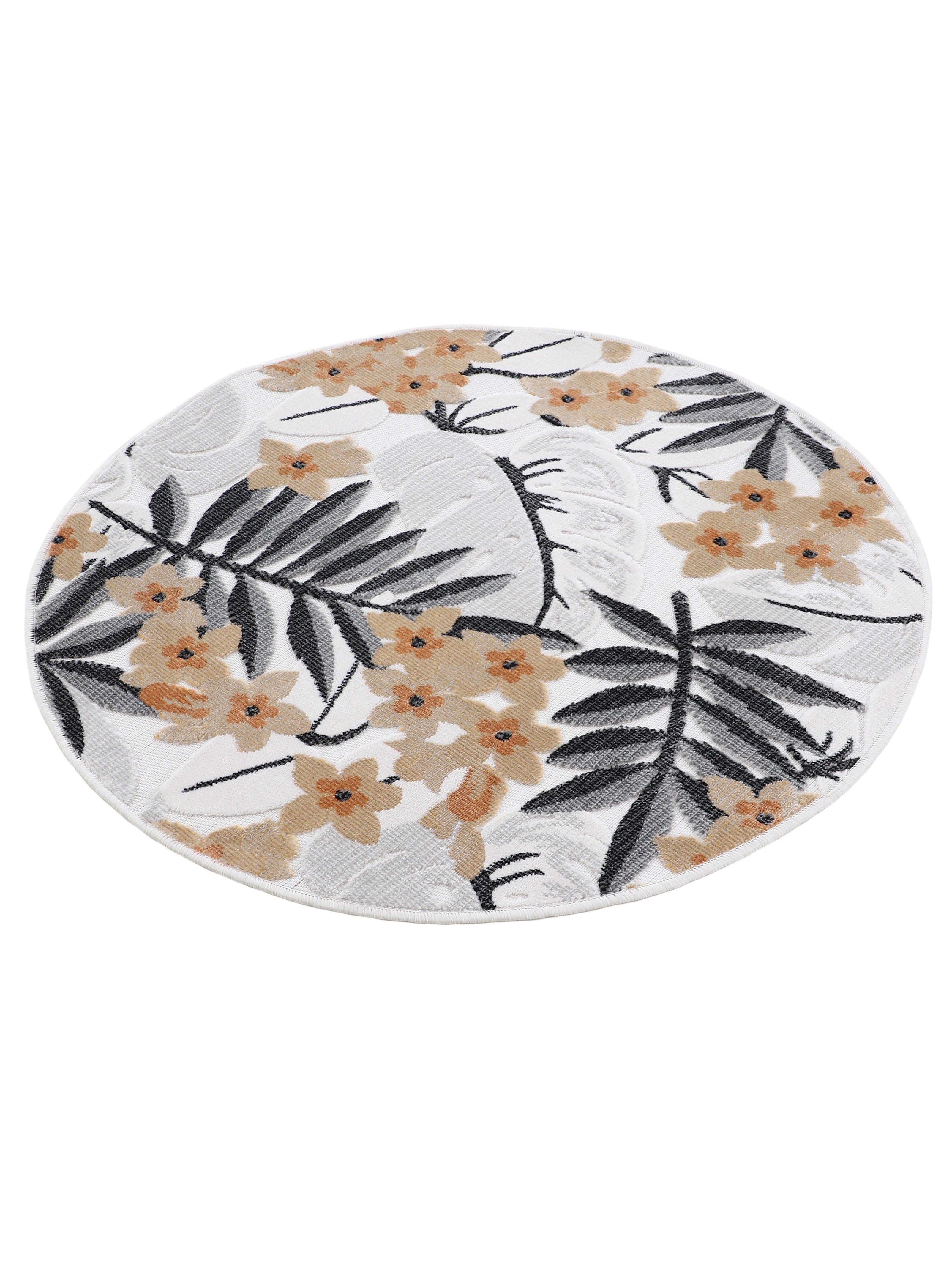
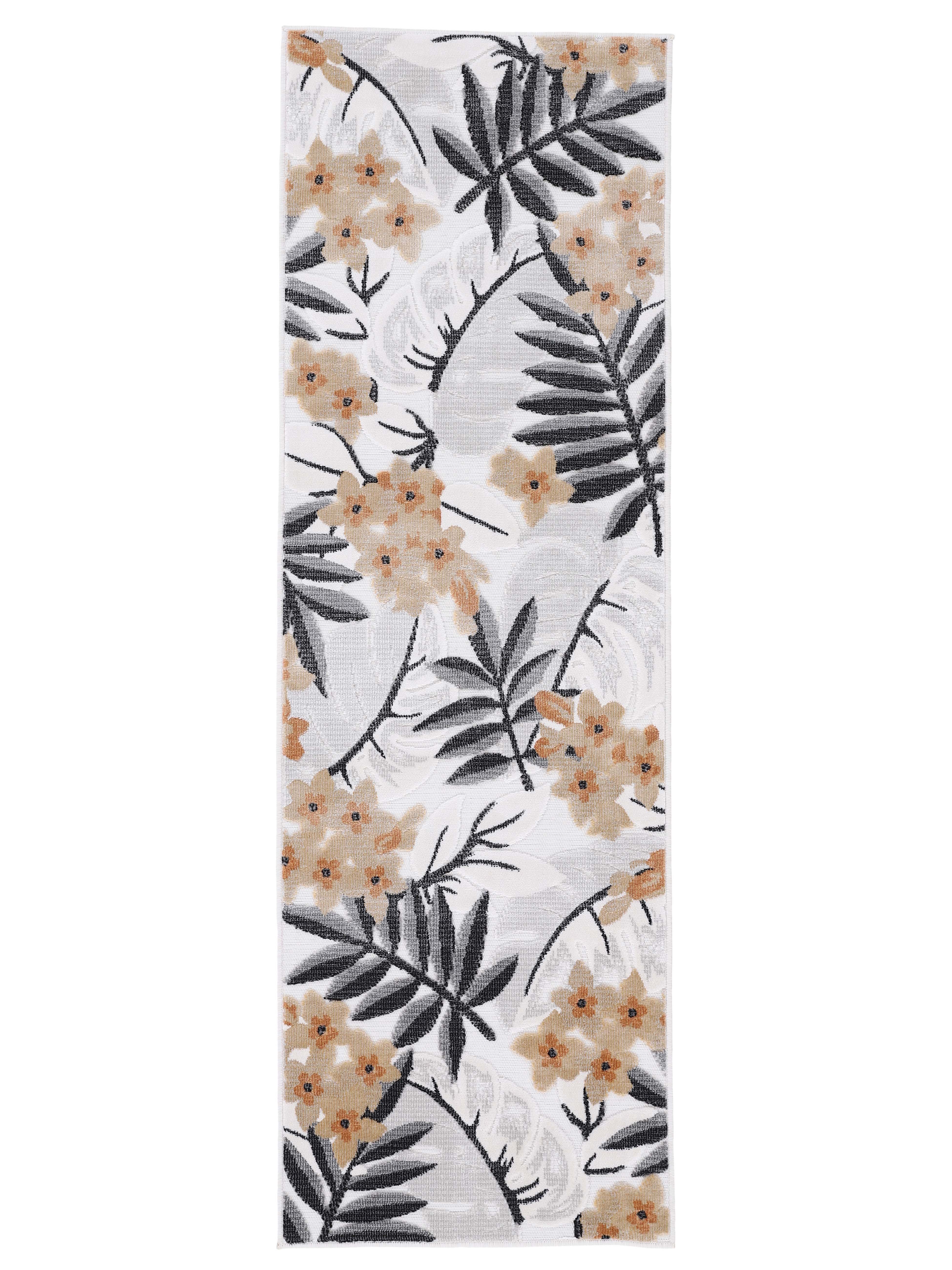
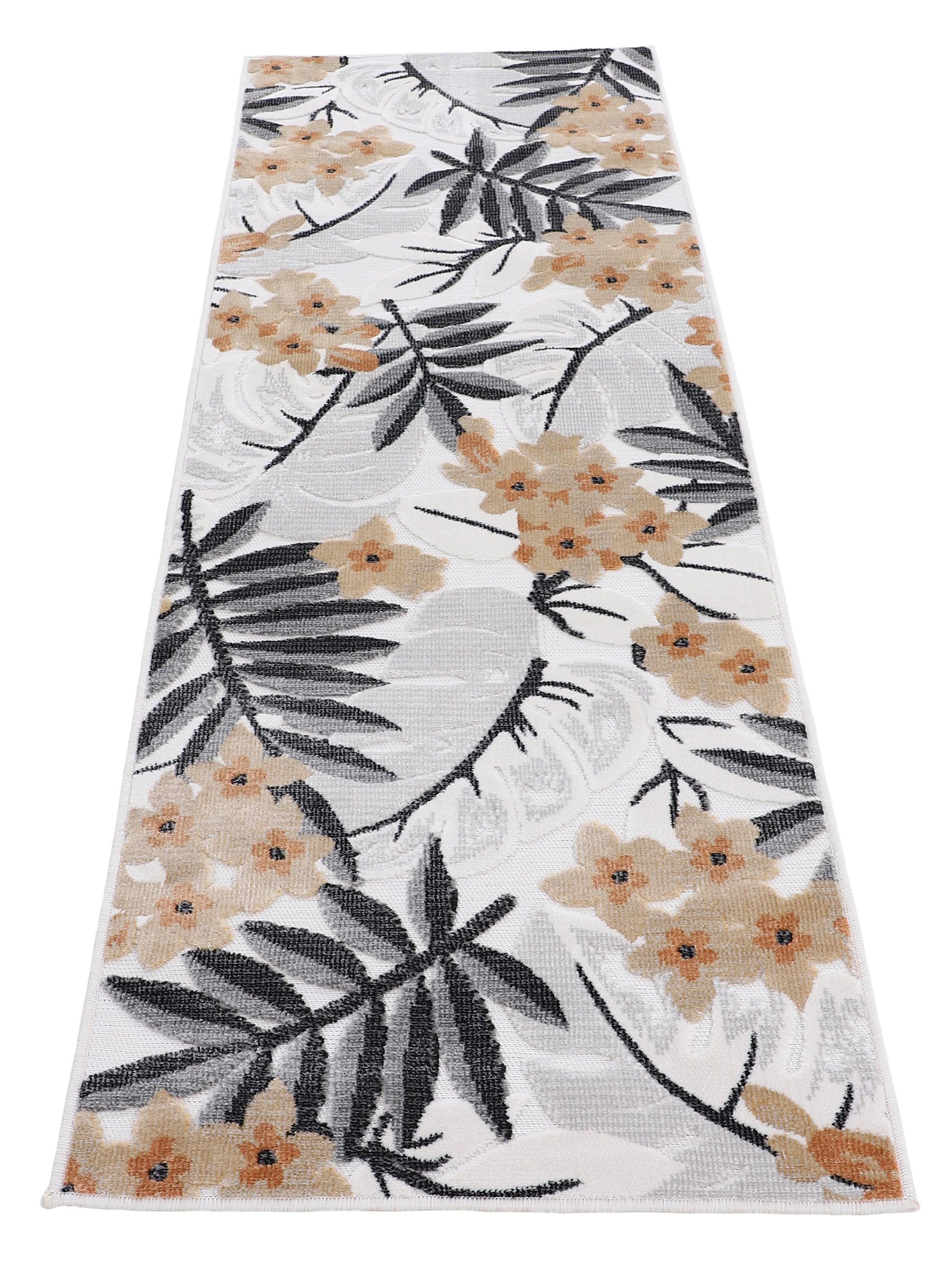
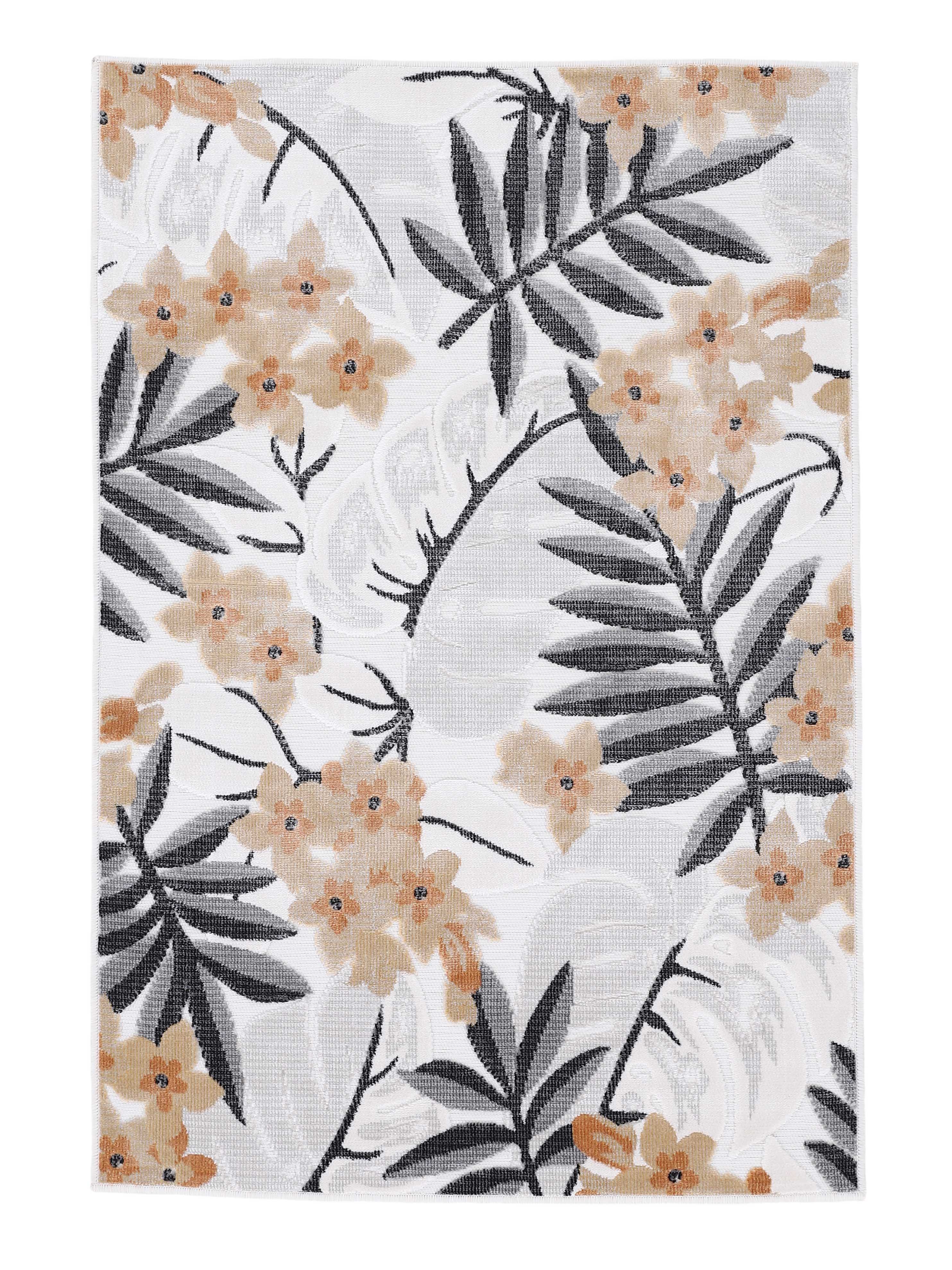
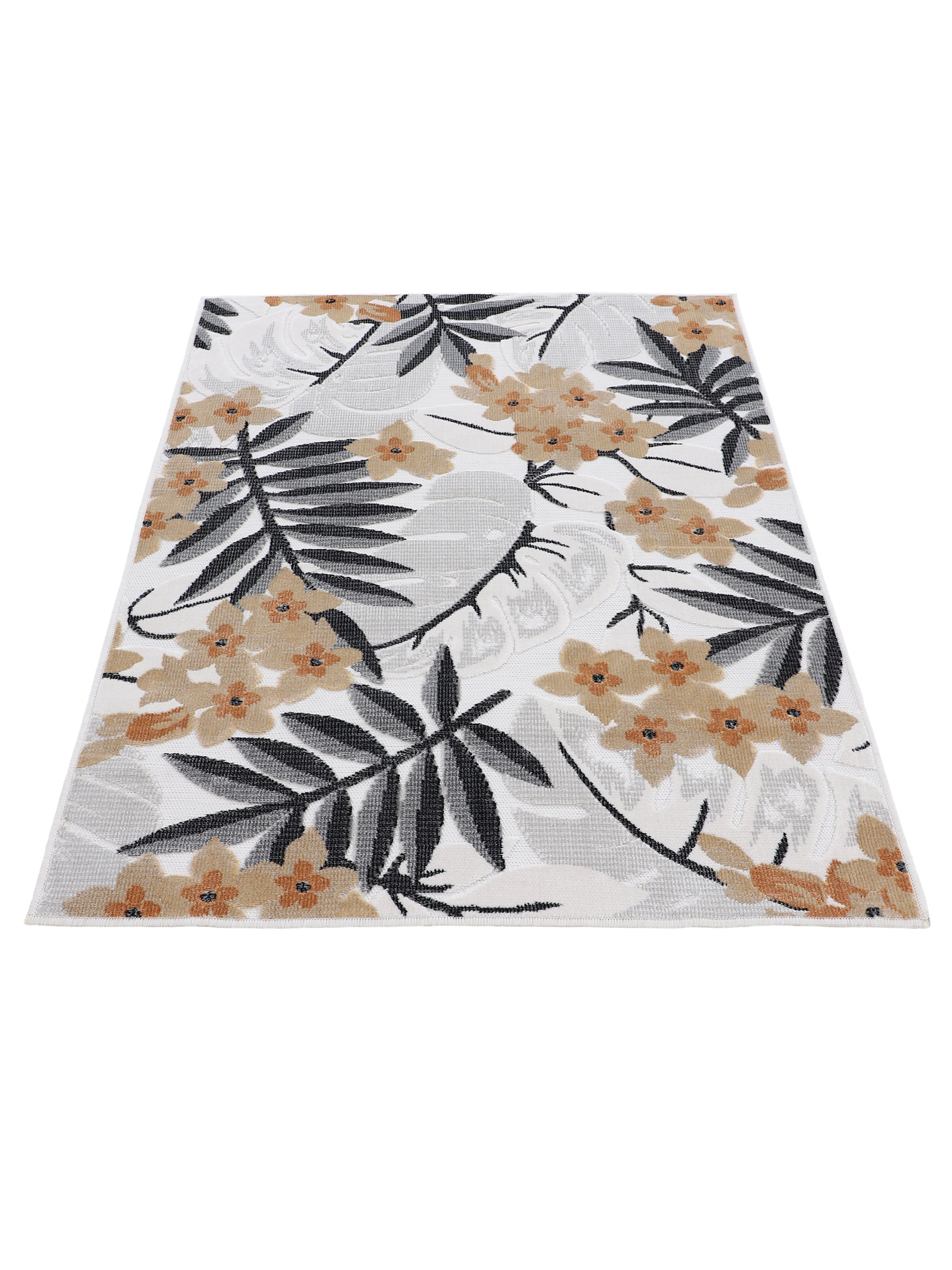
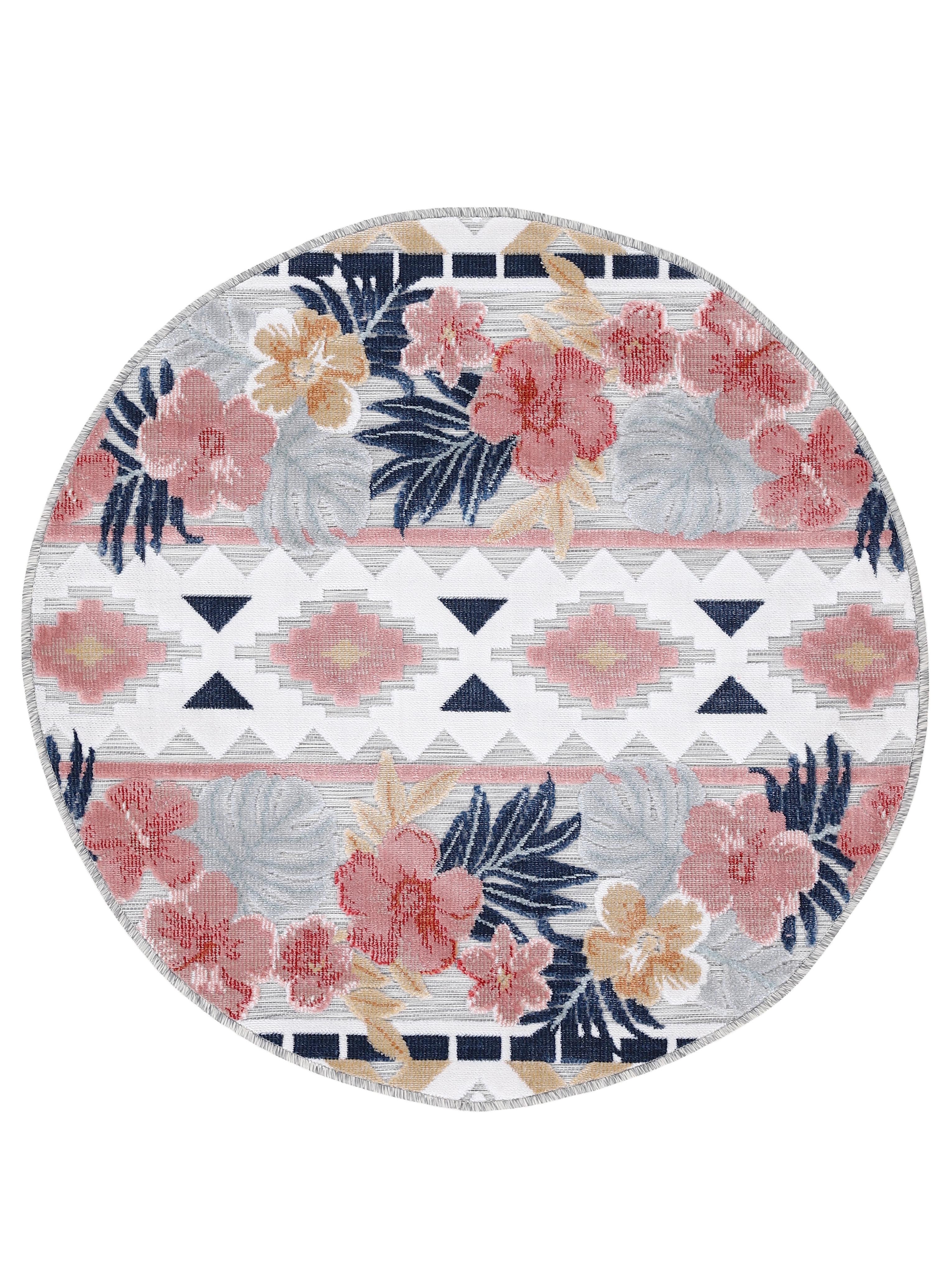
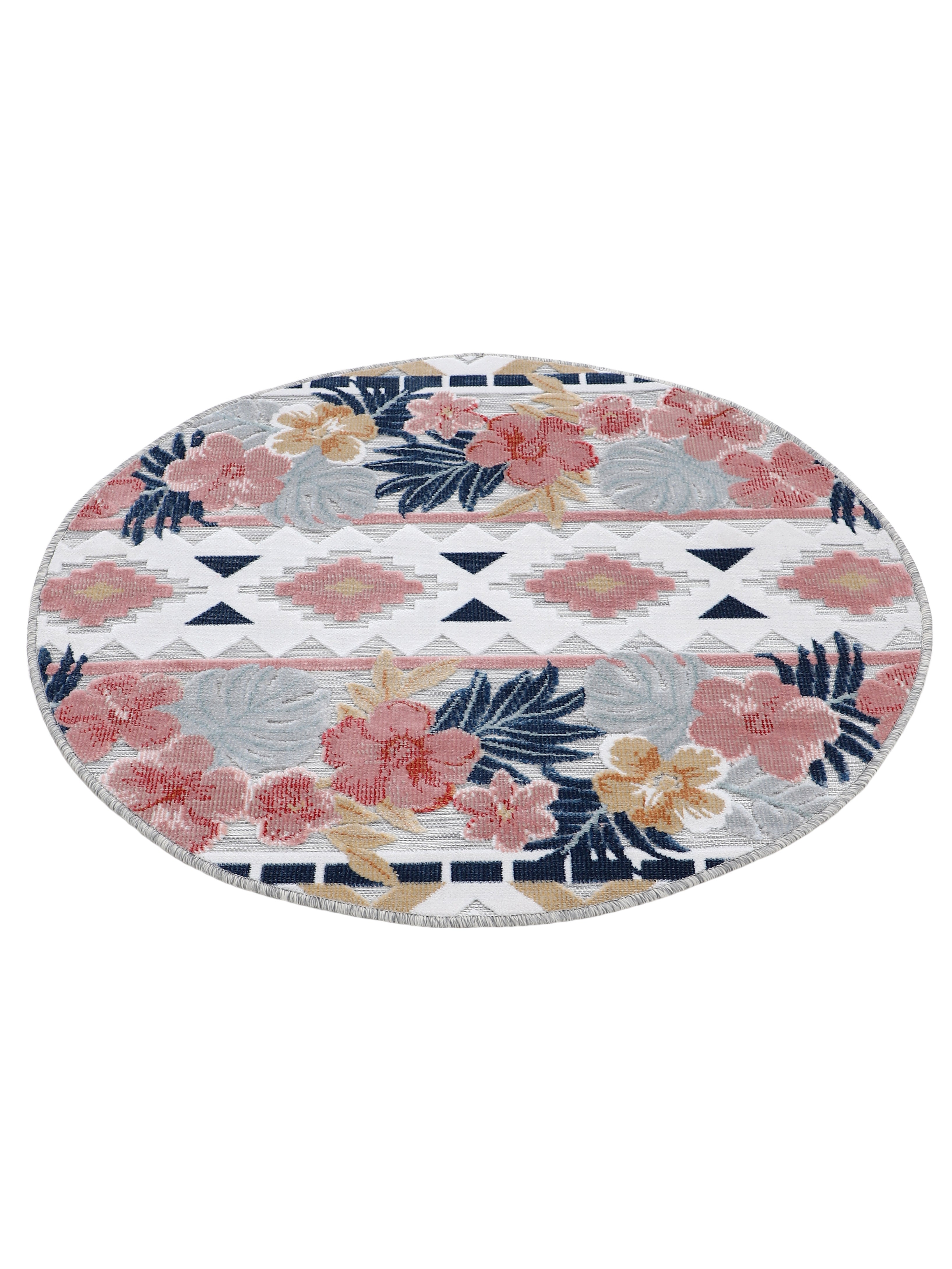
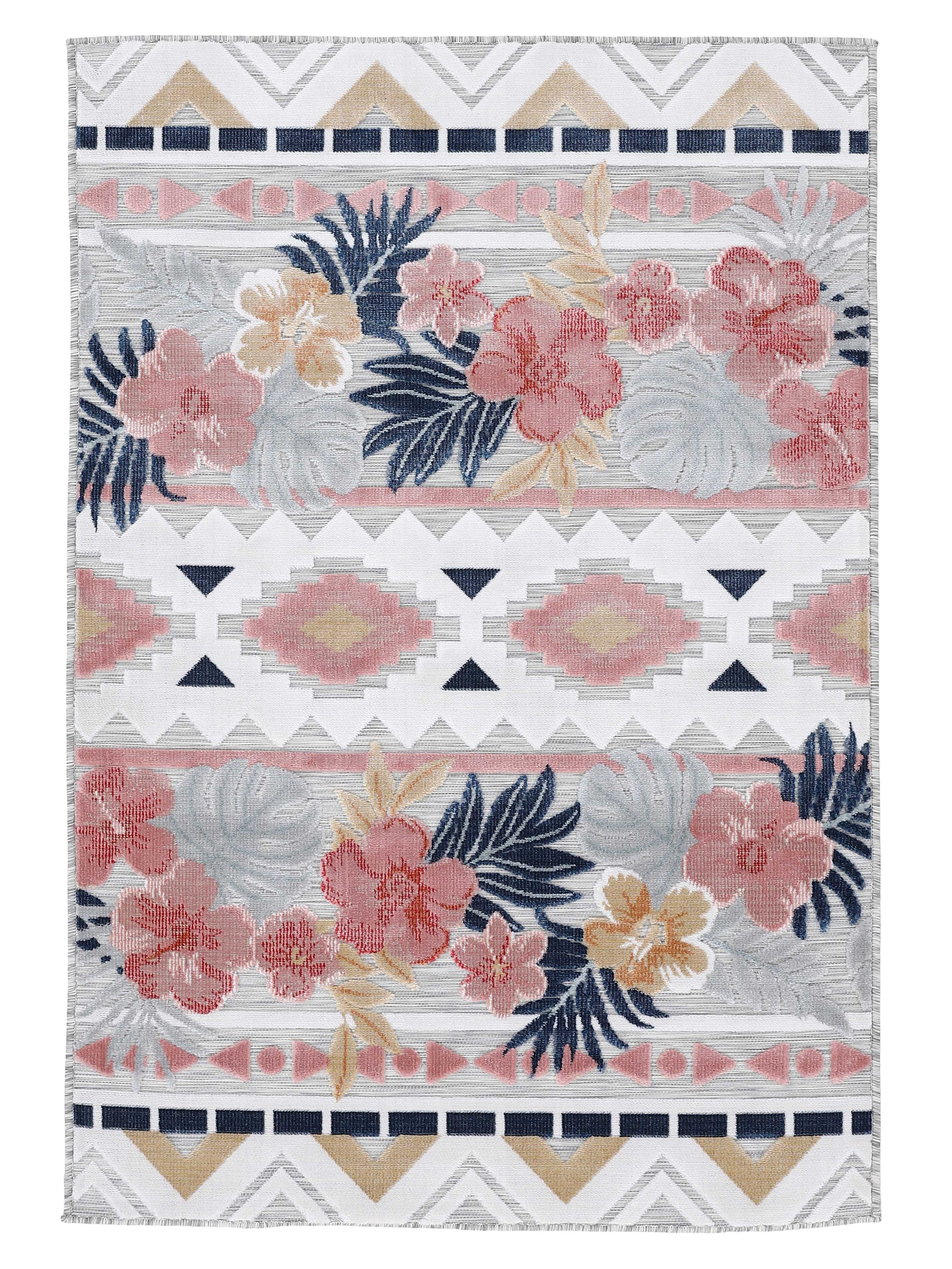
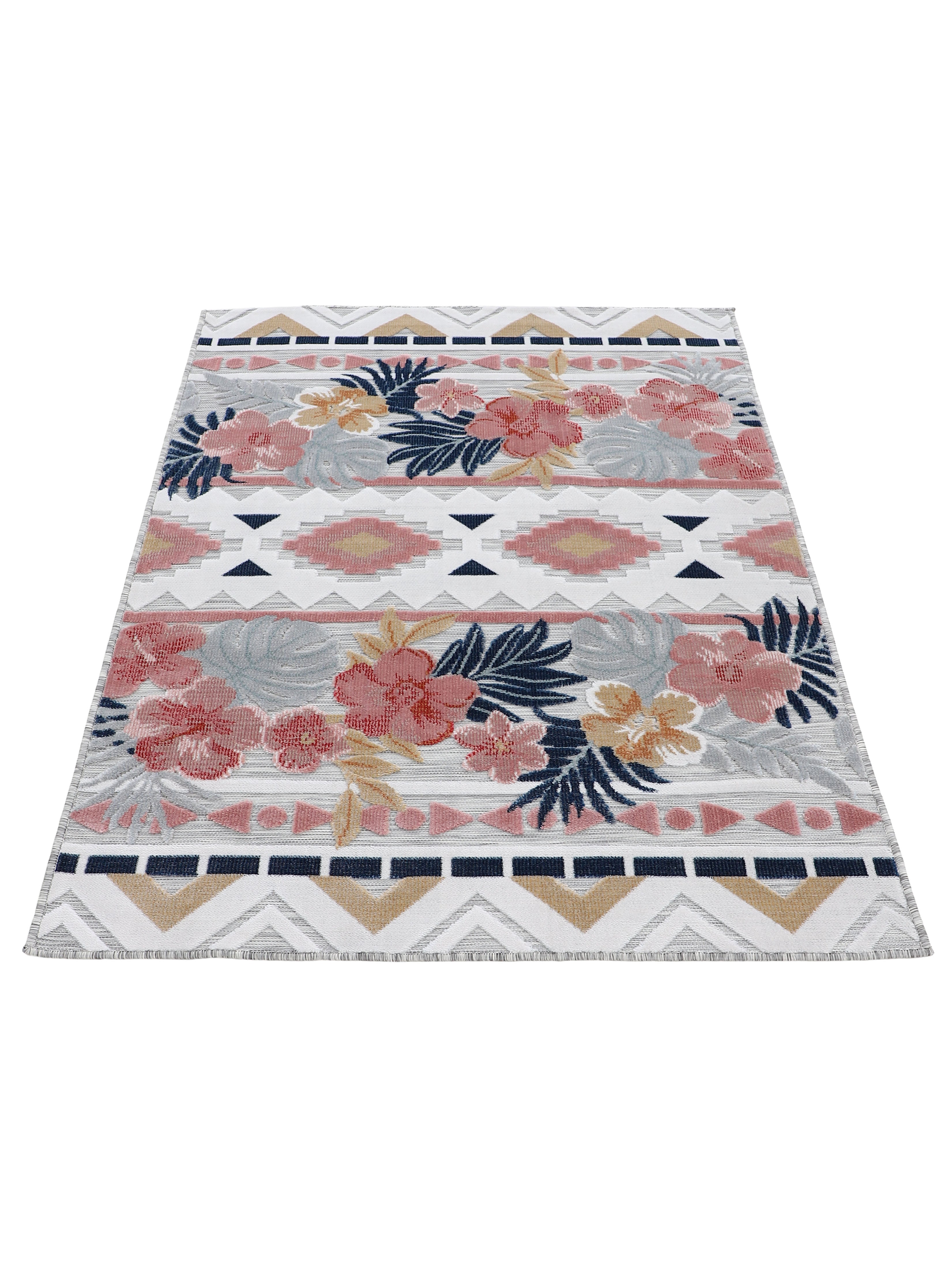
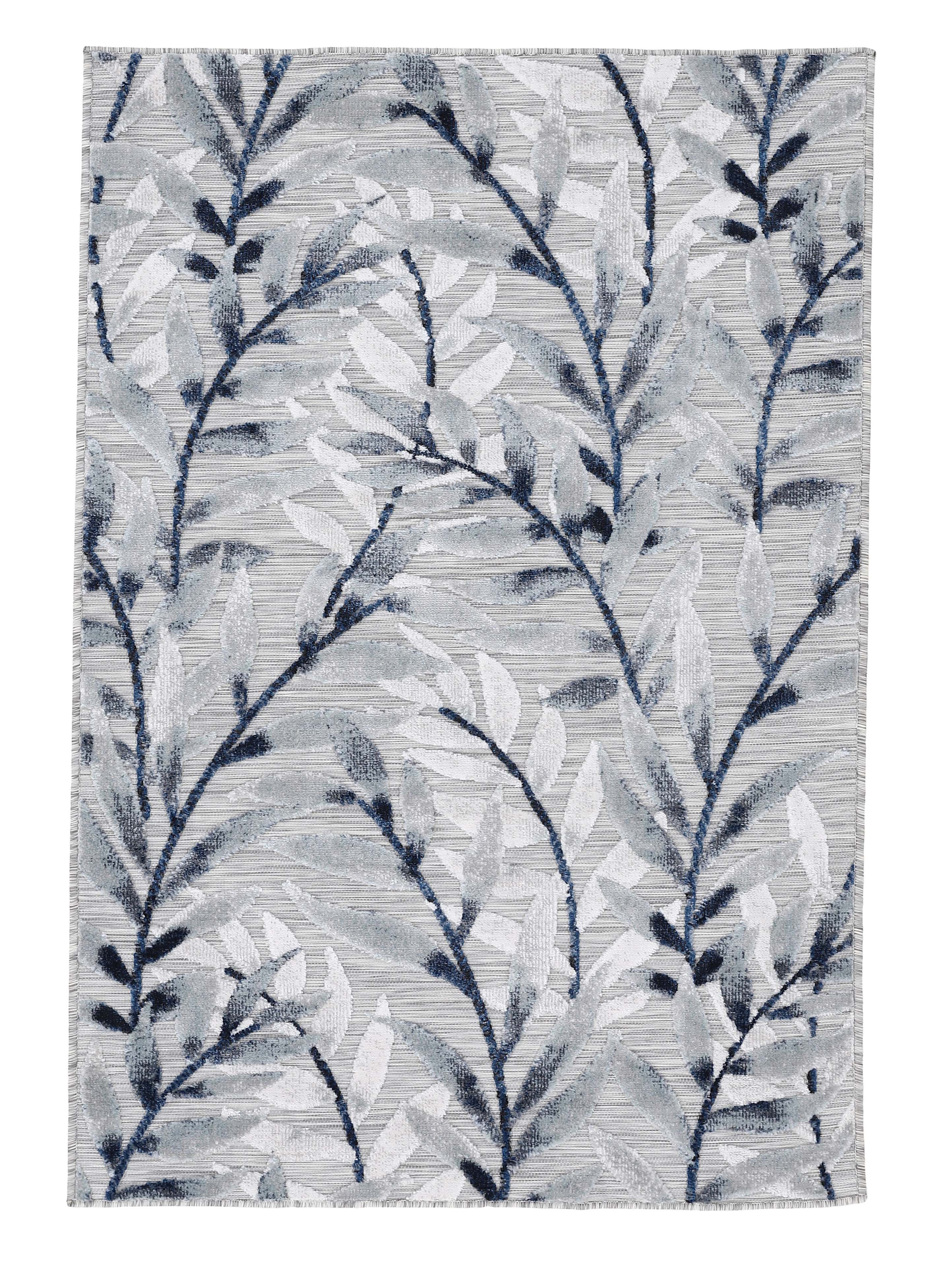
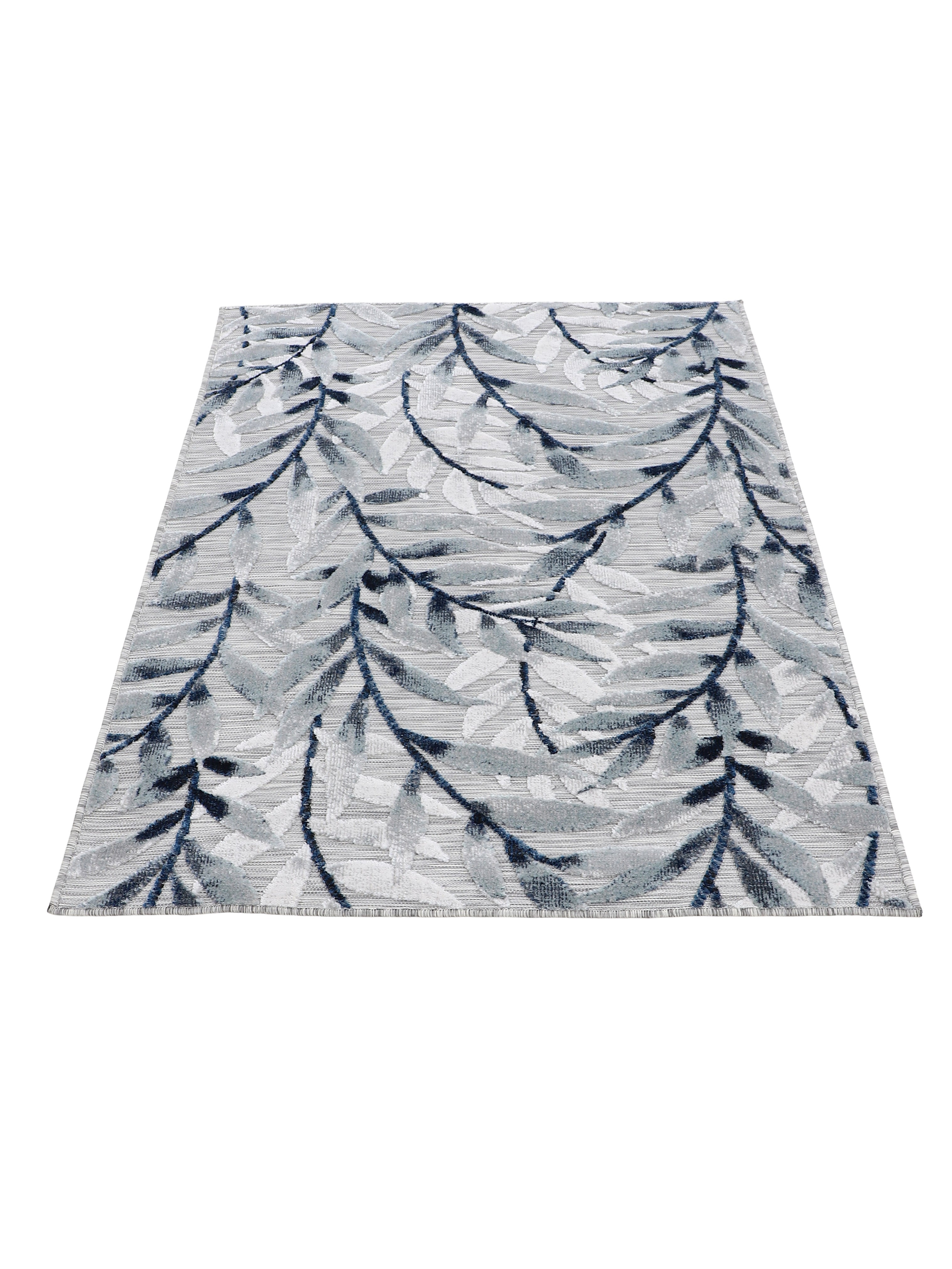
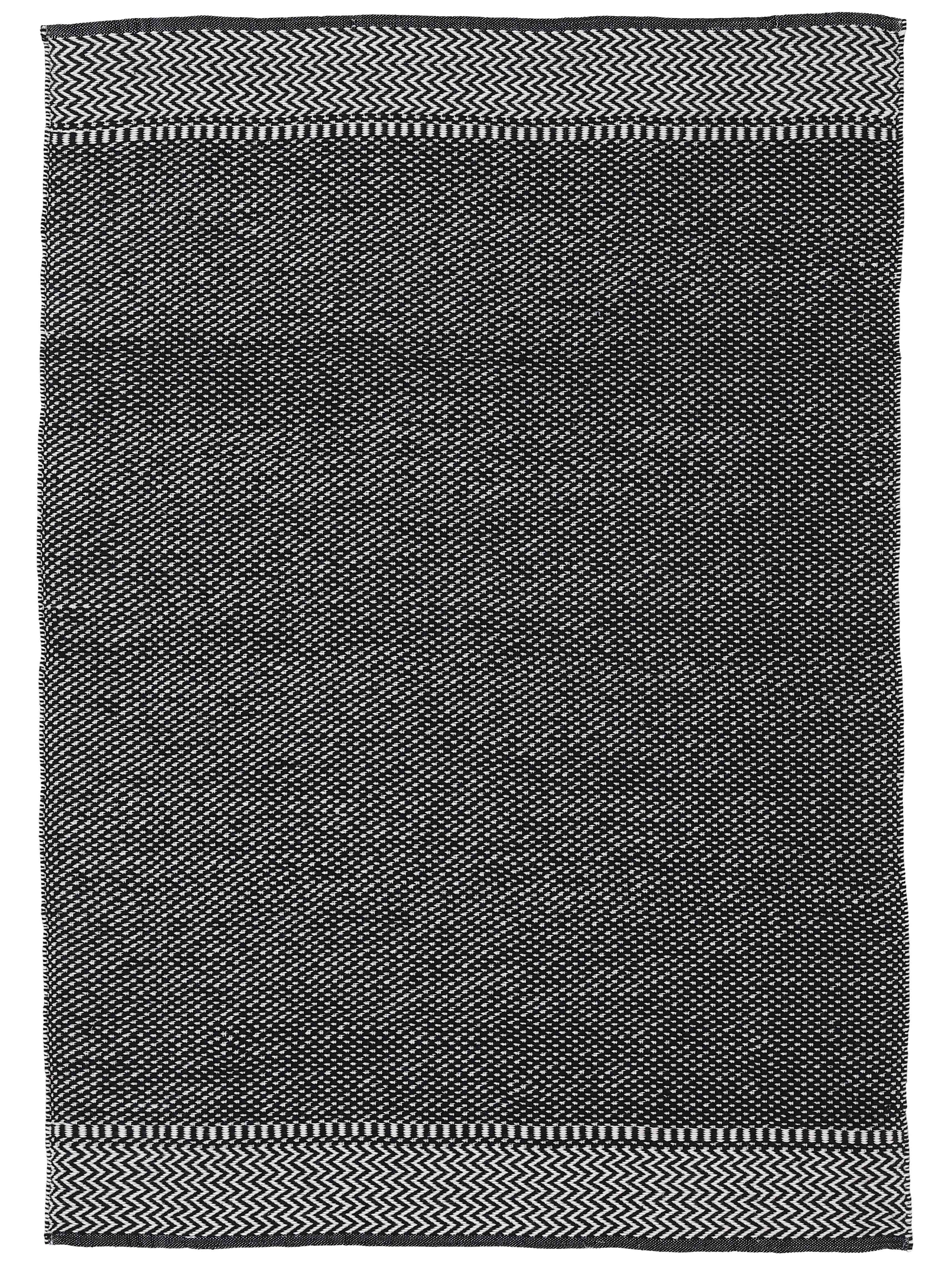
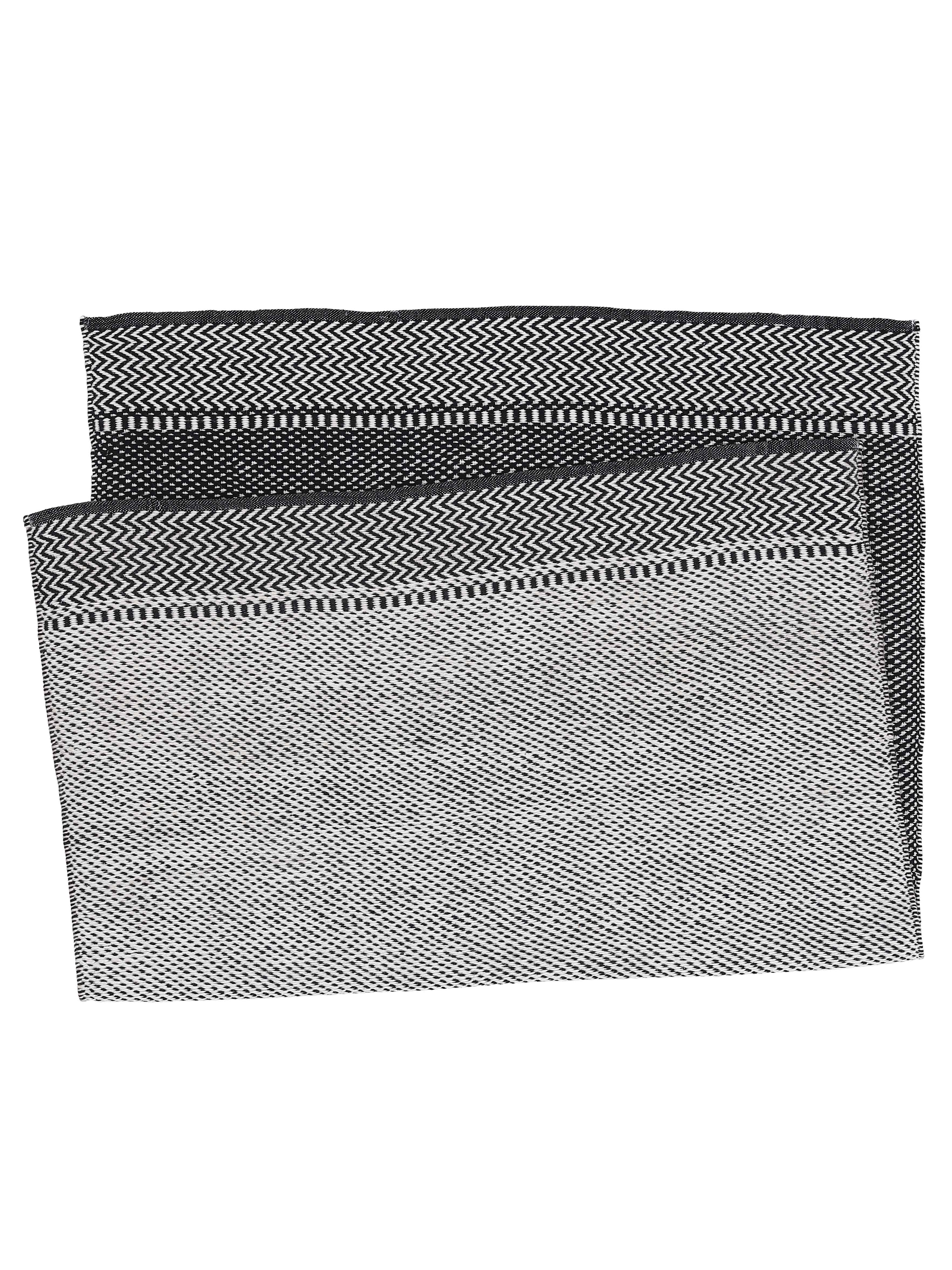
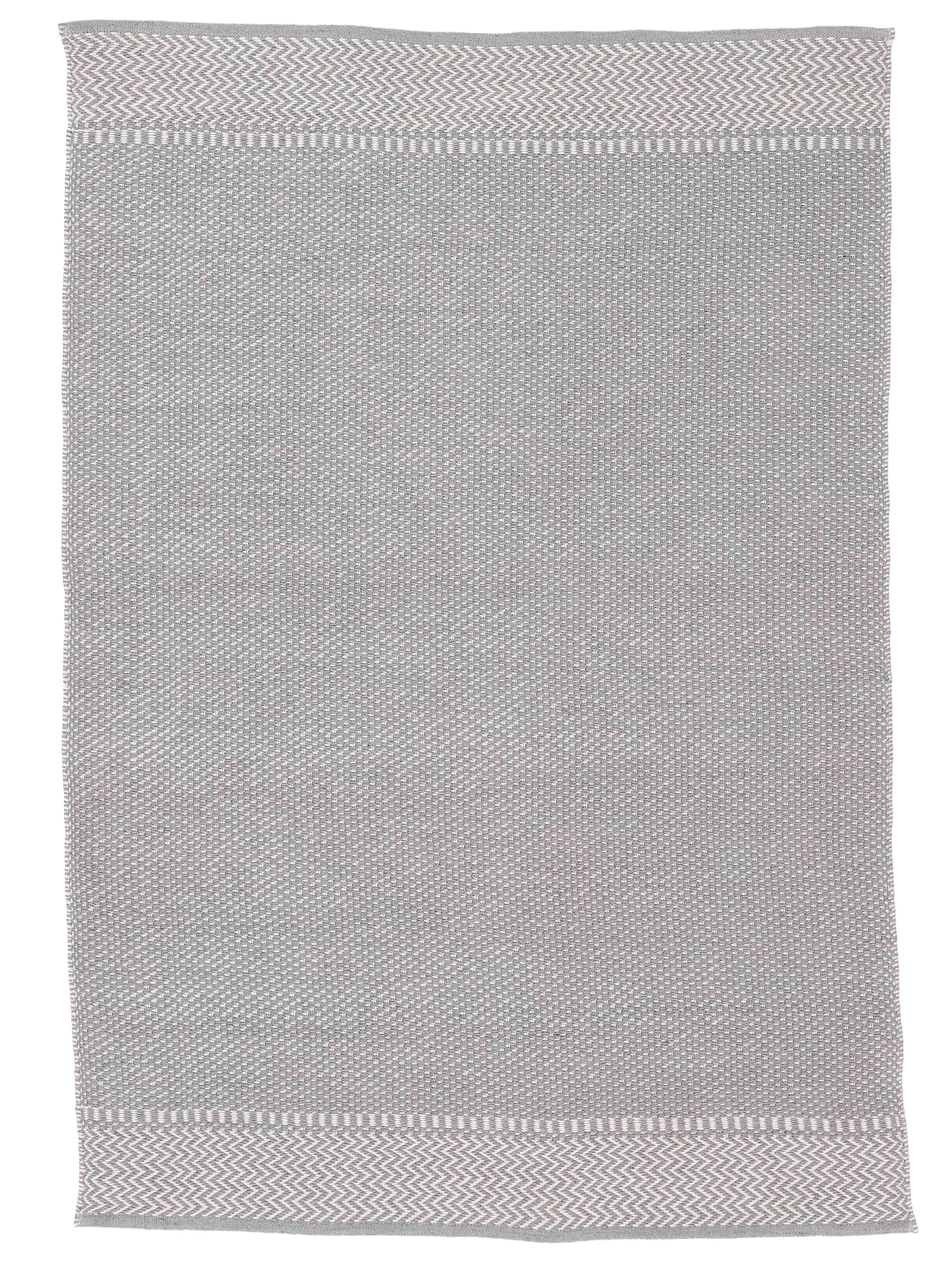
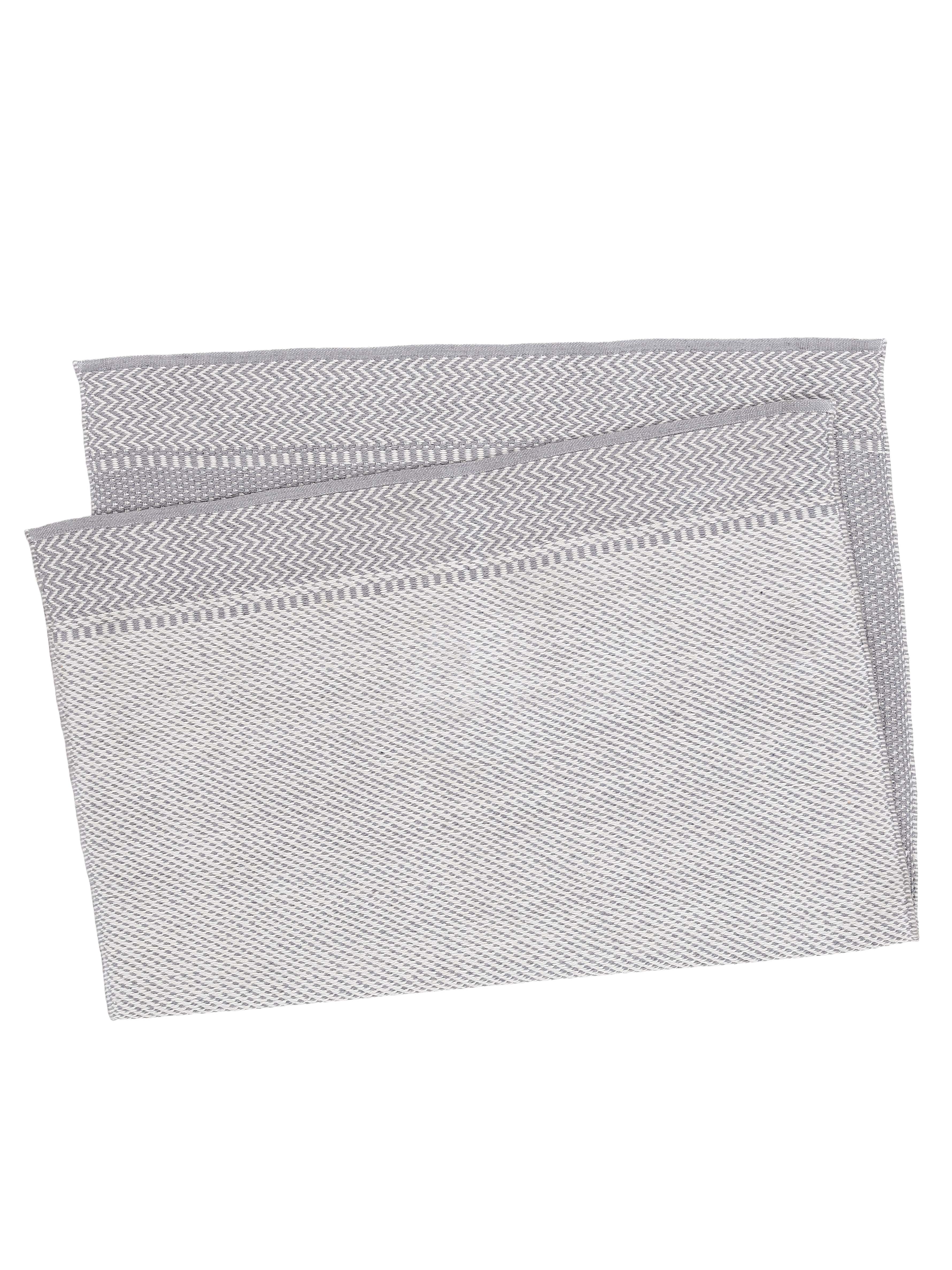
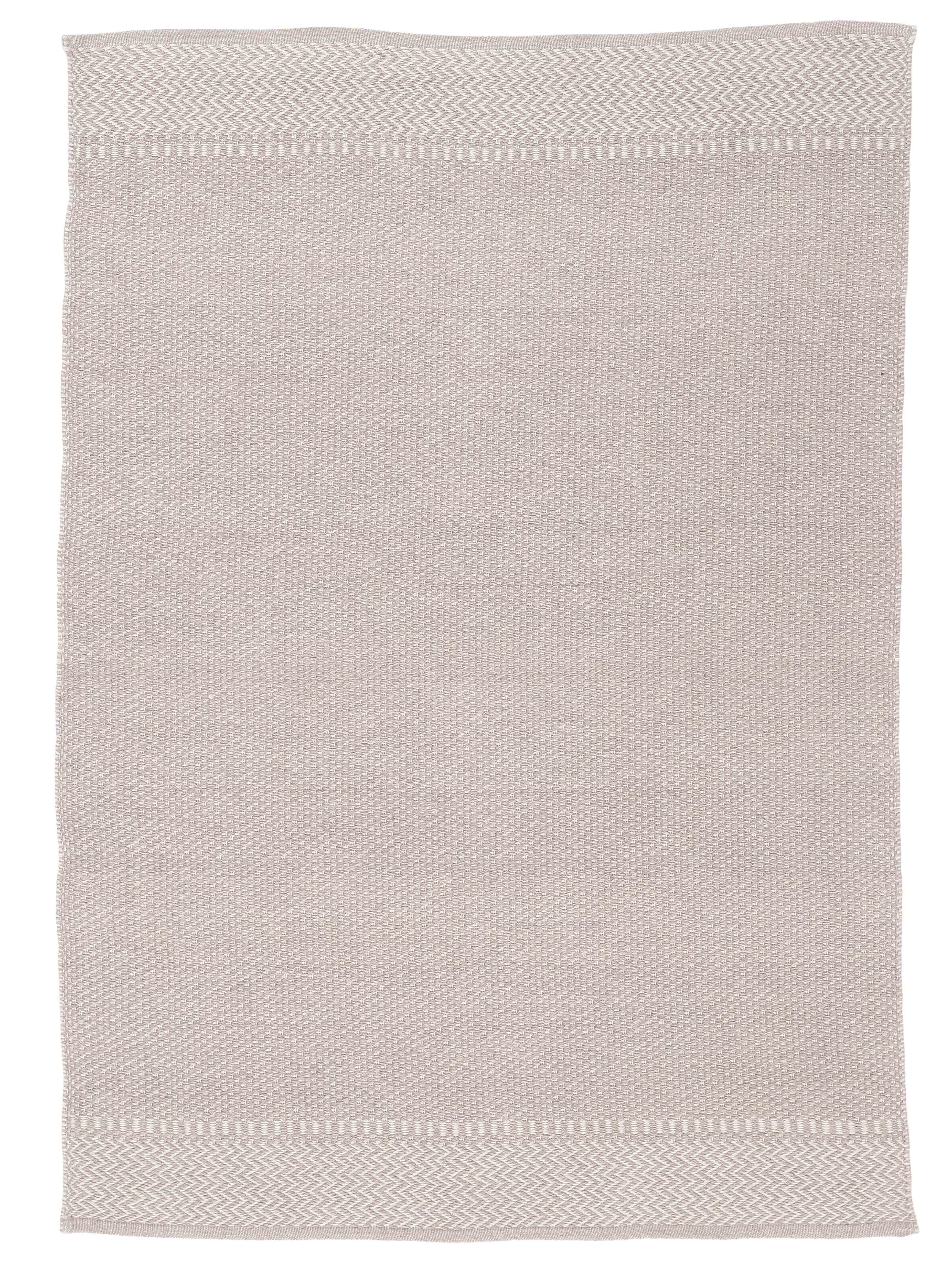
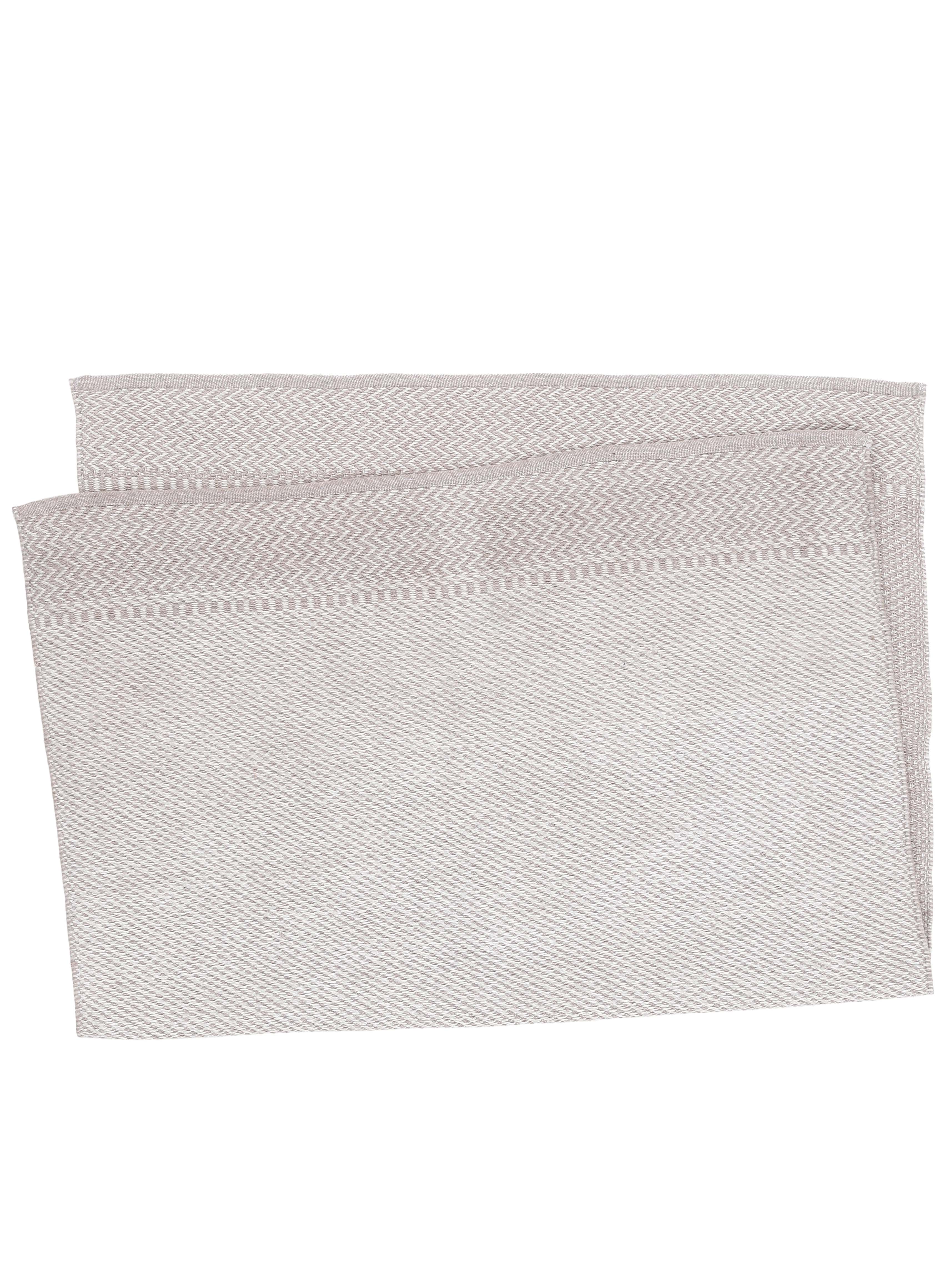
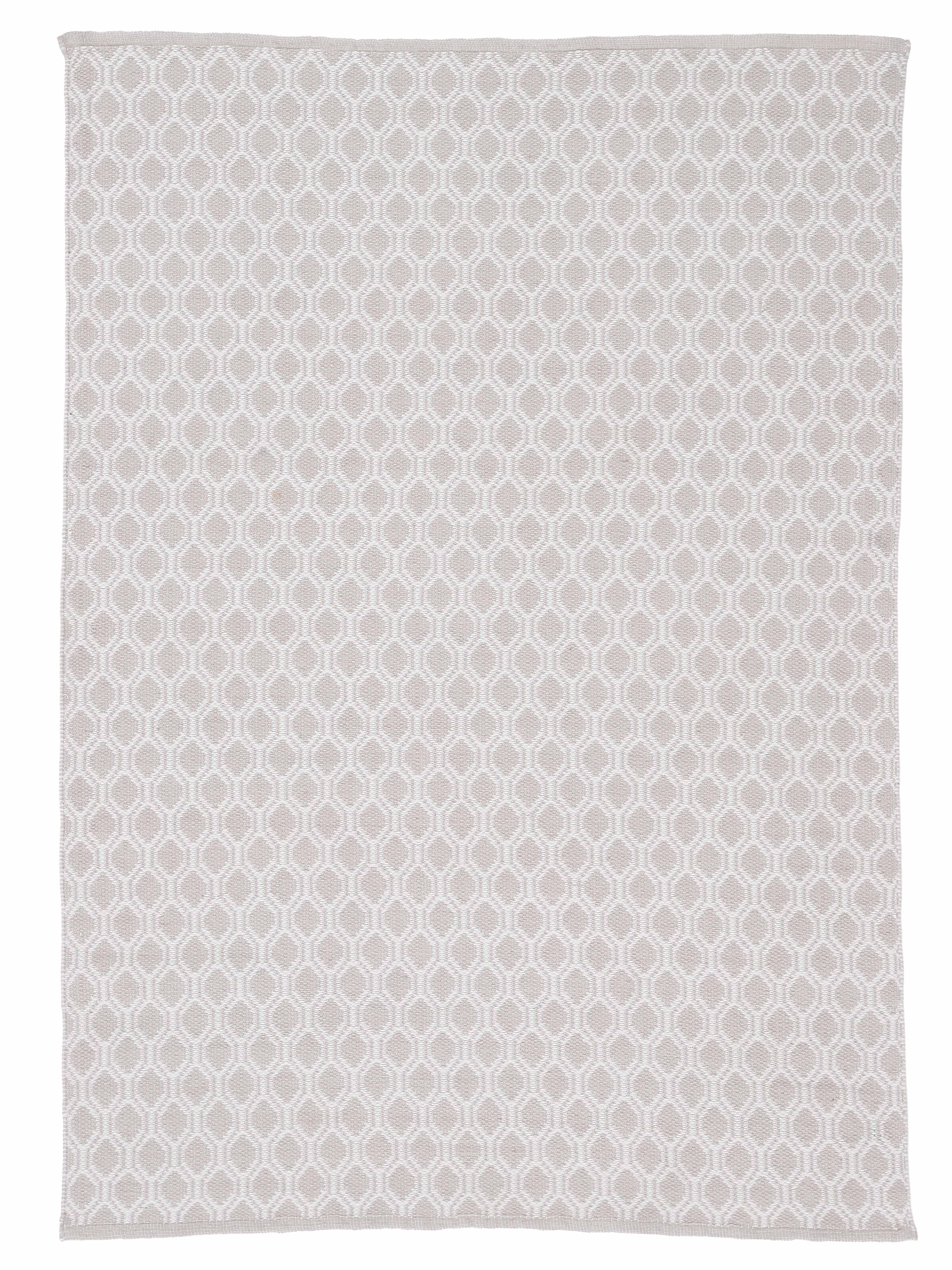
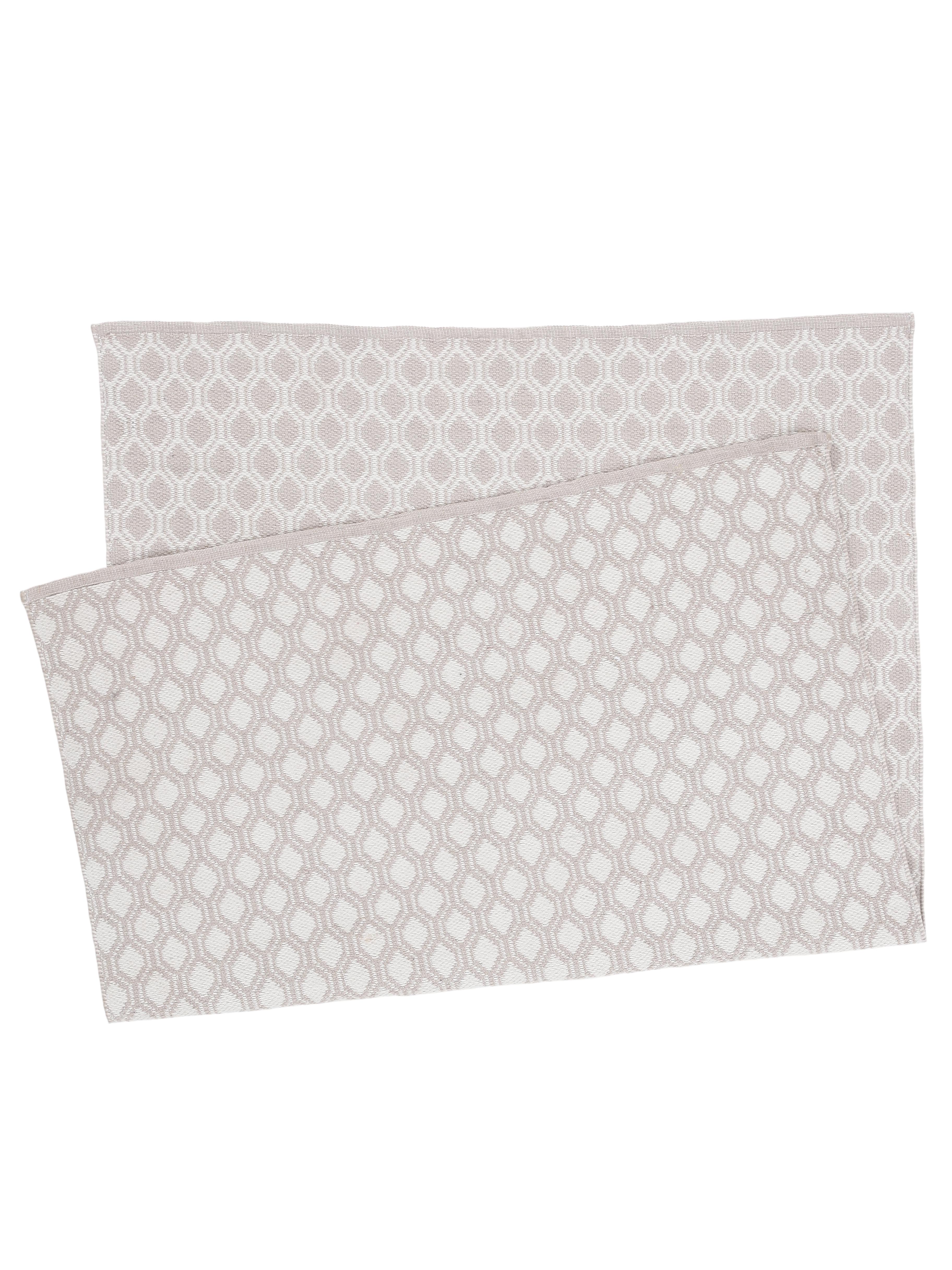
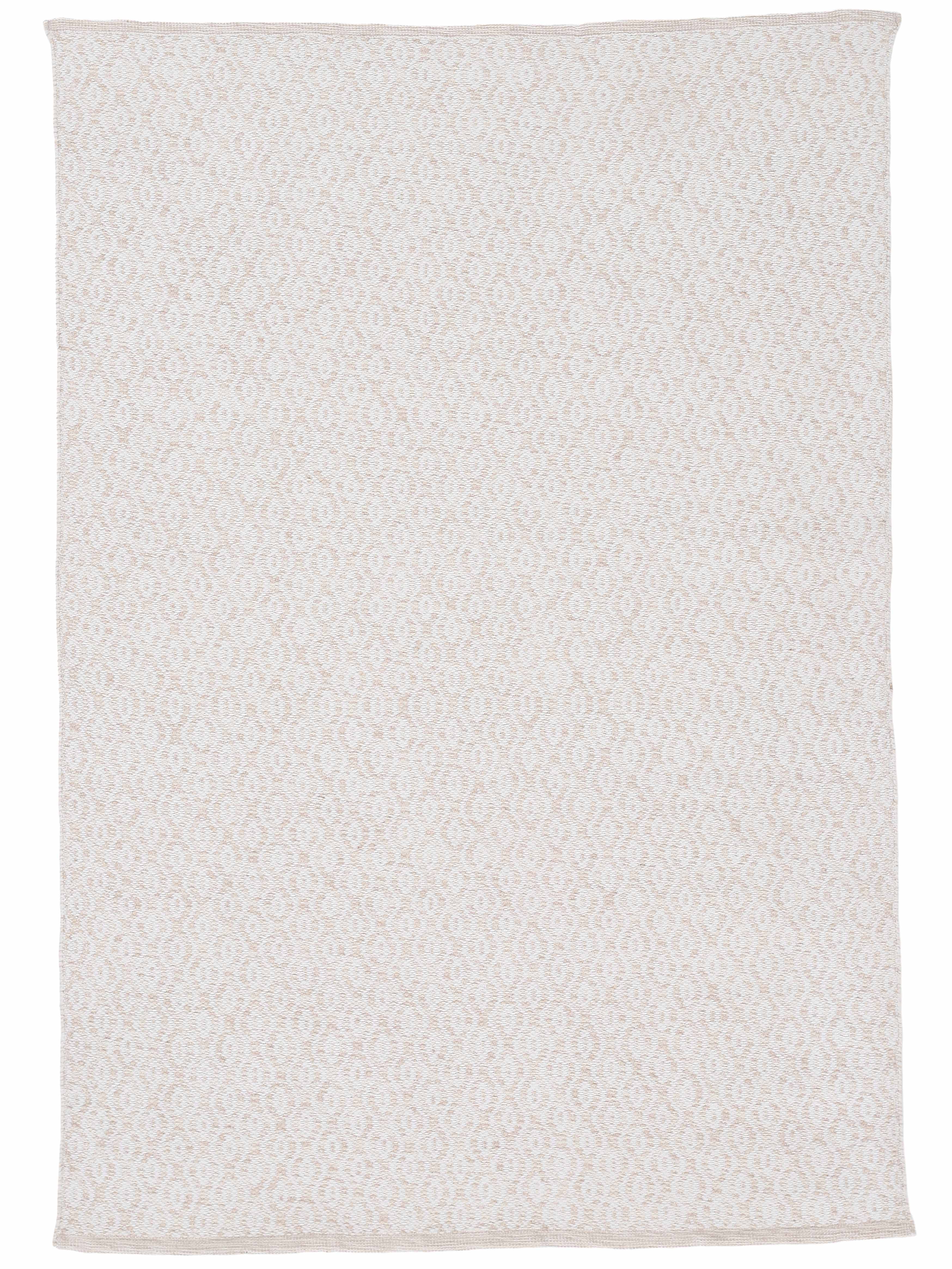
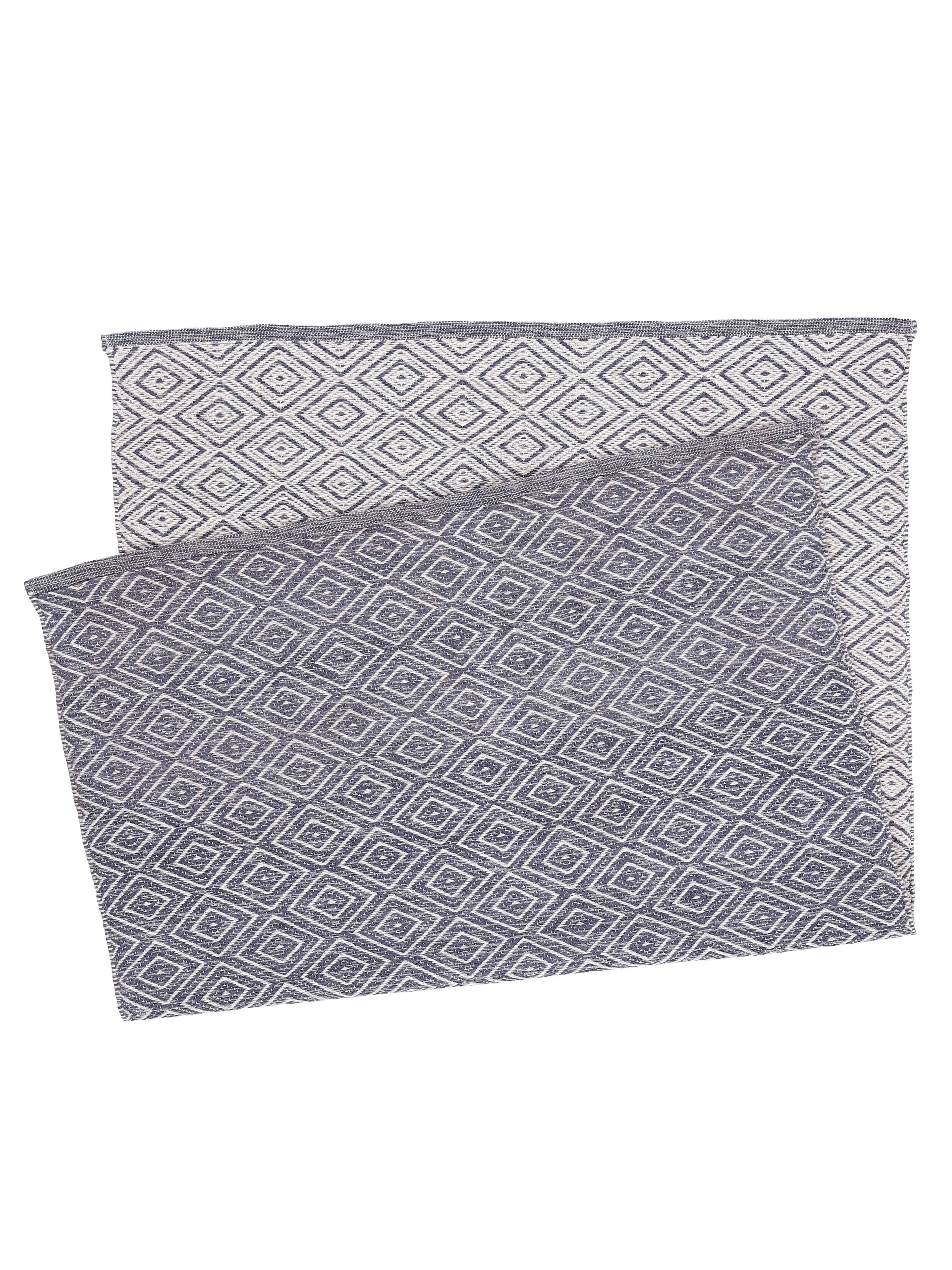
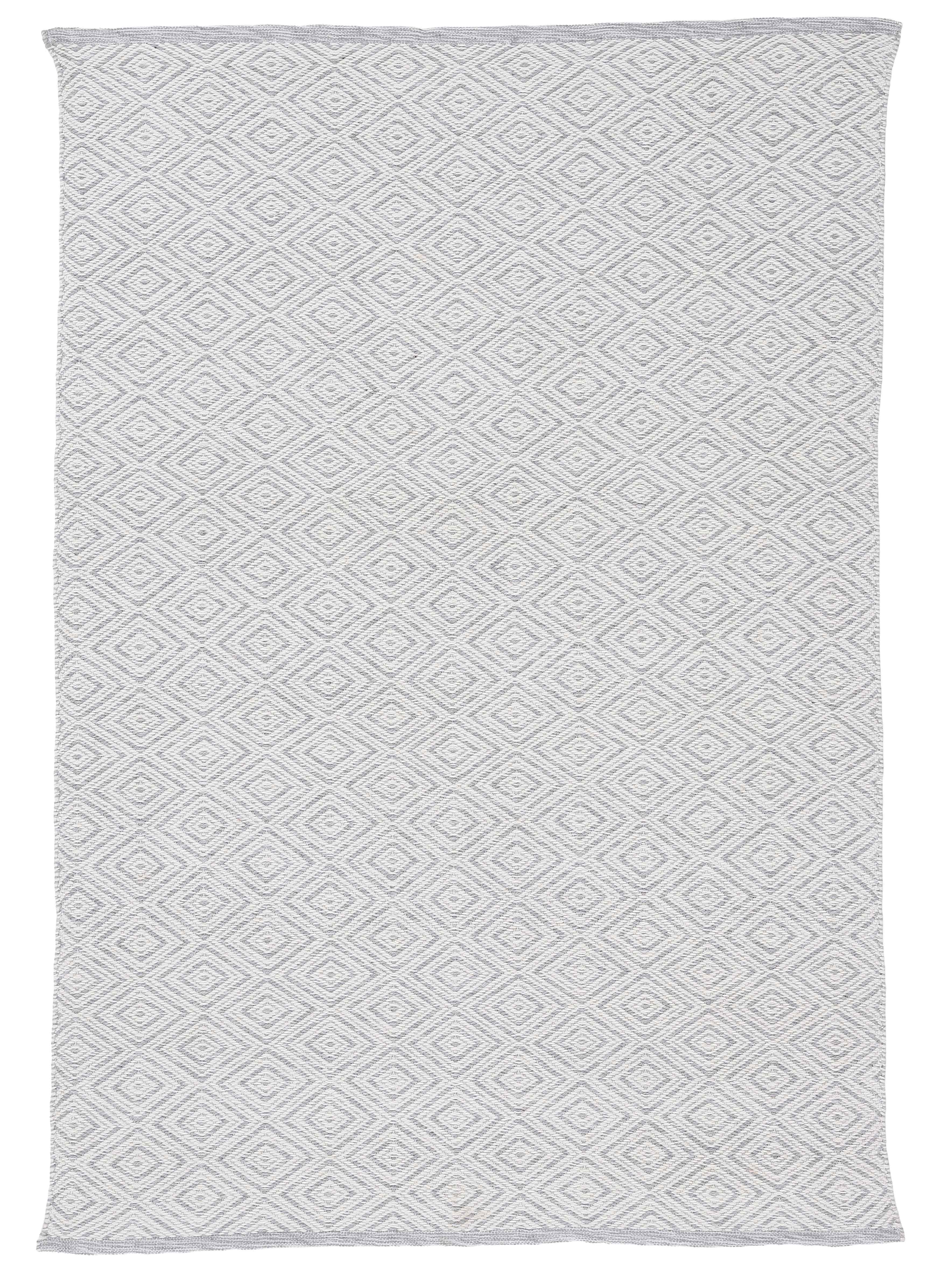
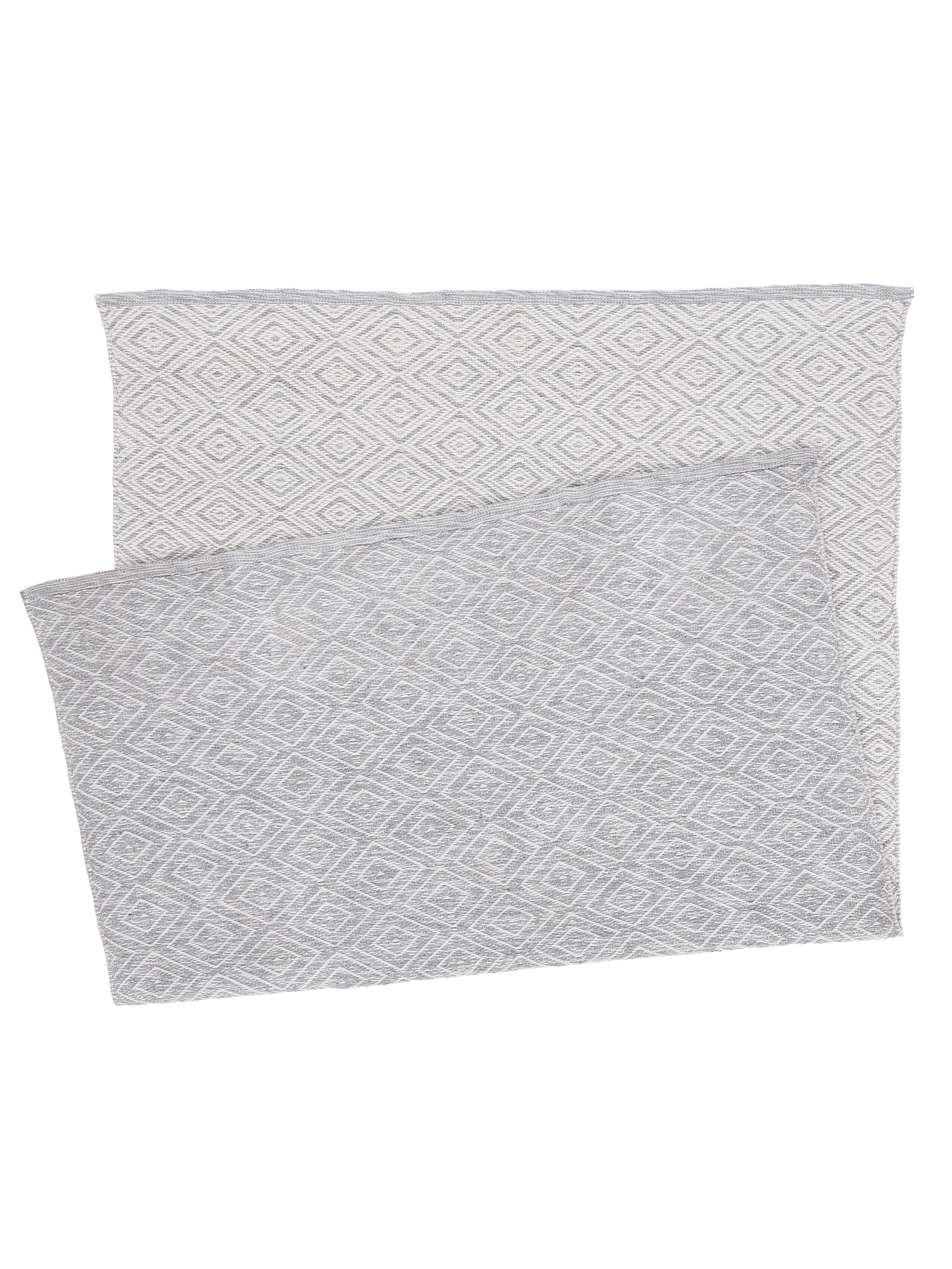
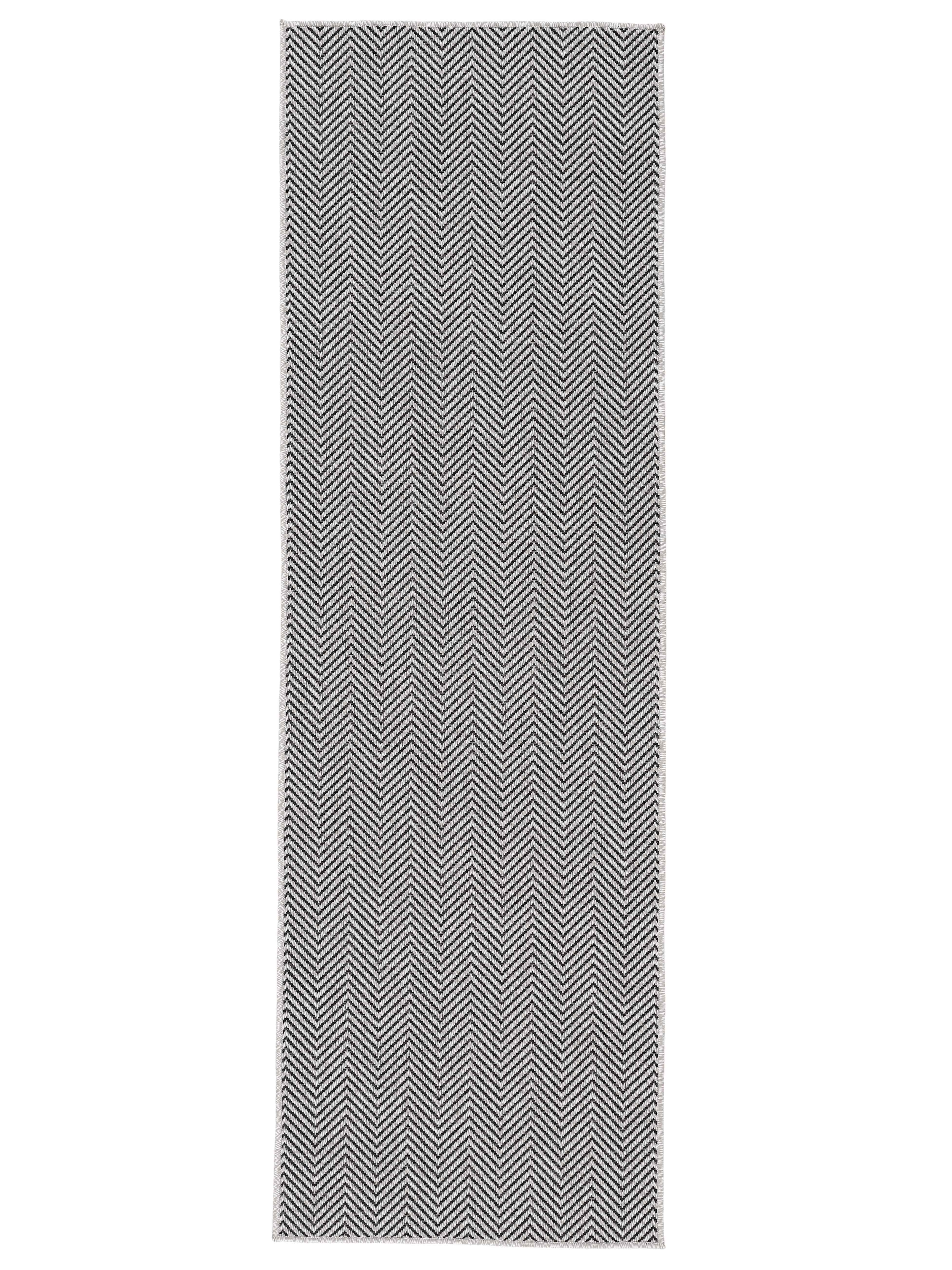
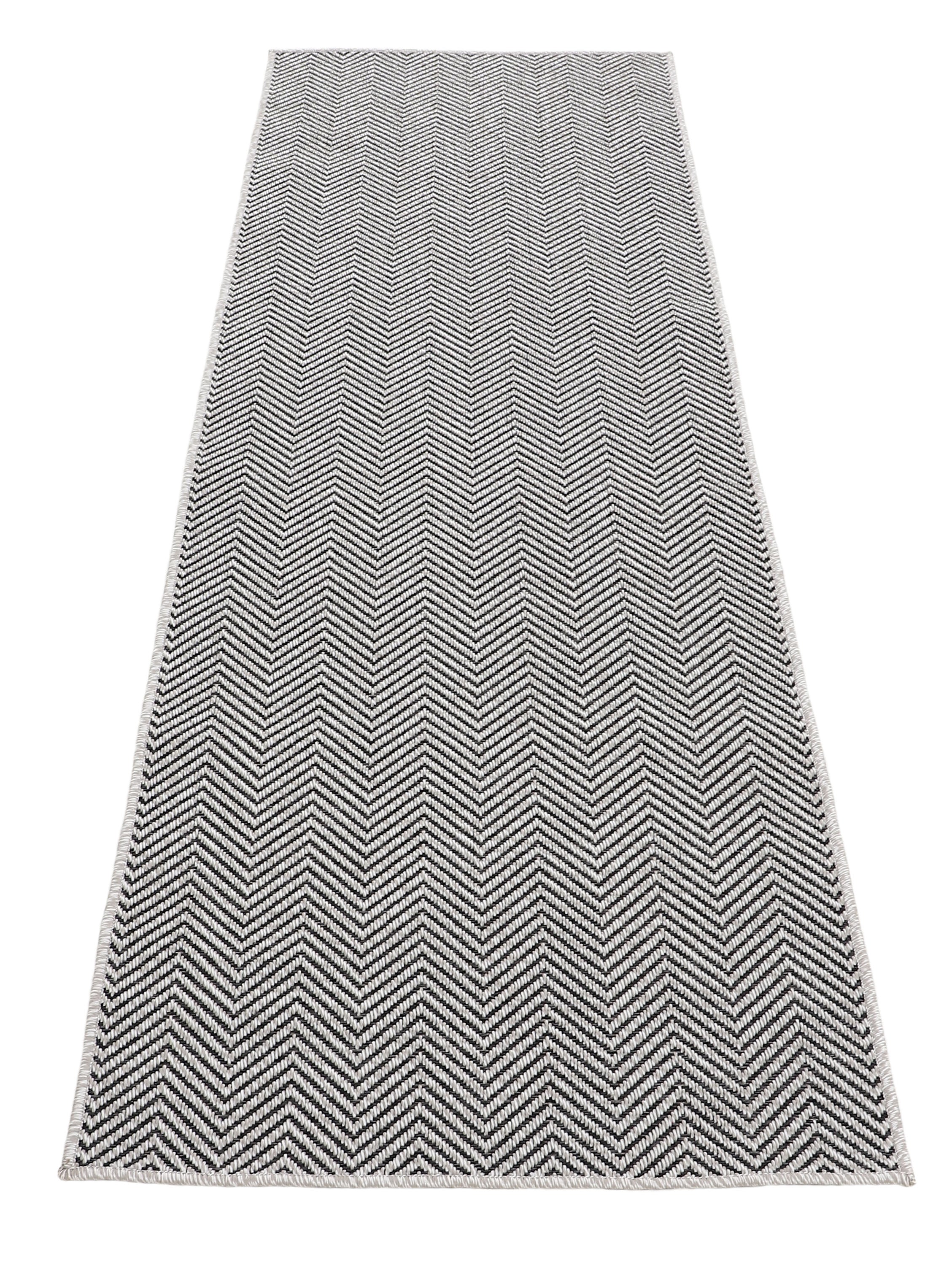
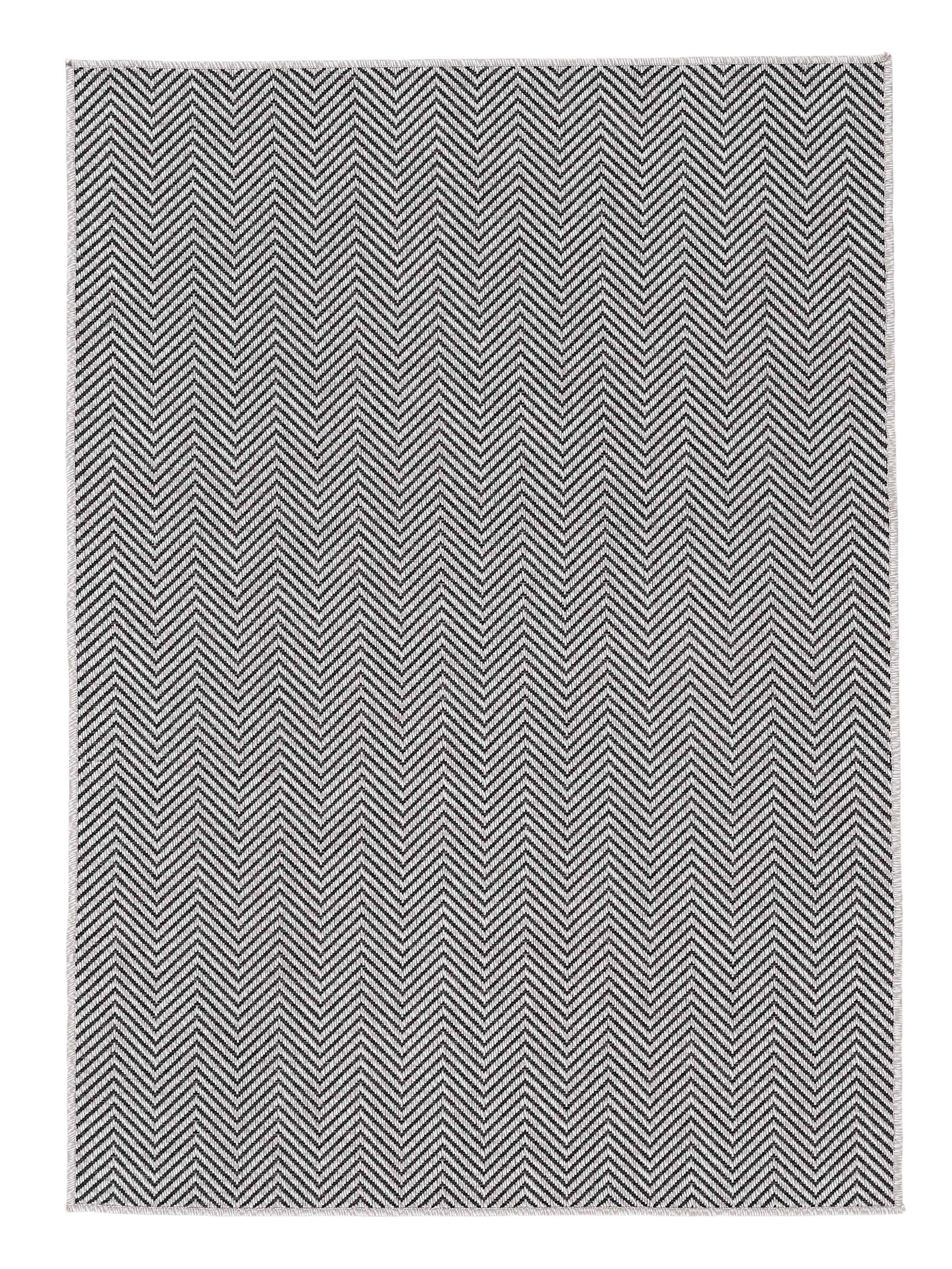
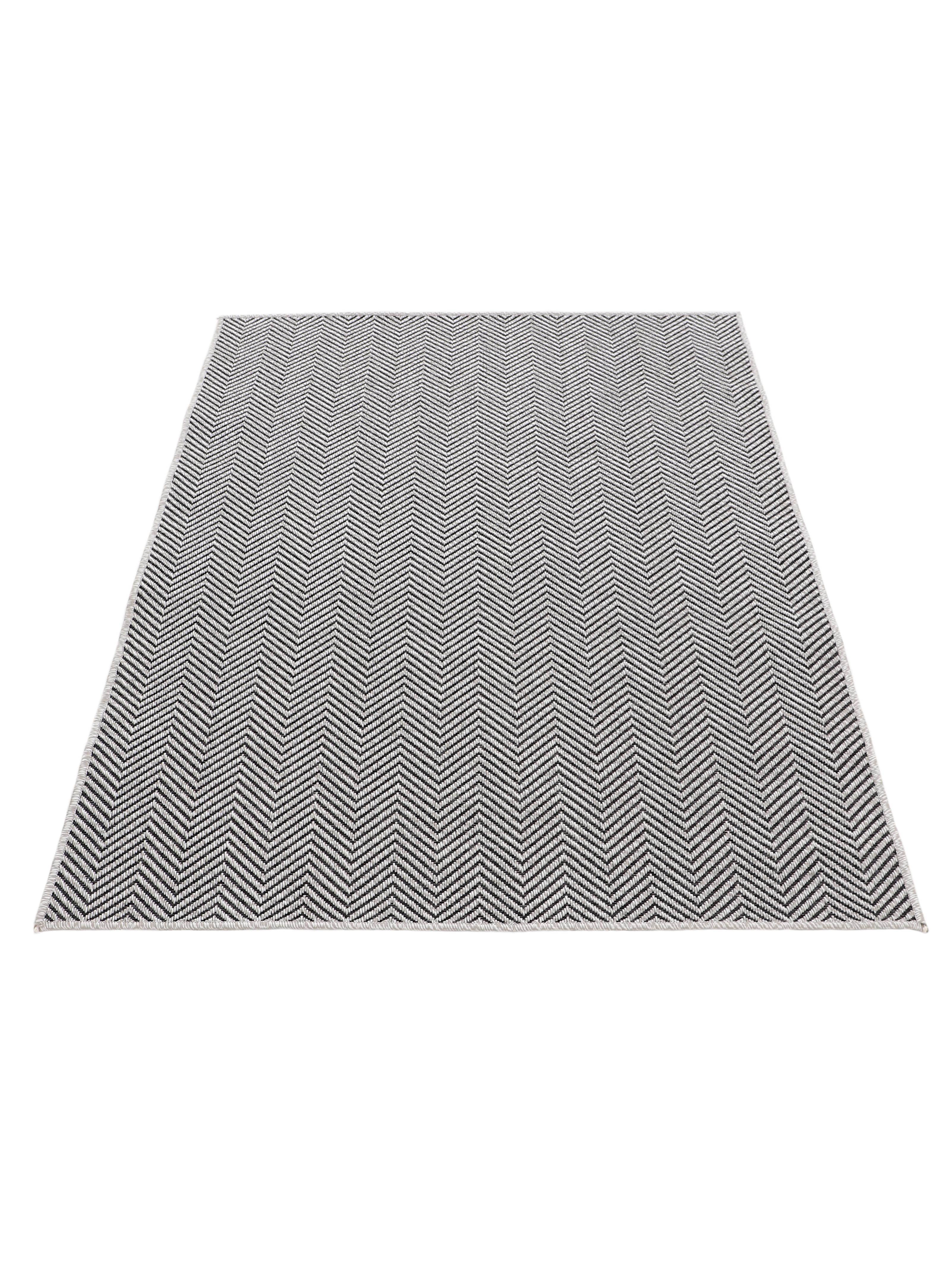
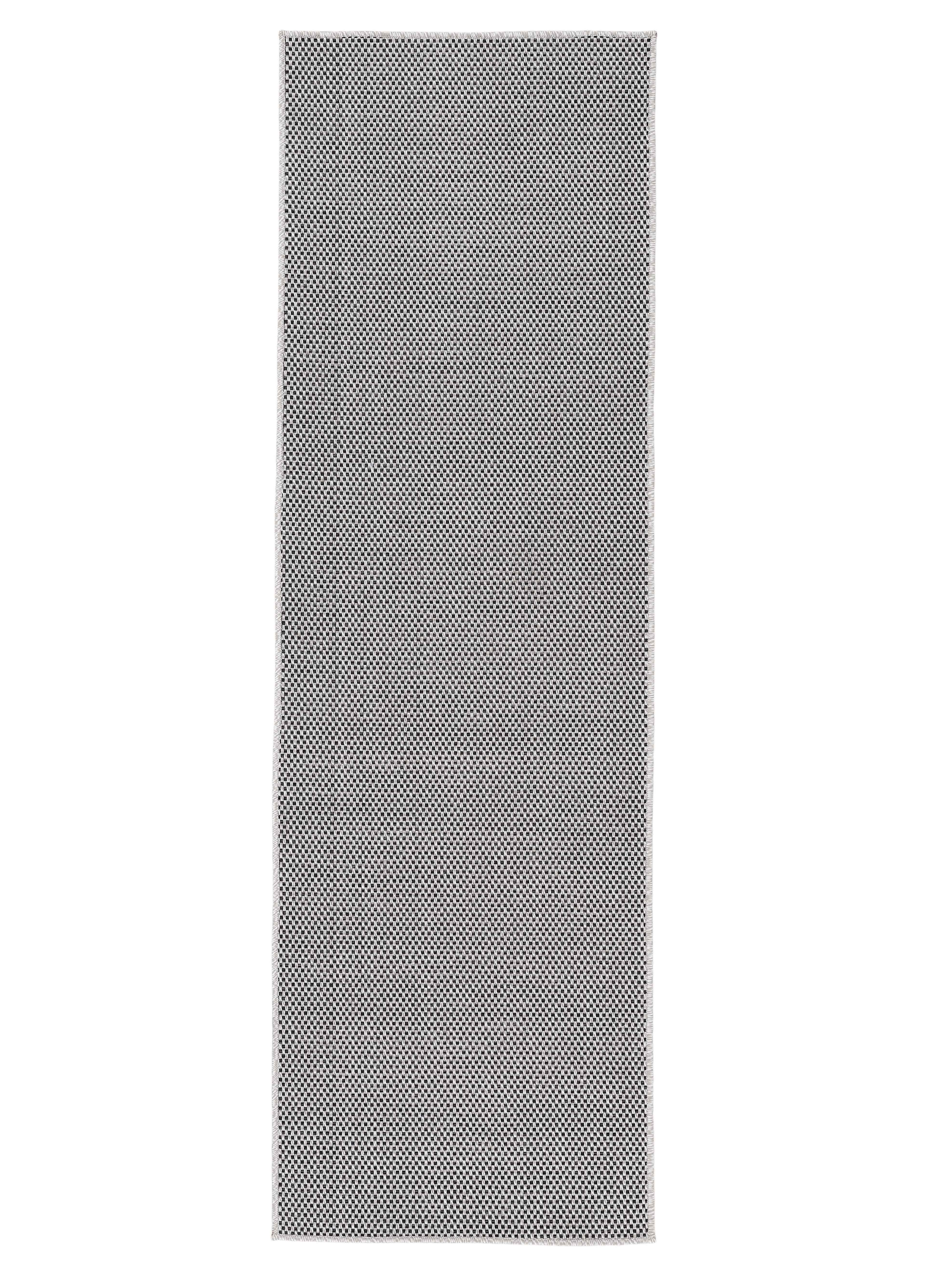
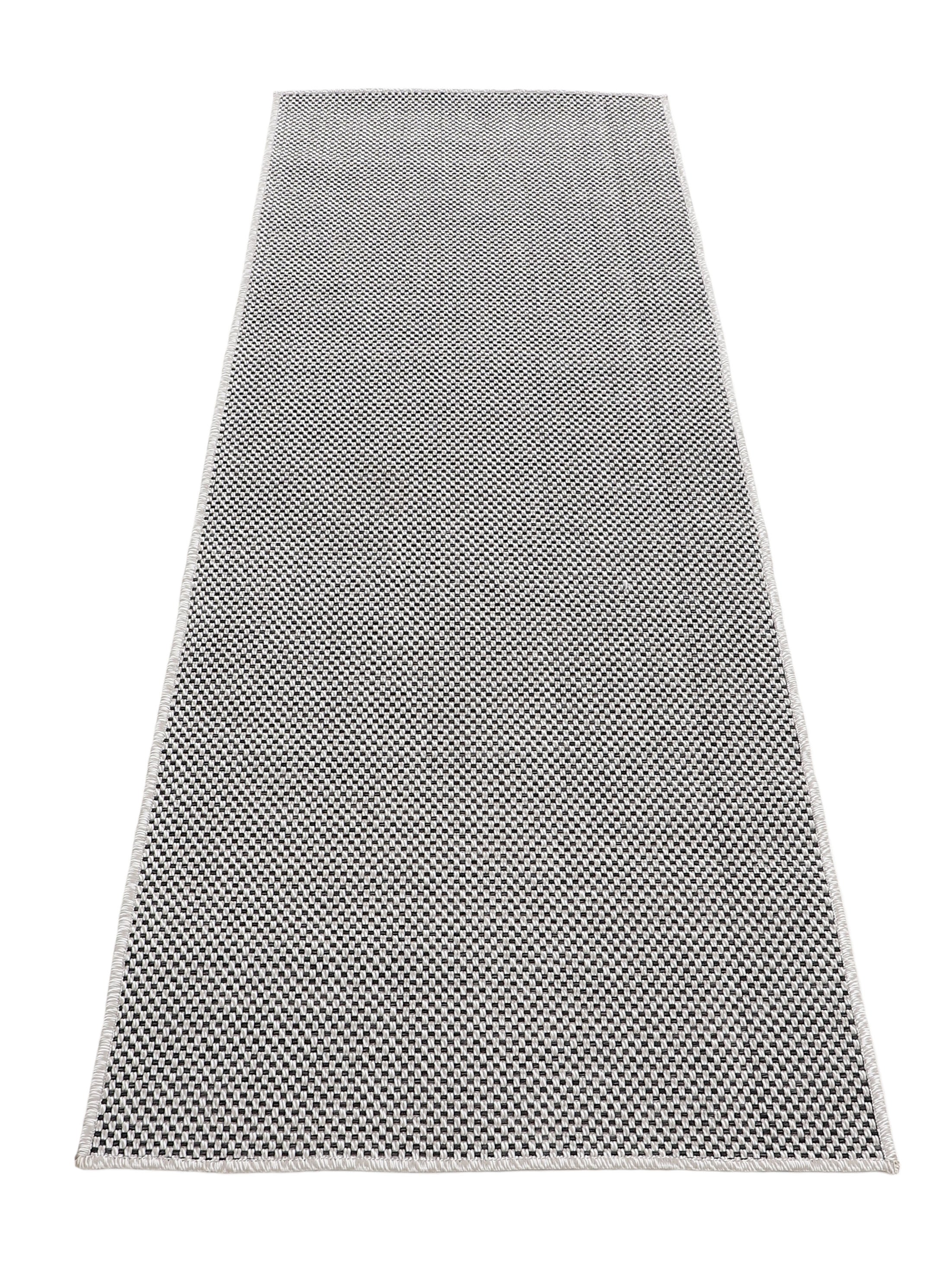
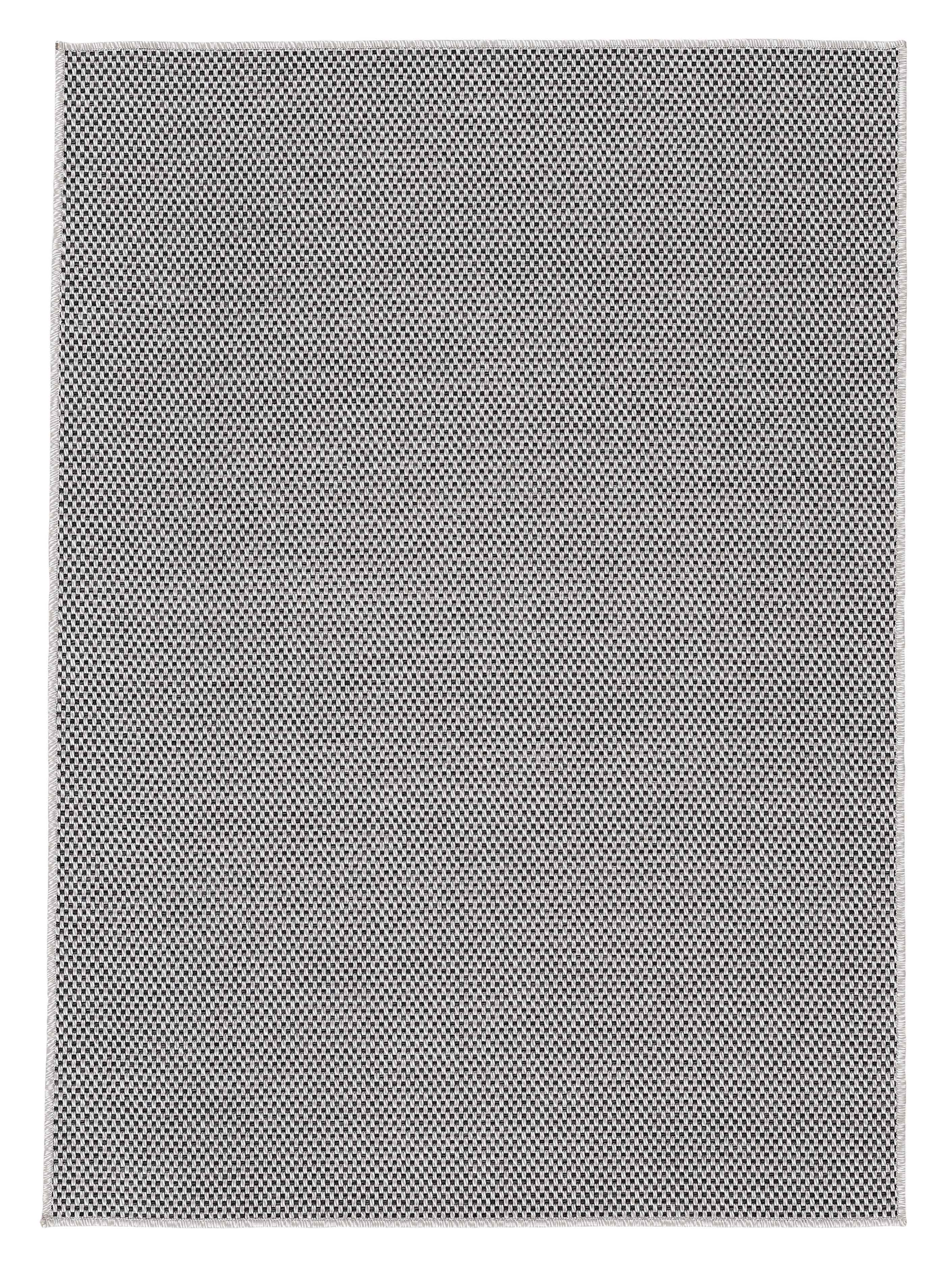
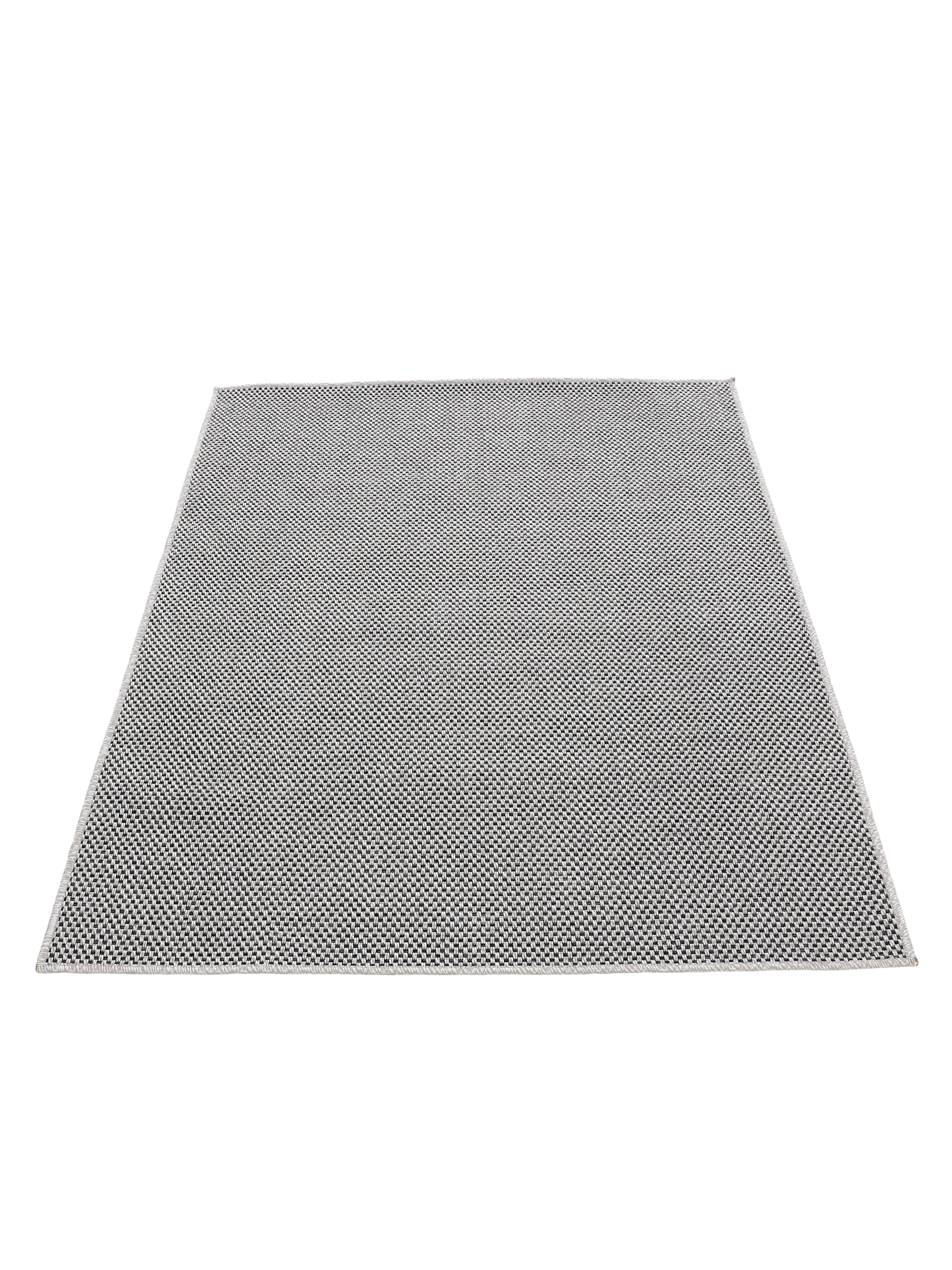
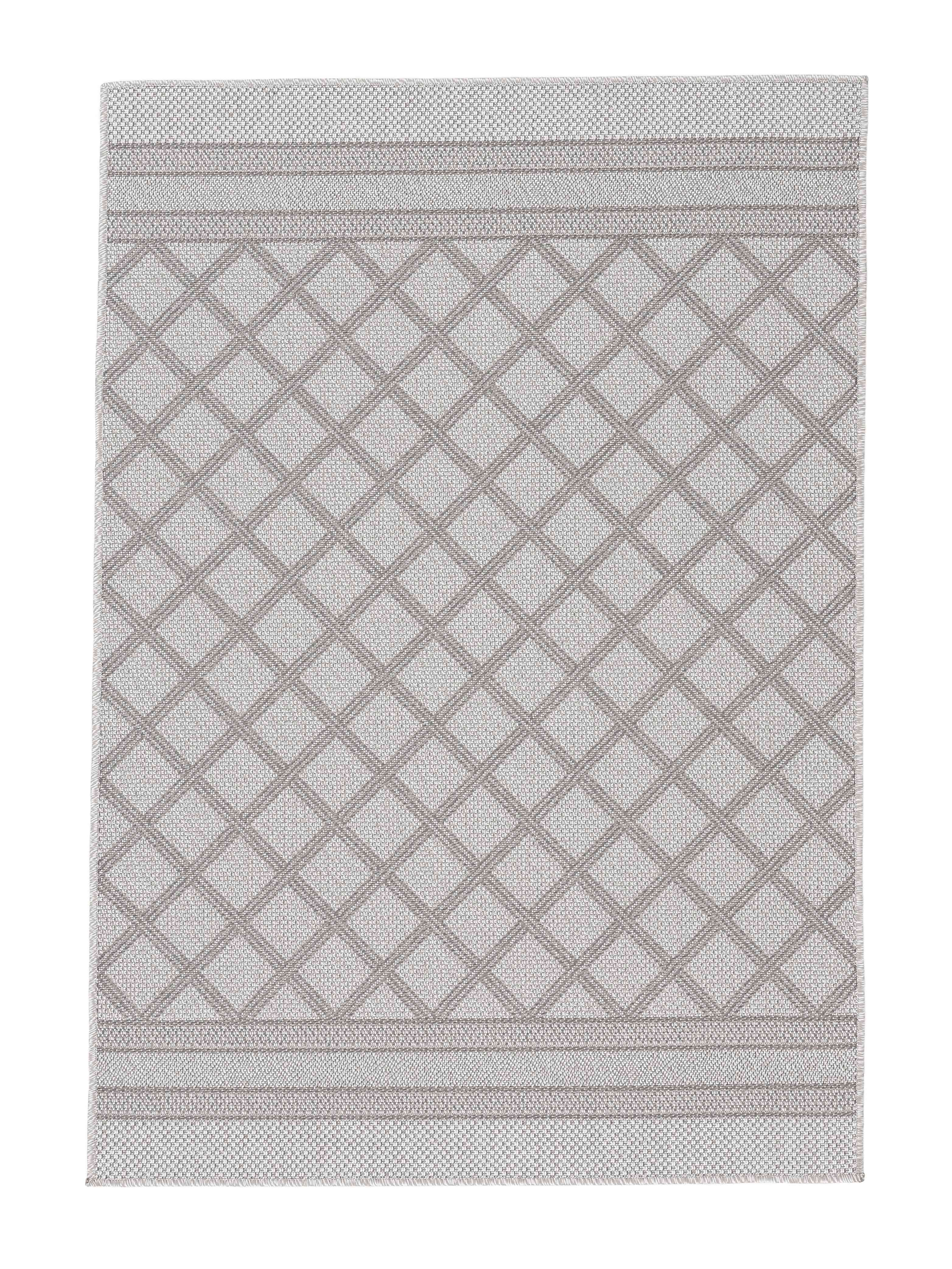
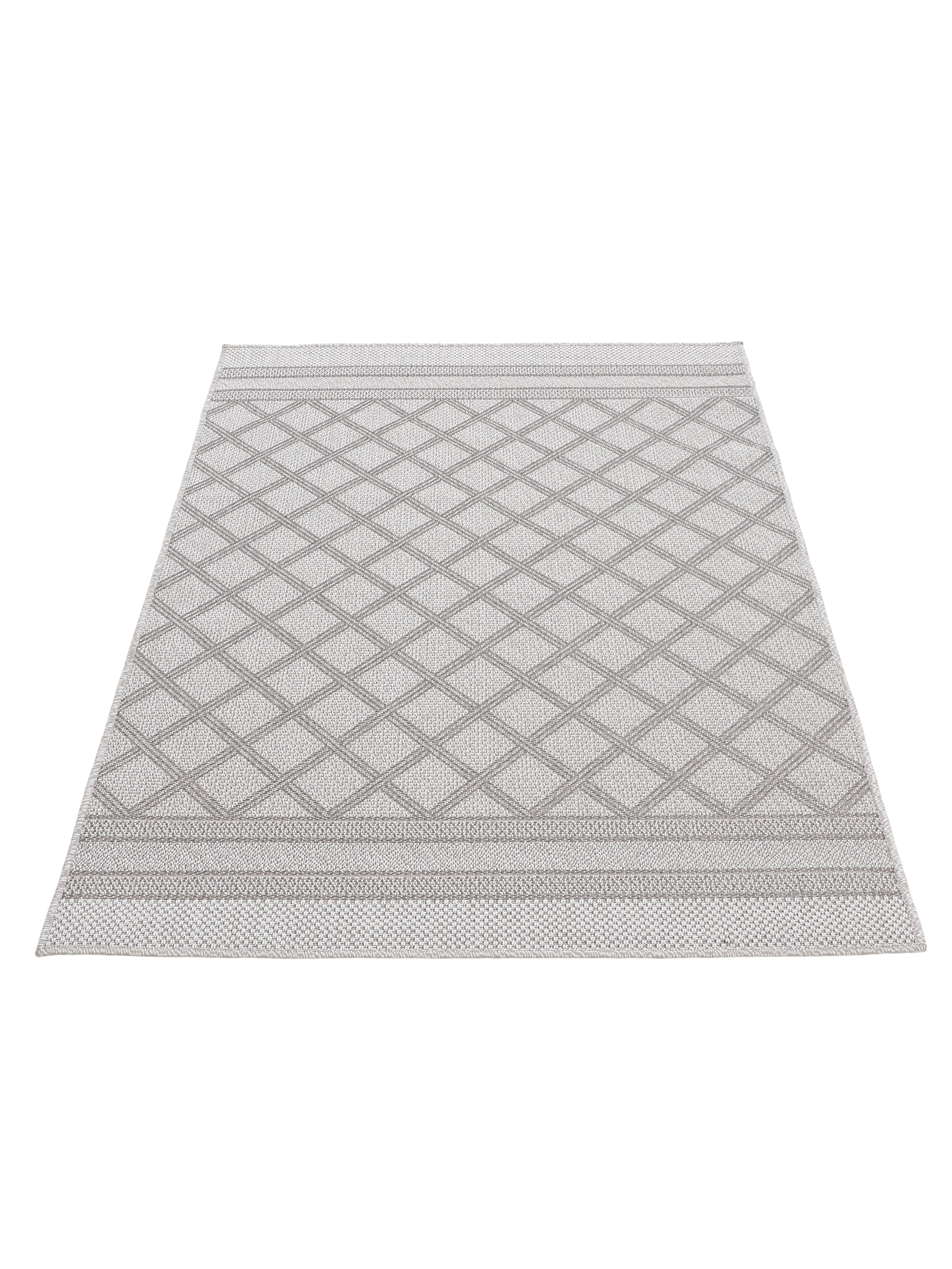
A balcony collects a lot. Shoes and paws, sand and pollen, and damp rising from below. That is why every outdoor rug here is made of synthetic fibre rather than natural fibre. You can choose from 49 designs, rectangular or round, plus runners. All of them are flat-woven and very low.
Three families make up the range. Two are machine-woven from polypropylene, a fibre that takes up hardly any moisture. The third is handwoven from recycled PET. More designs in synthetic fibre are waiting among our polypropylene rugs.
What happens when it rains?
One thing you should know. Both polypropylene families have a jute backing. After a downpour they need to dry properly, preferably hung over a rail so the back gets air as well.
Our product data say nothing about resistance to strong sun or constant rain. So treat the rug like a garden cushion. During long wet spells and over winter, bring it inside. As a garden rug on the lawn it struggles, because moisture from the soil barely dries off underneath. Decking or paving slabs are a far better base.
Shake out loose dirt or simply sweep it off. Stains come out with lukewarm water and a little mild detergent, then rinse with clear water. Leave the pressure washer in the shed. Its hard jet strains the weave. Thanks to the flat pile and the synthetic fibre, these designs usually dry faster than rugs made of natural fibre.
Sizes for balcony and patio
Measure the free space between railing and furniture first. As a rough guide:
Narrow balcony
Runner of 60 x 180, 75 x 200 or 80 x 240 cm
Bistro table with two chairs
80 x 150 cm, or round with Ø 100 to 120 cm
Lounge corner
120 x 170 cm
Seating group or dining table
160 x 230 or 200 x 290 cm
In front of the garden door
60 x 110 cm
On a balcony, leave a small gap at the railing so rainwater can run off. On the patio a 200 x 290 cm outdoor rug holds a whole seating group. Searching for a large outdoor rug of 200 x 300 cm? Then that is your size. We don't have anything bigger for outside.
Round shapes go with bistro and lounge tables, rectangles with benches and long tables. They range from Ø 90 to Ø 160 cm, and every round outdoor rug is gathered on its own page.
Which outdoor rug suits your furniture?
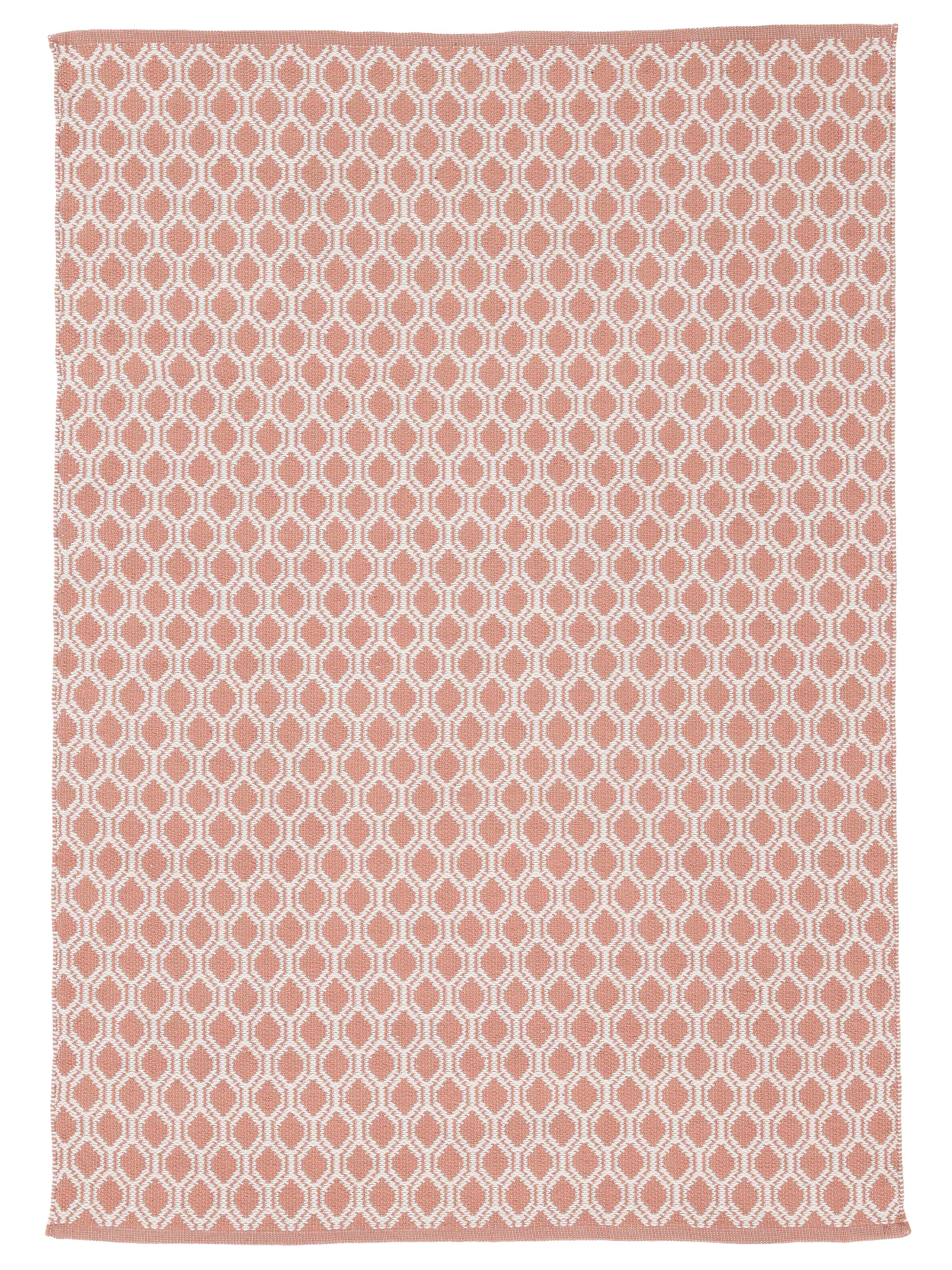
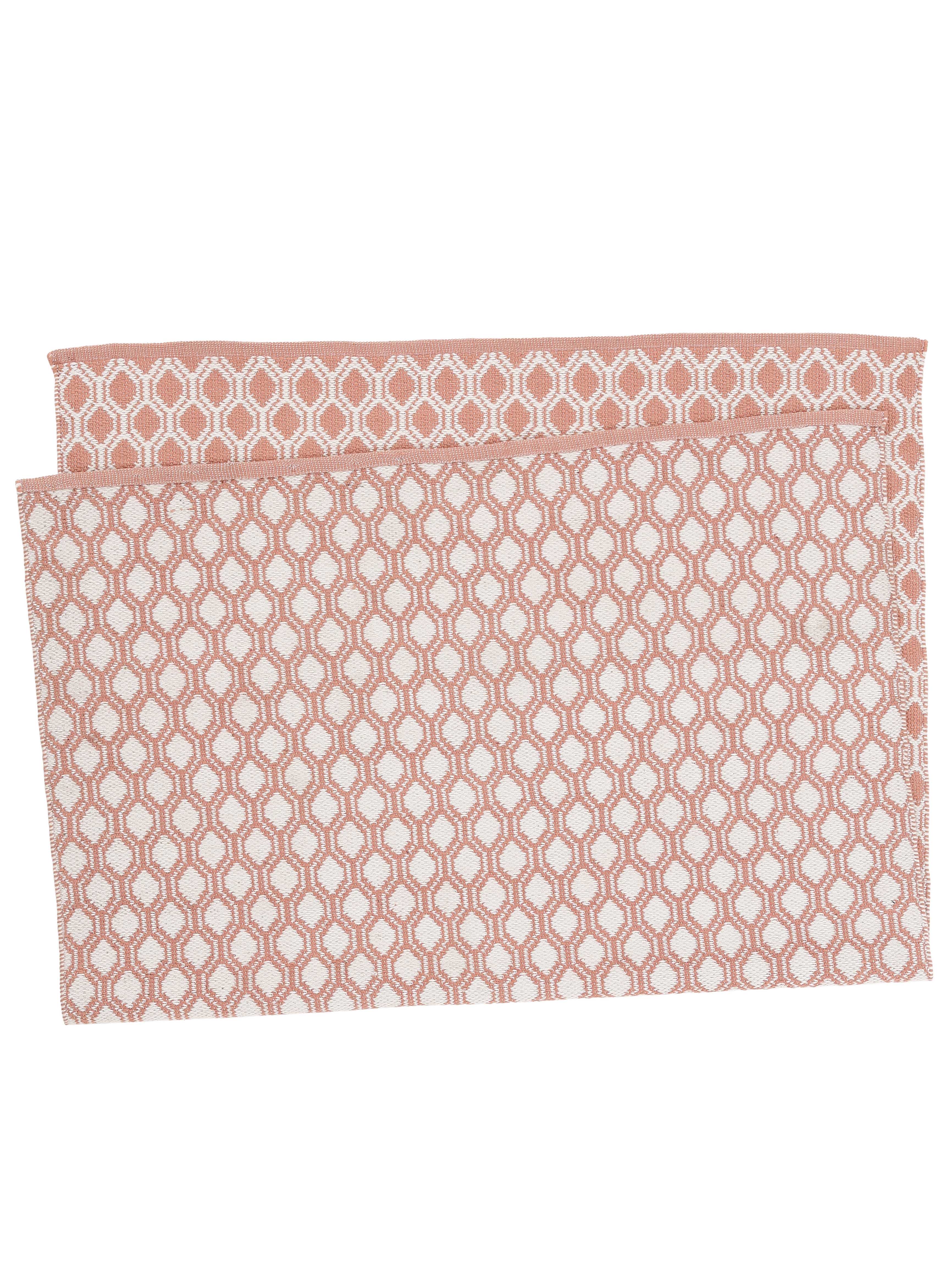
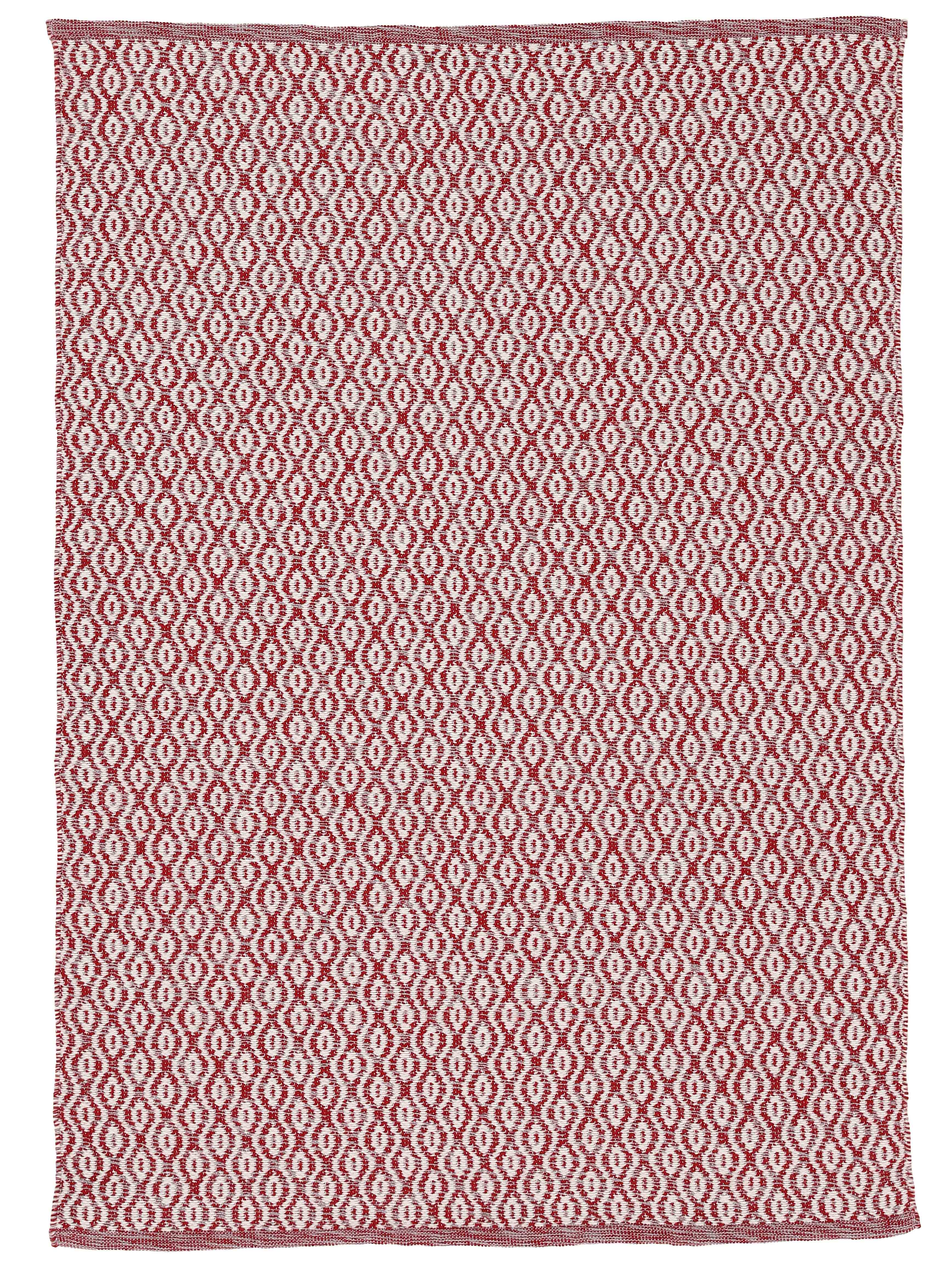
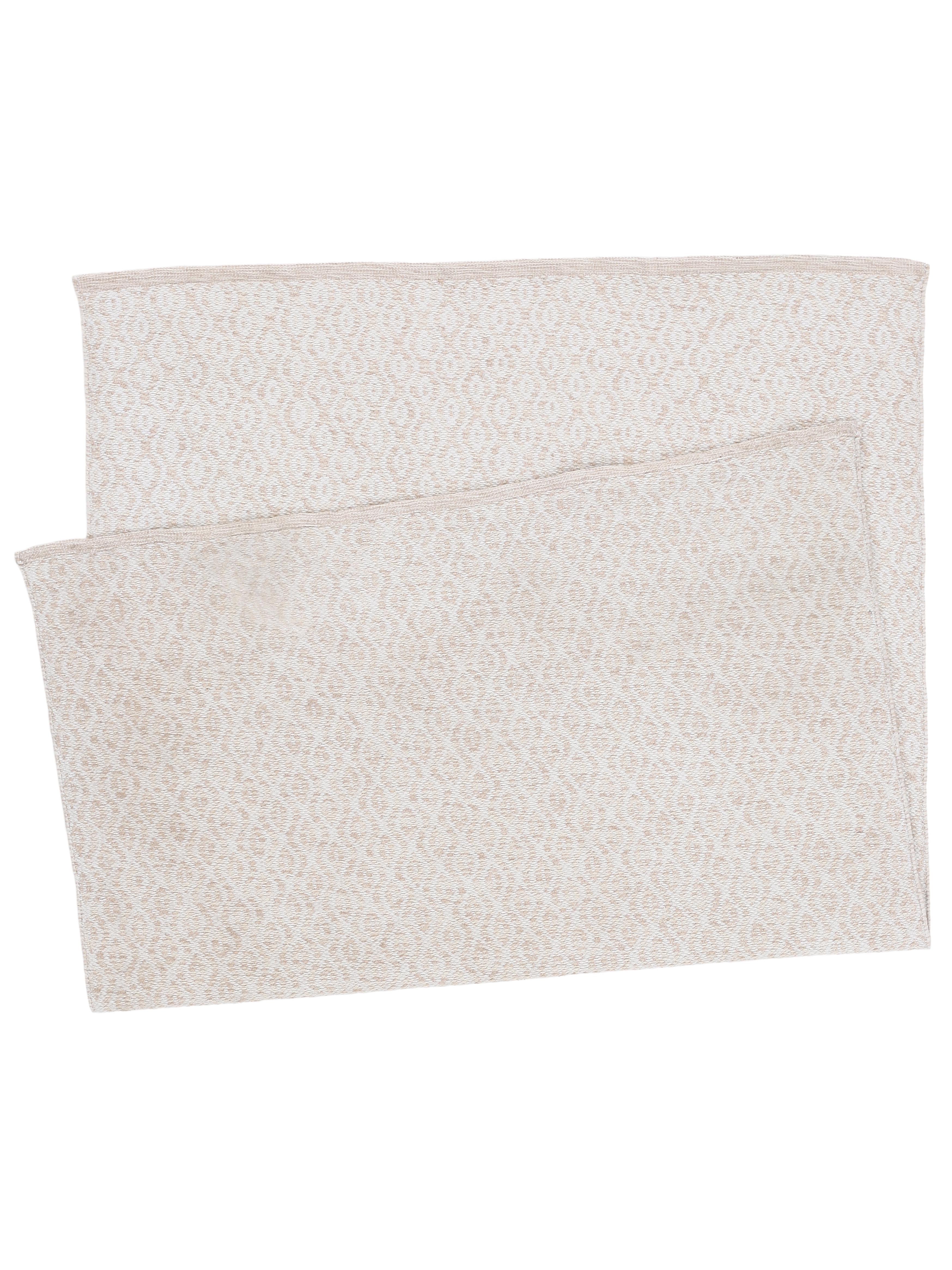
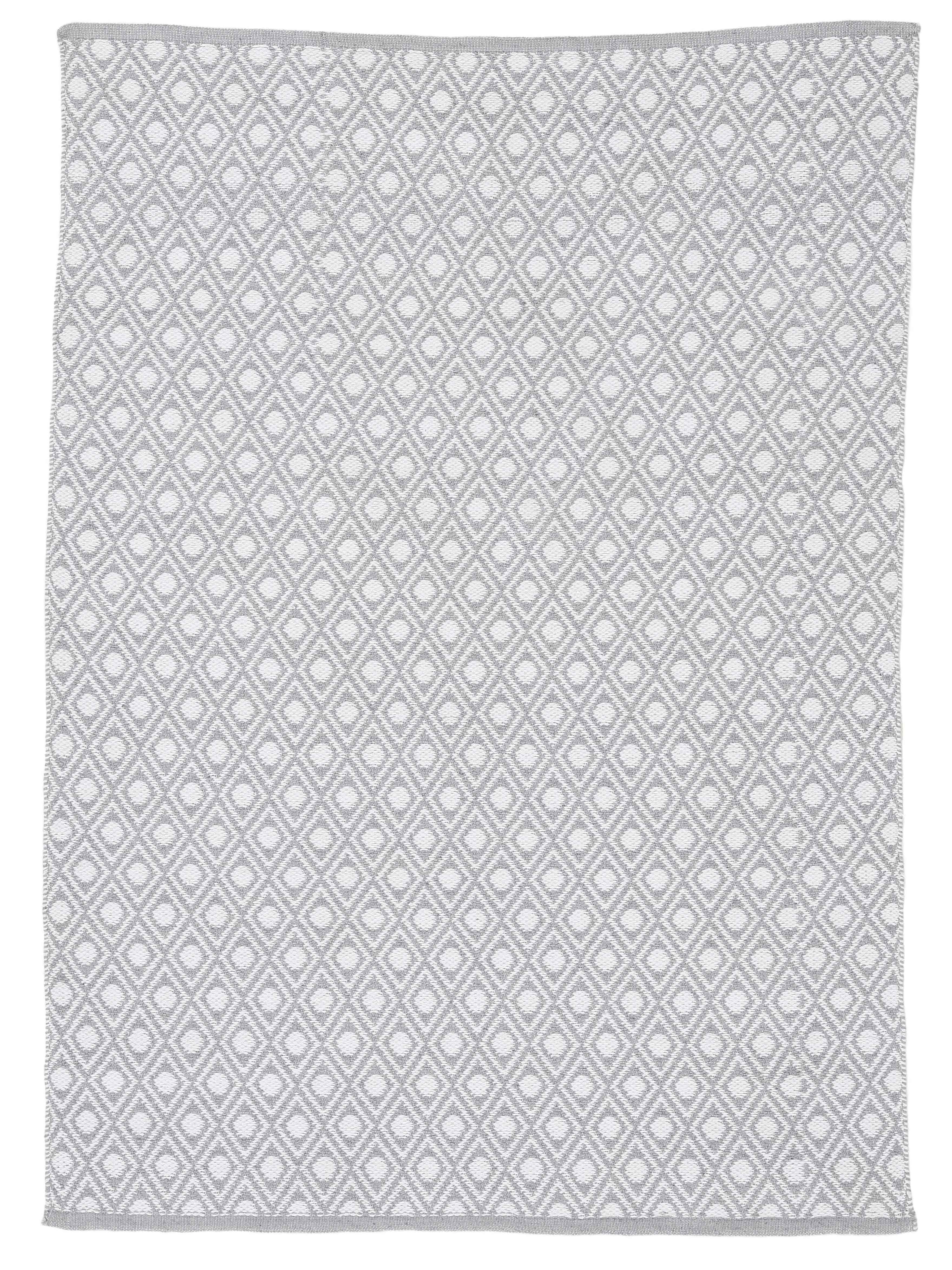
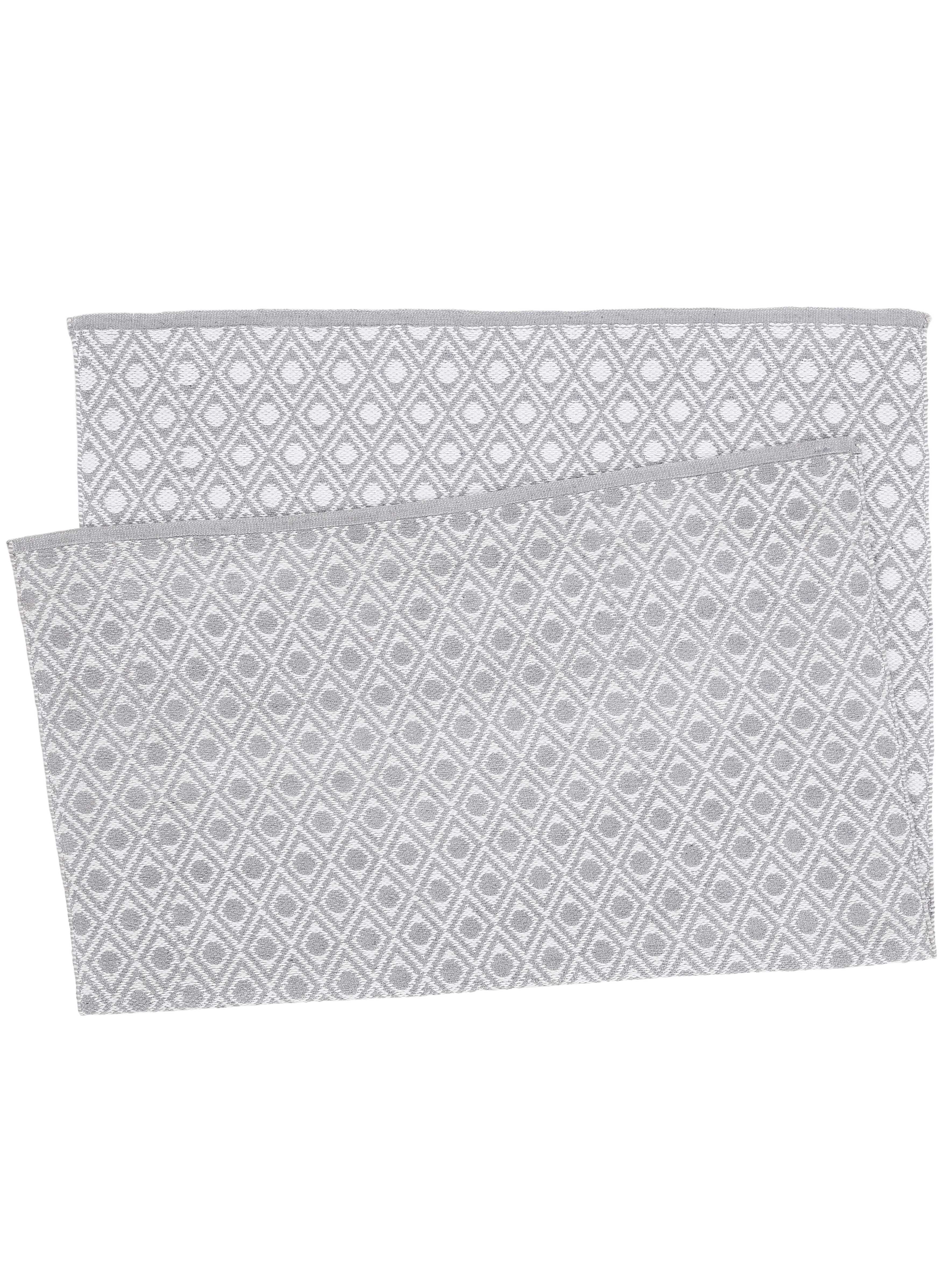
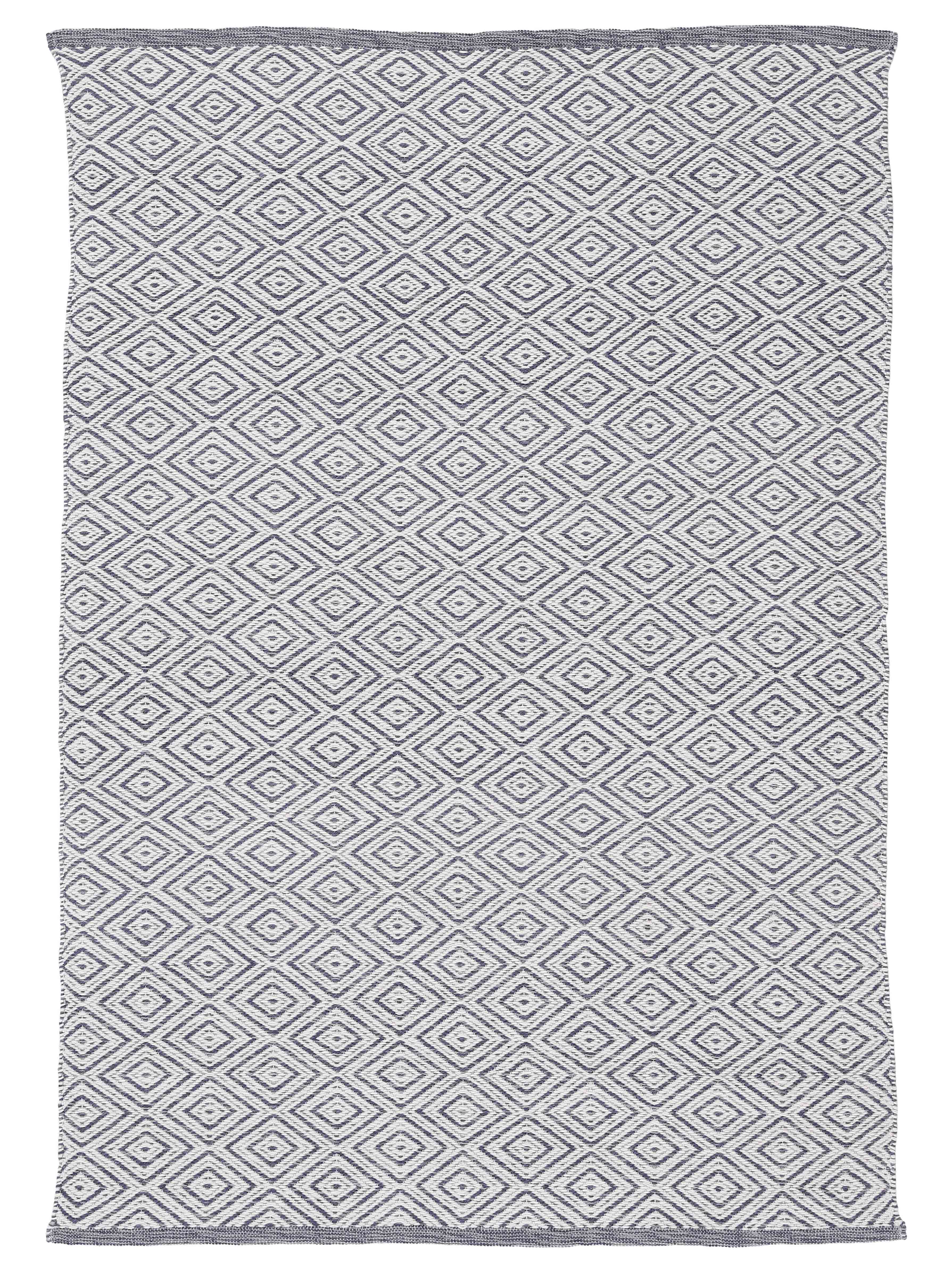
Beige is by far the most common colour, with 23 designs. One polypropylene family comes only in beige, with a check pattern that sits nicely with rattan furniture and lots of plants. The other has a bolder pattern and is also available in cream, dark blue and grey.
The recycled range has the widest spread of colour. It goes from black and red to light green and a soft peach.
A beige or cream outdoor patio rug makes a small space look bigger but shows dirt sooner. Grey suits metal furniture and concrete. Dark blue looks calm next to white garden chairs and hides the odd footprint well. When rug and seat cushions pick up the same colour, the balcony starts to feel like an extra room.
Indoors in winter
According to our product data, every design is meant for indoor use too, so these really are indoor outdoor rugs. Over the colder months one of them can become an easy-care kitchen rug, or lie in the hall like one of our runner rugs. Because they are so flat, doors open over them without catching. That makes them handy by the back door as well, where muddy boots and wet paws come in after a walk. A quick shake outside and the worst is gone.
Moving the patio table indoors for the winter? Suitable sizes for the space underneath are with the dining room rug designs.
Frequently asked questions
Can it stay out in the rain?
Our product data don't say. Polypropylene hardly absorbs water, but two families have a jute backing. Let them dry after rain and store them indoors over winter.
Will it damage my decking?
Moisture can collect under the rug and discolour wood. Lift it after rain and only put it back once both are dry.
Can I put it on grass?
We'd advise against it. The ground stays damp and the back hardly dries.