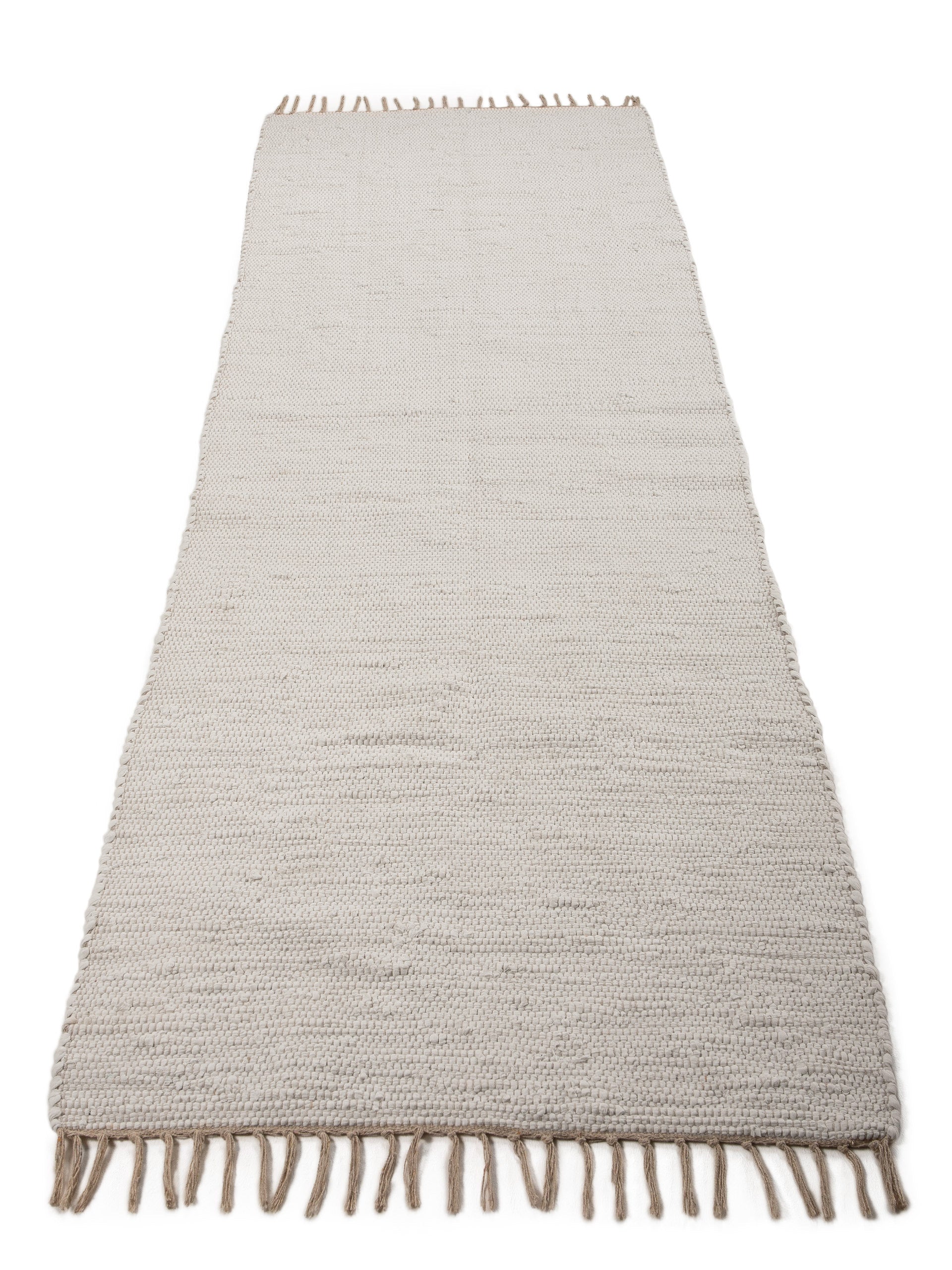
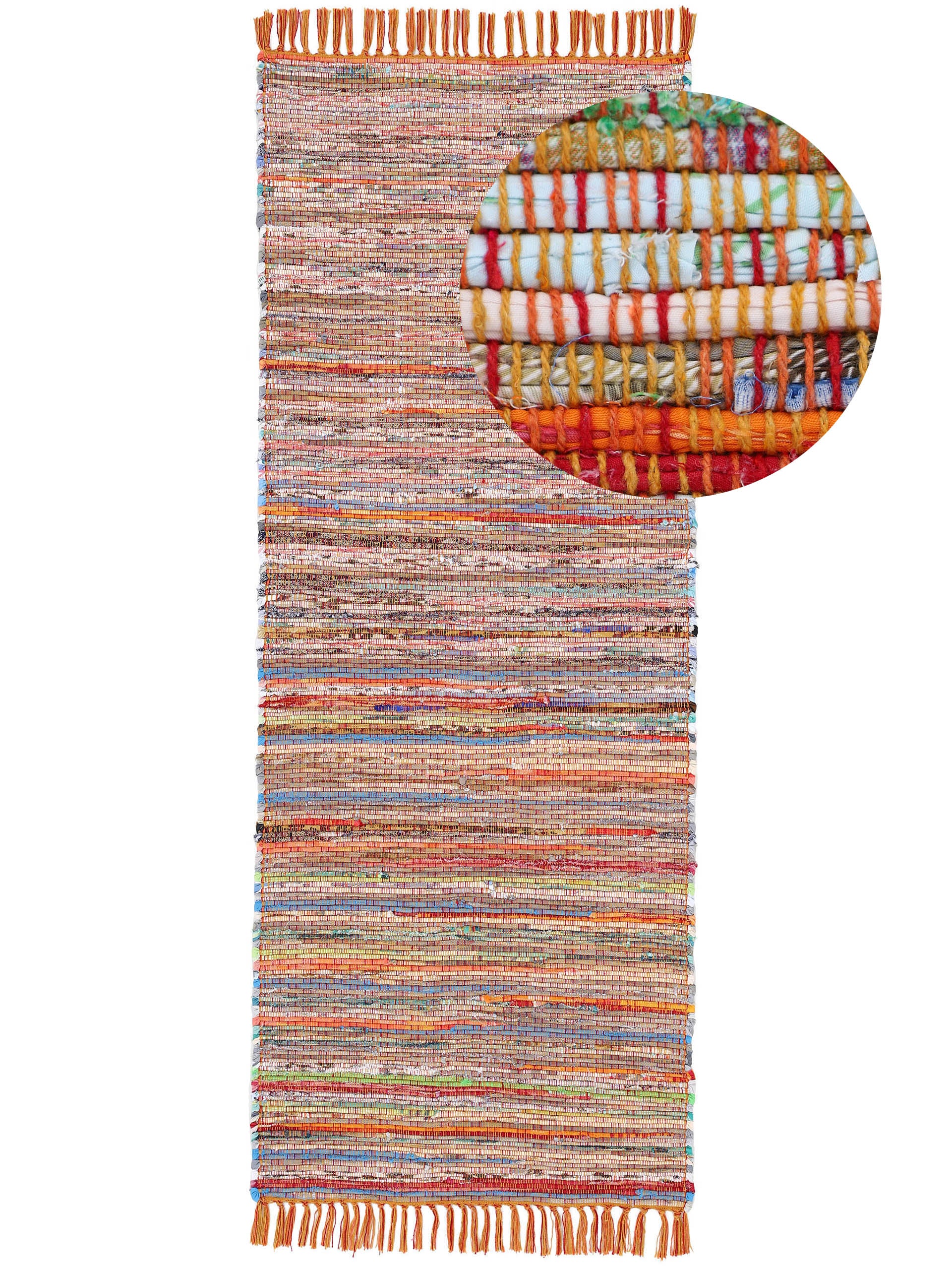
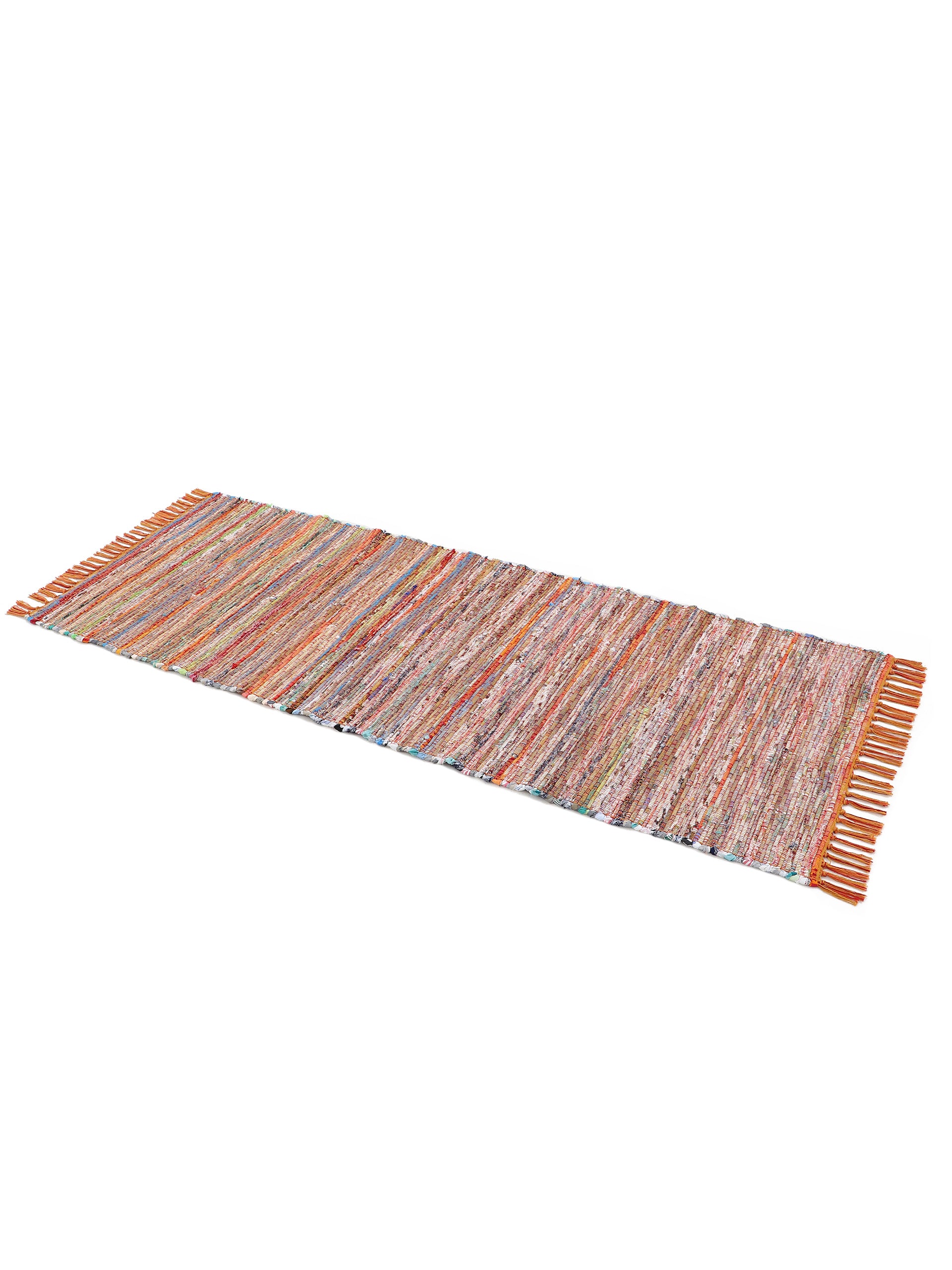
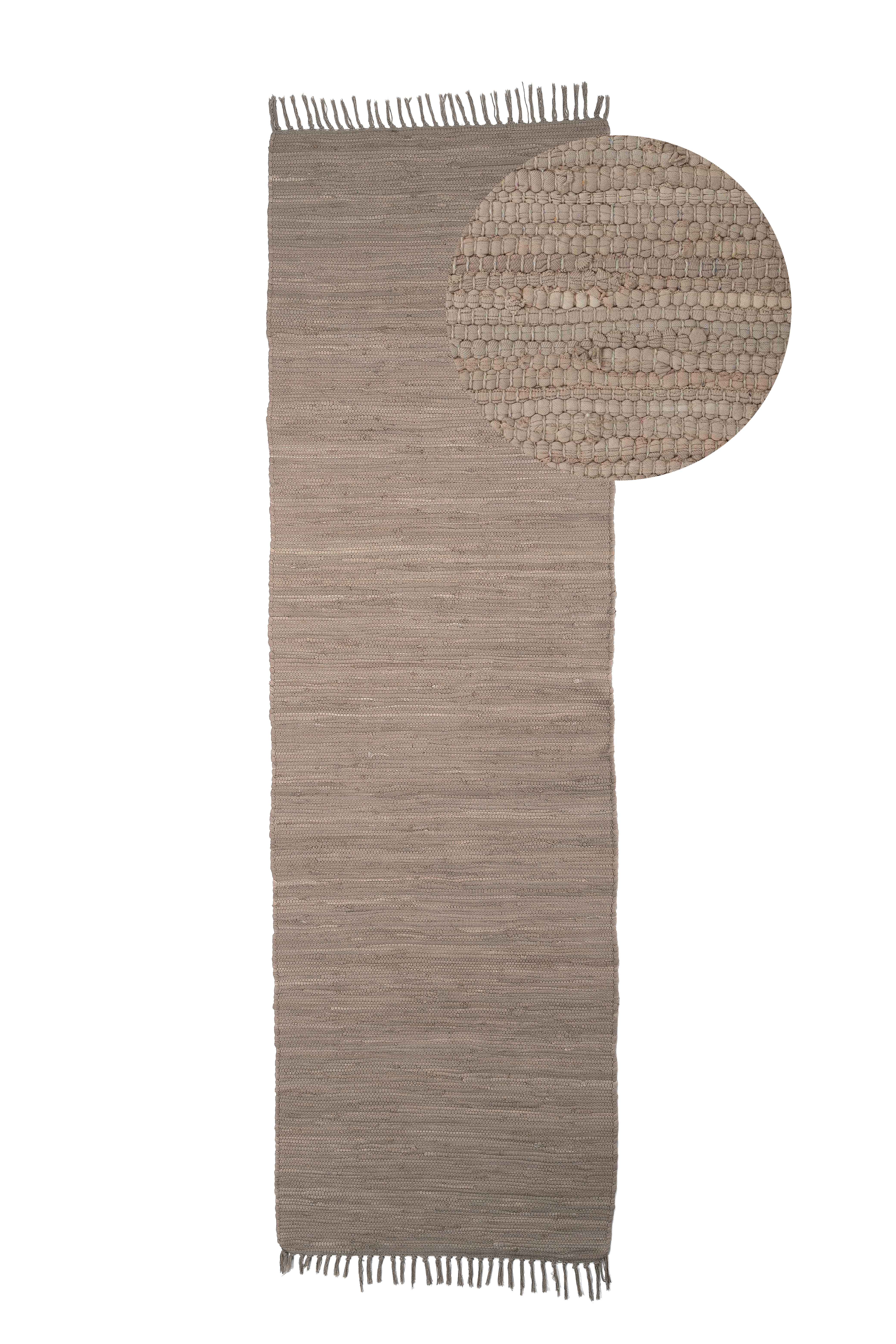
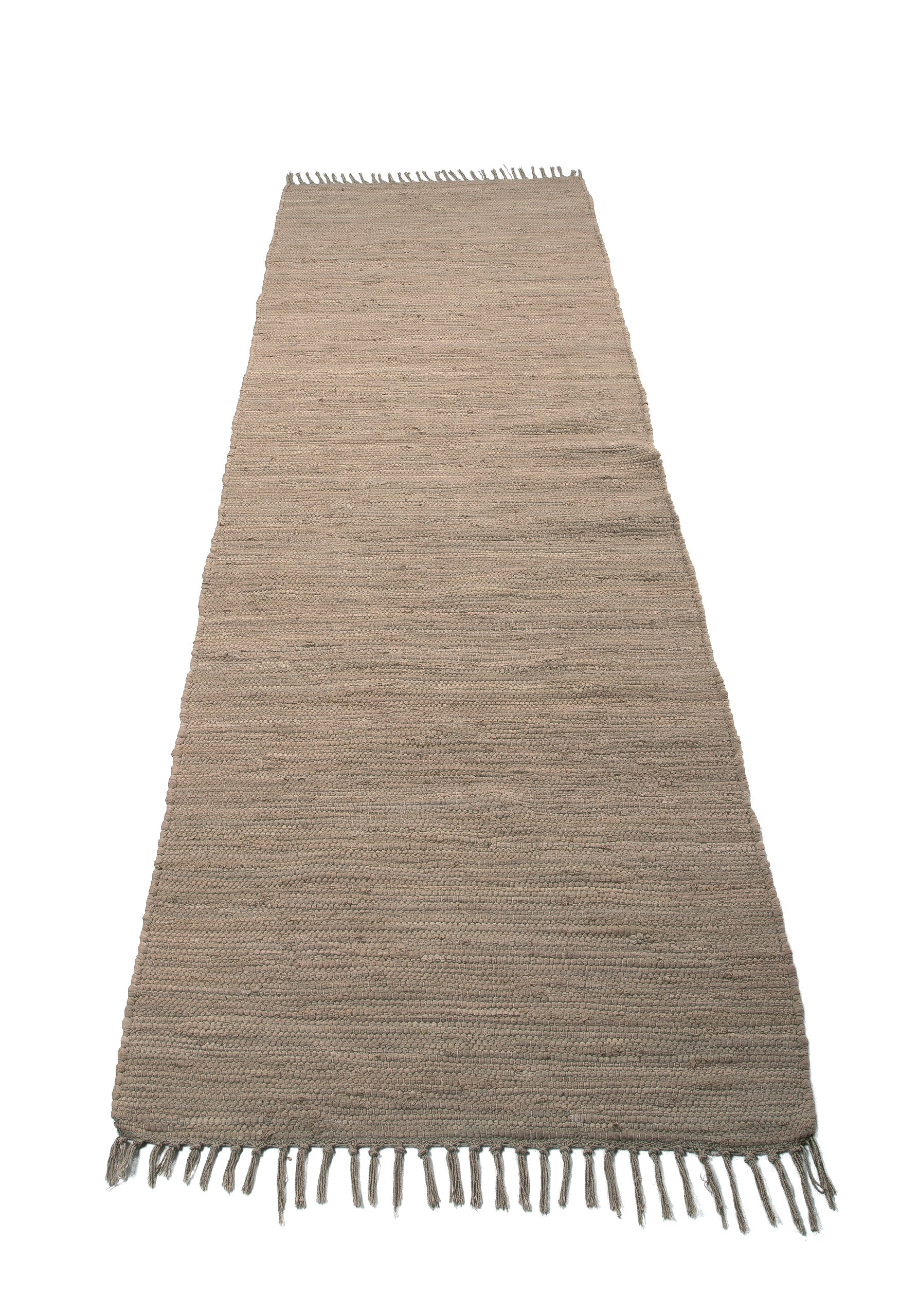
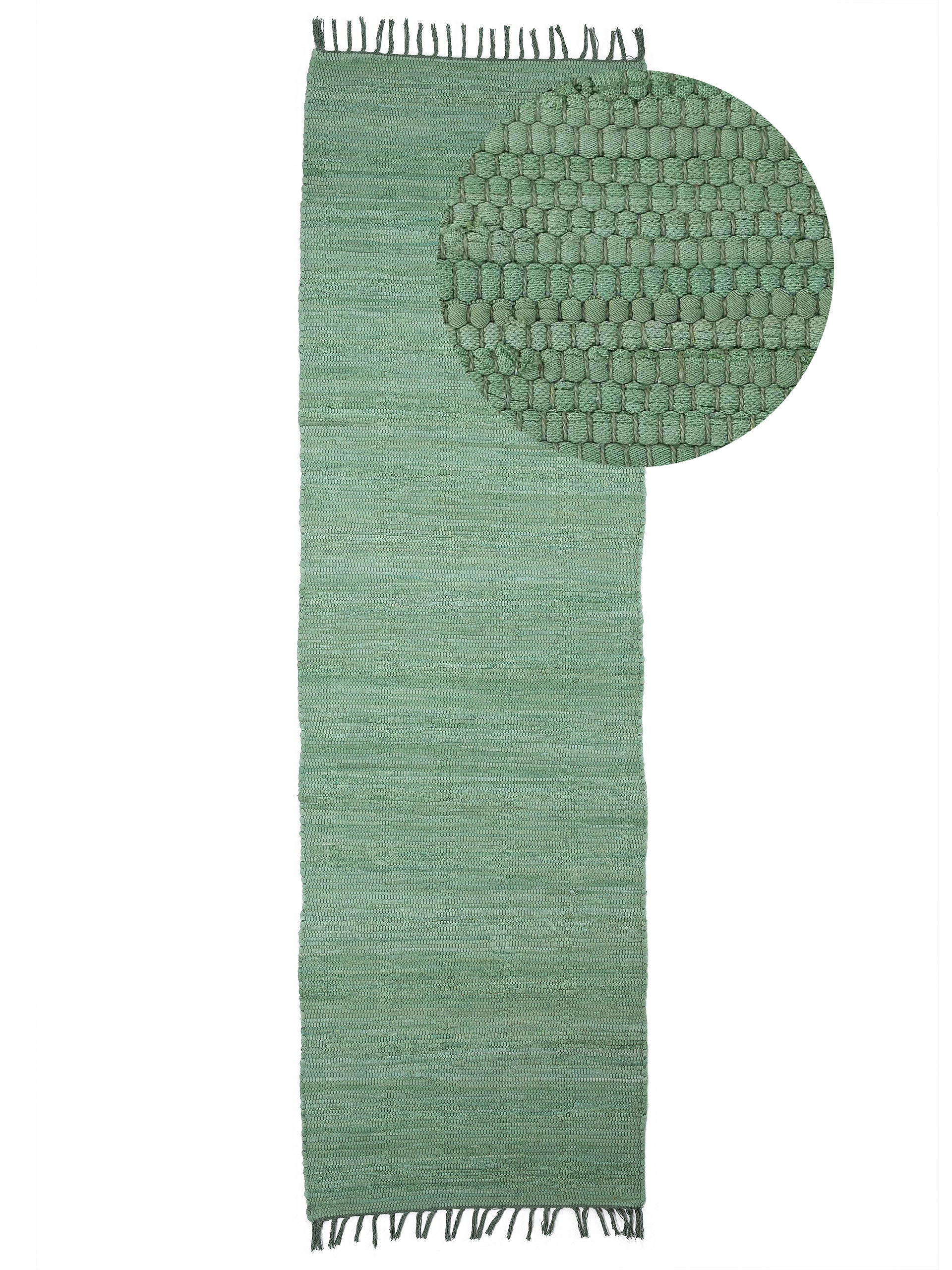
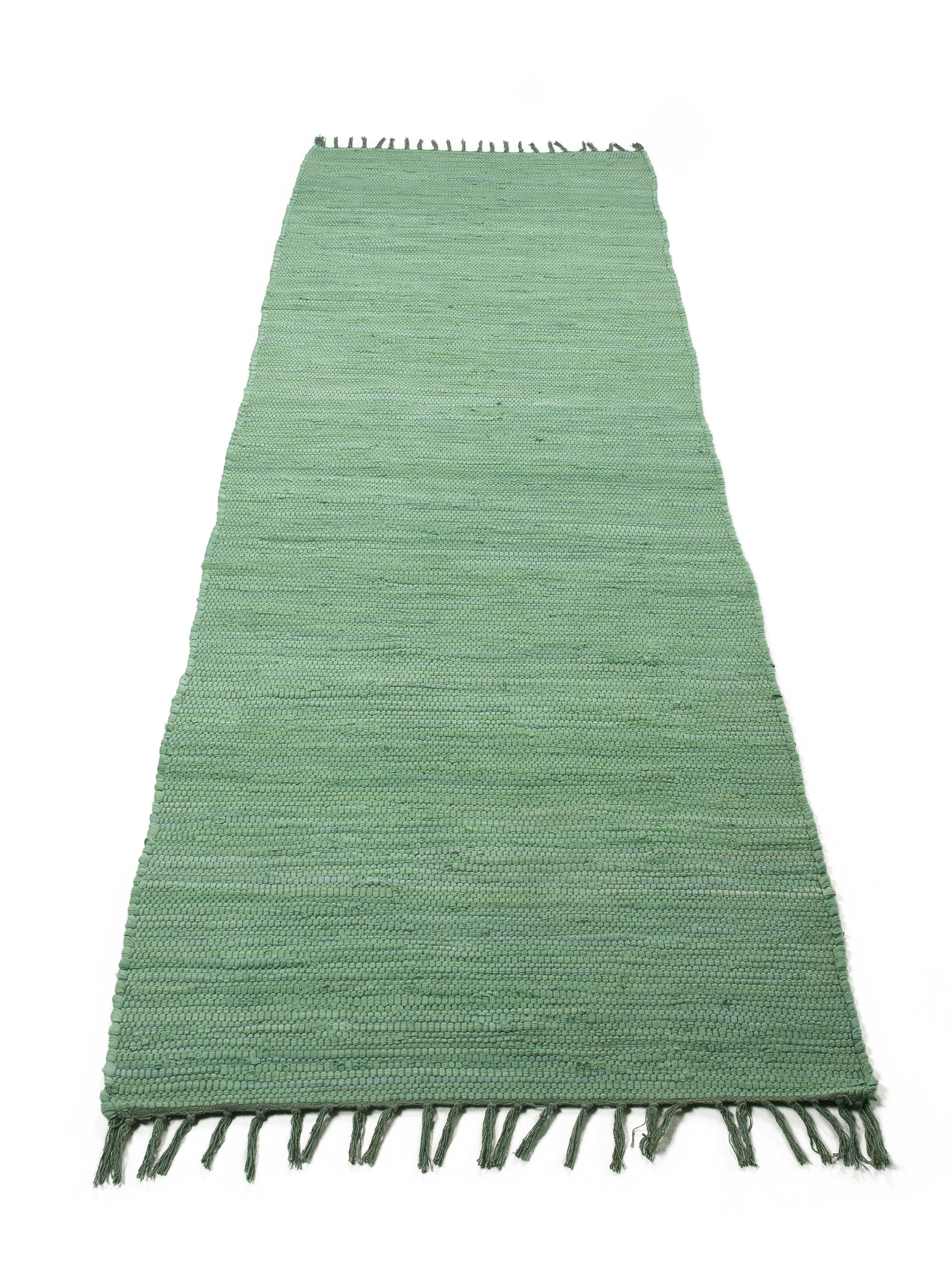
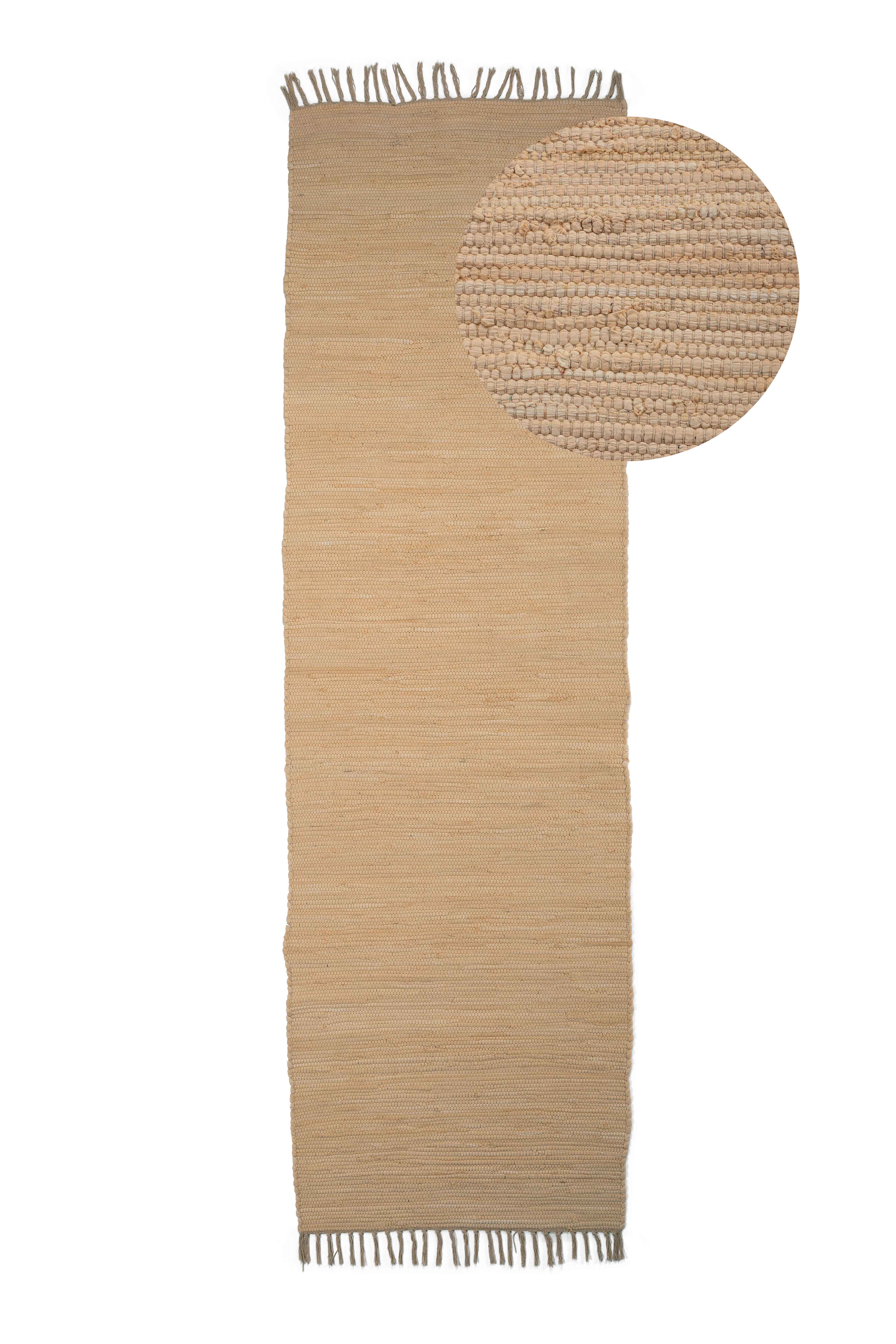
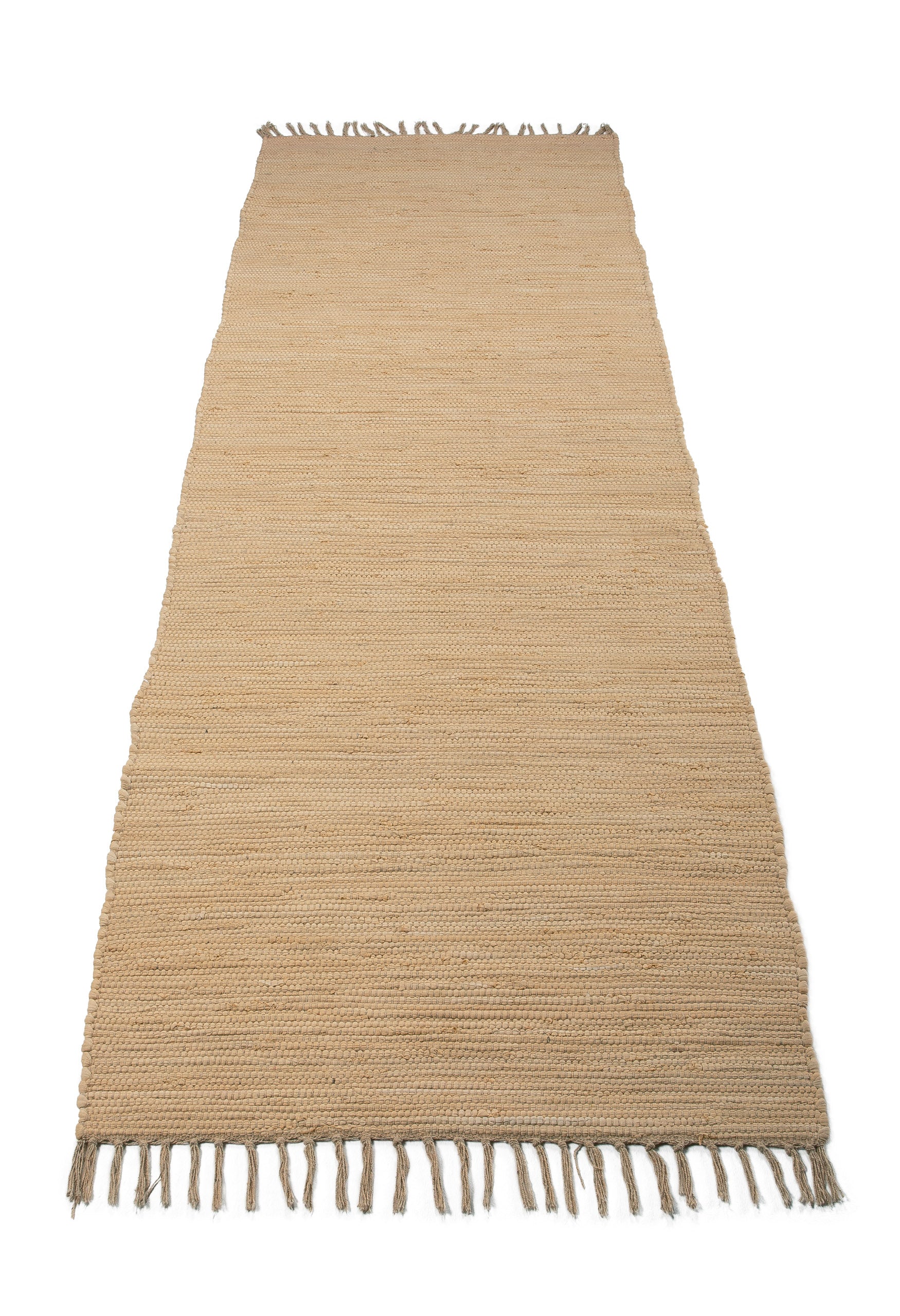
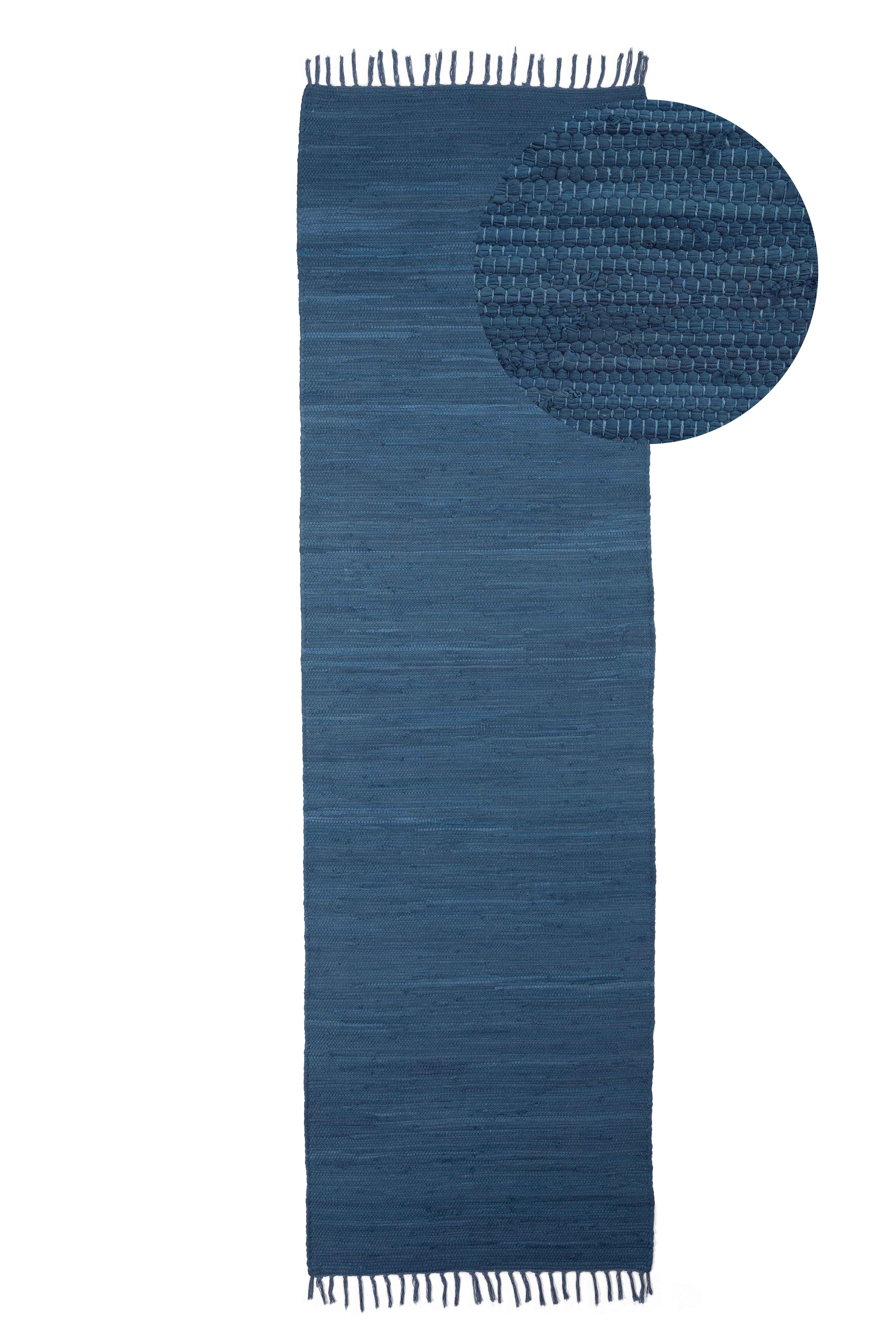
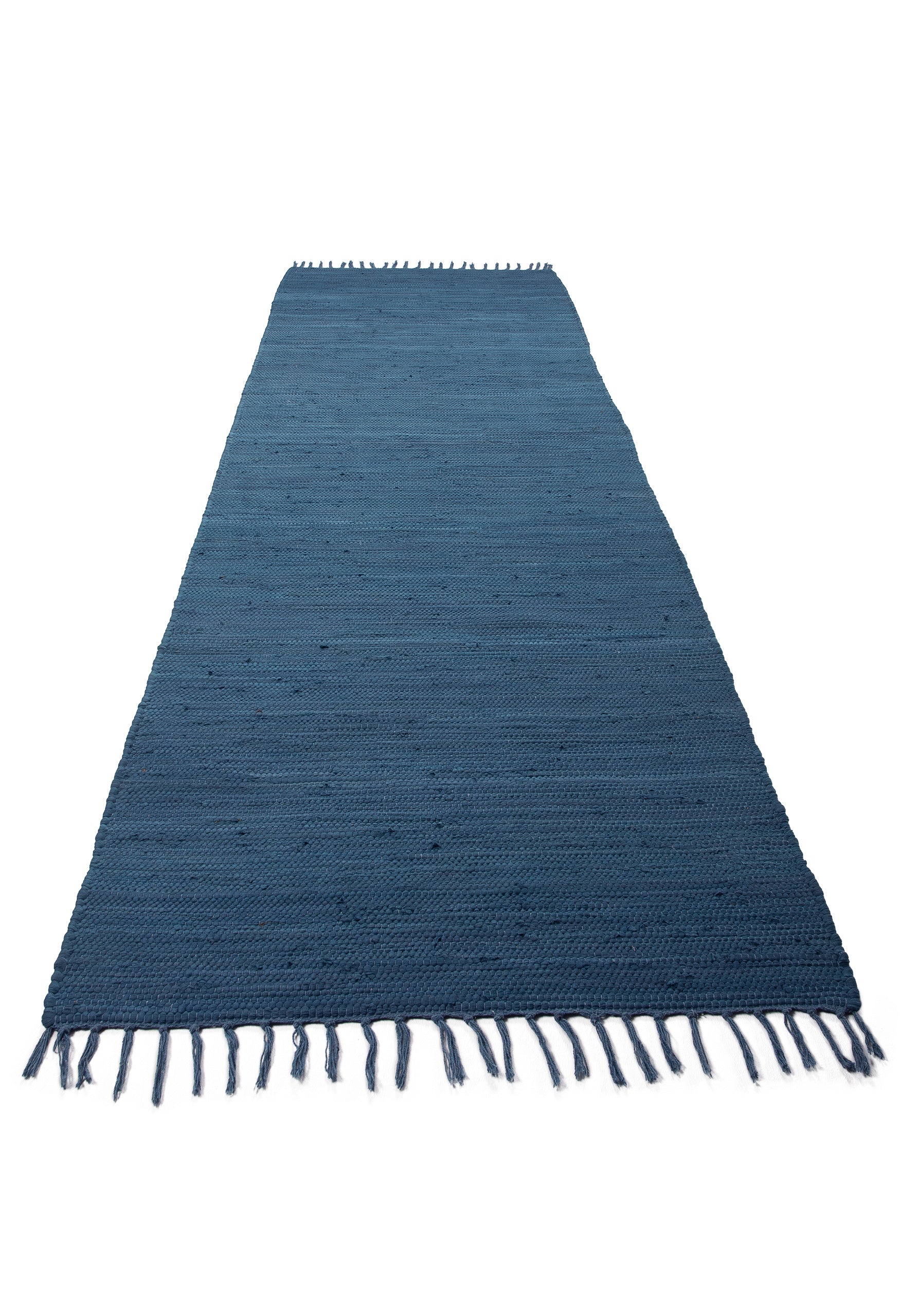
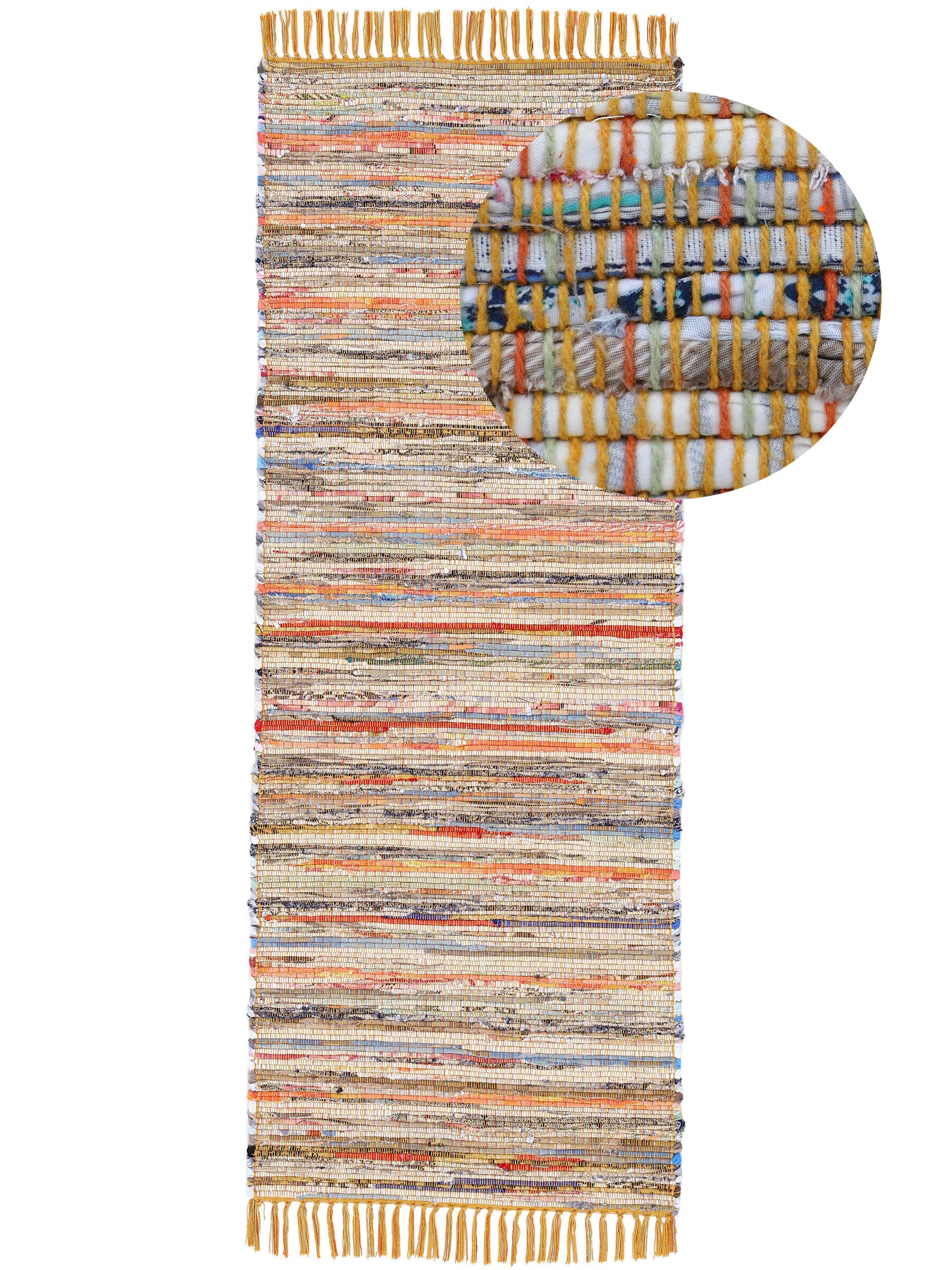
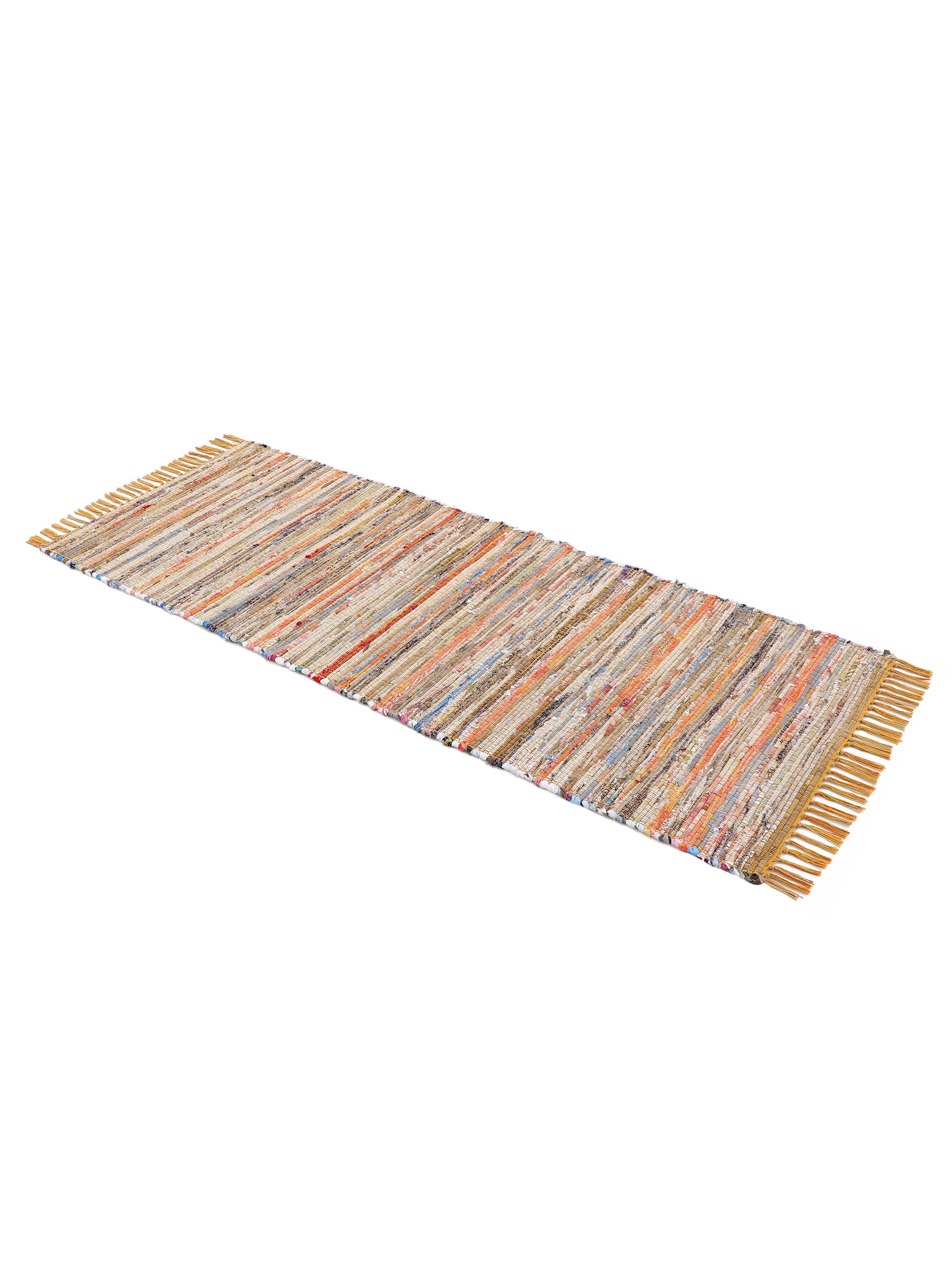
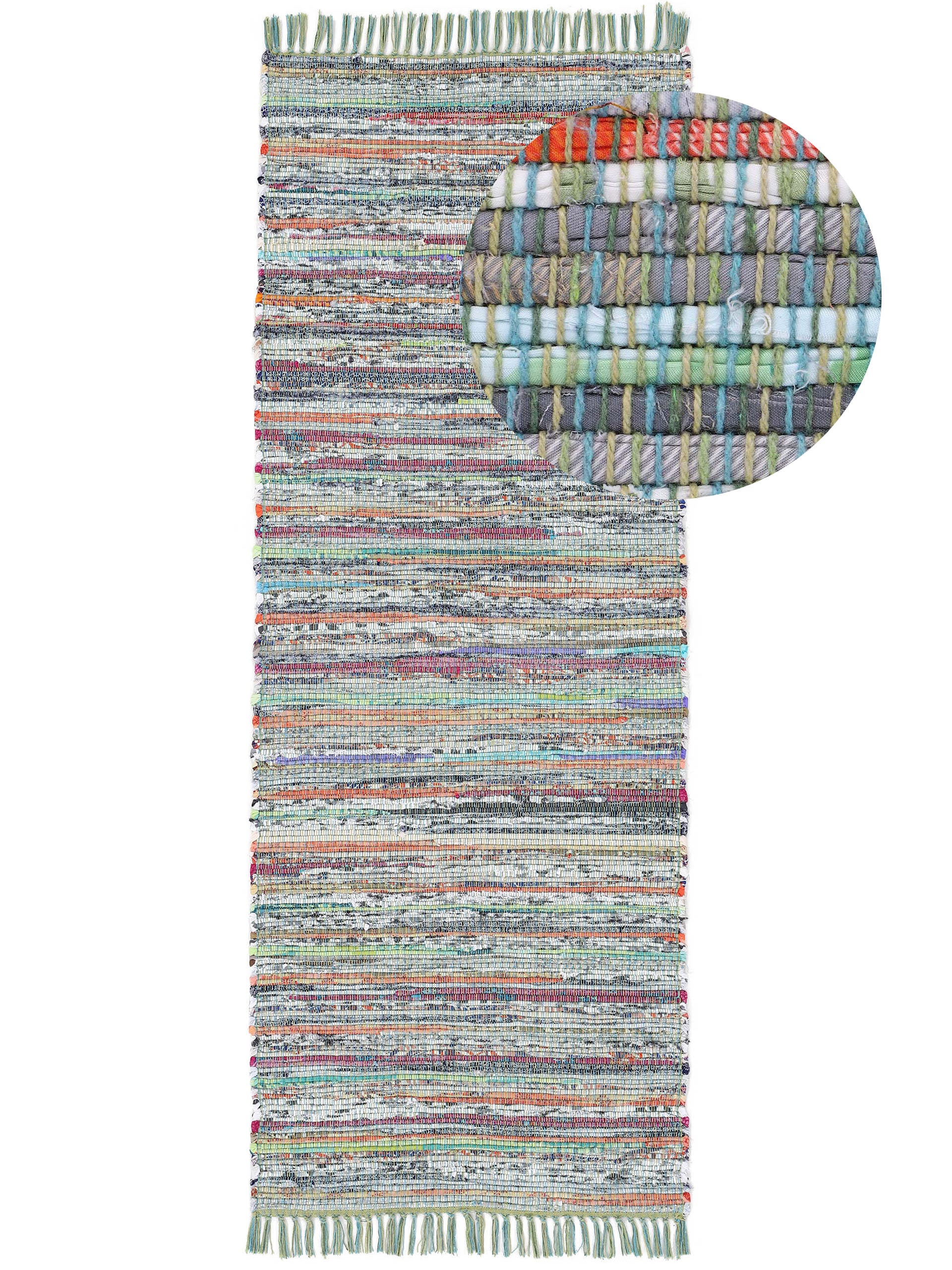
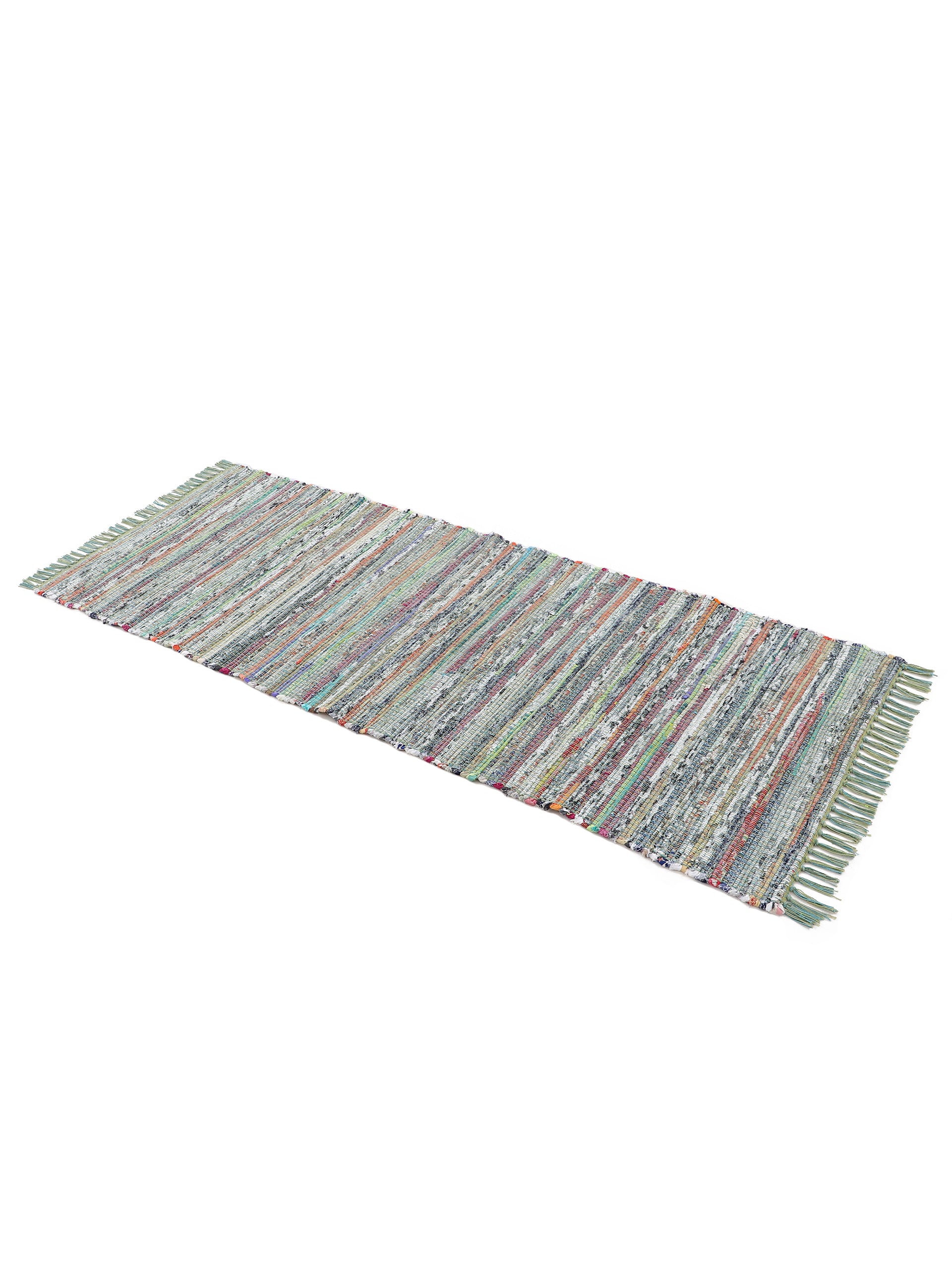
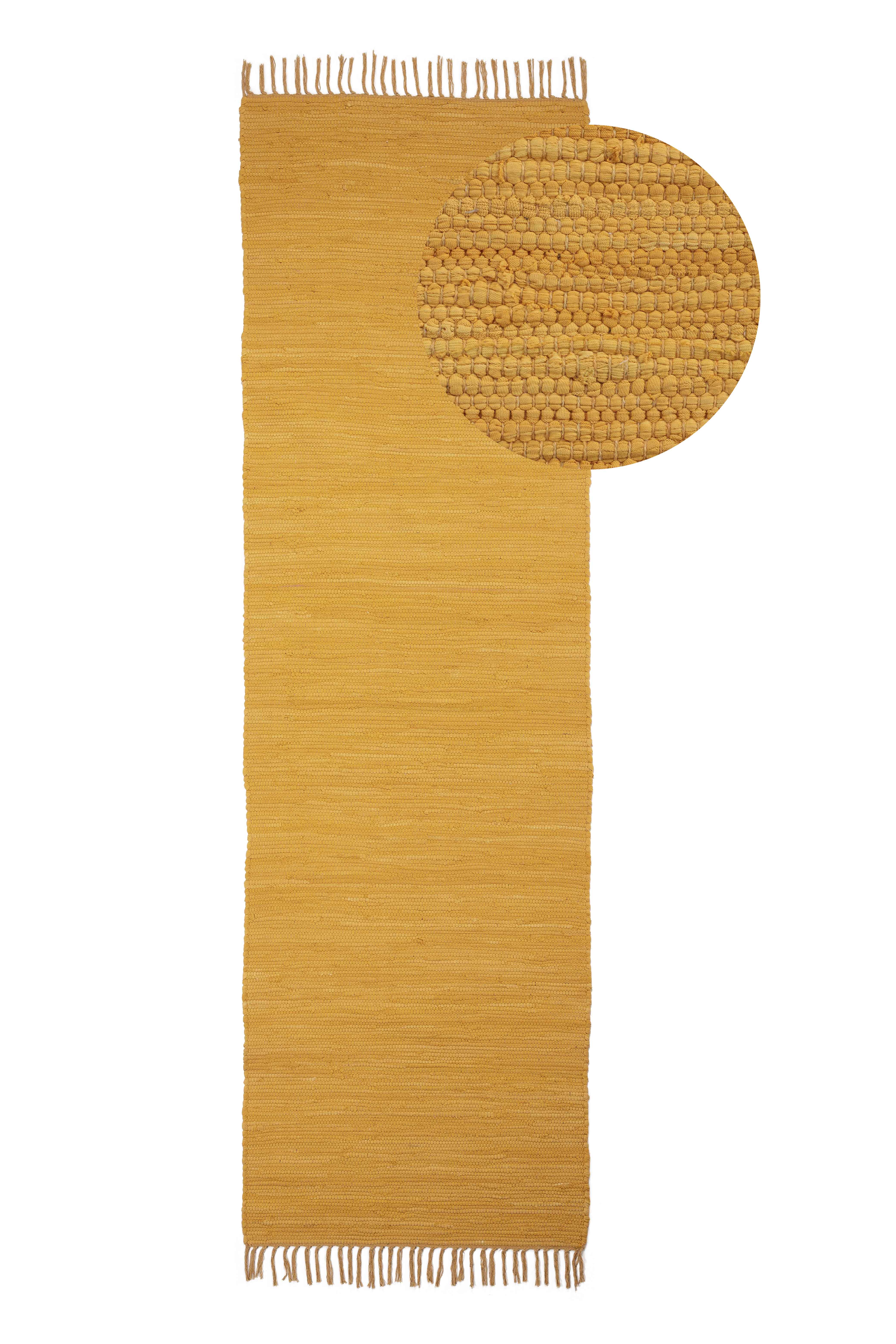
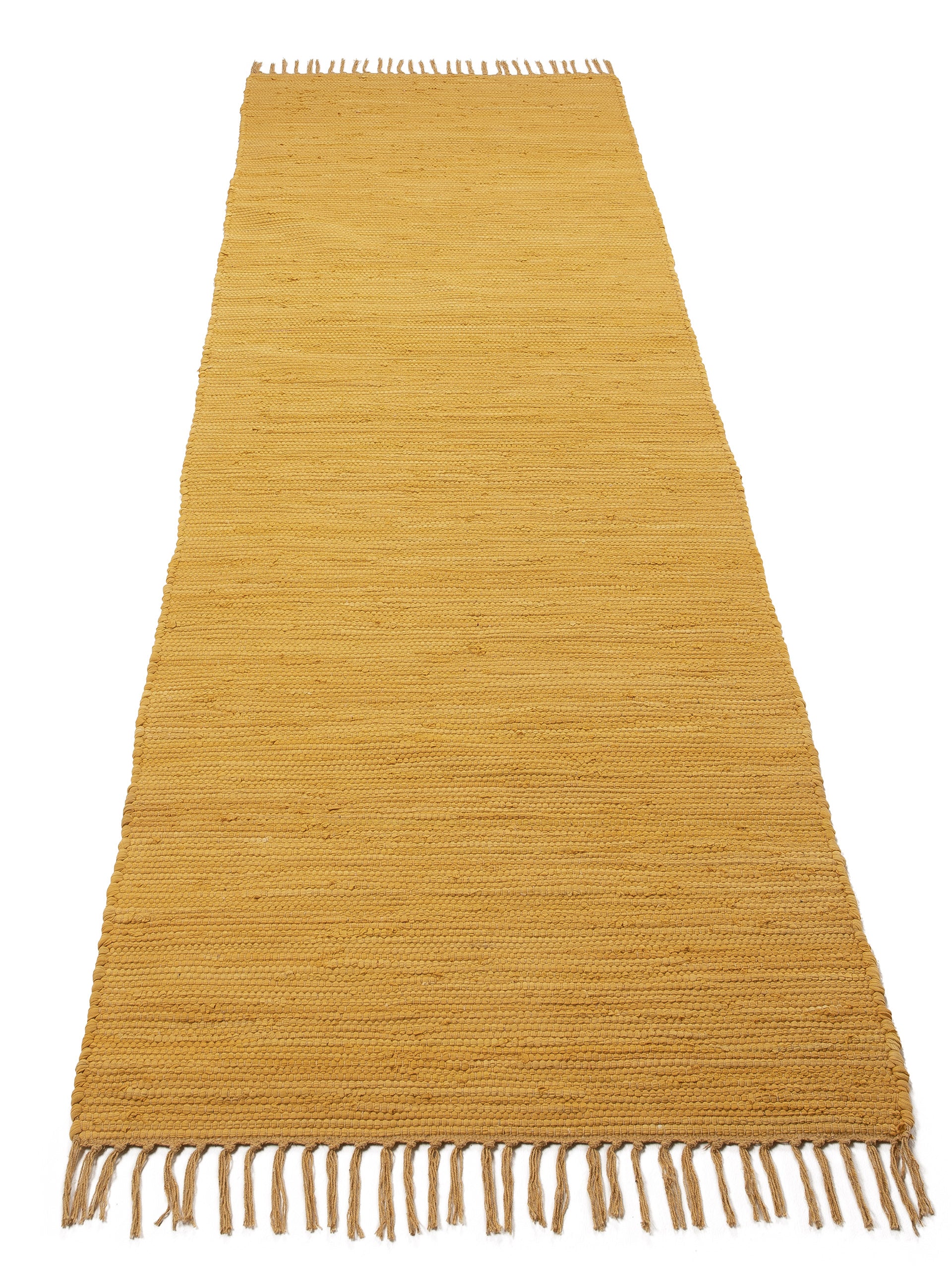
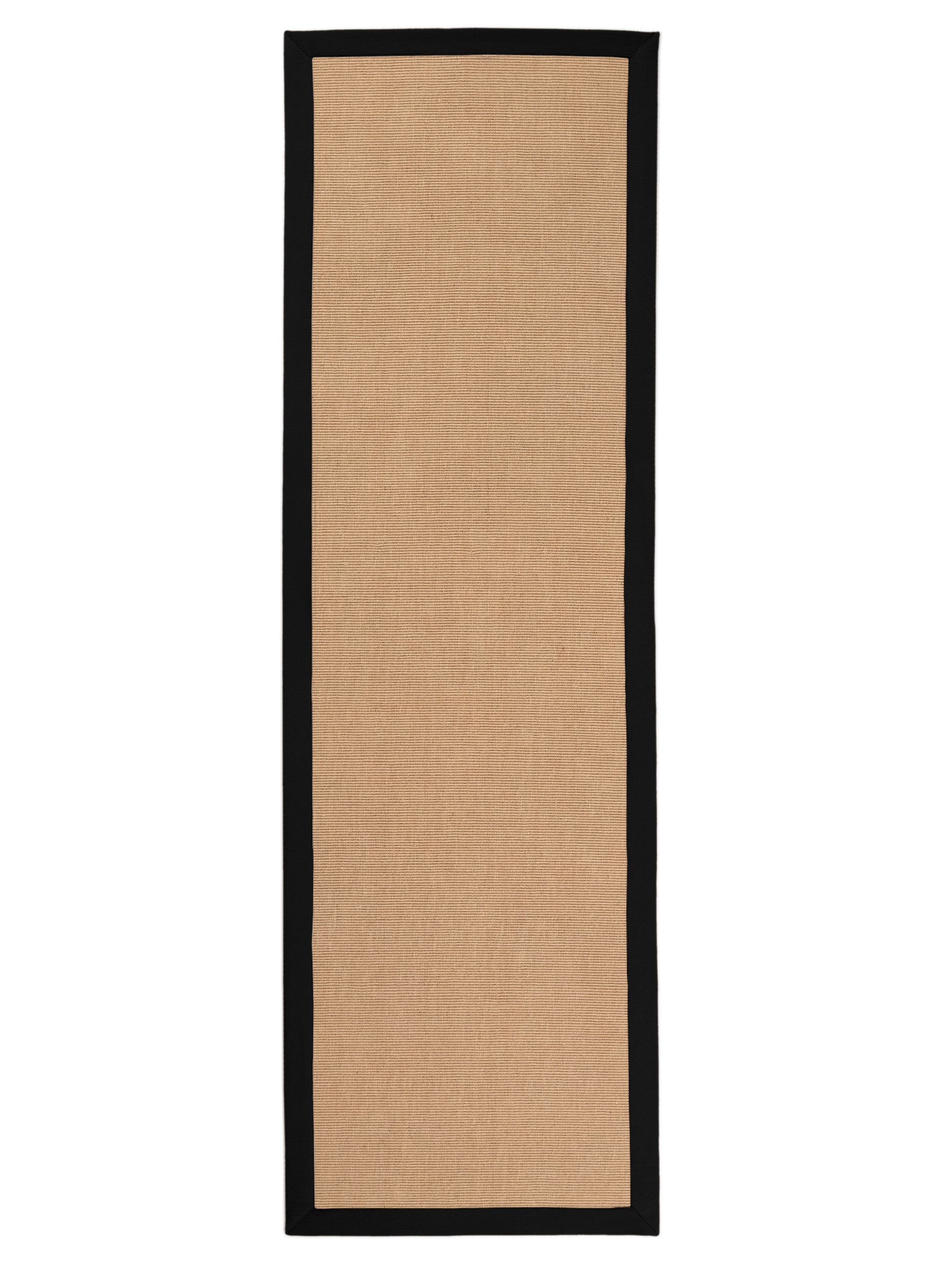
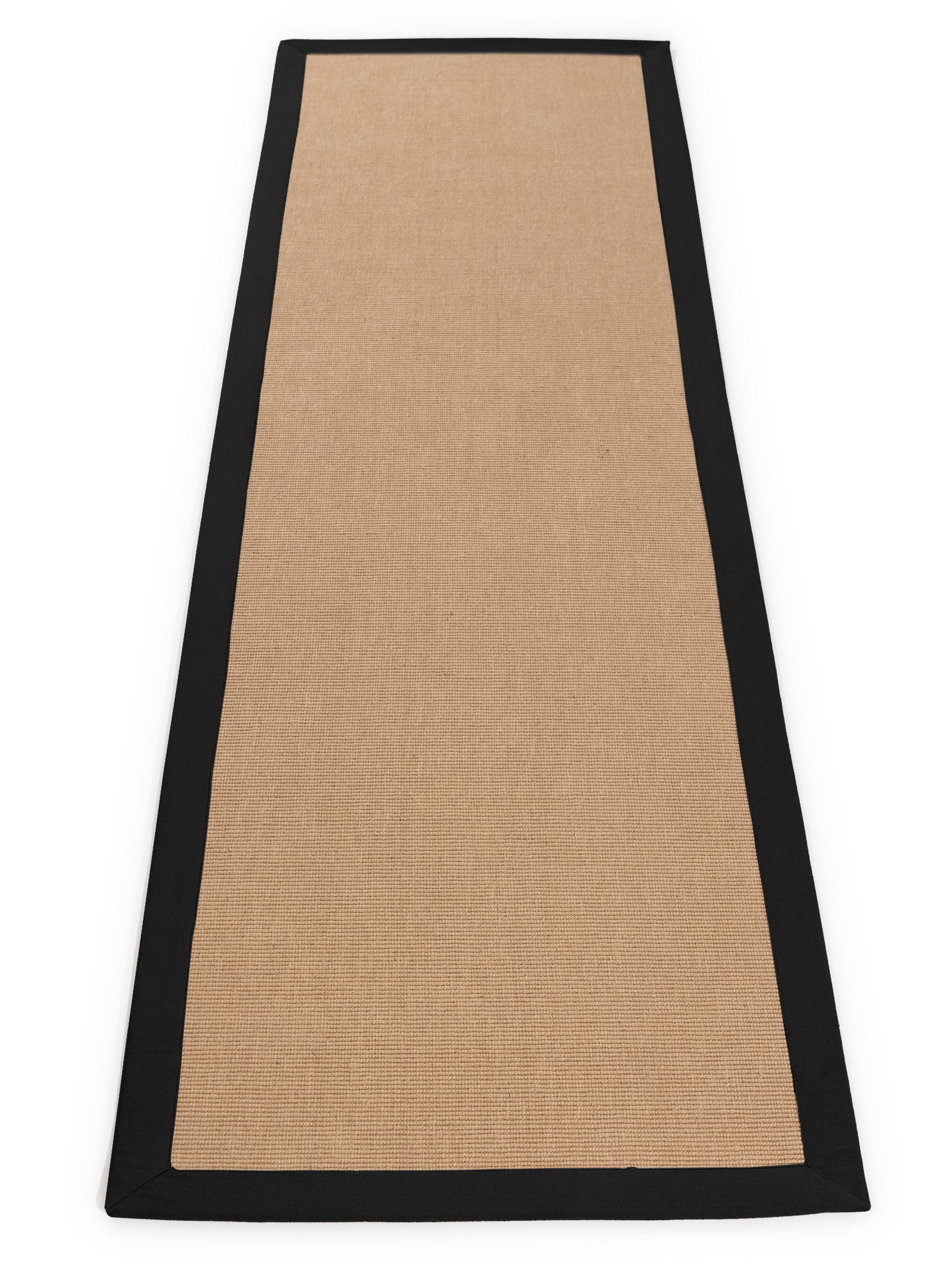
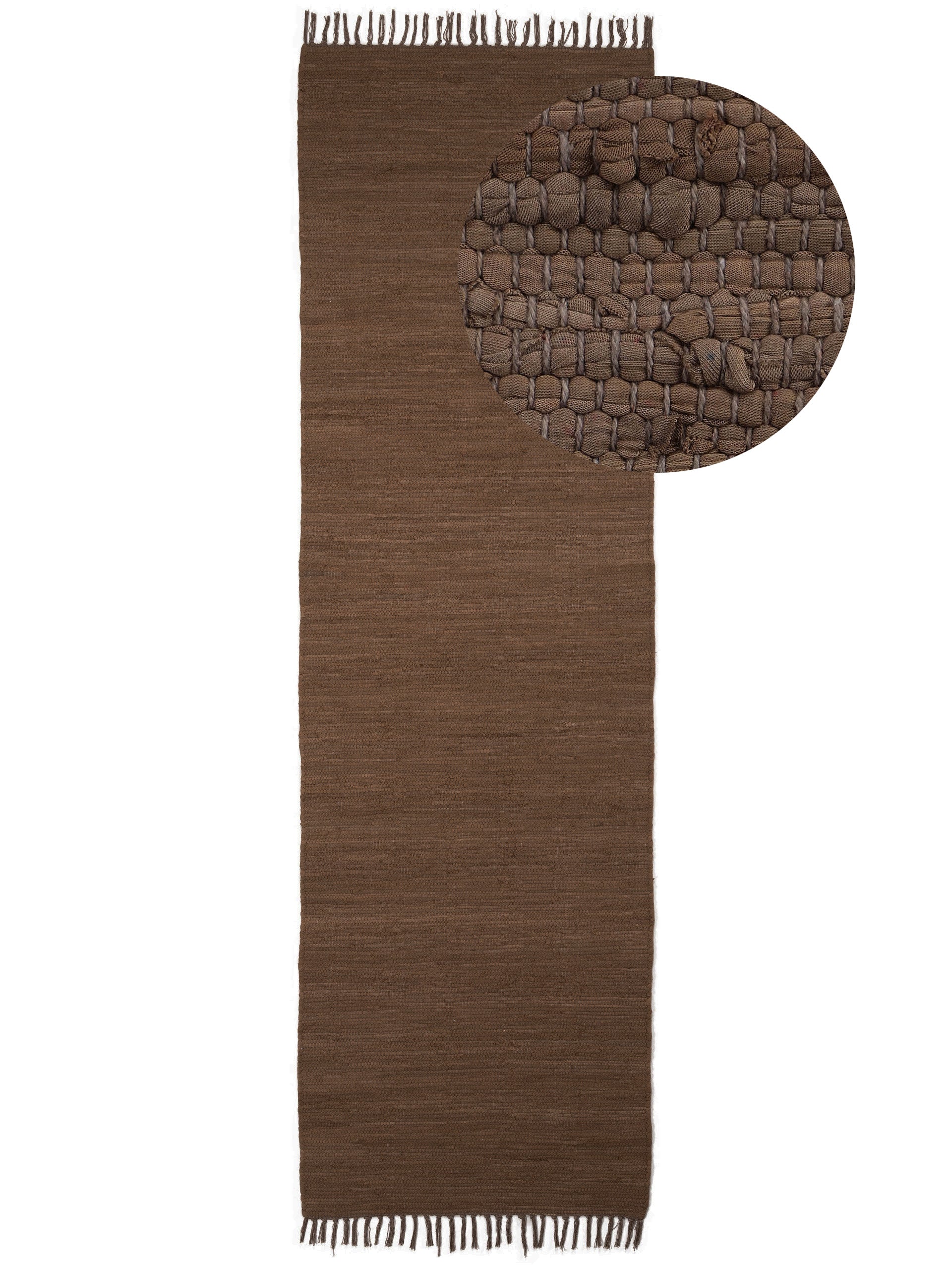
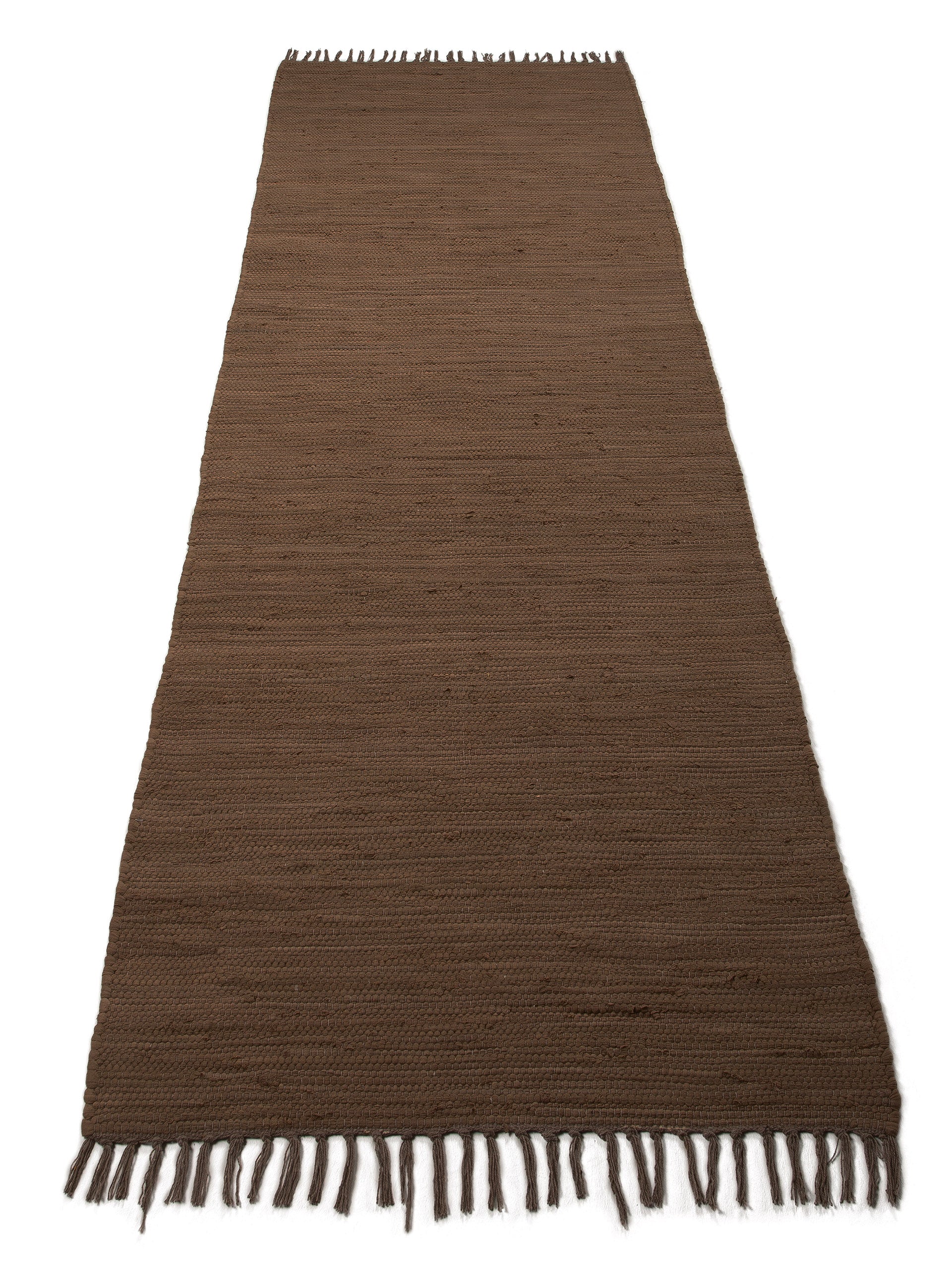
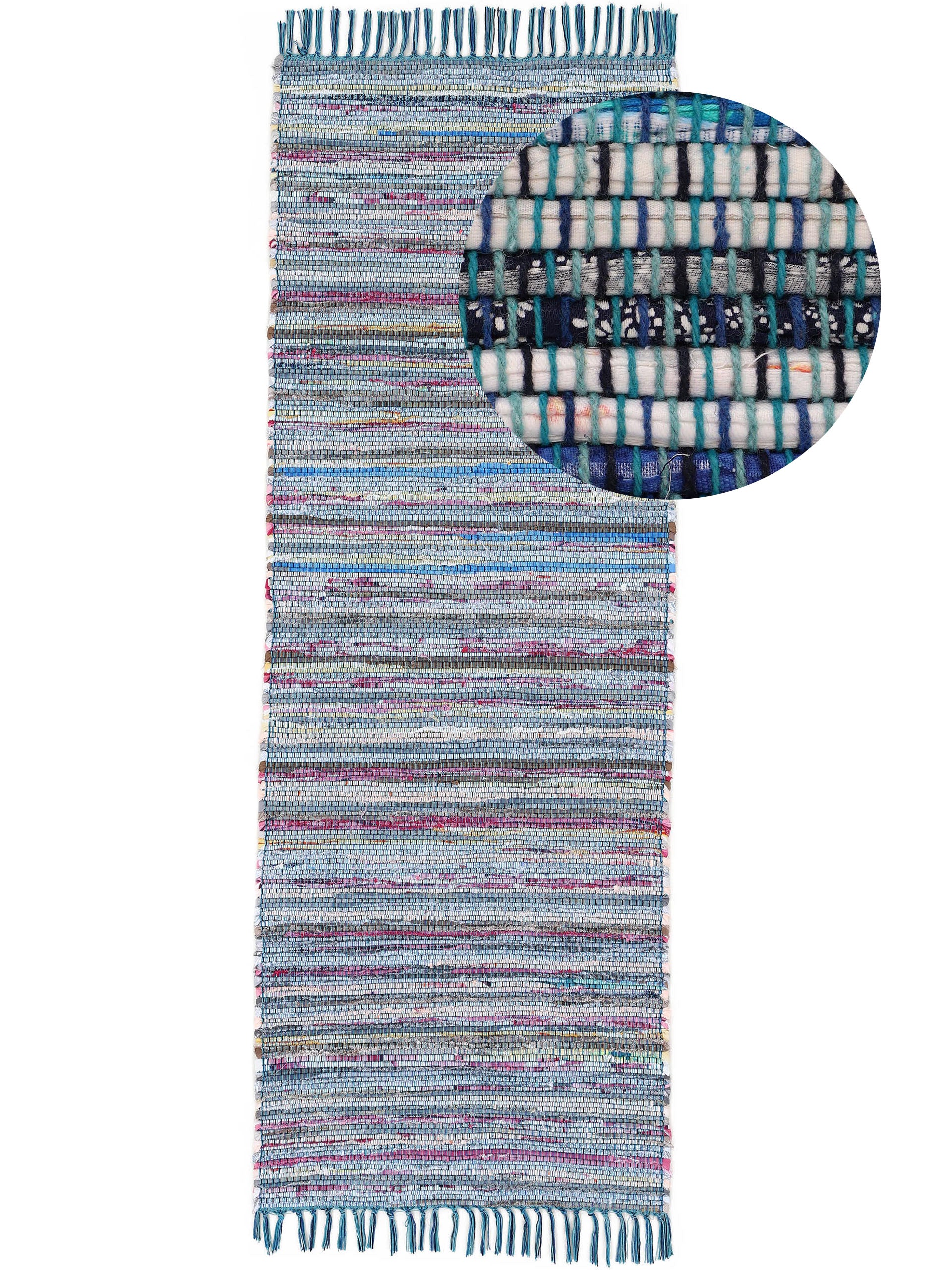
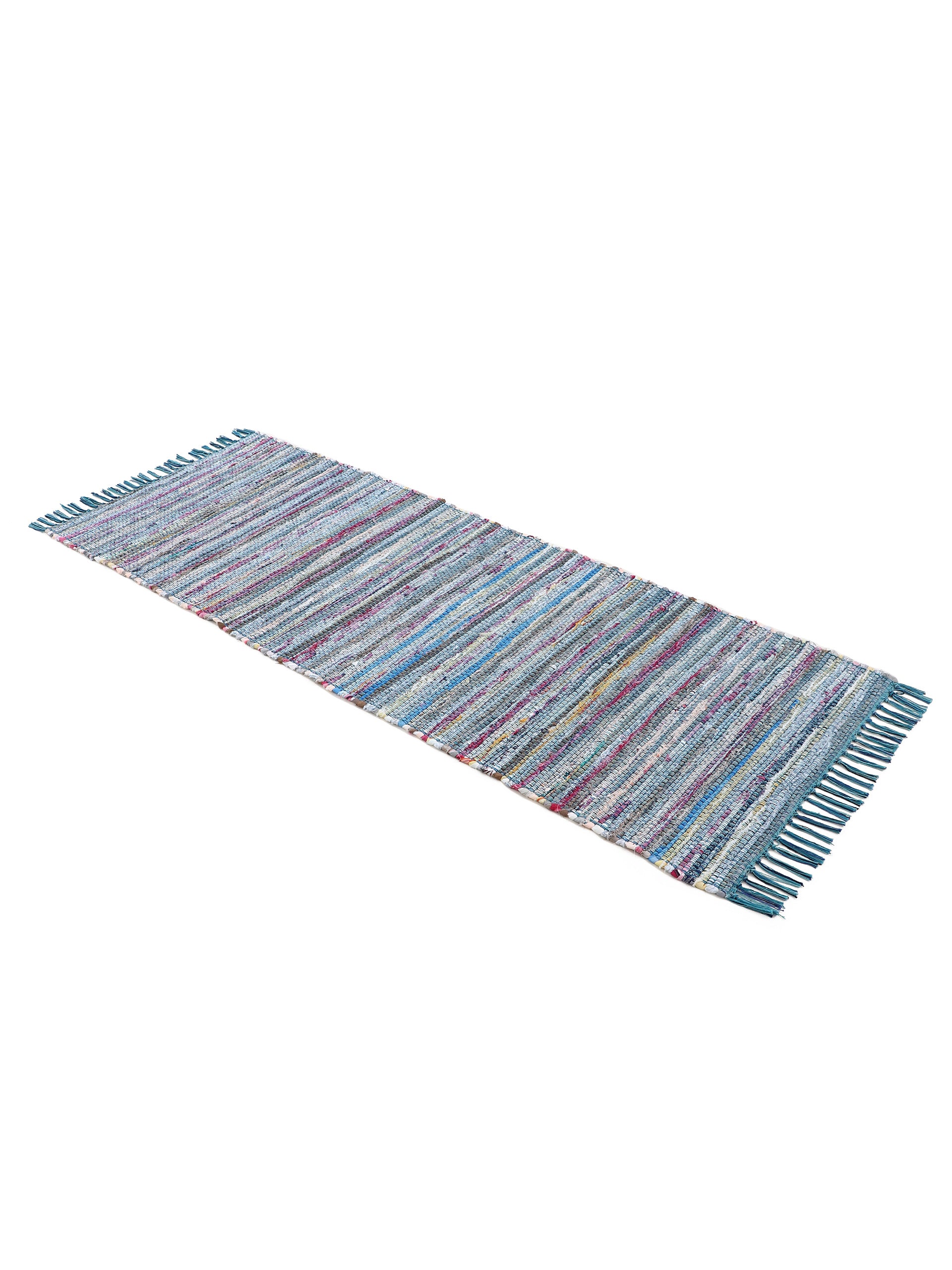
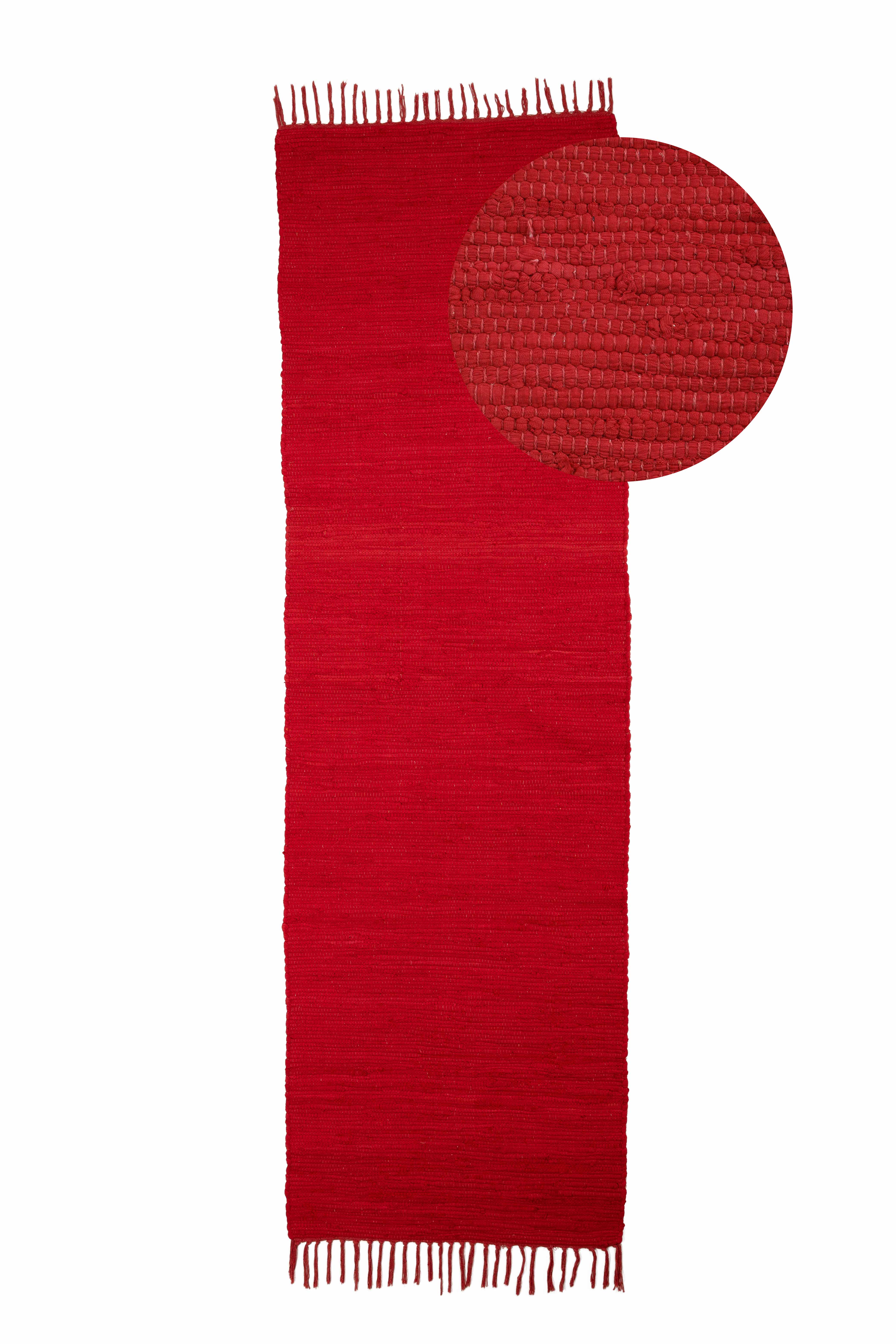
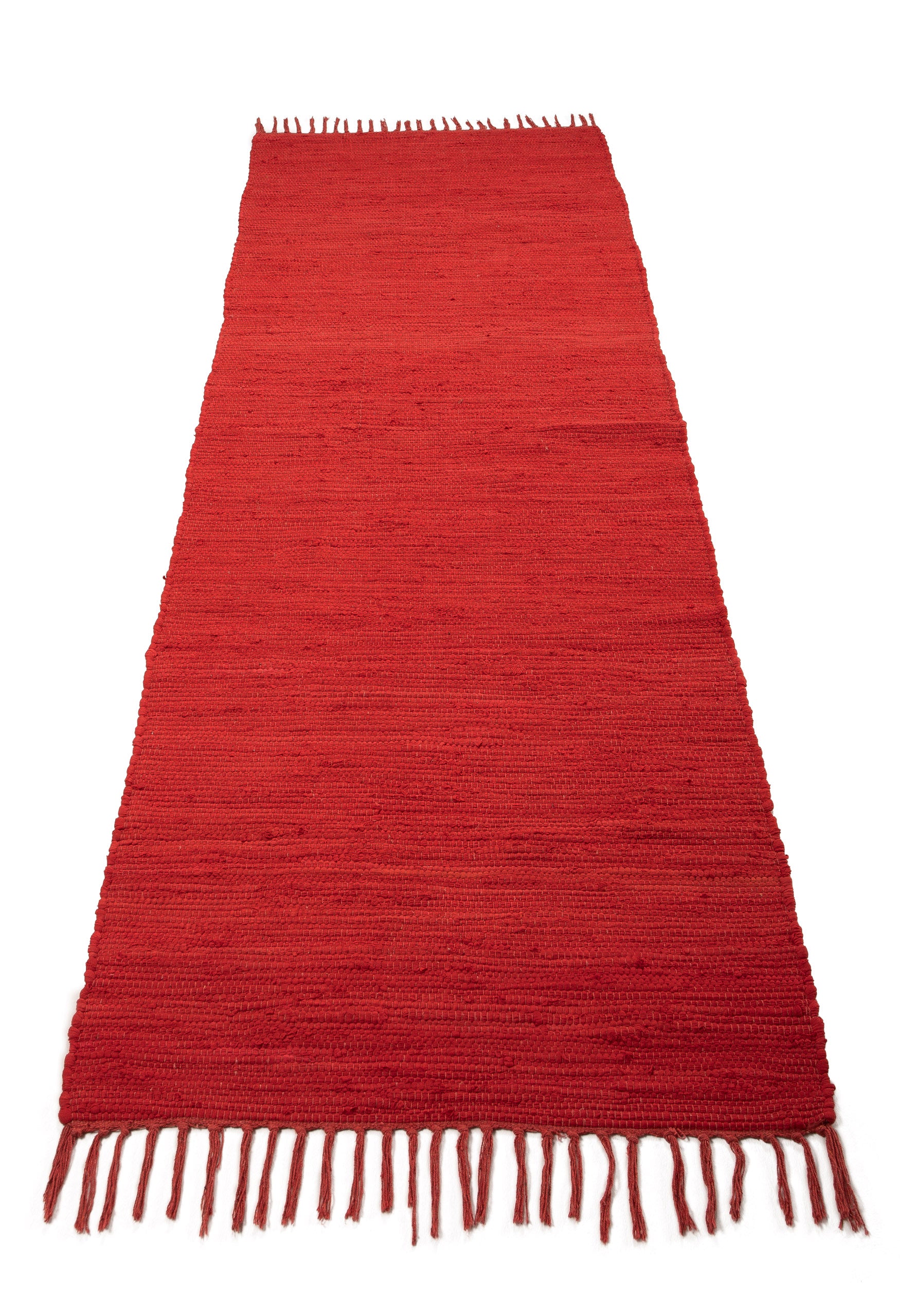
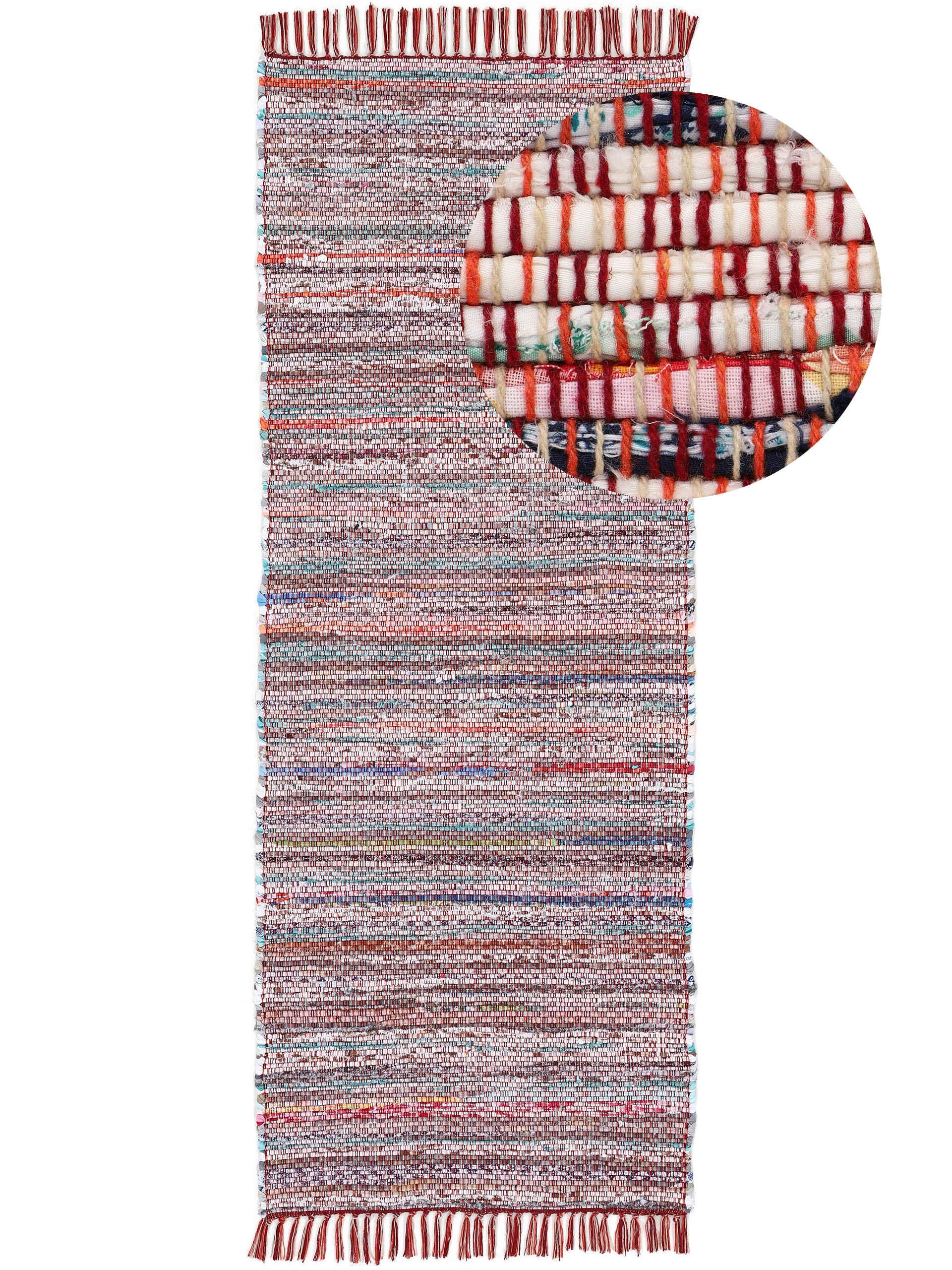
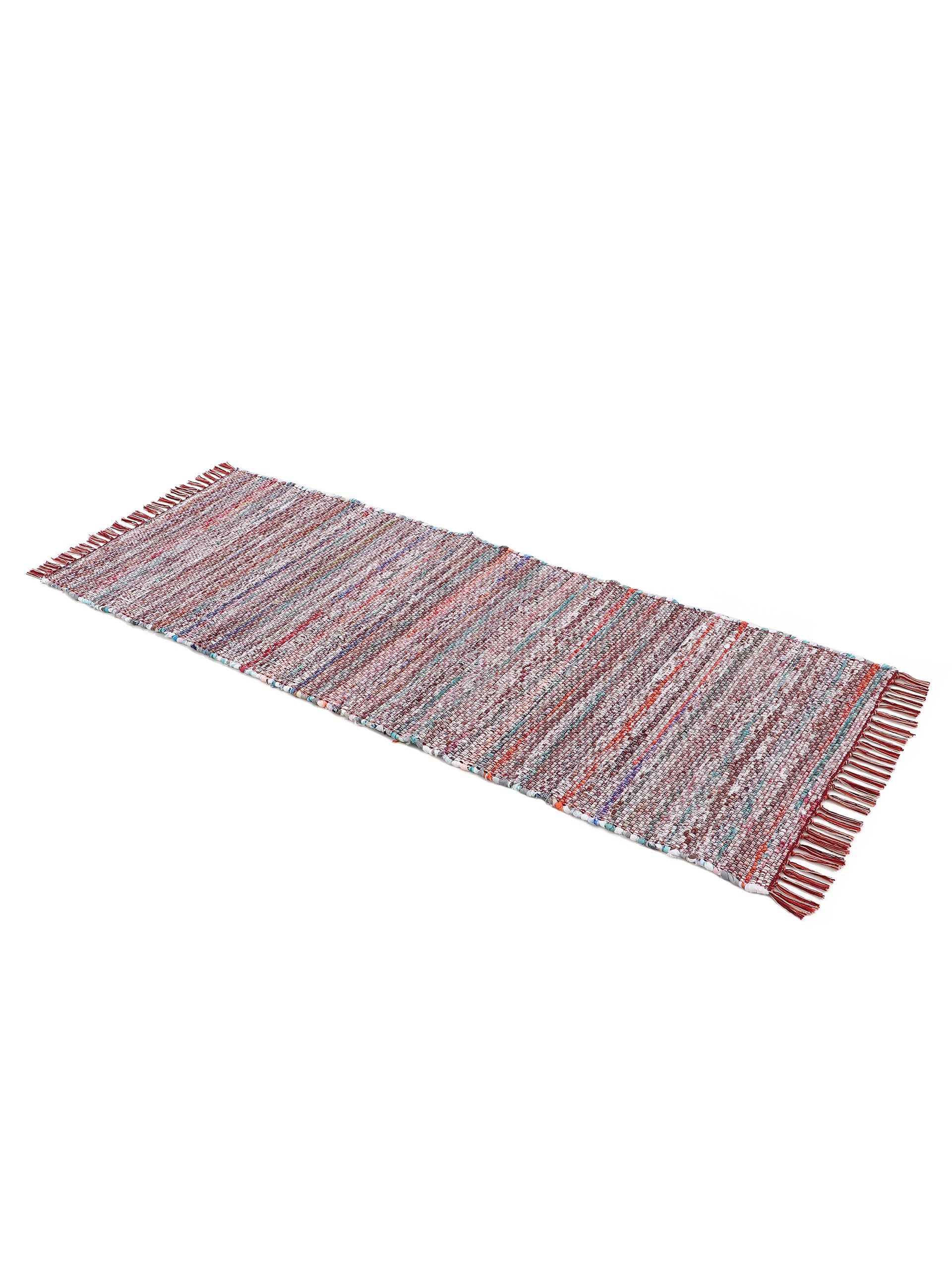
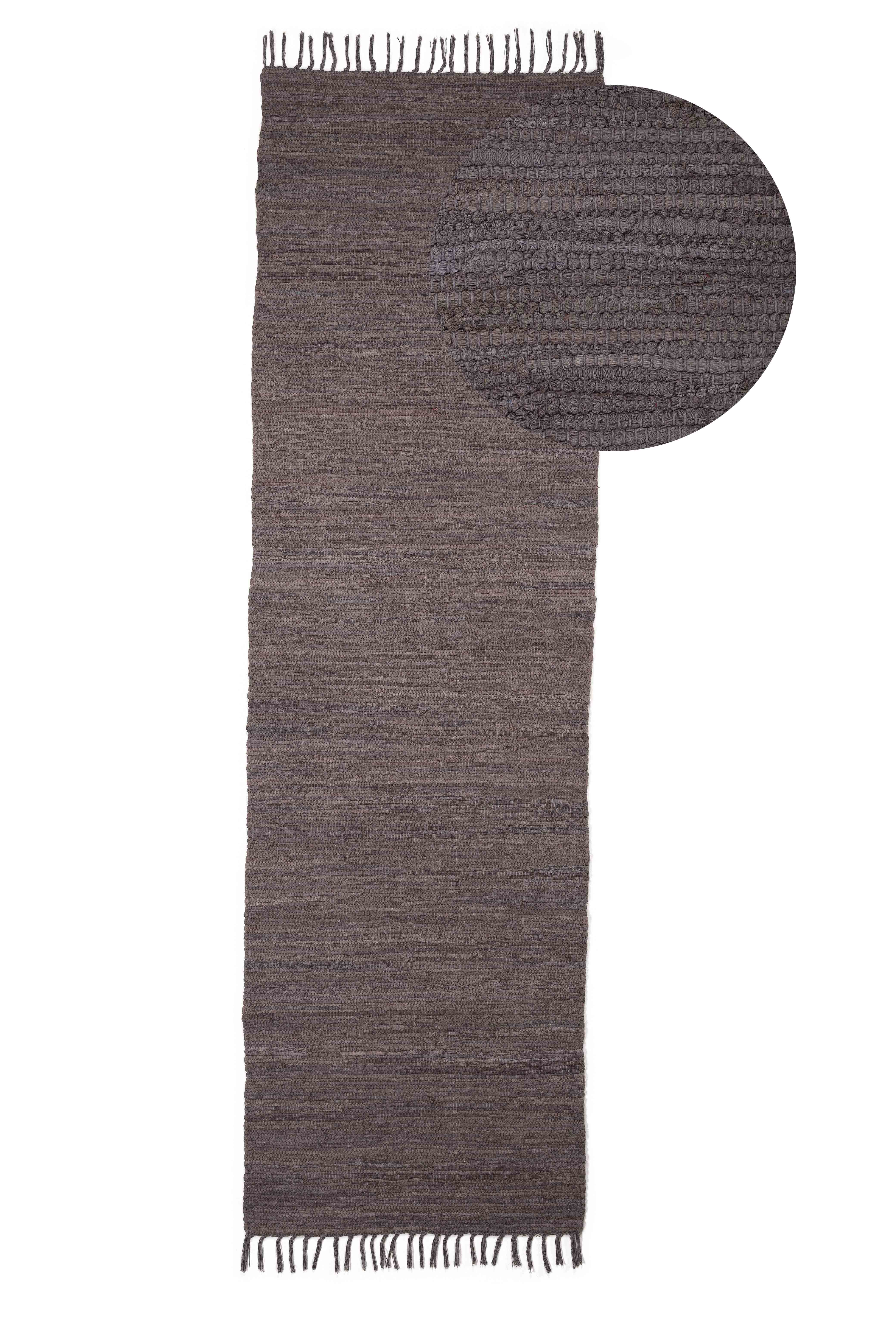
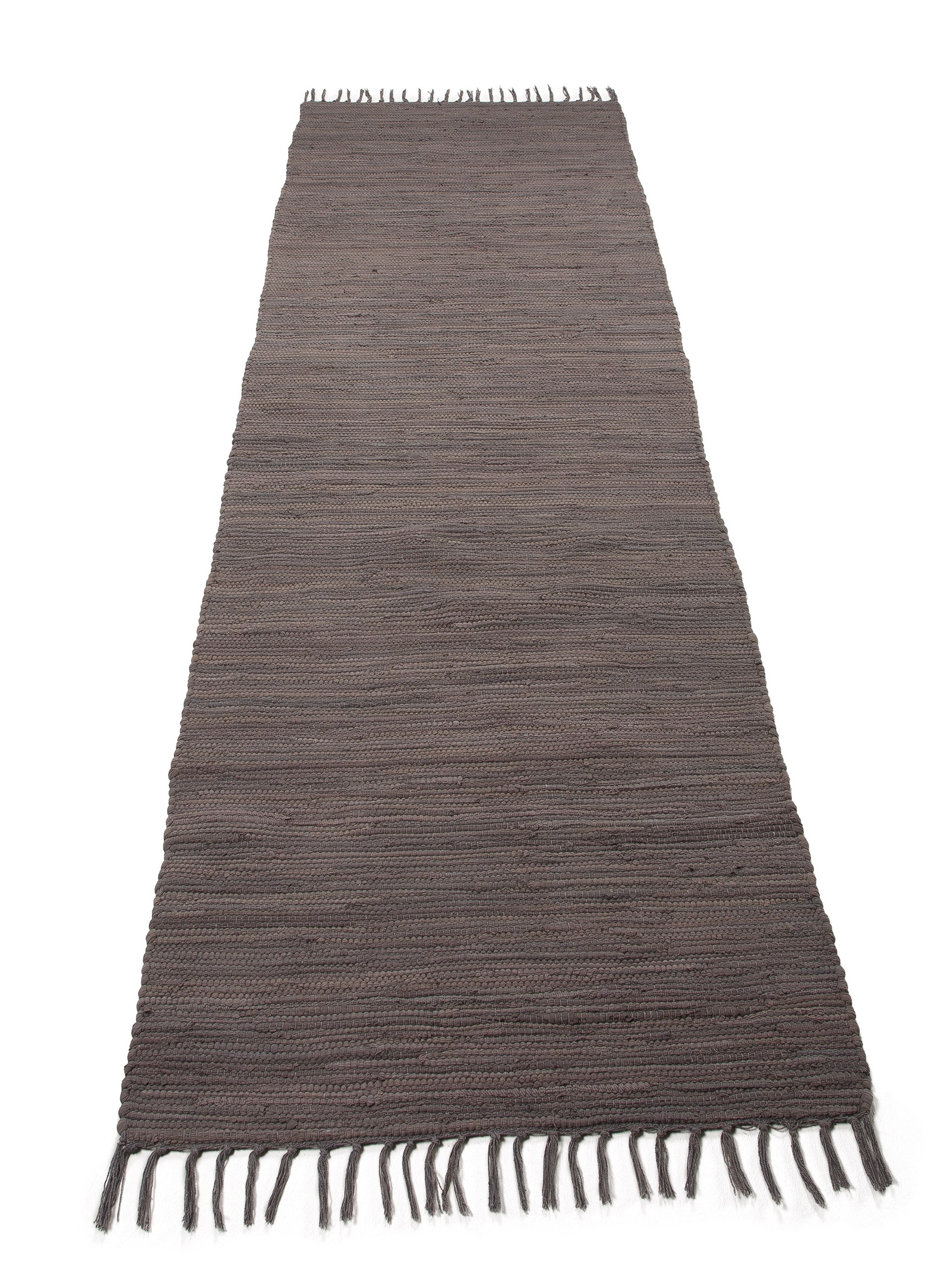
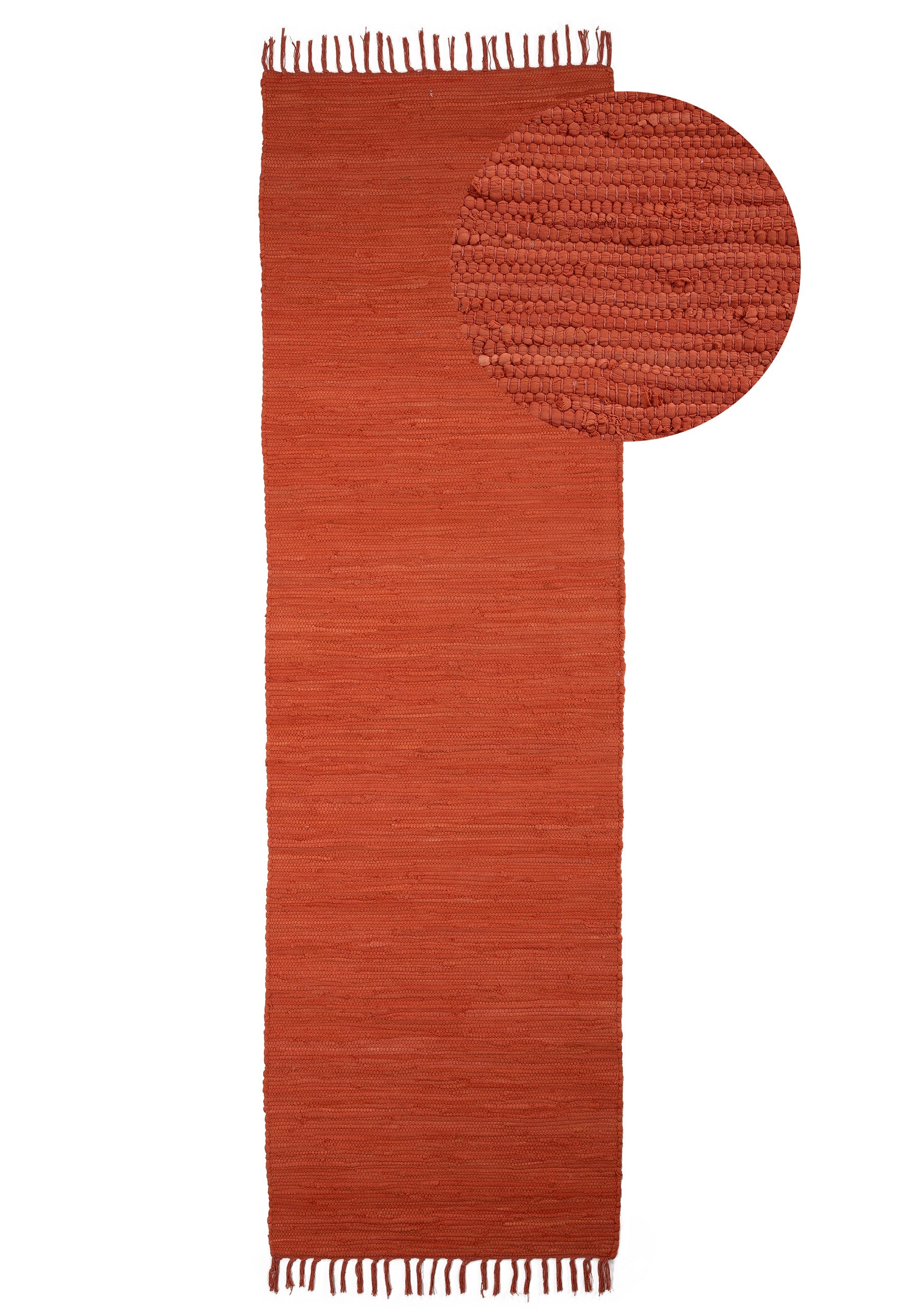
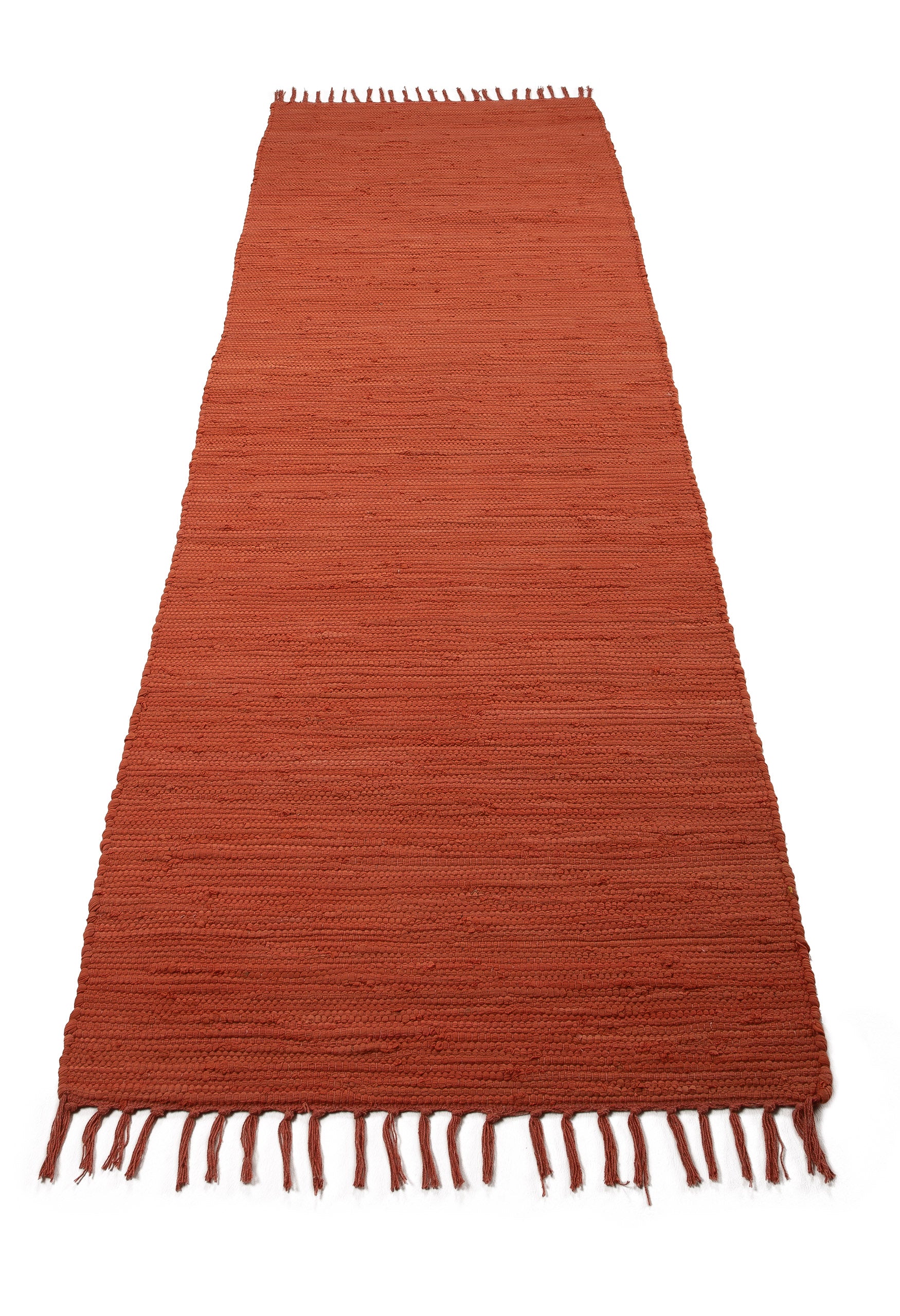
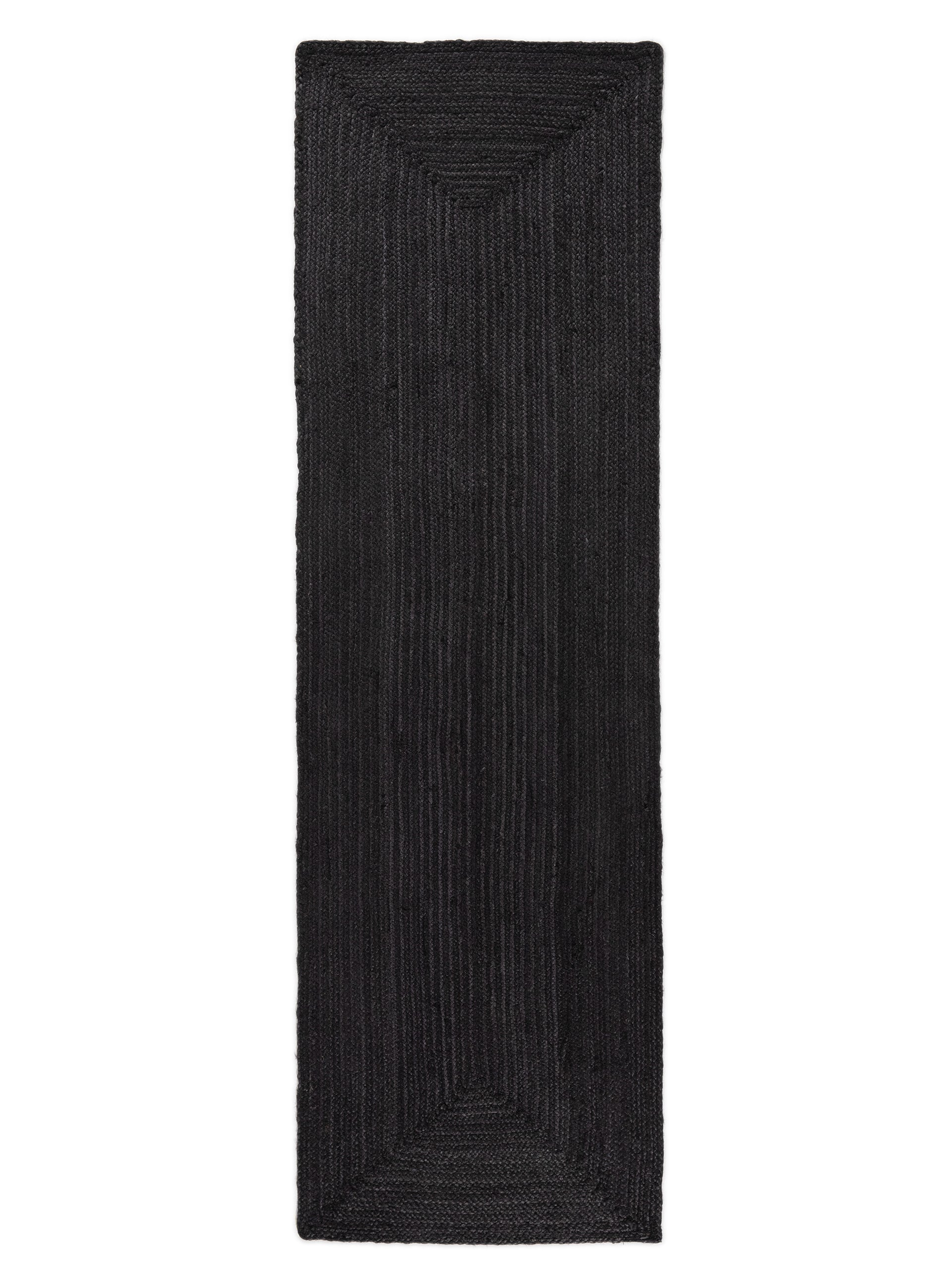
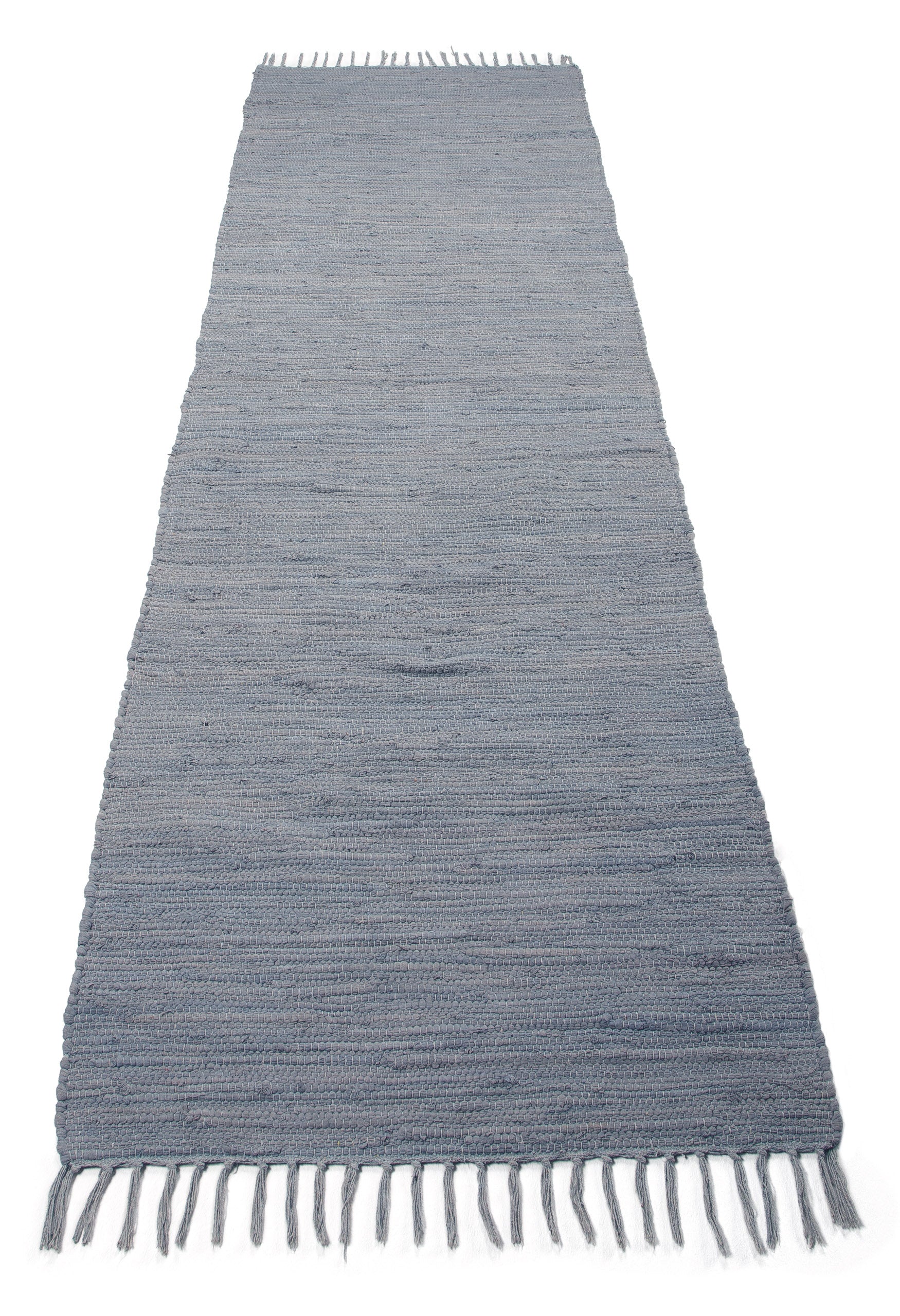
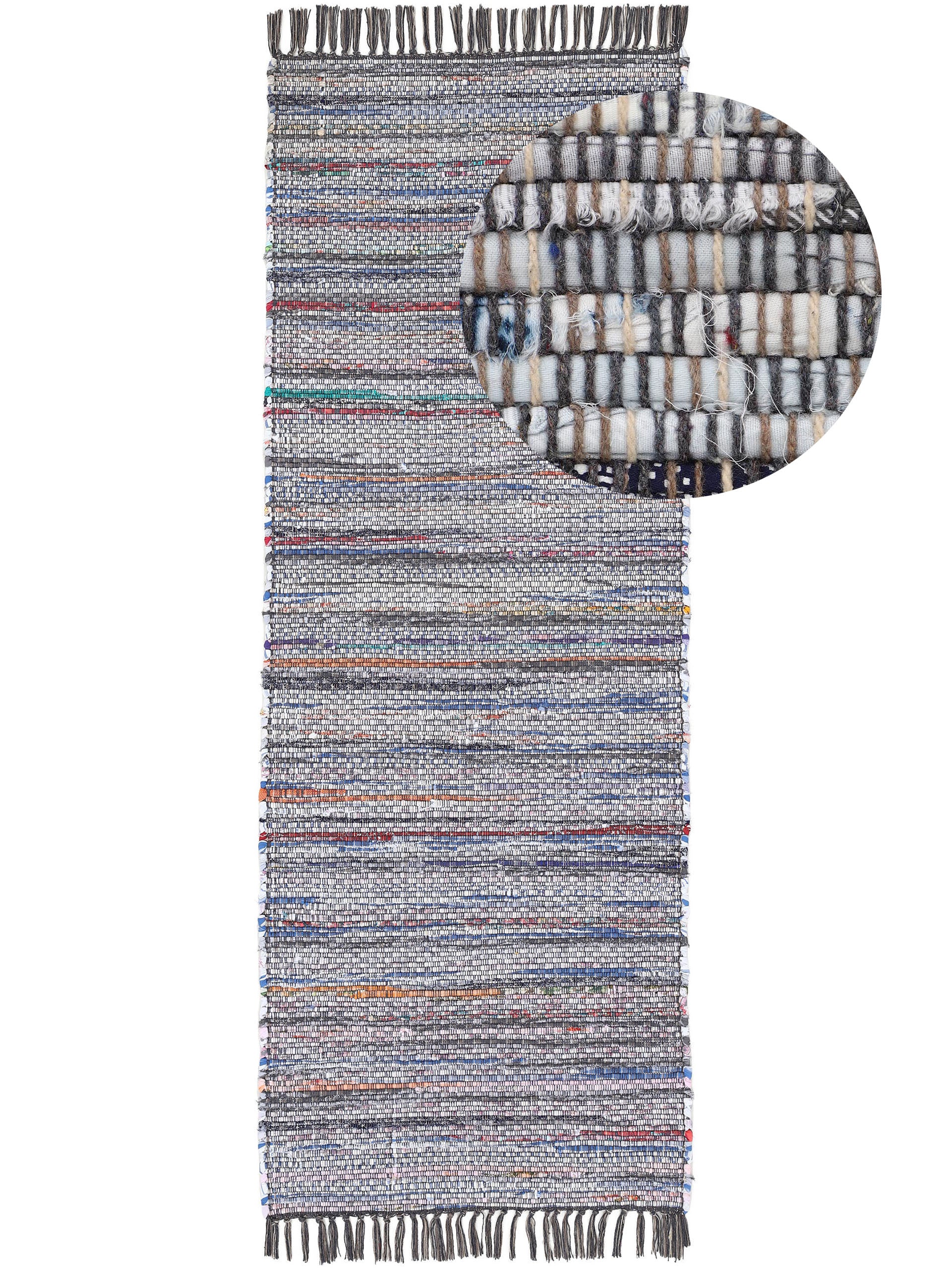
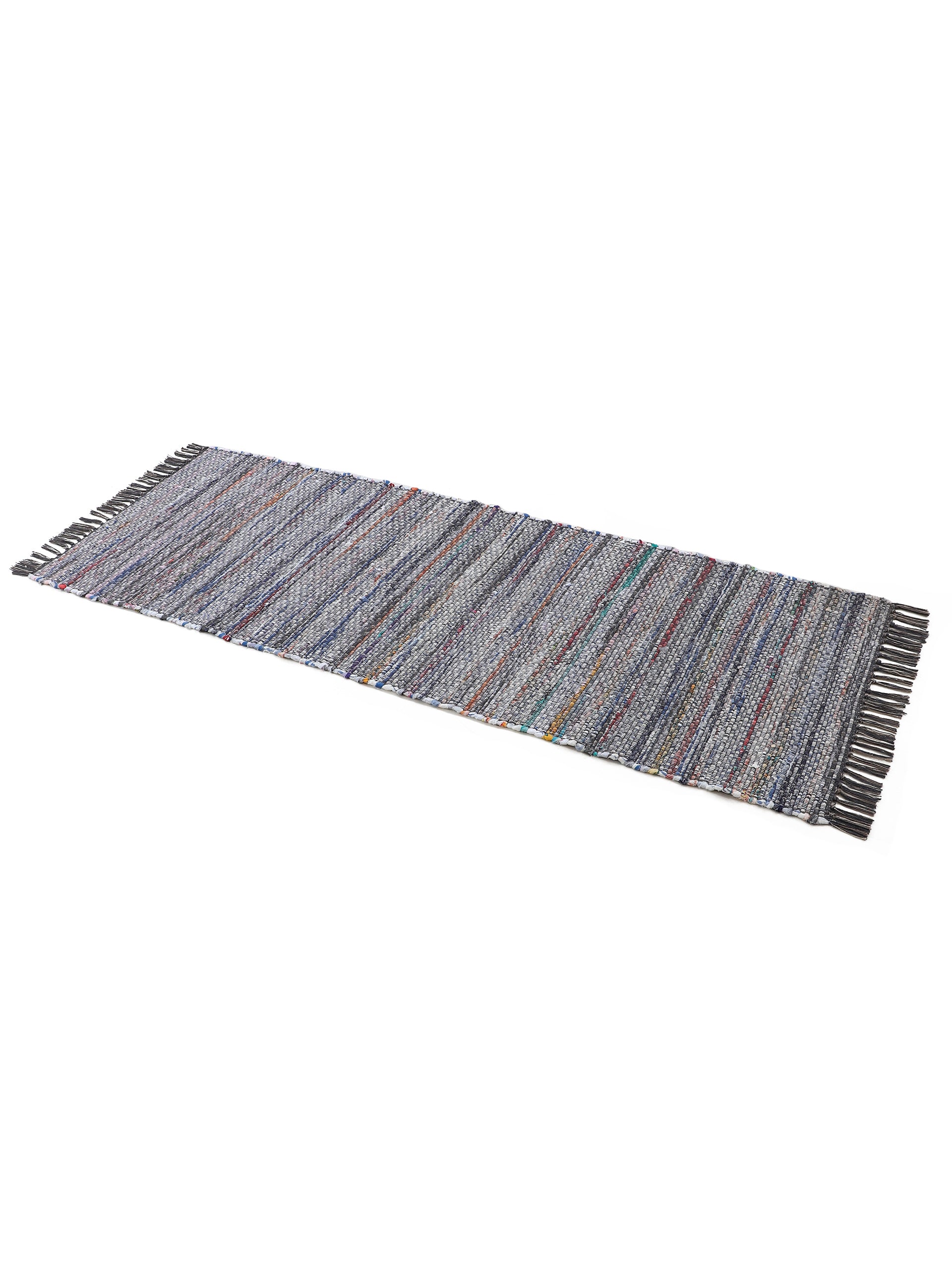
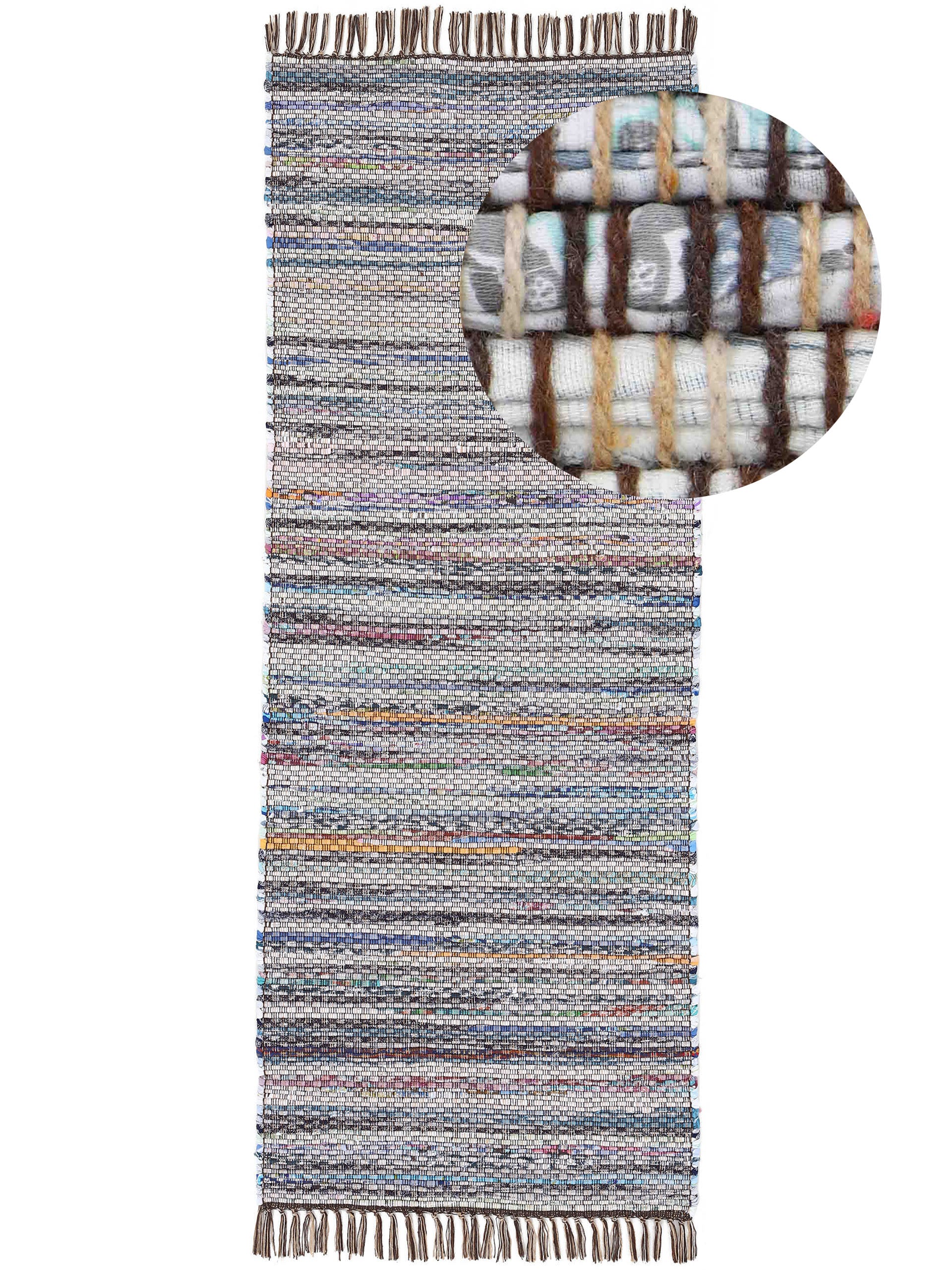
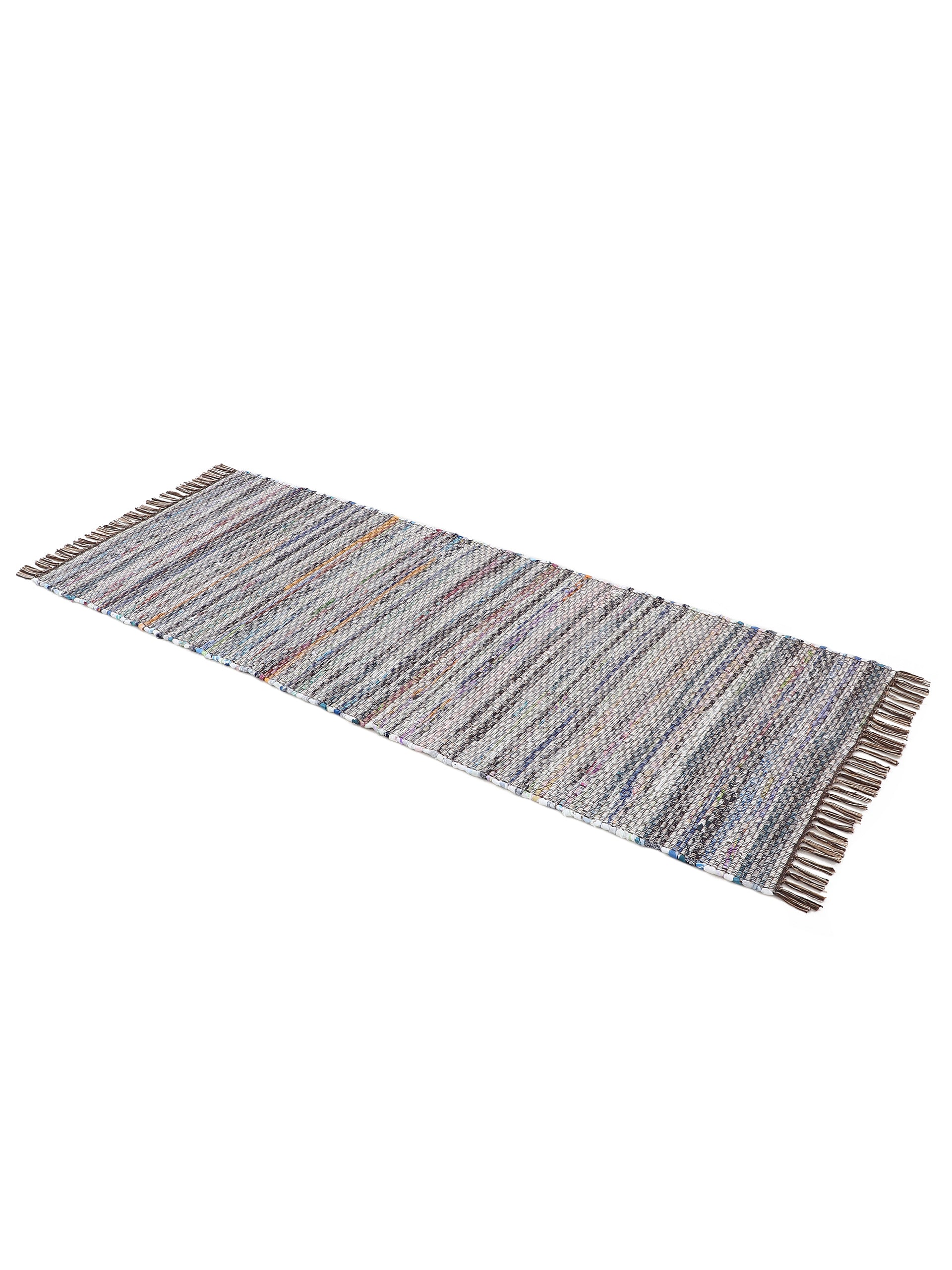
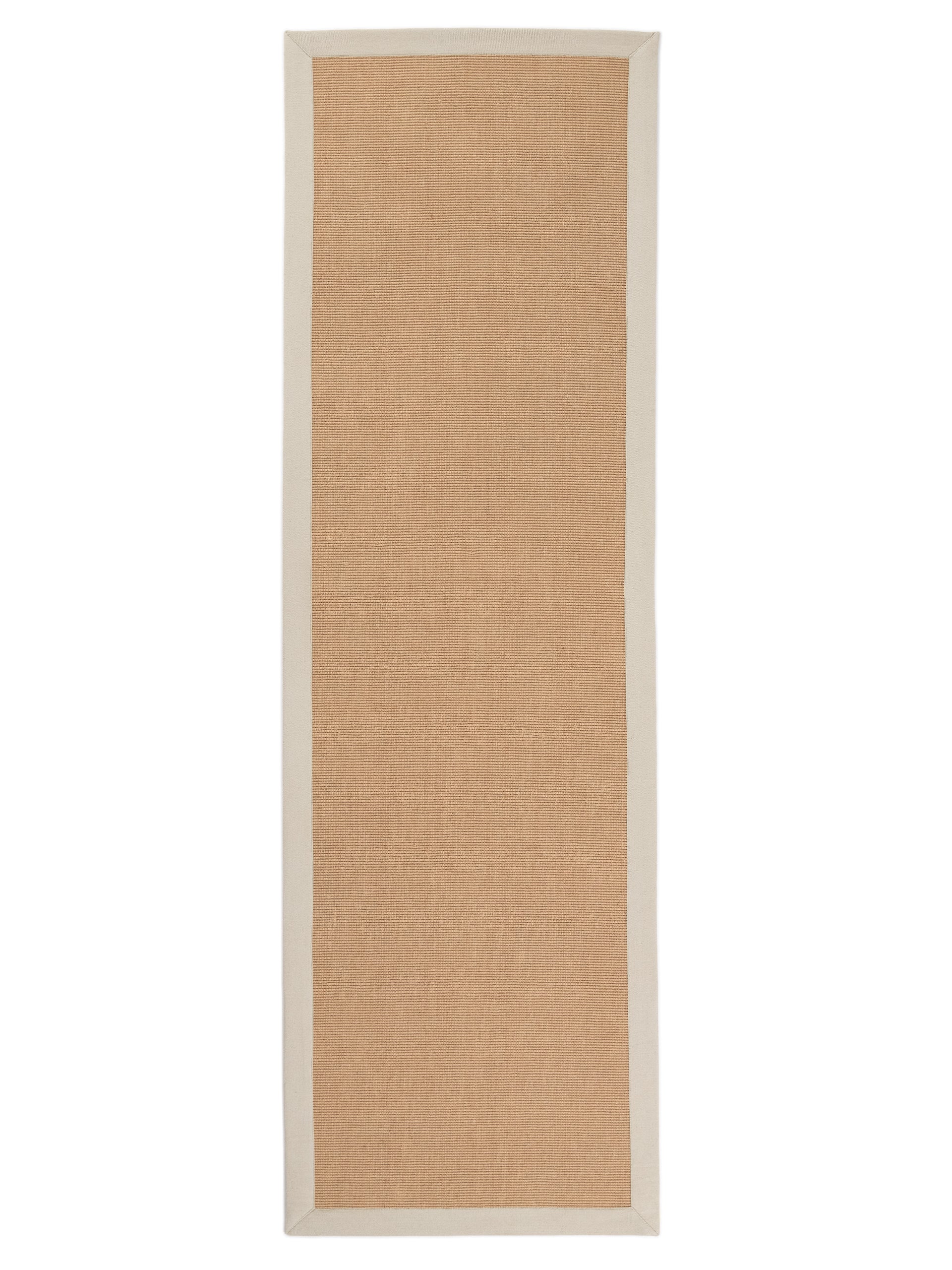
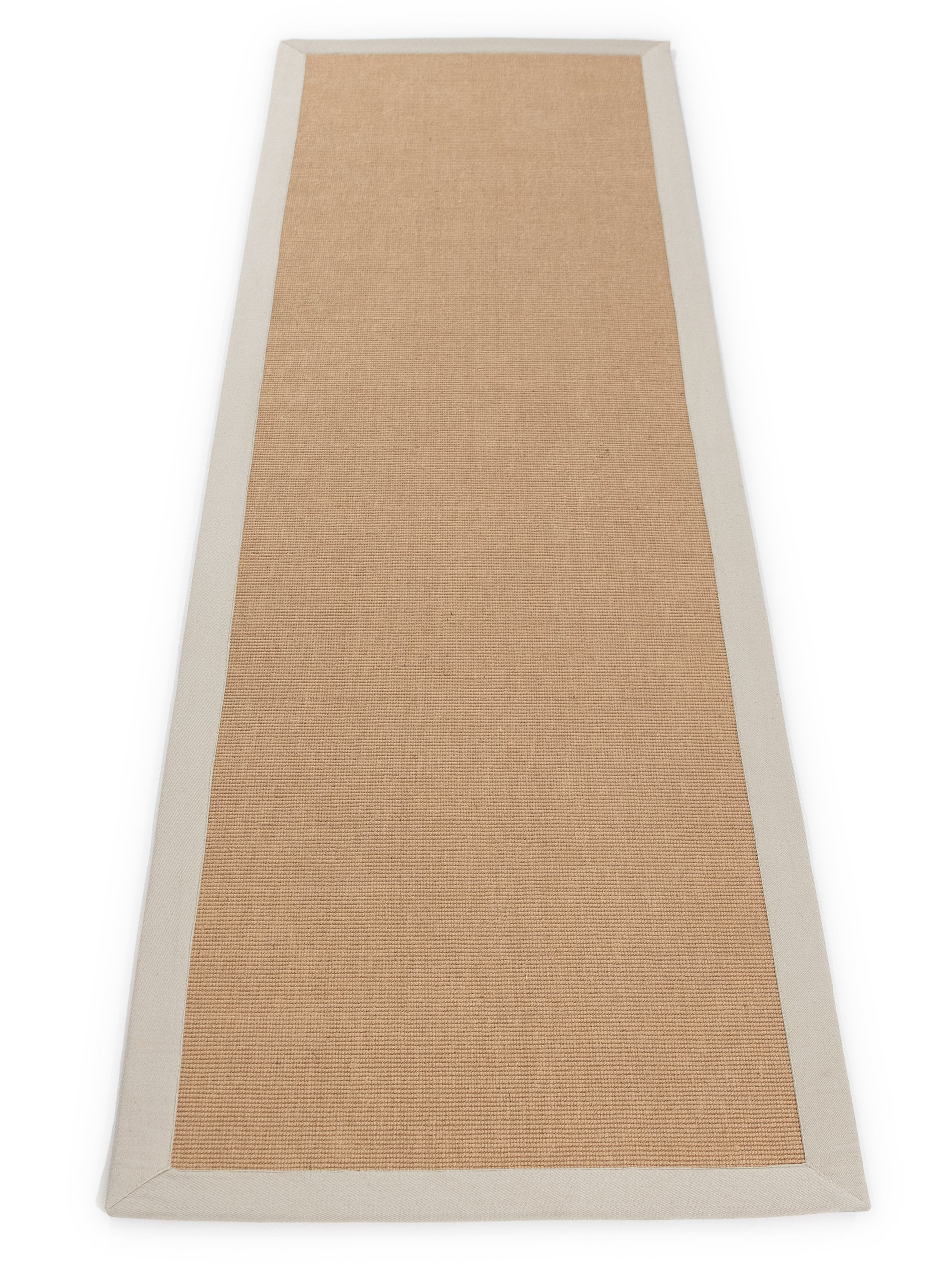
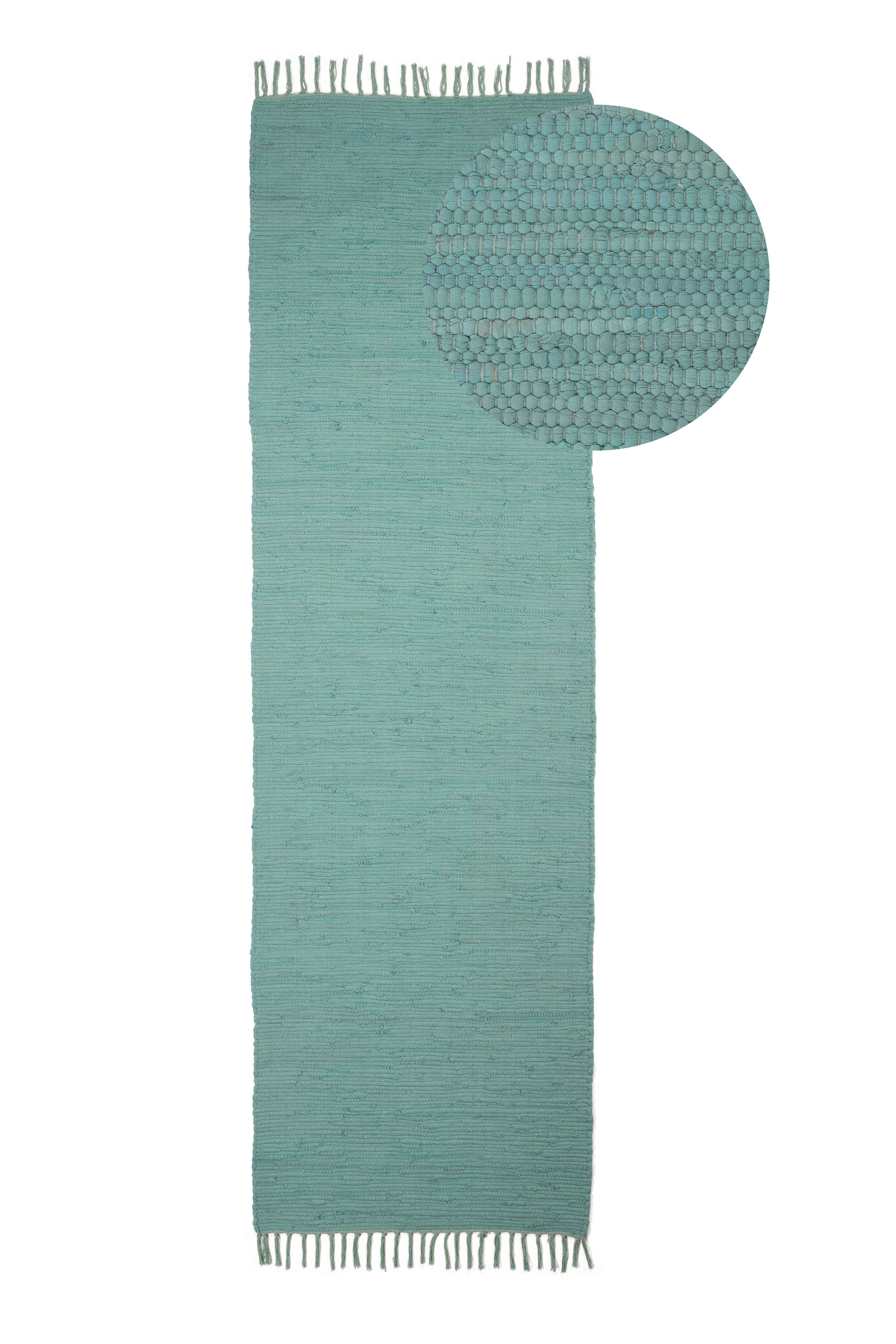
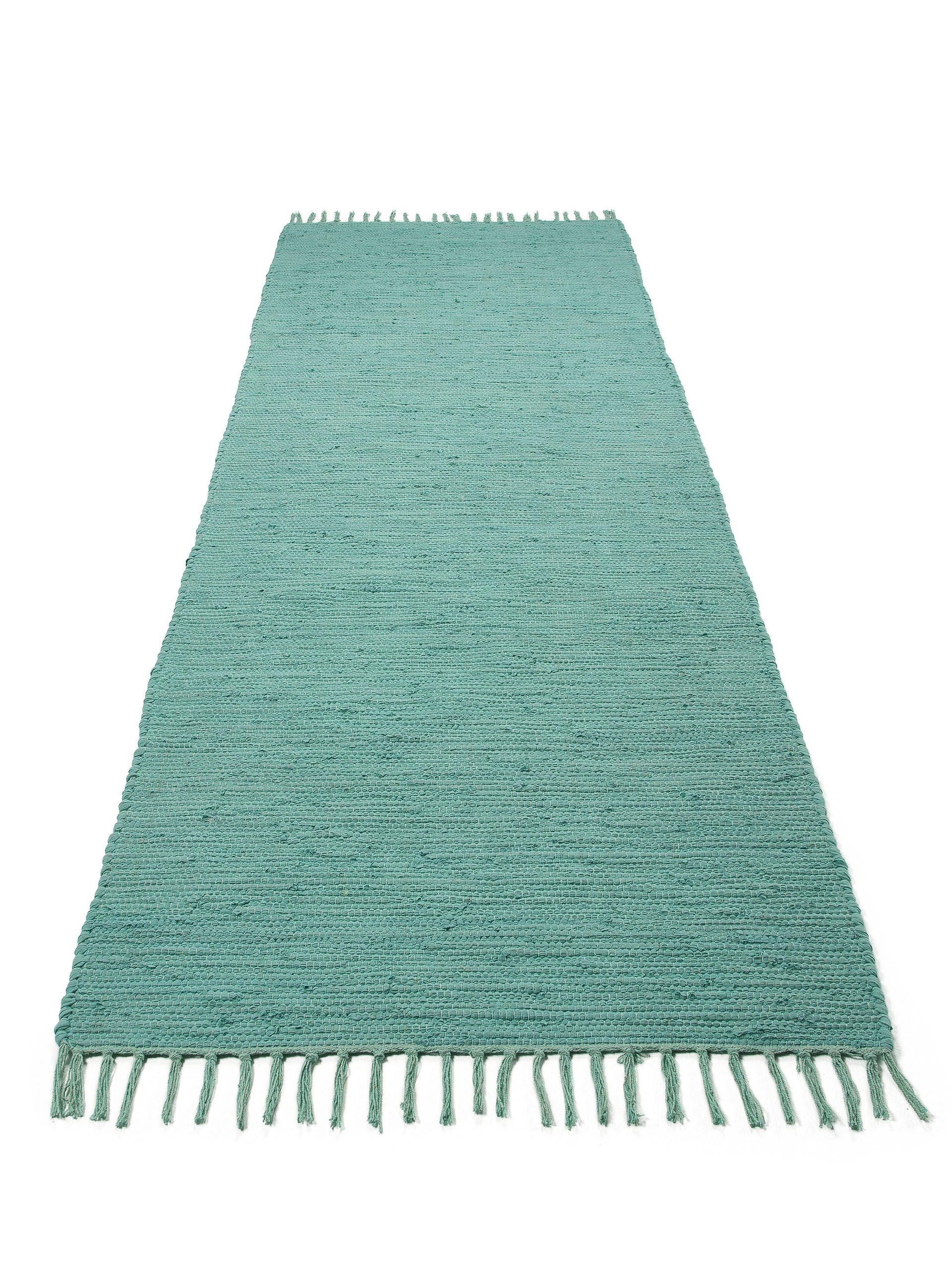
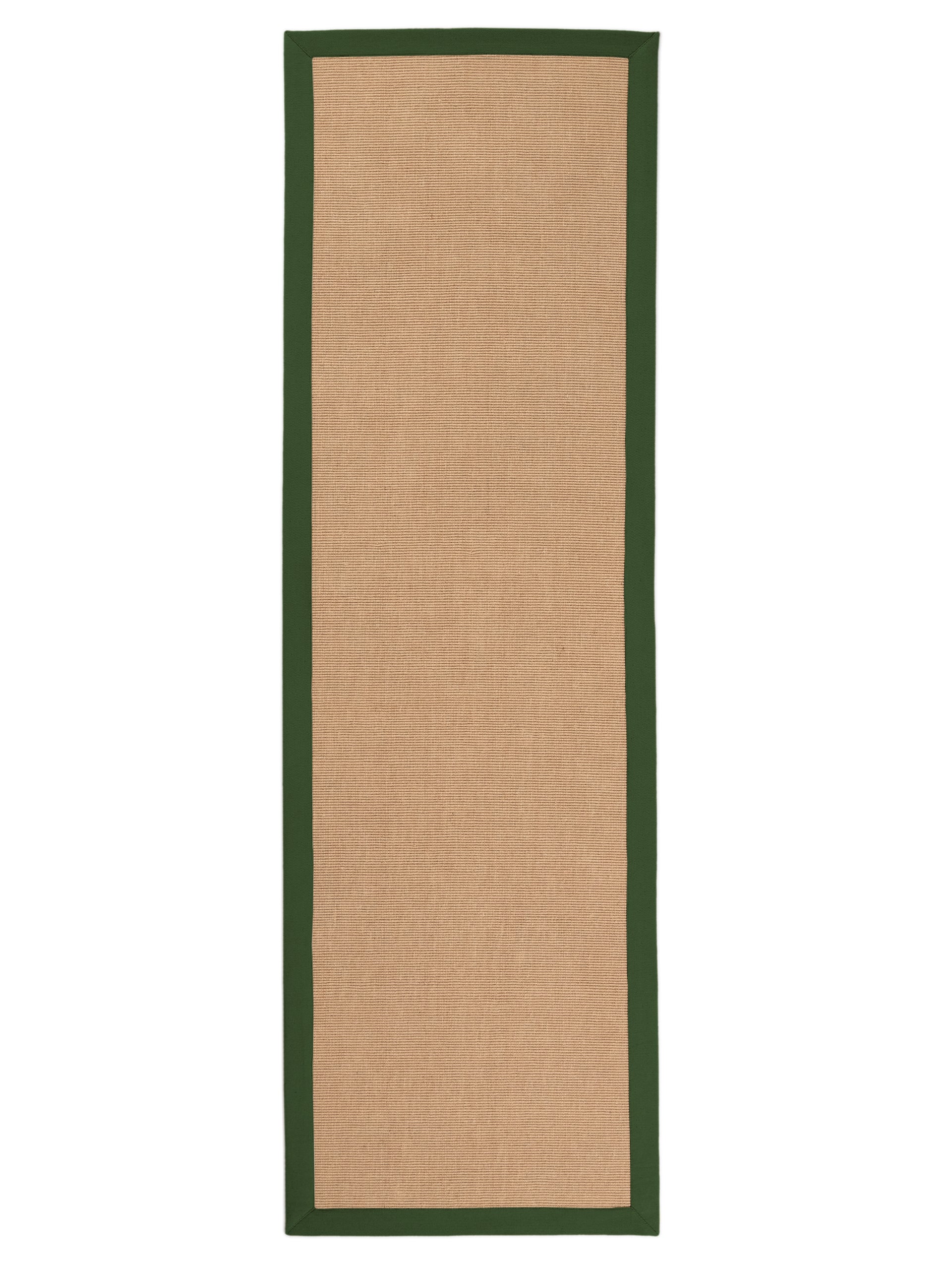
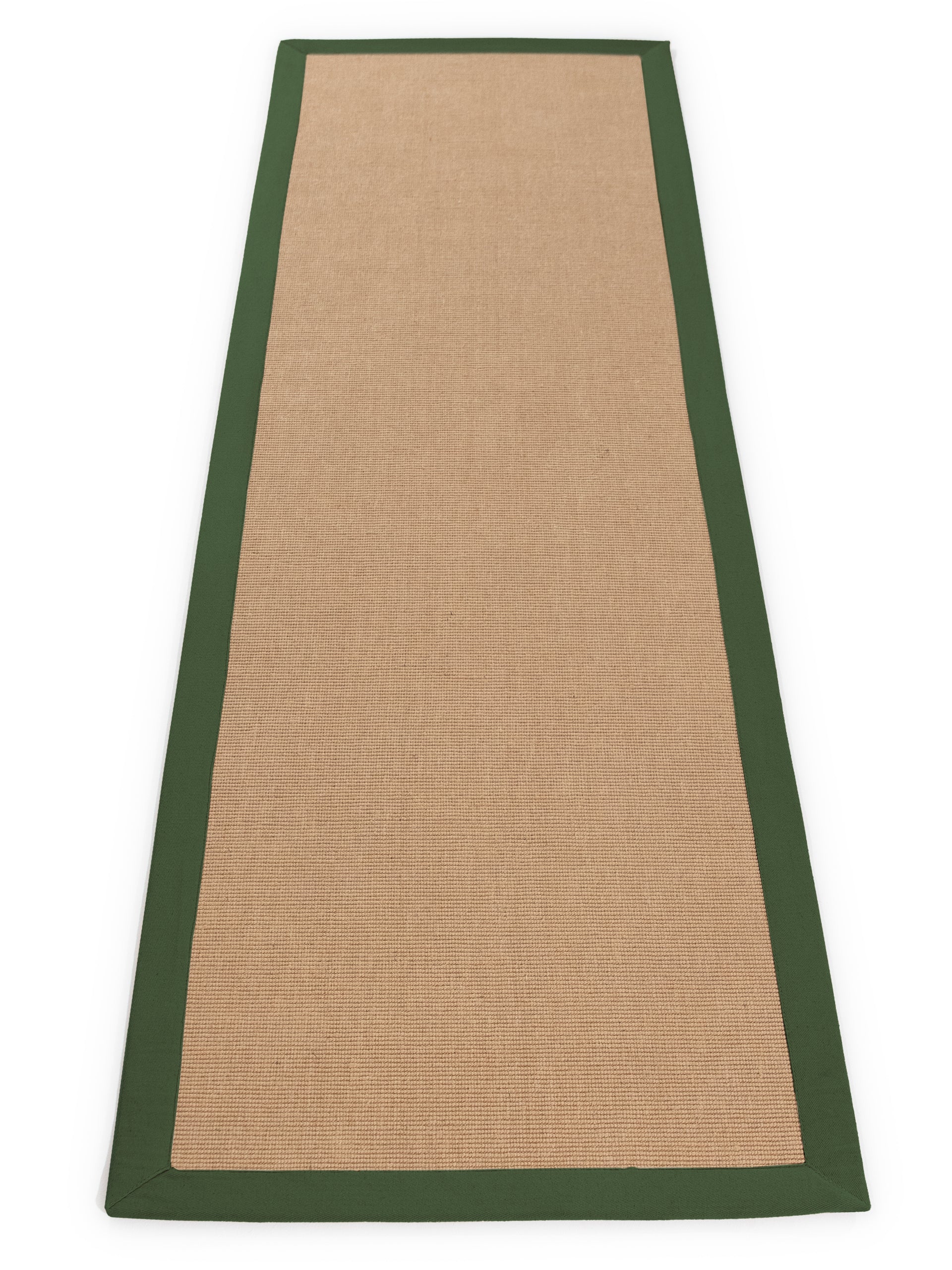
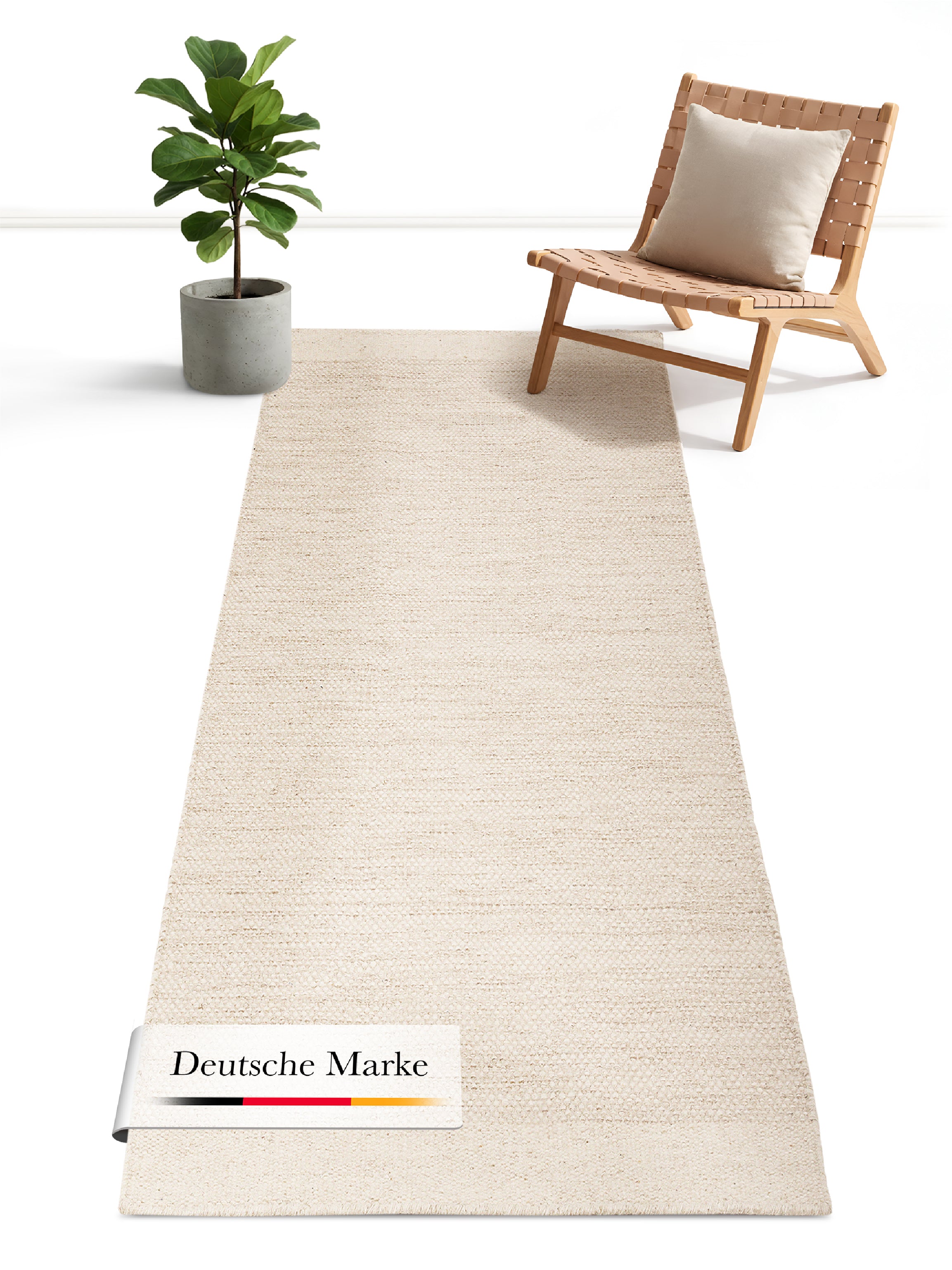
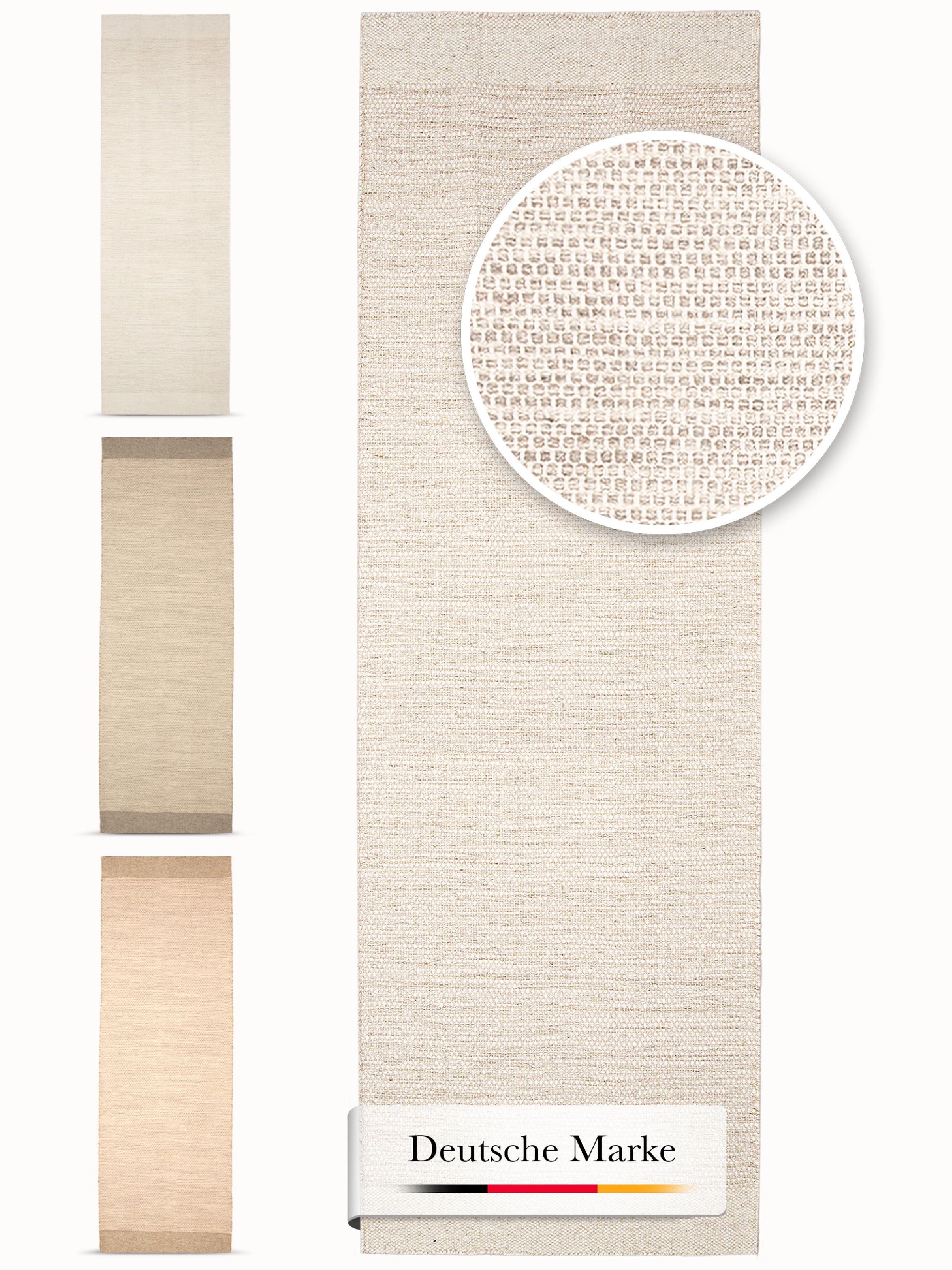
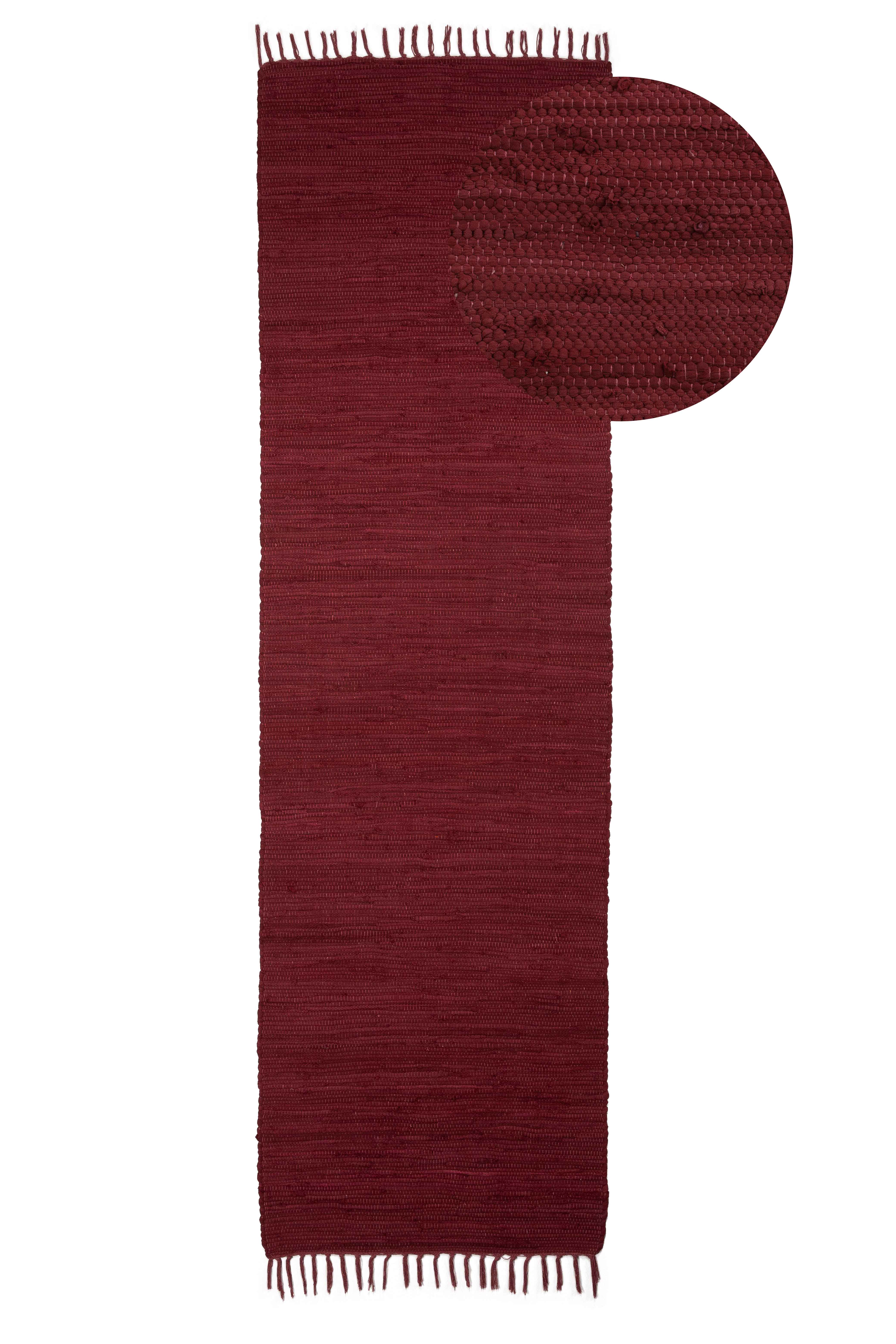
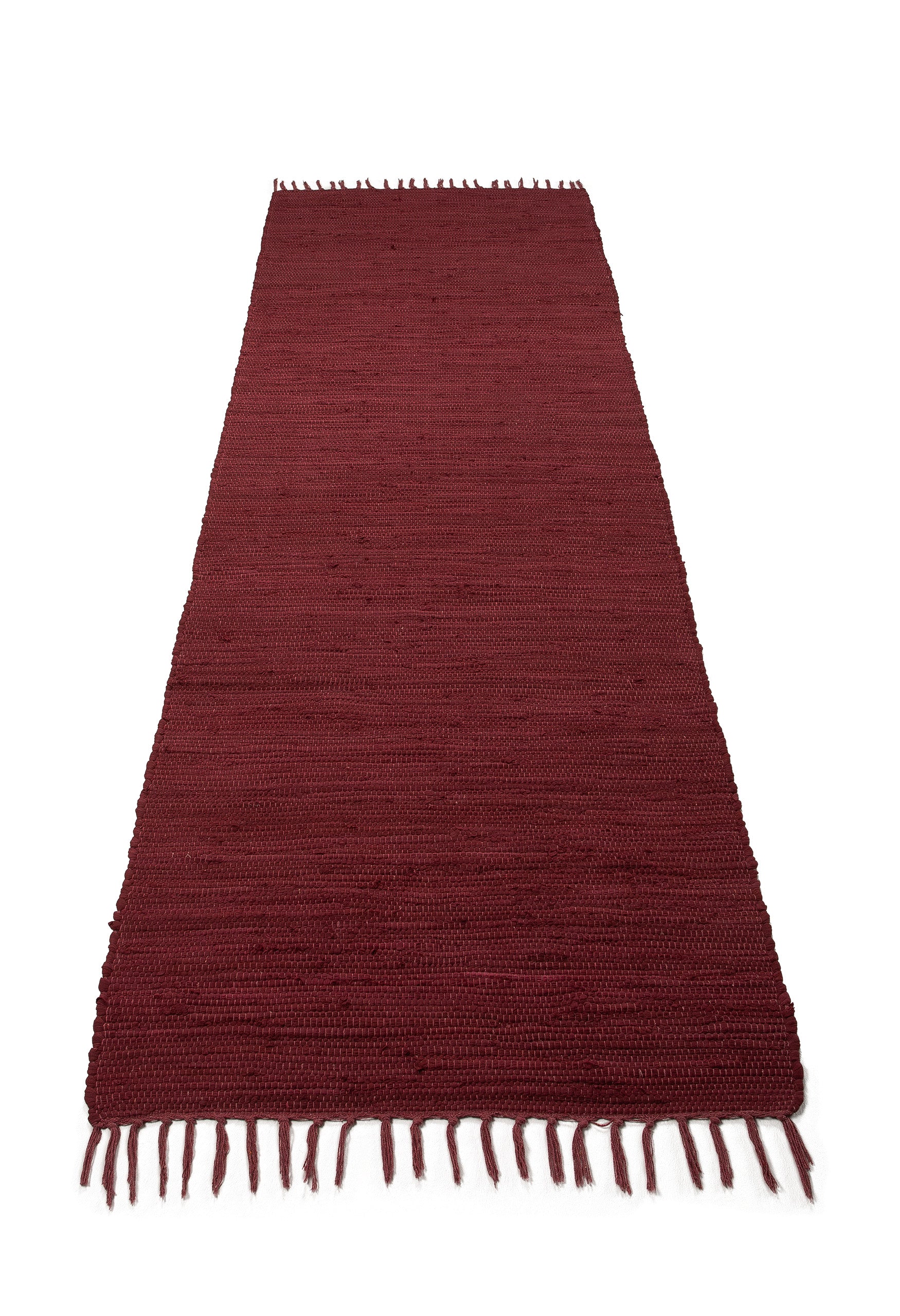
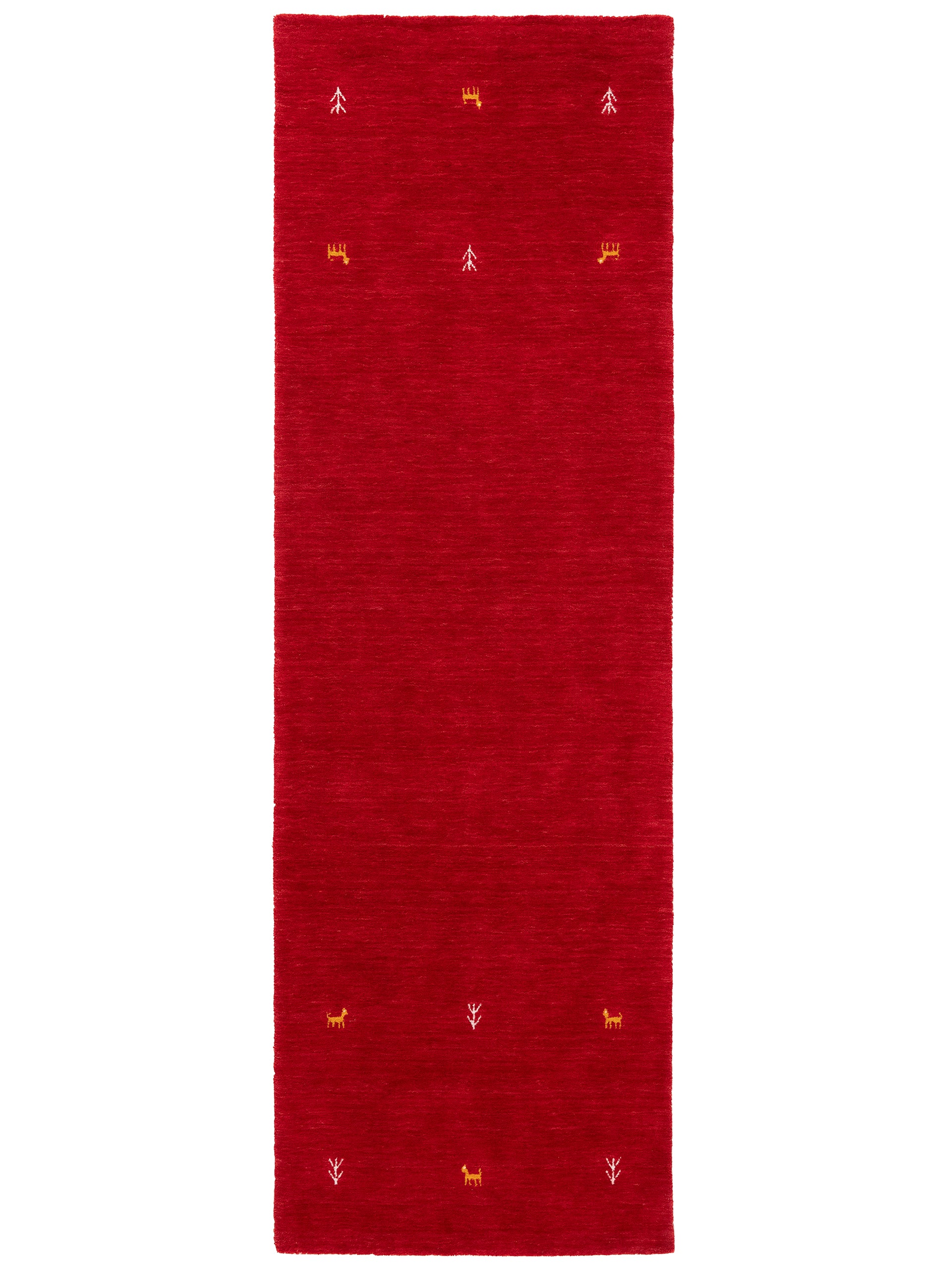
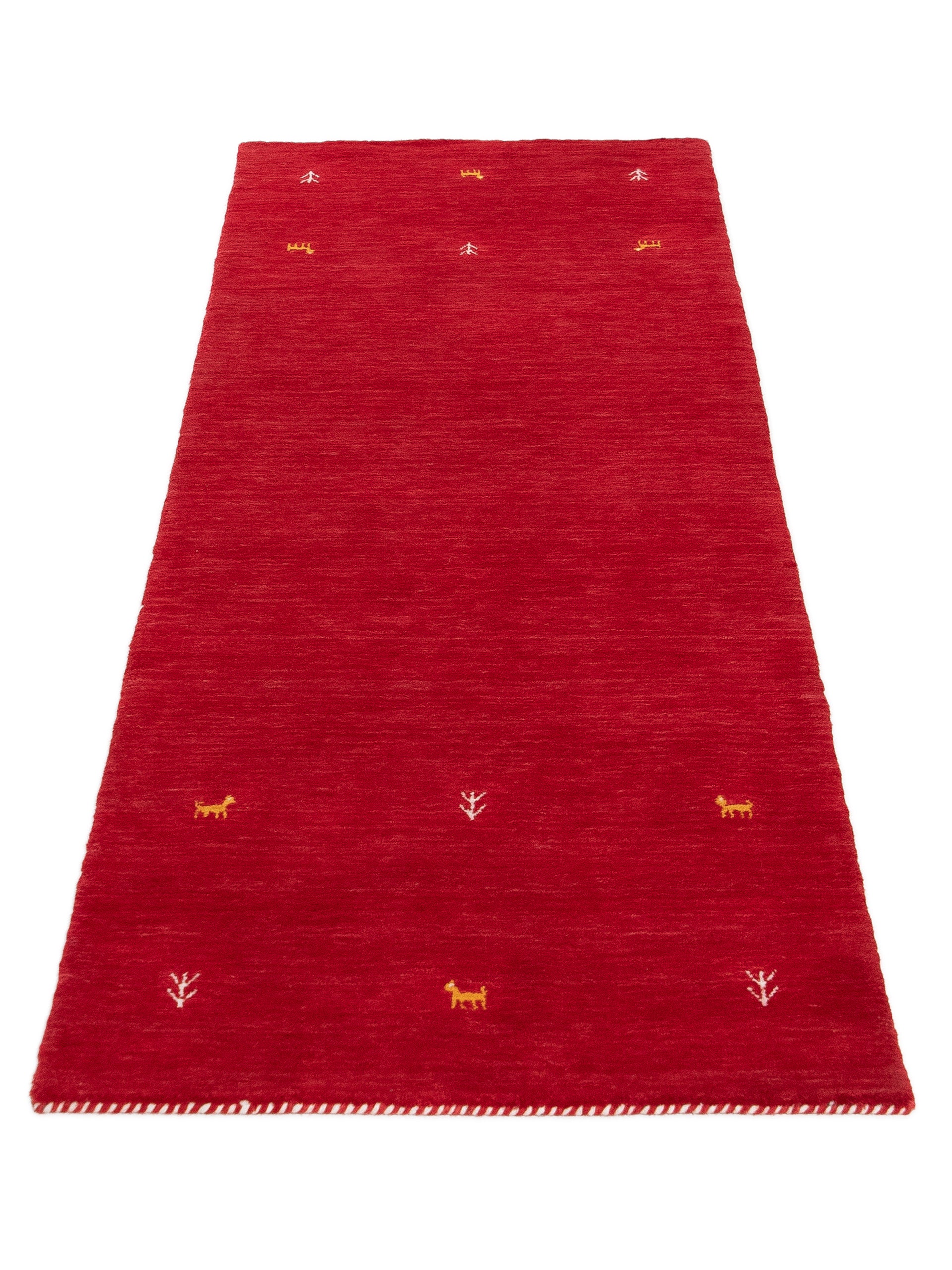
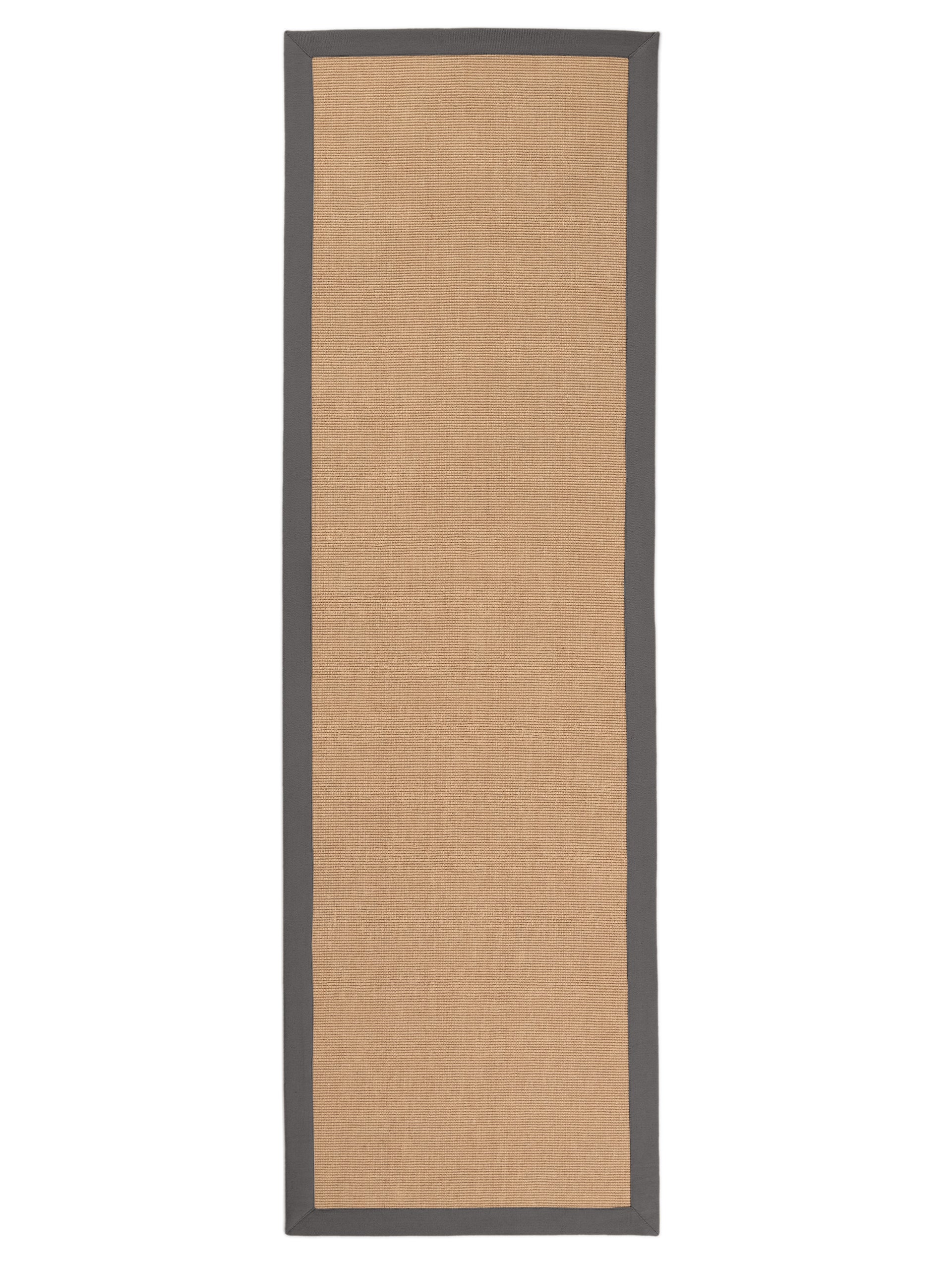
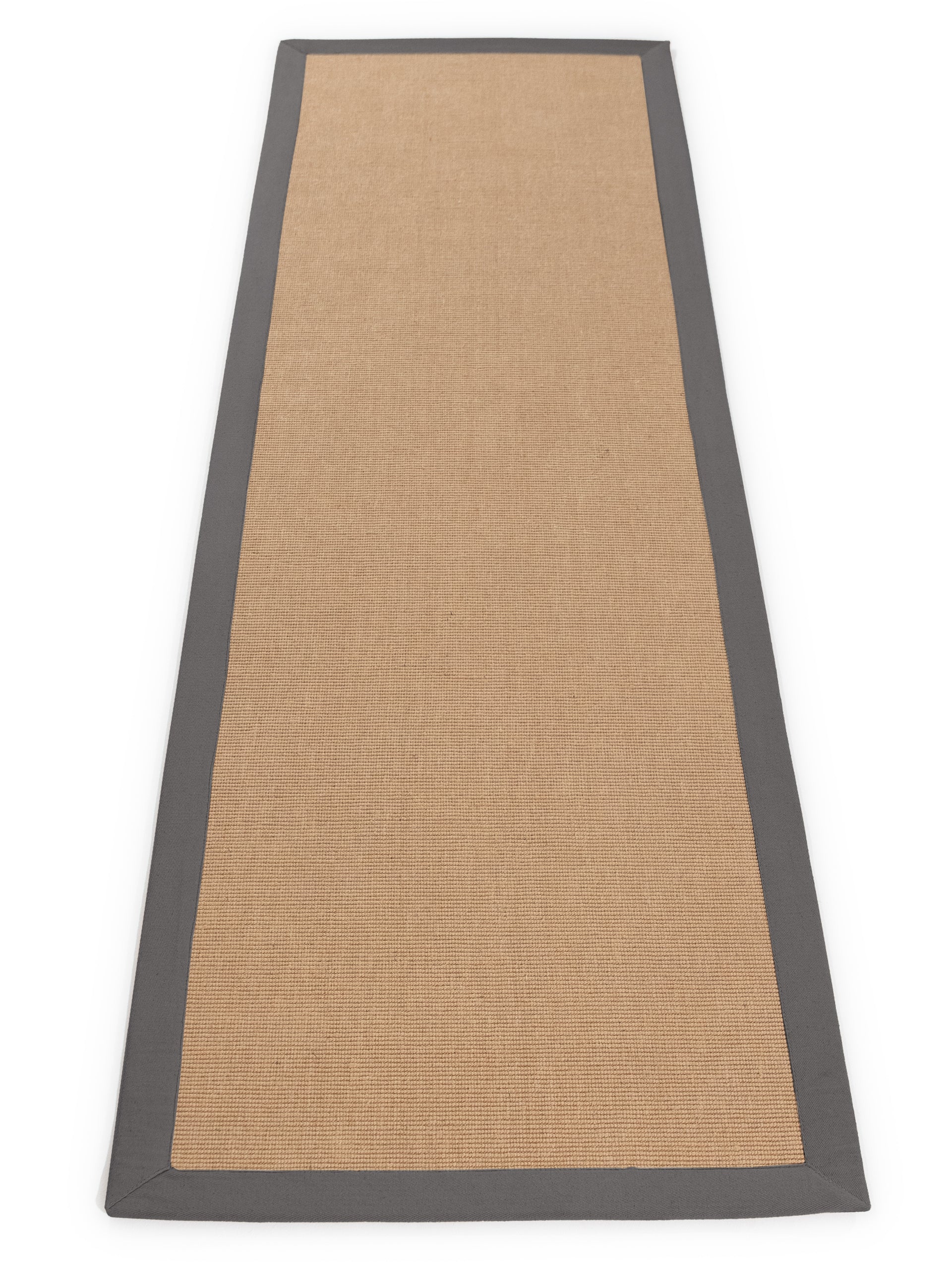
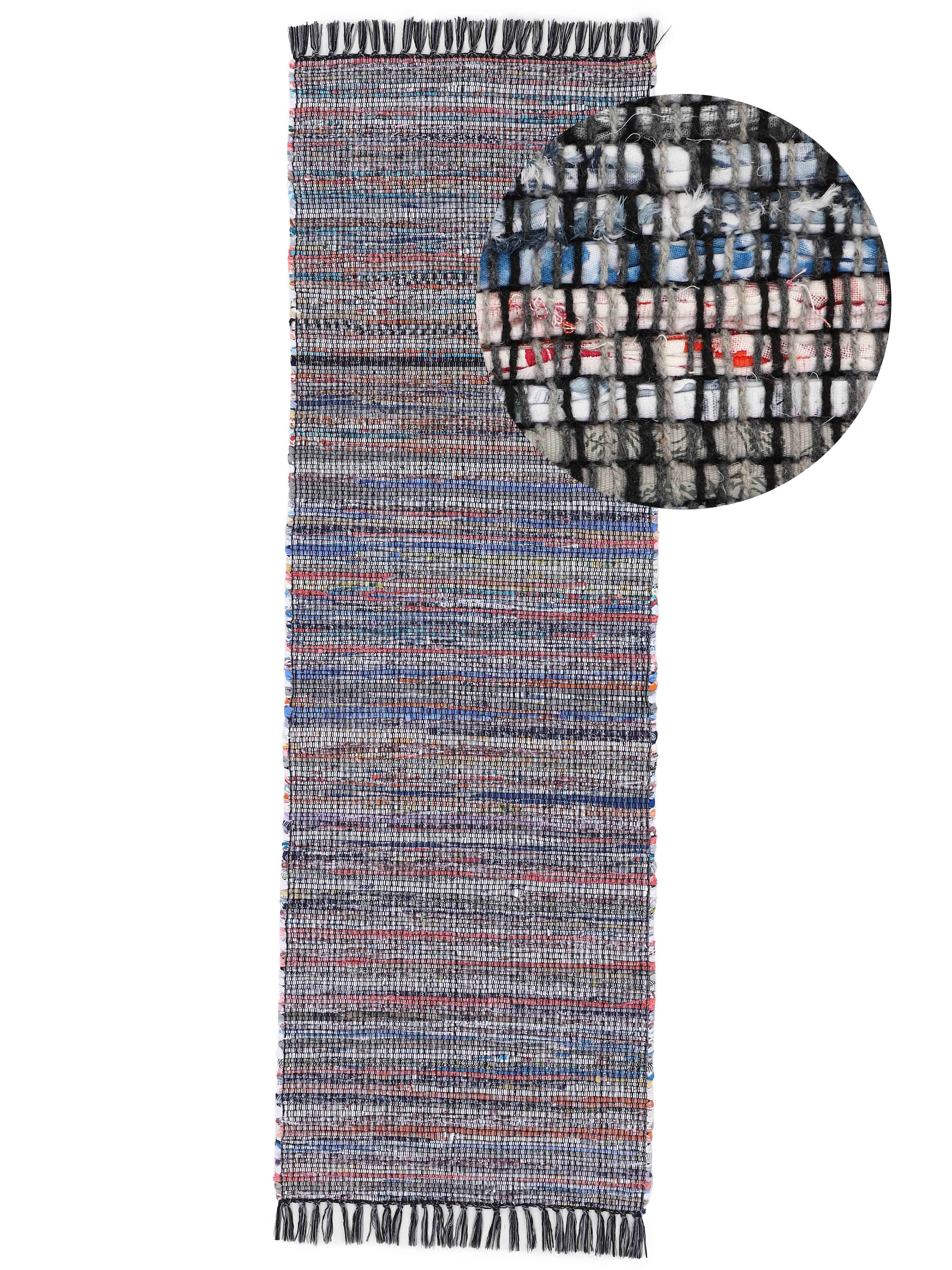
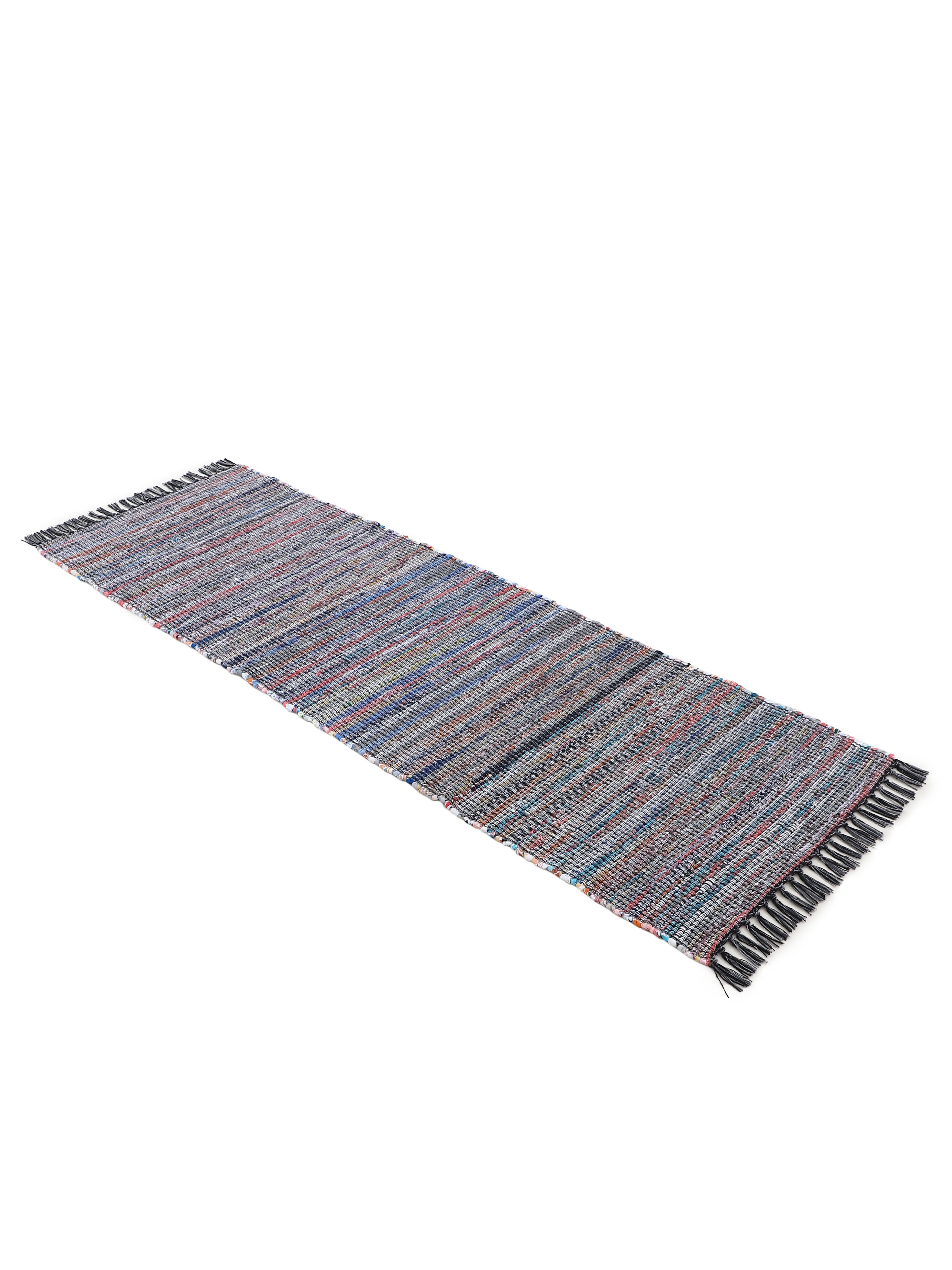
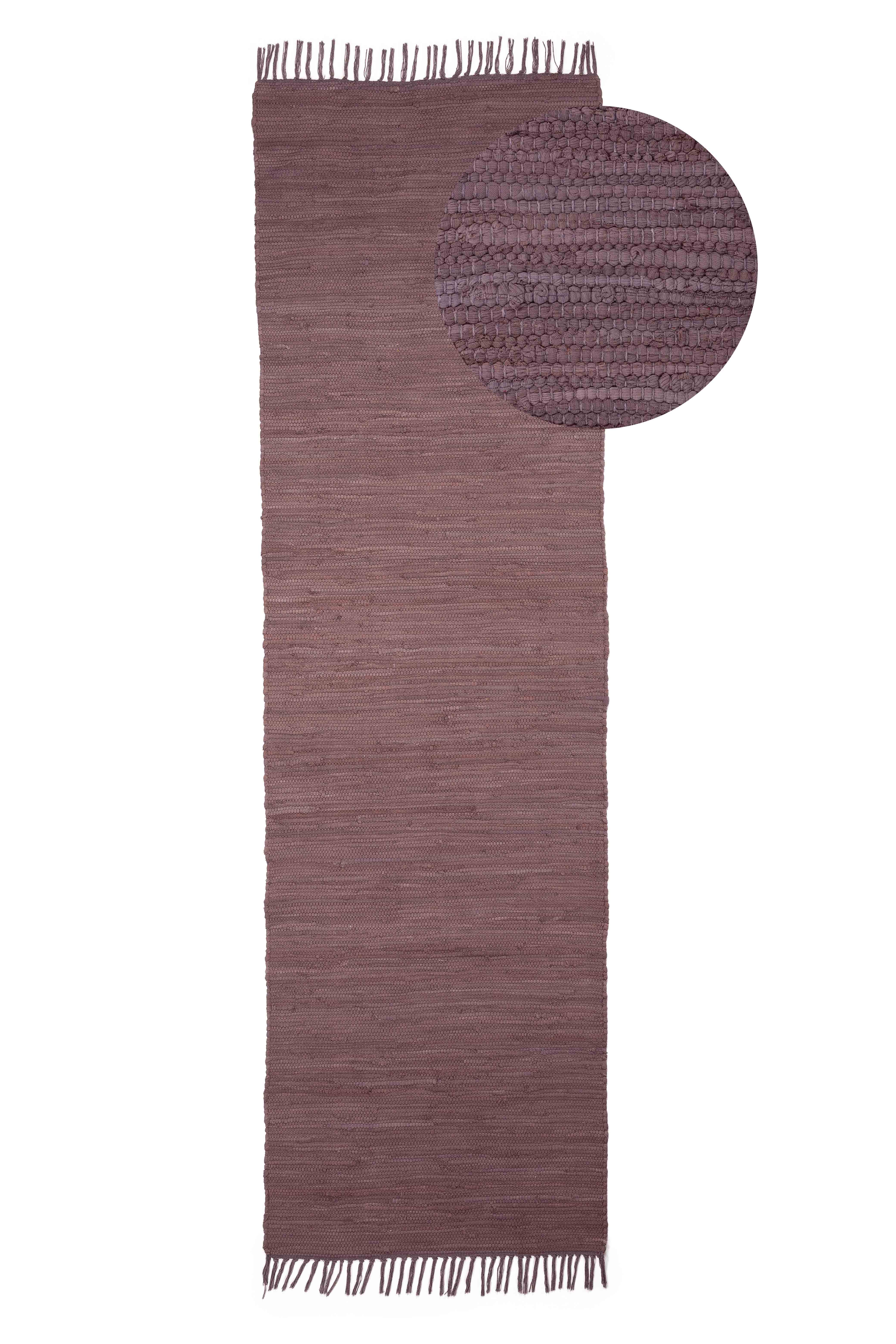
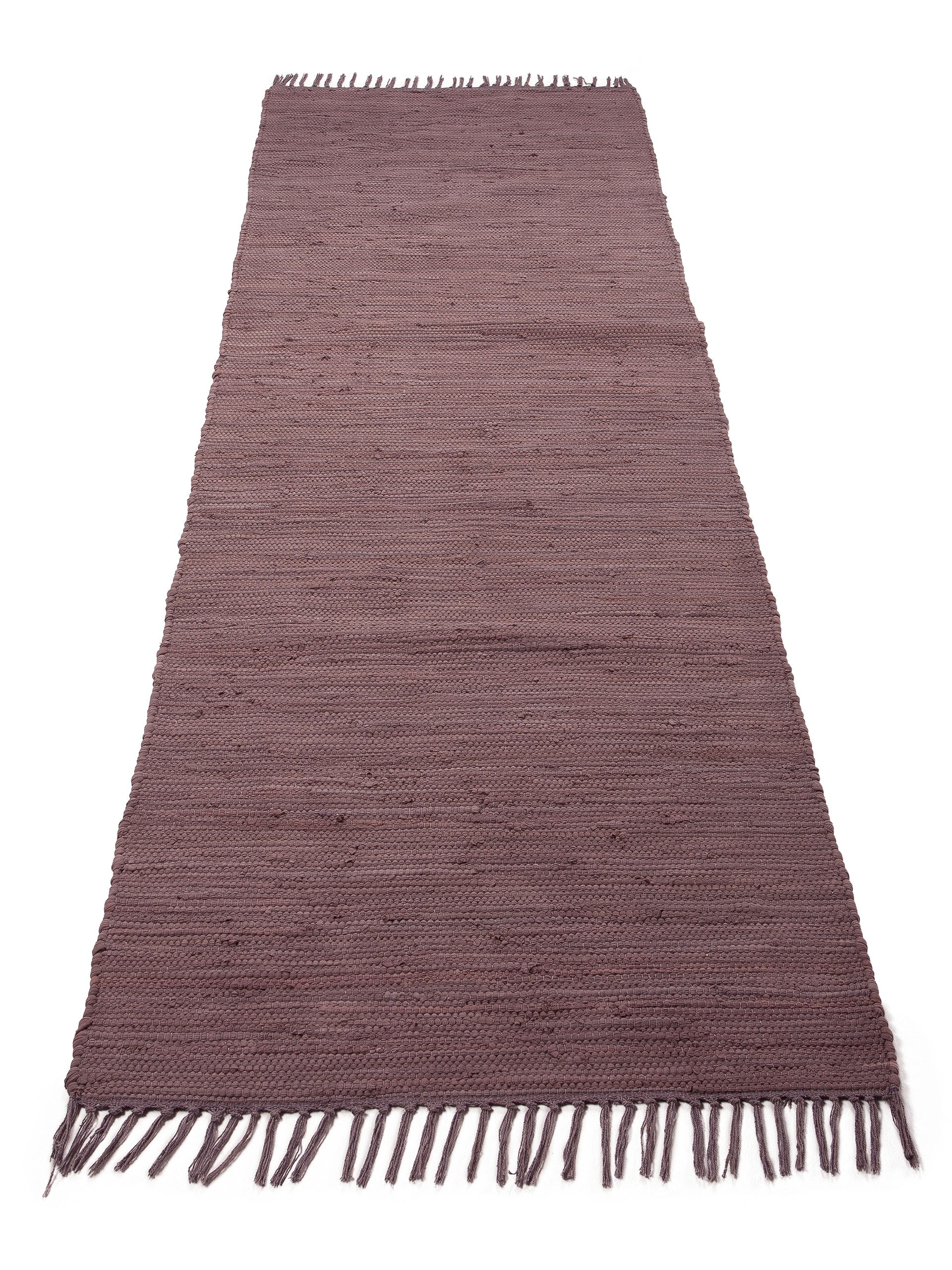
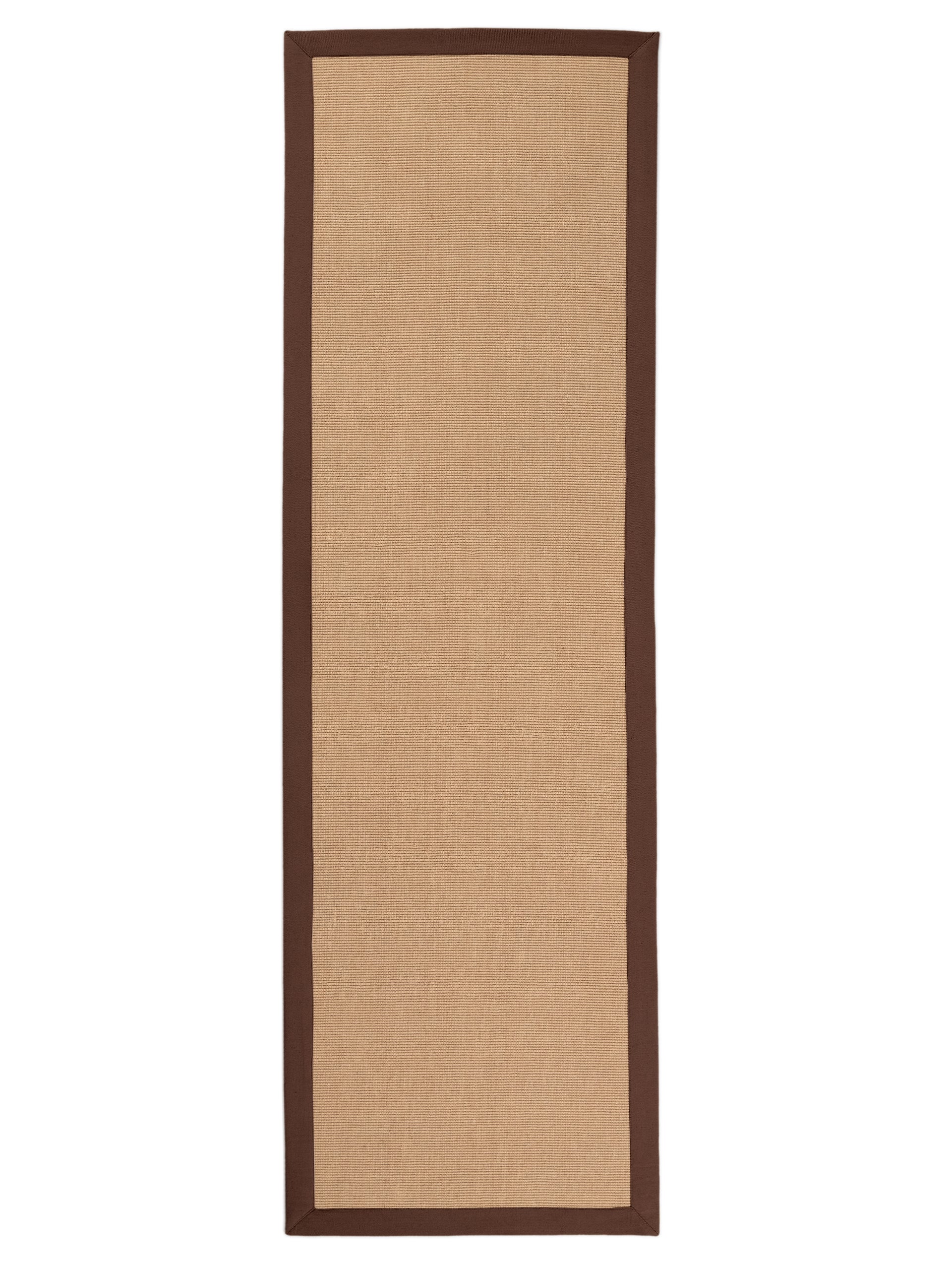
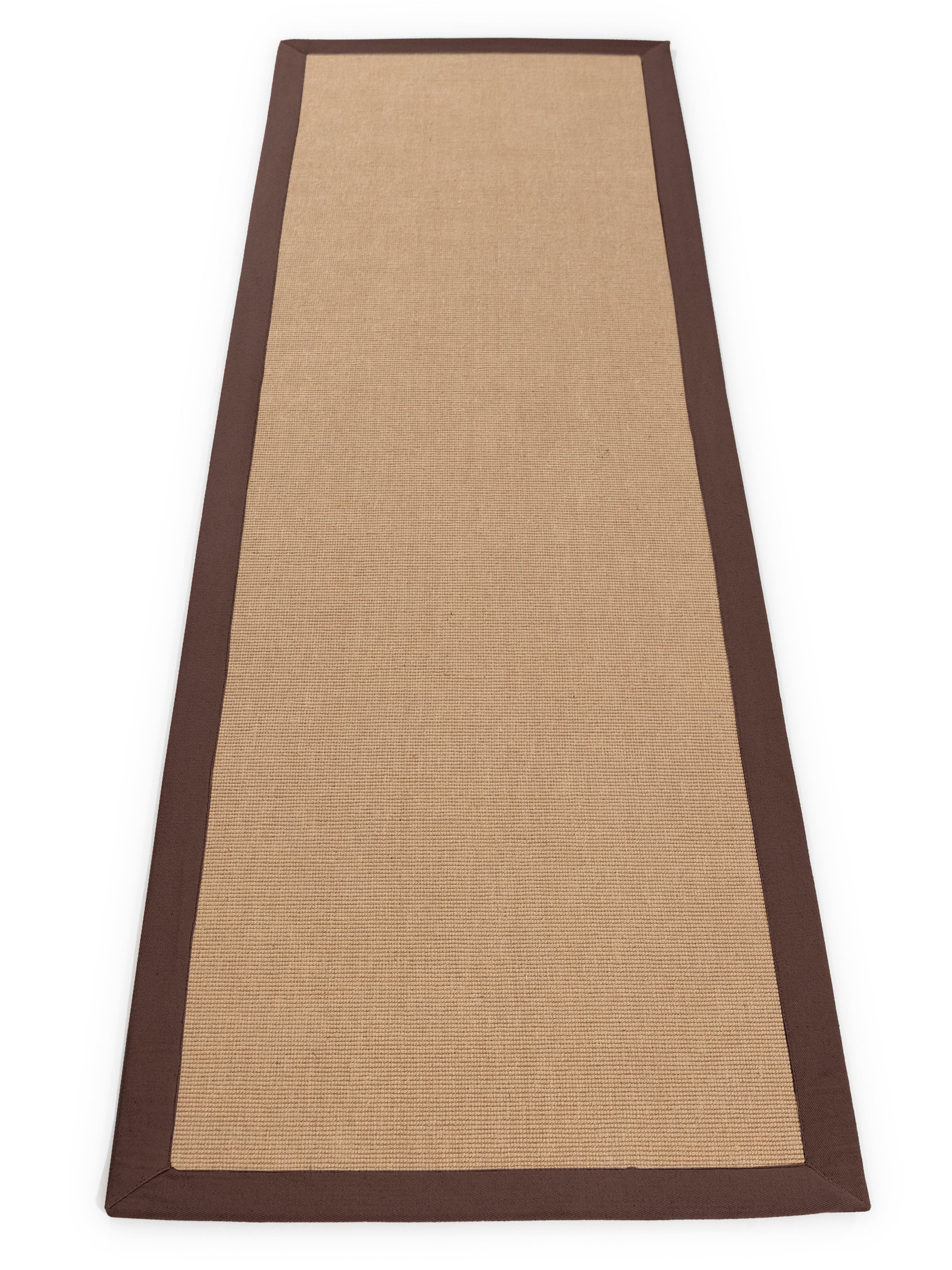
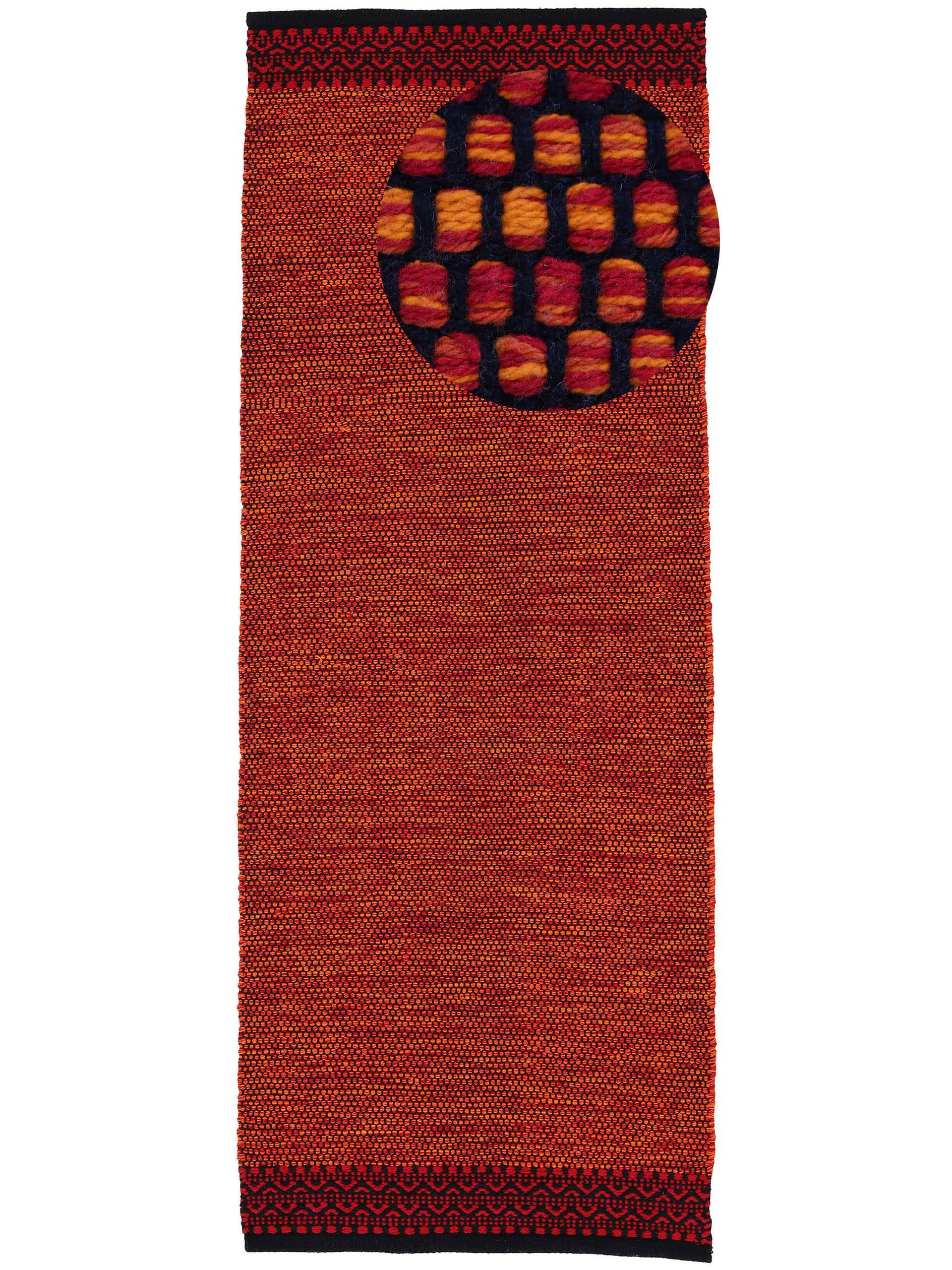
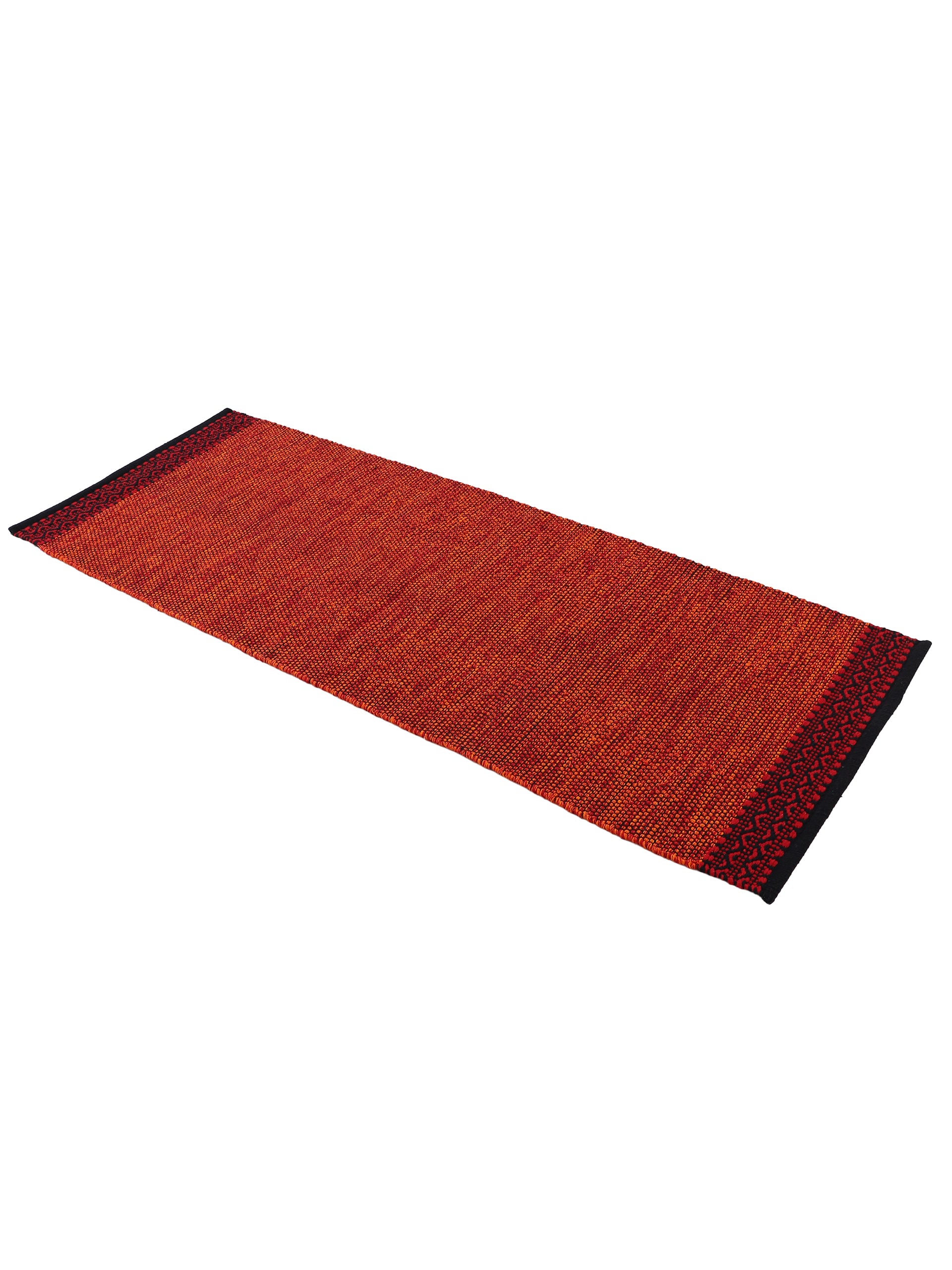
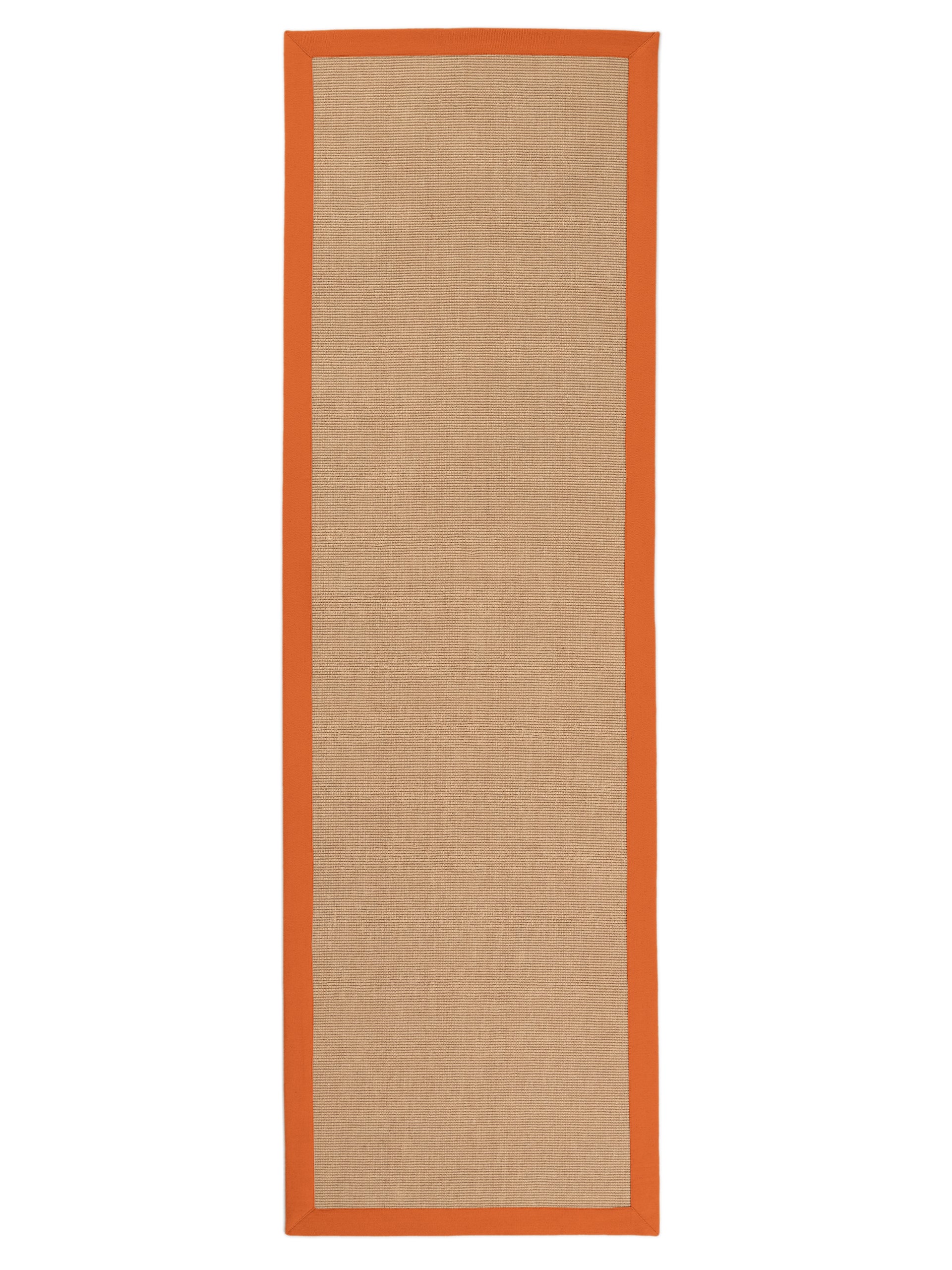
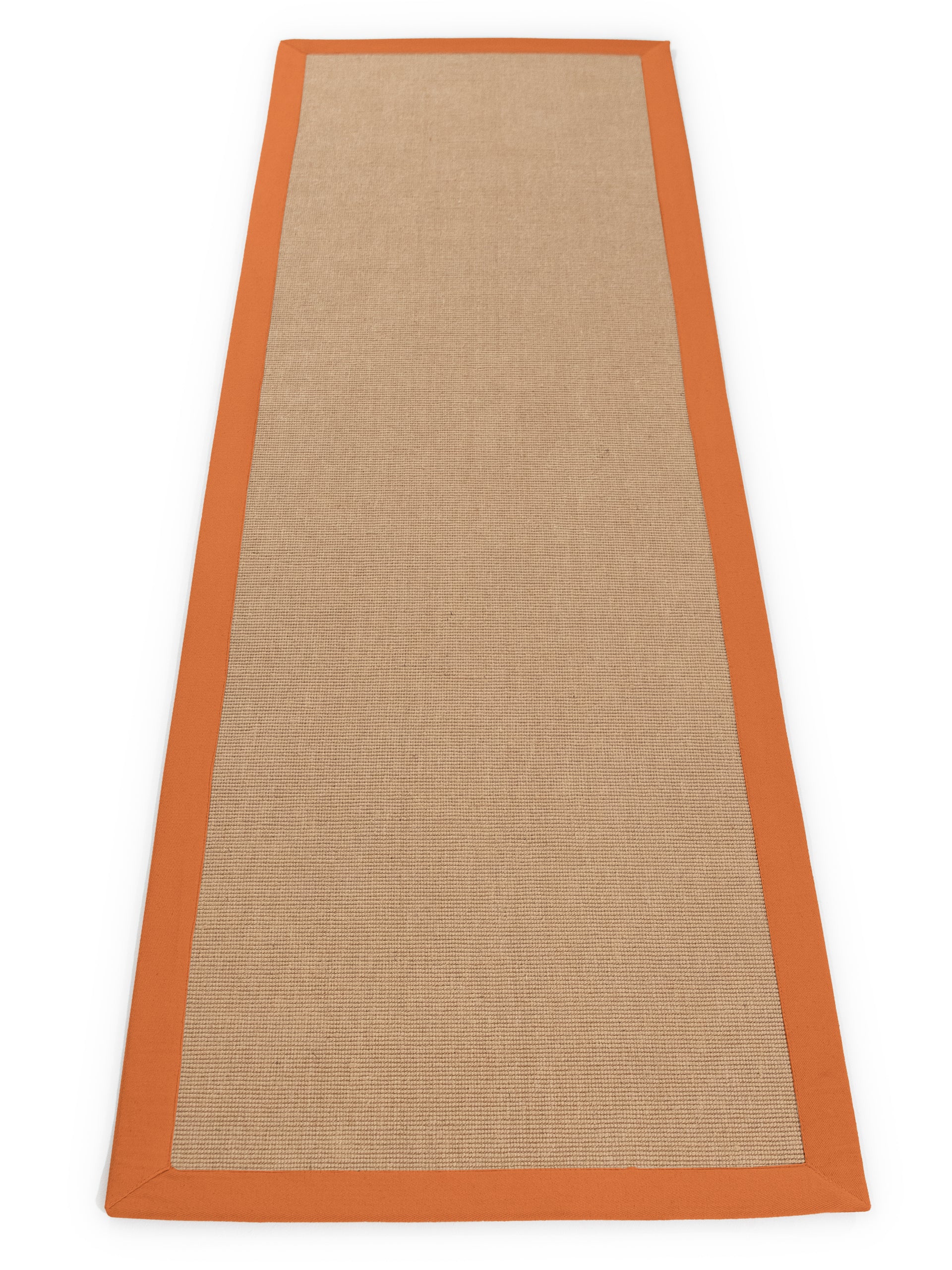
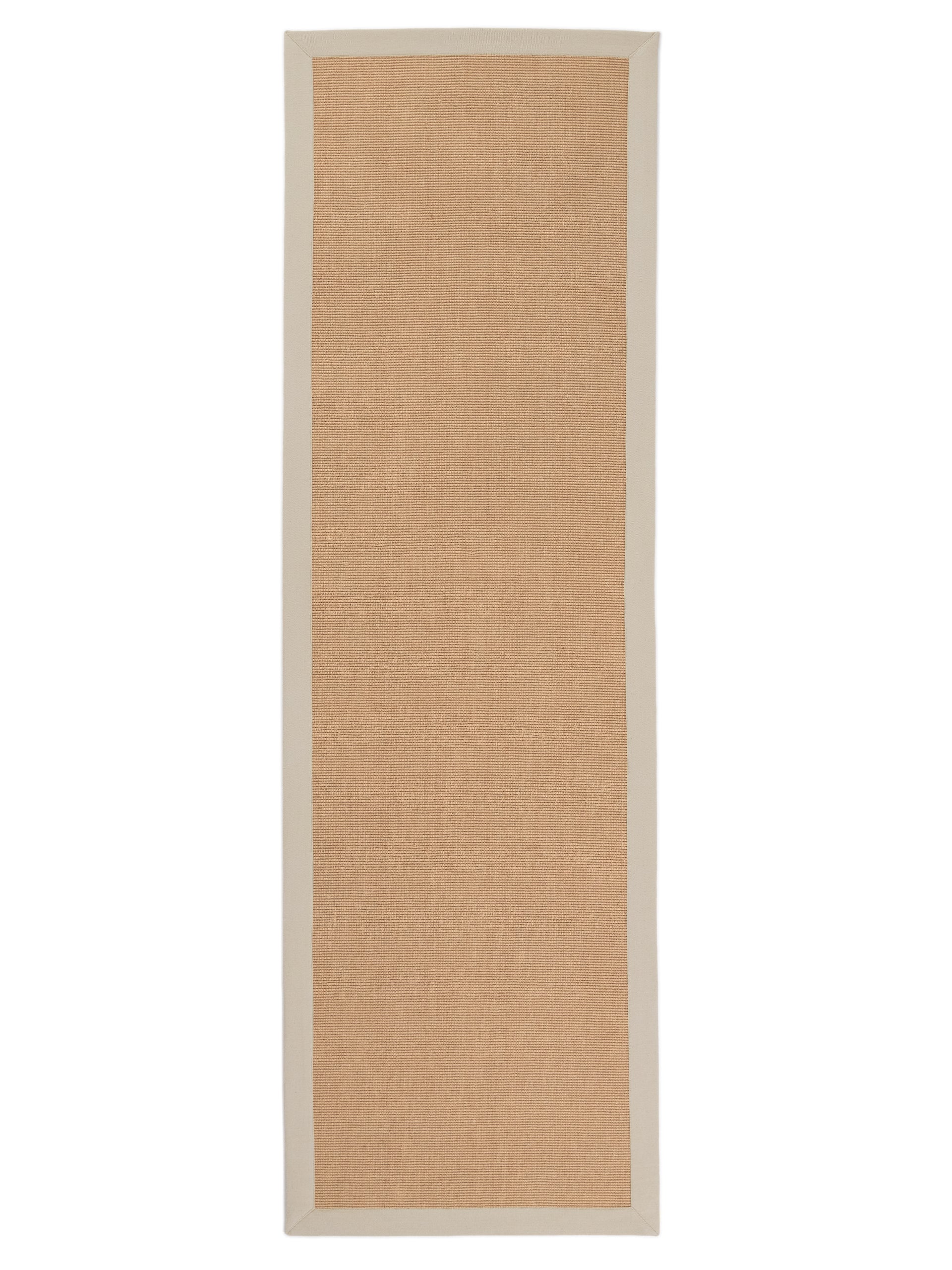
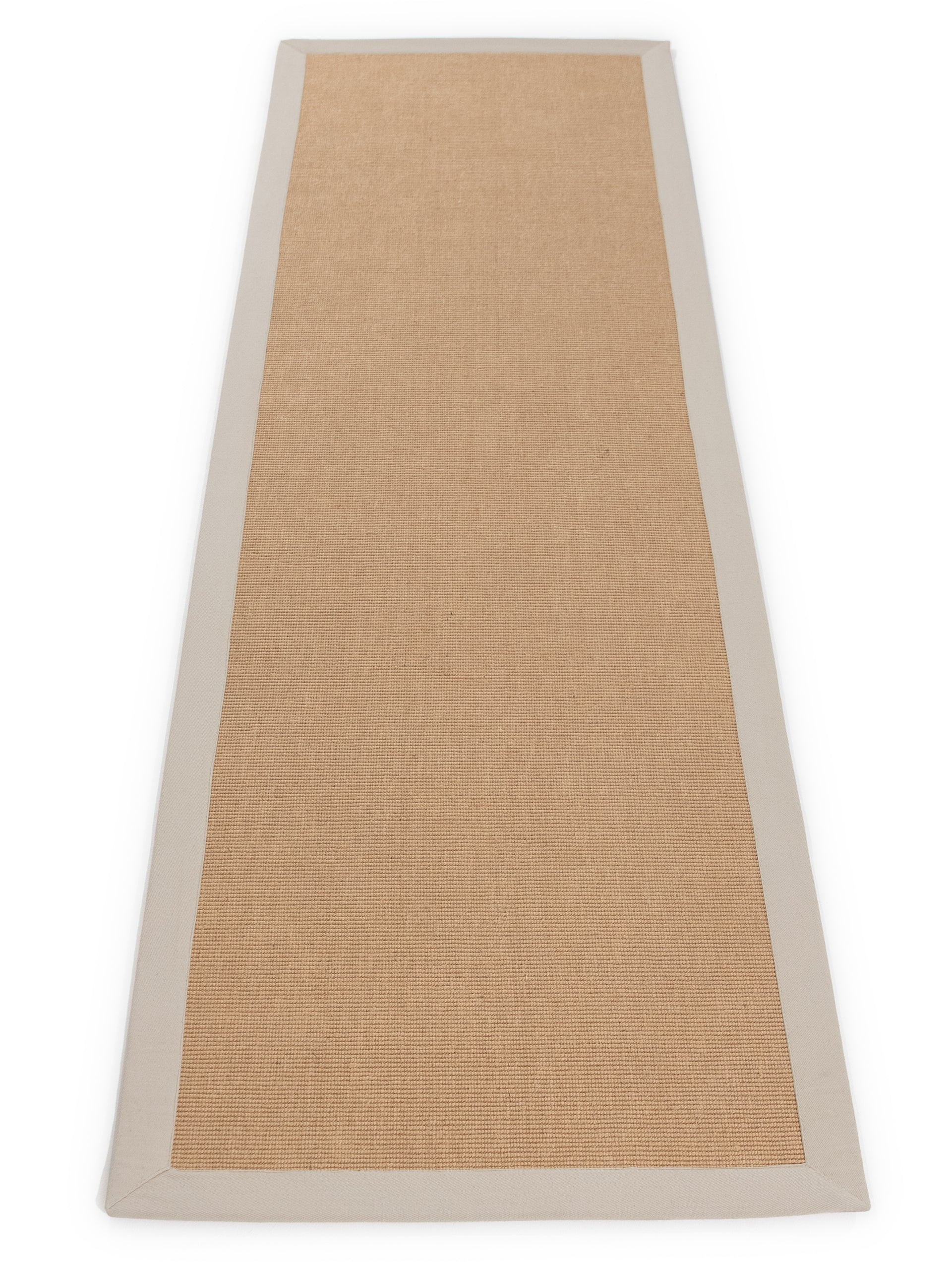
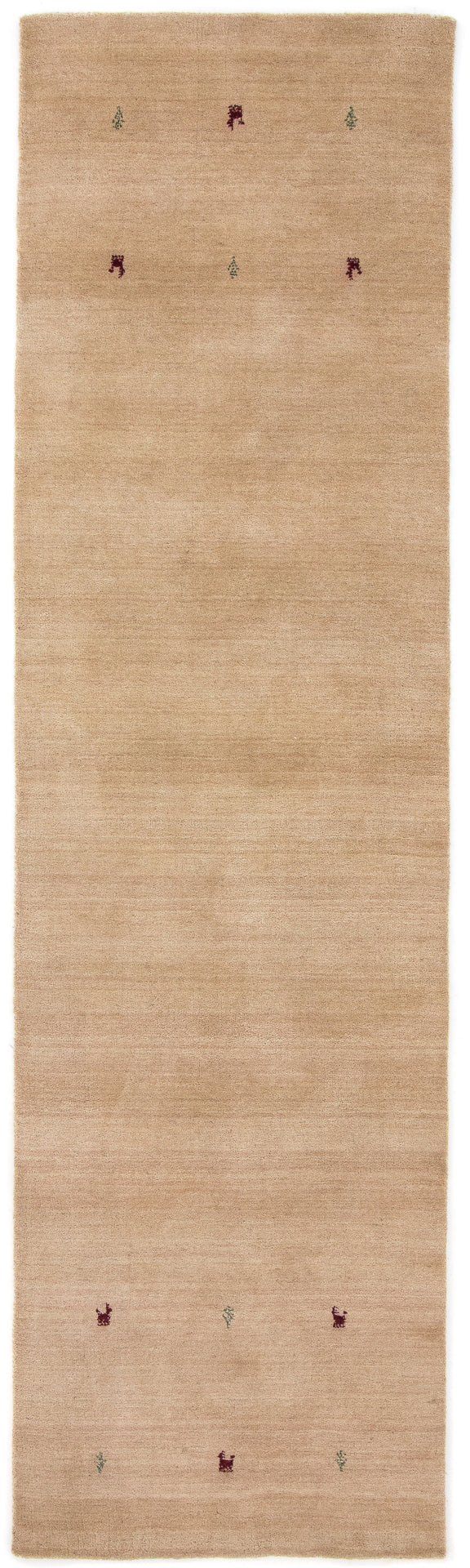
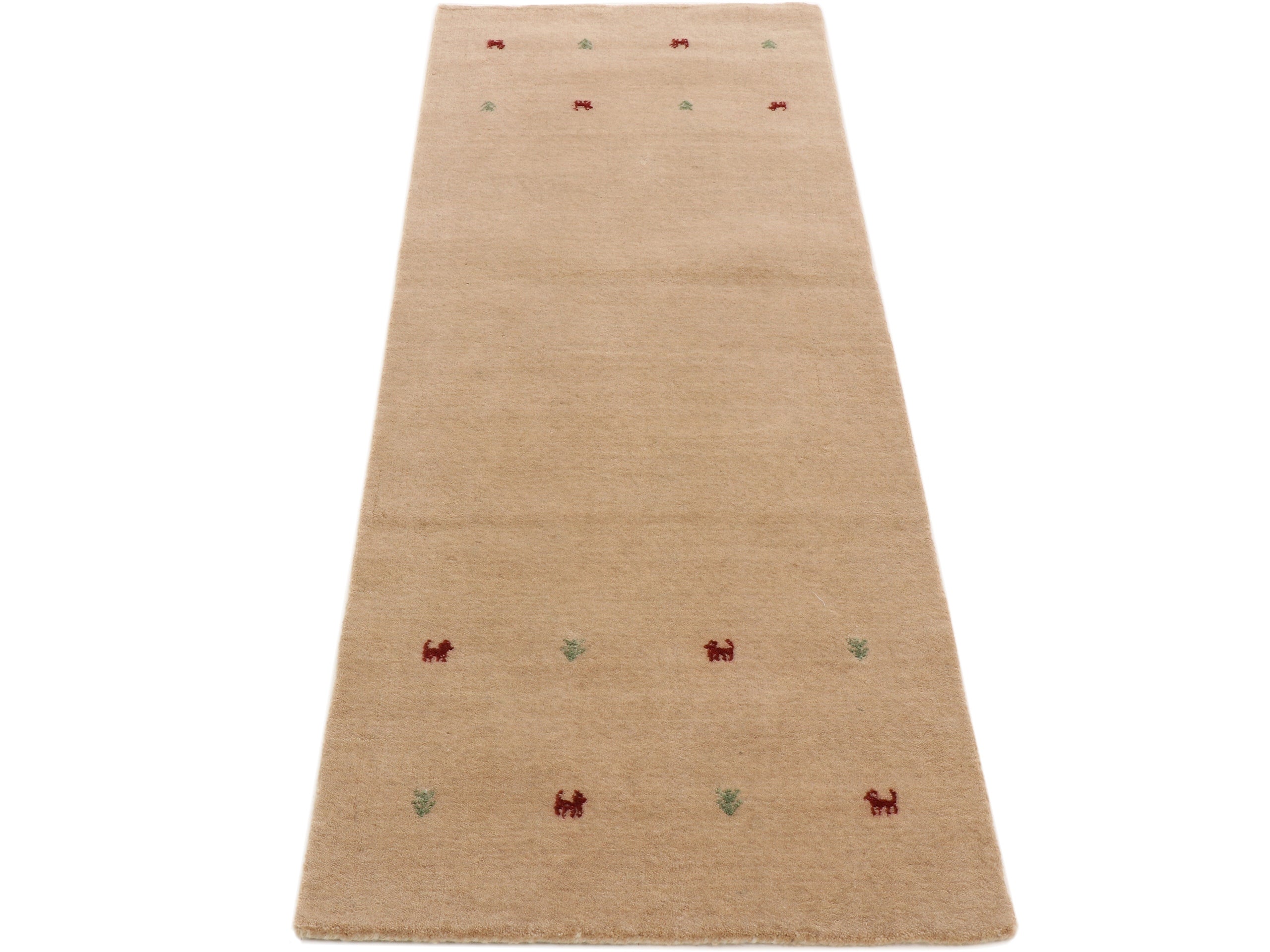
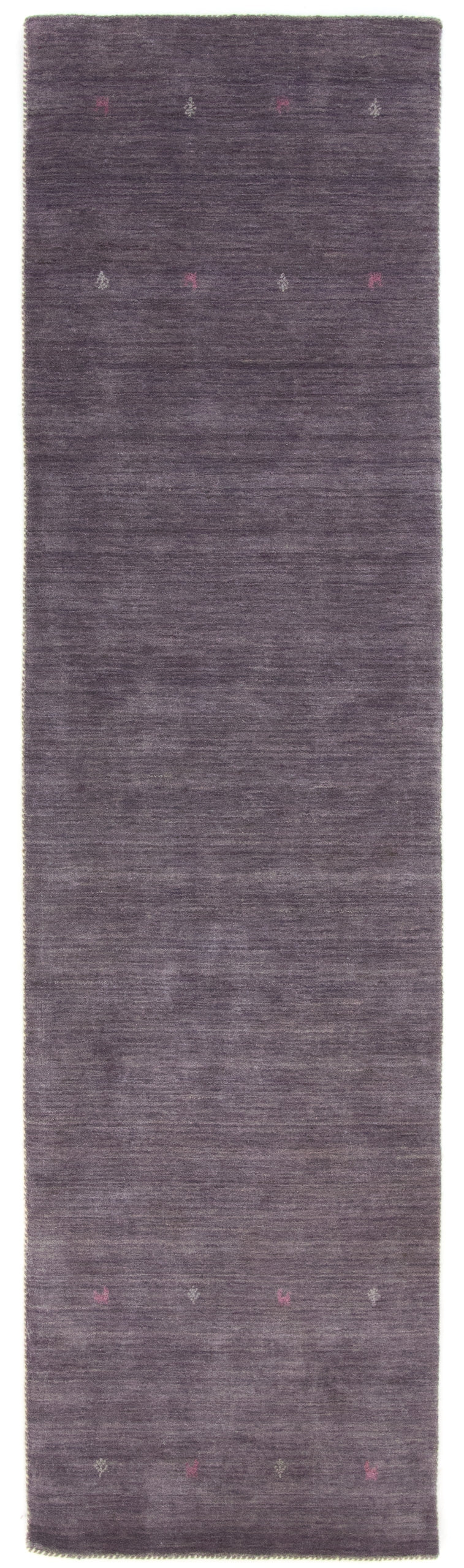
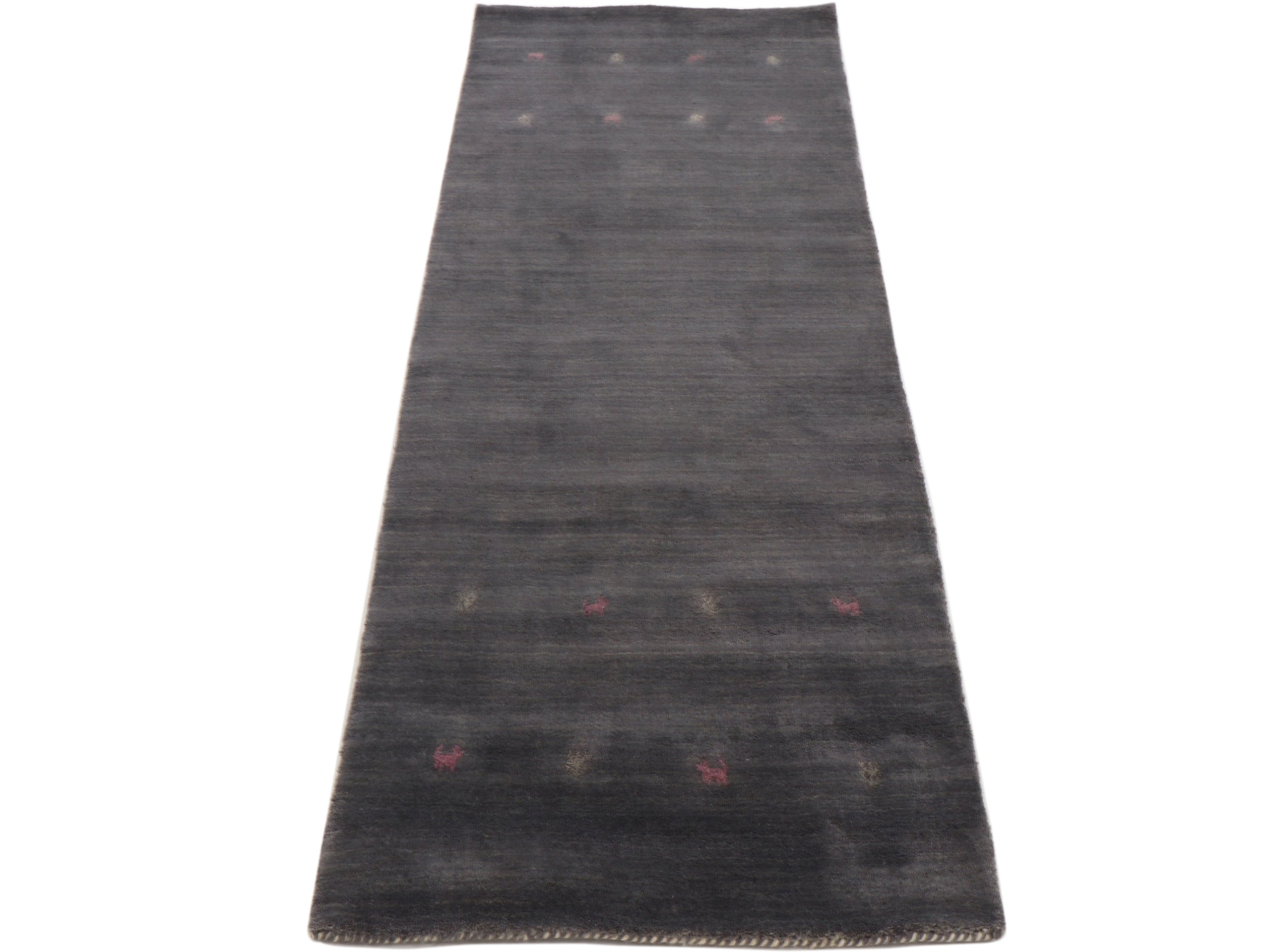
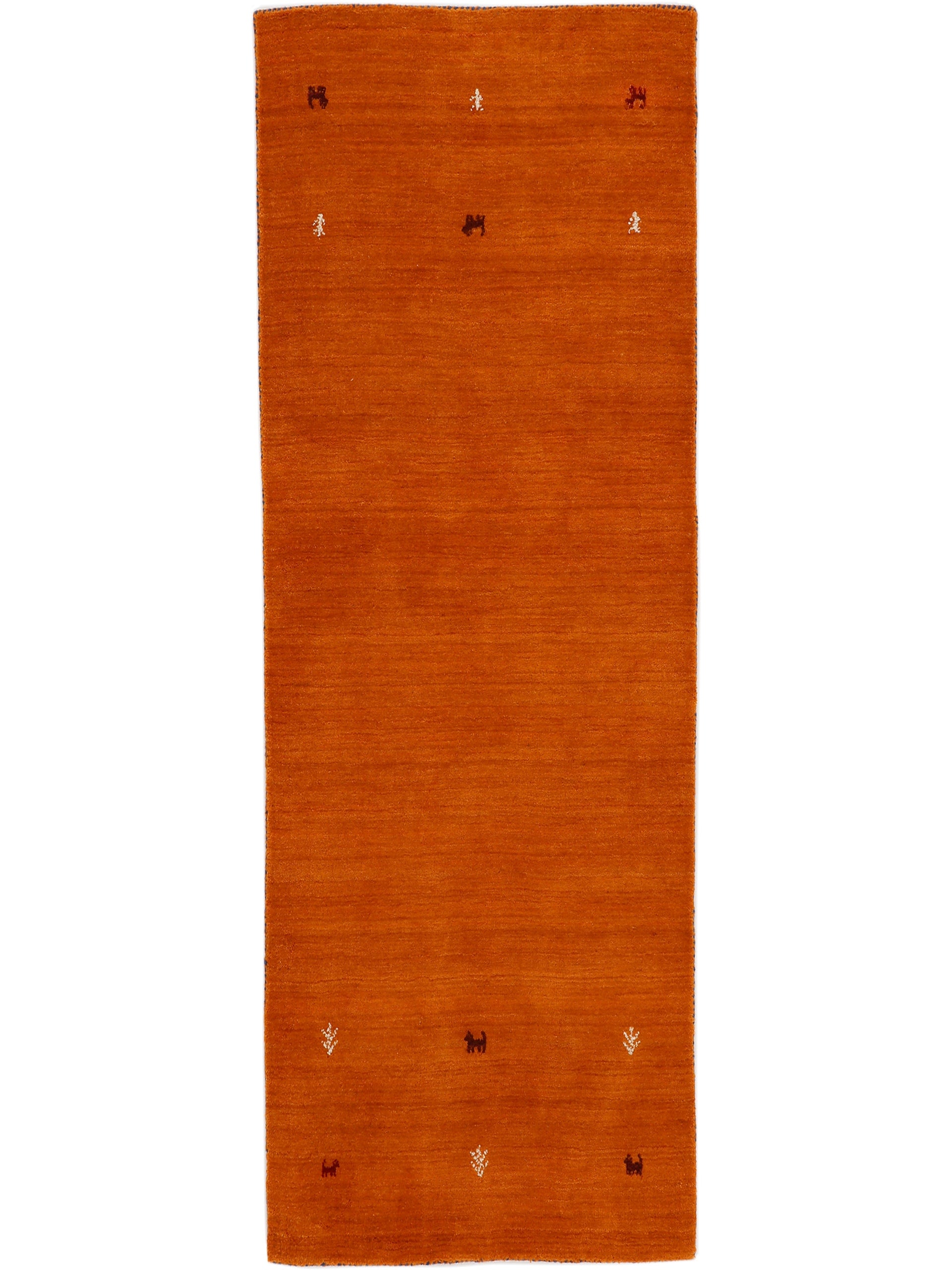
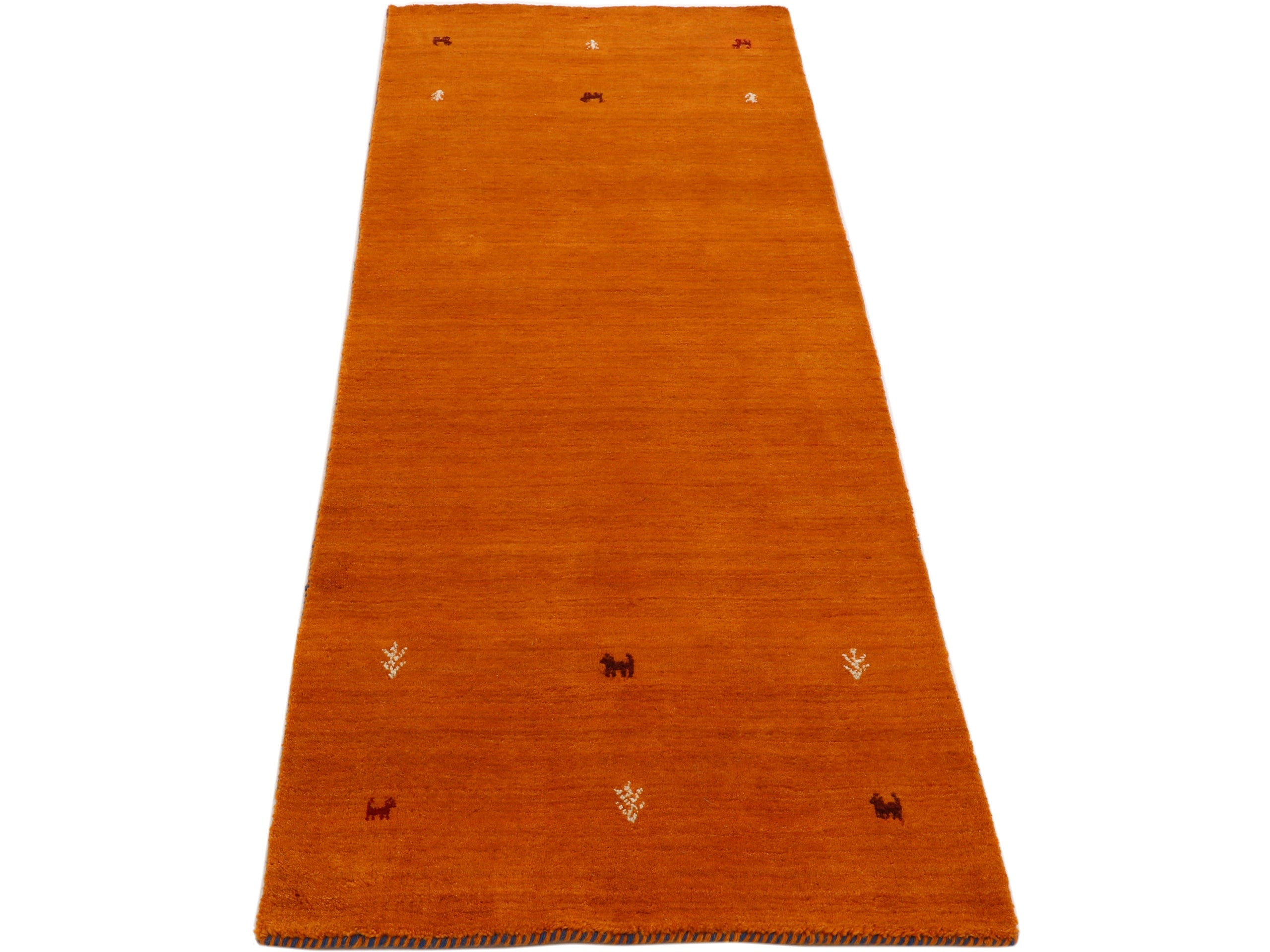
The hallway is the first room guests see, and usually the last one anyone gets round to. A hallway runner changes that with little effort. It softens footsteps, catches dirt and turns a bare corridor into a proper welcome. We have 147 designs in stock, from 180 to 600 cm long and 60 to 80 cm wide.
Runner rugs by material
Wool leads, with cotton close behind:
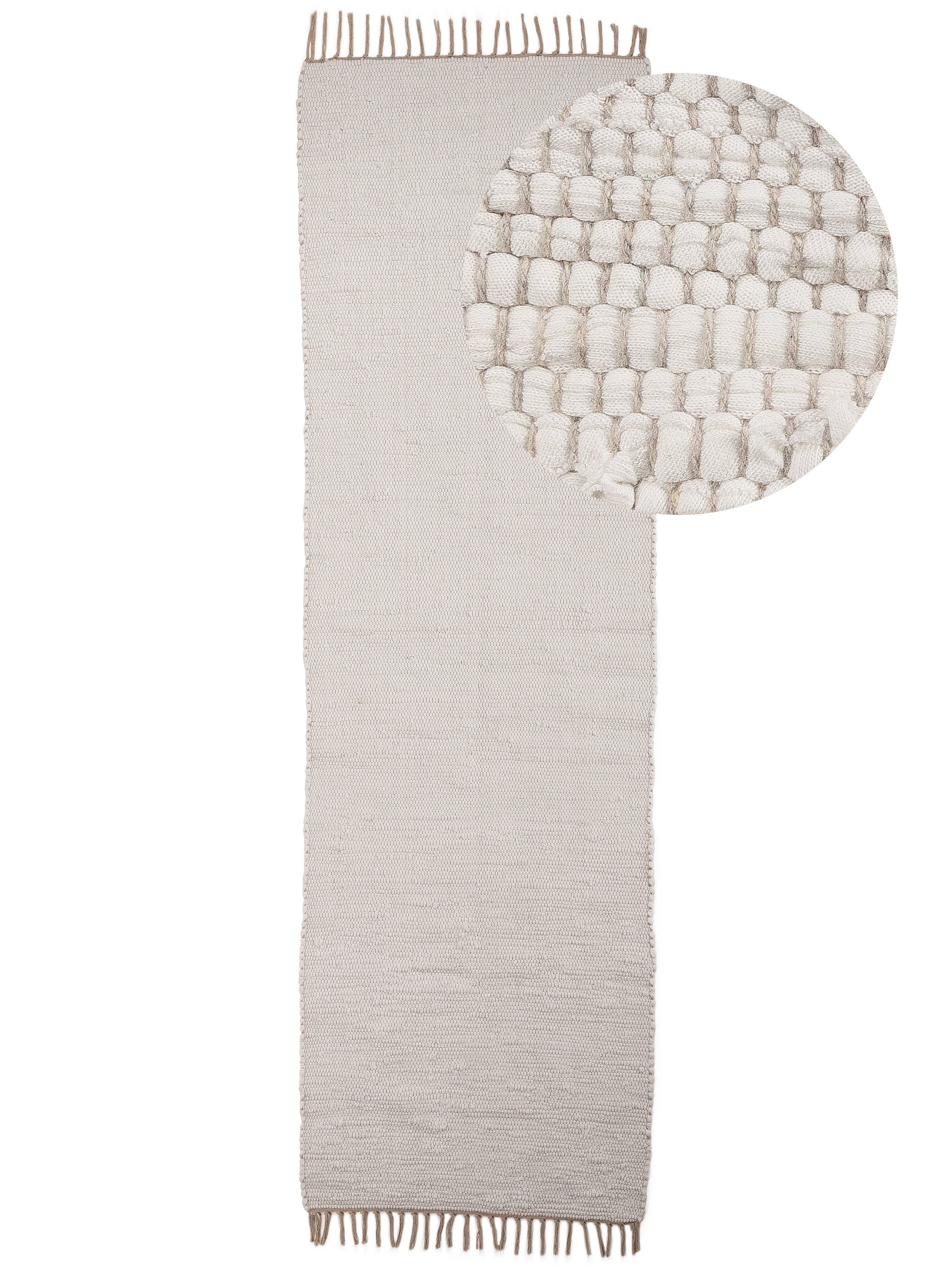
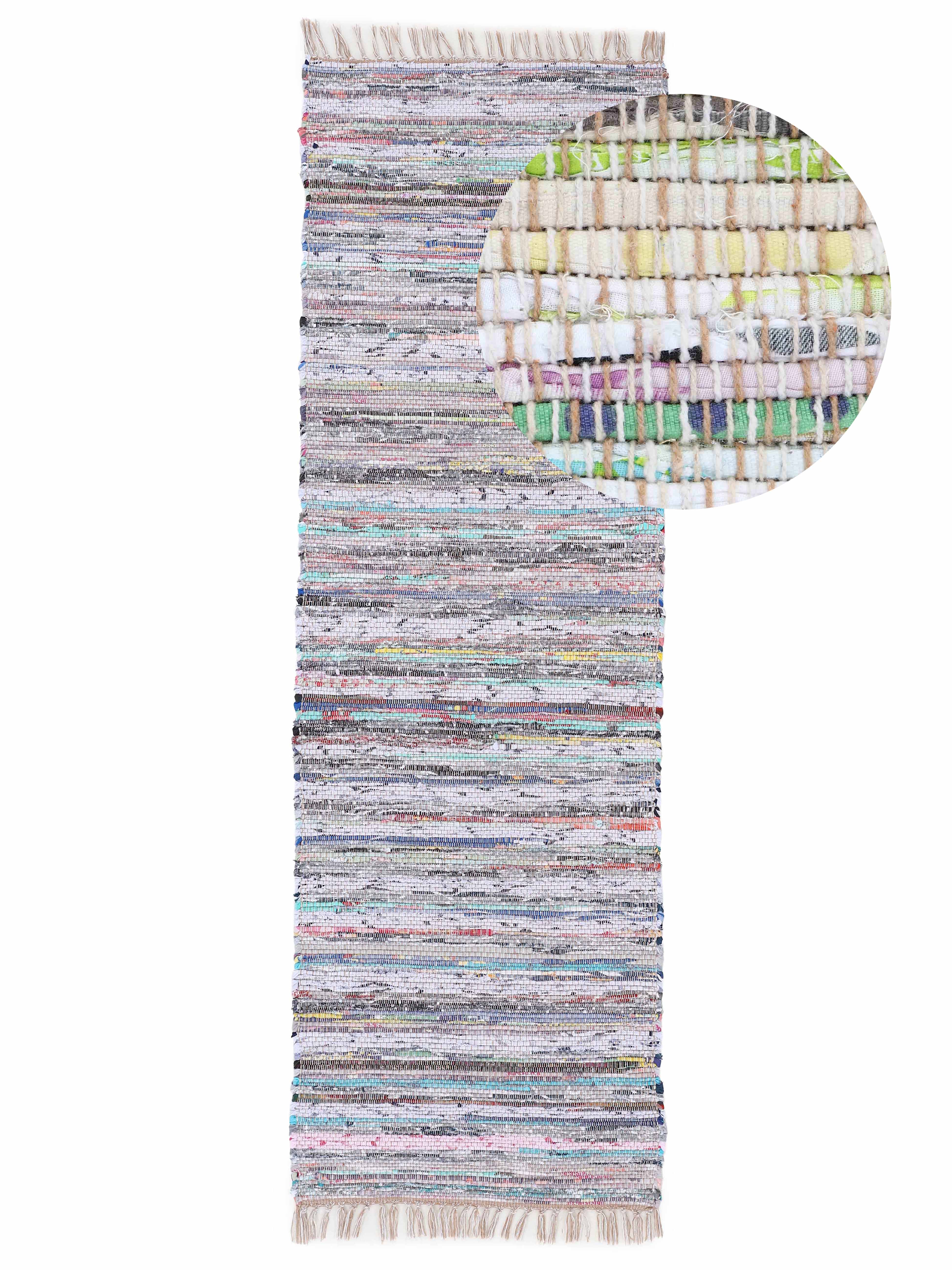
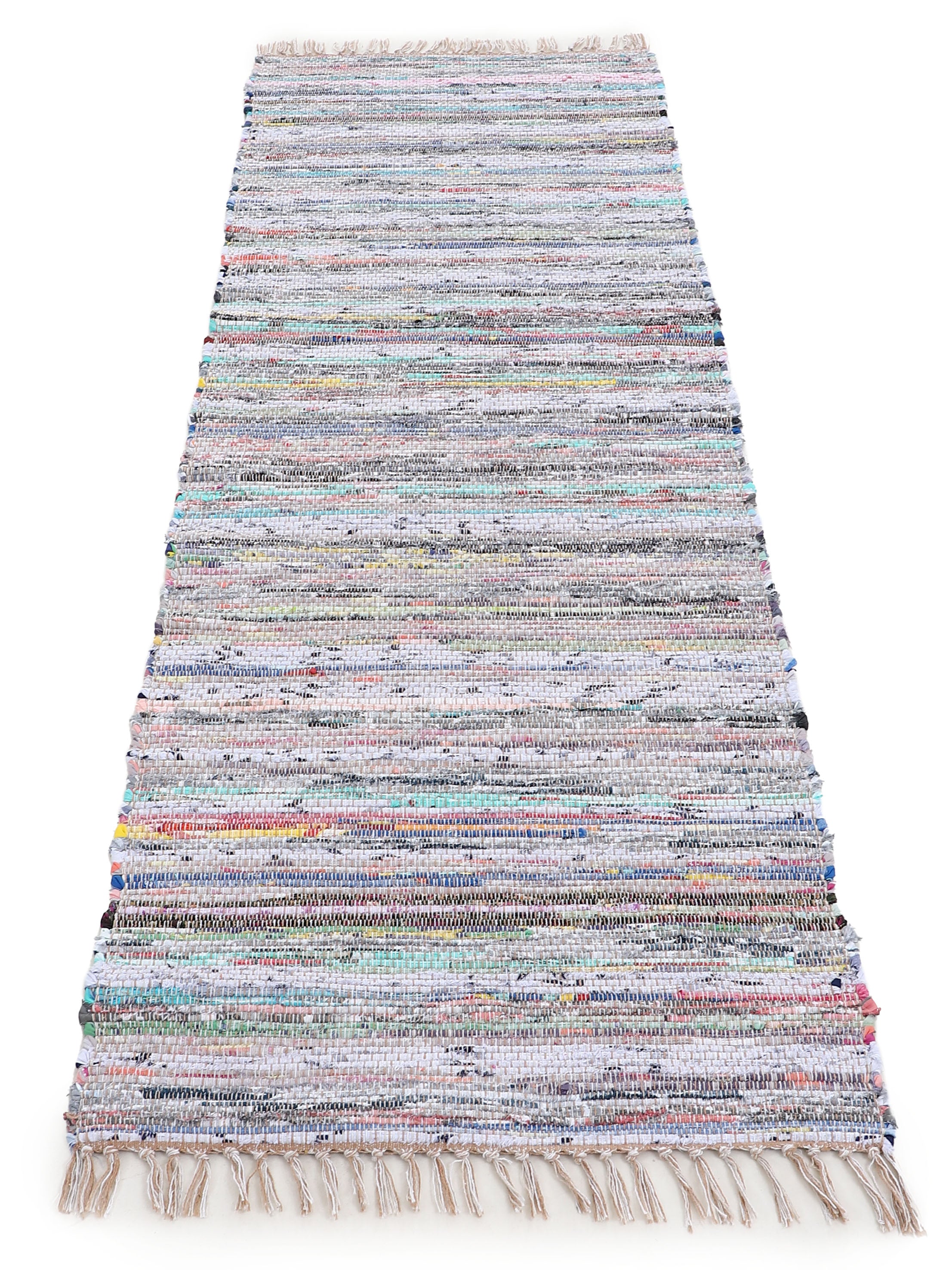
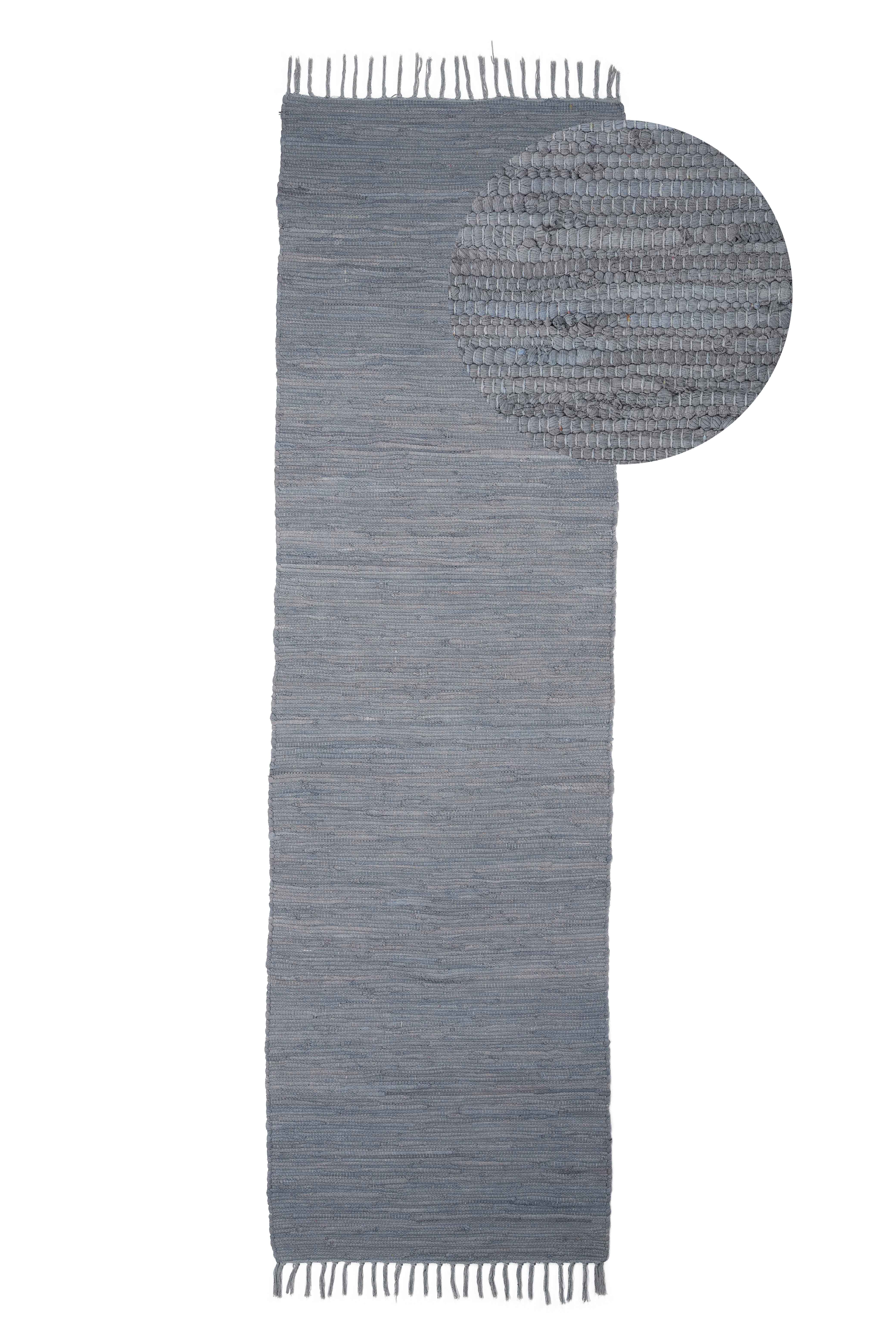
- Cotton kilim: flat and light. Good for the entrance, the kitchen and anywhere a door has to swing over it.
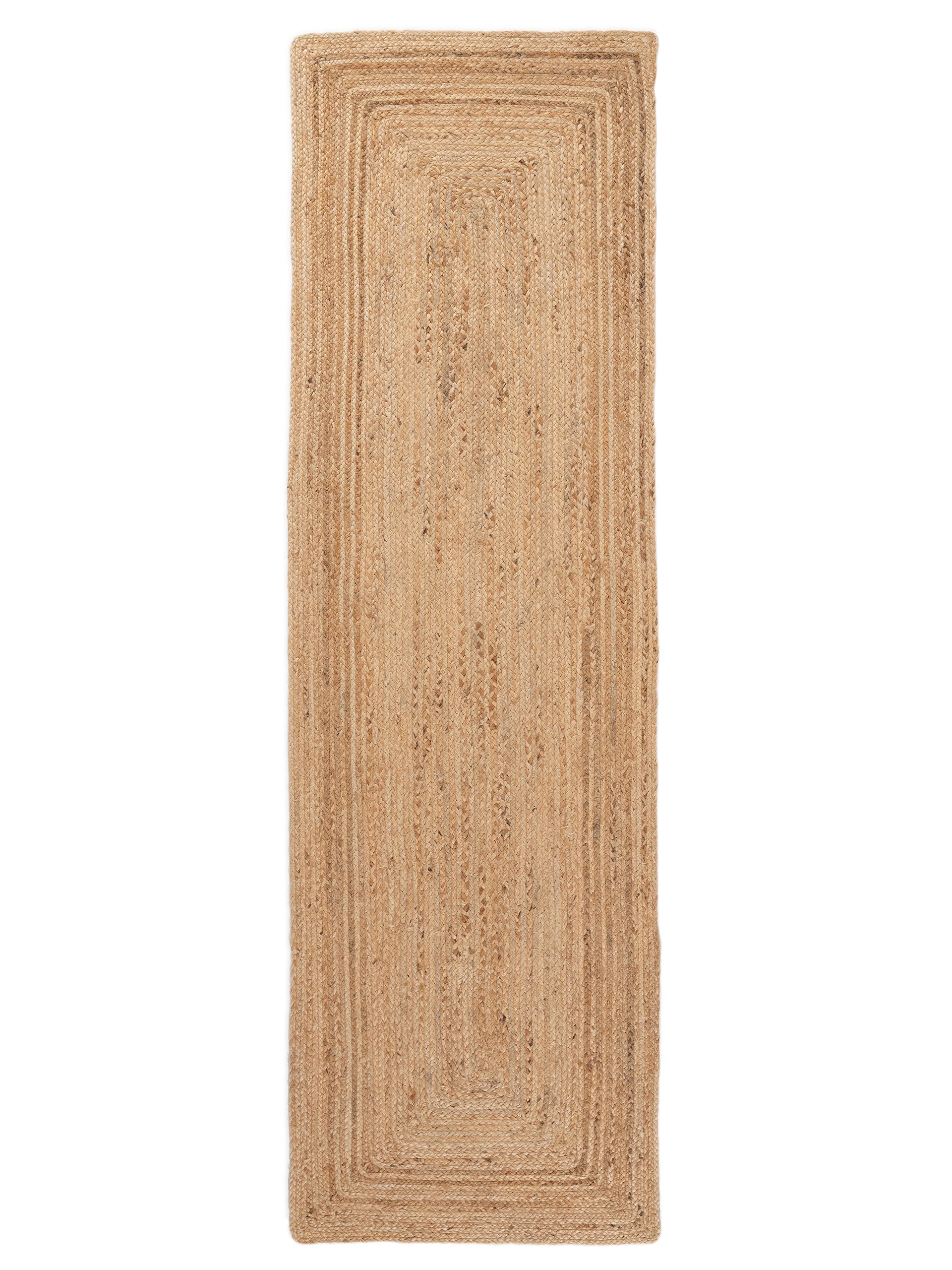
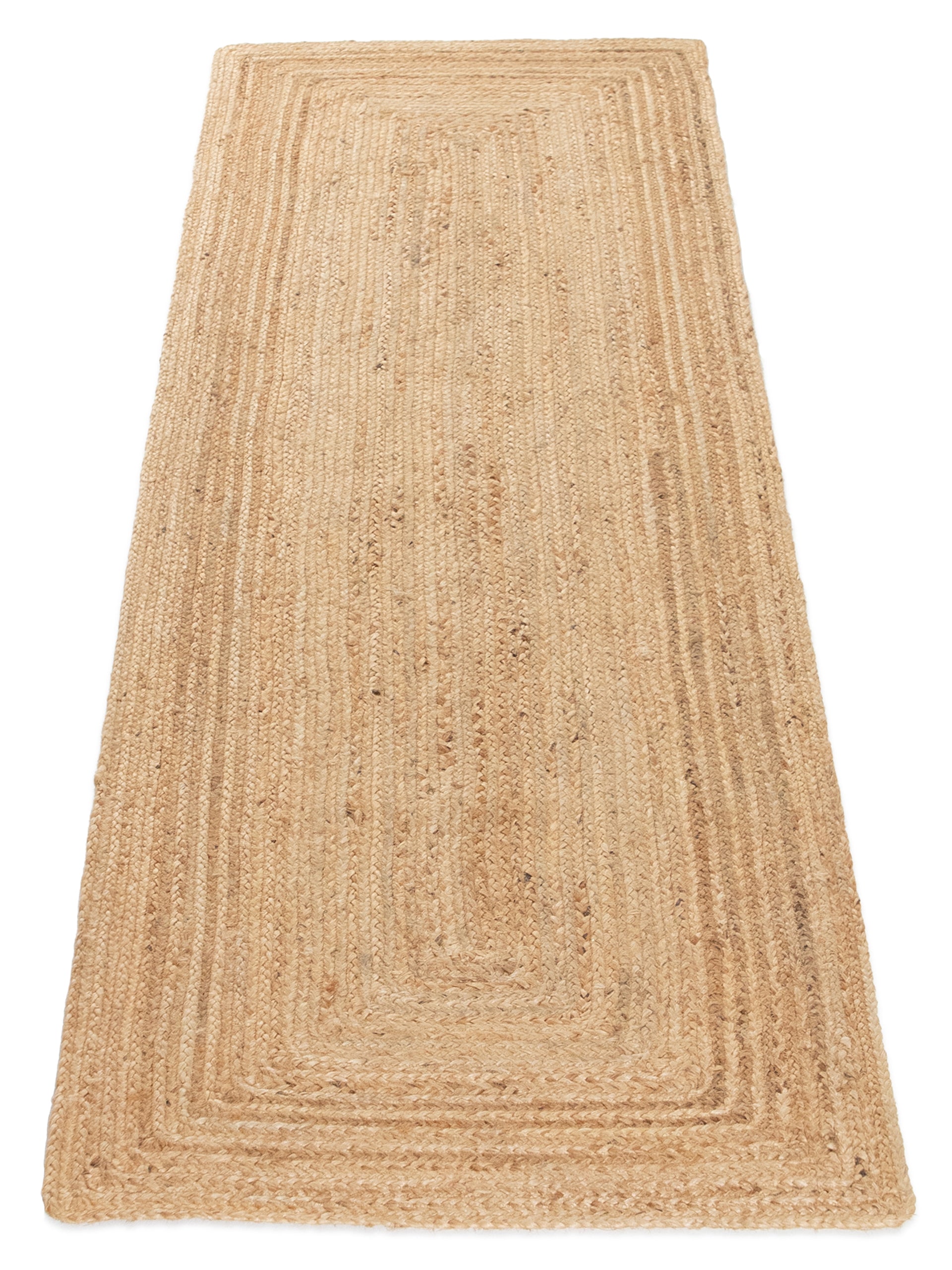
- Jute, jute with cotton: short pile, firm and natural. Happiest in dry halls and living areas.
- Wool: fuller pile, warm and dense, for bedrooms and quiet corridors.
- Synthetic: from flat to shaggy, depending on the design. Copes with busy routes and children's rooms.
- Viscose: short pile, smooth with a slight sheen, for areas with little foot traffic.
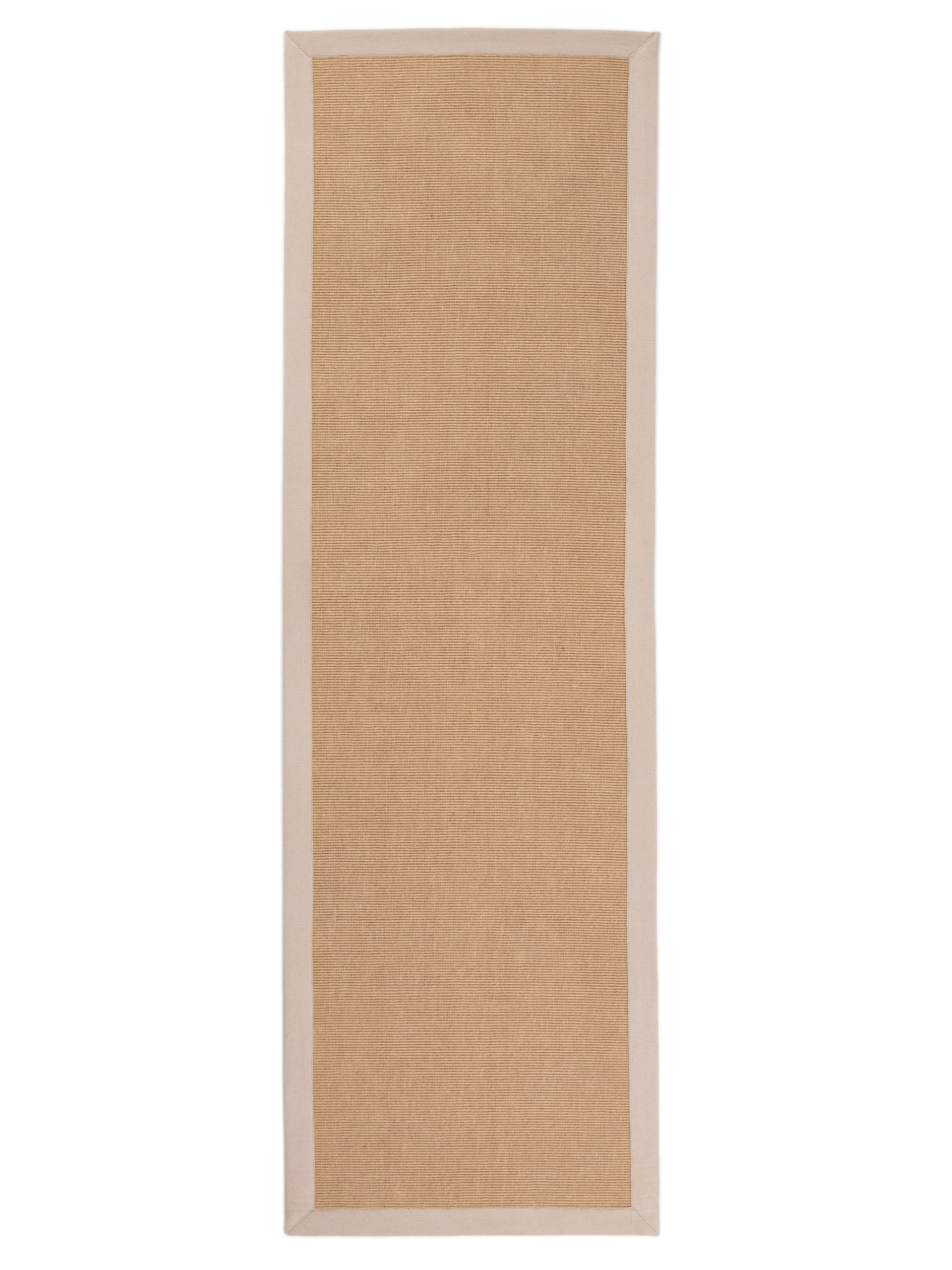
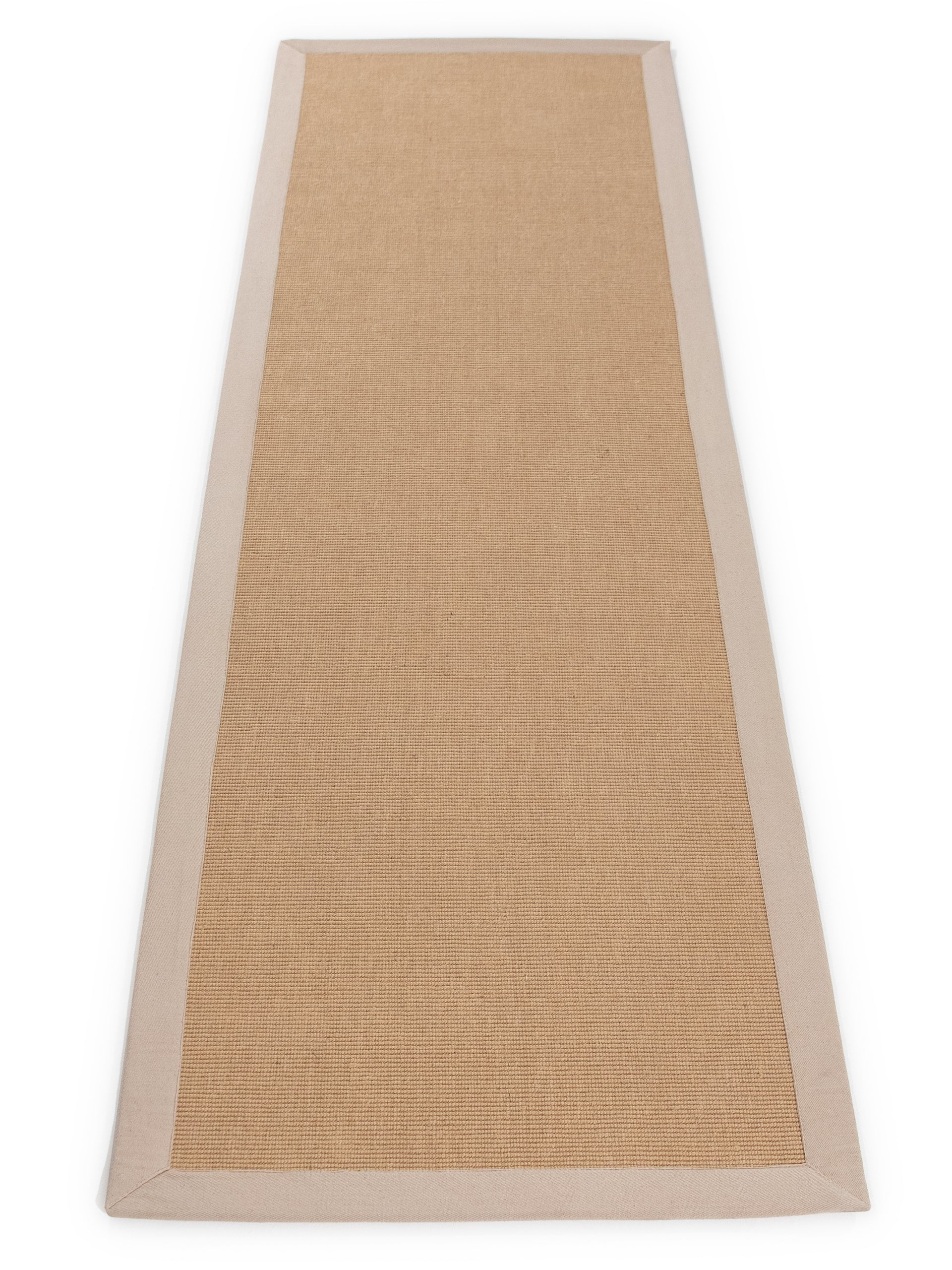
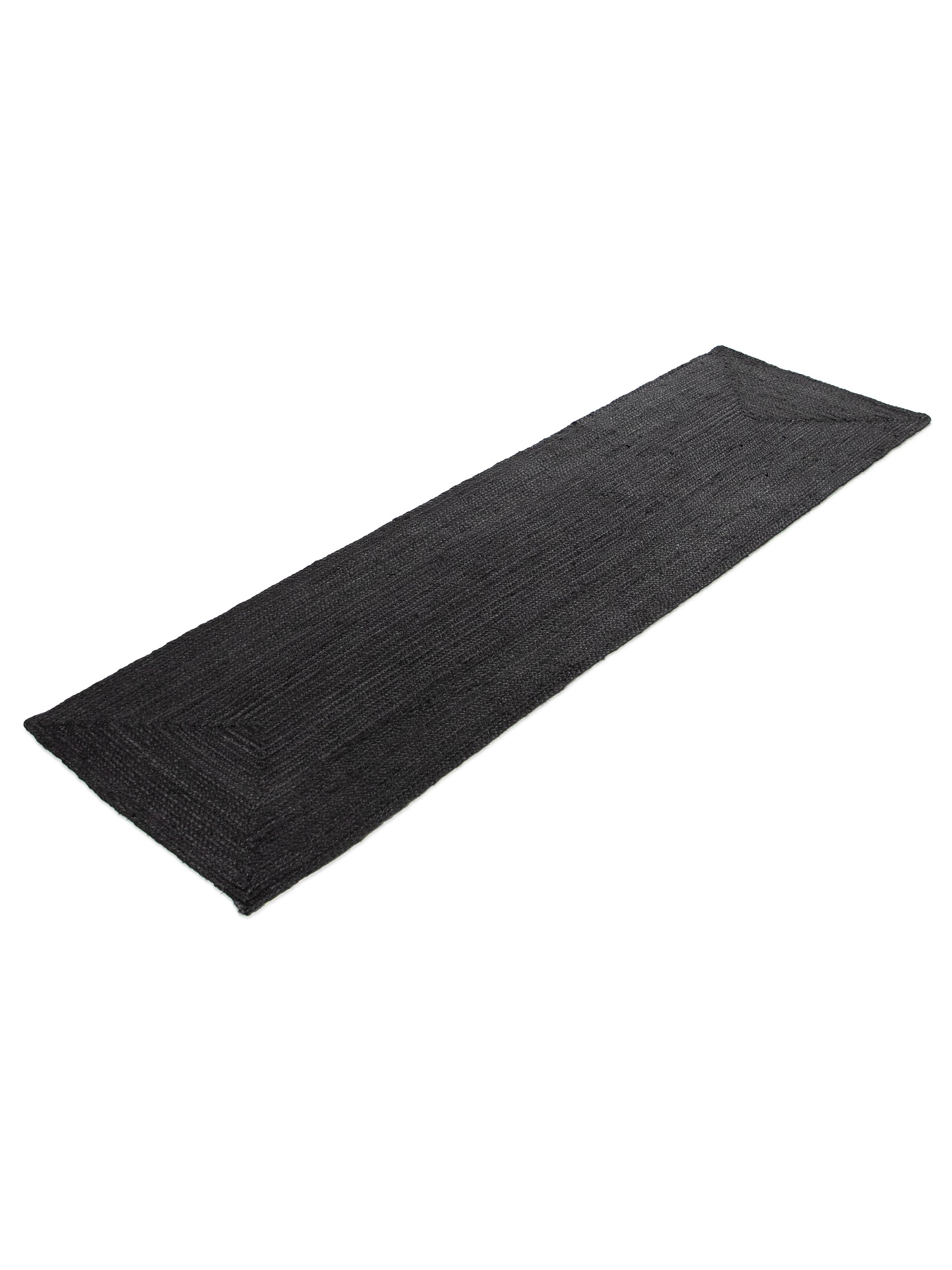
A plain cotton kilim lies so flat that the front door clears it easily. If you are after a jute runner, there is one in 100 % jute, and the sisal-look version looks very similar. Despite its name it is four-fifths jute, the rest cotton. Both like it dry. Wool feels warmer. It also absorbs footstep noise, which is welcome in a period house with thin floors.
Measuring the hall properly
Measure the free length between the front door and the far wall, or between two doors if the hall has several, and then take off 15 to 20 cm at each end before you start looking at sizes. Doors open freely. The floor frames the rug.
Width works the same way. In corridors under a metre wide, 60 or 70 cm looks better than 80 cm. If no floor shows at the sides, it quickly looks like fitted flooring.
A coat stand or shoe cabinet in the way? Let the rug stop before it or disappear completely underneath. Halfway under looks undecided. In an L-shaped hall, lay two pieces, one for each leg, and leave a little floor free in the corner.
The sizes we stock most are 80 x 400 cm, 60 x 180 cm and 80 x 300 cm. A short entrance of up to about 2.40 m takes the runner rug in 80 x 200 cm. Around 3.40 m of hall suits the runner rug in 80 x 300 cm, and up to about 4.40 m a long runner rug measuring 80 x 400 cm. For a very long corridor there are 80 x 500 cm and even 80 x 600 cm.
On tiles or parquet, put a non-slip underlay beneath it, especially near the front door, where people kick off their shoes in a hurry and a sliding rug is the last thing anyone needs. Cut to size, it protects the floor and makes flat weaves a little softer. No more creeping.
Colour, kitchen and bedroom
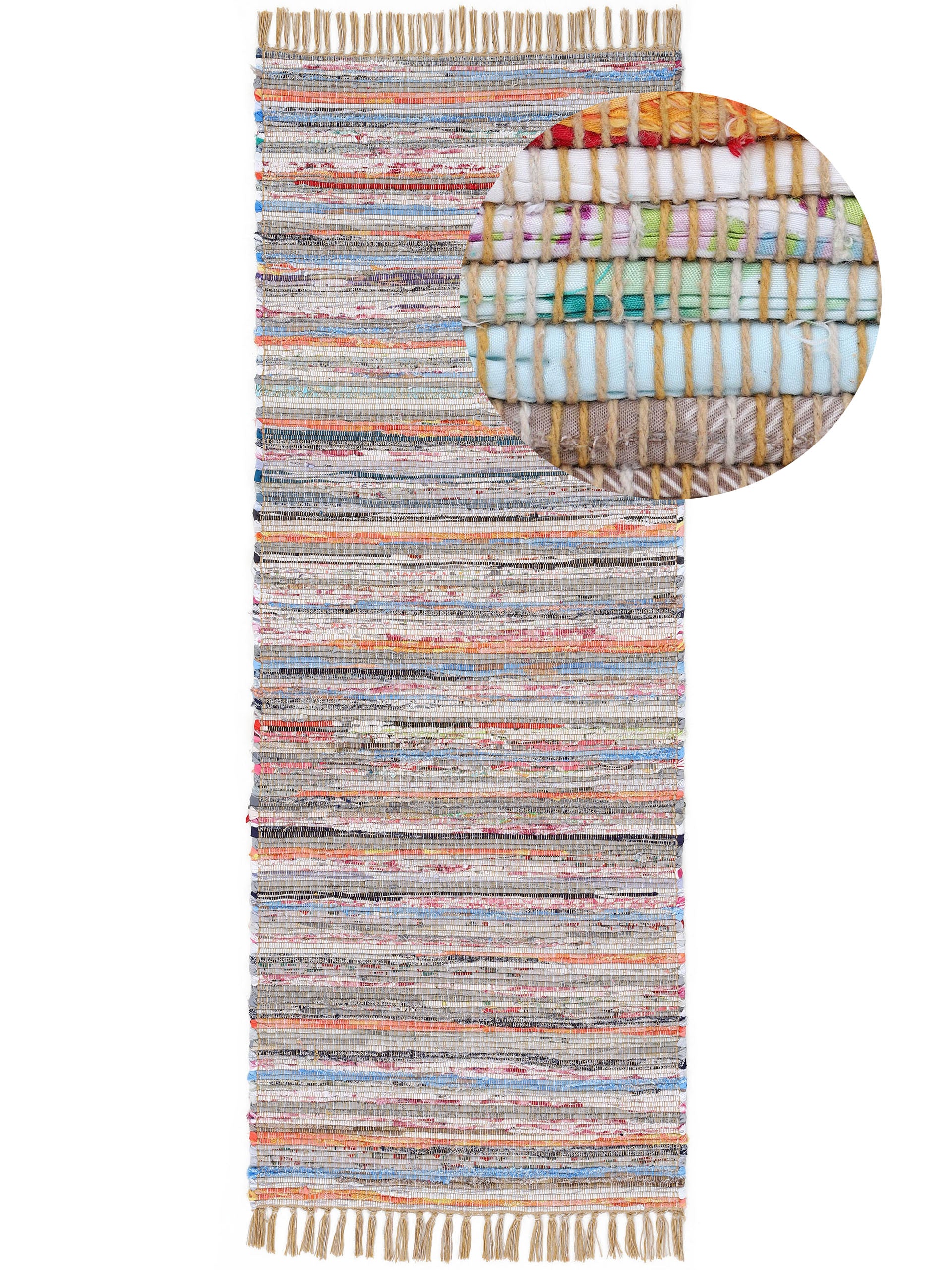
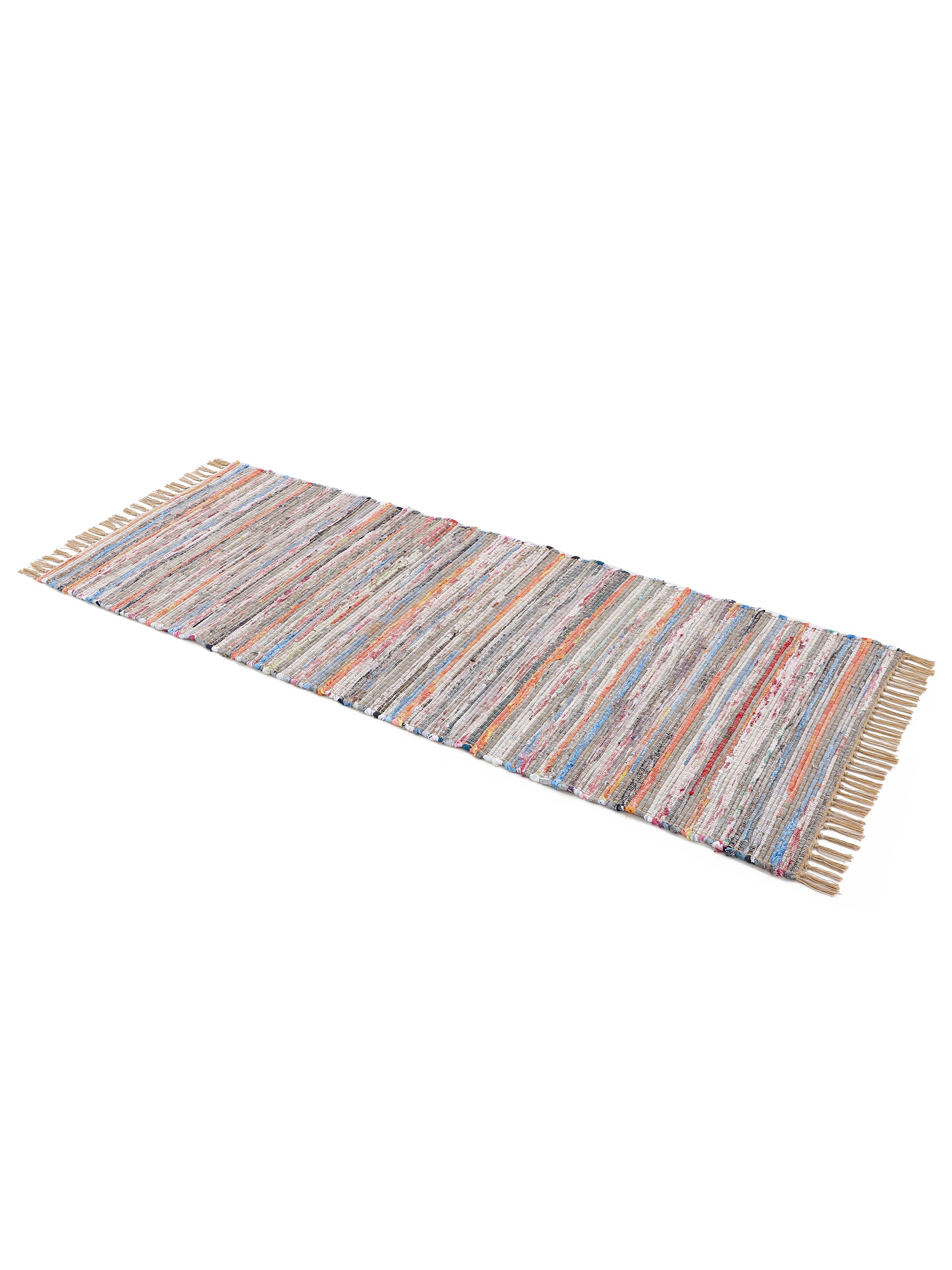
Beige and red lead the colour count, followed by cream, then blue, black and grey. Smaller groups in green and orange, in brown and in multicoloured patterns round off the choice. In a windowless hall, beige or cream reflects more light and the corridor looks wider. Grey hides footprints. So do patterns. That helps where the whole family walks through in outdoor shoes, and a hall runner in warm red balances a cold stone floor. Multicoloured designs are the least fussy choice of all, since they go with changing décor and forgive stains.
Right inside the front door is where most dirt lands. A rug there should be flat and preferably dark or patterned, with a doormat in front of it to catch the worst.
Along the kitchen units height counts. Flat cotton slips under cupboard doors, and a kitchen runner covers exactly the path between hob and sink. Further formats are under kitchen rug. In the bedroom, two runners left and right of the bed can replace one large rug, which is practical with wide beds and when cleaning. A dining table needs area rather than length, so look at a dining room rug for that.
Turn it 180 degrees now and then. Busy spots then wear more evenly.
Frequently asked questions
Which widths are there?
Widths run from 60 to 80 cm, with 70 and 75 cm in between. The exact sizes are listed with each design.
Can I put a runner in the washing machine?
One range, yes. The plain cotton kilim runner is listed as machine washable, which makes it a handy washable runner for hall or kitchen. For all other runner rugs, follow the care notes on the product page.
Do wool runners shed at first?
A few loose fibres in the first weeks are normal. Regular vacuuming soon reduces them.
Can I lay two runners end to end?
You can, but it usually looks busier than one continuous piece. In a long hall, 80 x 500 cm or 80 x 600 cm is the calmer option.