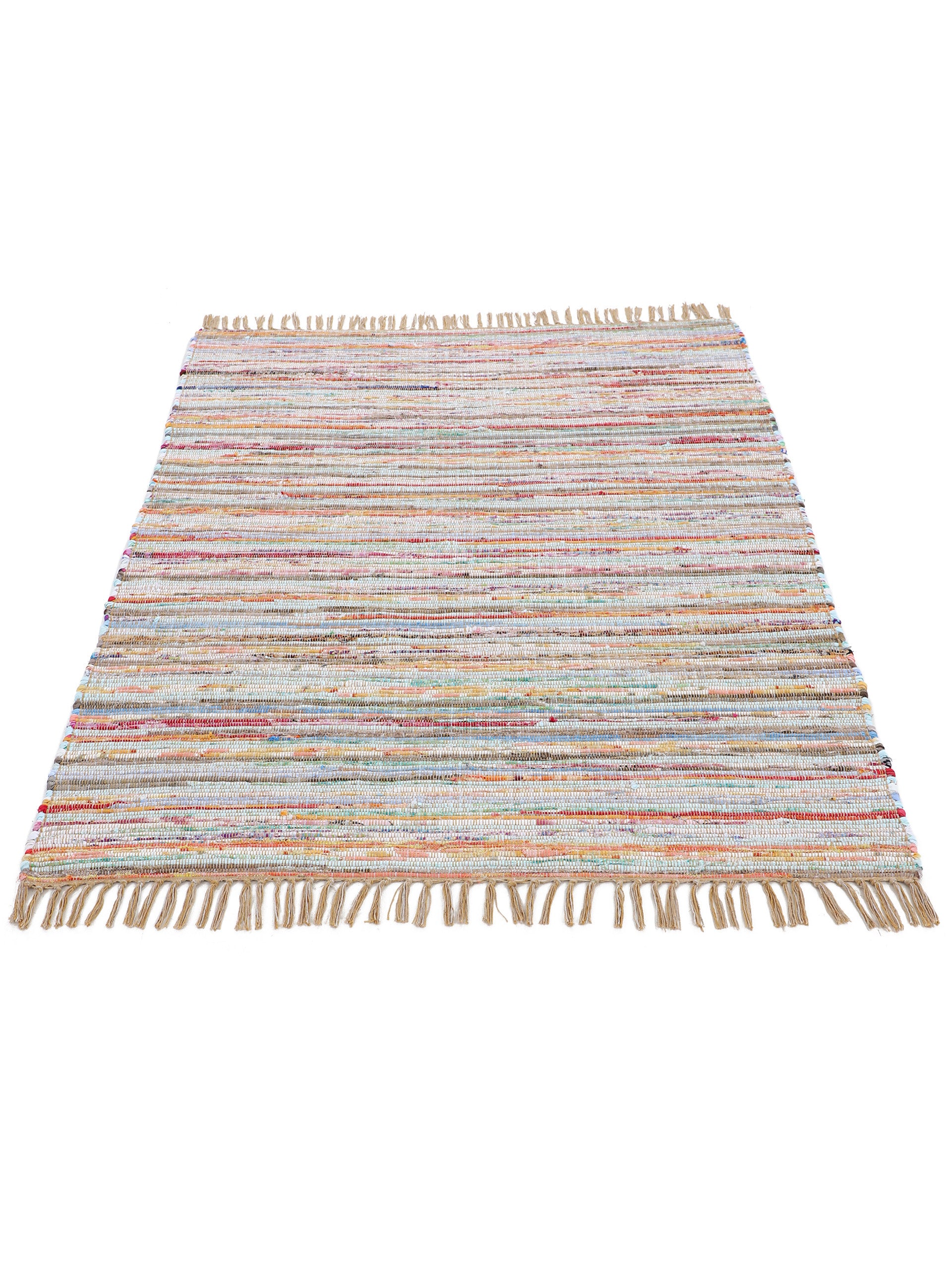
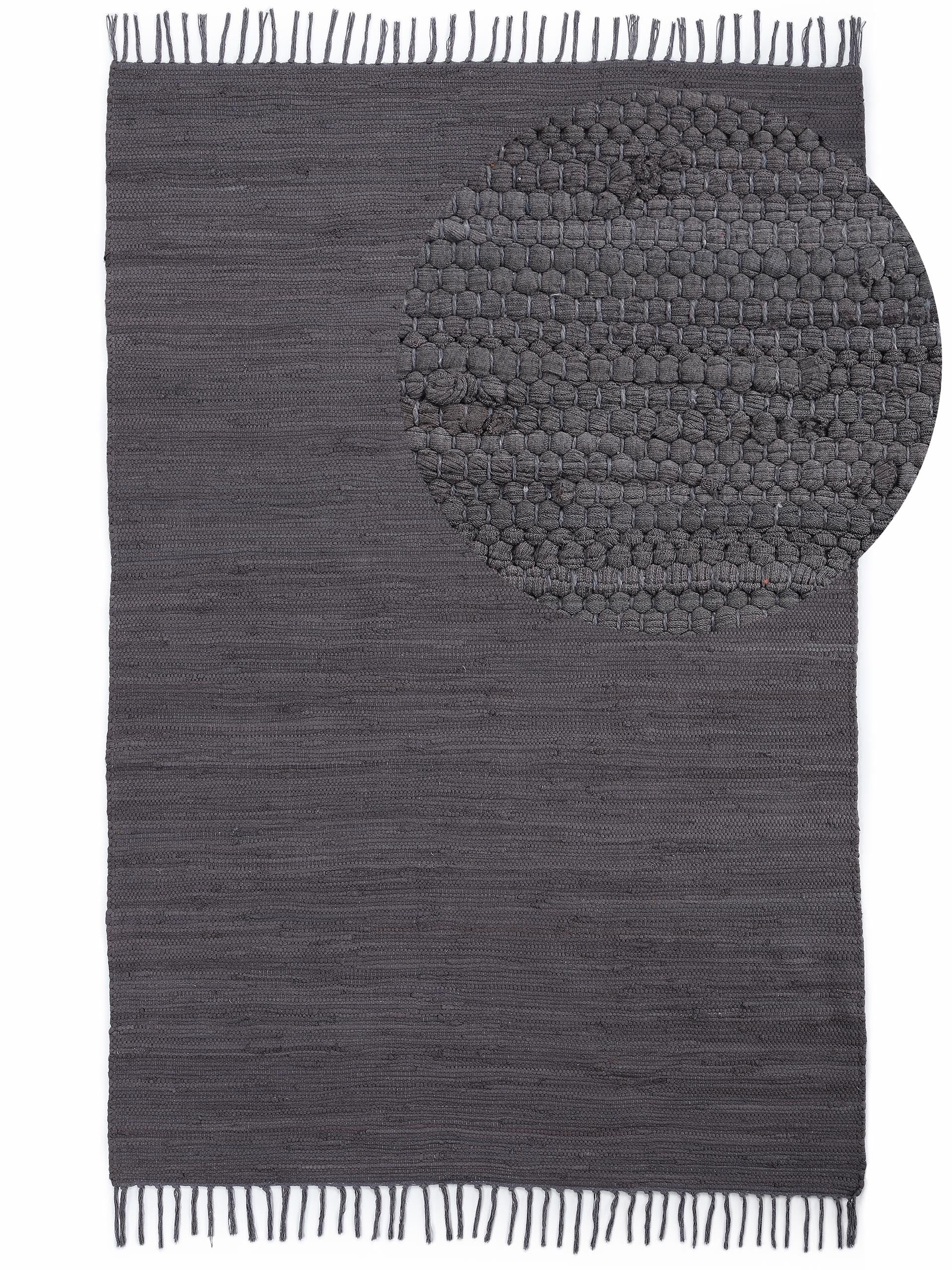
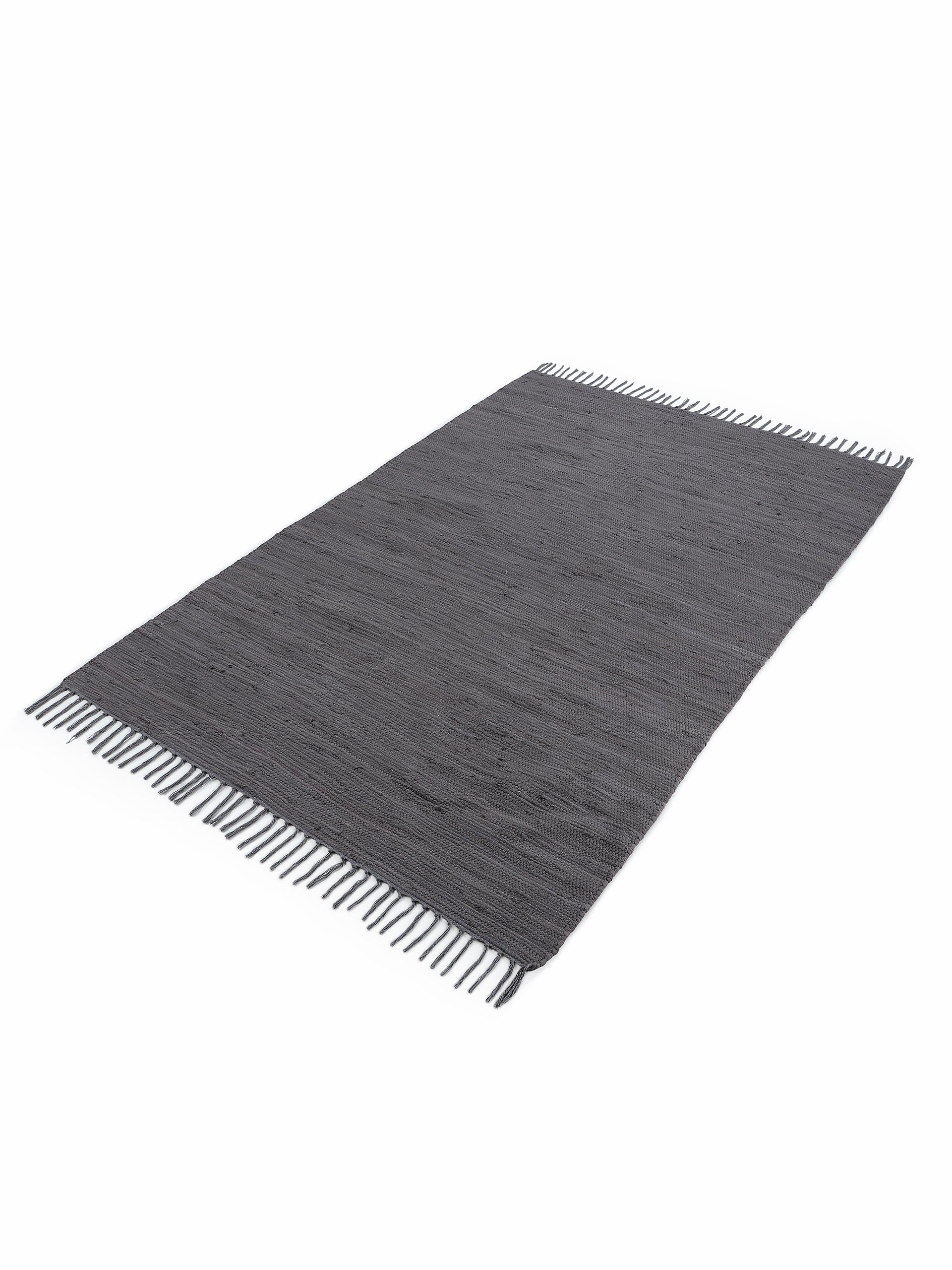
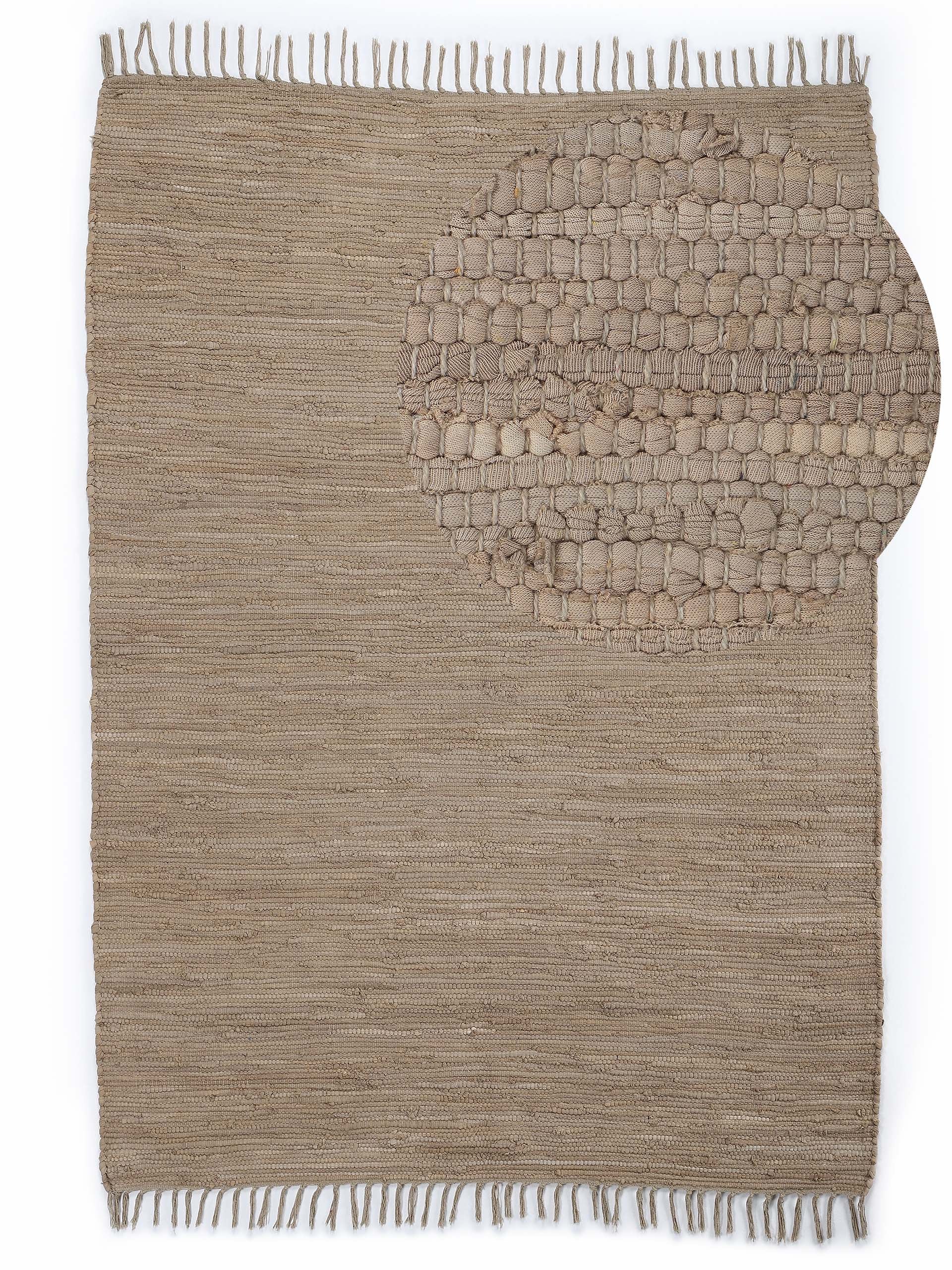
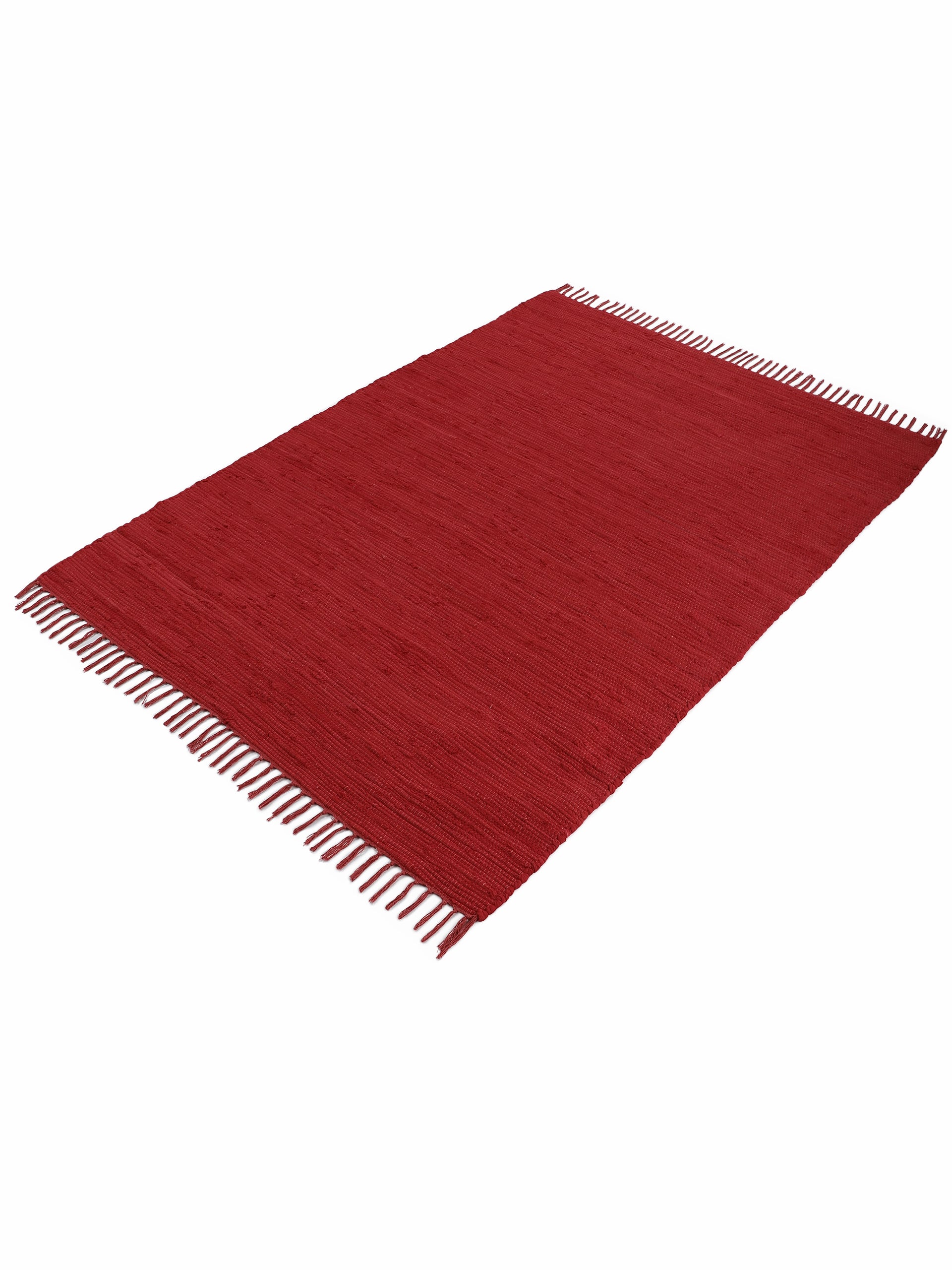
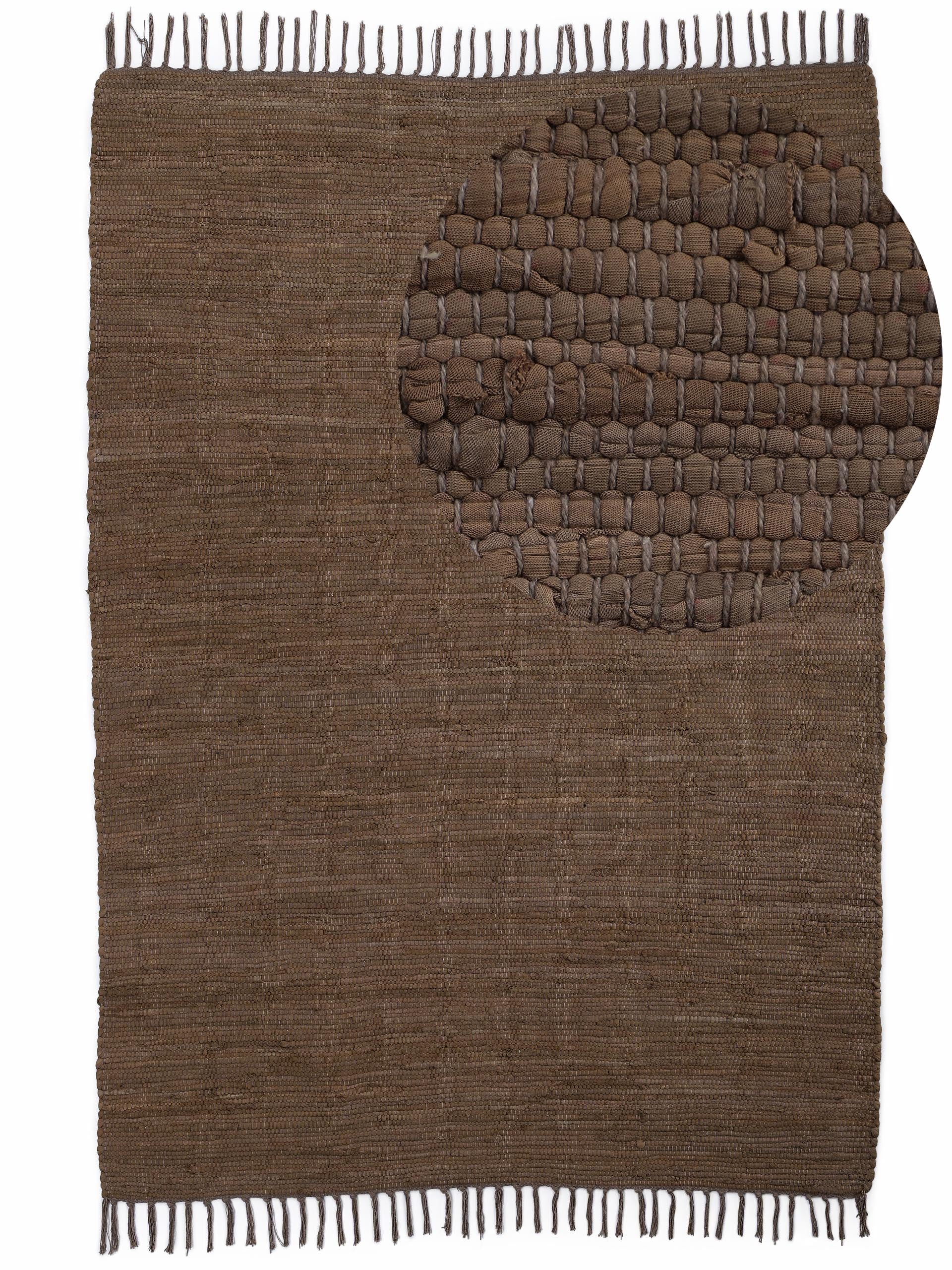
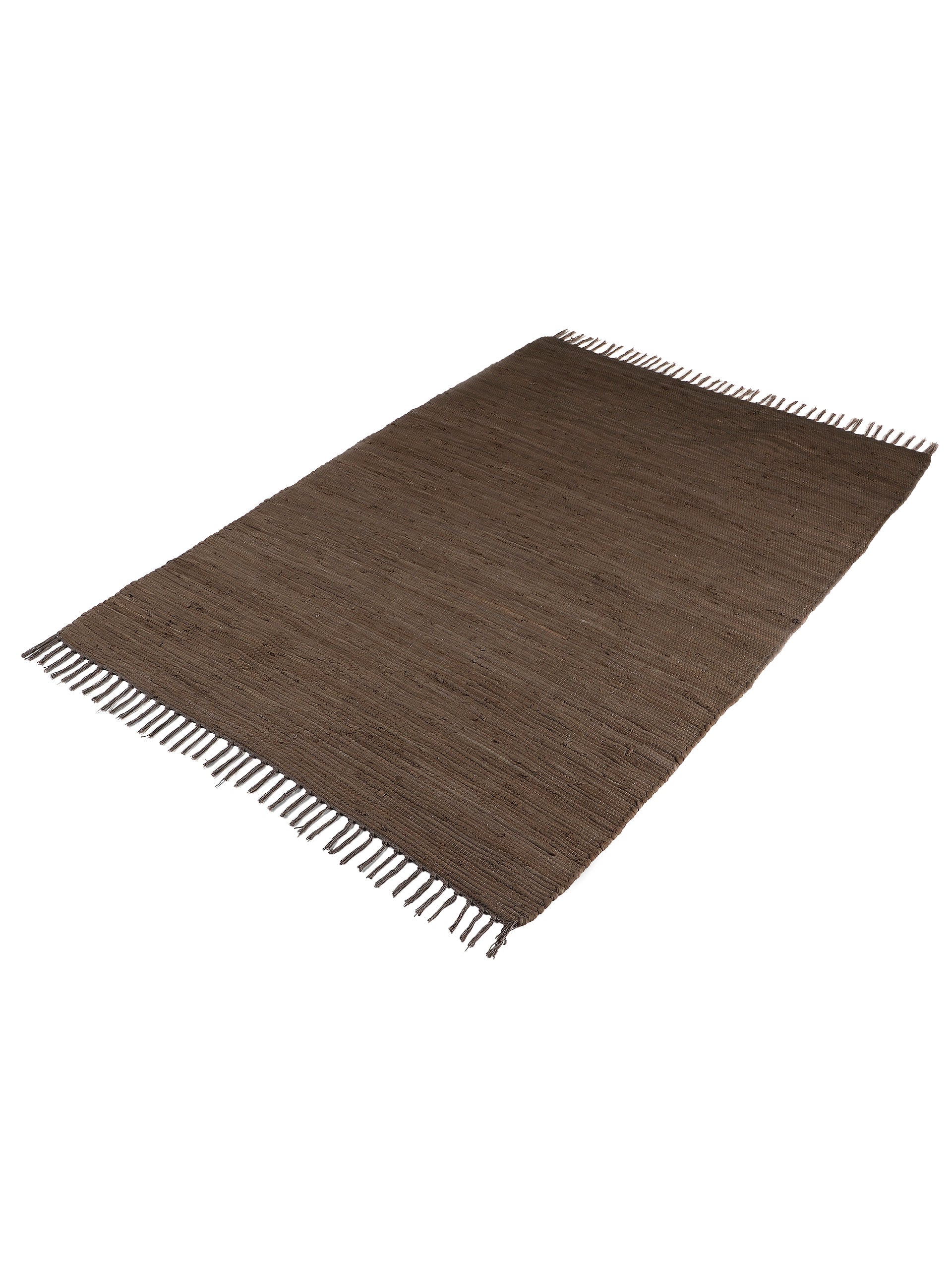
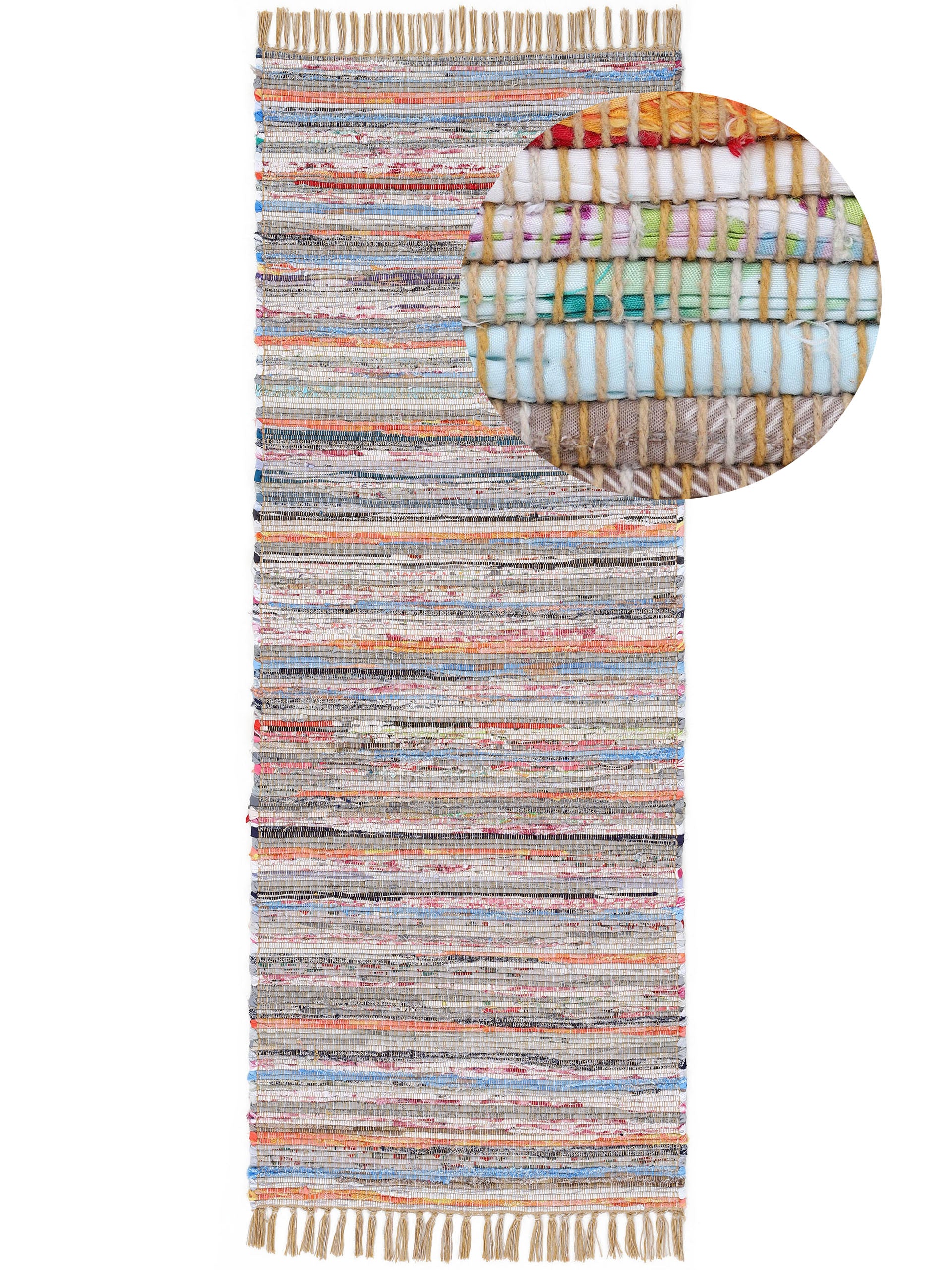
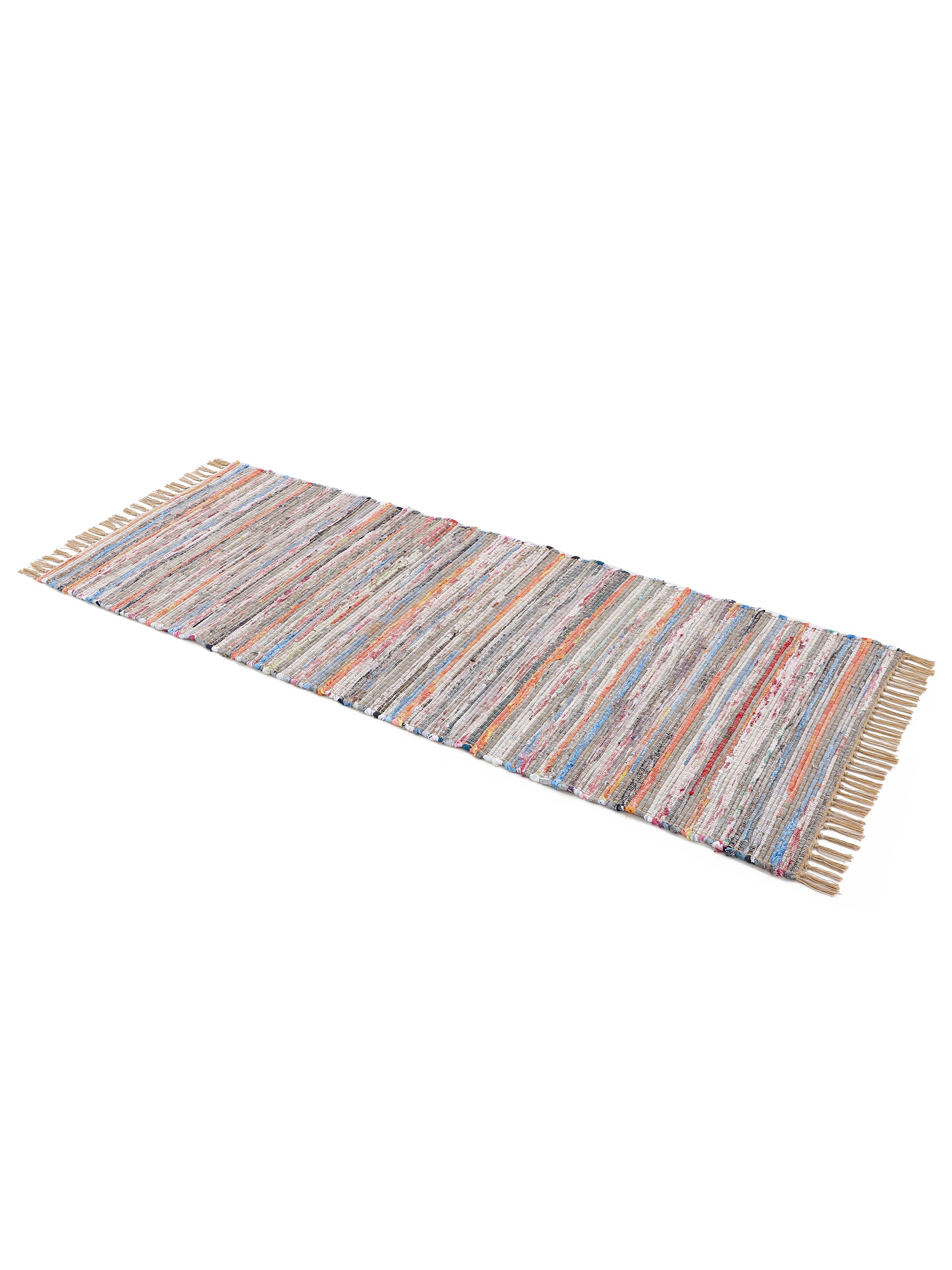
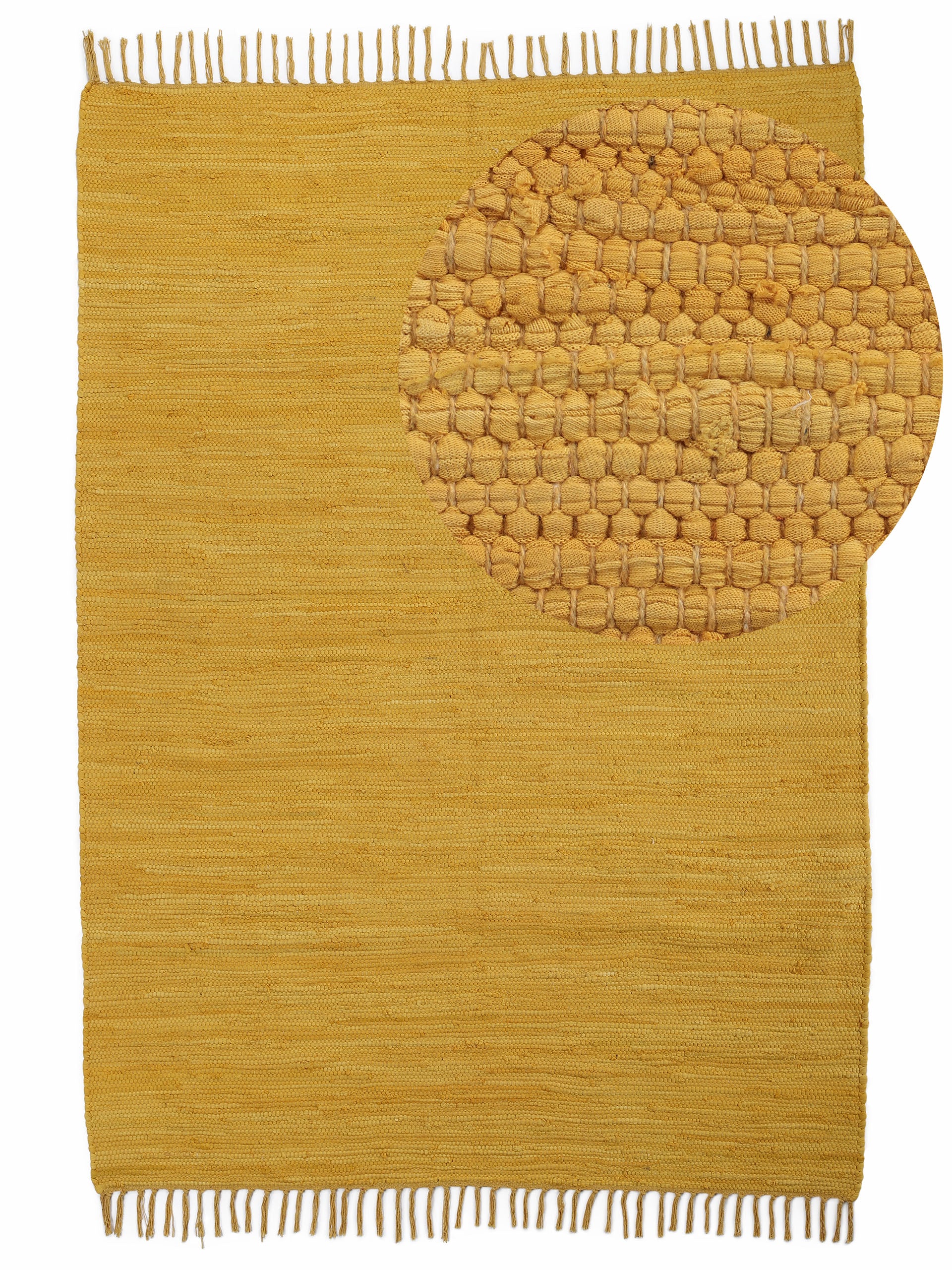
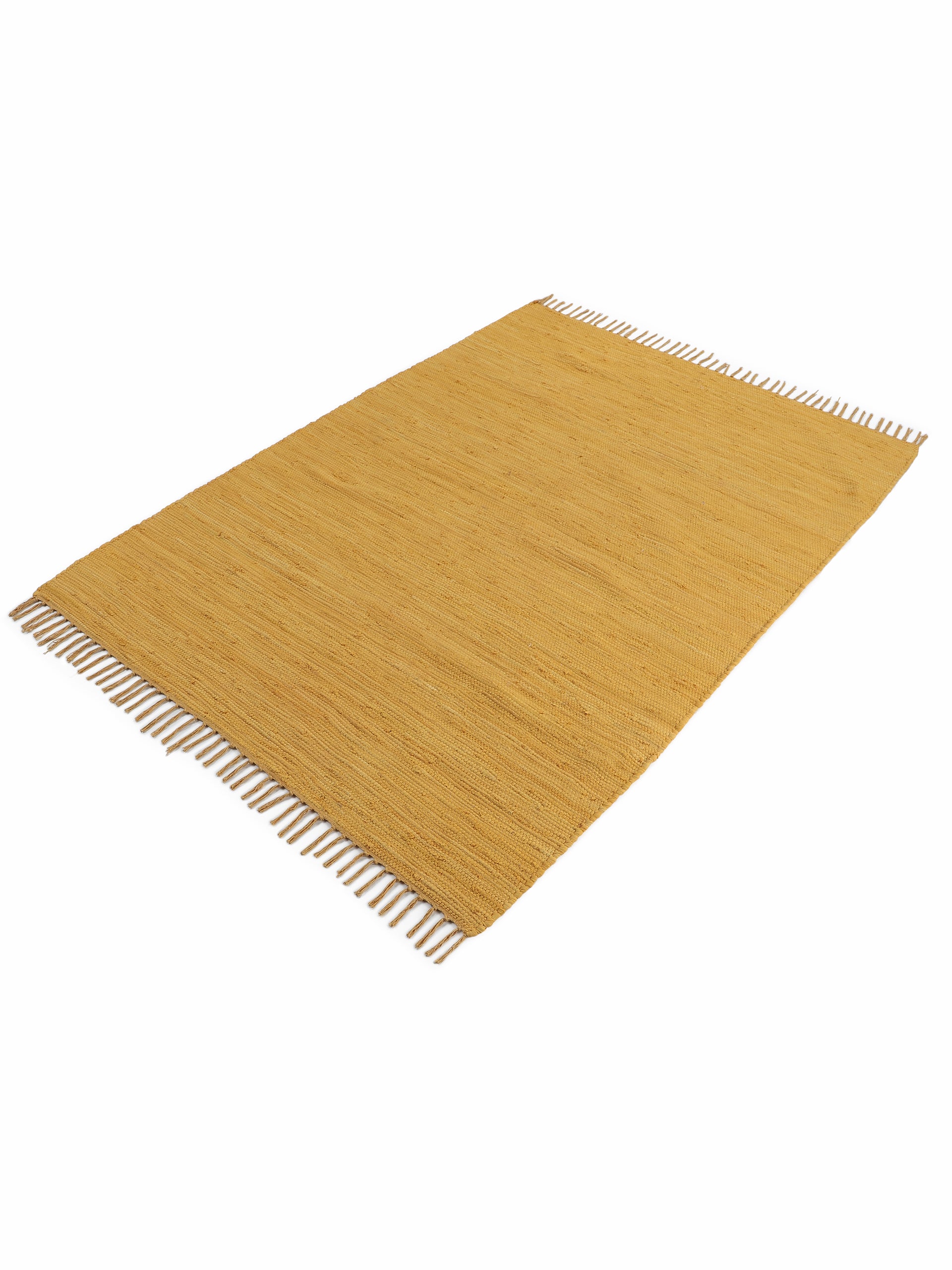
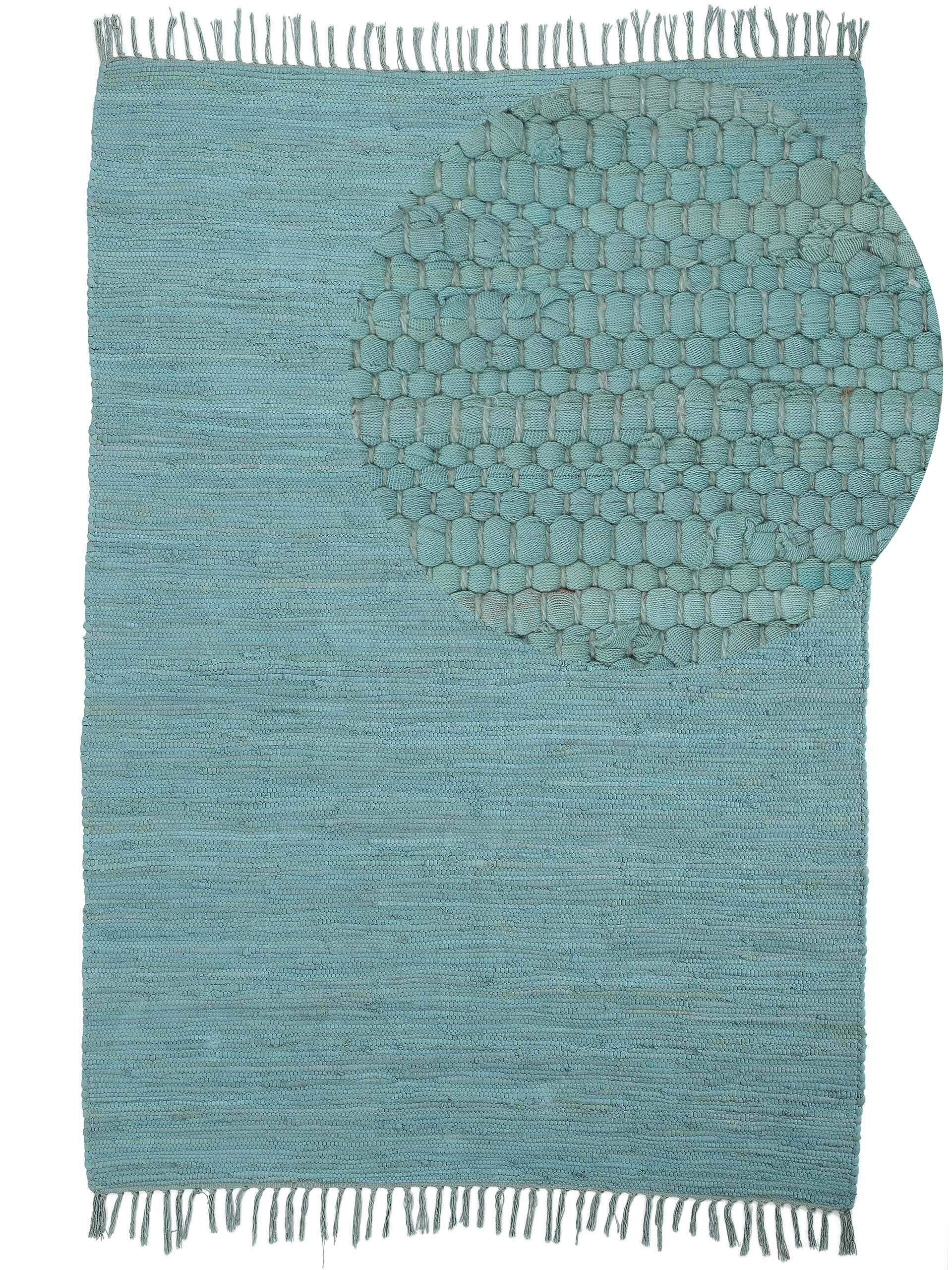
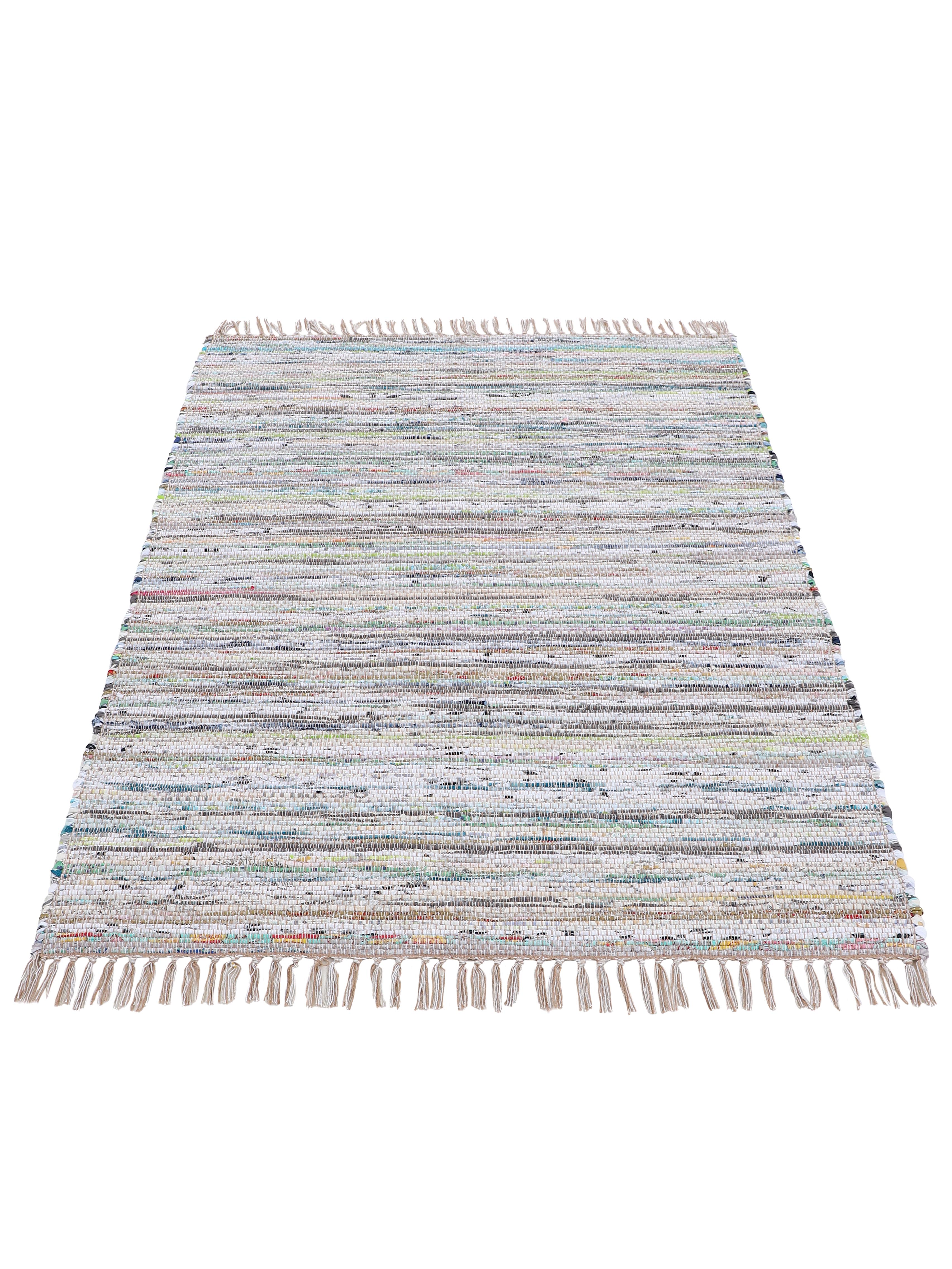
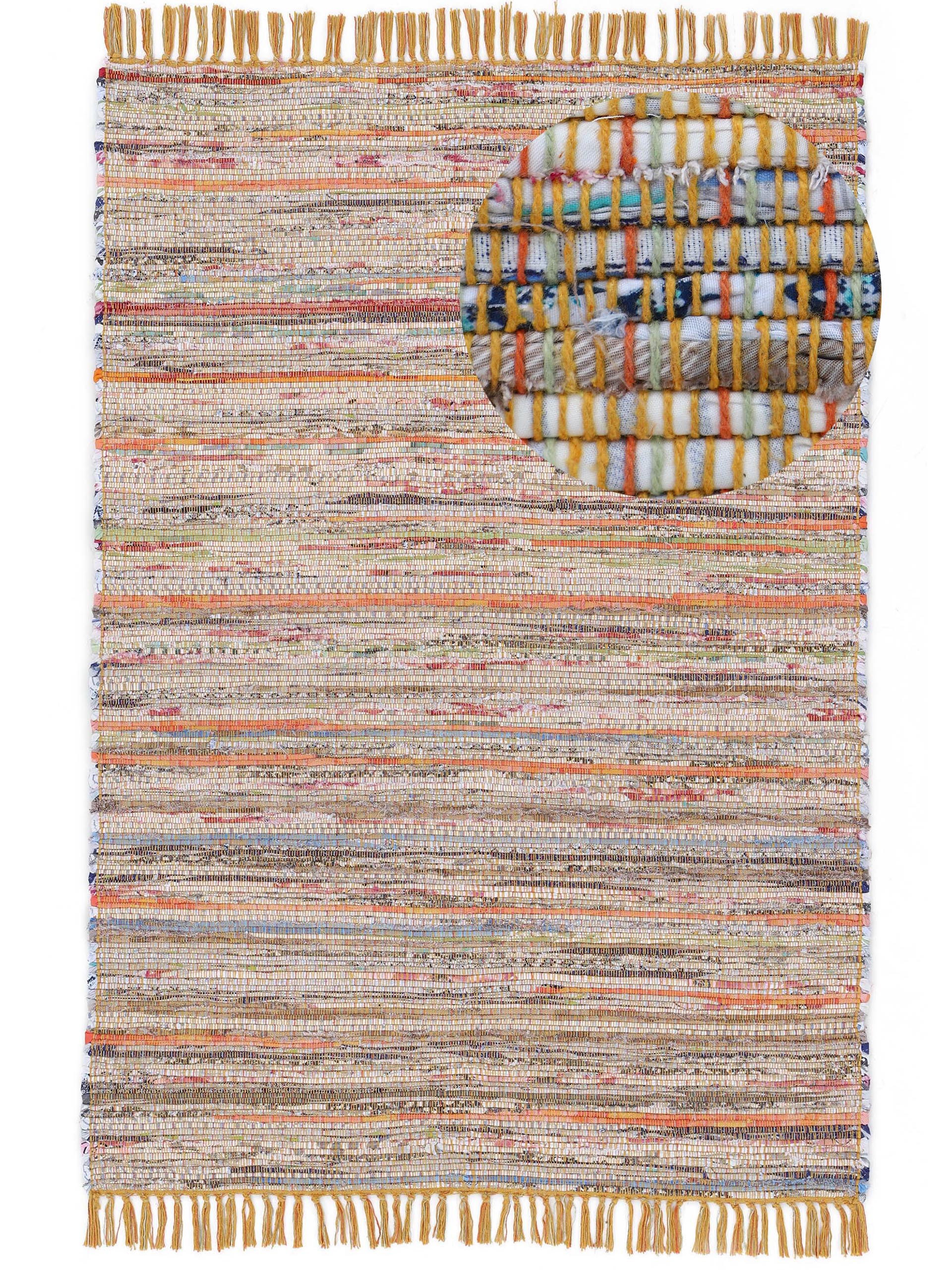
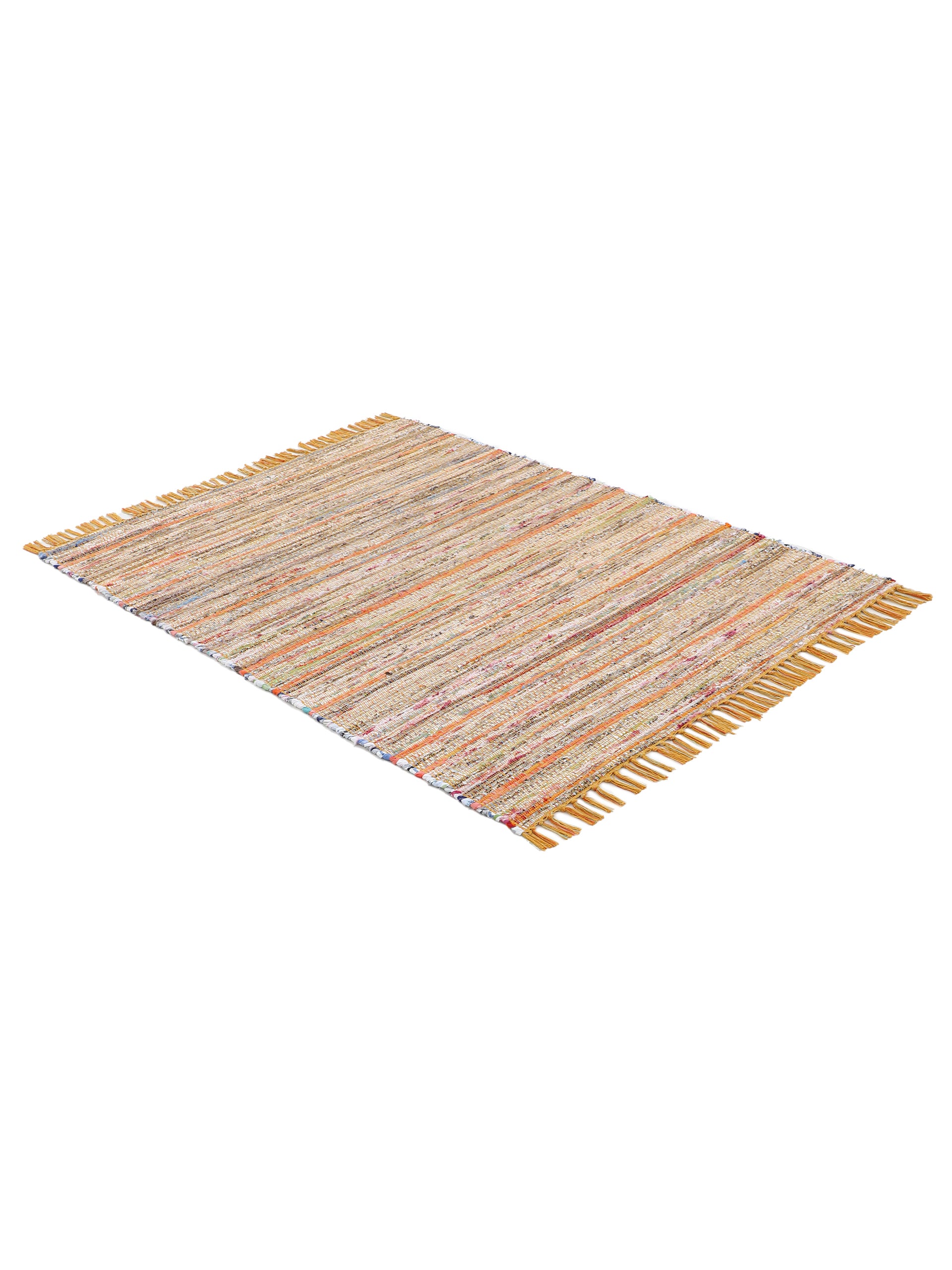
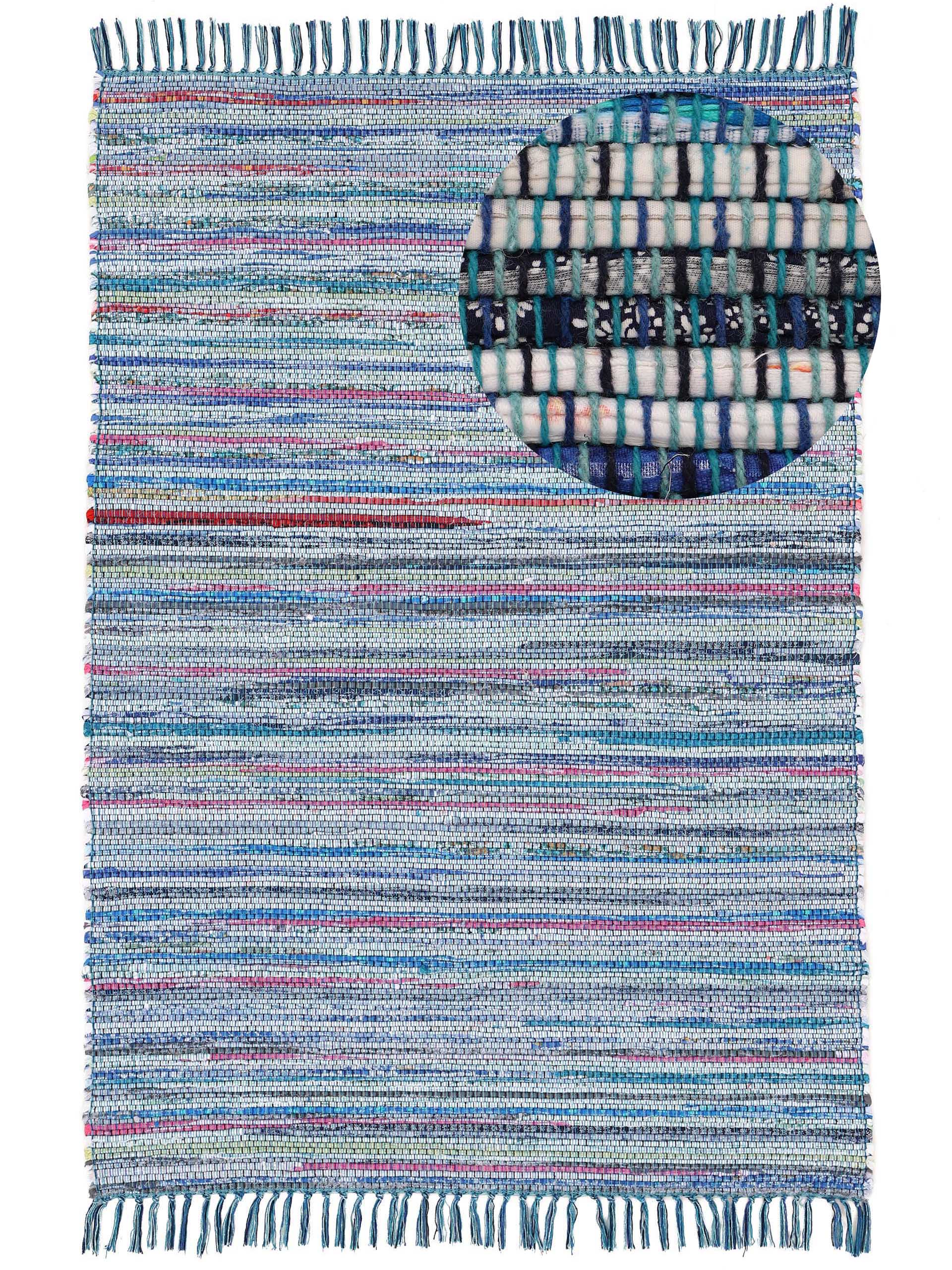
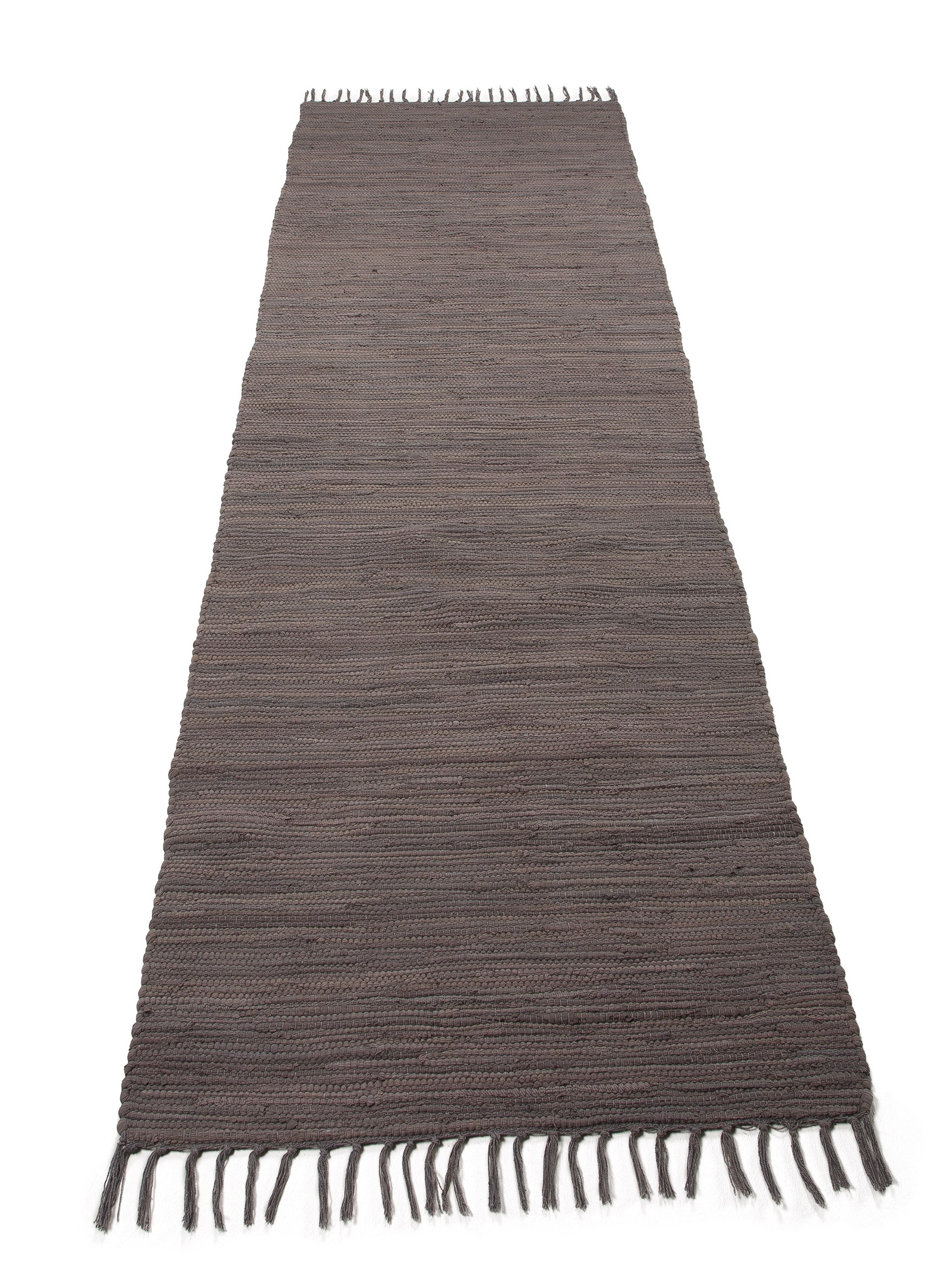
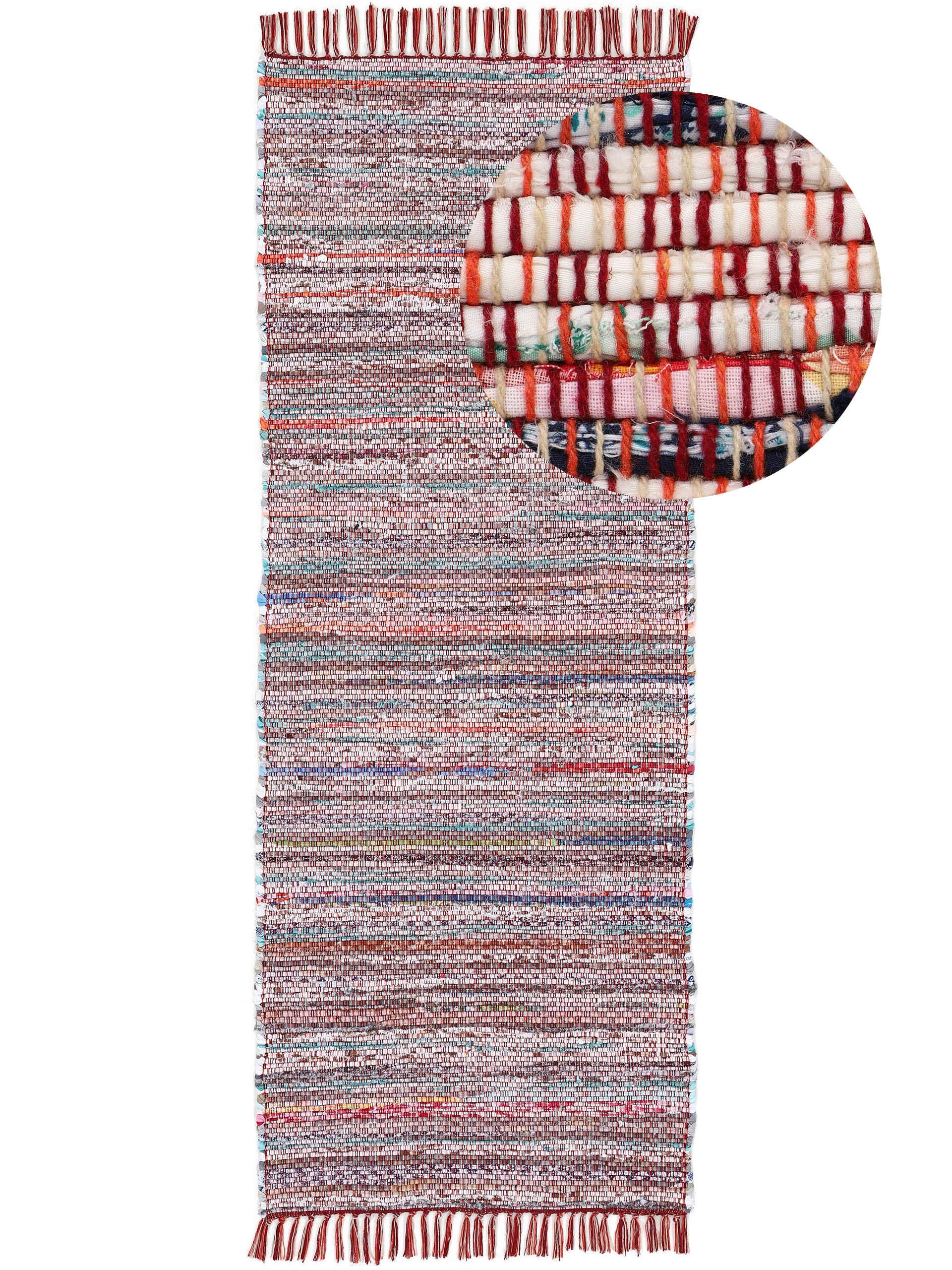
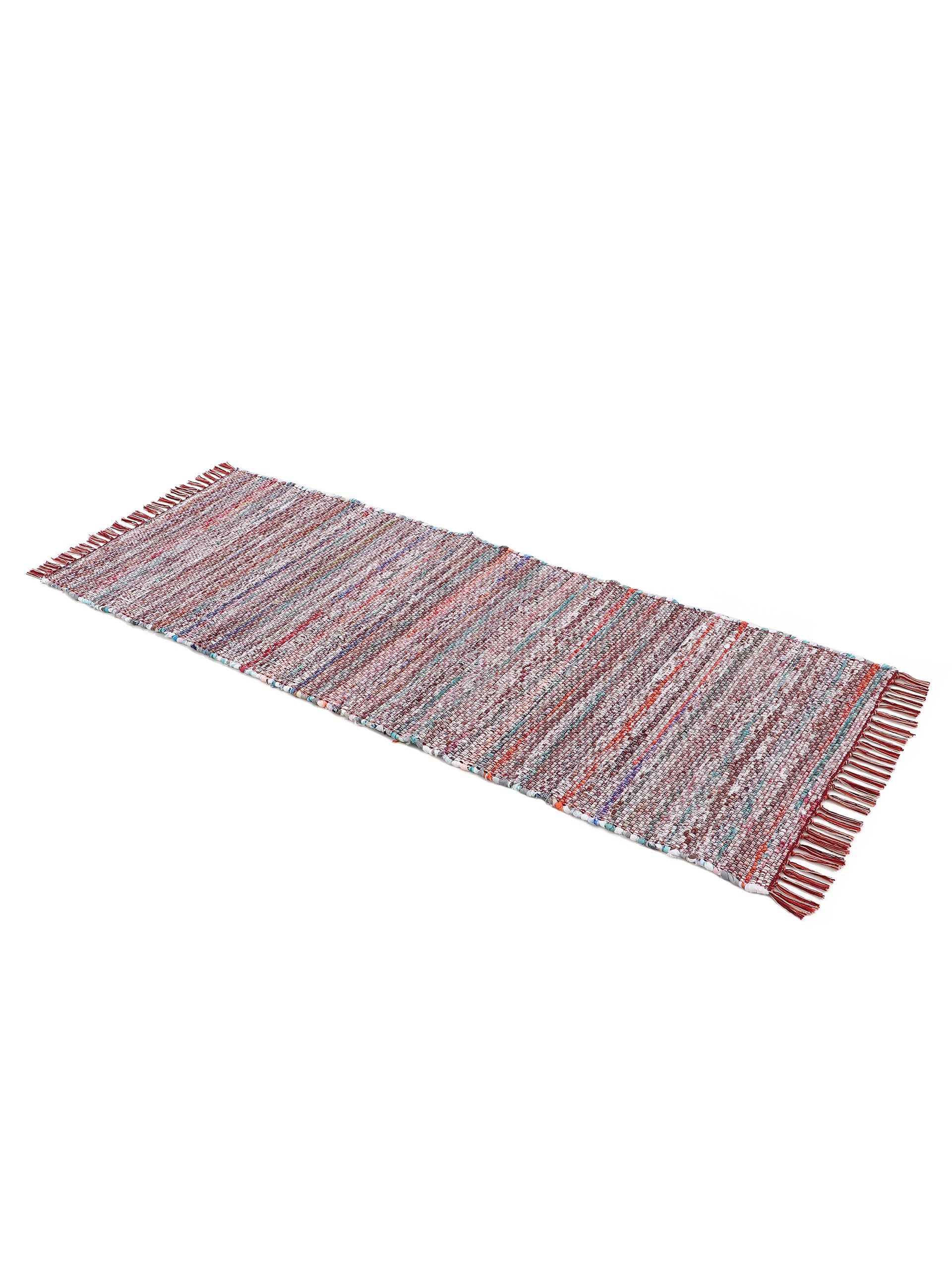
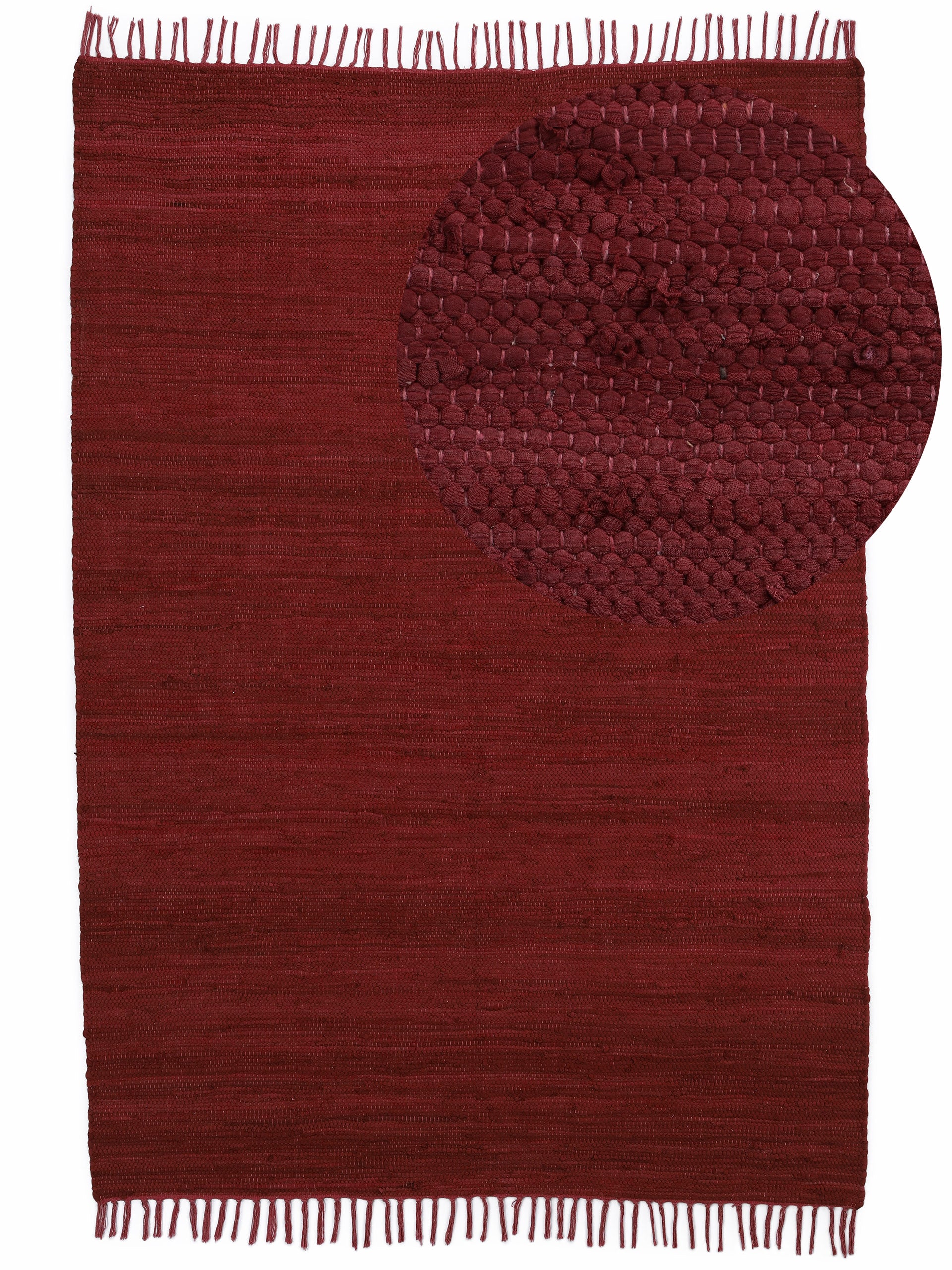
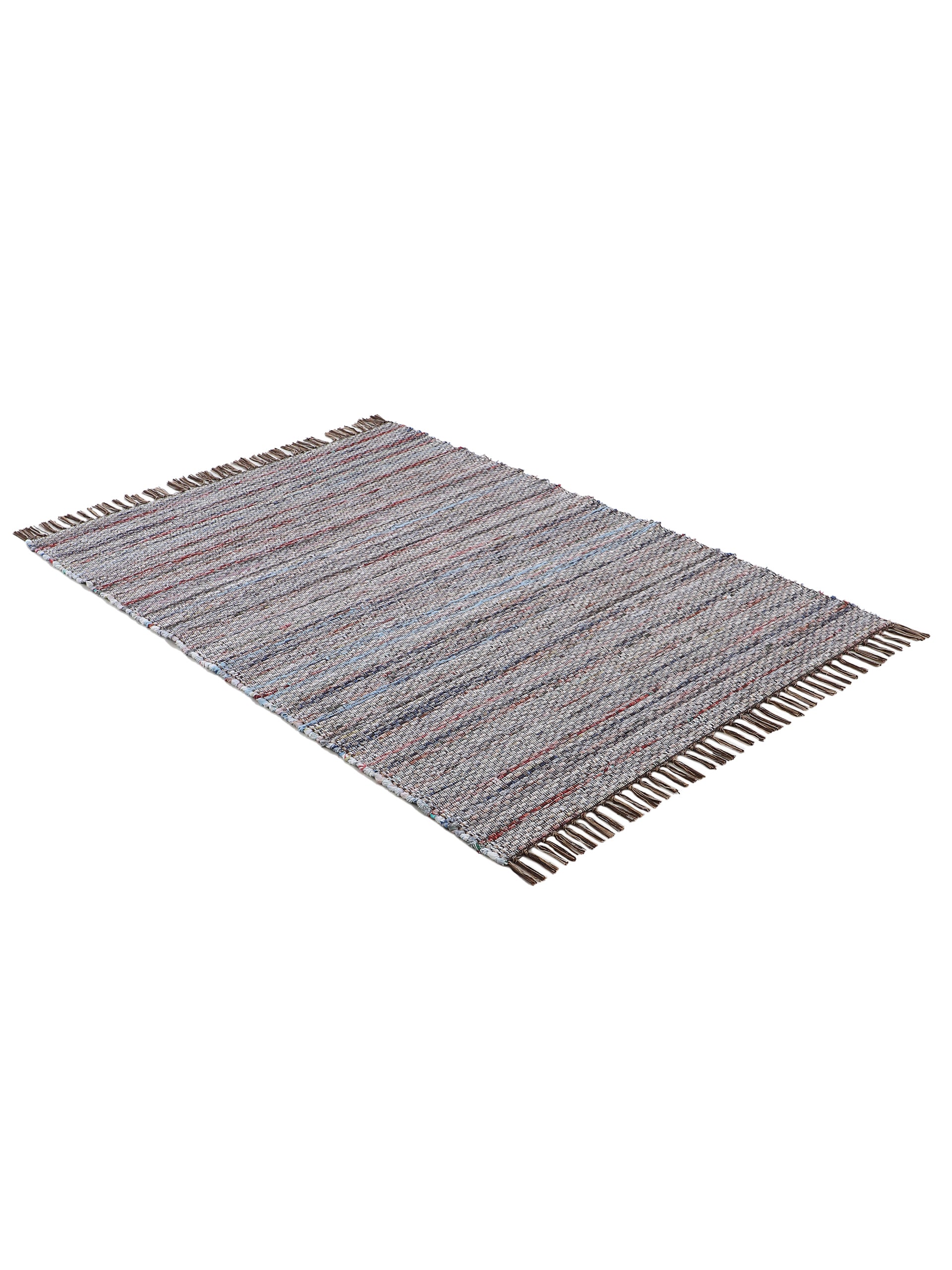
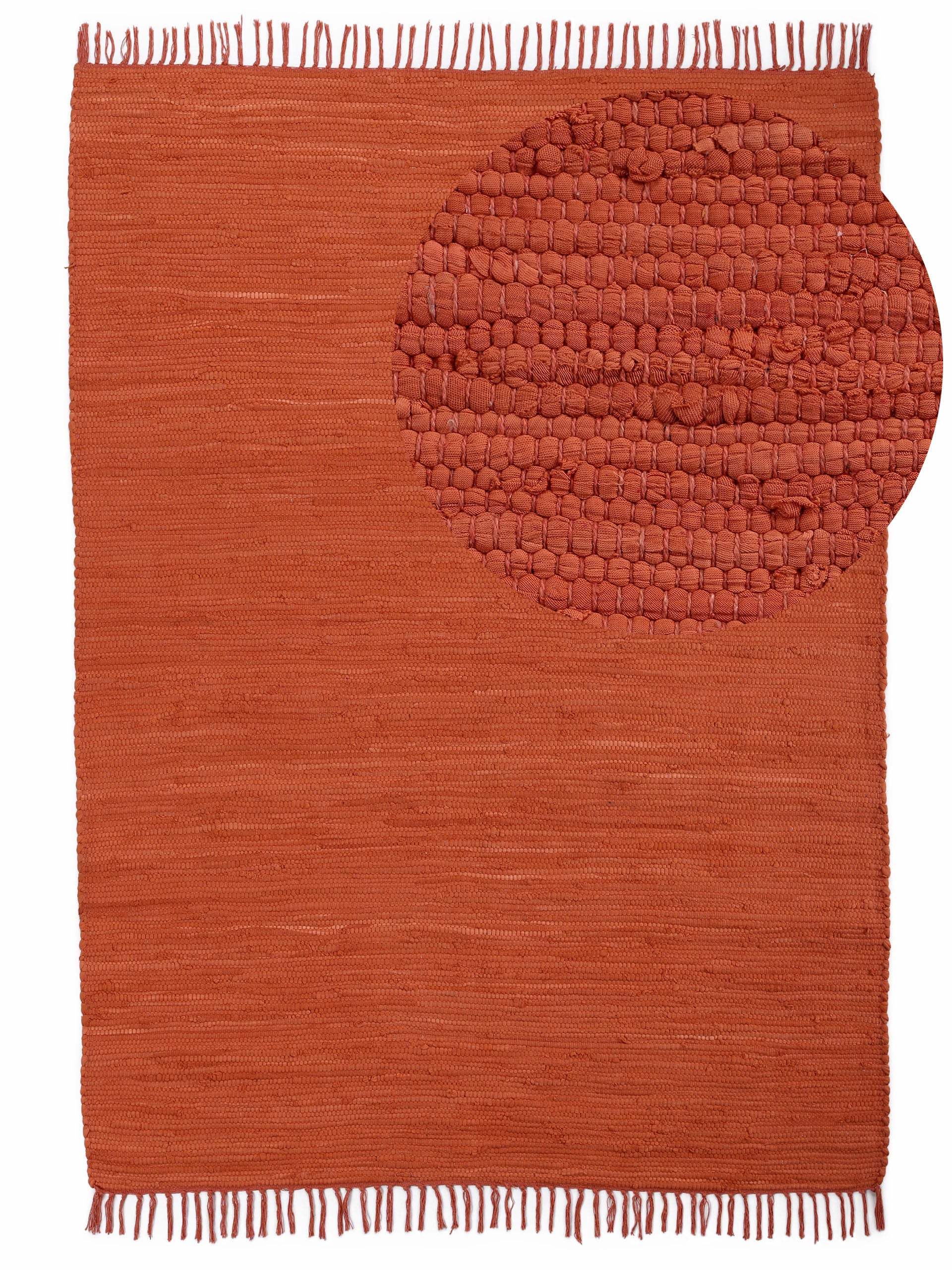
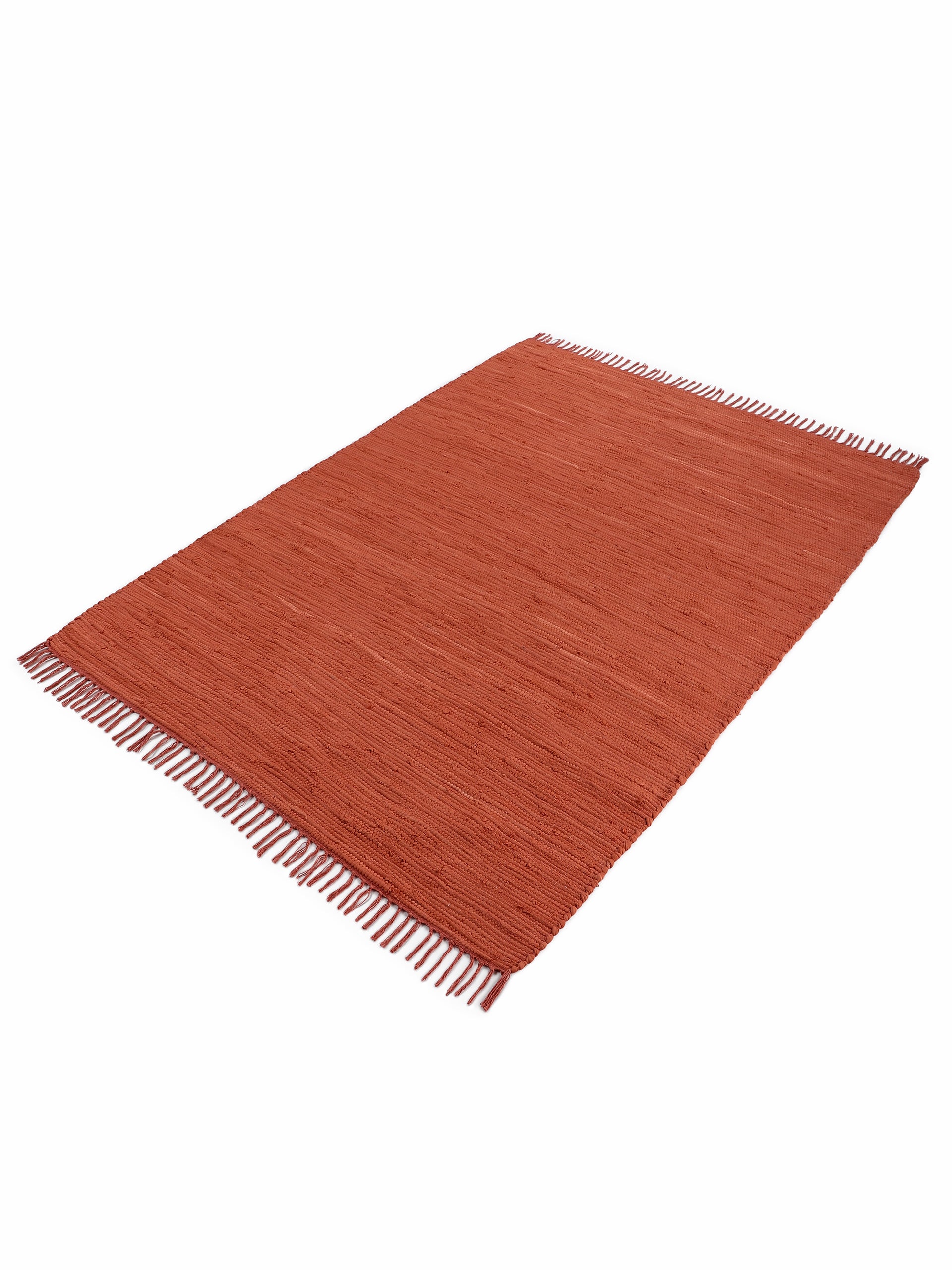
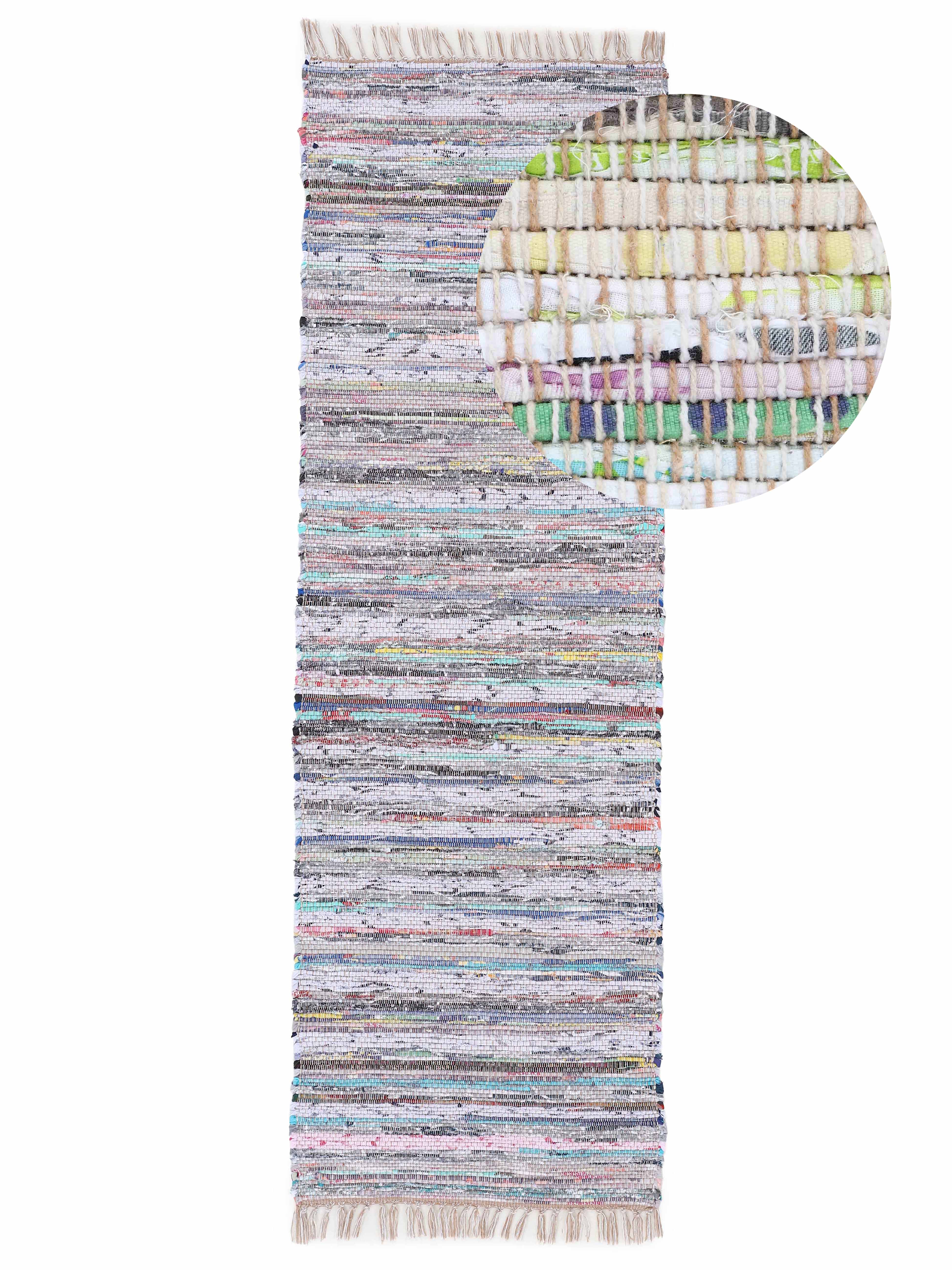
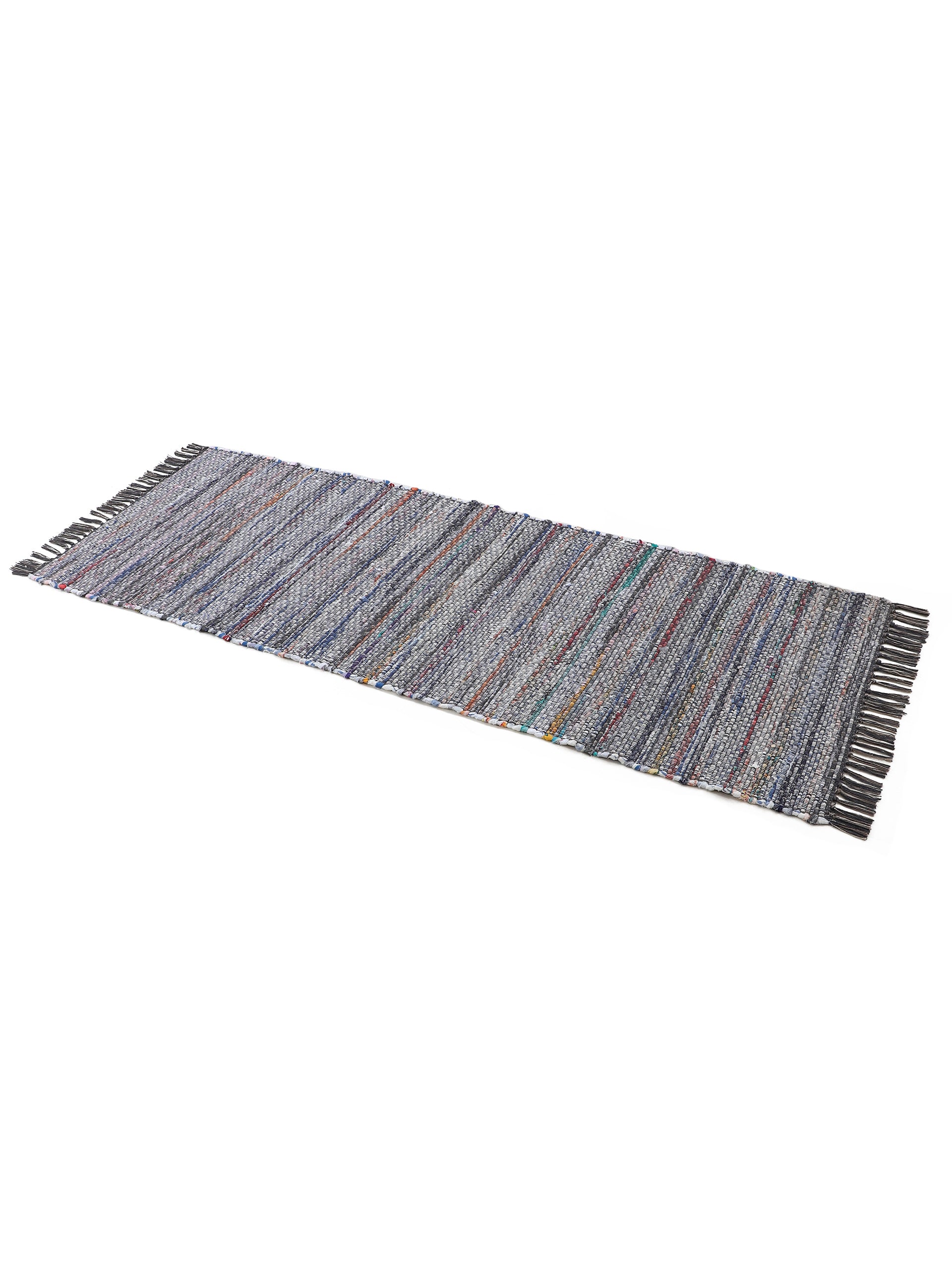
Most of what happens in a child's room happens on the floor. Towers get built, puzzles get finished, stories get read aloud, and toy cars race round the bed frame. So kids rugs have two jobs. Flat enough that the tower of blocks stays standing. Soft enough for knees.
There are 229 designs to choose from. Slightly more than half are synthetic fibre, the rest cotton. Most are rectangular, with 59 runners, 37 round designs and a handful of squares.
Beige and grey are the most common colours, closely followed by blue and red. Cream and green are there too, as are brown and black, even white. The child's own favourite colour matters more in a kids' room than any scheme. A beige nursery rug looks neutral and still works when the room is redone a few years later. Dark shades show small stains much less than pale ones.
Flat or soft
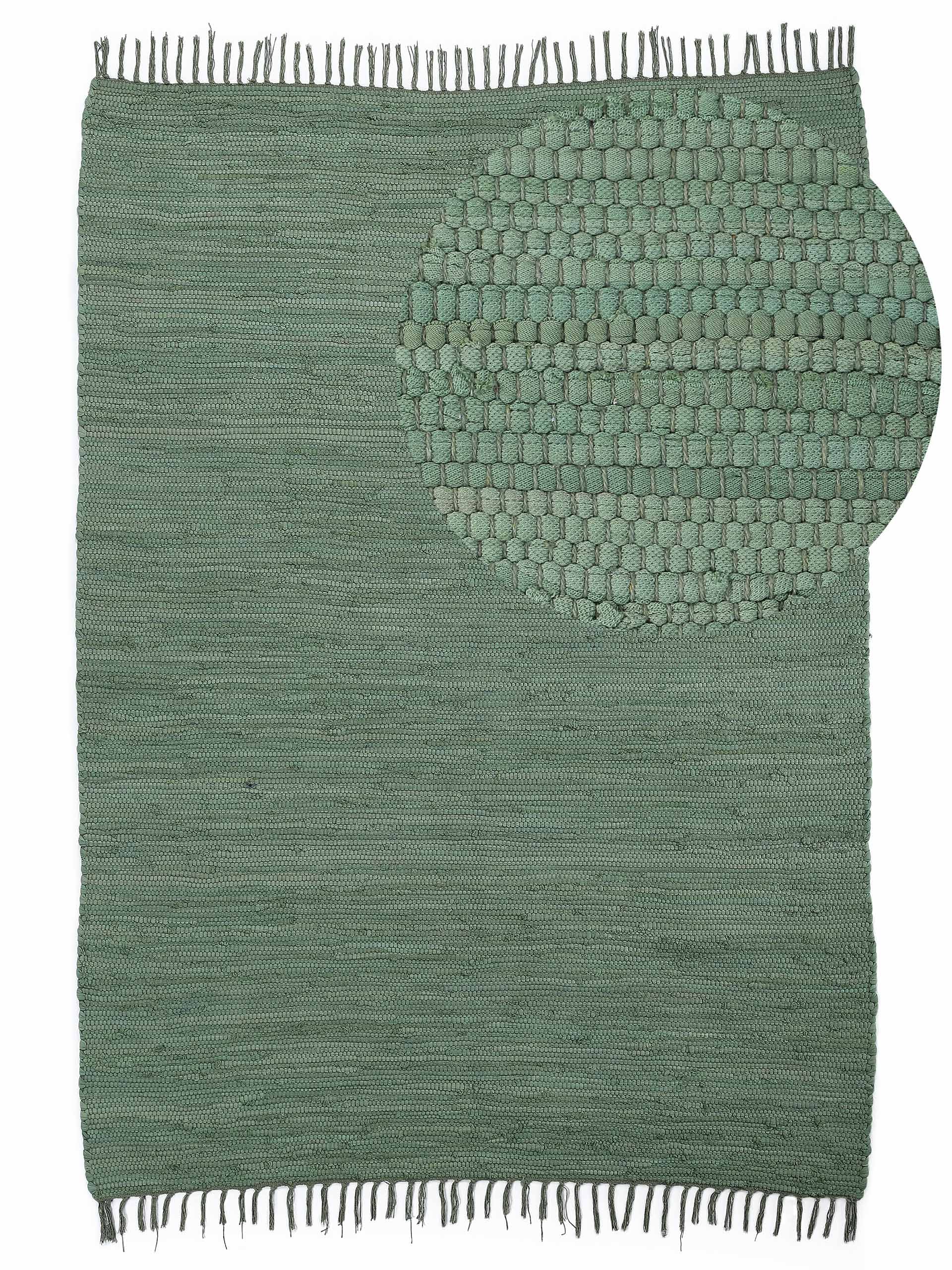
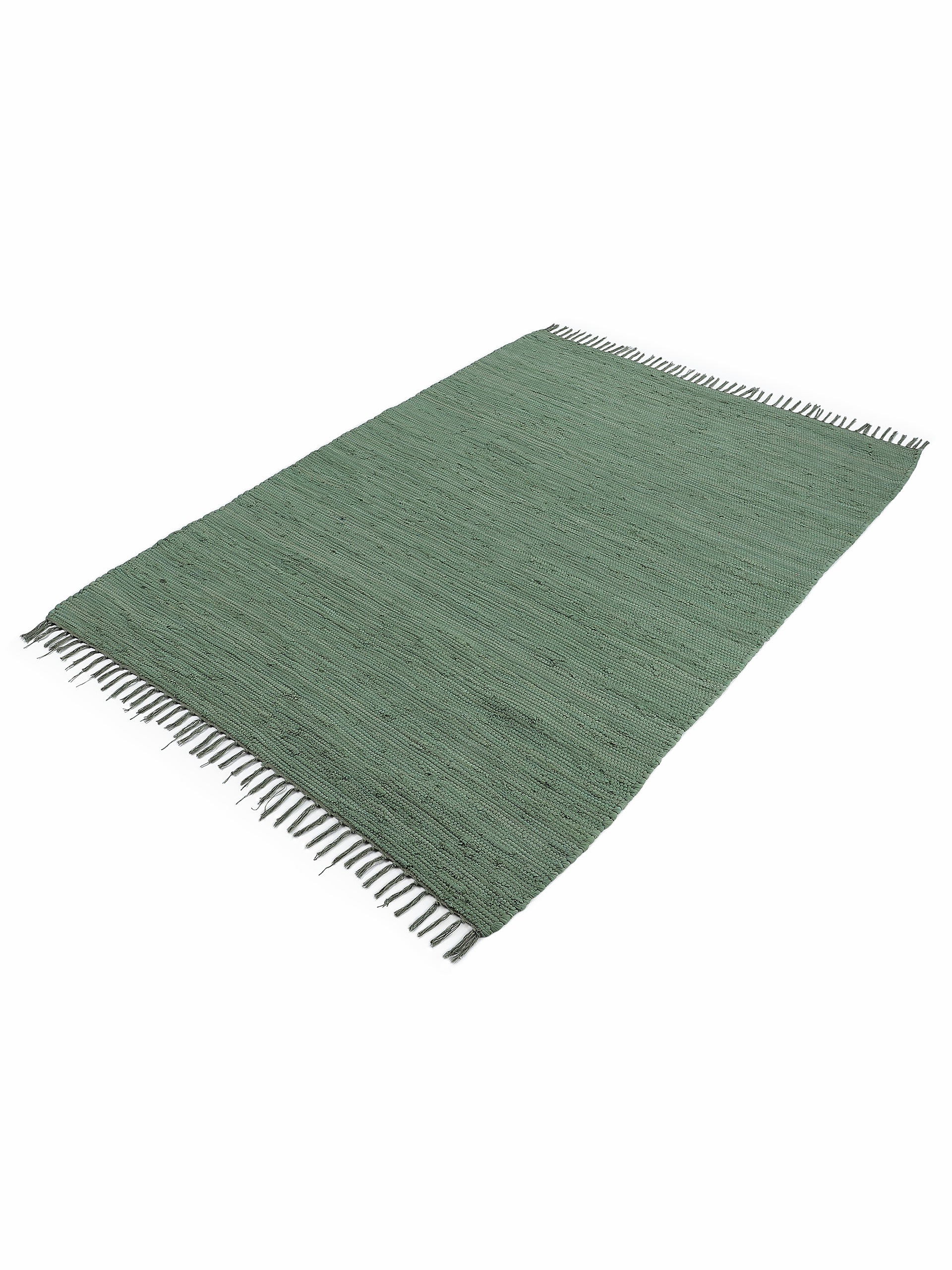
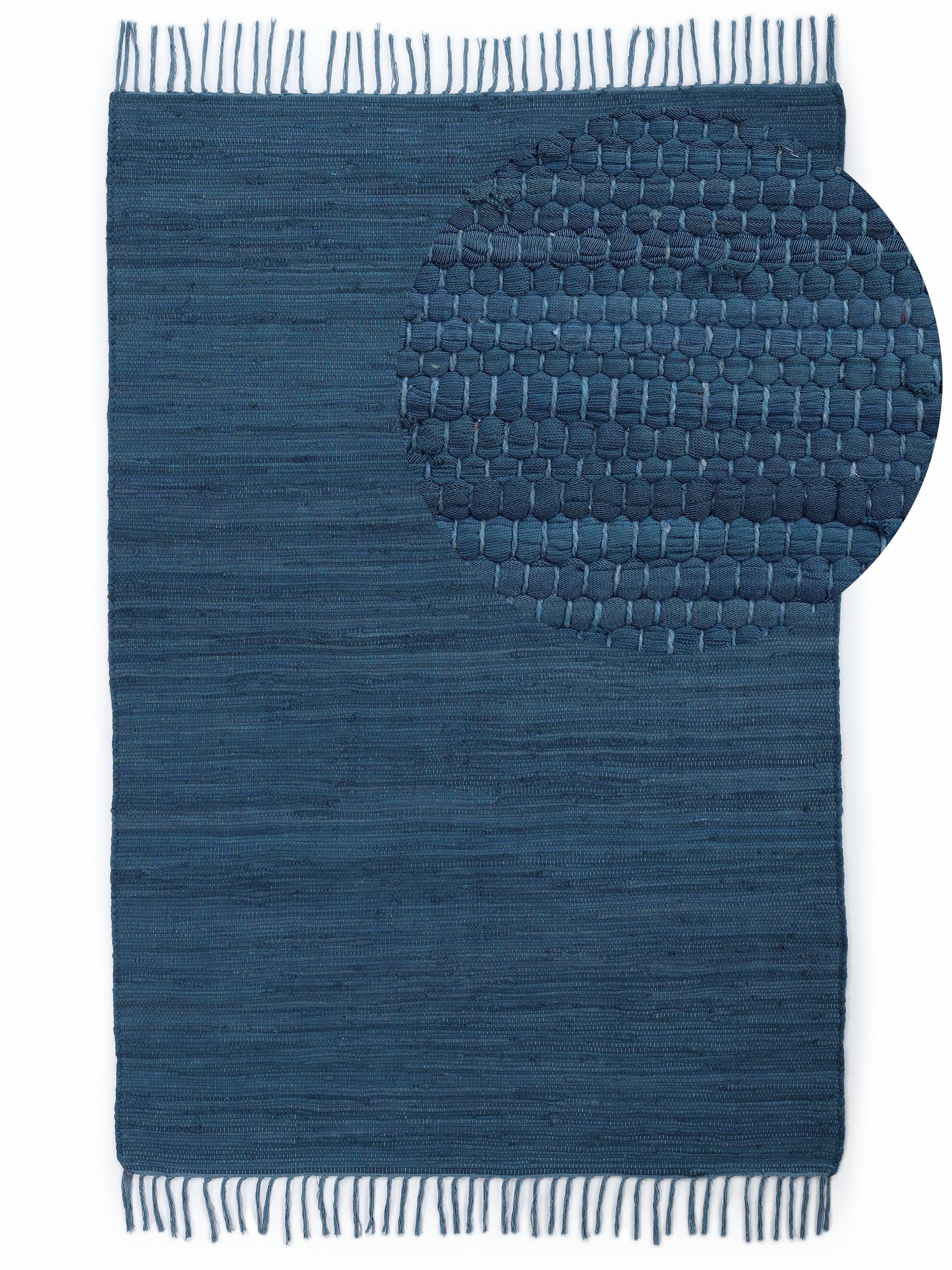
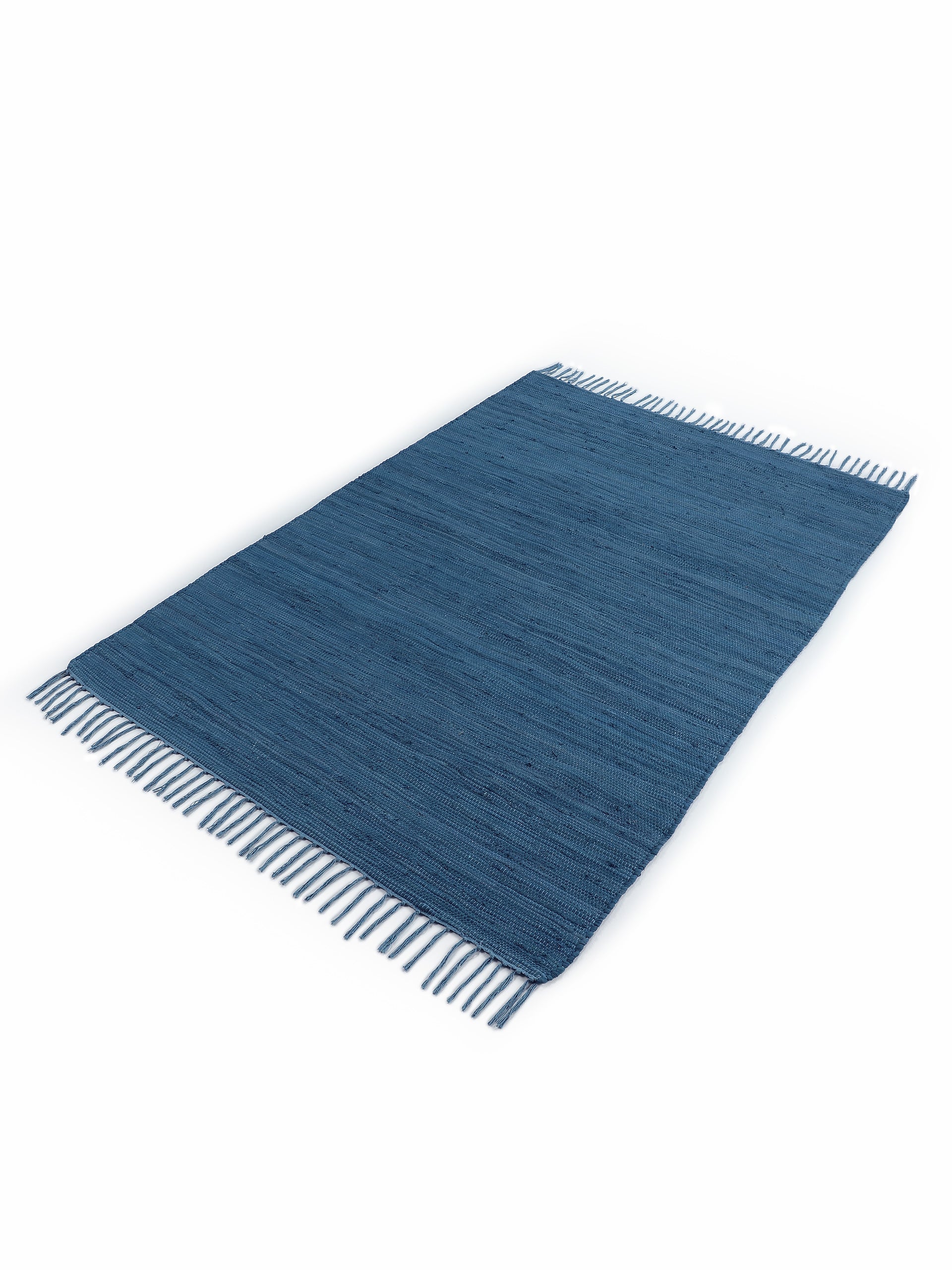
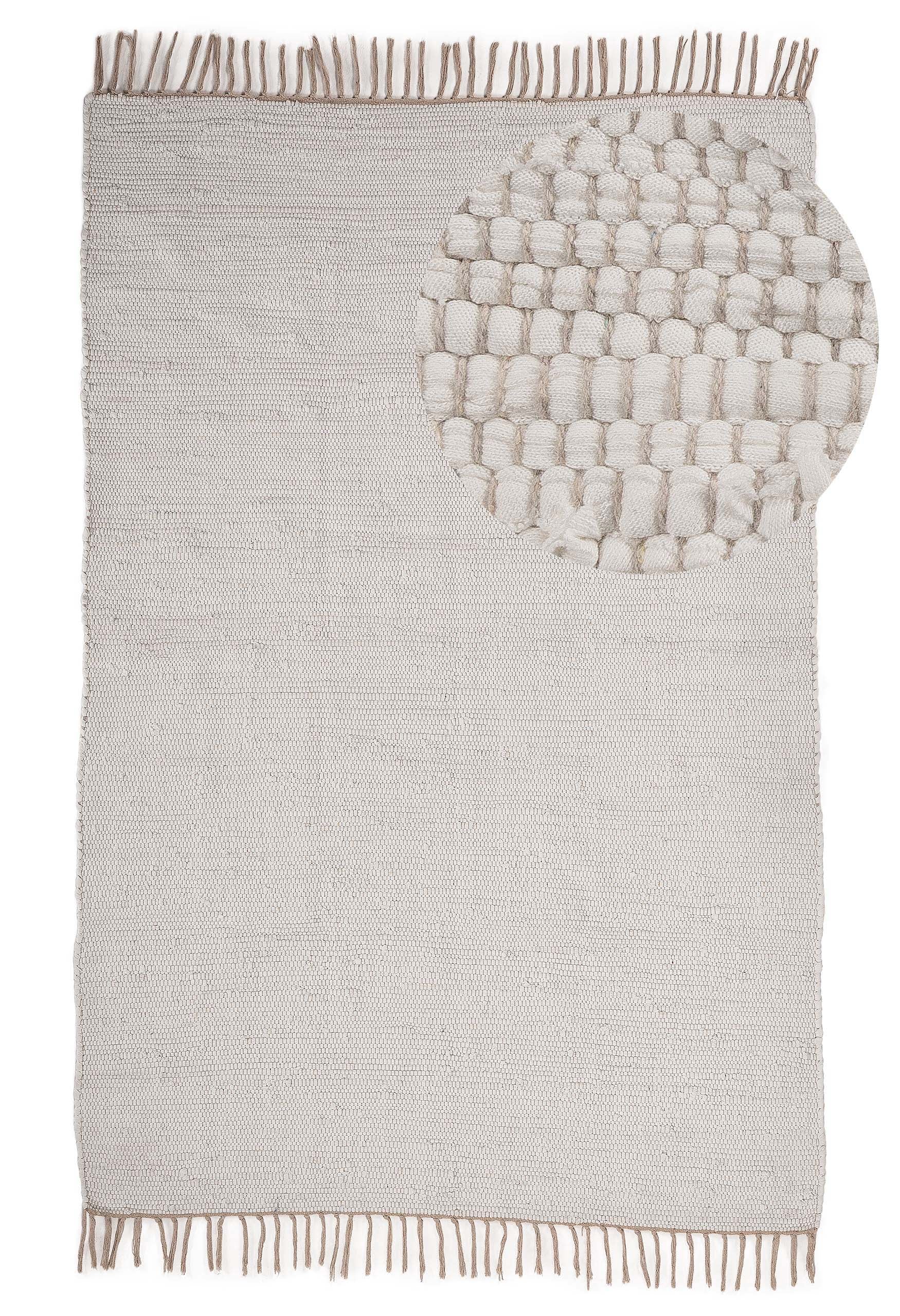
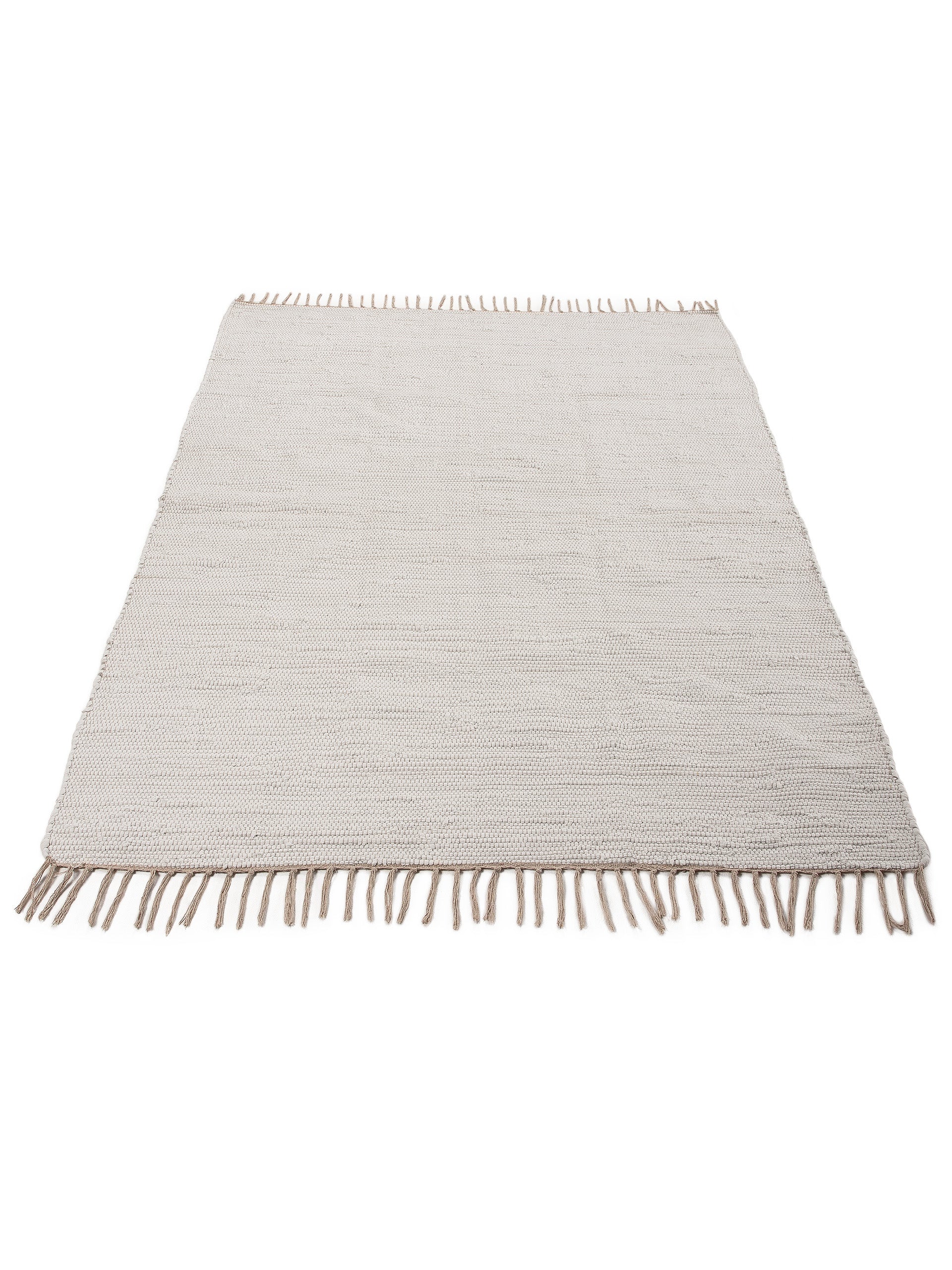
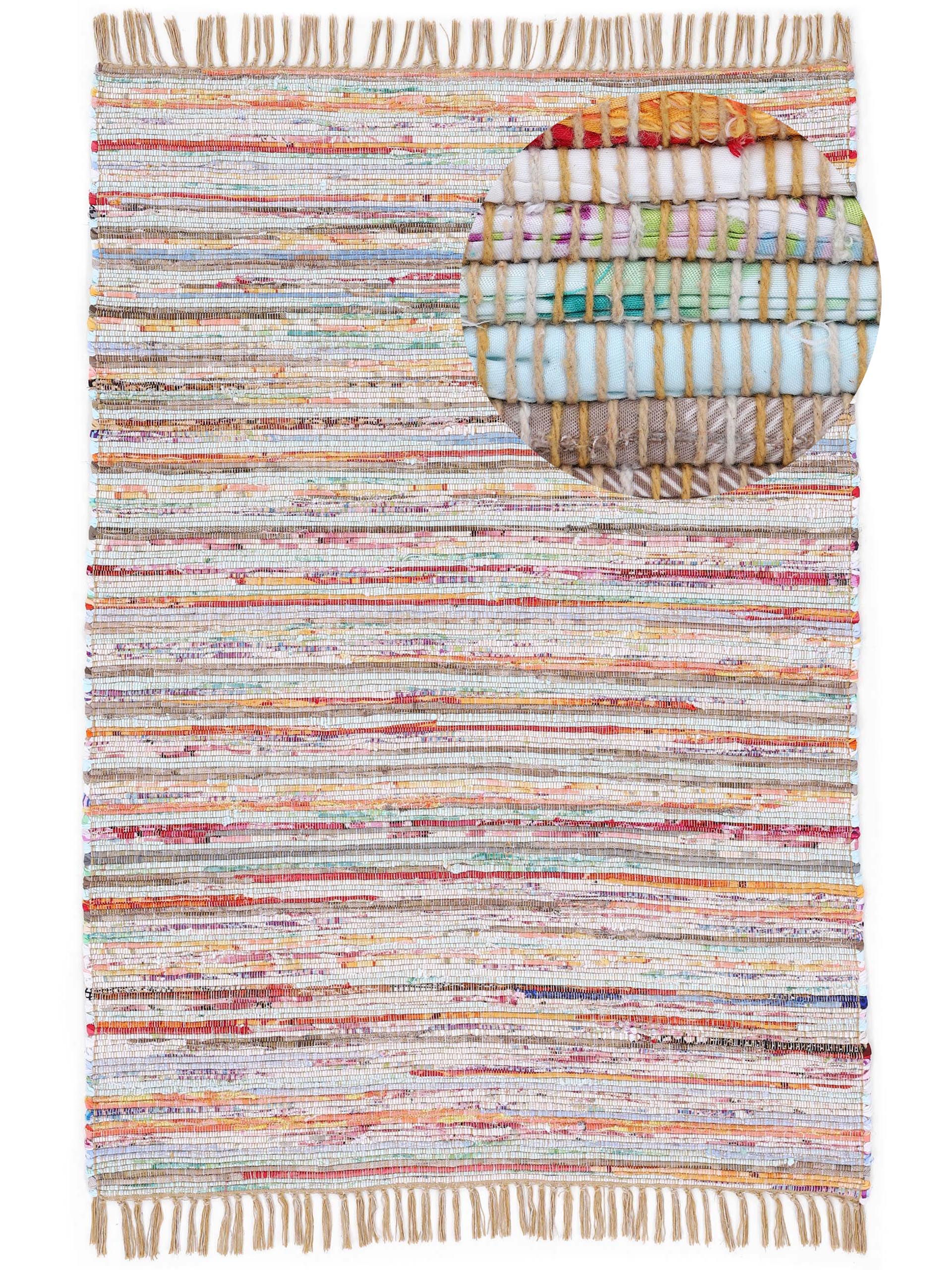
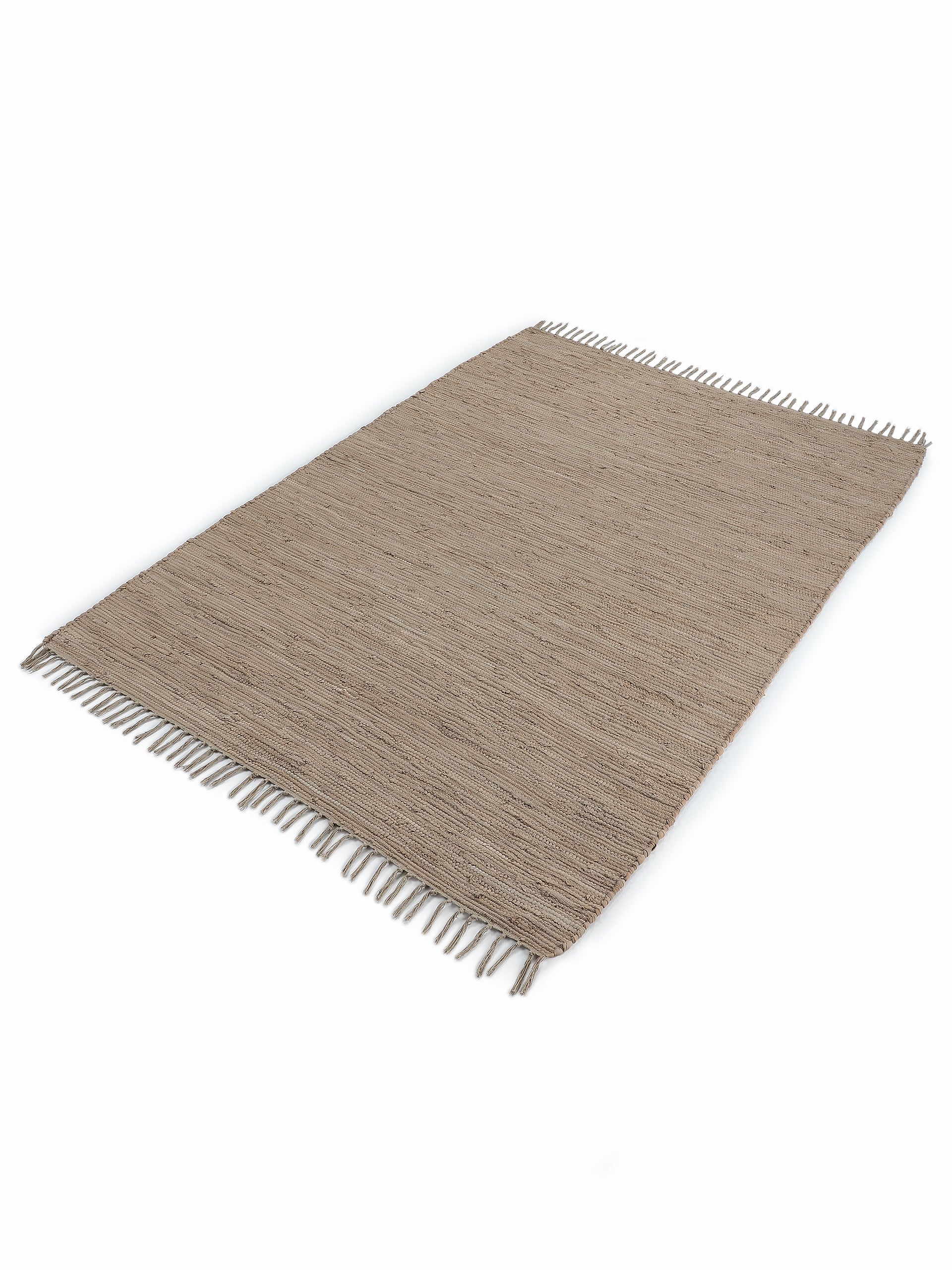
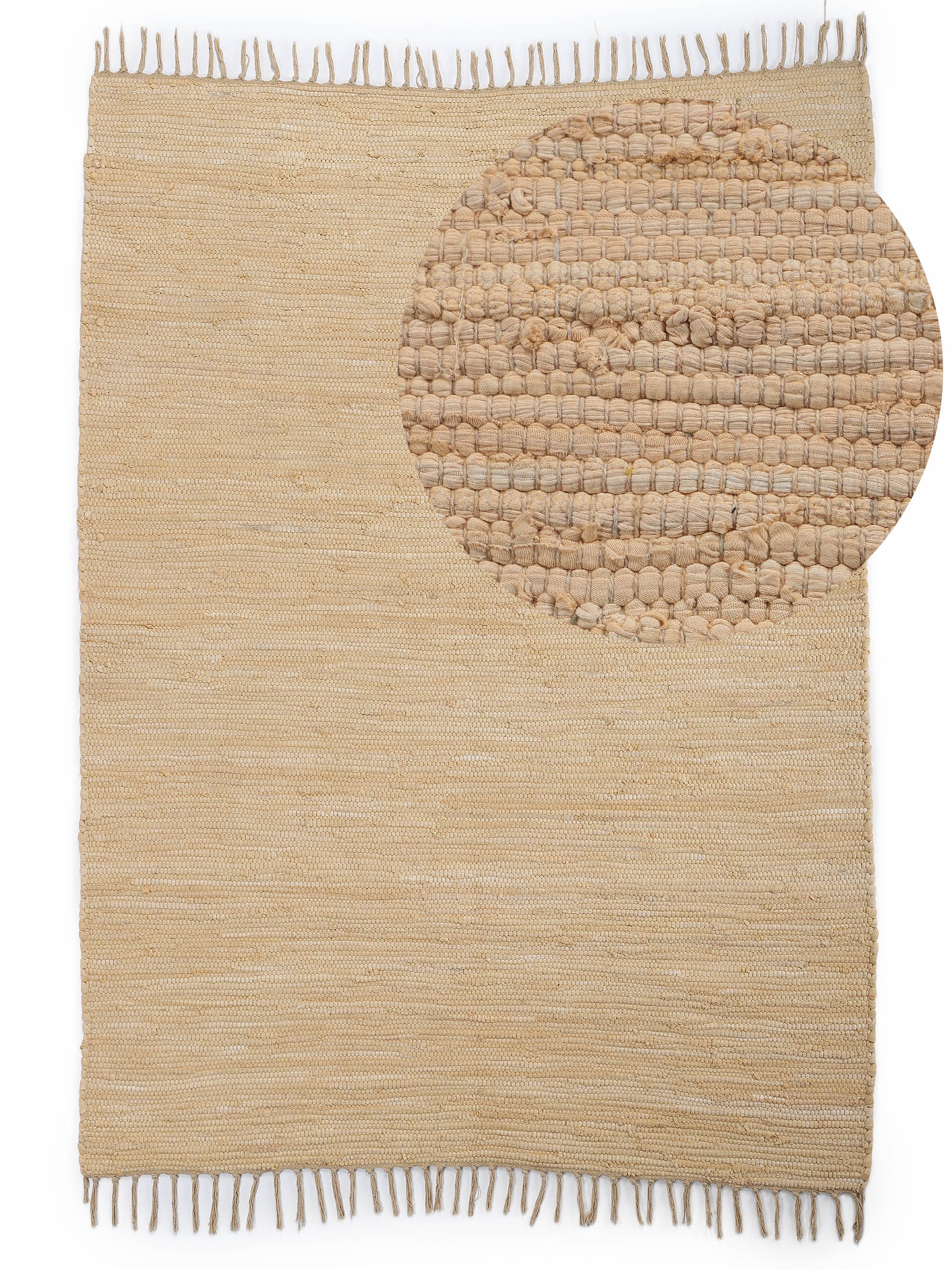
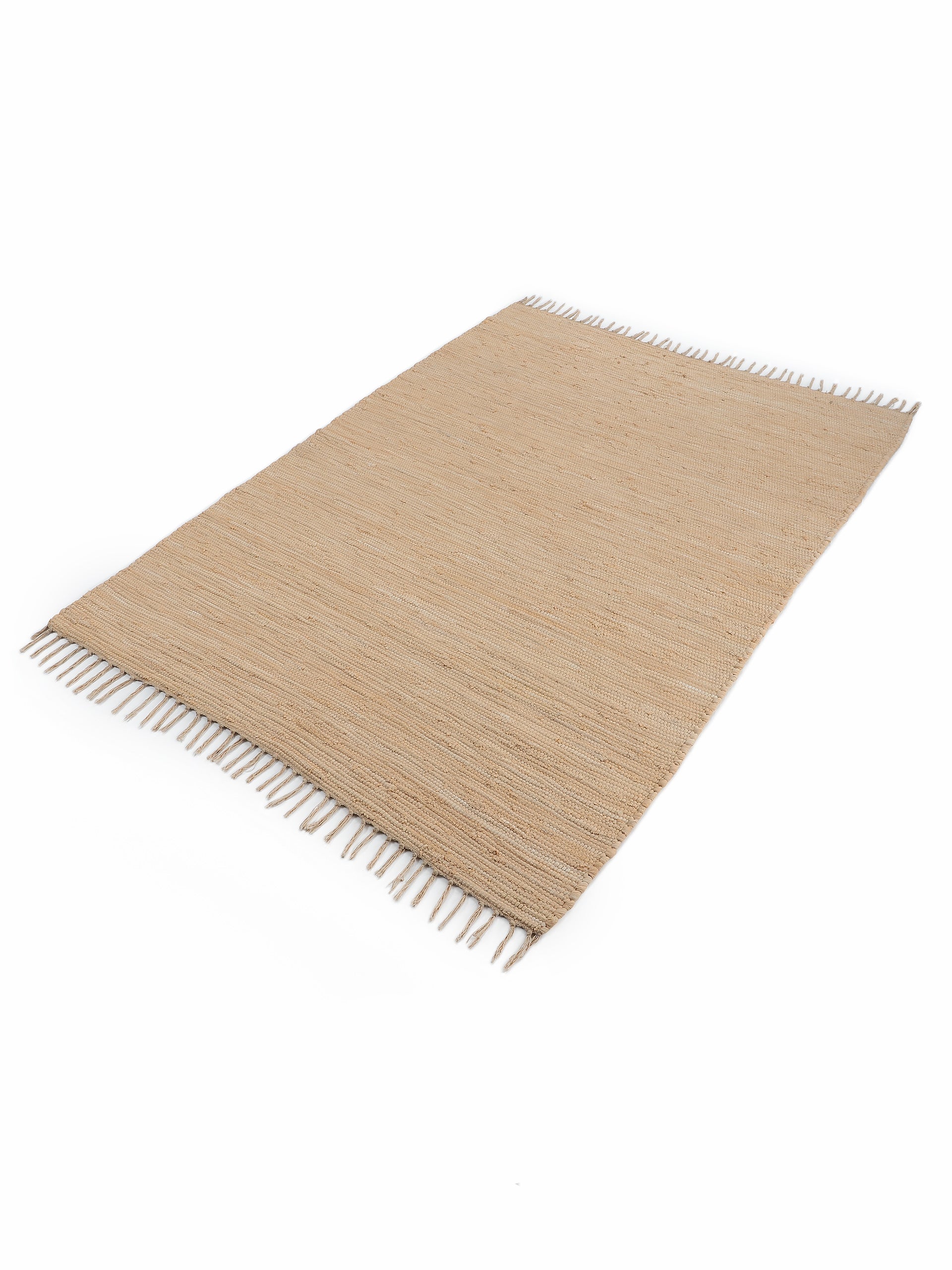
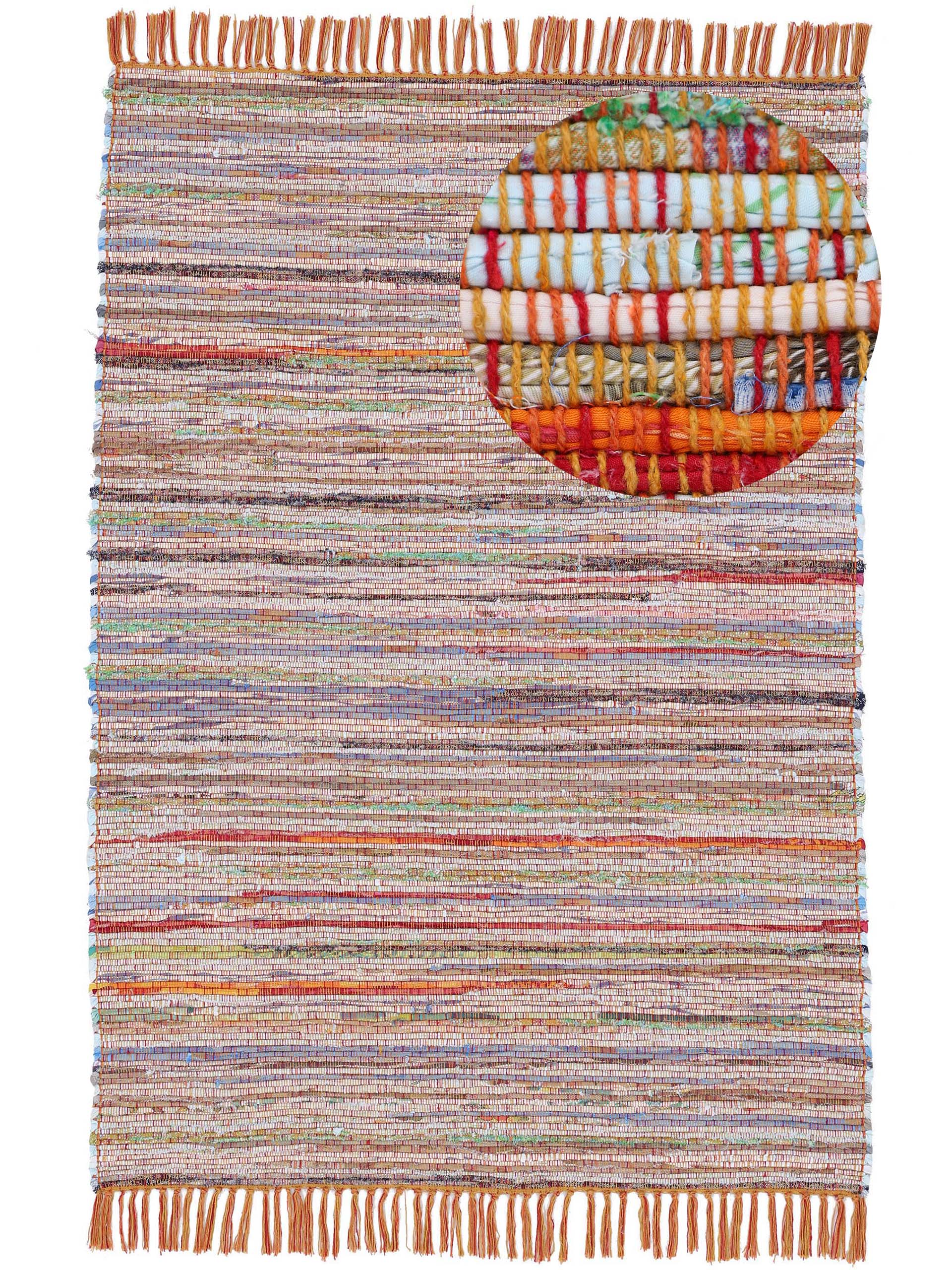
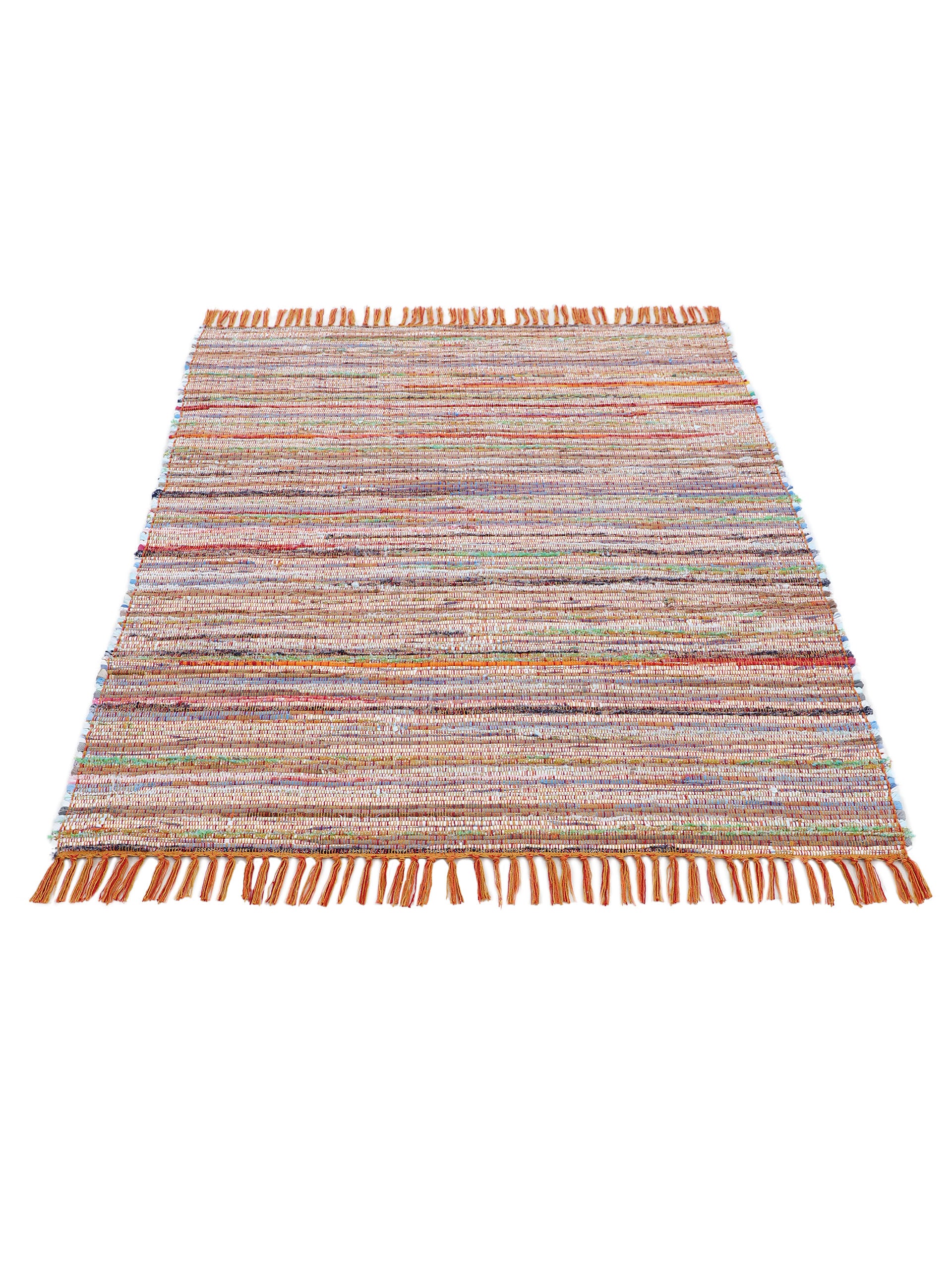
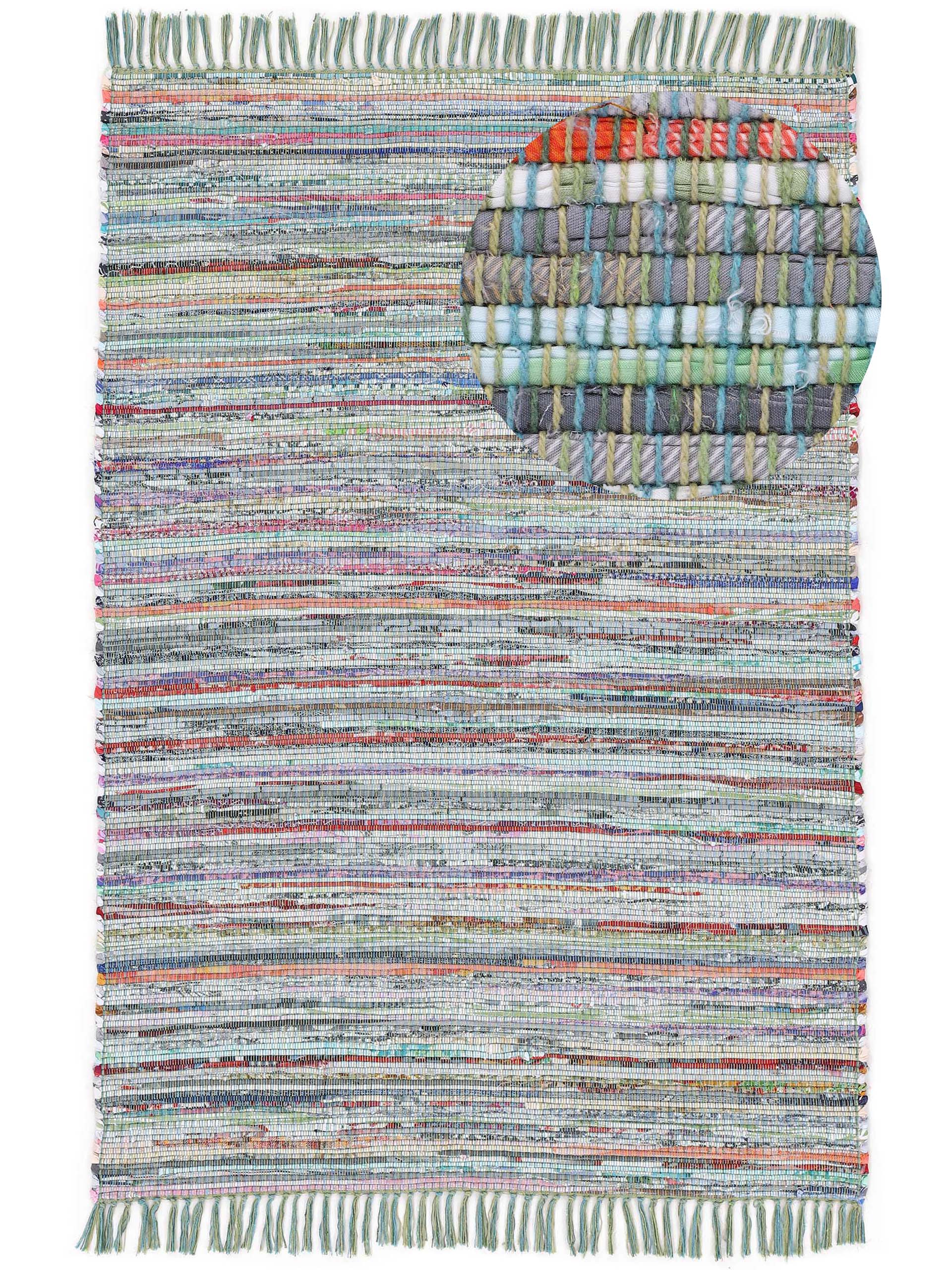
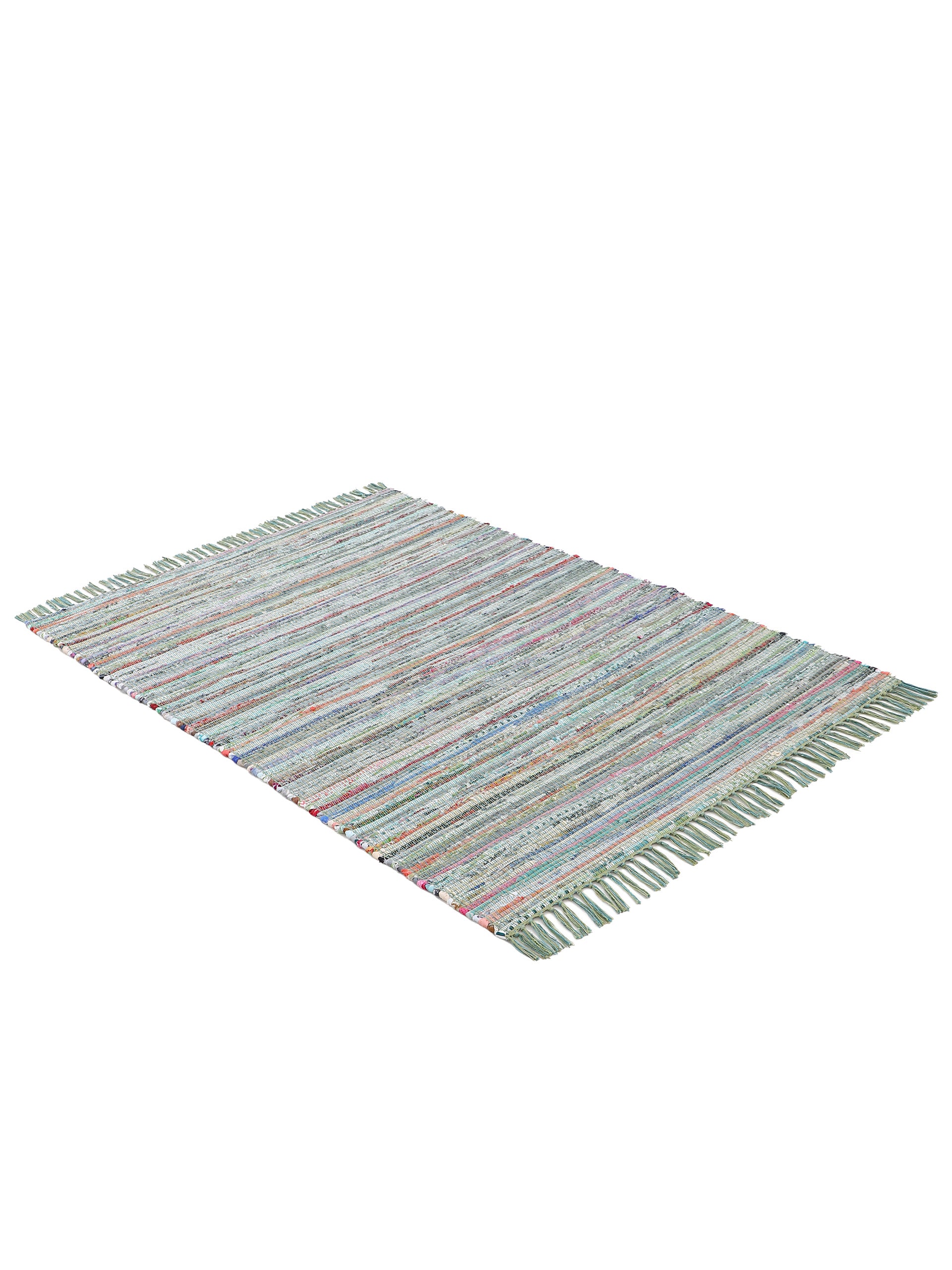
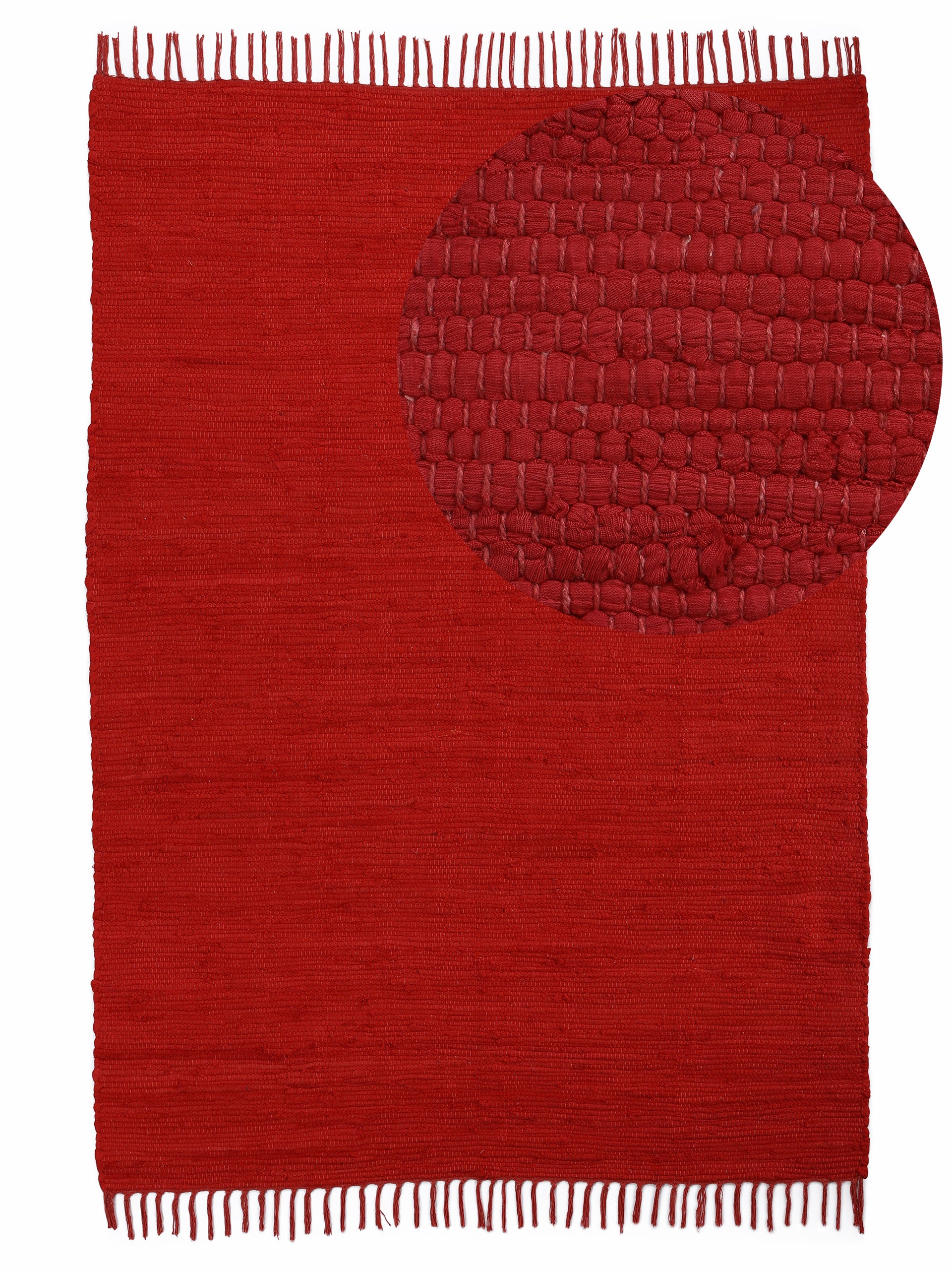
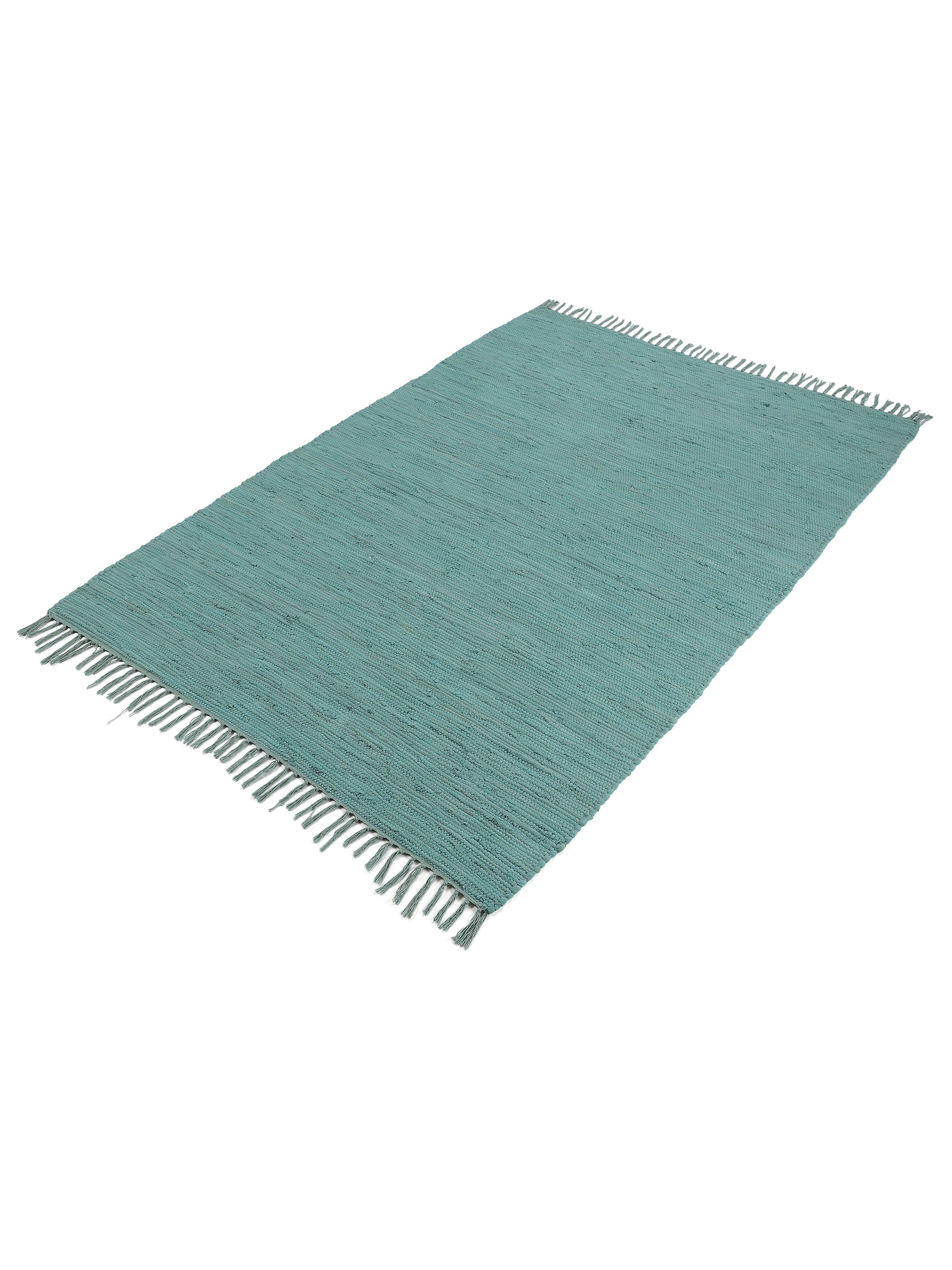
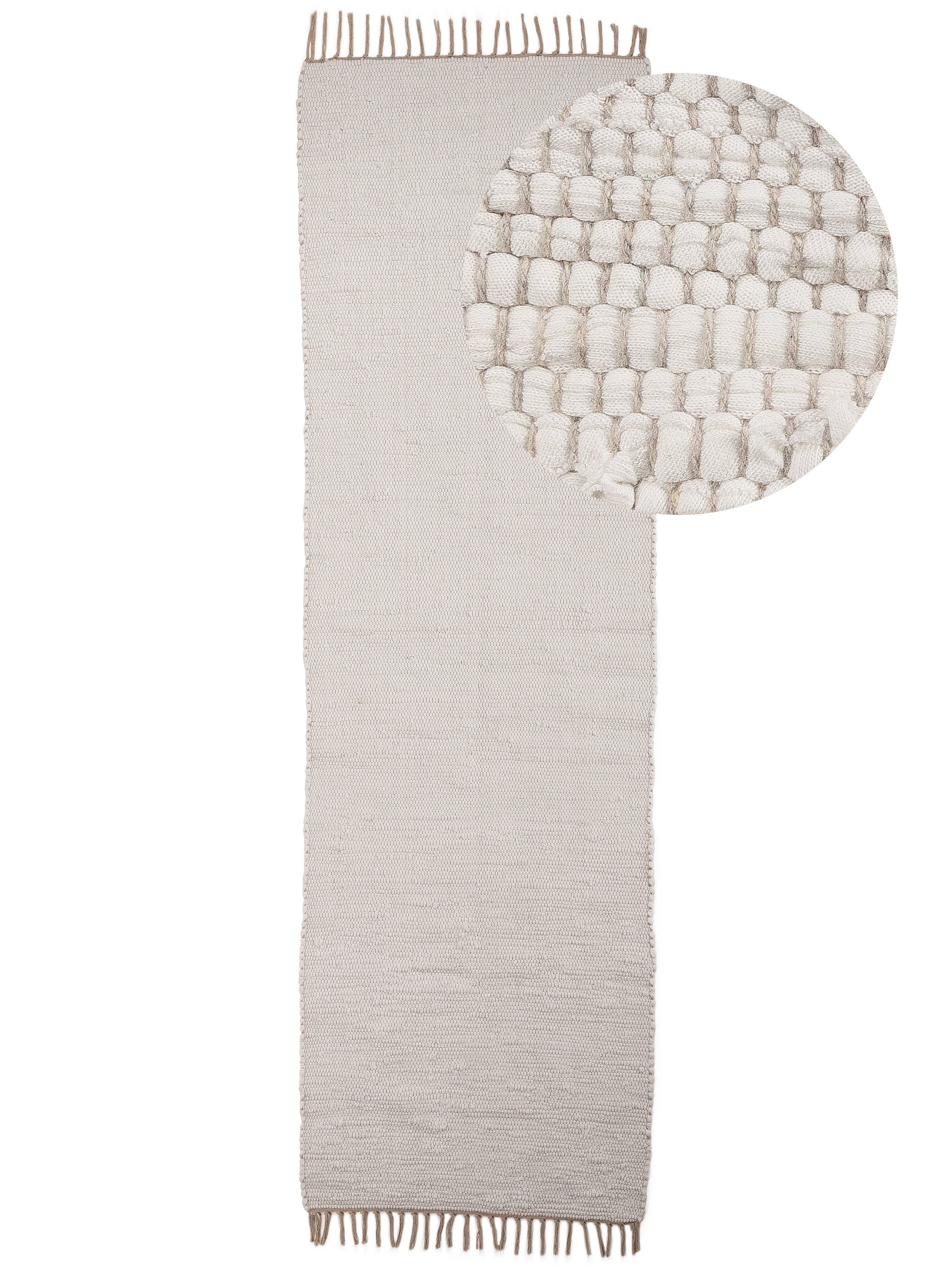
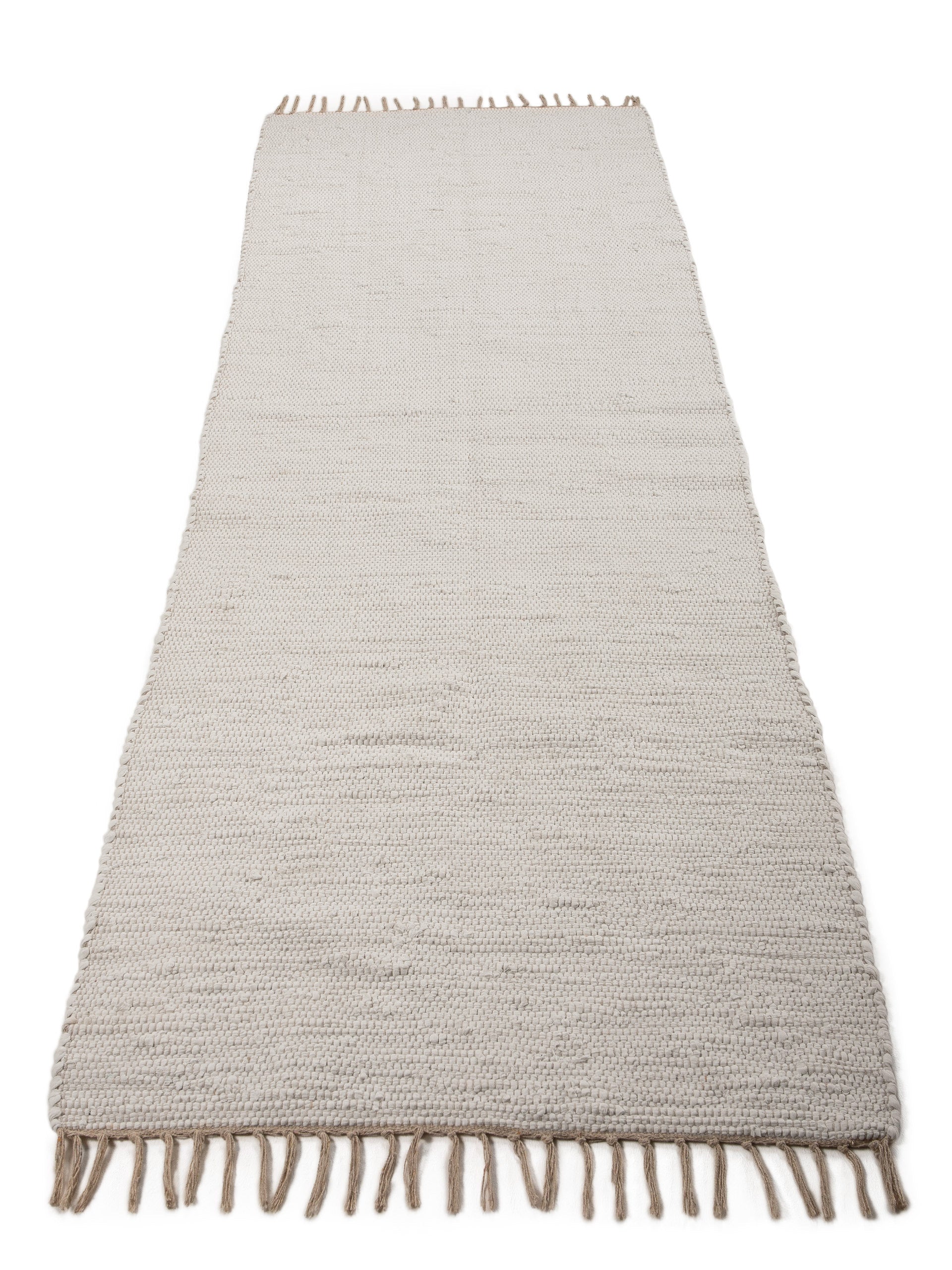
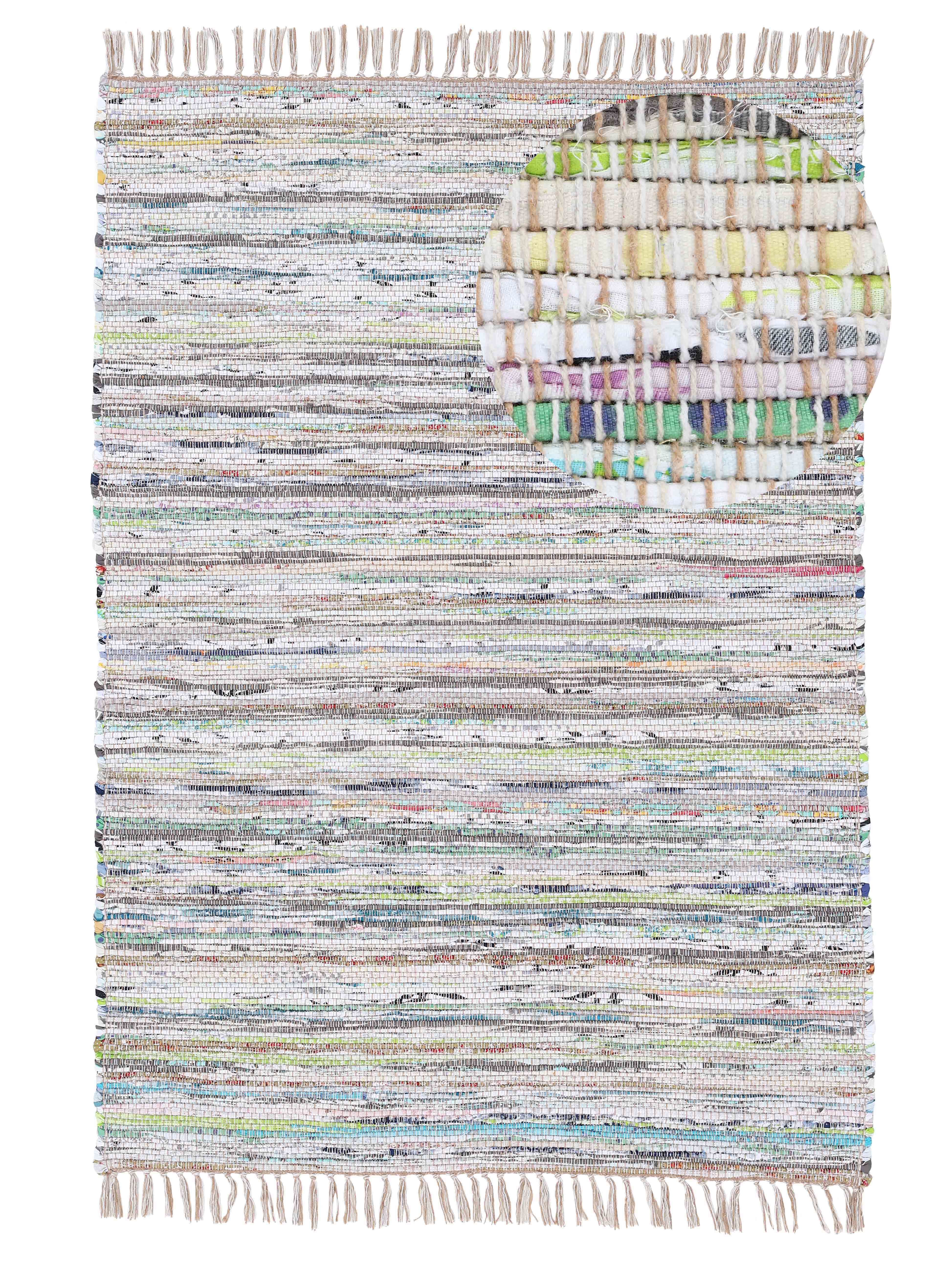
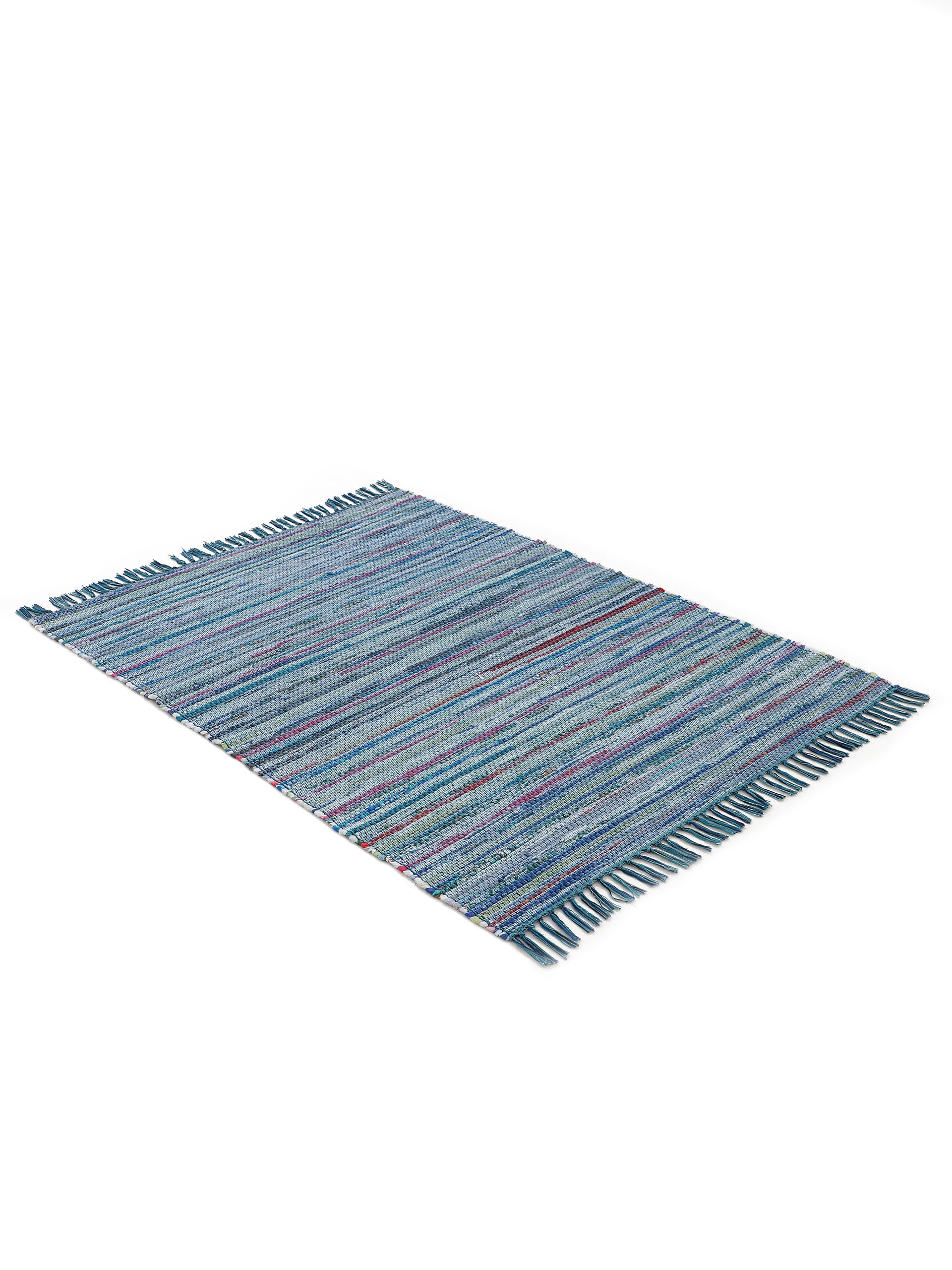
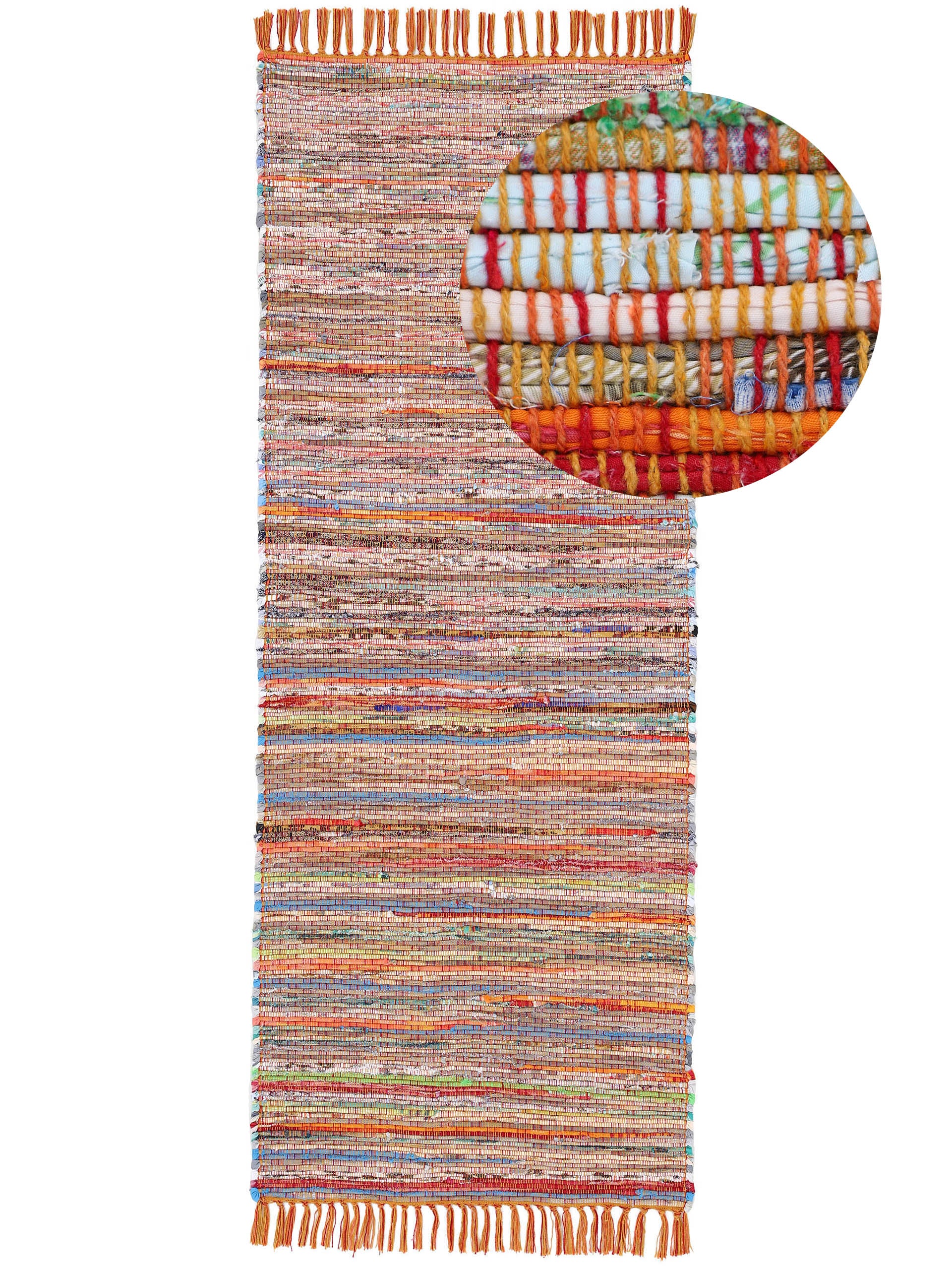
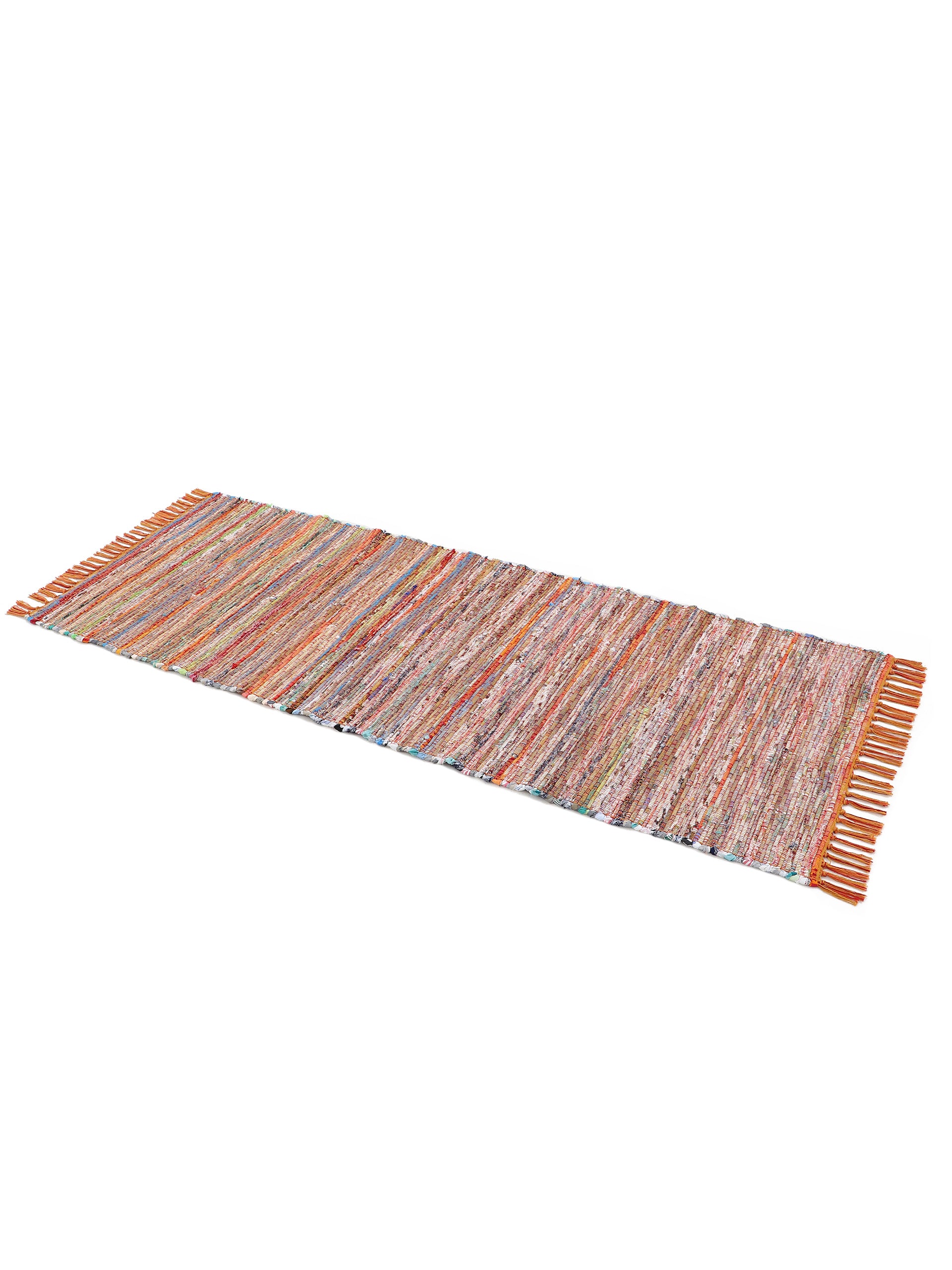
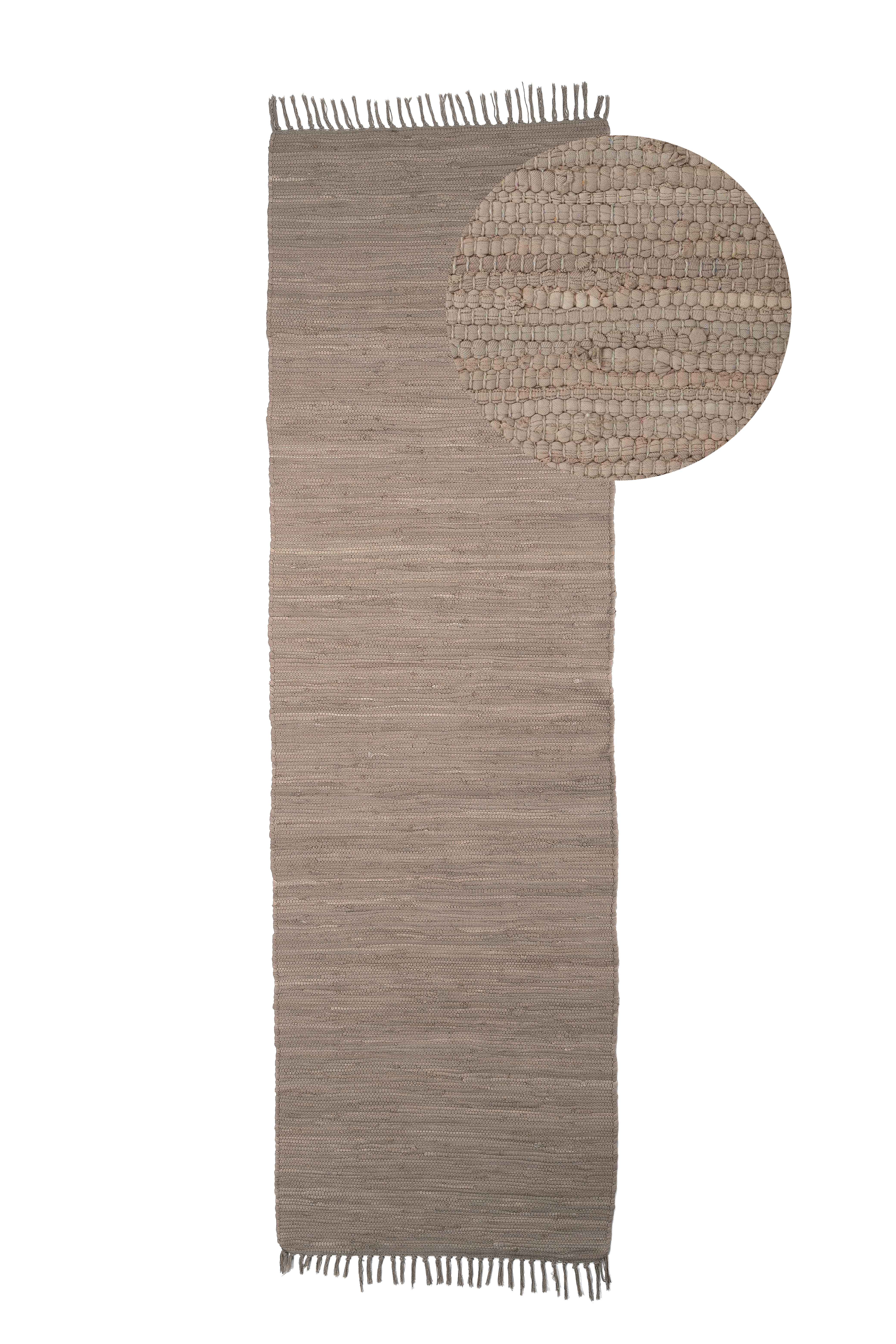
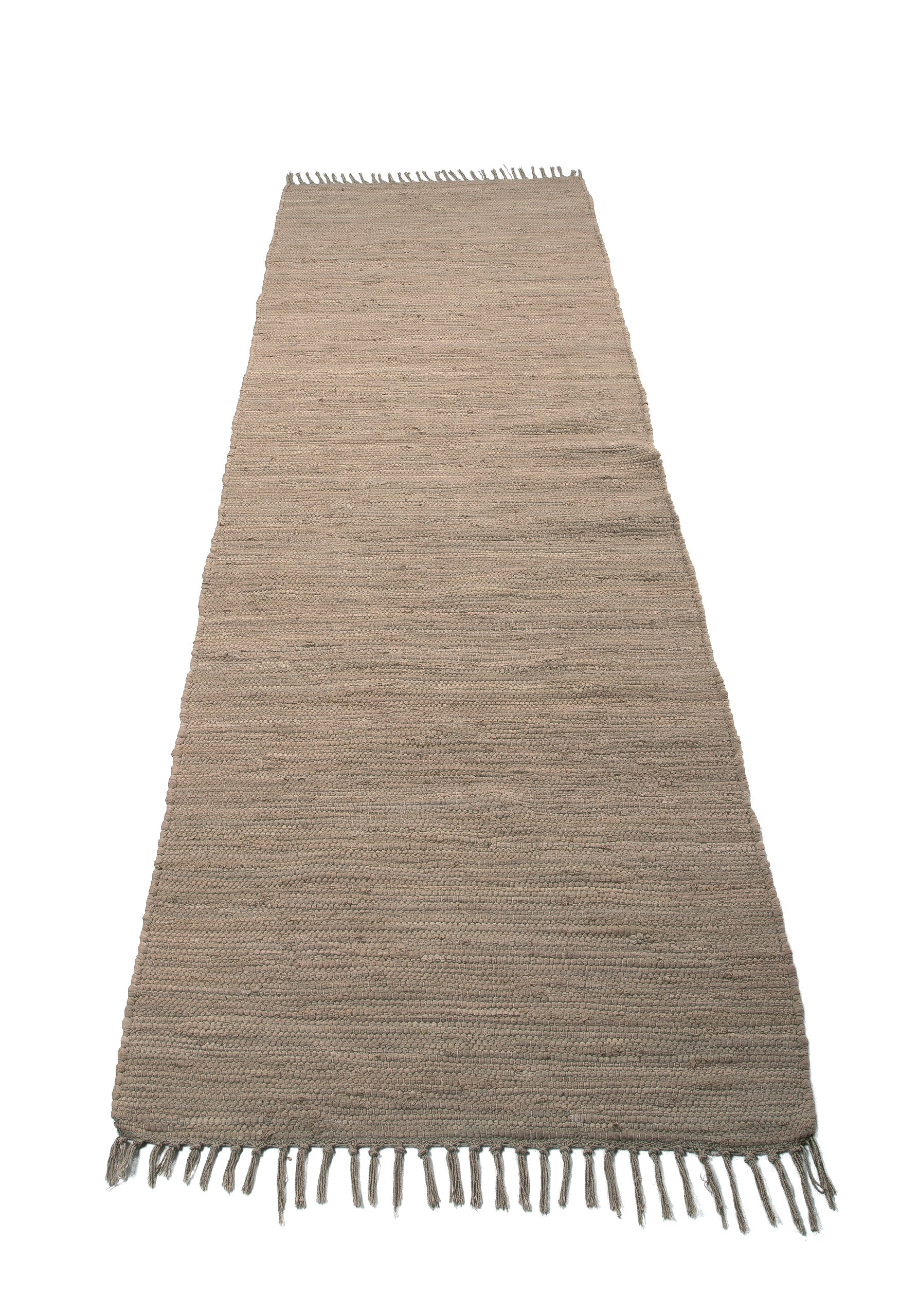
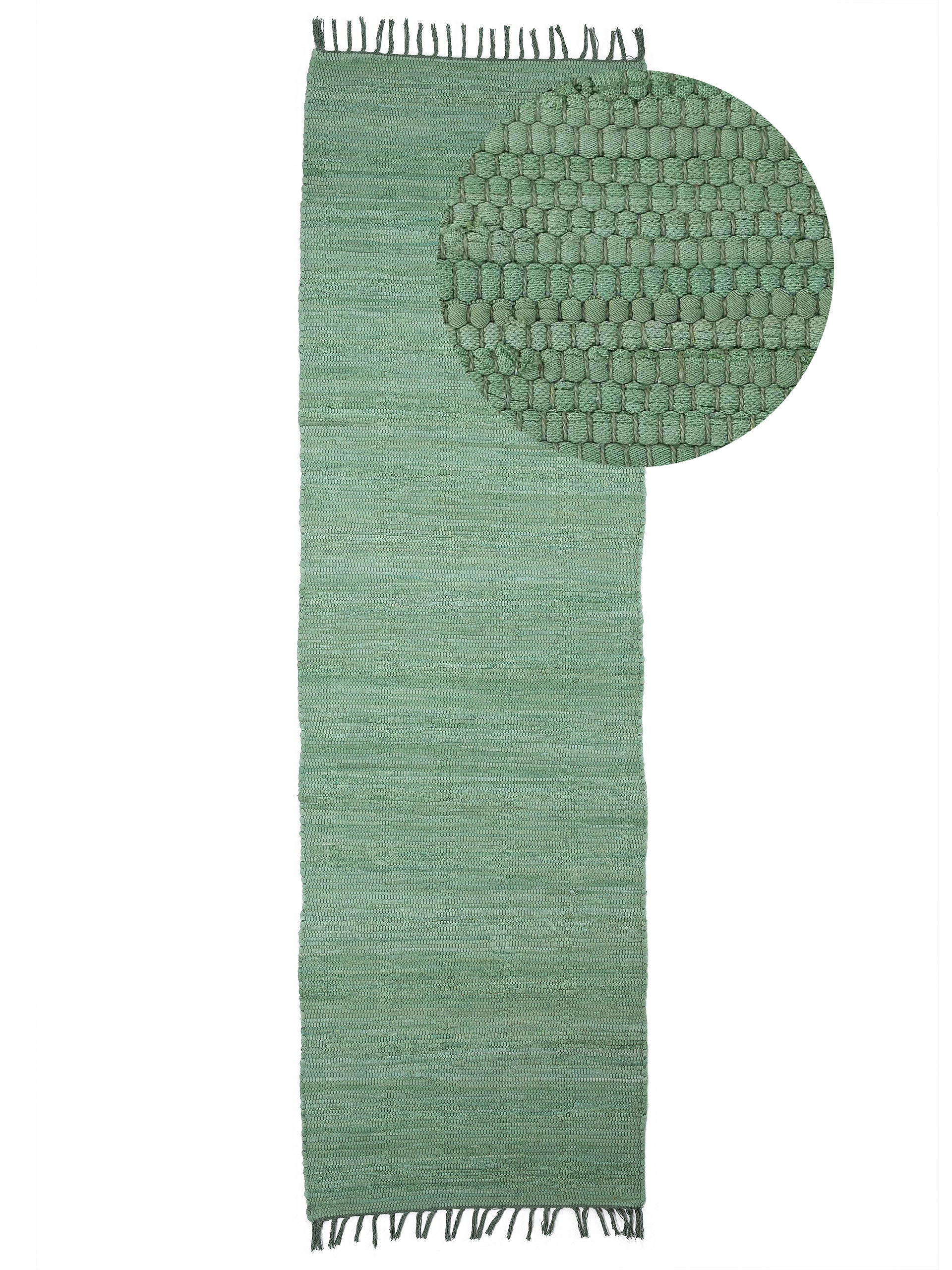
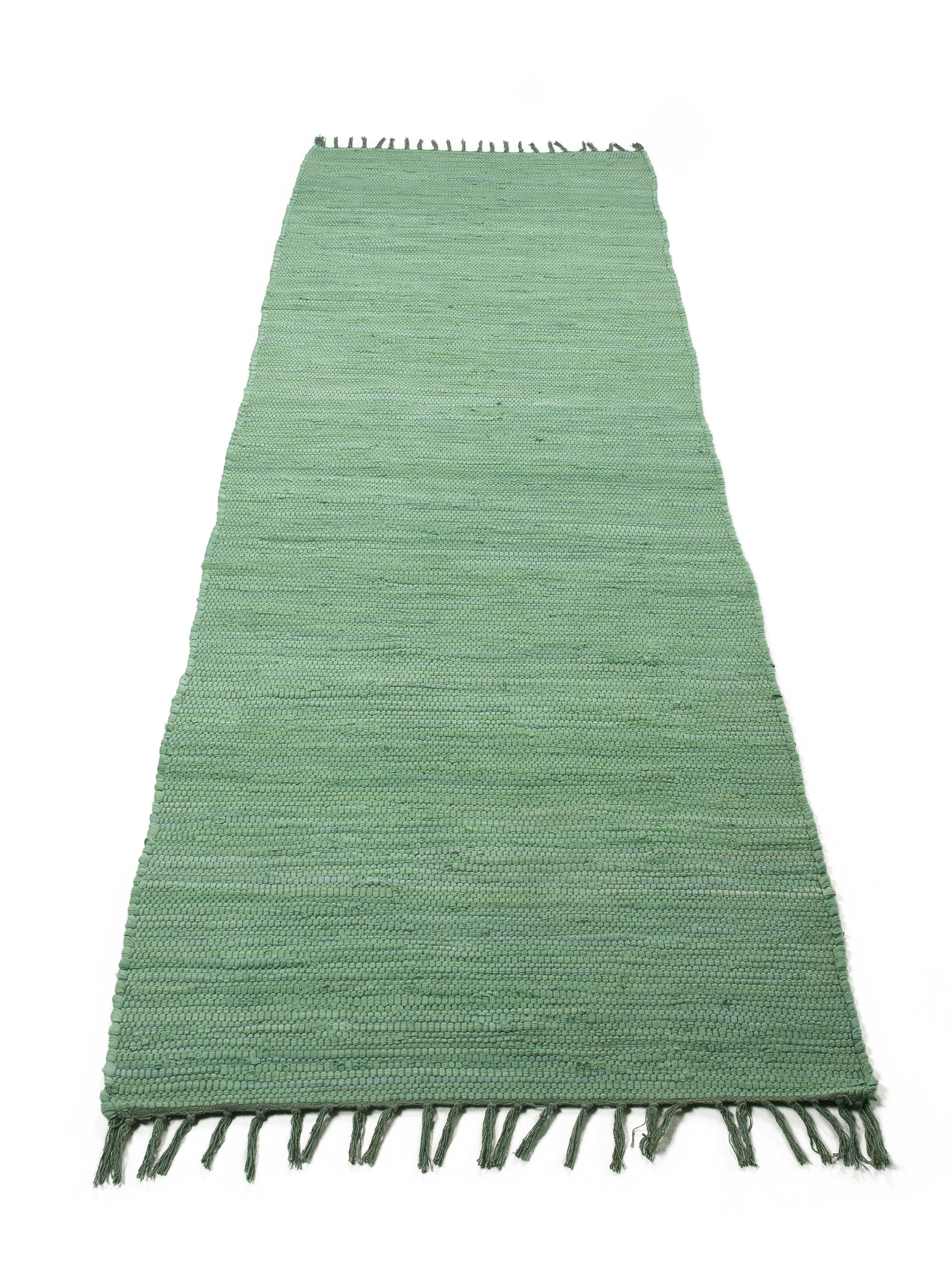
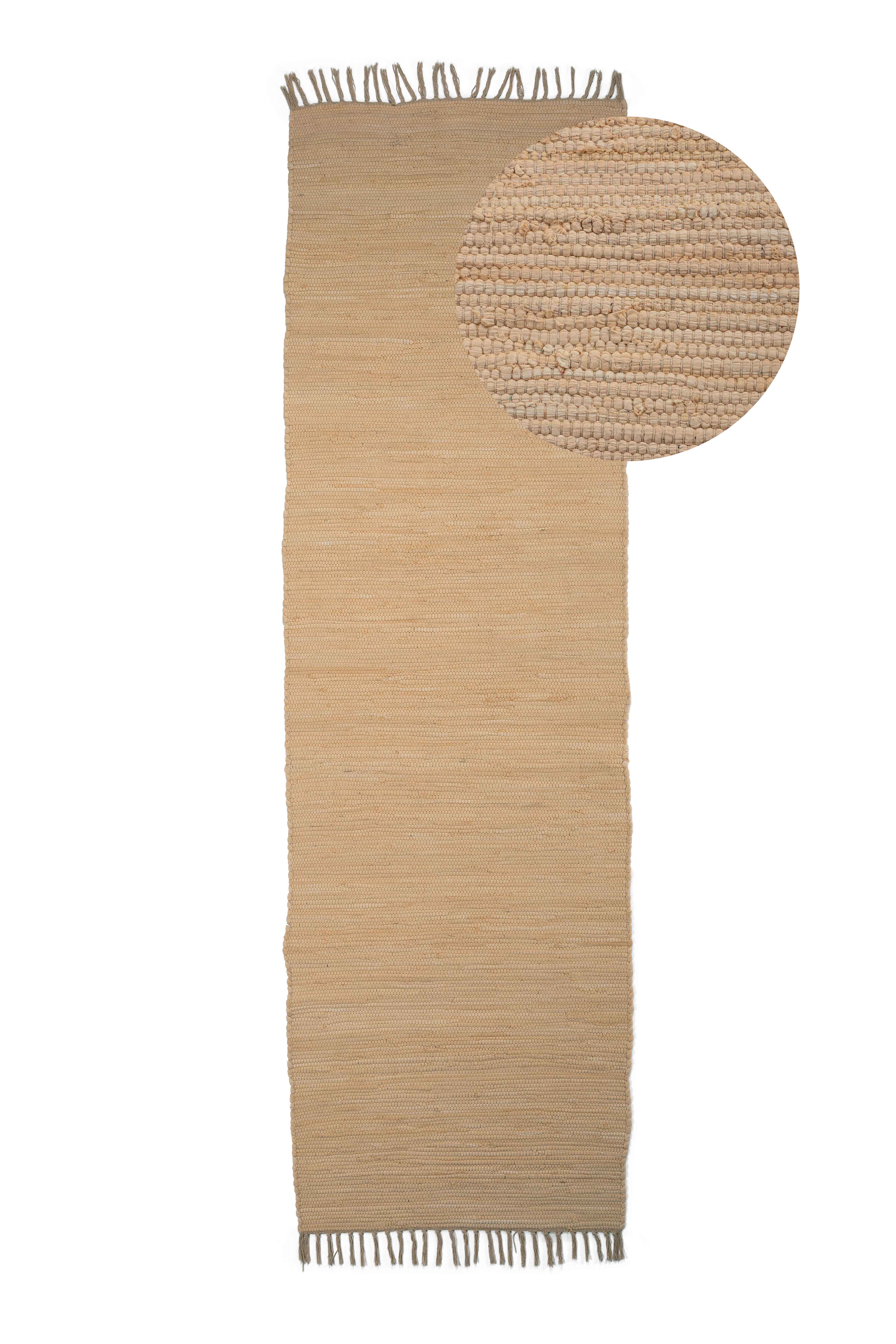
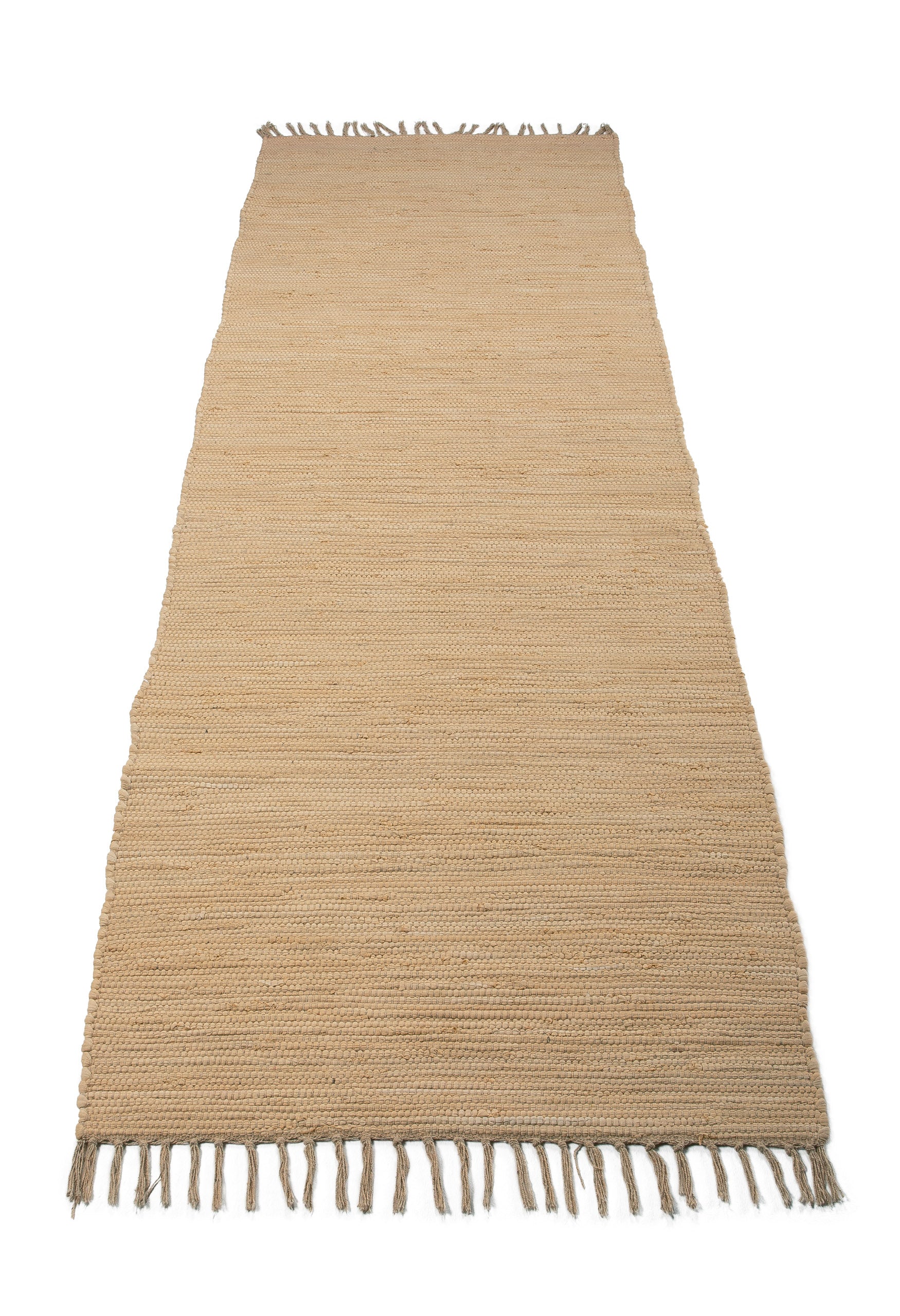
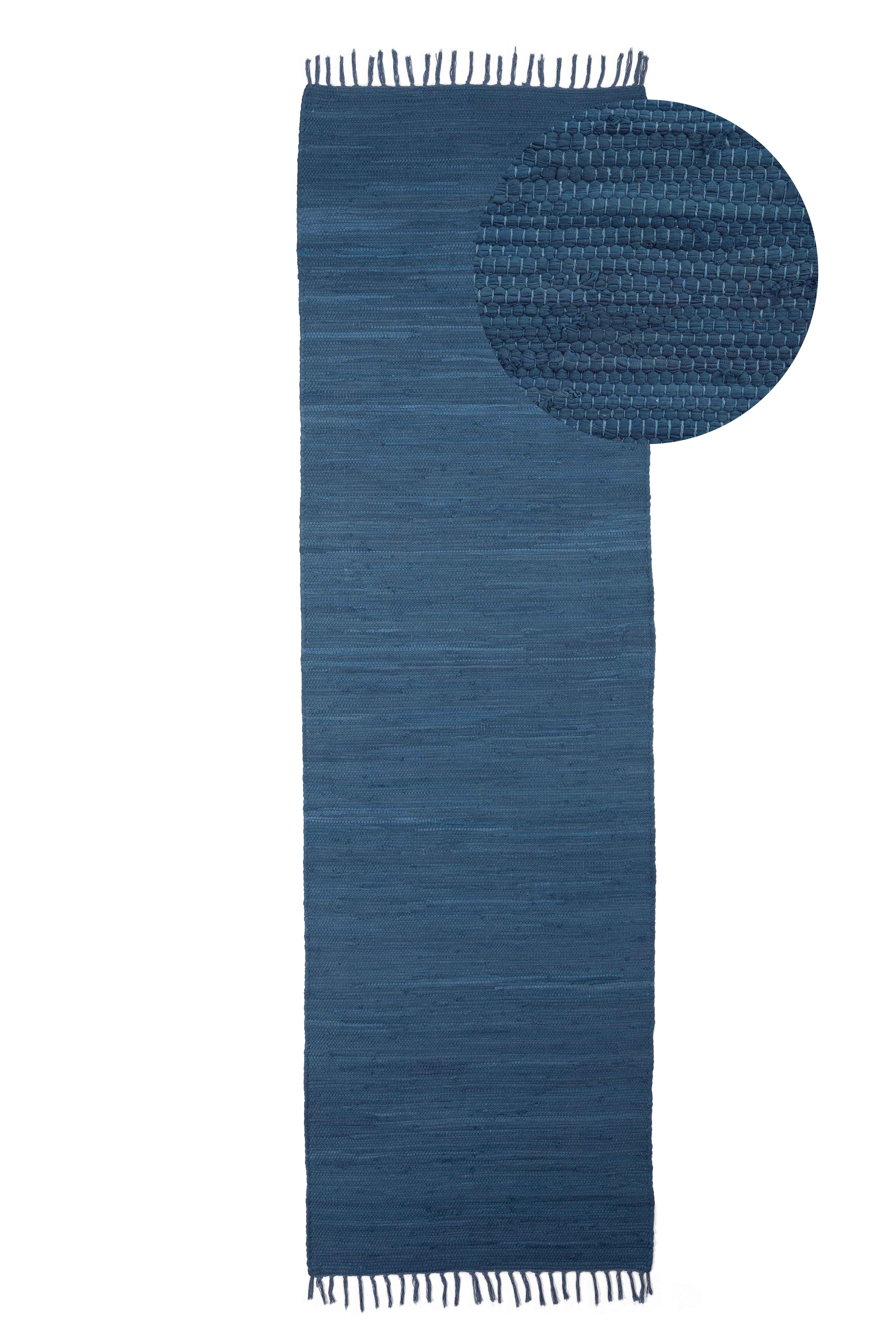
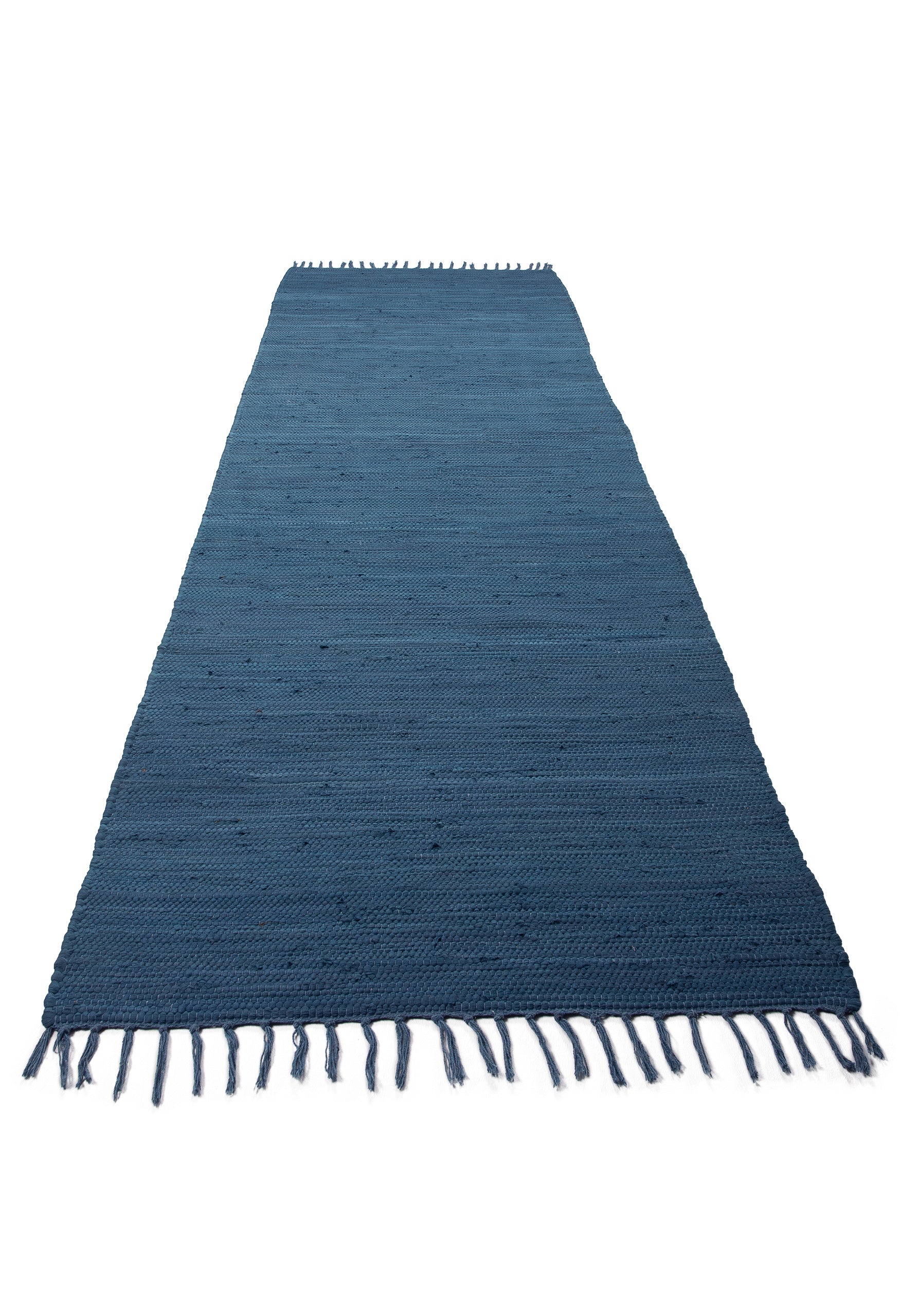
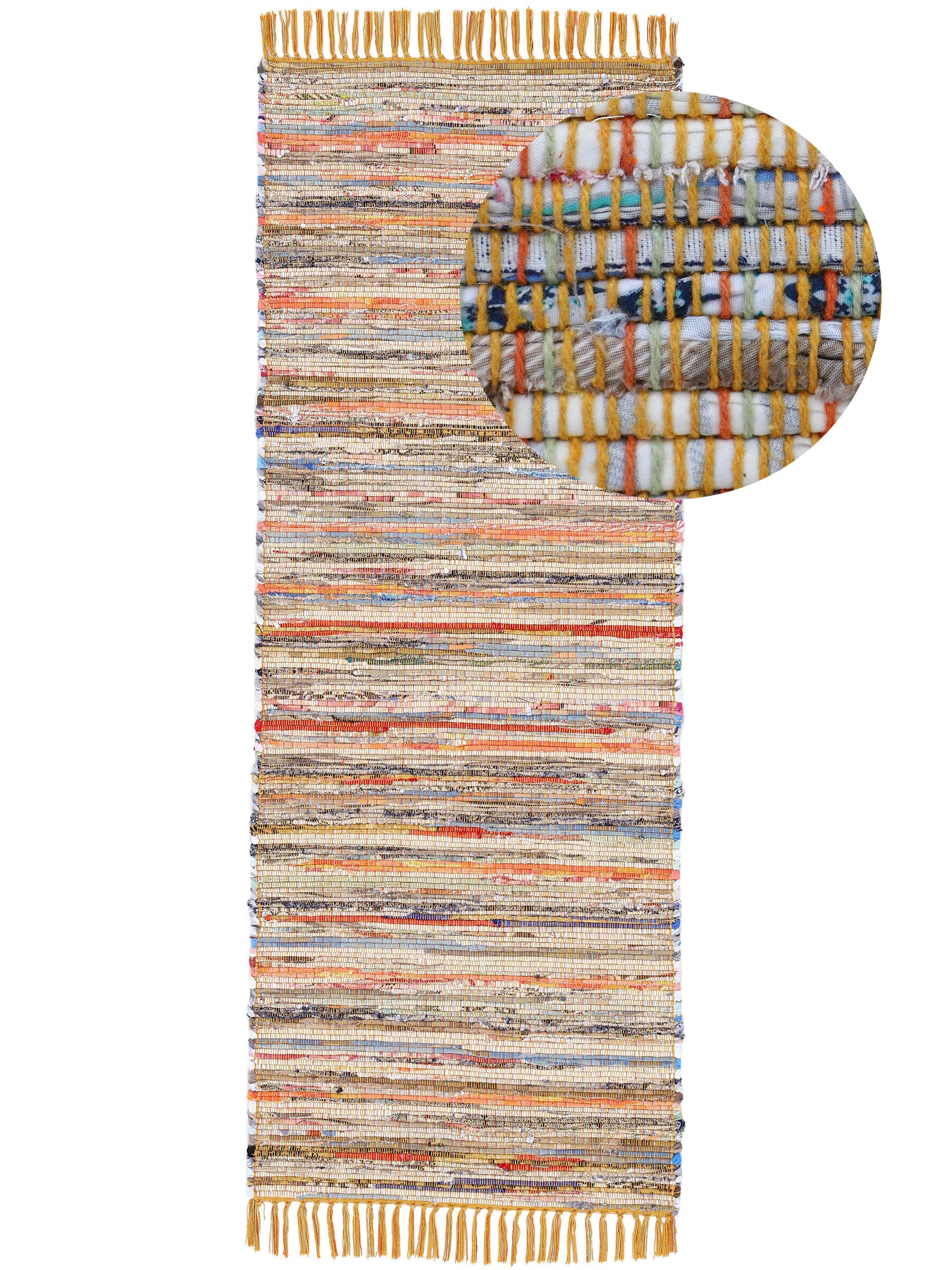
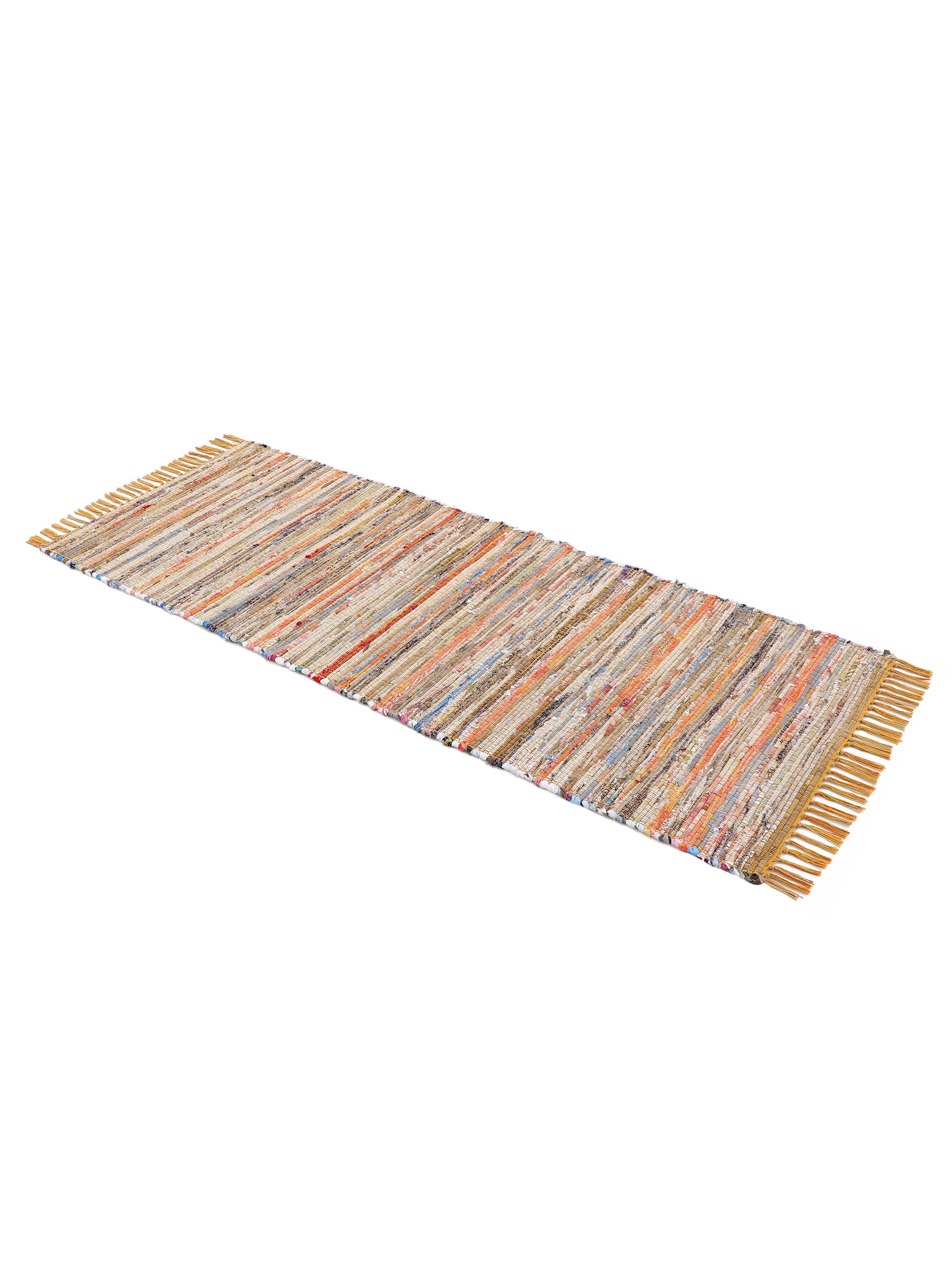
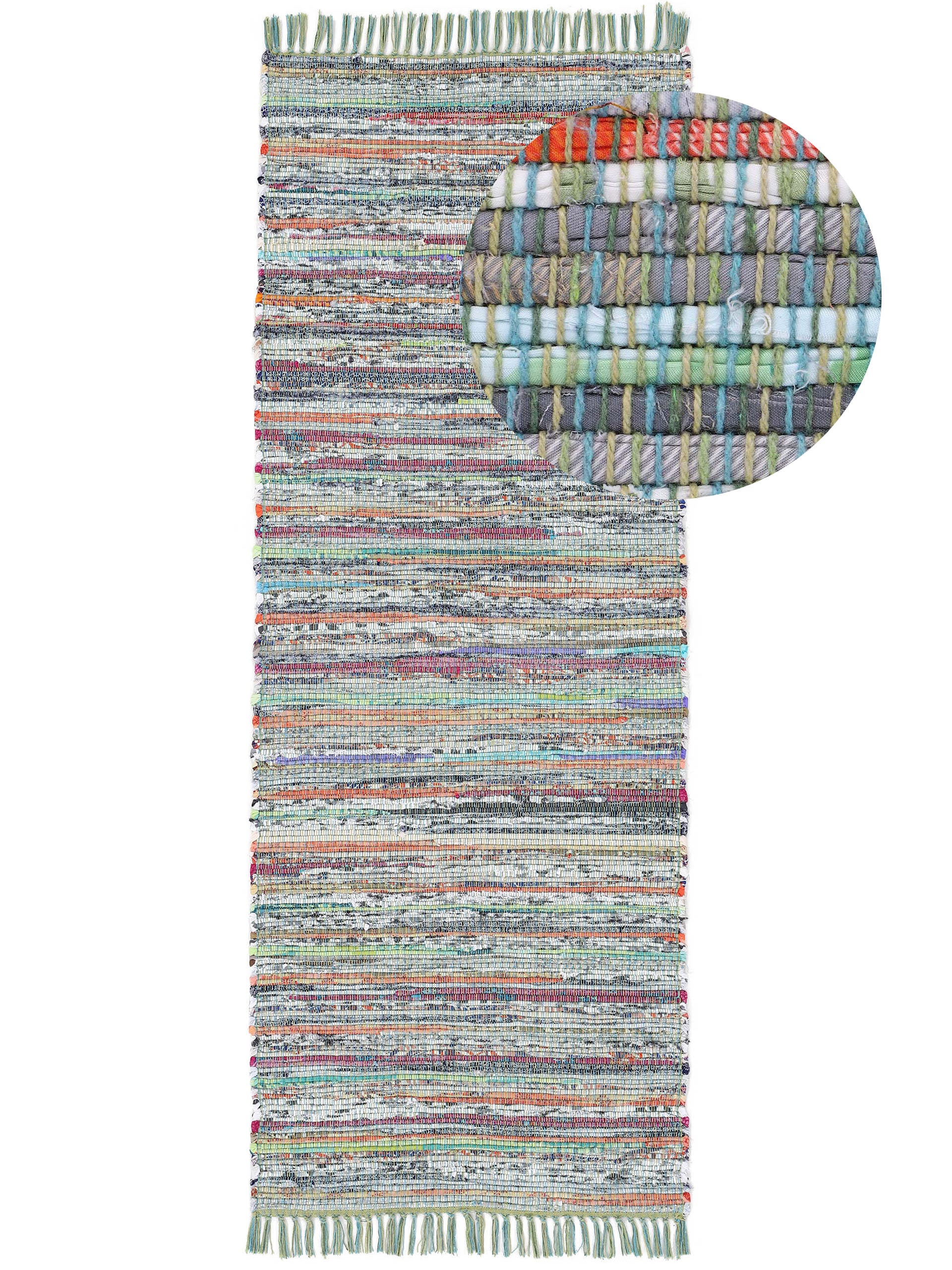
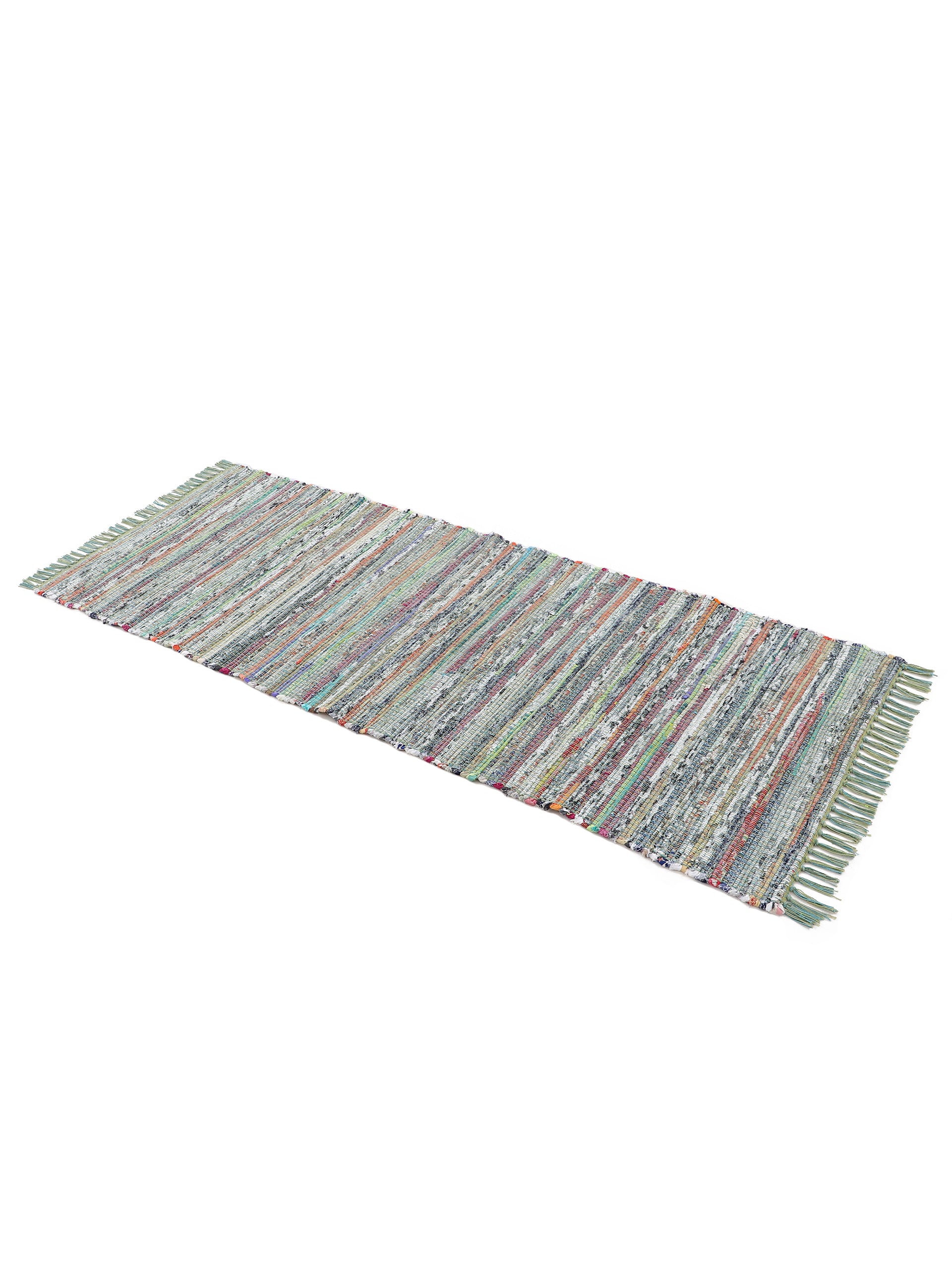
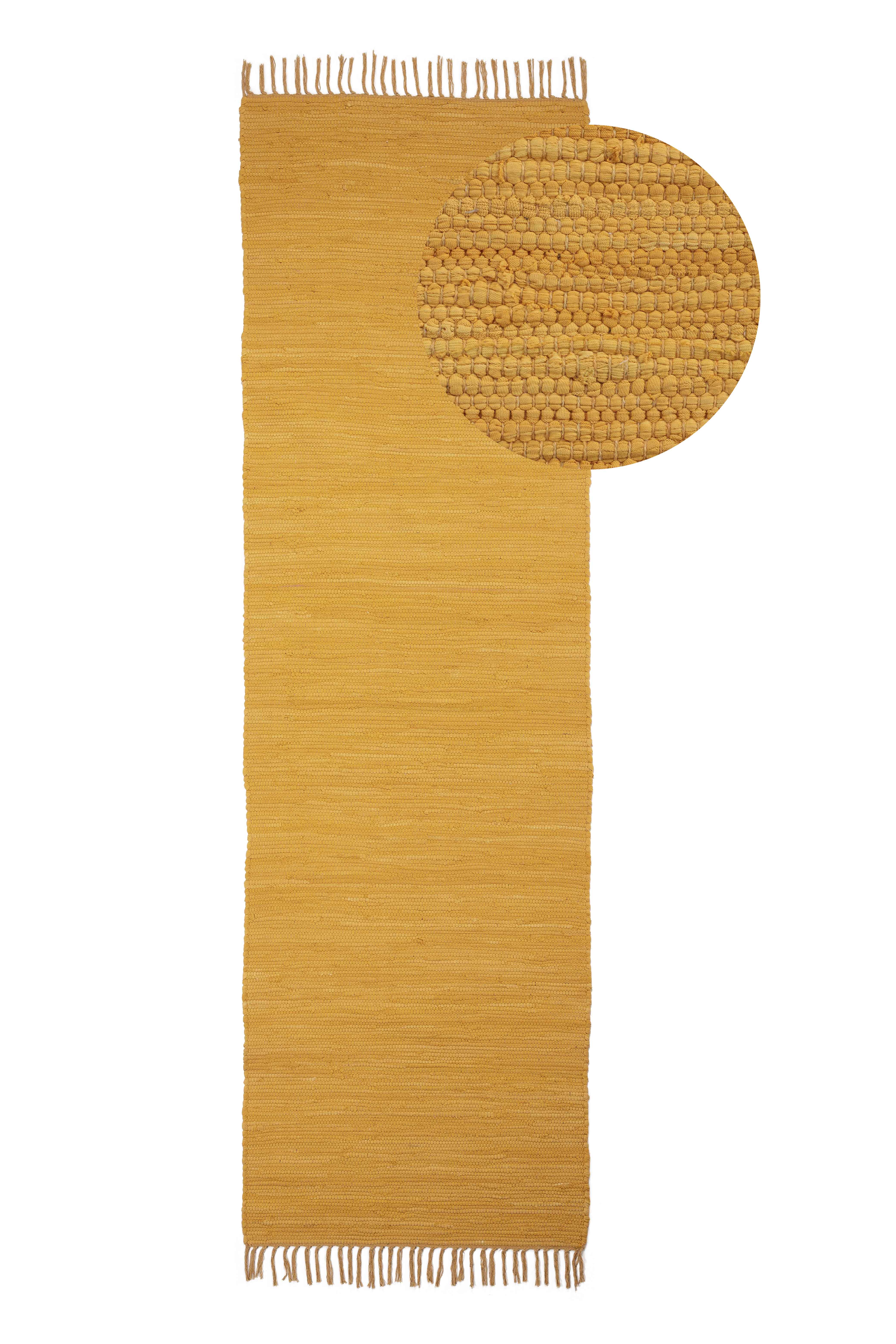
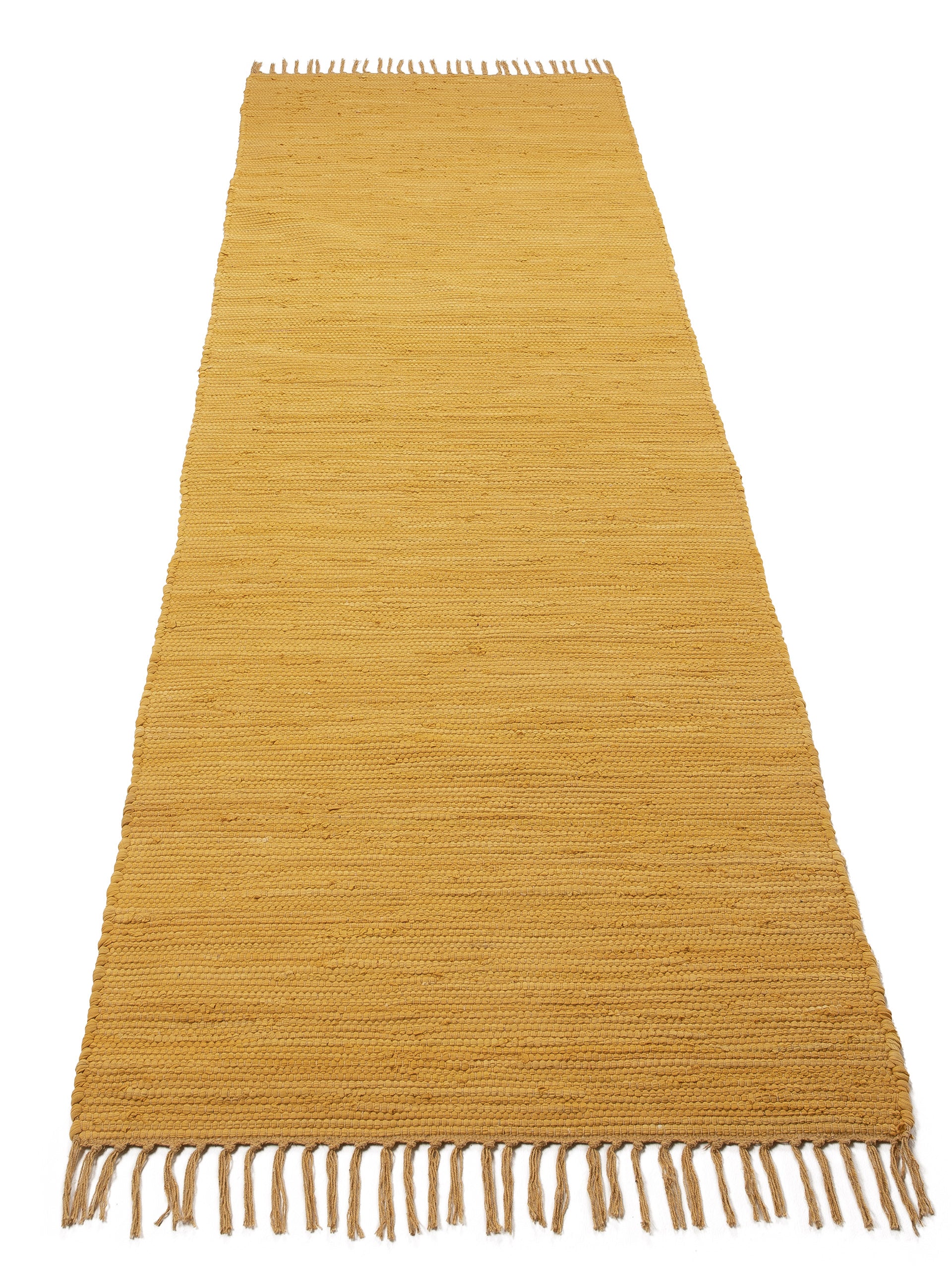
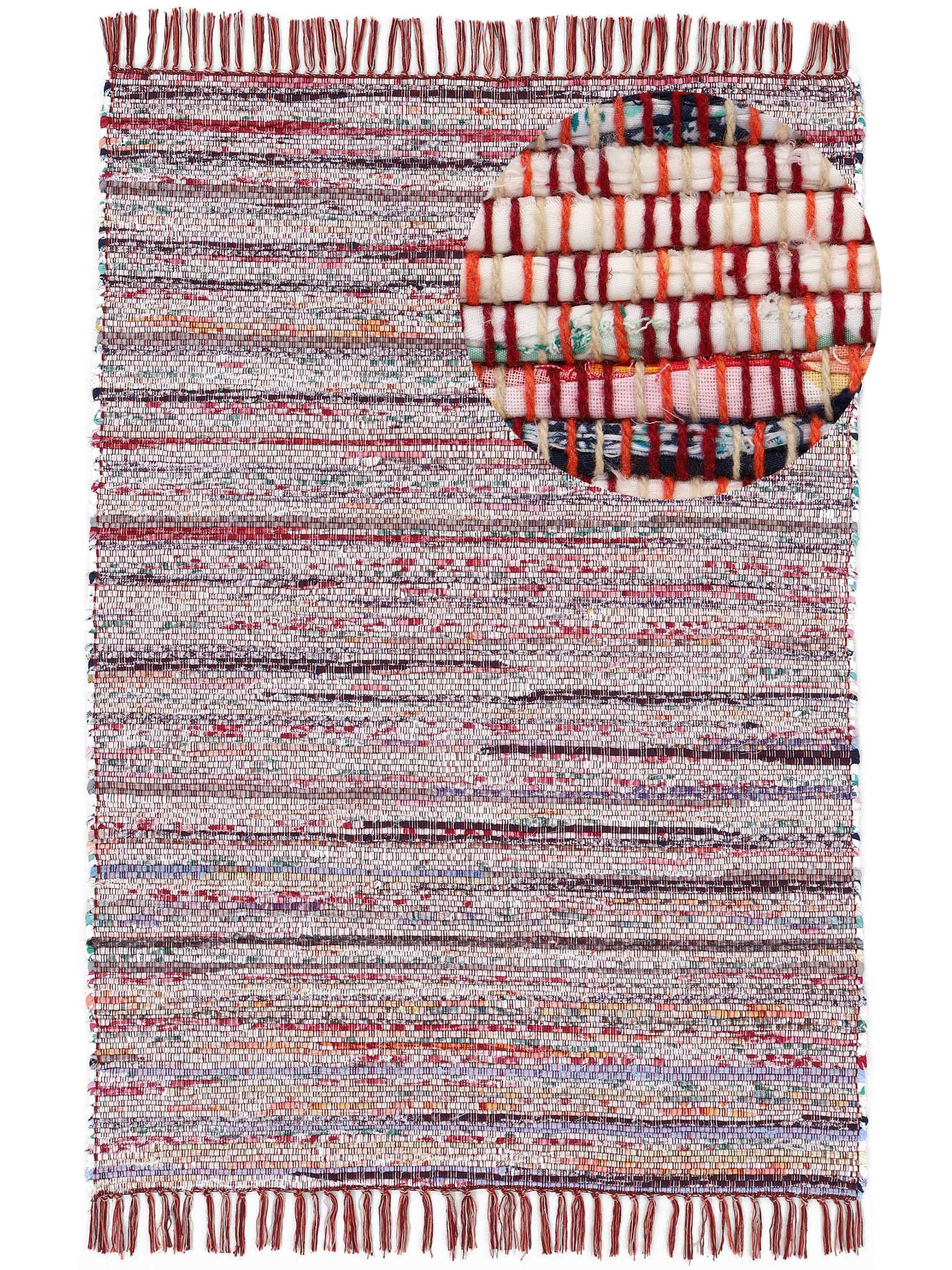
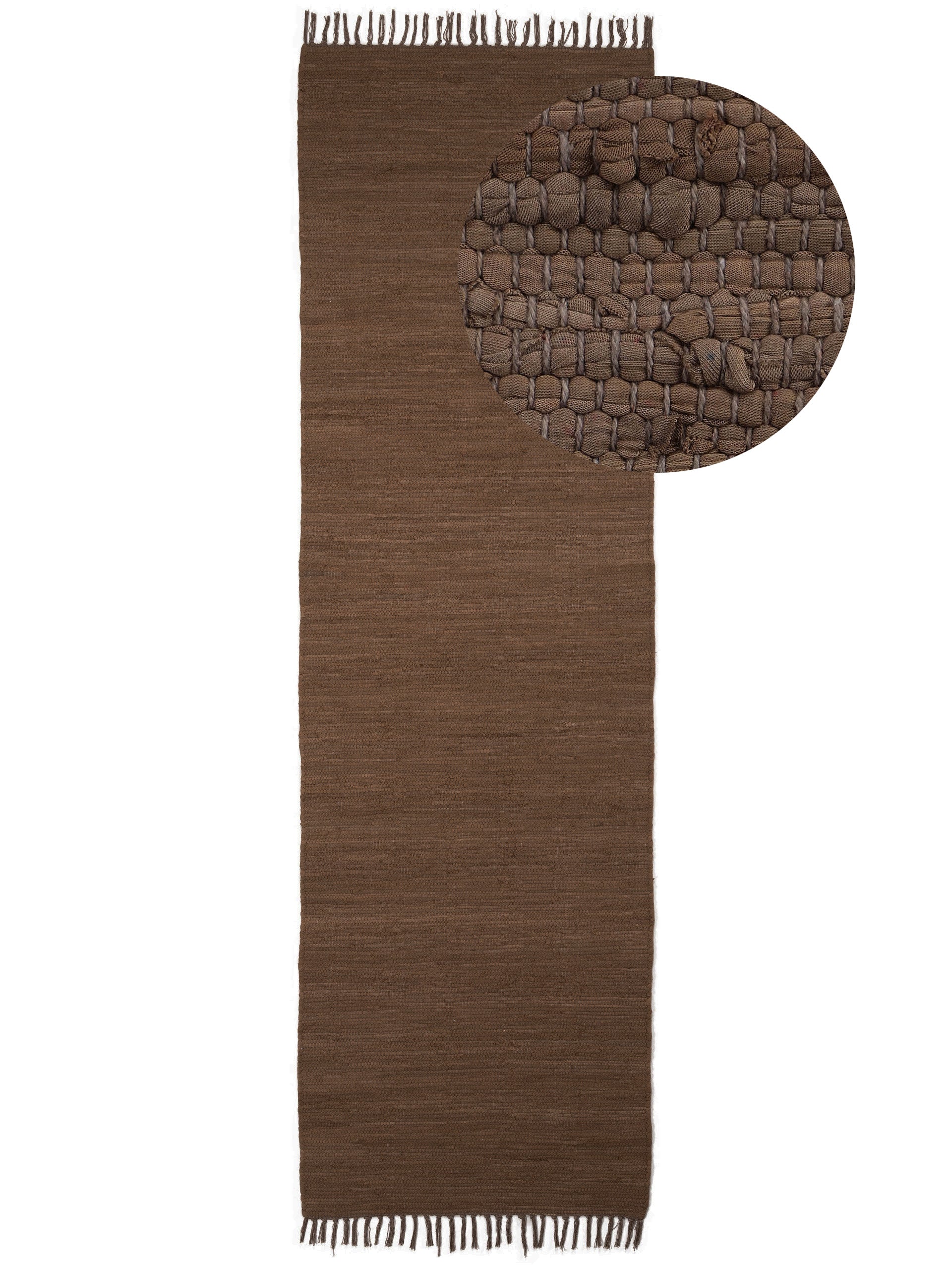
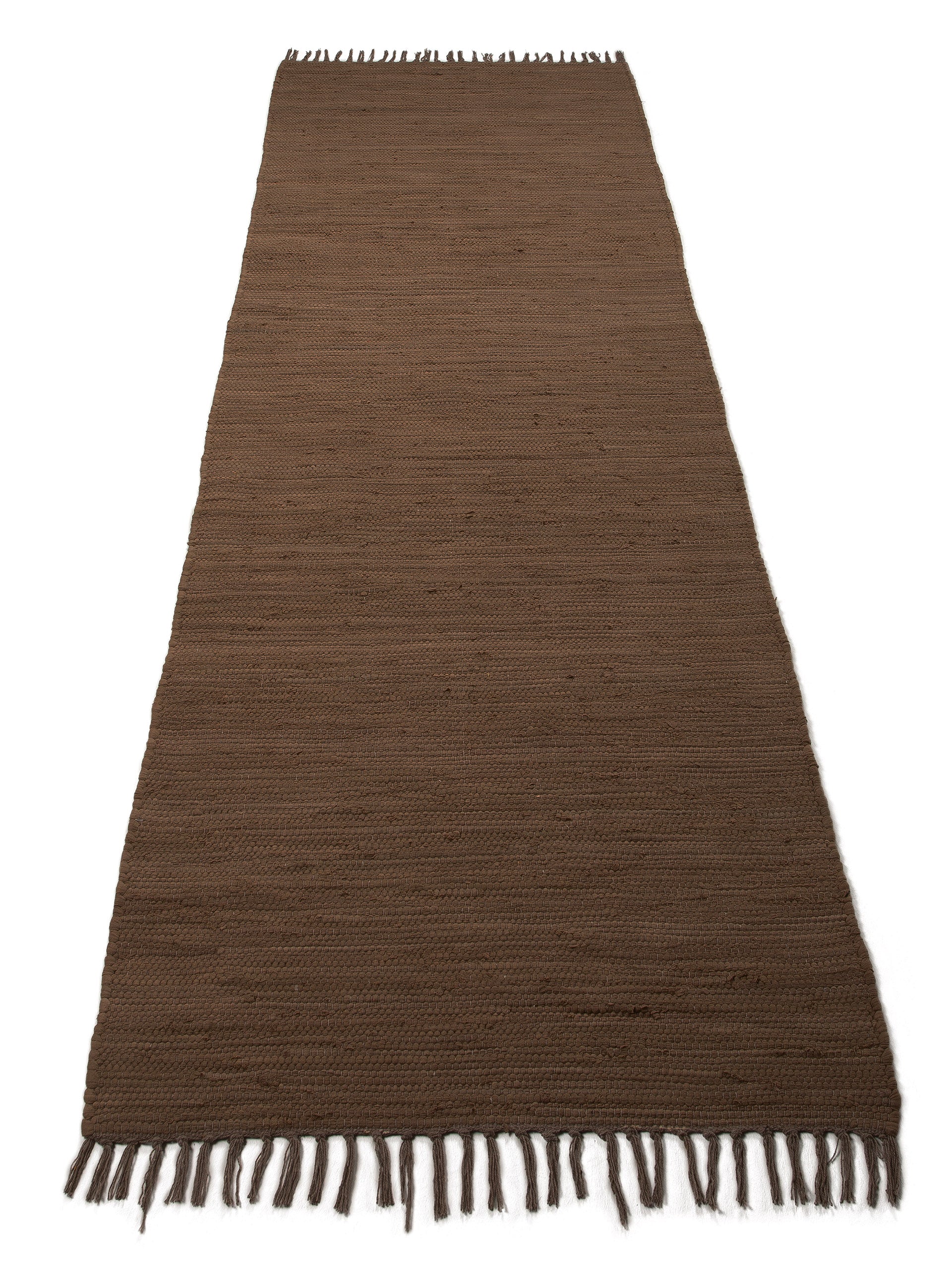
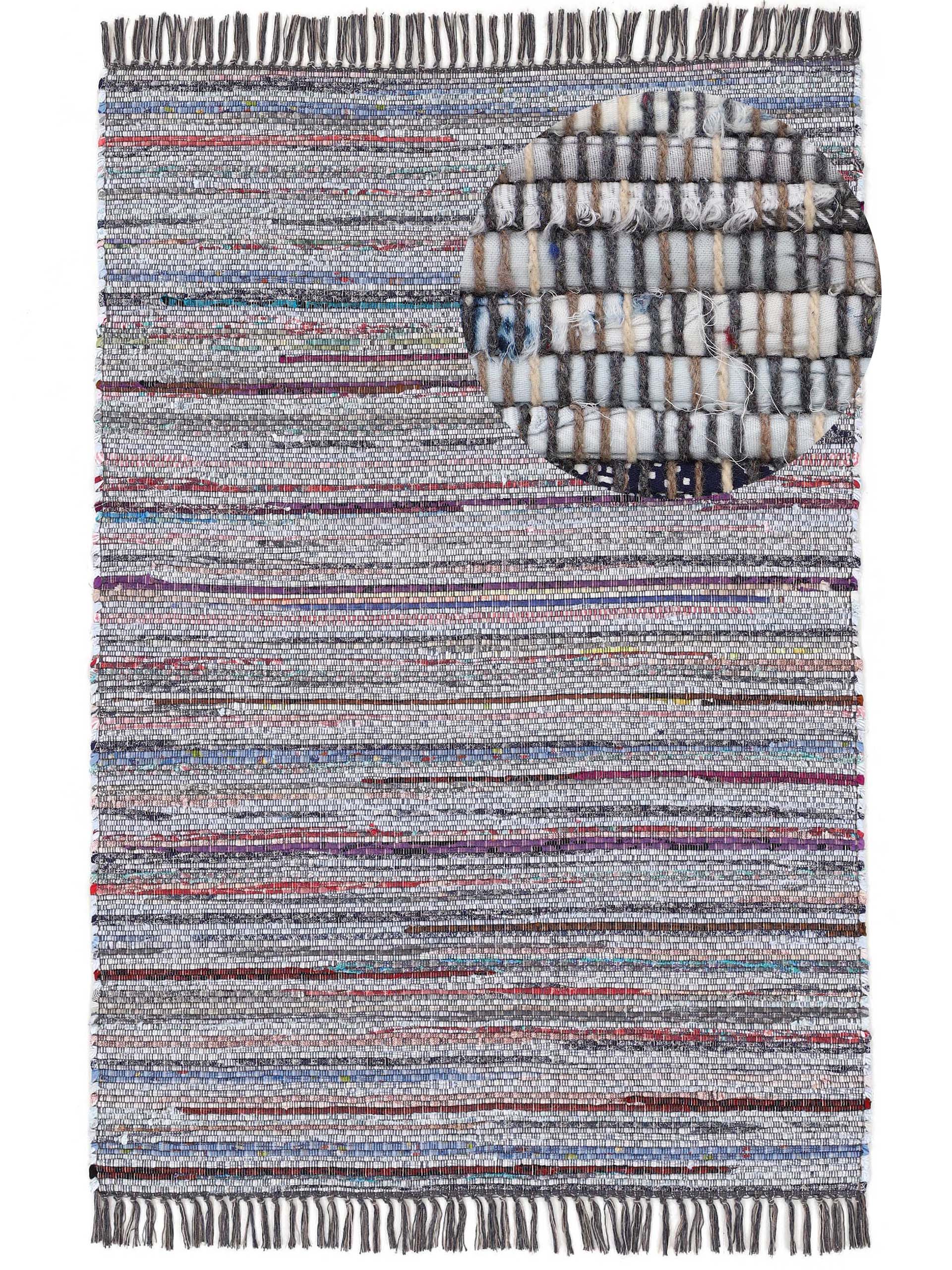
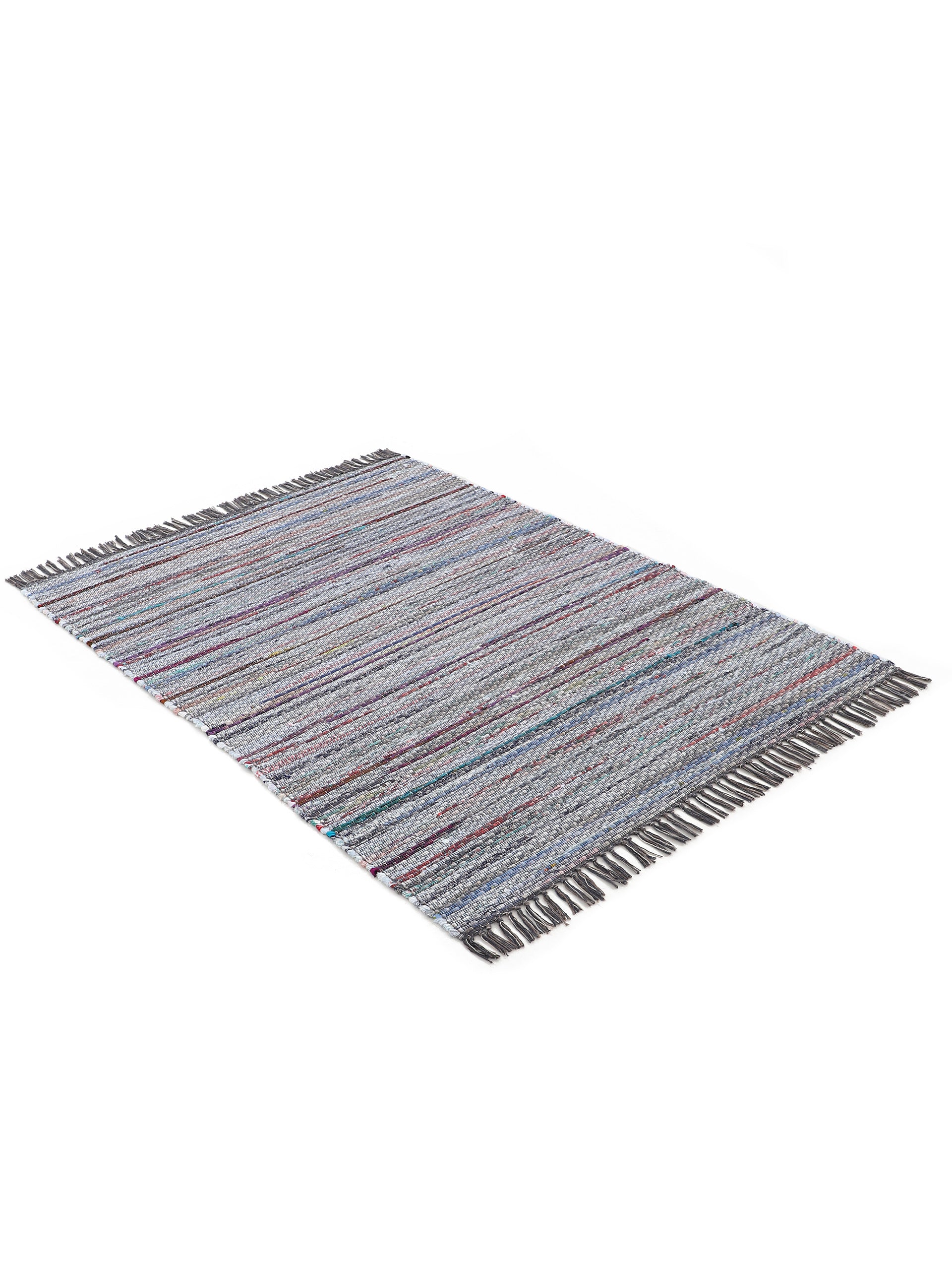
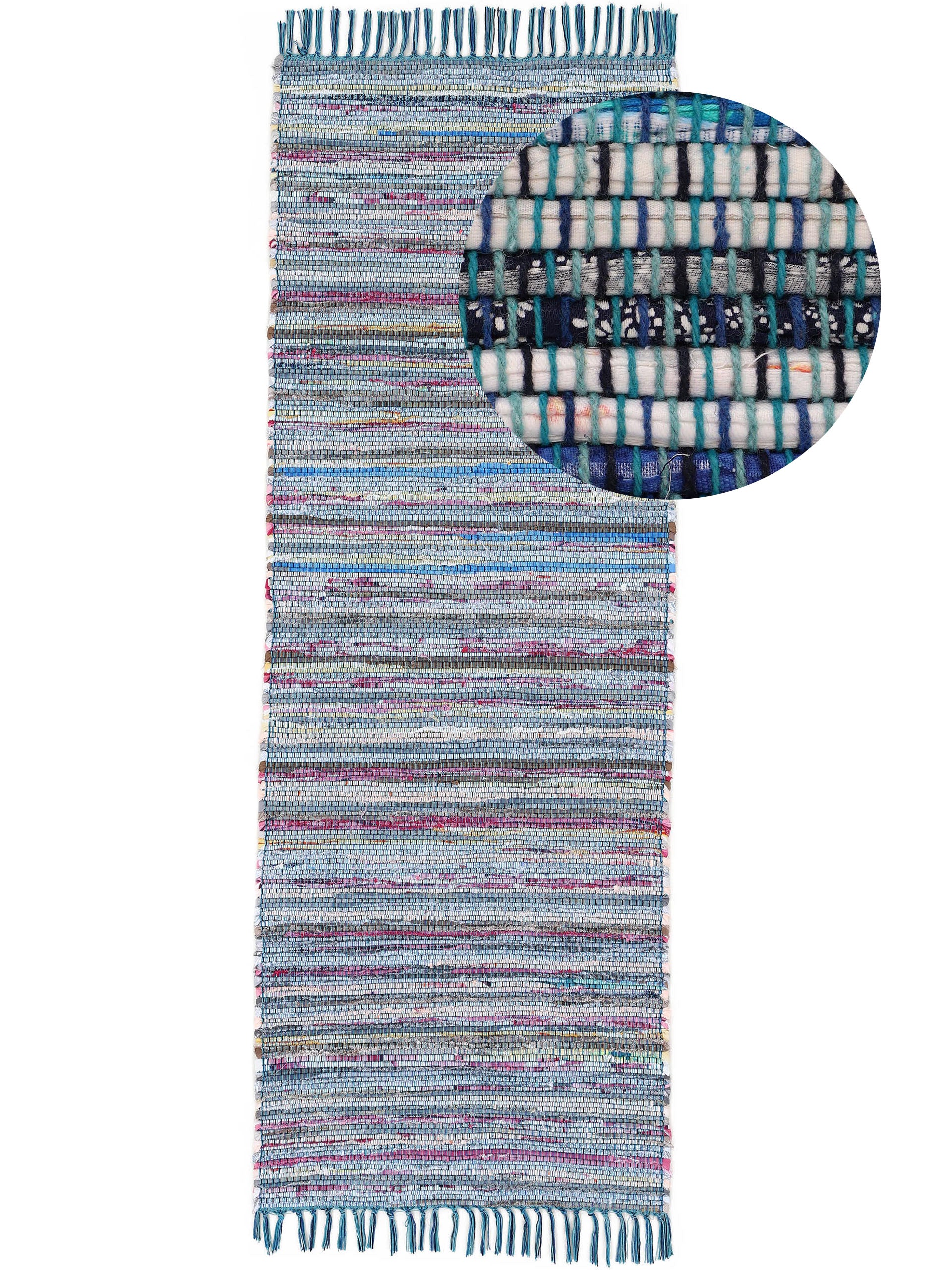
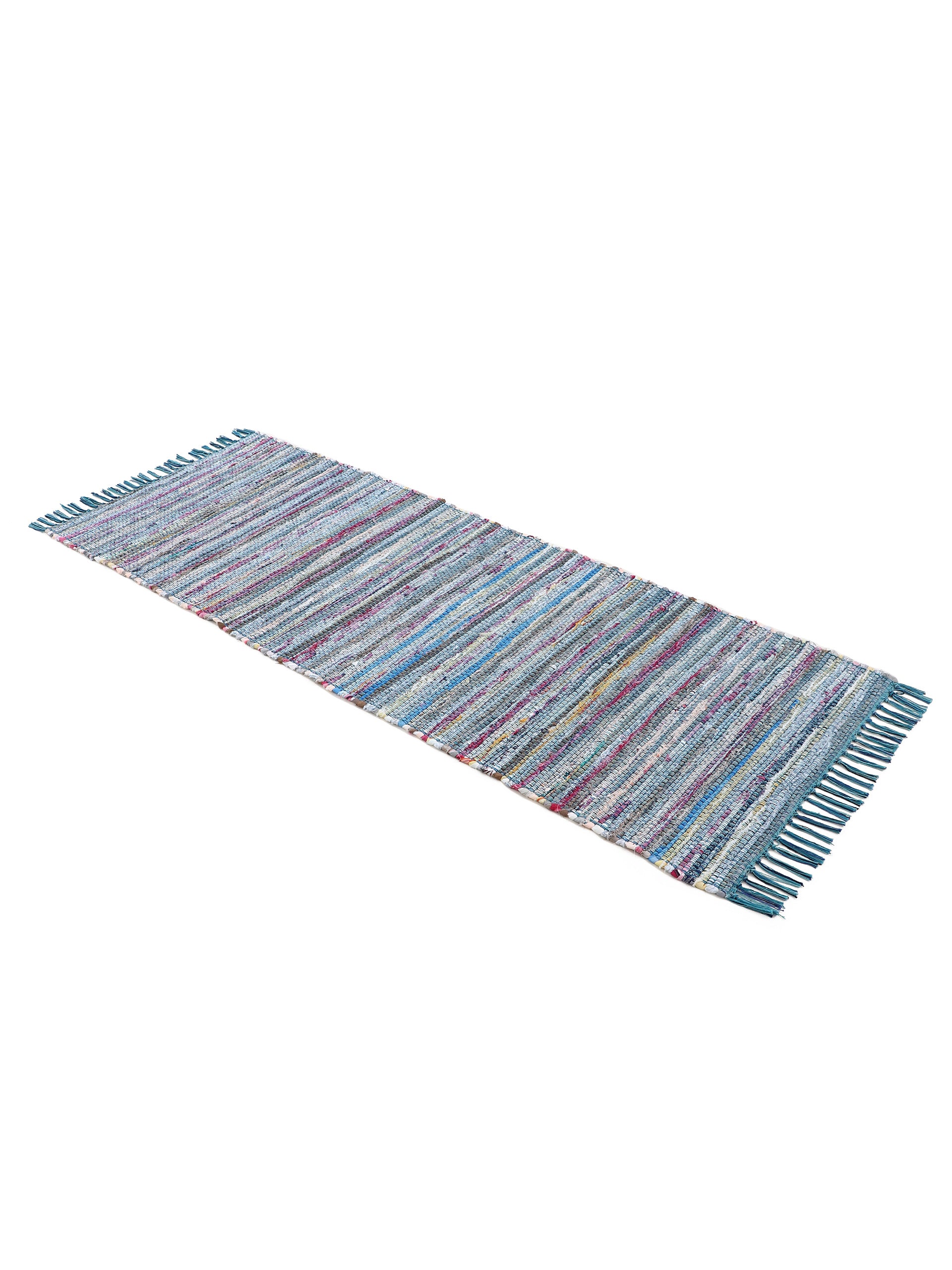
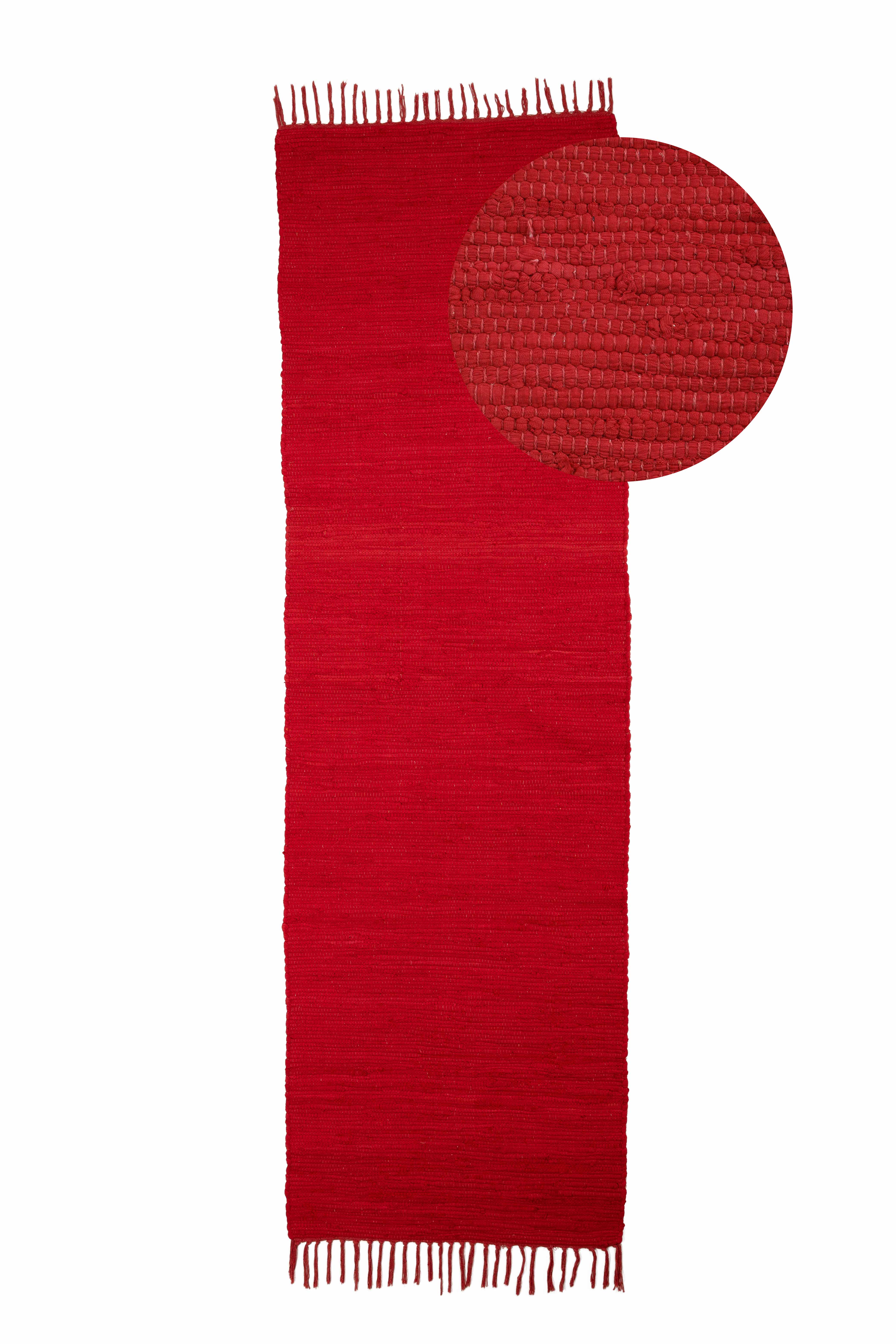
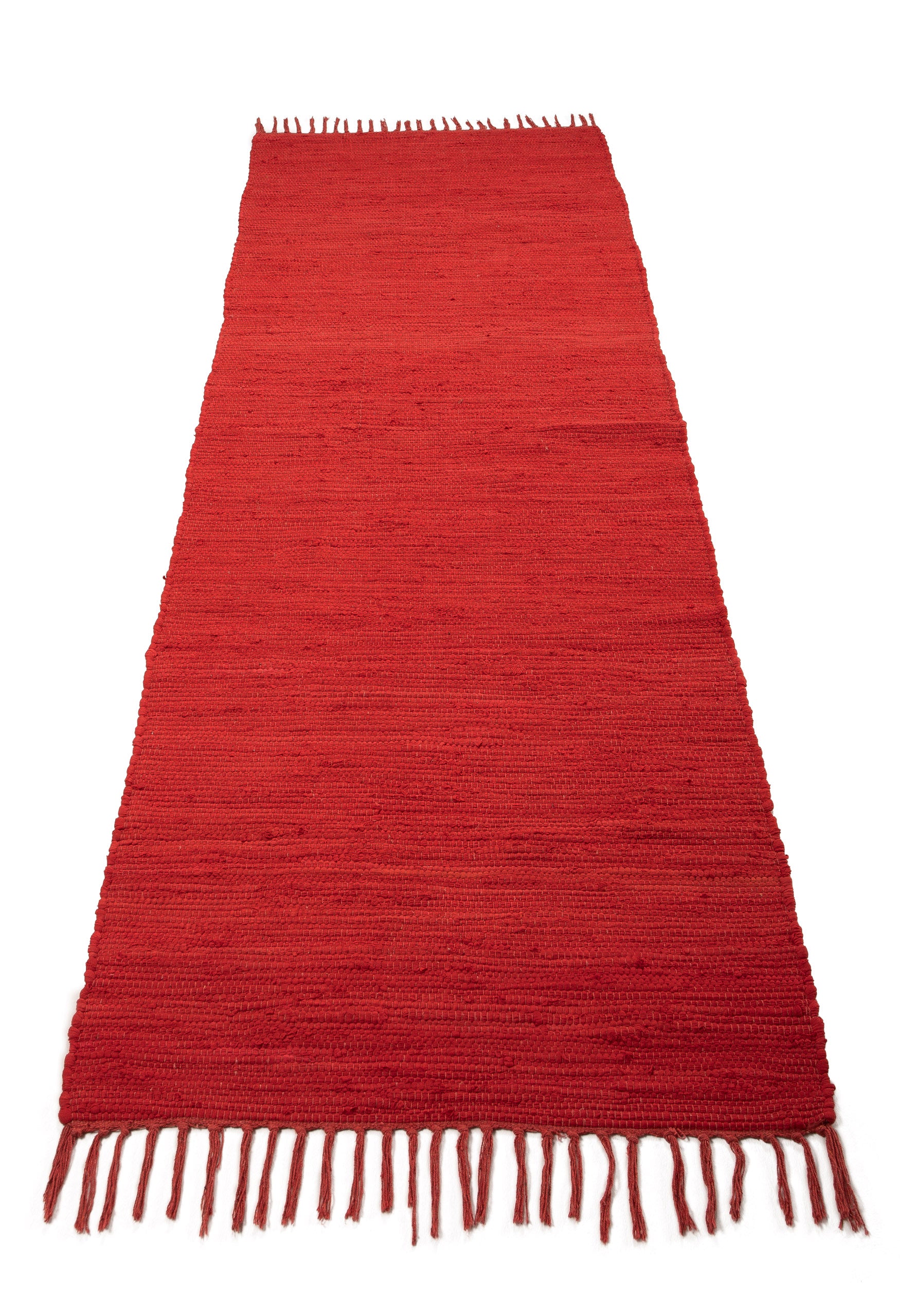
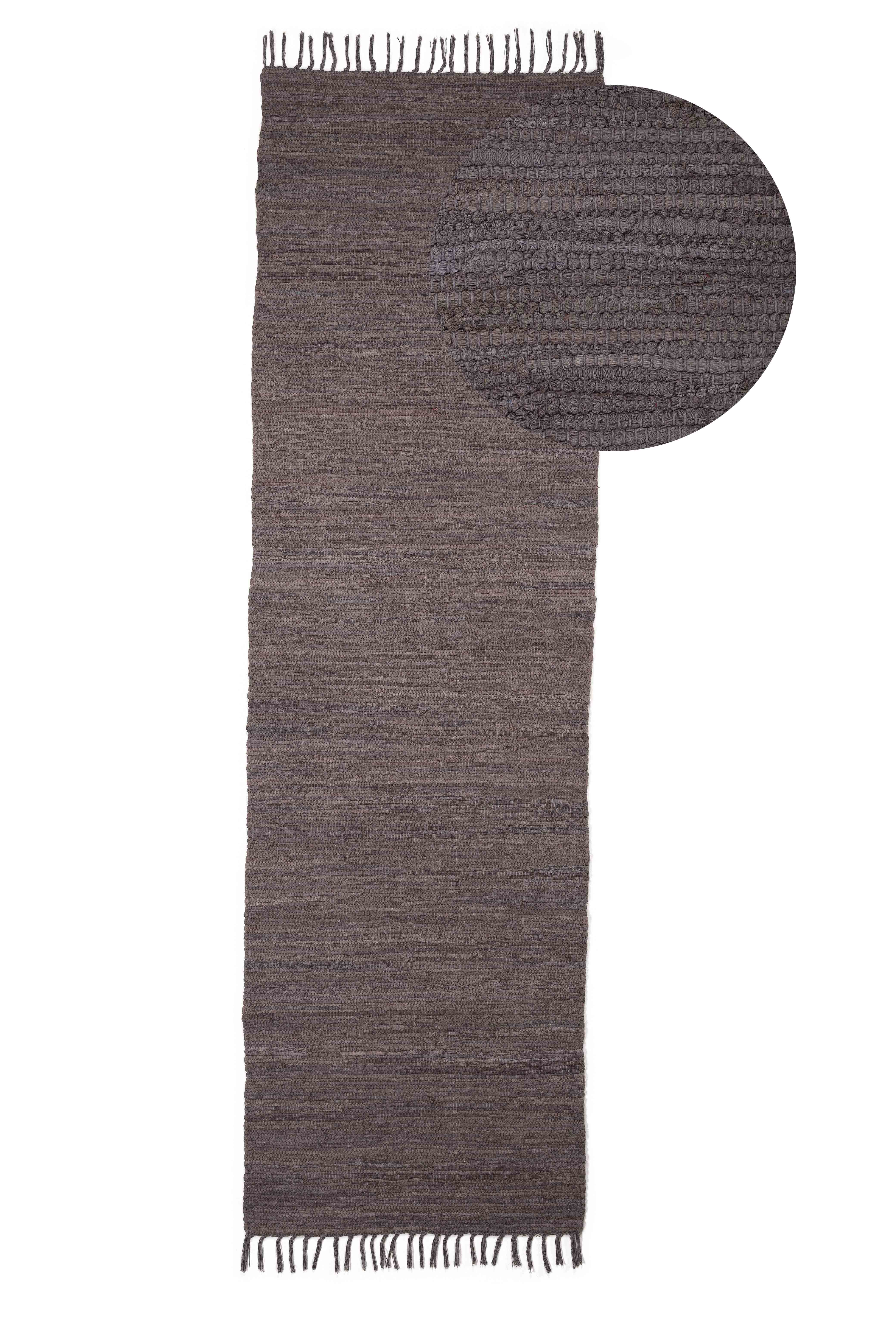
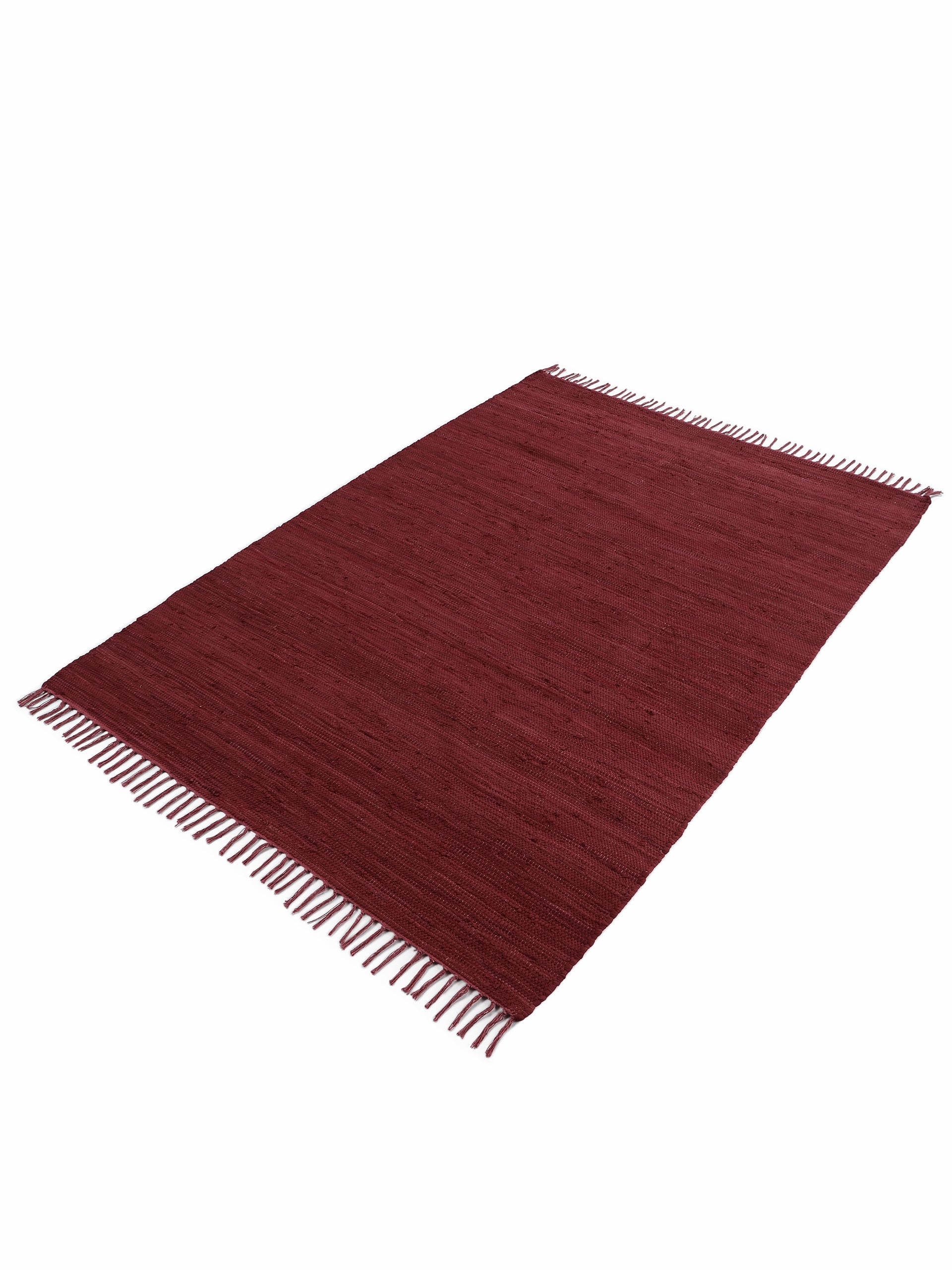
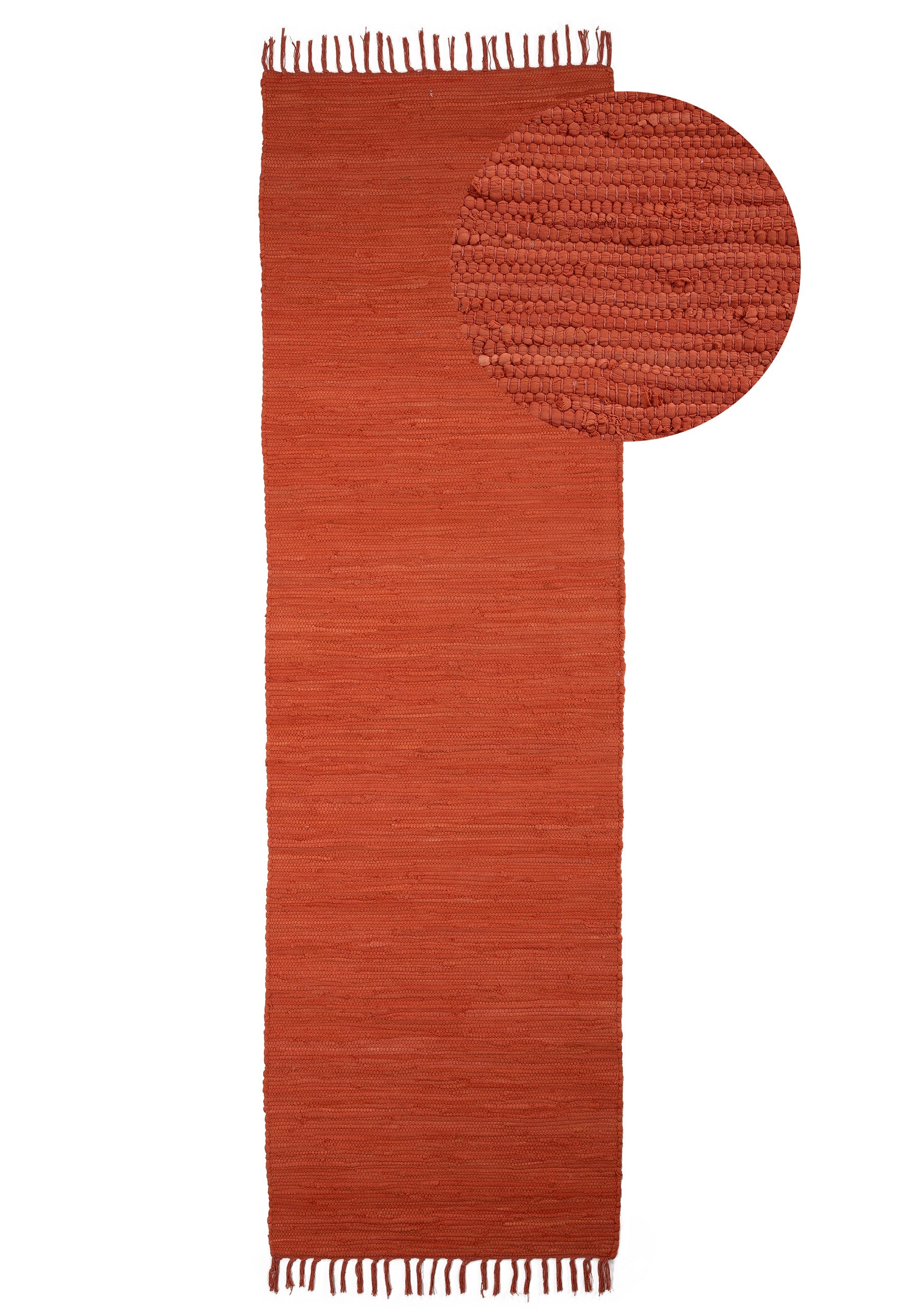
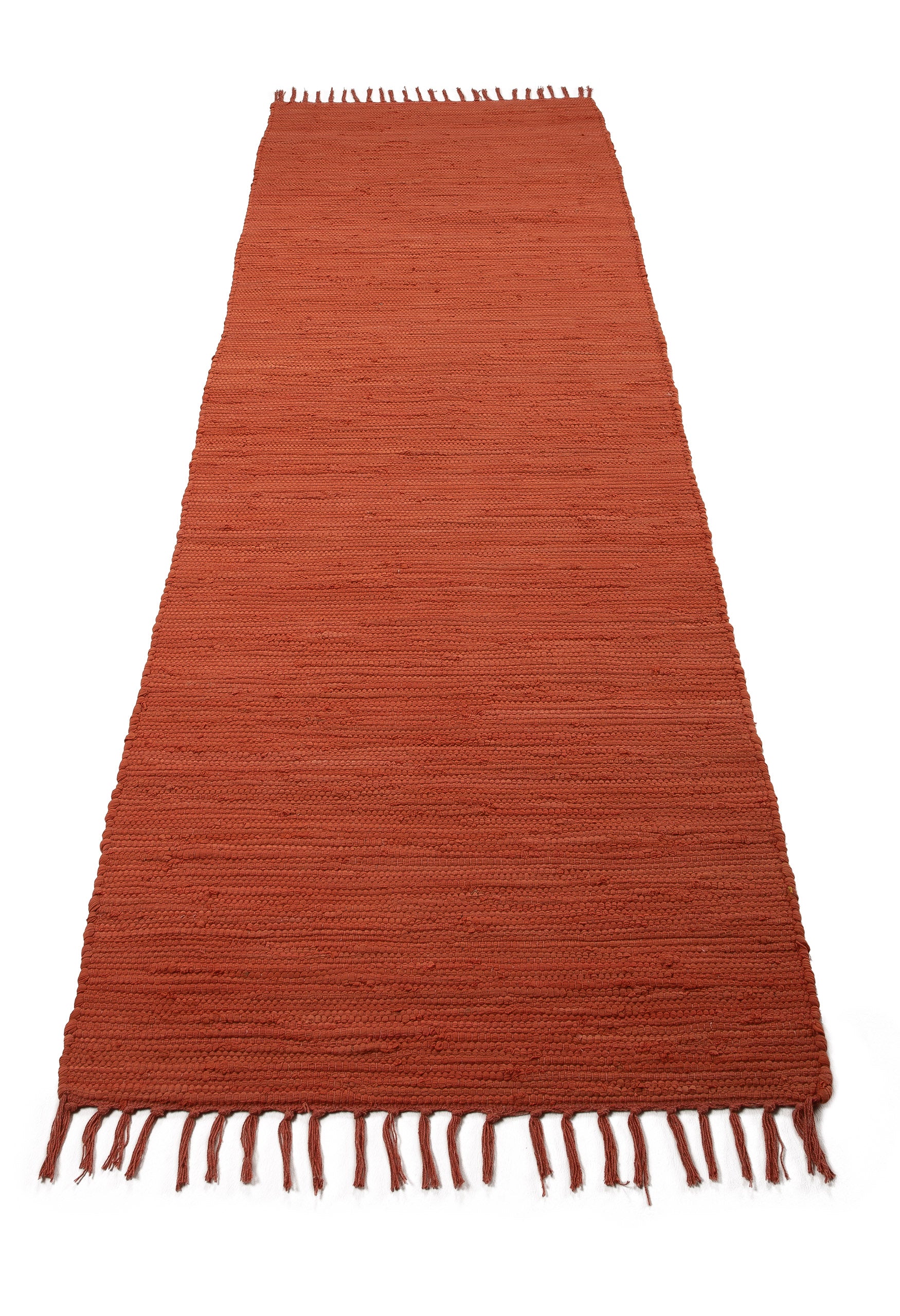
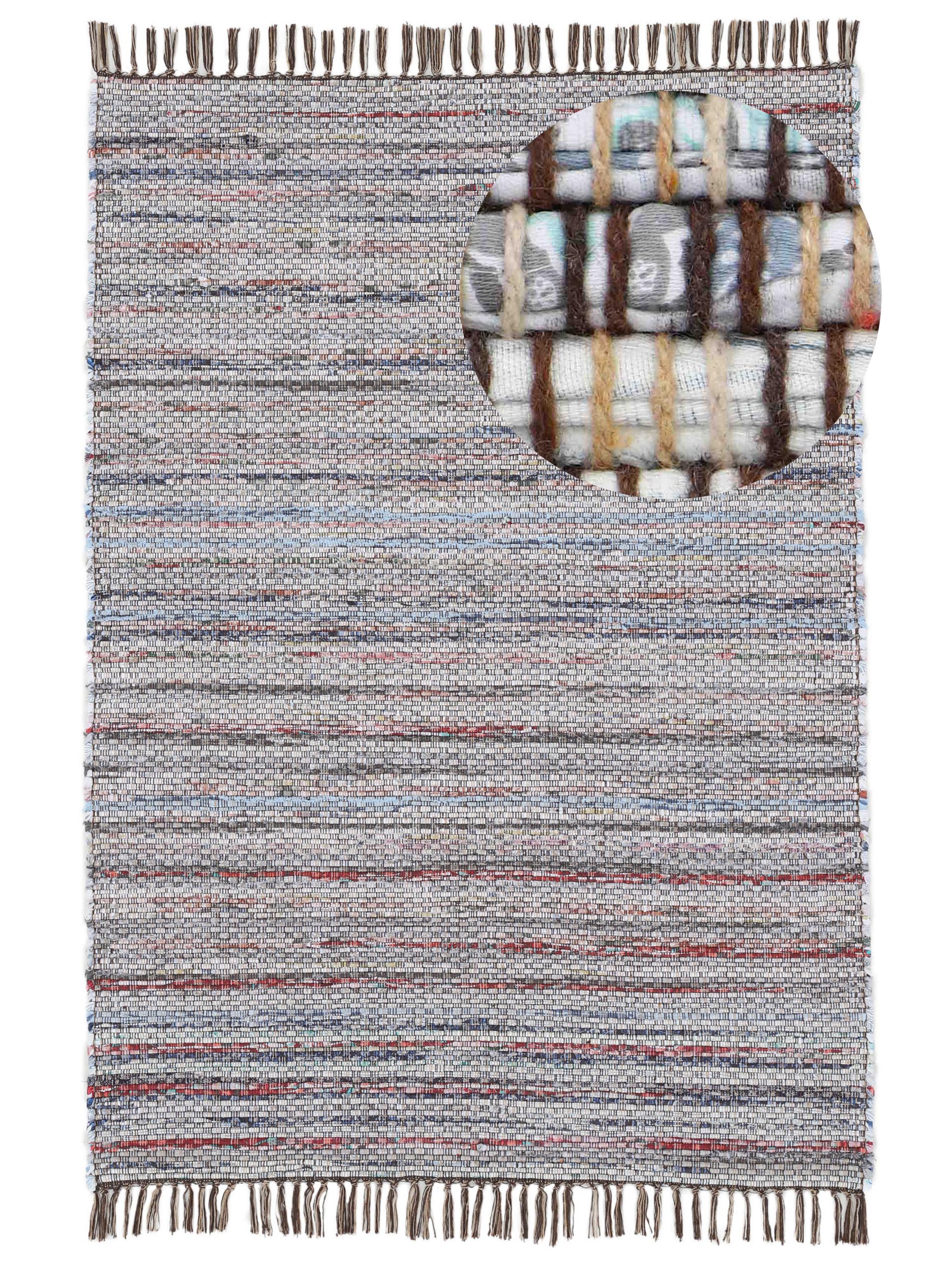
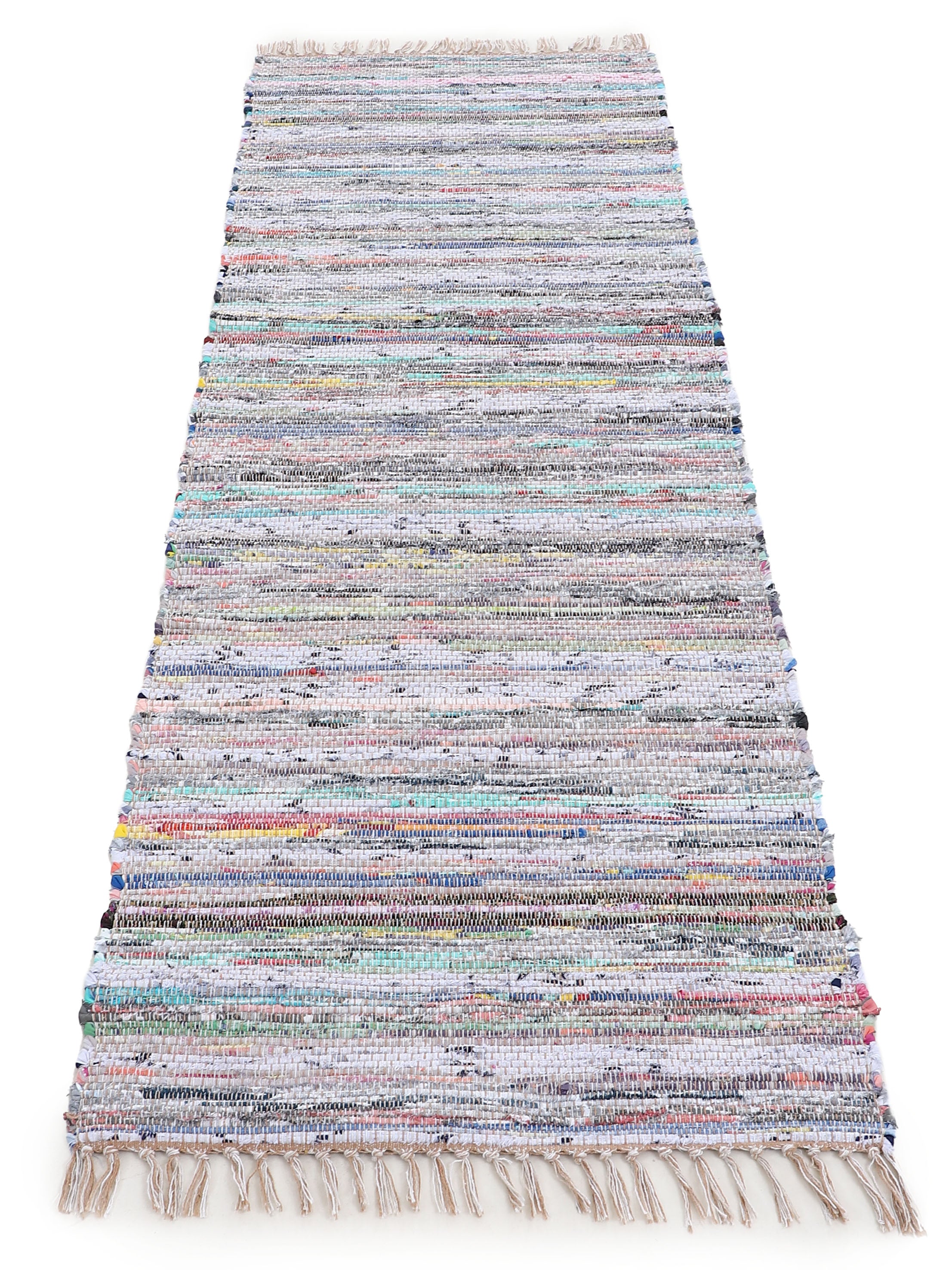
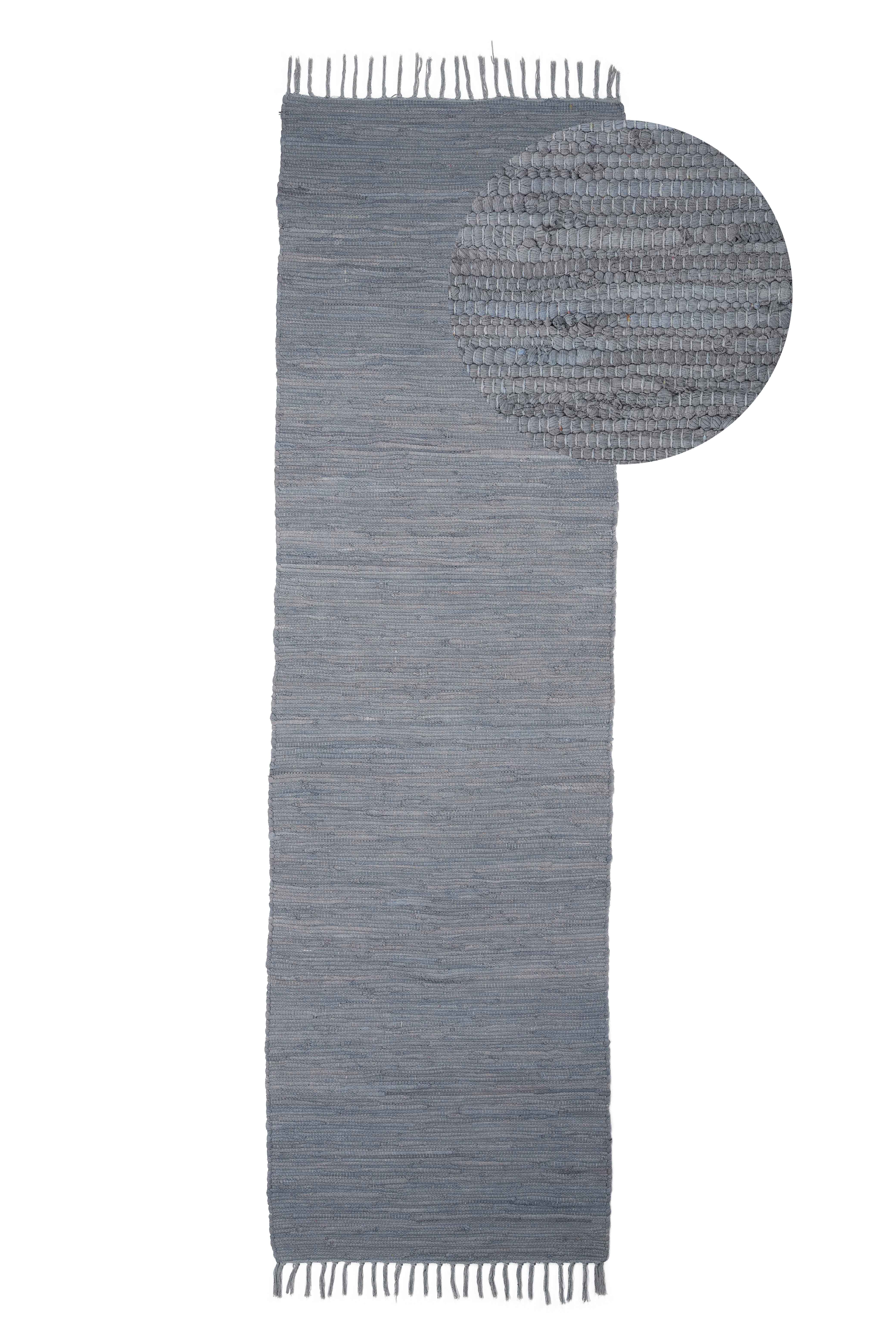
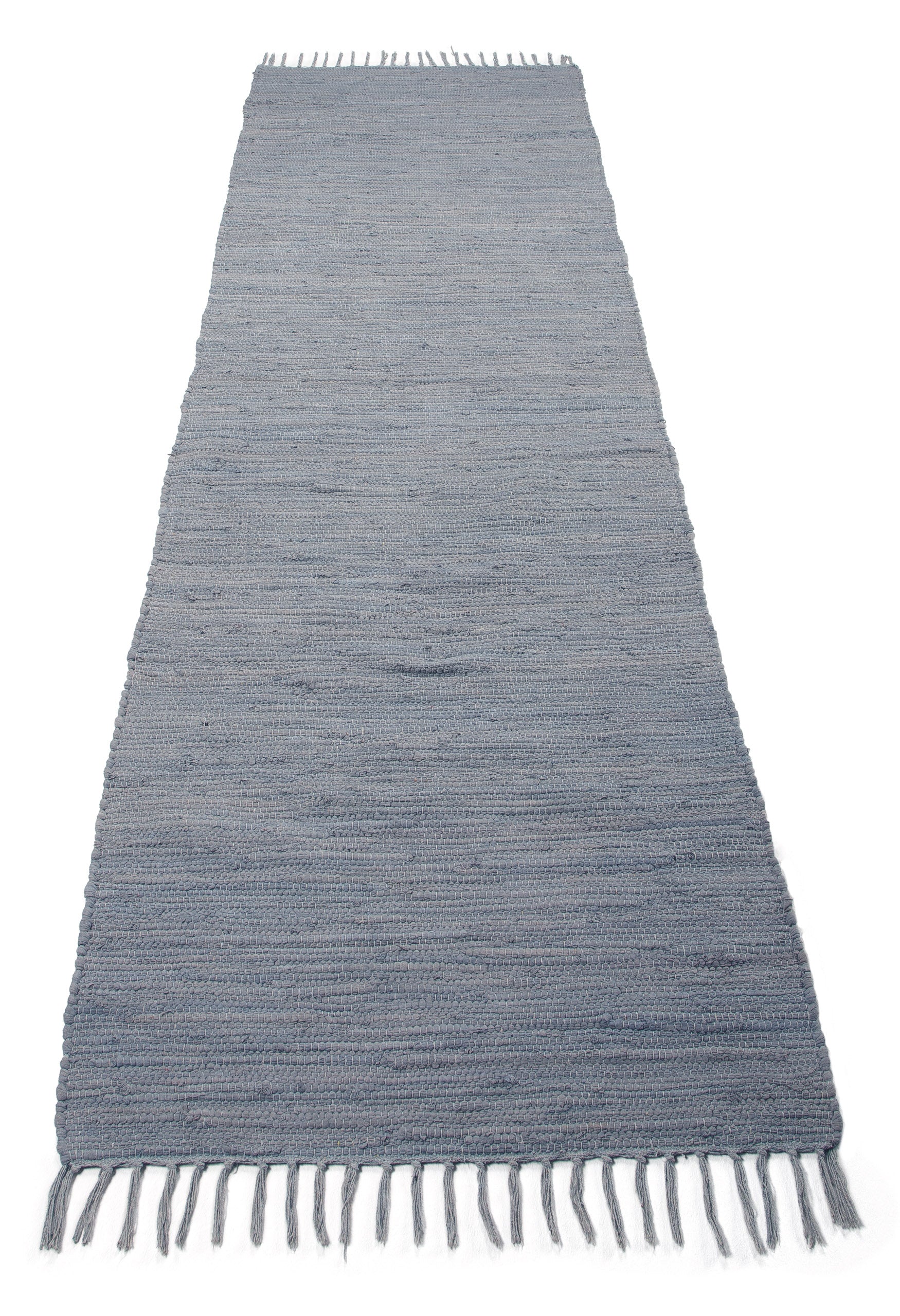
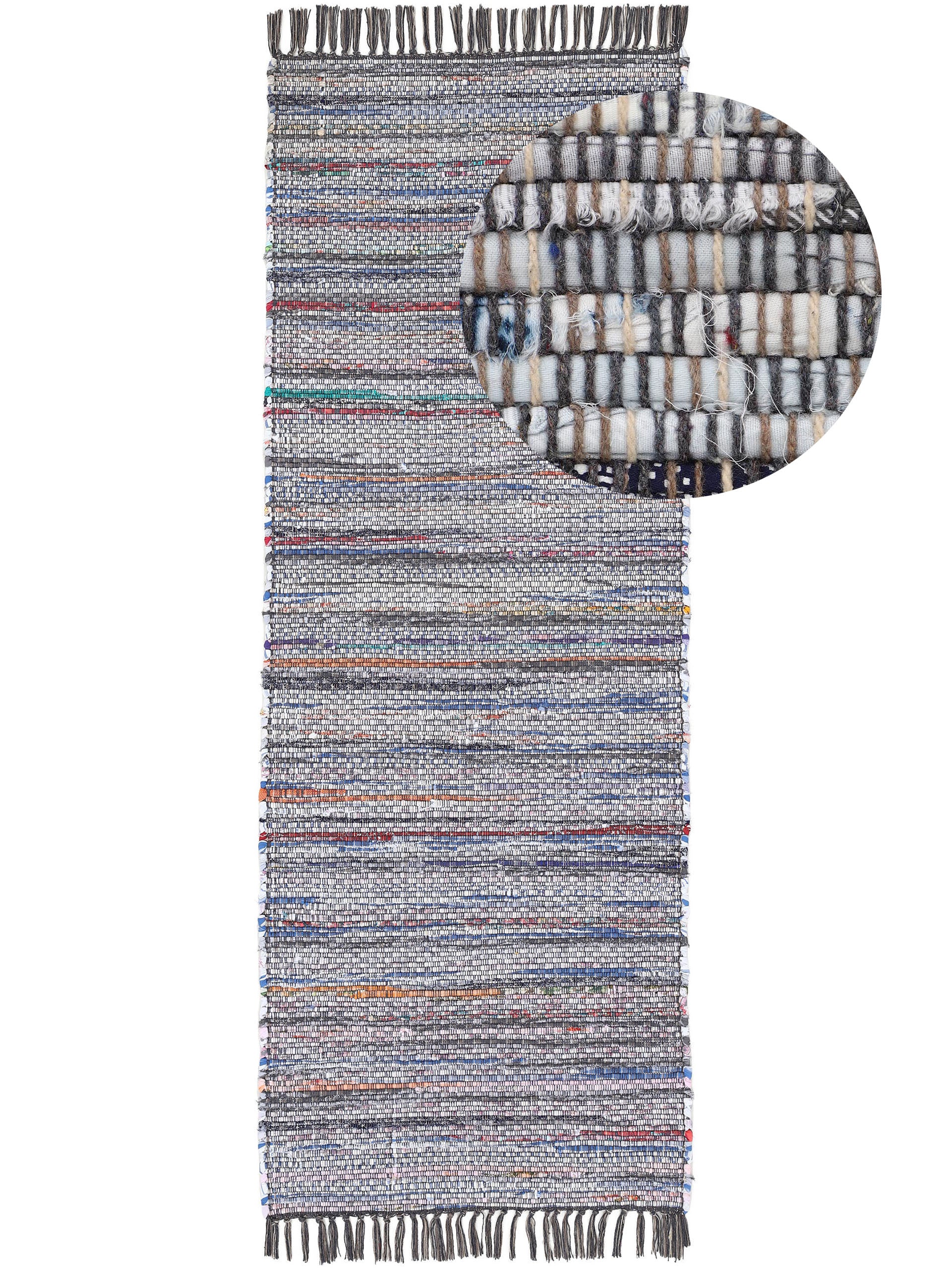
For building, flat children's play rugs are the practical choice. The flat kids rugs here are cotton kilims, handwoven and very flat. Blocks stand straight on them and toy cars roll well. Some come in one plain colour, which pairs easily with patterned bedding and colourful furniture without making the room busy. More flat designs in natural fibre are among our cotton rugs.
For cuddling up with a book, more pile is welcome. A hand-tufted microfibre design has a fuller pile and is soft to sit and lie on. A polyester shaggy goes higher still. That one belongs in the reading corner rather than on the building site, since crumbs sink deeper into it.
Cotton or synthetic? A cotton kilim is light. You can lift it, move it and shake it out on the doorstep. Polyester absorbs little moisture, so spilt juice can usually be blotted up without trouble.
A teenager's room can look more grown-up. The rug mainly needs to suit bed and desk, and neutral tones like grey or black last longer. A flat kilim is handy beneath a desk chair because the castors roll over it easily.
Sizing kids rugs
Kids rugs should be big enough that your child doesn't keep sliding onto bare floor while playing, but with some distance to wardrobe and bed. Leave about 20 to 30 cm between rug edge and wall and even a small kids bedroom looks tidy. If the rug should stay for several years, go one size up. Play areas grow.
When siblings share a room, a large format in the middle marks the shared space. Two narrow runners beside the beds then belong to each child alone. Round kids rugs mark a play island without filling the room, and they have no corners to curl up. A reading corner with a beanbag fits nicely on a 120cm round rug. As a rough guide:
- small room with a play area: 120 x 170 or 140 x 200 cm
- large room, play area in the middle: 160 x 230 or 200 x 290 cm
- beside the bed: runner of 60 x 180 or 75 x 200 cm
- reading or cuddle corner: round with Ø 120 cm
- large play circle: round with Ø 200 cm
Shake flat kids rugs out in the garden and vacuum shaggy pile with a smooth nozzle. Blot spills at once before they soak in. Where juice ends up on the floor most days, compare our washable rugs for the children's room as well. On polyester a damp cloth with a little mild detergent usually deals with fresh stains, then dab with clear water. Sand from the playground is better vacuumed briefly every day than thoroughly once a week, otherwise it rubs into the pile.
The same easy-care kilims also do well as a kitchen rug in front of the sink, or as a dining room rug under the family table.
Frequently asked questions
Will the rug slide away when they romp around?
On parquet or tiles it can. An anti-slip underlay cut slightly smaller than the rug holds it in place.
What's good for crawling babies?
Soft pile such as the microfibre cushions a little. For first steps a flat kilim is safer.