

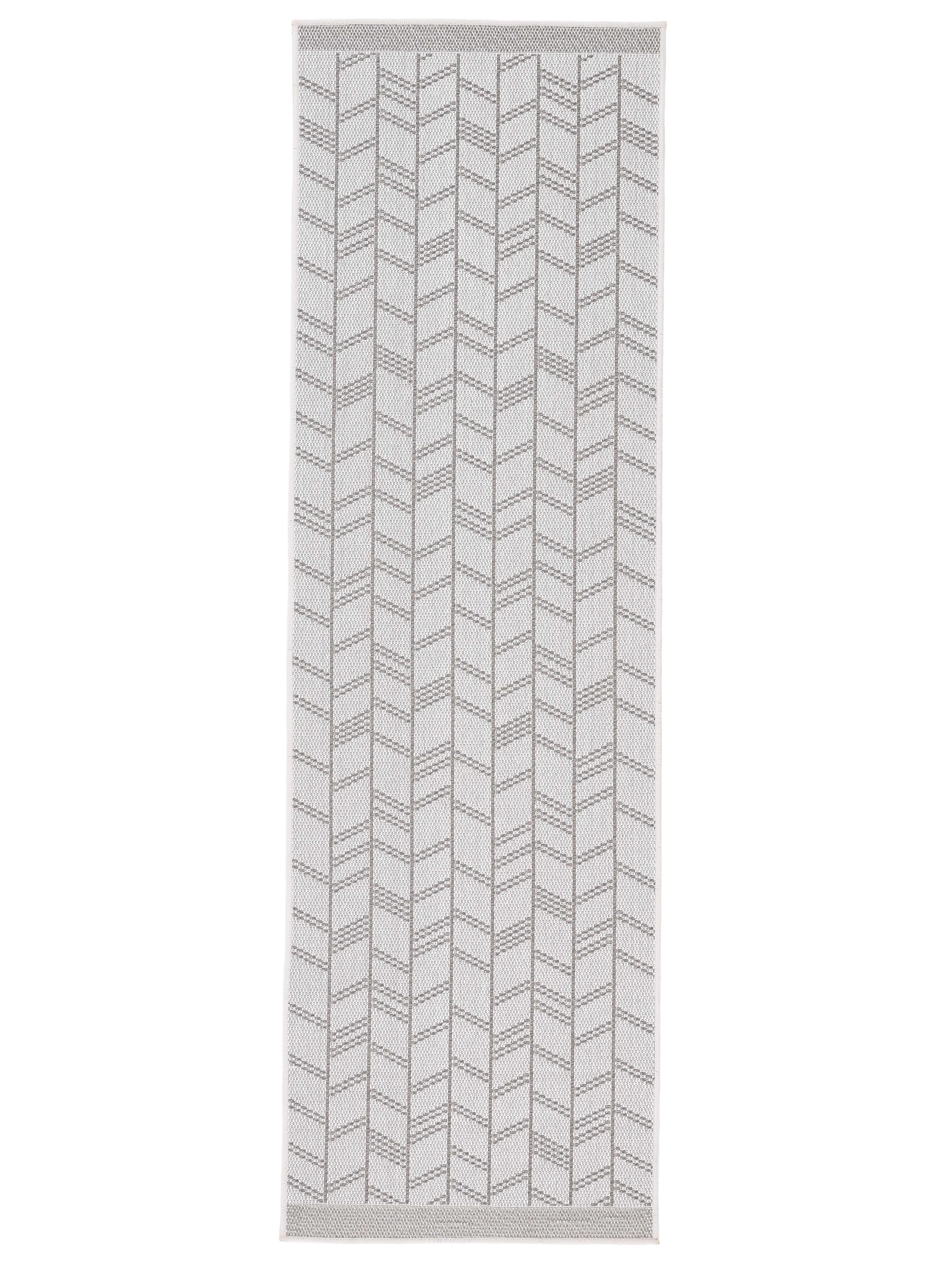
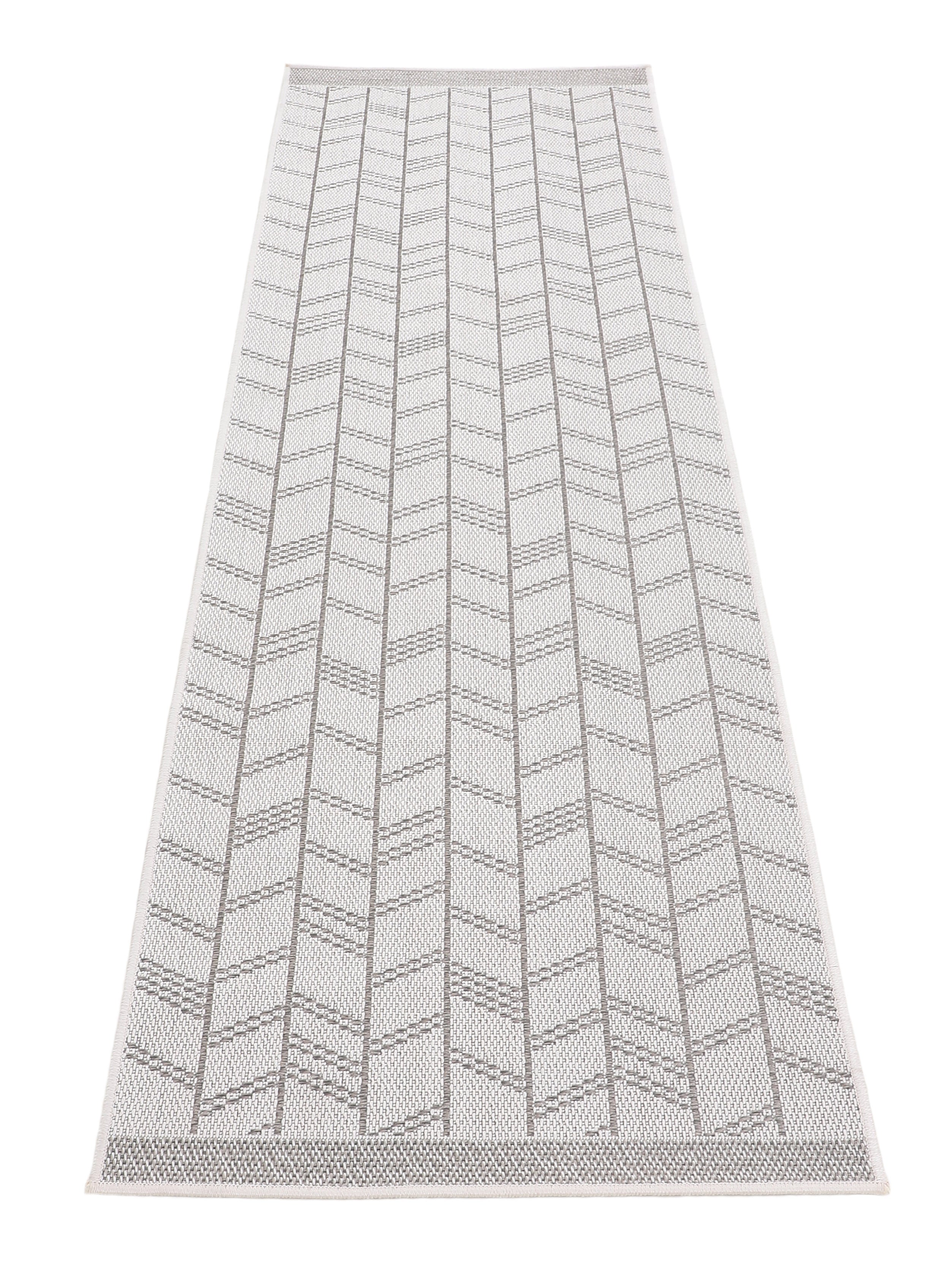


When you cook, you stand in the same few spots again and again. At the sink, at the hob, on the stretch of worktop in between. That is where the floor is hard and often cold, and where a bit of pasta drops or water splashes. A kitchen runner catches all of that. It is narrow enough for drawers and the dishwasher door to open freely, and long enough to follow the whole run of units.
Every runner in our range counts here. That covers flat cotton kilims as well as wool runners with a fuller pile. Widths run from 60 to 80 cm. Lengths go from 180 cm all the way to 600 cm. Red and beige are the most common colours, and cream and blue follow, with lots of patterns on top.
Not every runner belongs in front of the hob, though. A deep shaggy pile traps crumbs, and viscose reacts badly to water. In a kitchen two things count. A low pile, and a material that forgives the odd splash.
Along the Worktop
Measure first, then choose. Take the length of your units from the tall cupboard to the wall or to the end of the worktop, then subtract what should stay free, because the runner can easily be 30 to 60 cm shorter so that floor stays visible at both ends and it doesn't butt up against a cupboard or the wall. For a short run or a small galley, 60 x 180 cm is enough, and it is one of the sizes we stock most often. Slightly wider, there is 80 x 200 cm.
With three to four metres of units you usually end up between 240 and 350 cm in length. The popular middle size has its own page with our 80 x 300 cm runner rugs. Long kitchens up to 4.60 m take an 80 x 400 cm runner, and very long runs can go up to 600 cm.
A Kitchen Runner for Narrow Spaces
Width is quickly sorted. Most kitchens work with 70 to 80 cm, very narrow layouts with 60 cm. Keep it a few centimetres clear of the base units. Otherwise drawers drag. In front of an island, the length follows the island rather than the whole kitchen. A galley with two rows of units simply gets one runner per side.
Kitchen rug runners need grip. An anti-slip underlay is essential on tiles. You move back and forth all the time while cooking. The sisal-look runner already comes with a felt backing with small nubs, so it doesn't shift so easily. With an underlay, any kitchen runner turns into a non-slip runner, and that makes everyday life a lot easier.
Near the Sink and Hob
Cotton is the least fussy choice. A flat kilim barely adds height, drawers glide over it, and for cleaning you shake it out in the garden. Synthetic fibre absorbs hardly any water. That helps. It dries quickly, and one of our indoor and outdoor designs in polypropylene is suitable for the kitchen too. If you would rather put a rug in the drum after a messy weekend, take a look at our machine washable rugs.
Jute looks natural as a kitchen runner rug and has a short pile, but it does not tolerate wet. Moisture is no friend of the sisal-look blend either, which is 80% jute and 20% cotton. Wool is soft and springy. It suits an open-plan kitchen where less splashes. Viscose and high pile are better off in the hallway or bedroom.
Cold tiles are the usual kitchen floor, and a woven runner makes them friendlier. Unlike a plain kitchen mat, it also looks like part of the room.
Next to the Dining Area
For colour, look at your cabinet fronts. Beside wooden fronts, beige or cream looks calm. Red brings colour into a white kitchen, and patterned runners hide splashes better than plain ones.
The dining spot next door usually needs a bigger size, and our dining room rugs give you ideas for it. Rectangular and round designs for the cooking area are among the kitchen rugs. For hall and landing there is a separate selection of runner rugs.
Frequently asked questions
How long should it be for a 3 metre run of units?
About 240 to 270 cm. A runner in 75 x 240 cm suits that well.
Do I need an underlay?
On tiles and laminate, yes. It keeps the runner in place even when you keep walking back and forth at the hob.
Can a wool runner go in the kitchen?
In an open-plan kitchen, yes. Thanks to its natural lanolin, wool tends to keep dirt on the surface, and it bounces back. Right in front of the sink, cotton is more practical.