



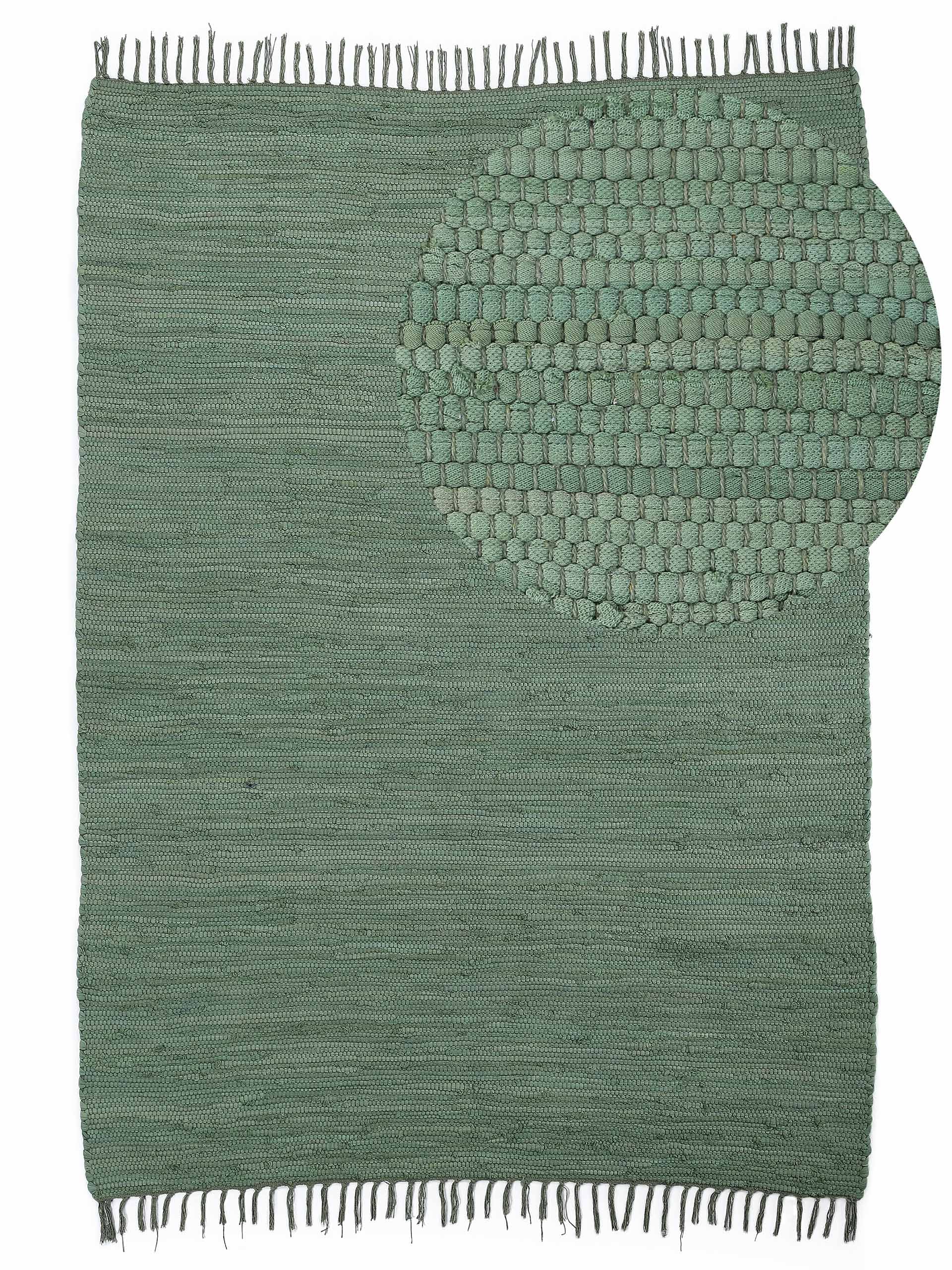
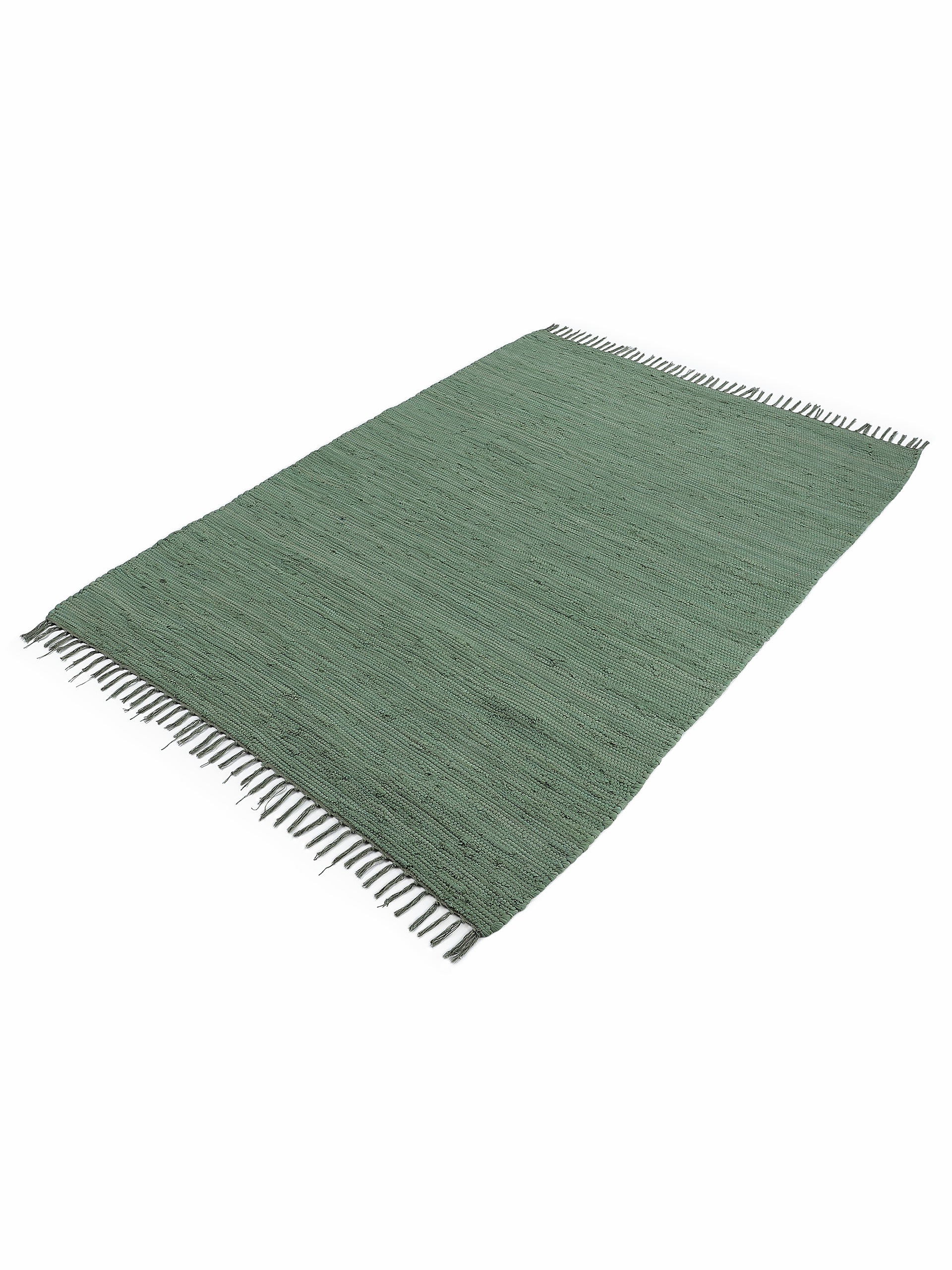
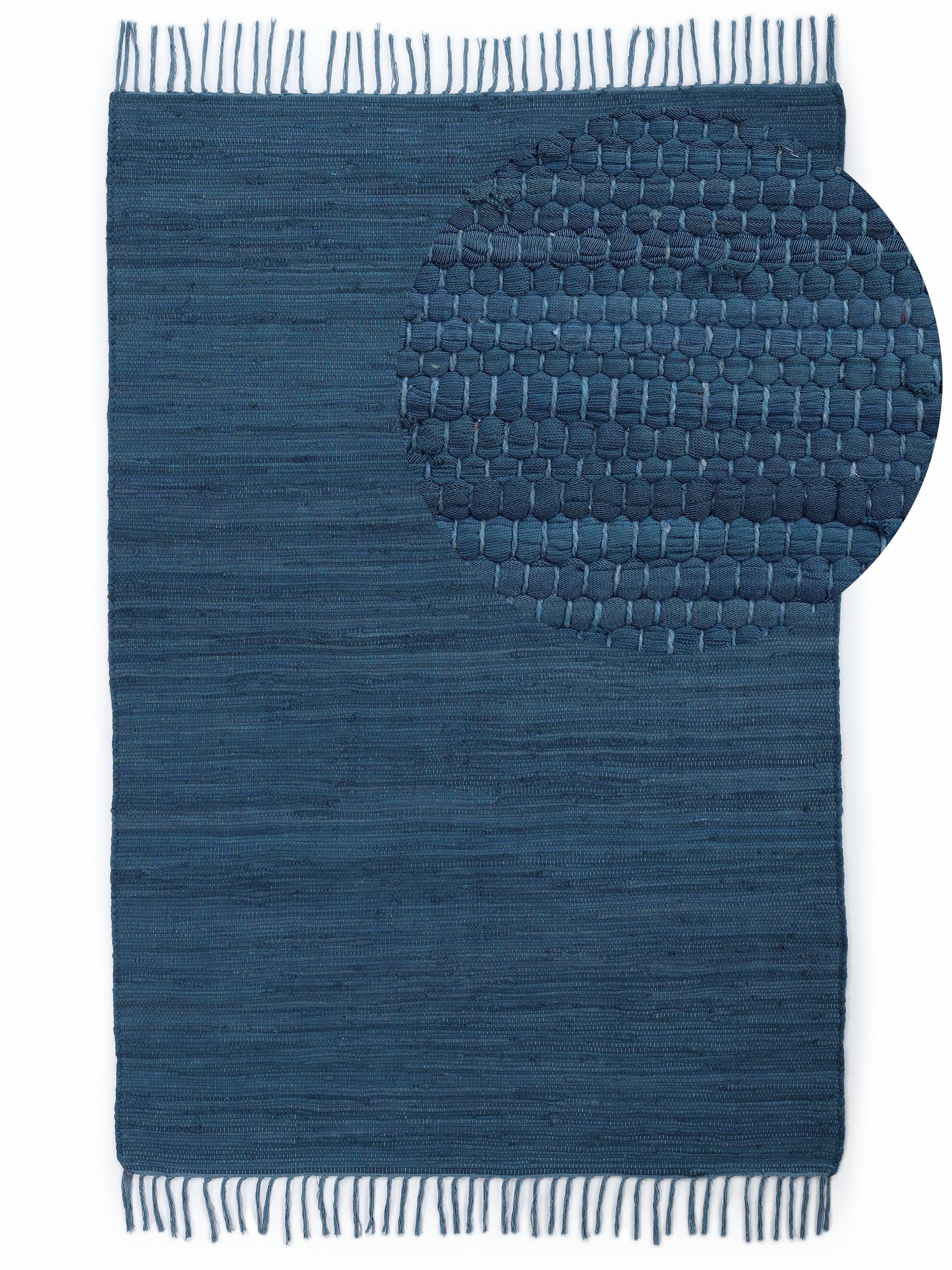
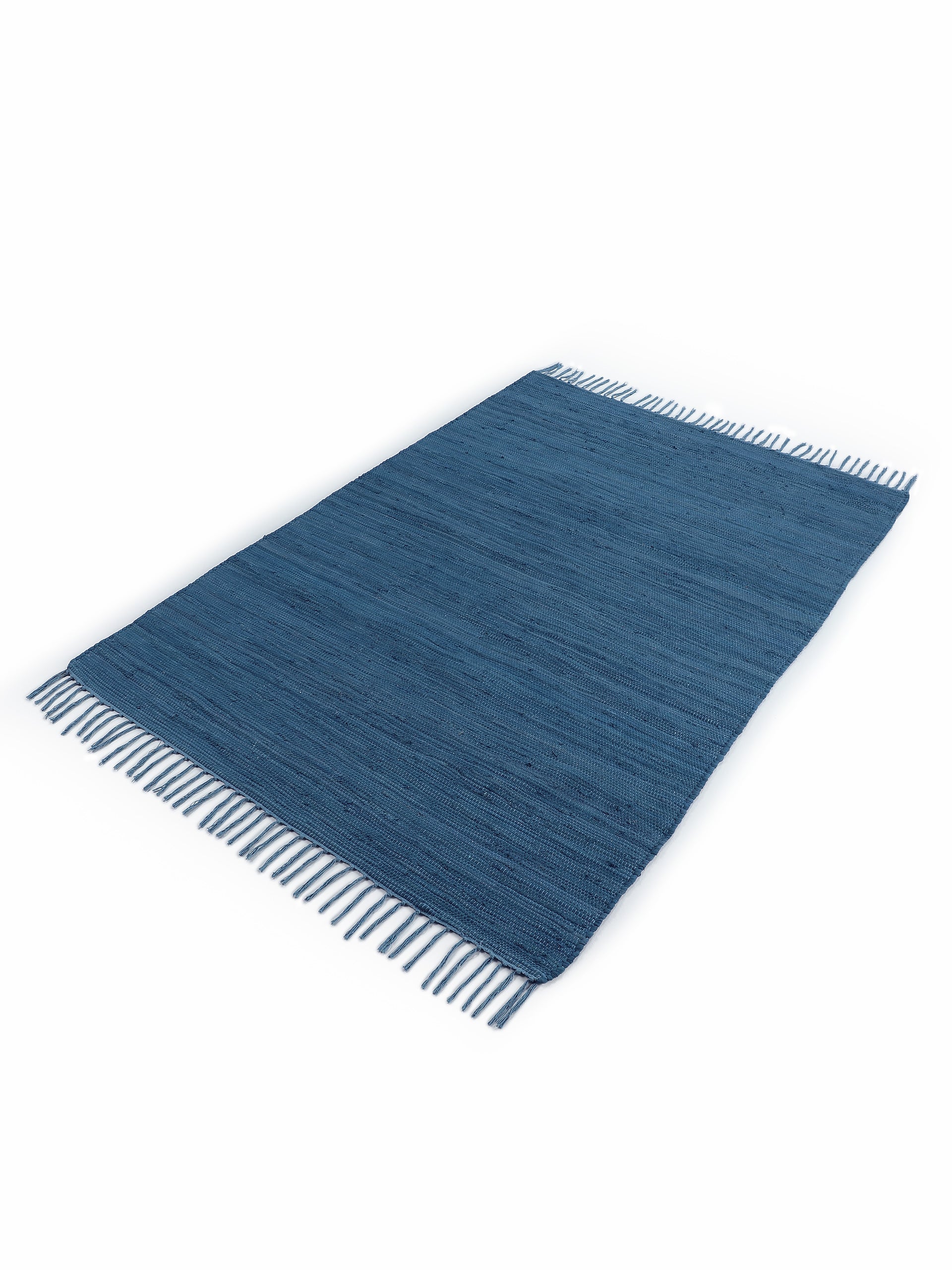
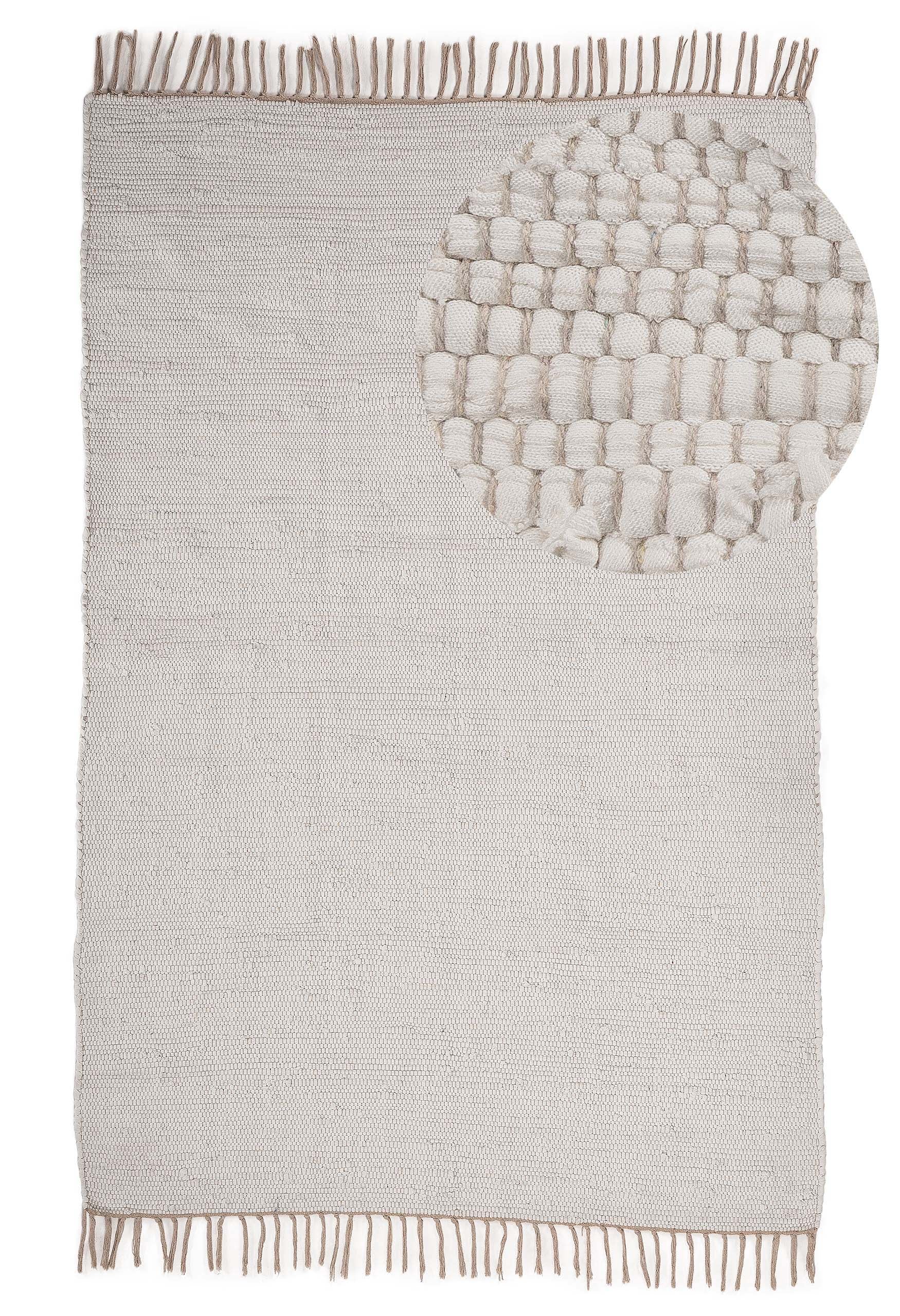
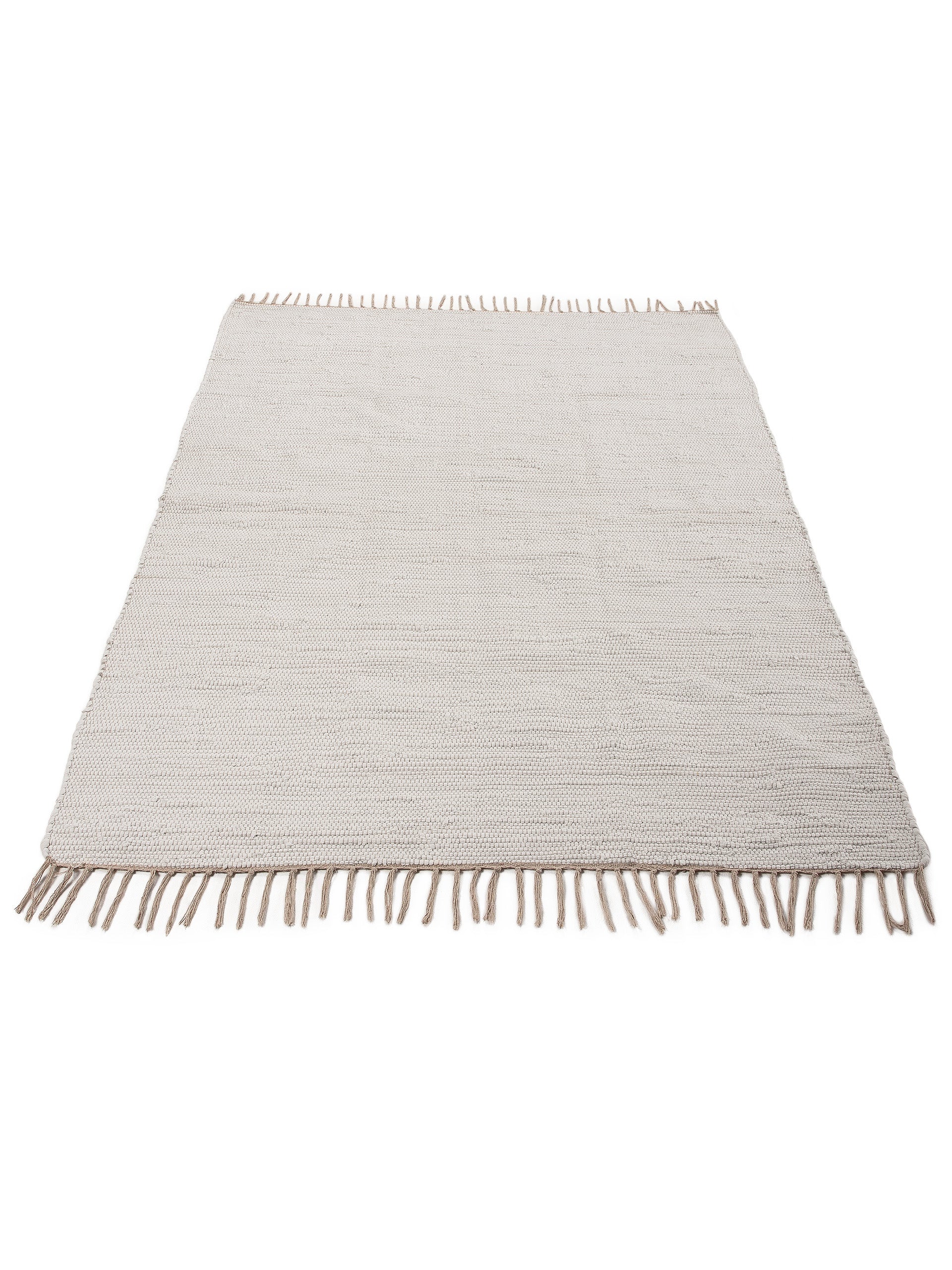
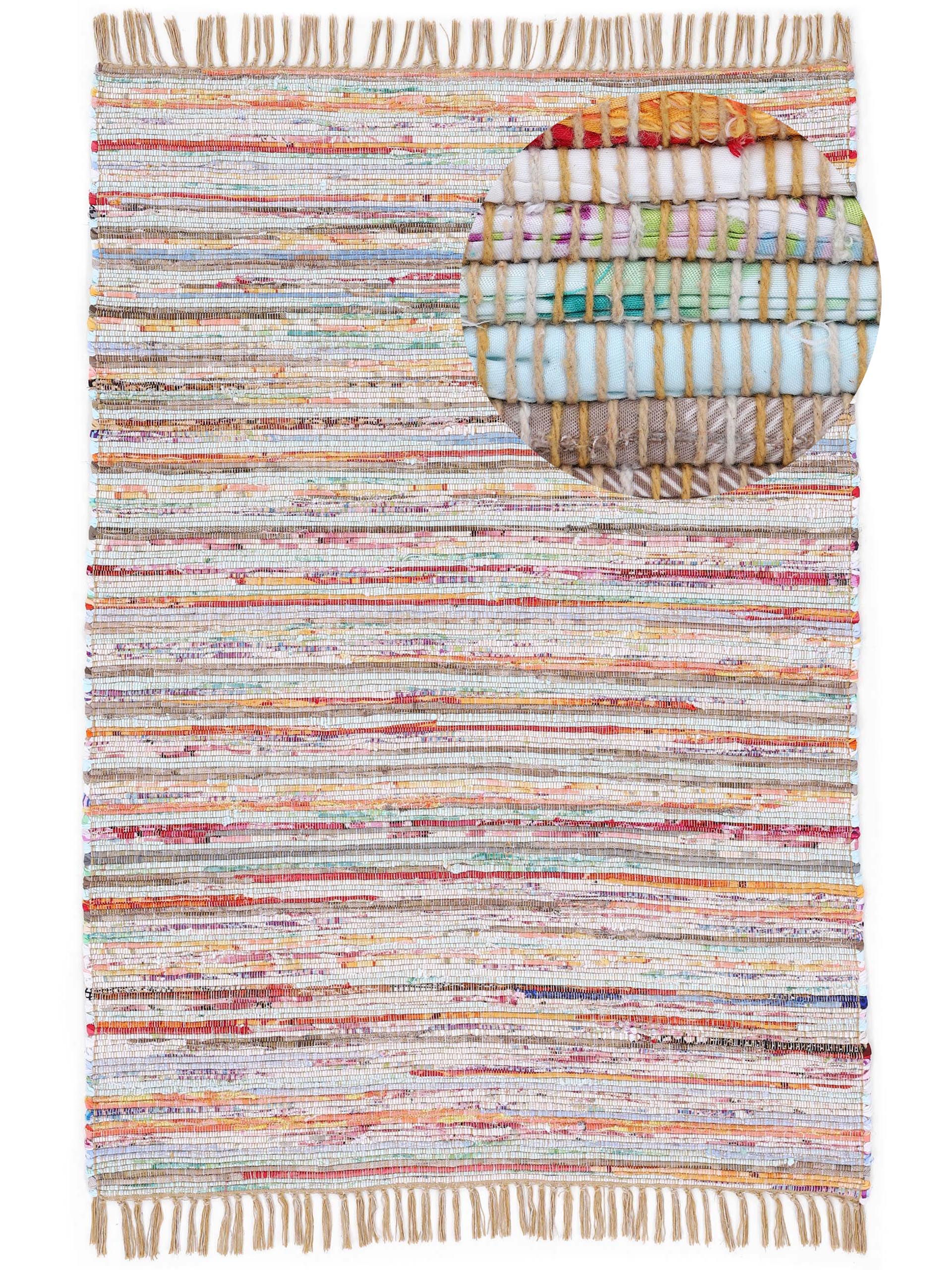
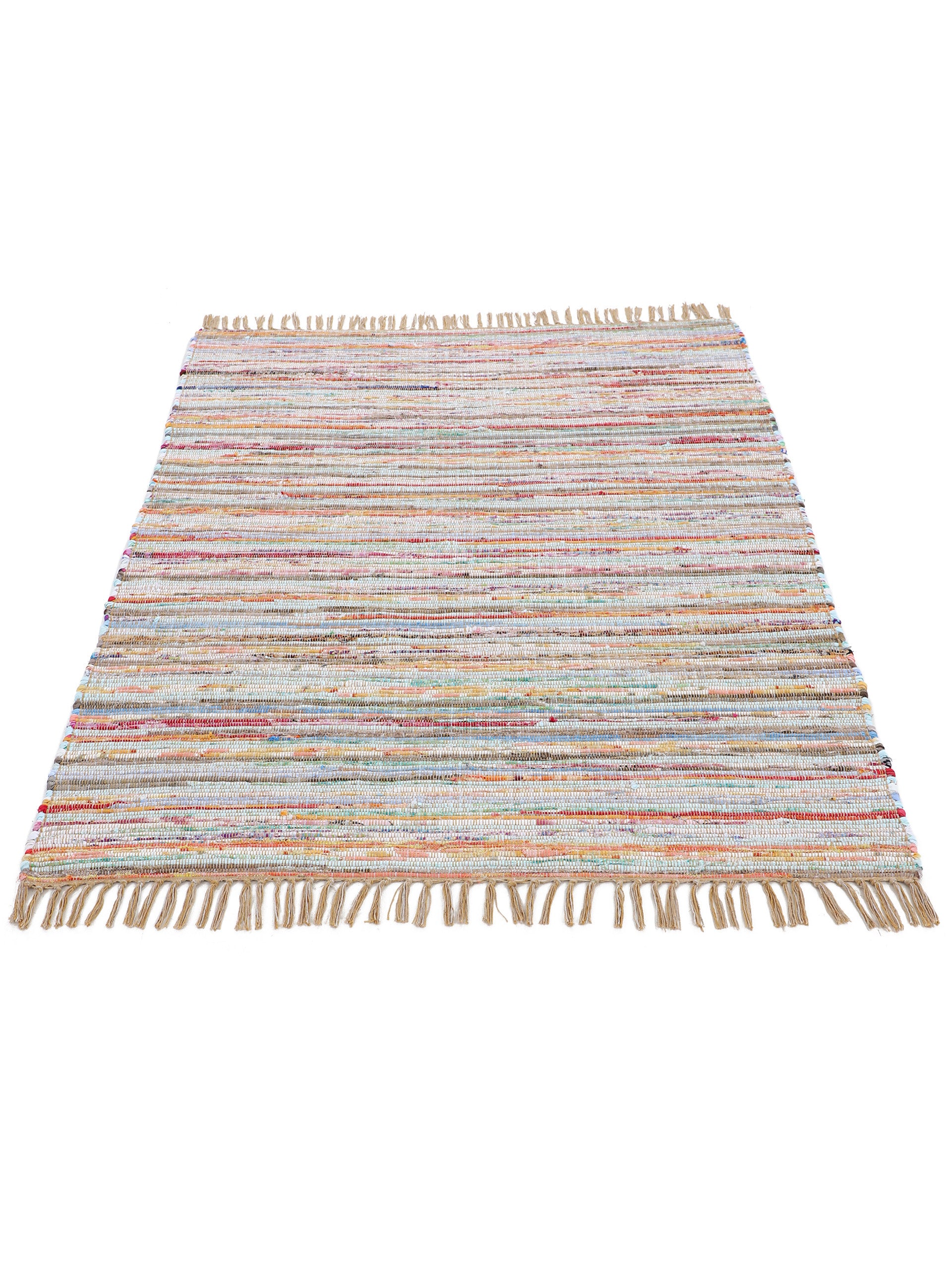
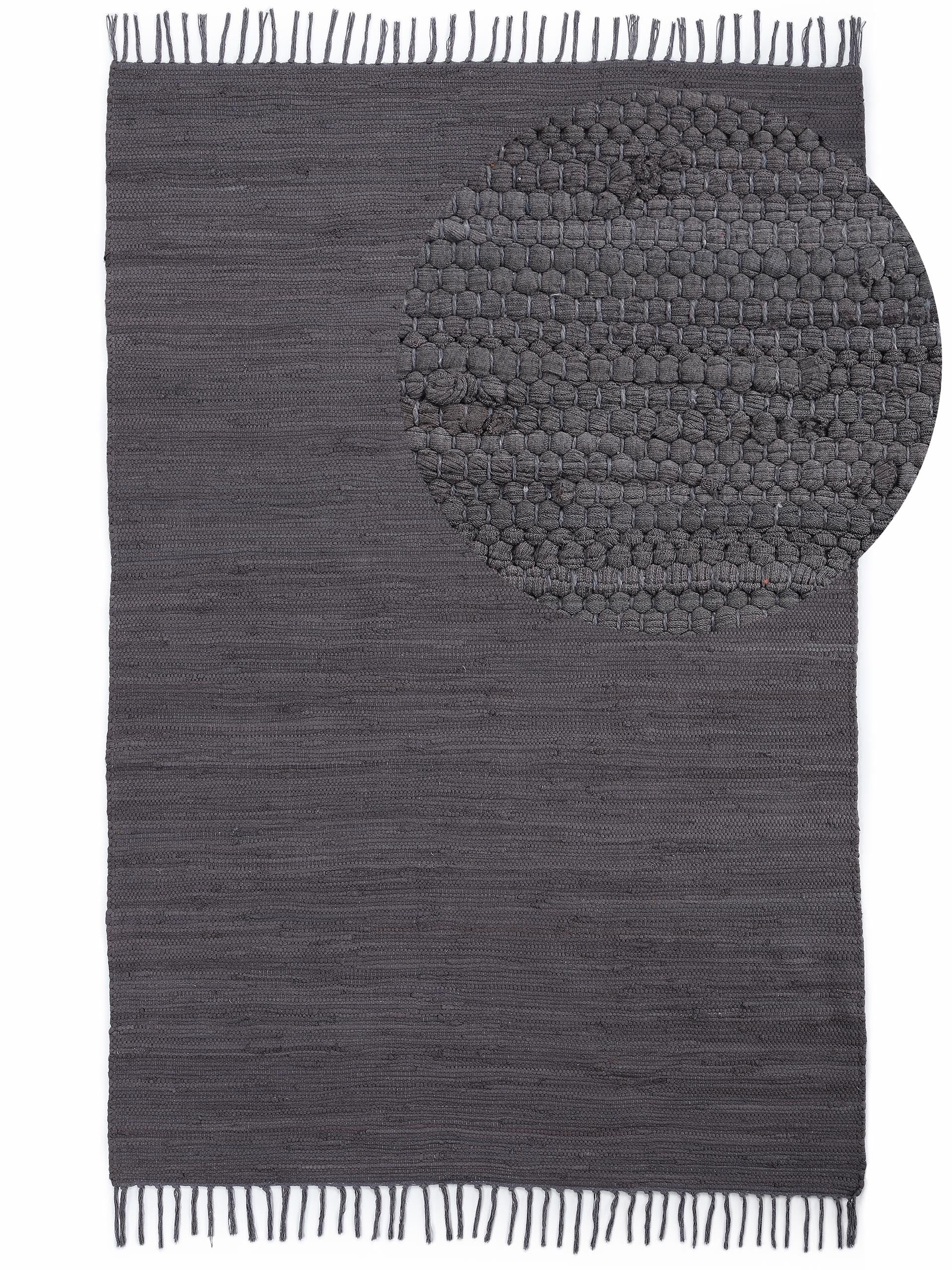
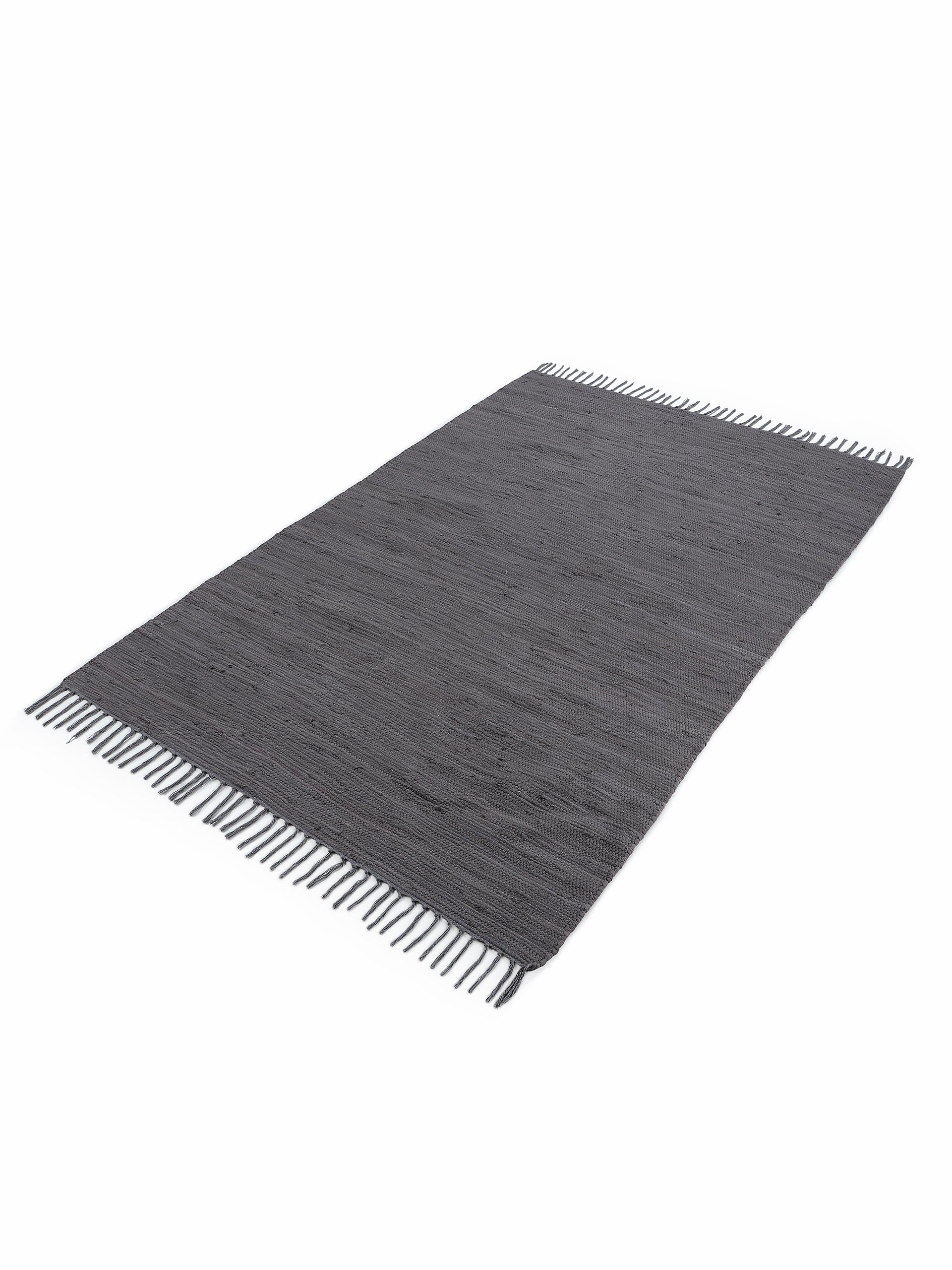
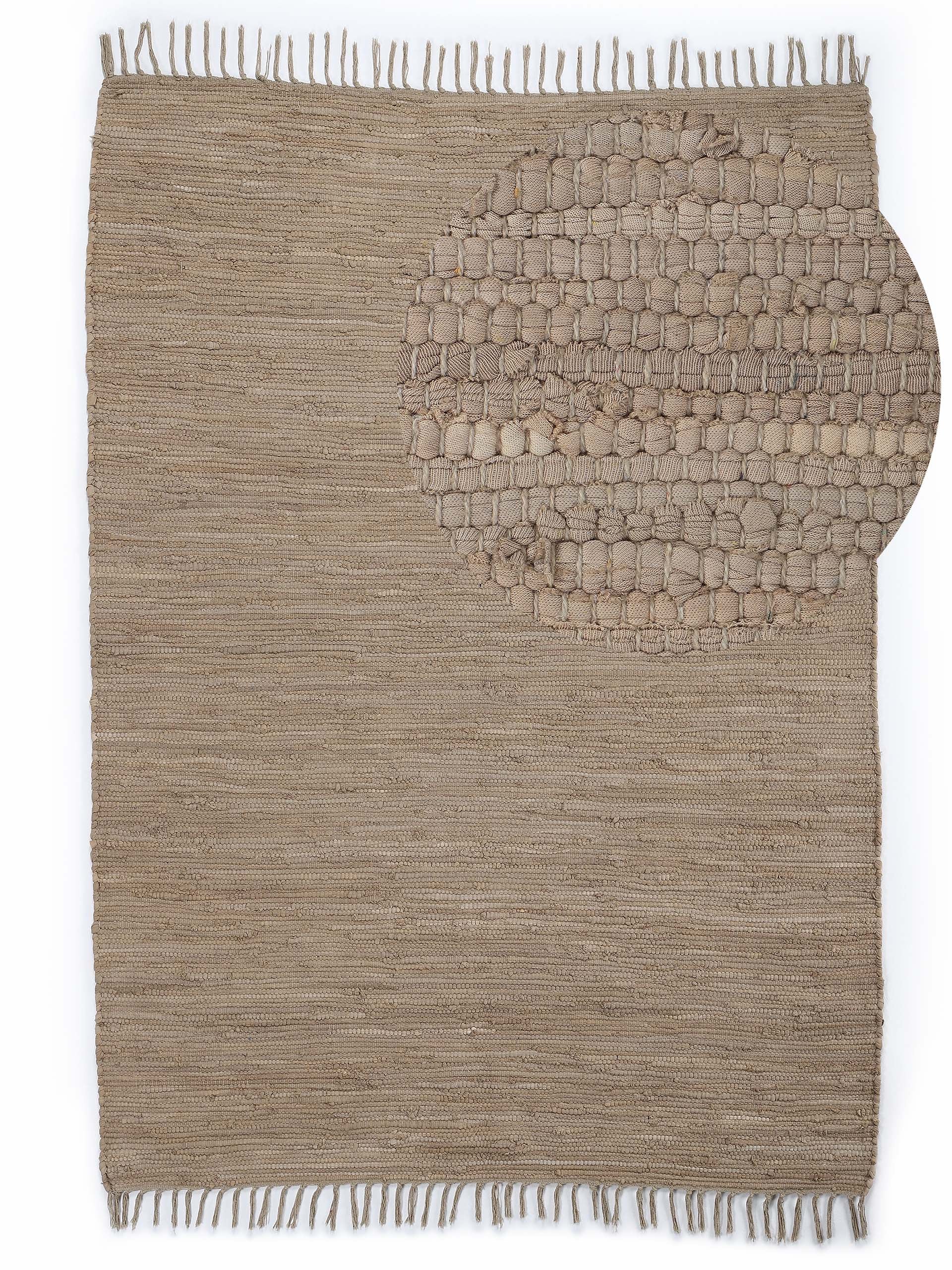
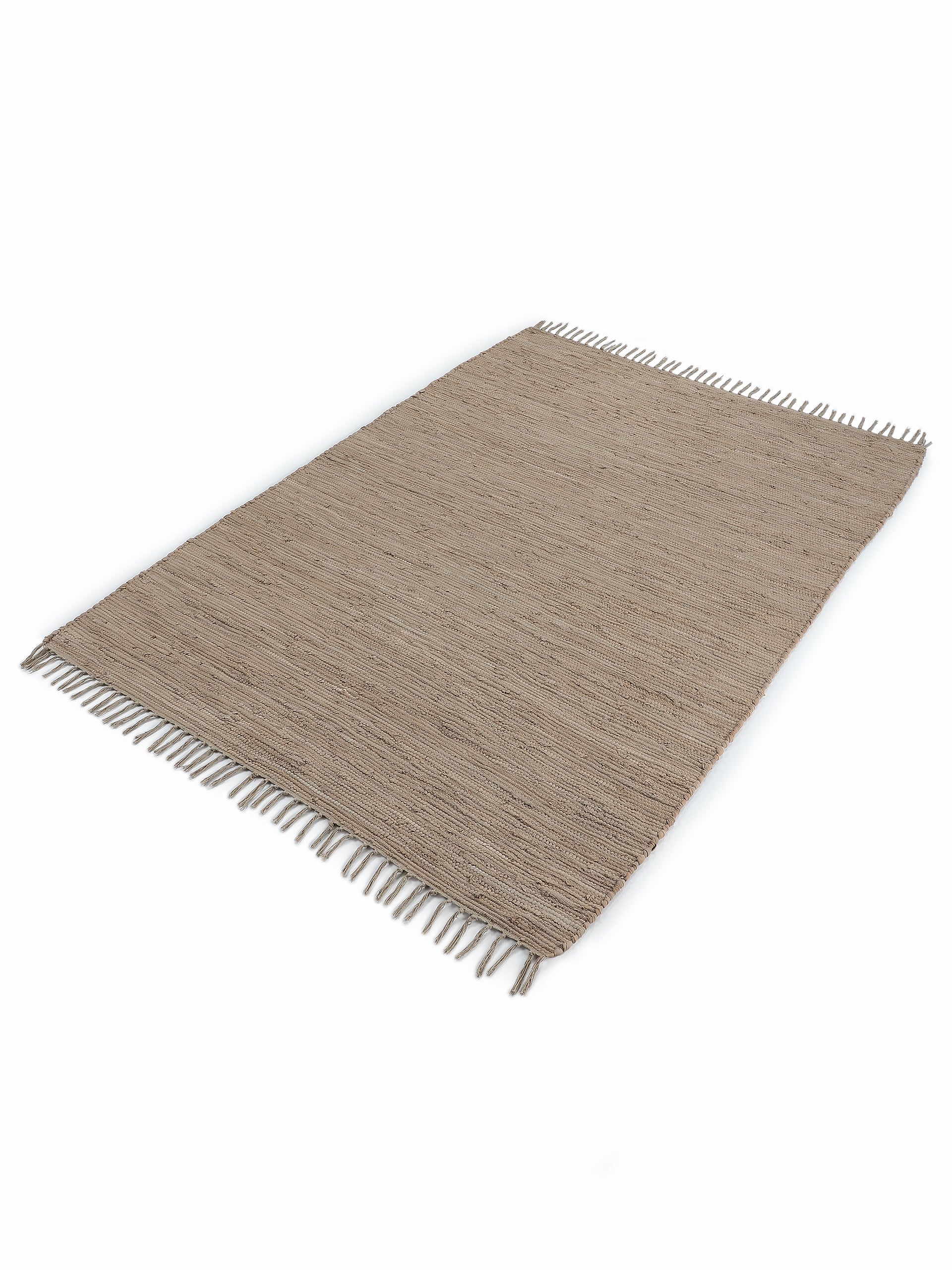
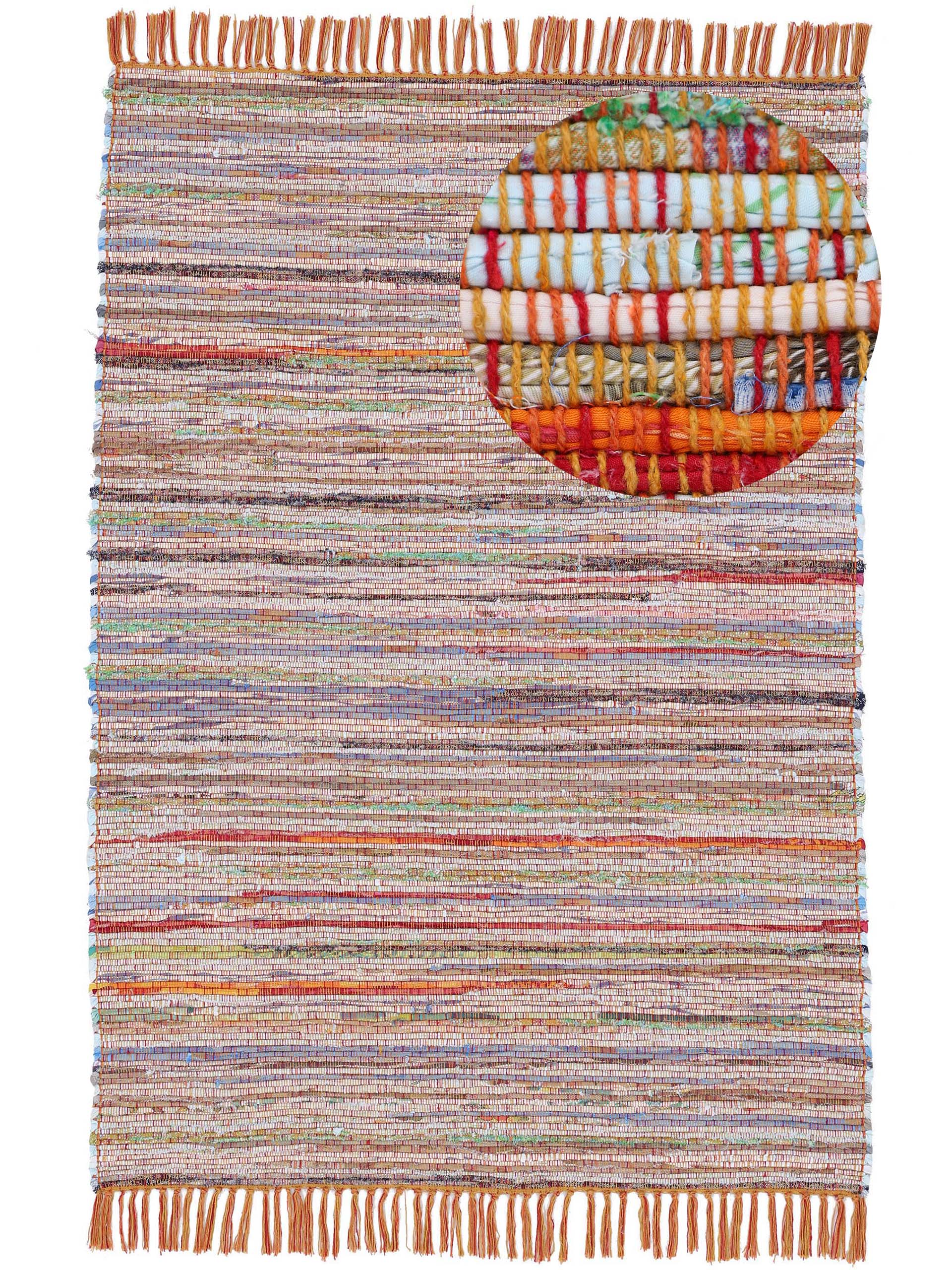
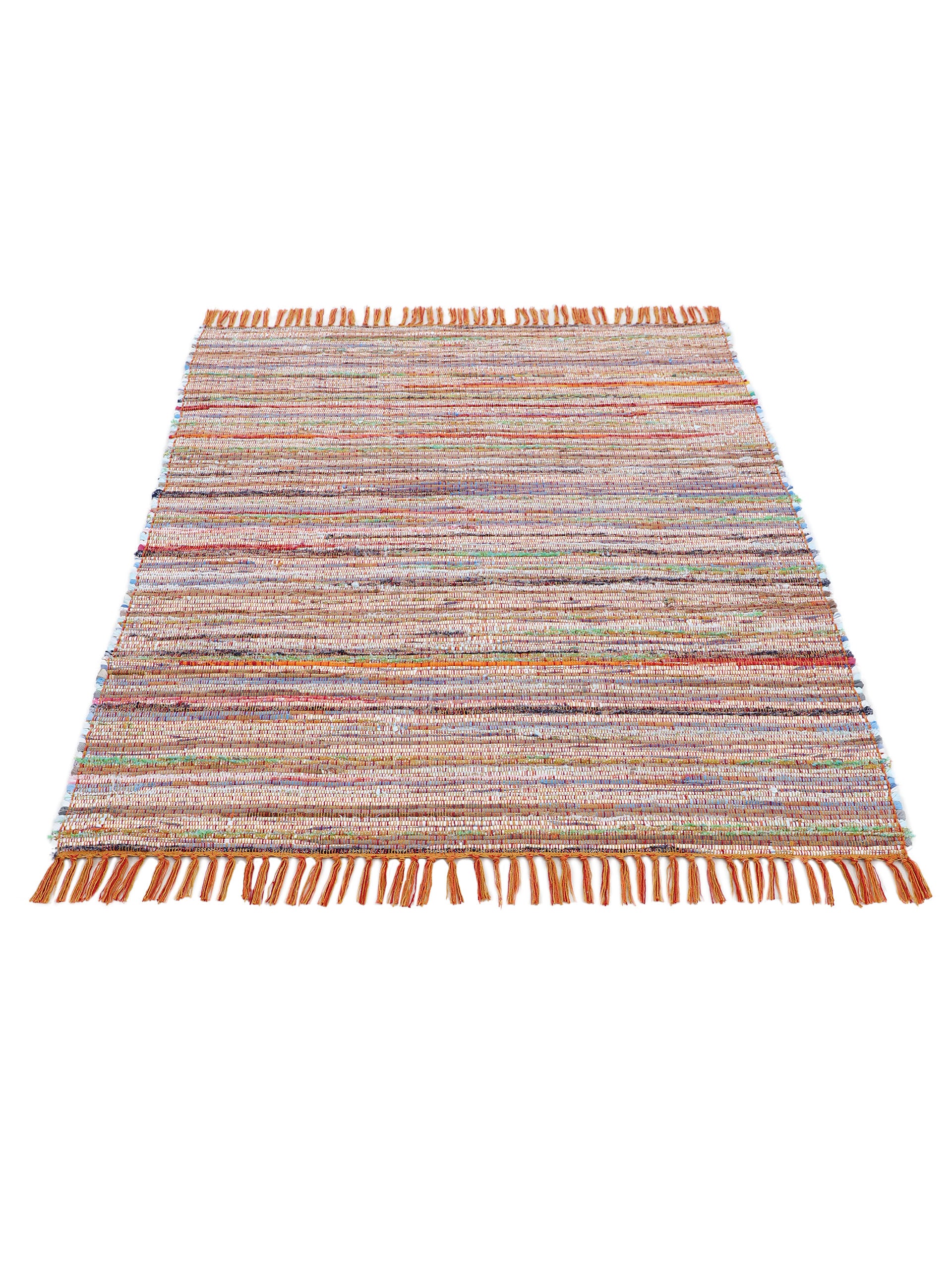
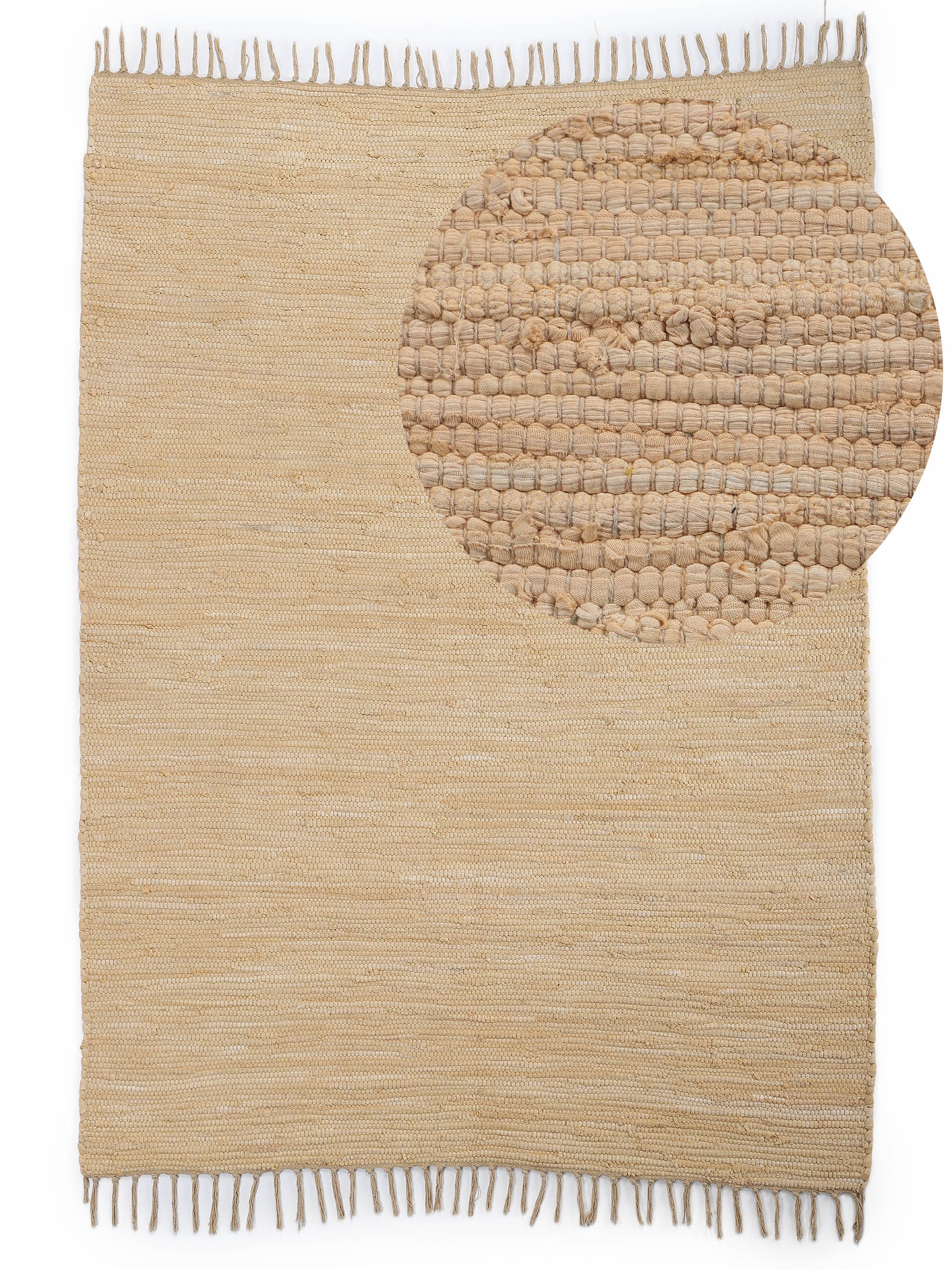
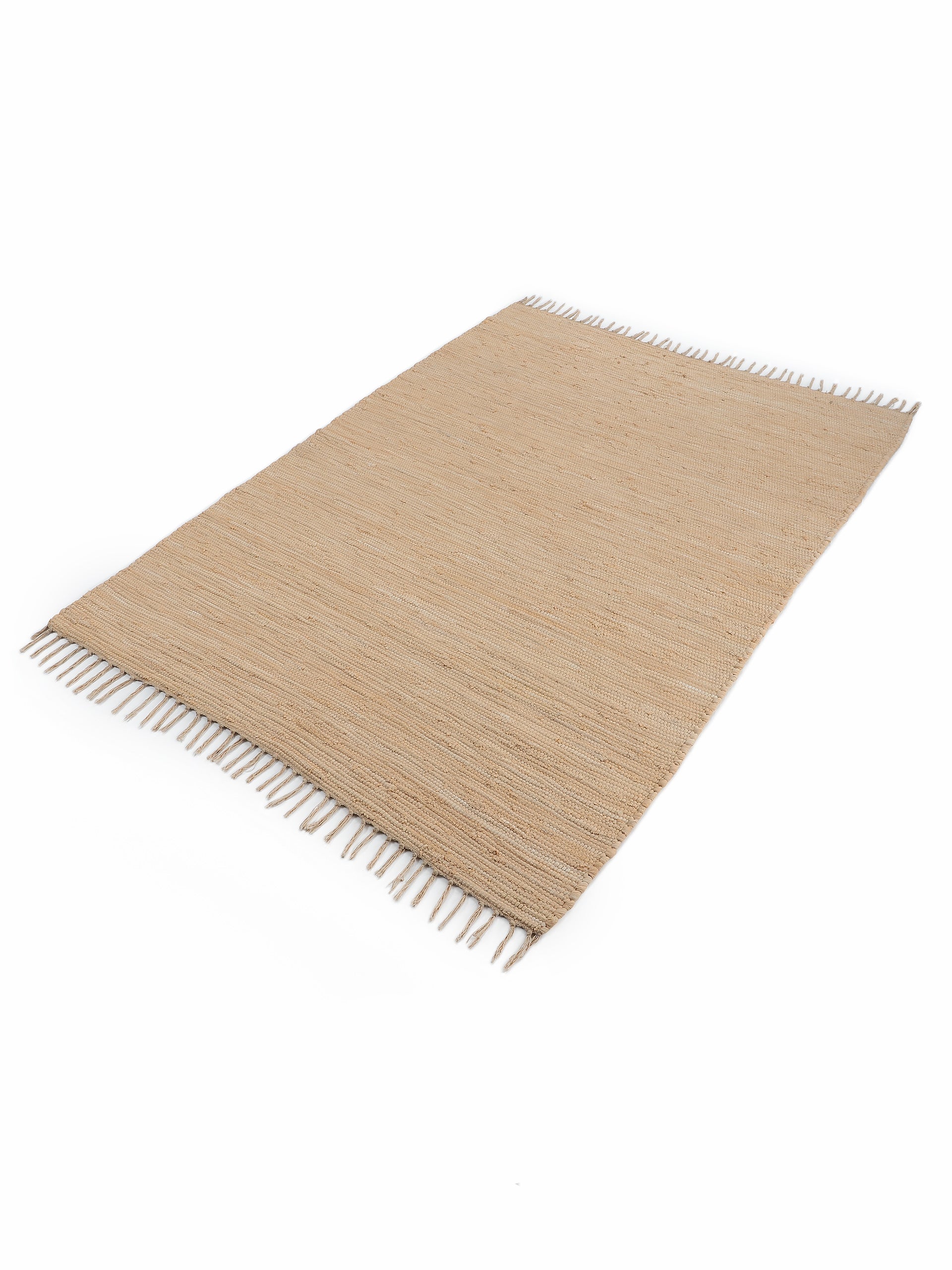
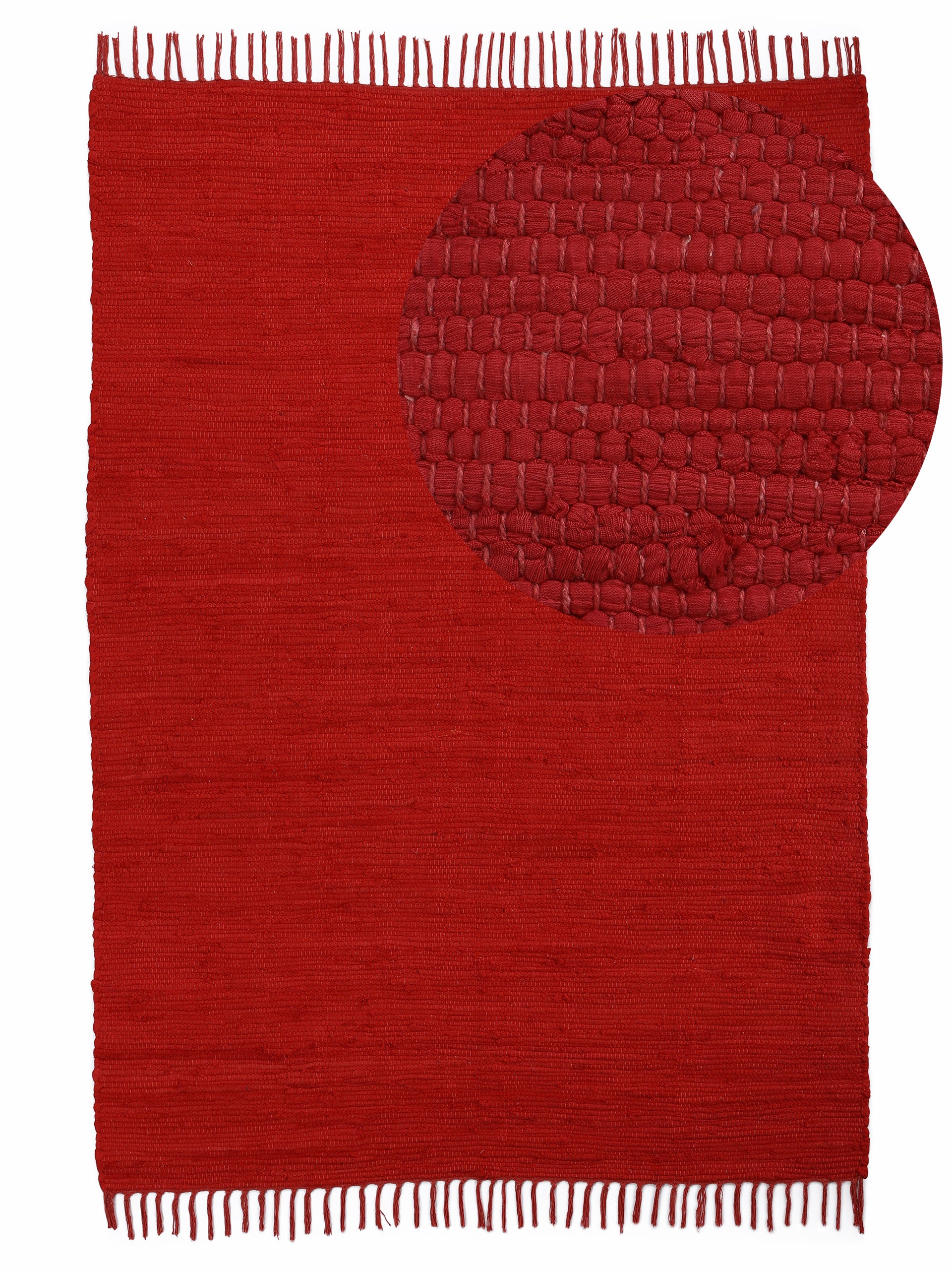
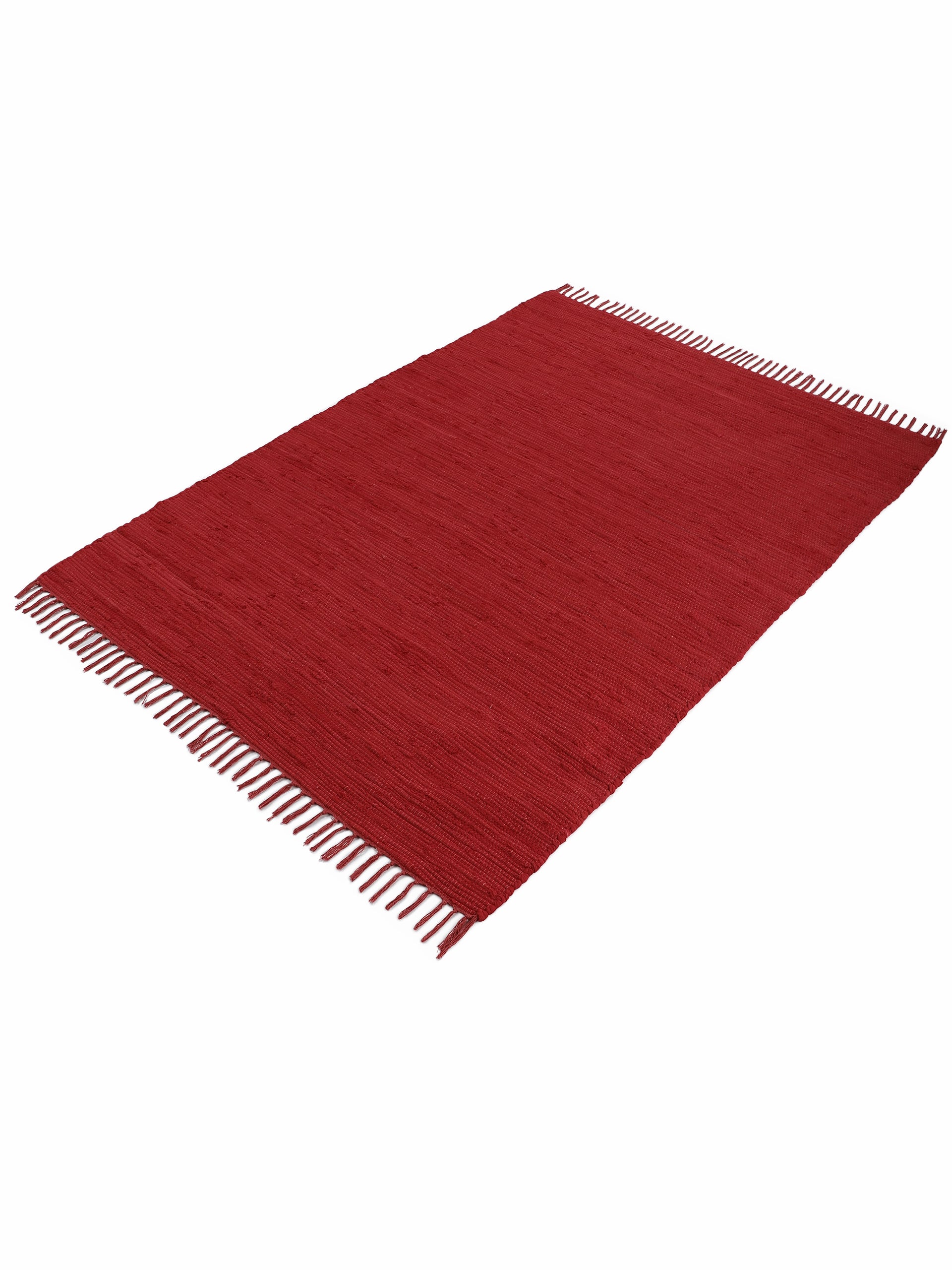
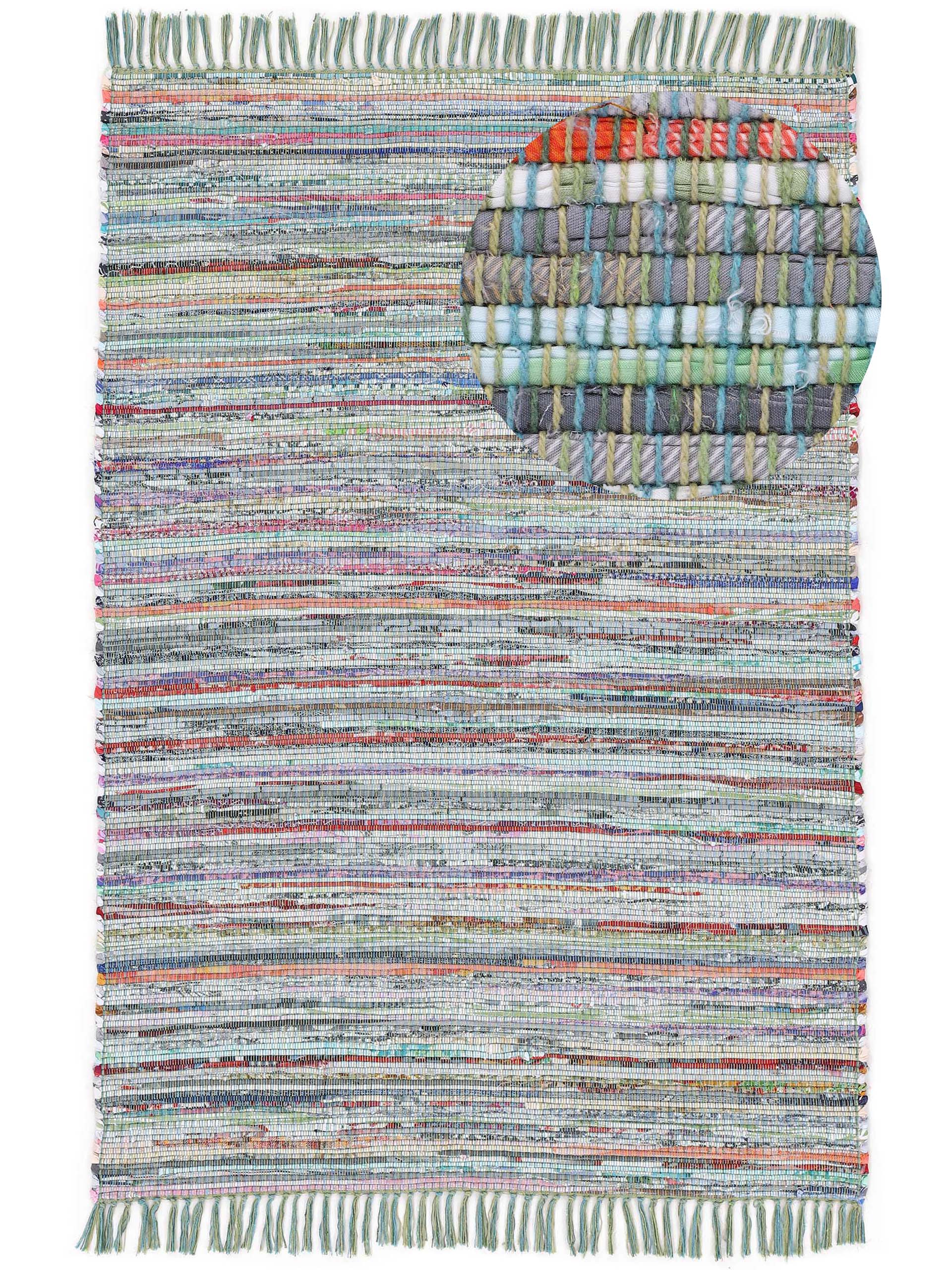
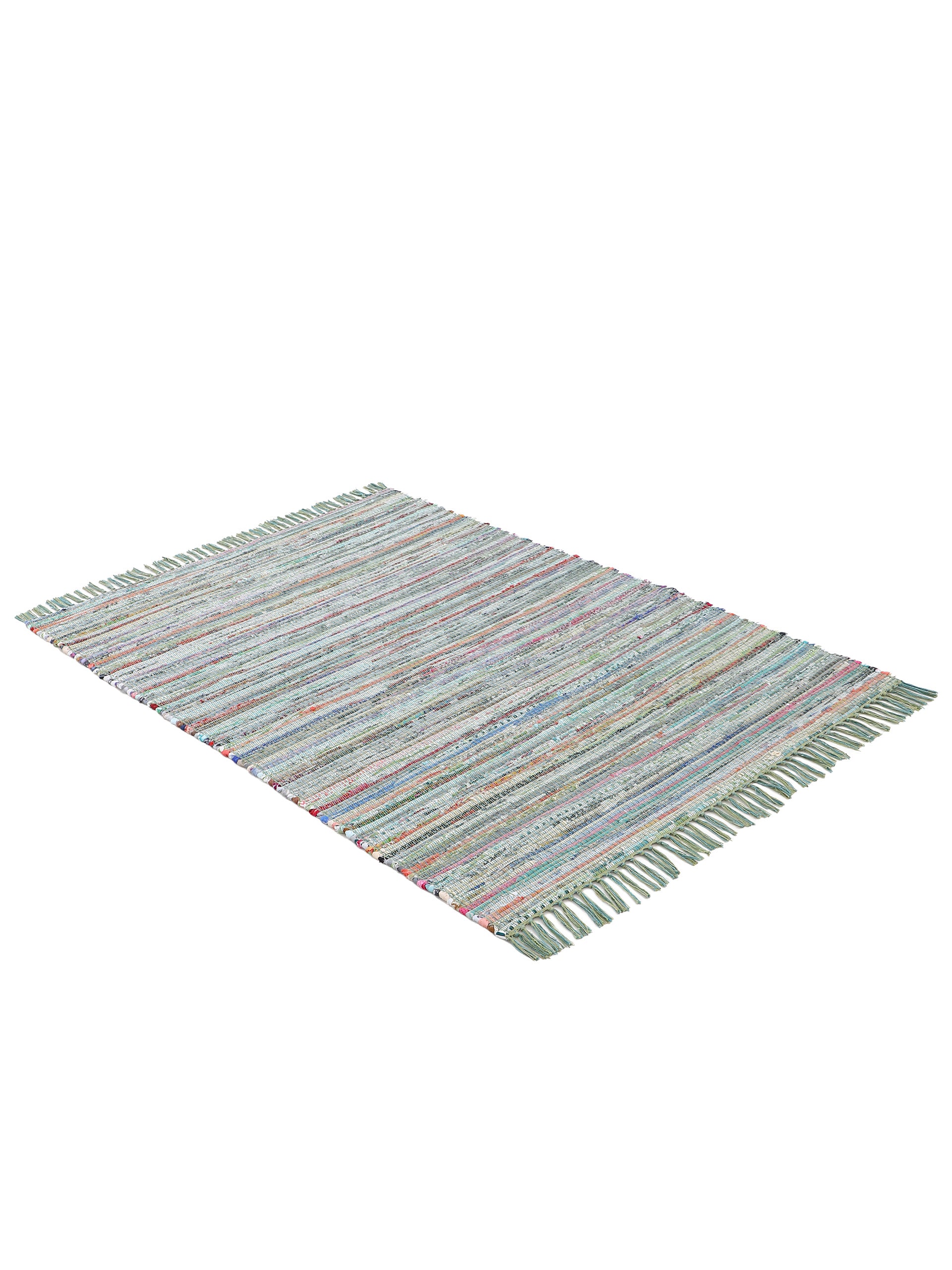
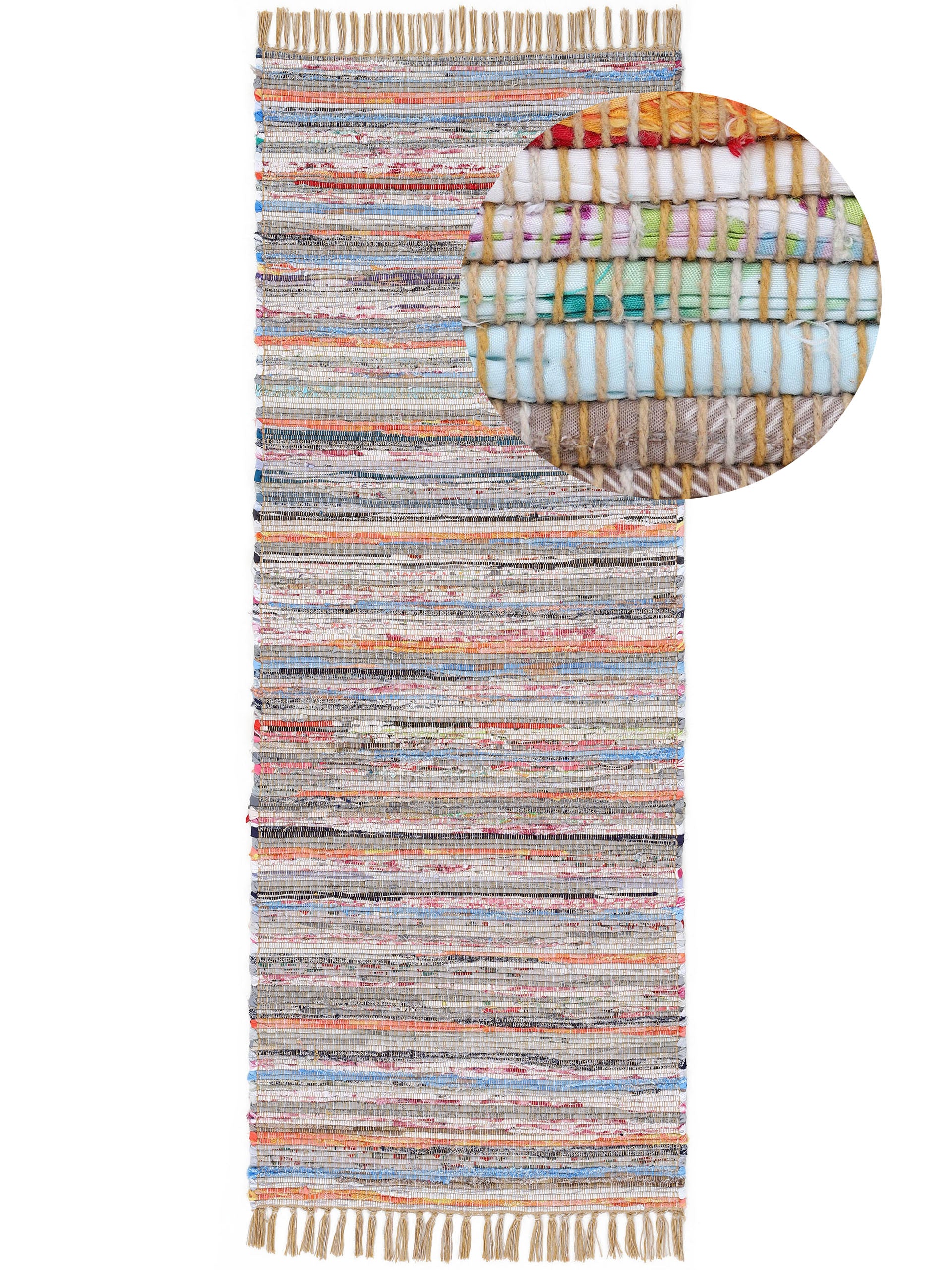
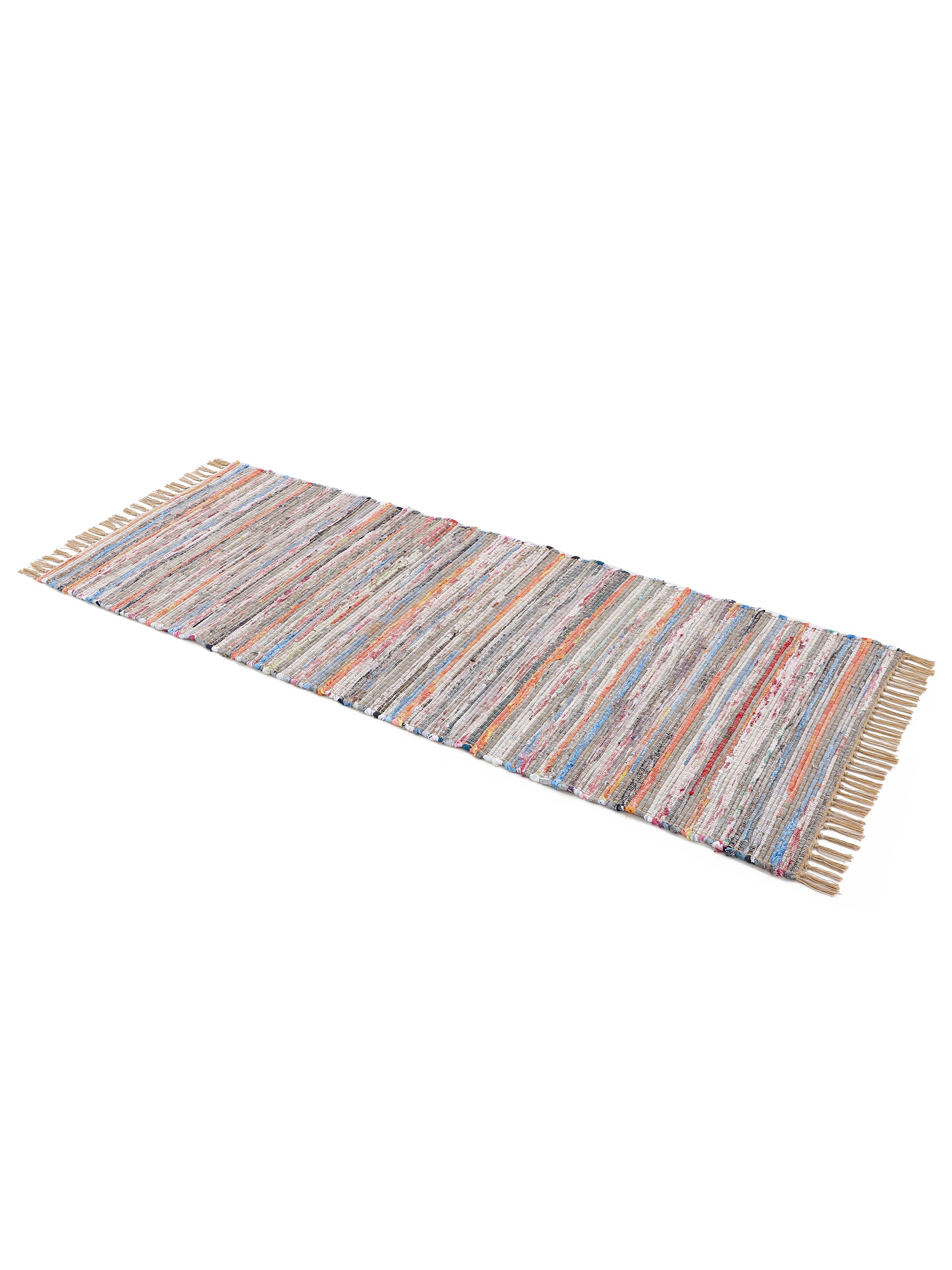
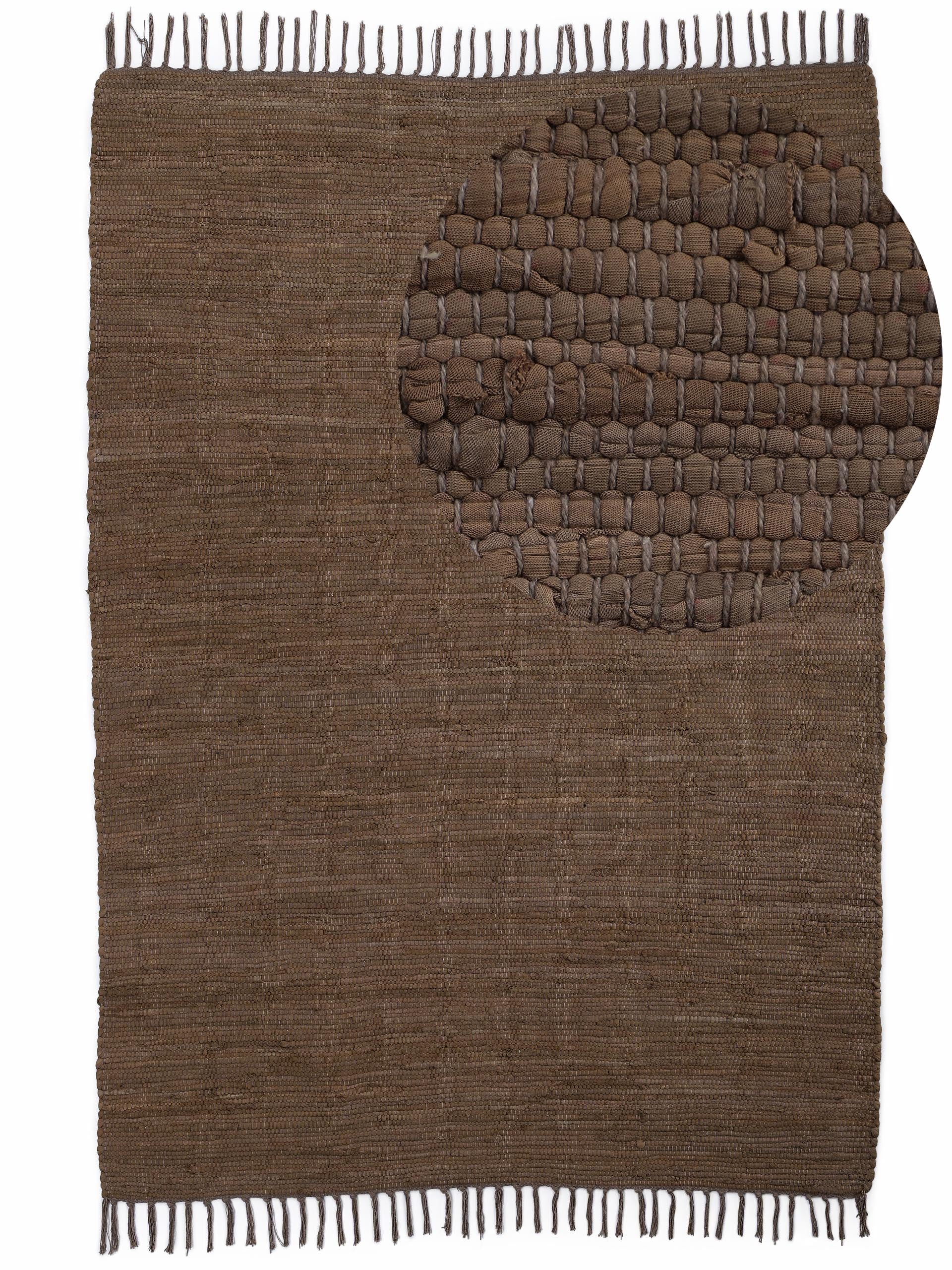
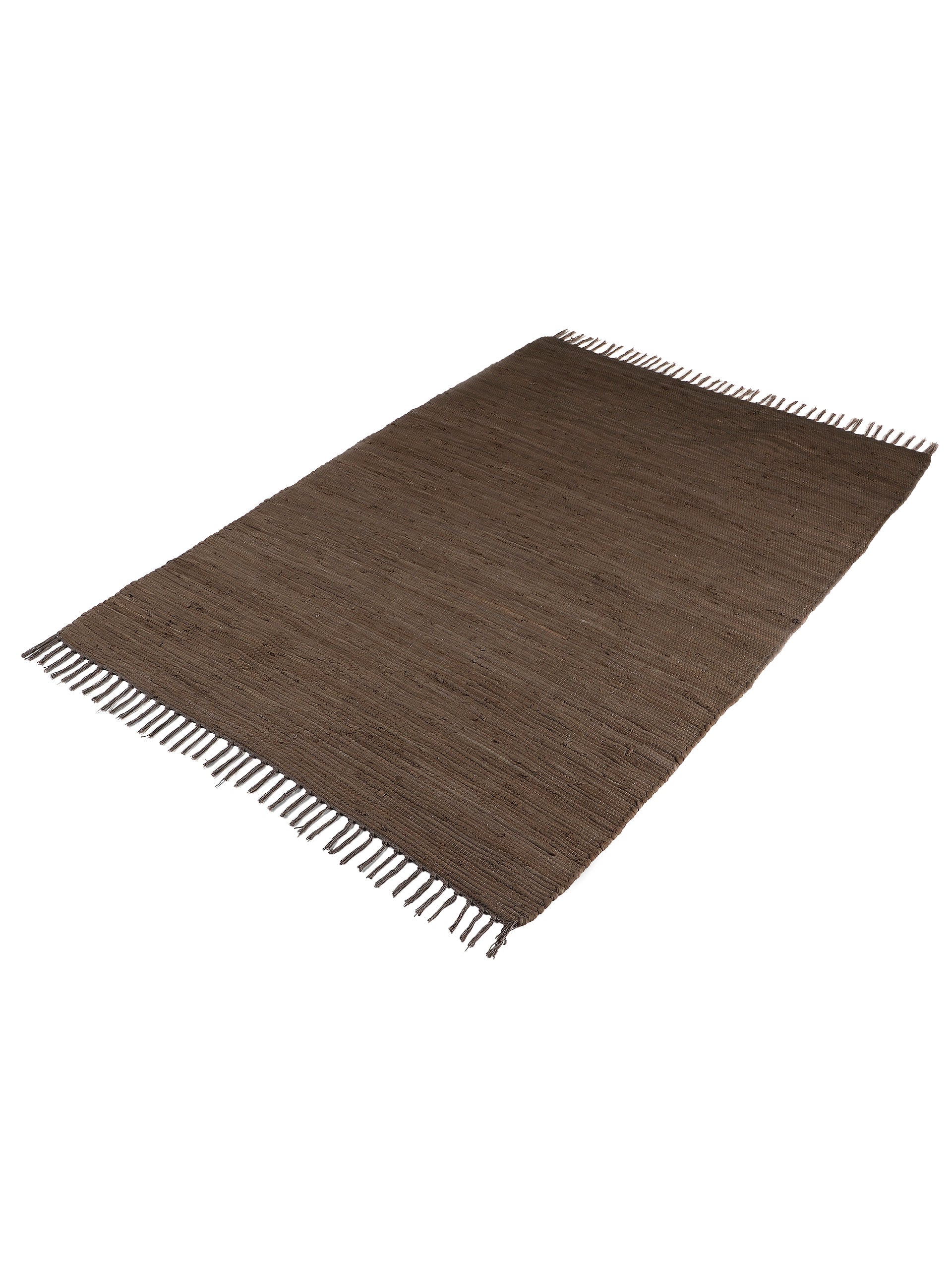
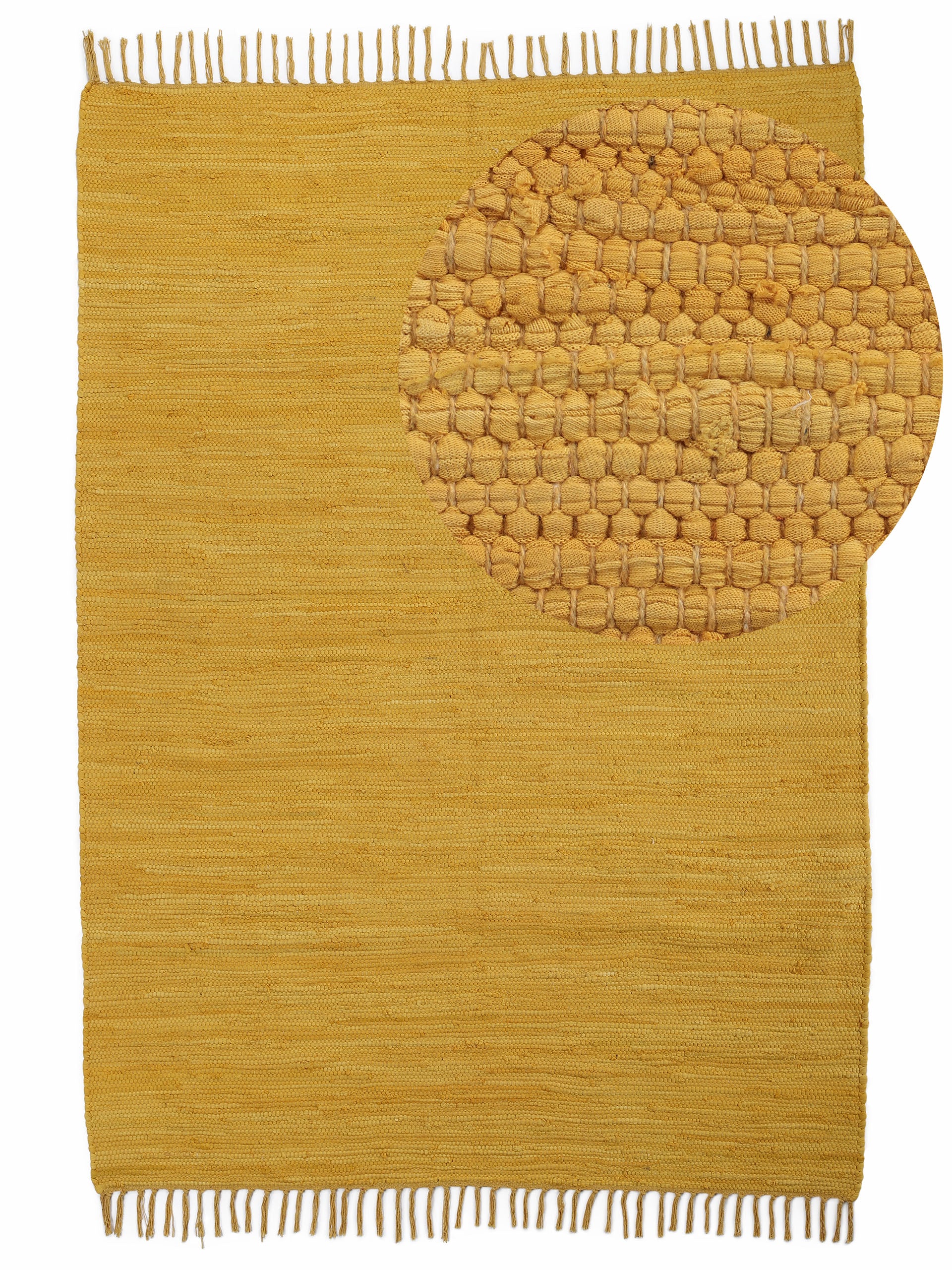
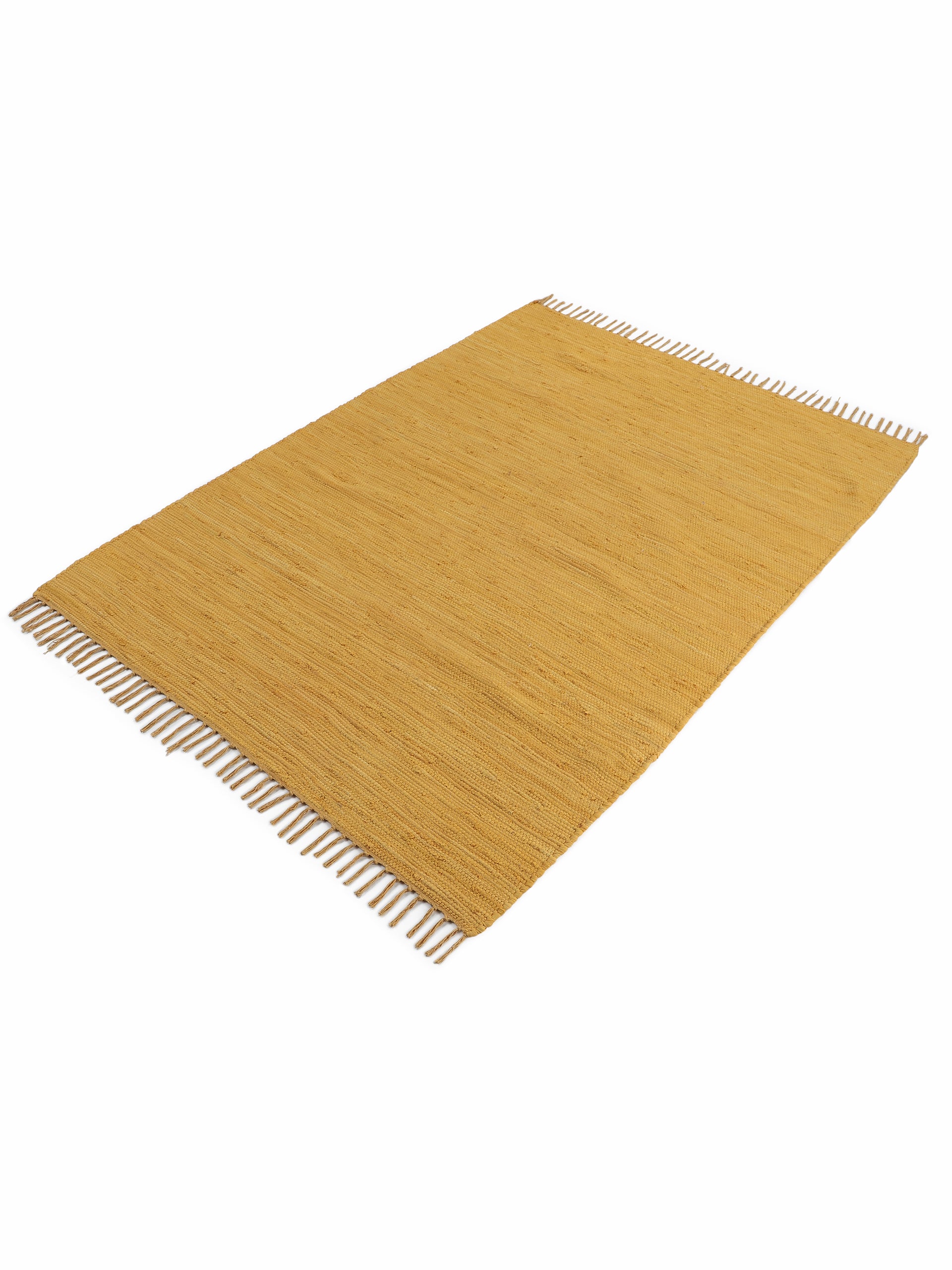
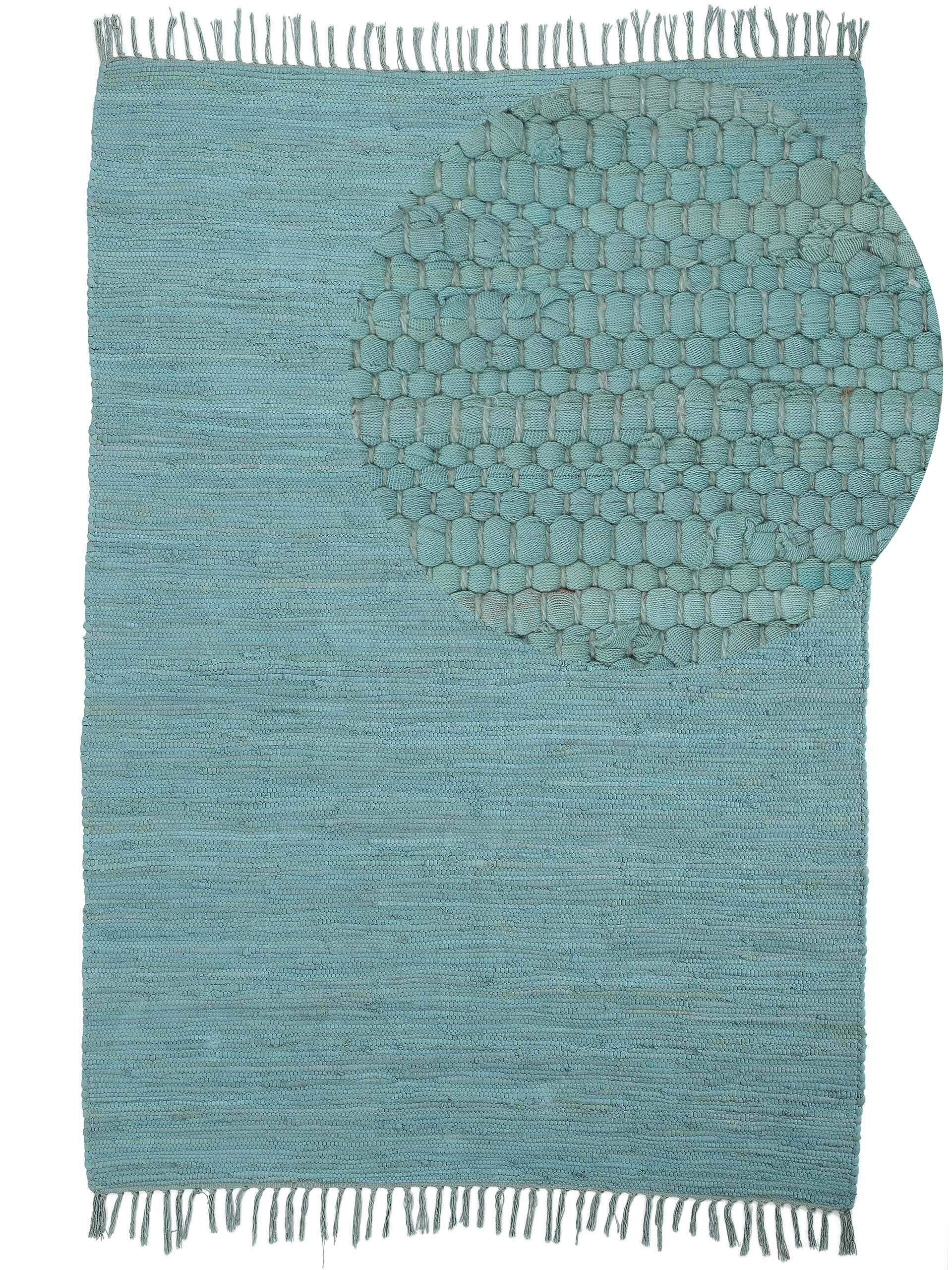
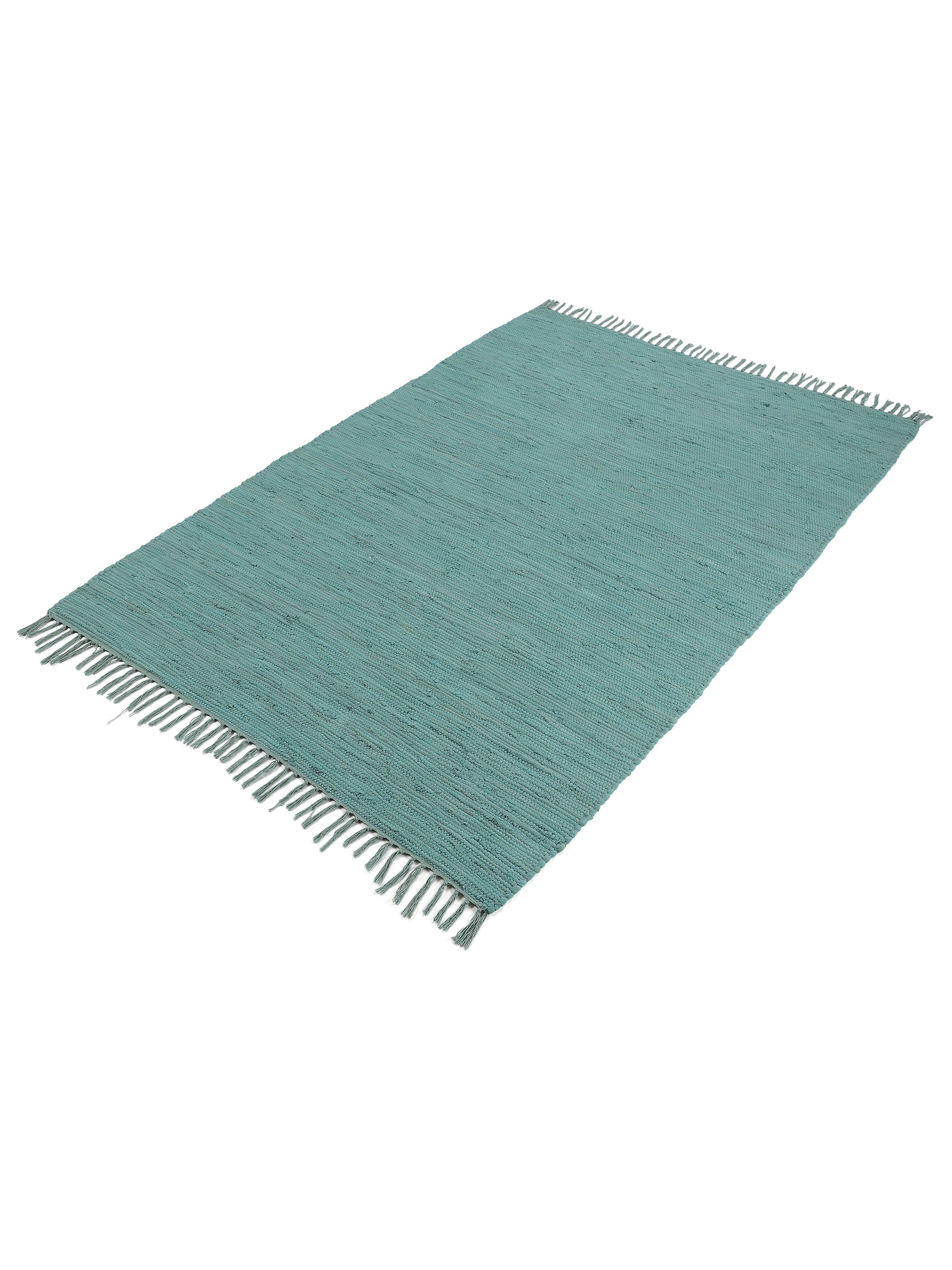
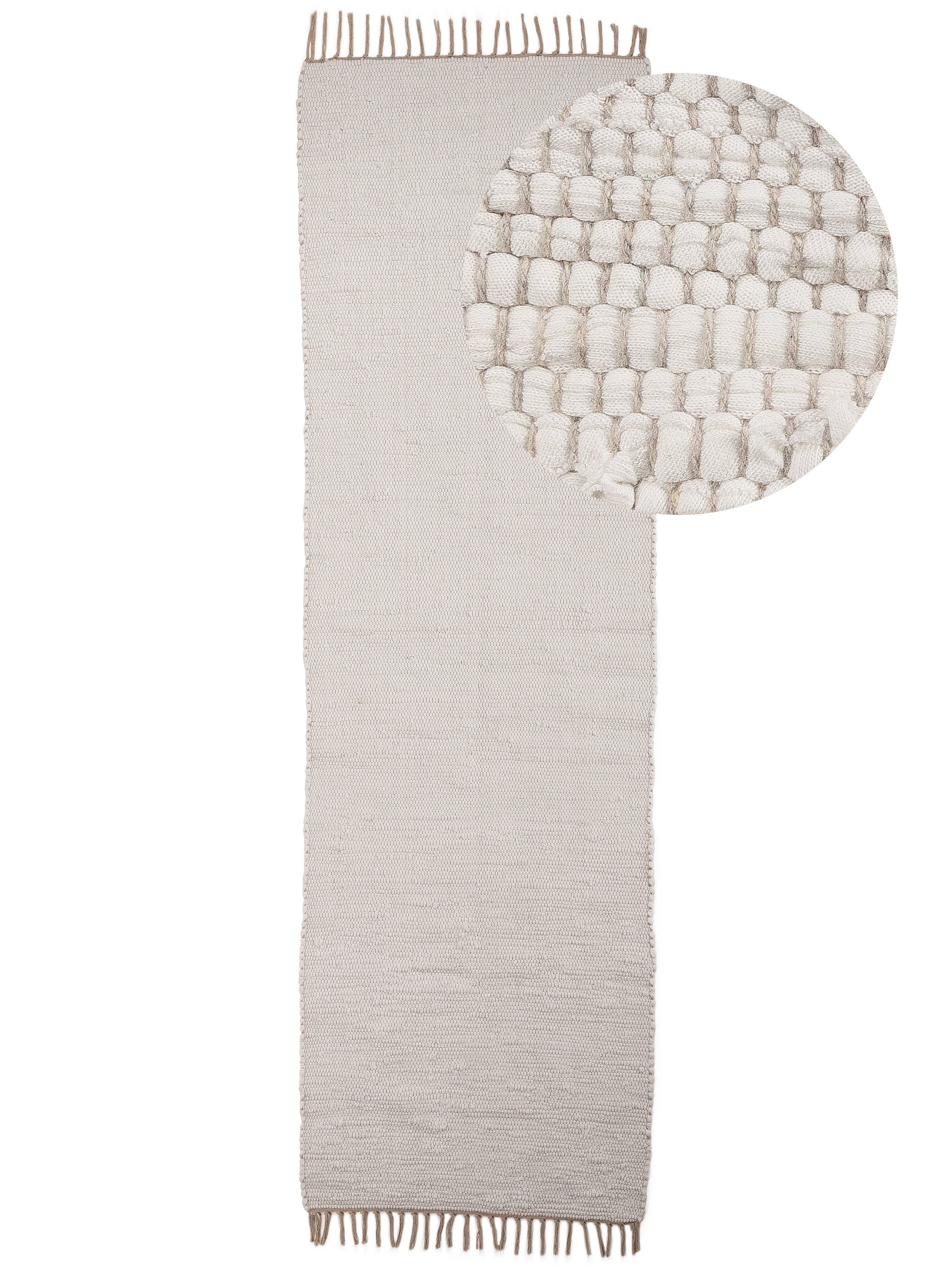
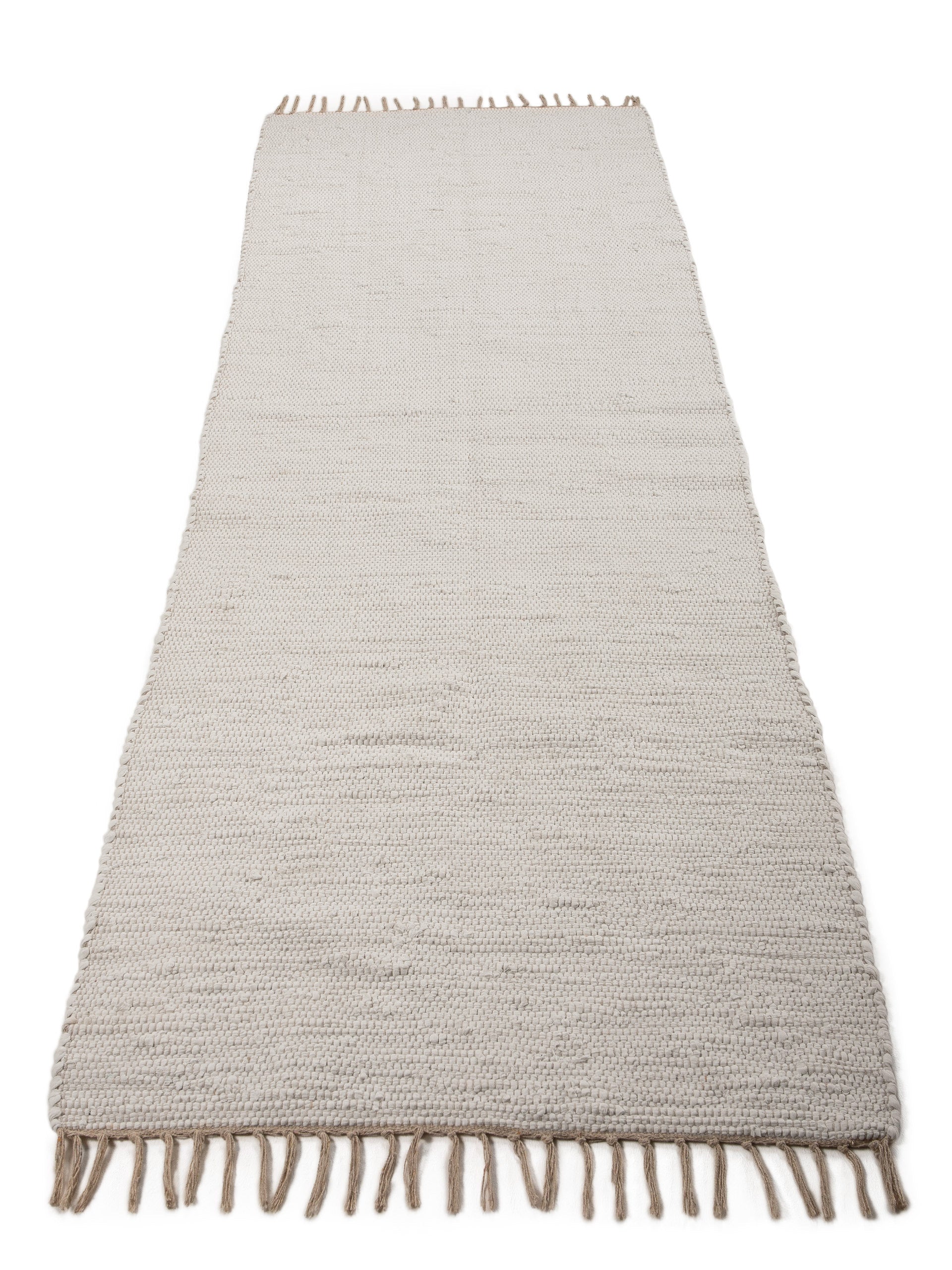
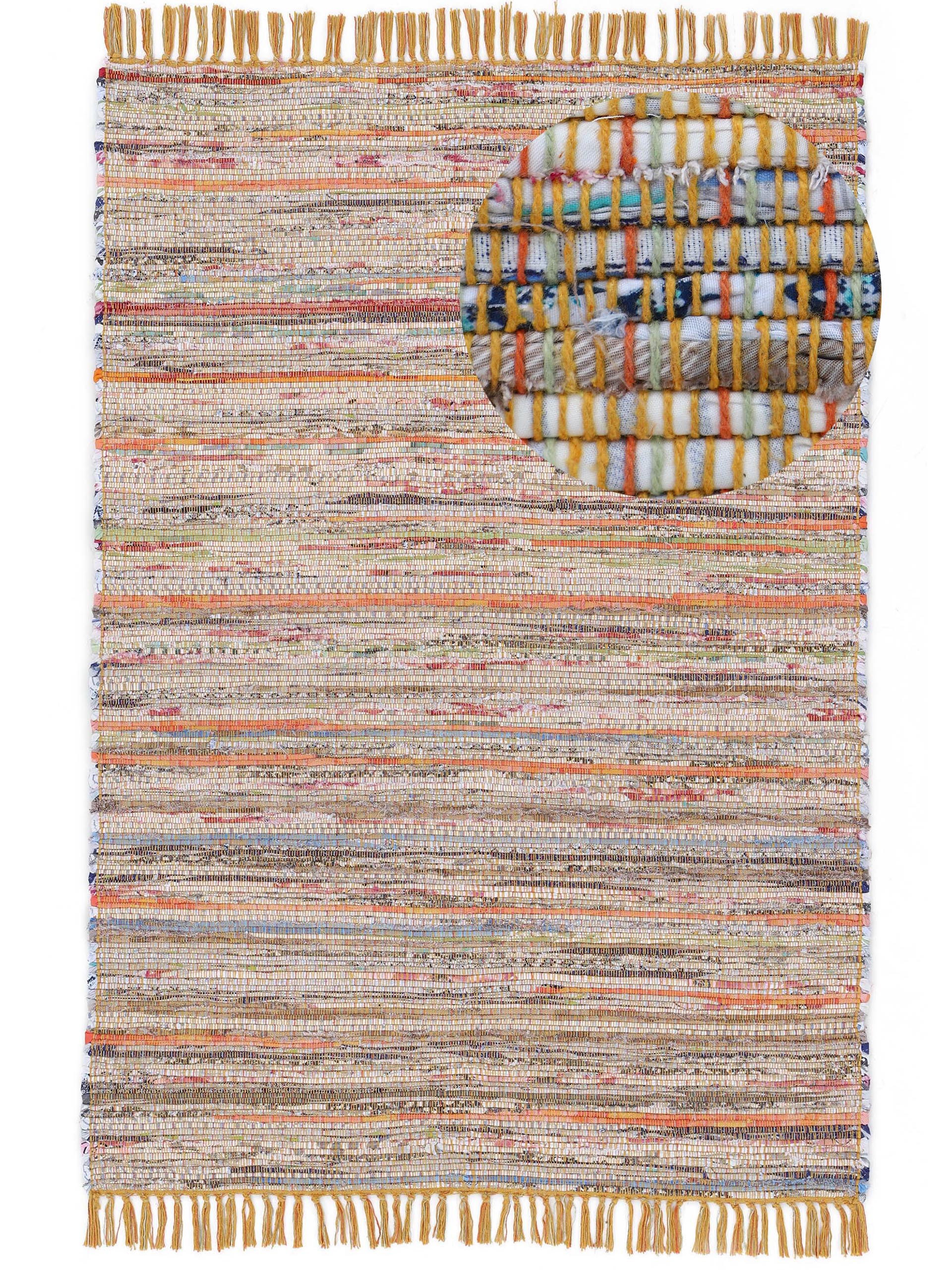
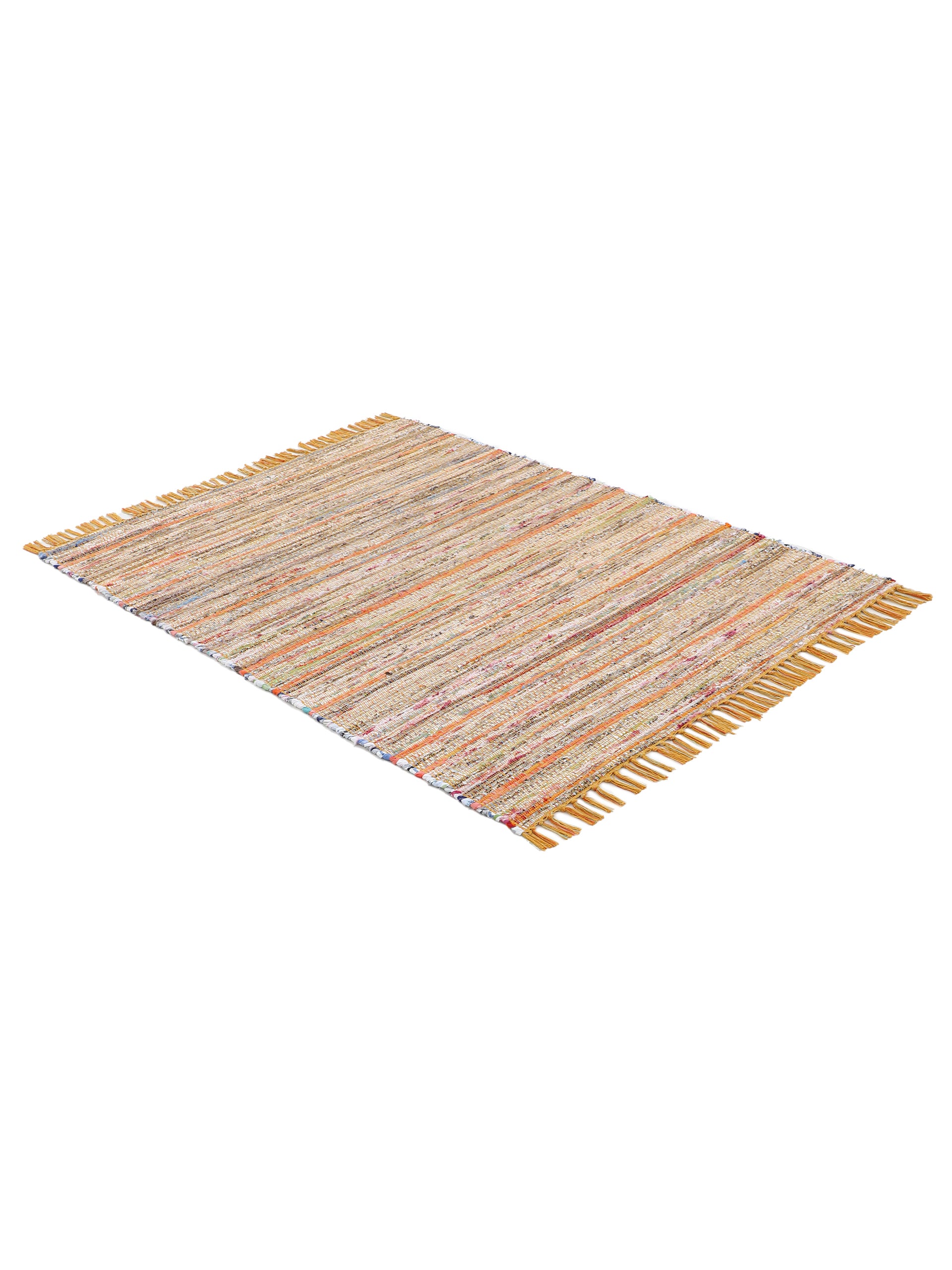
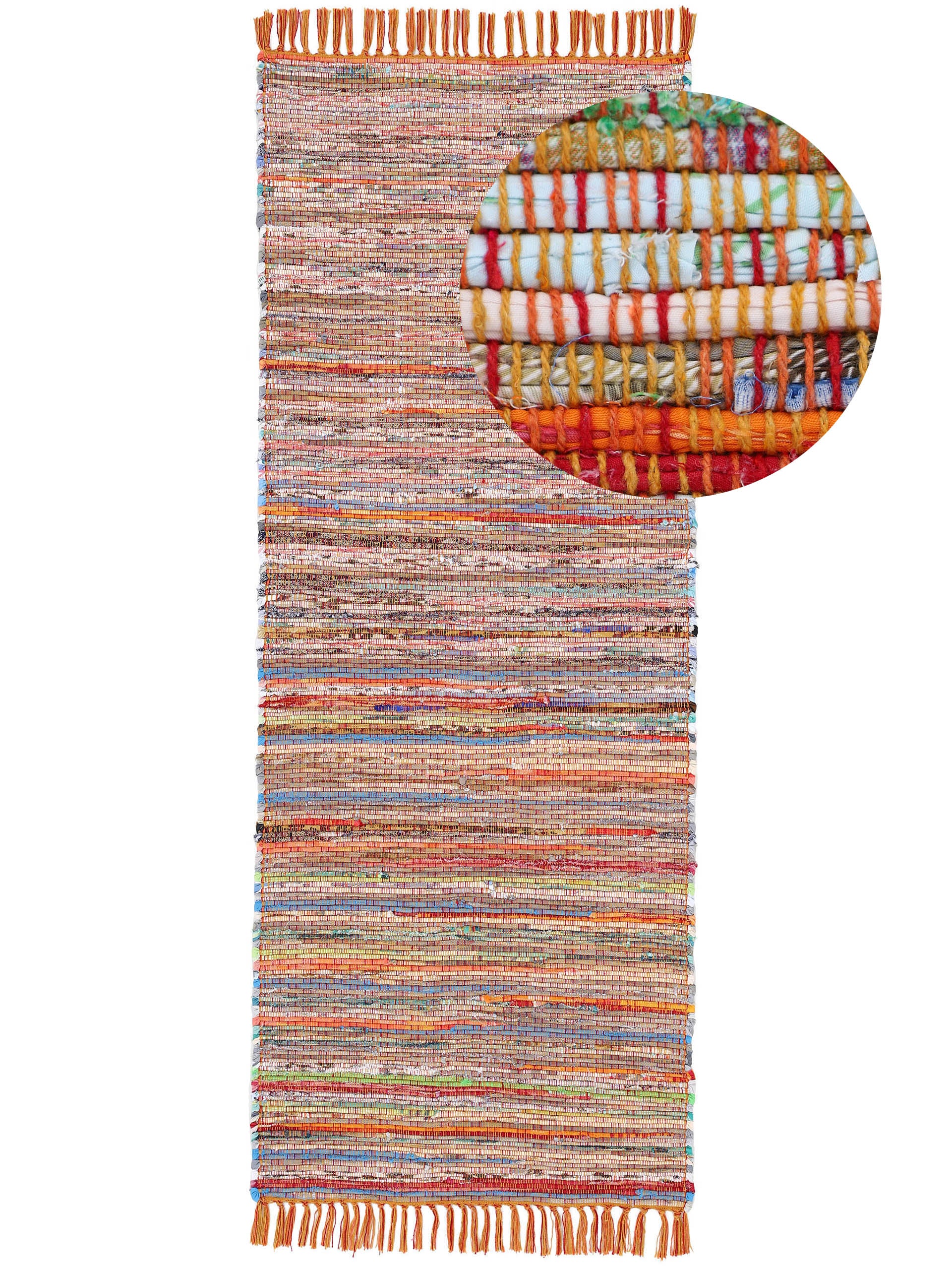
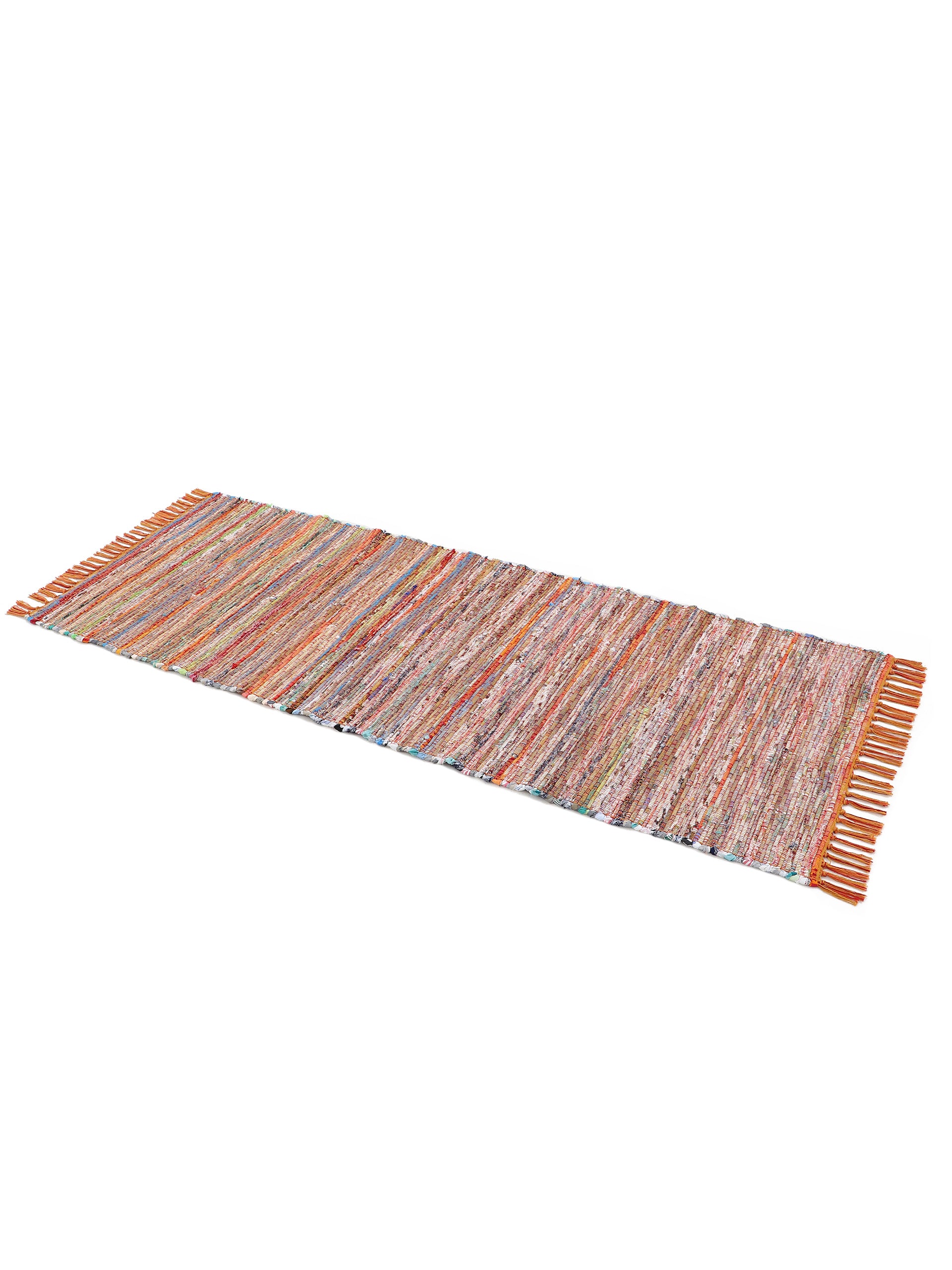
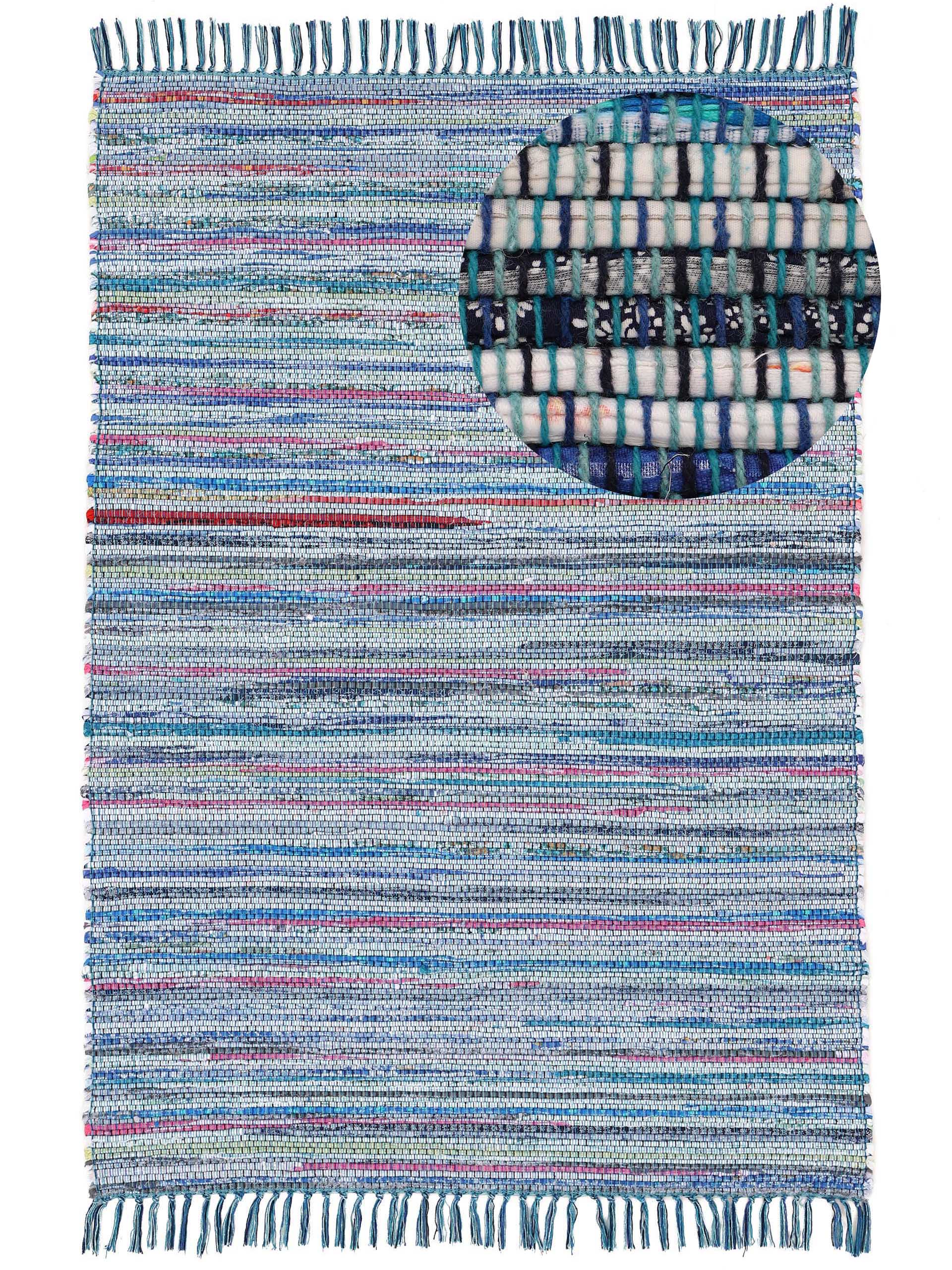
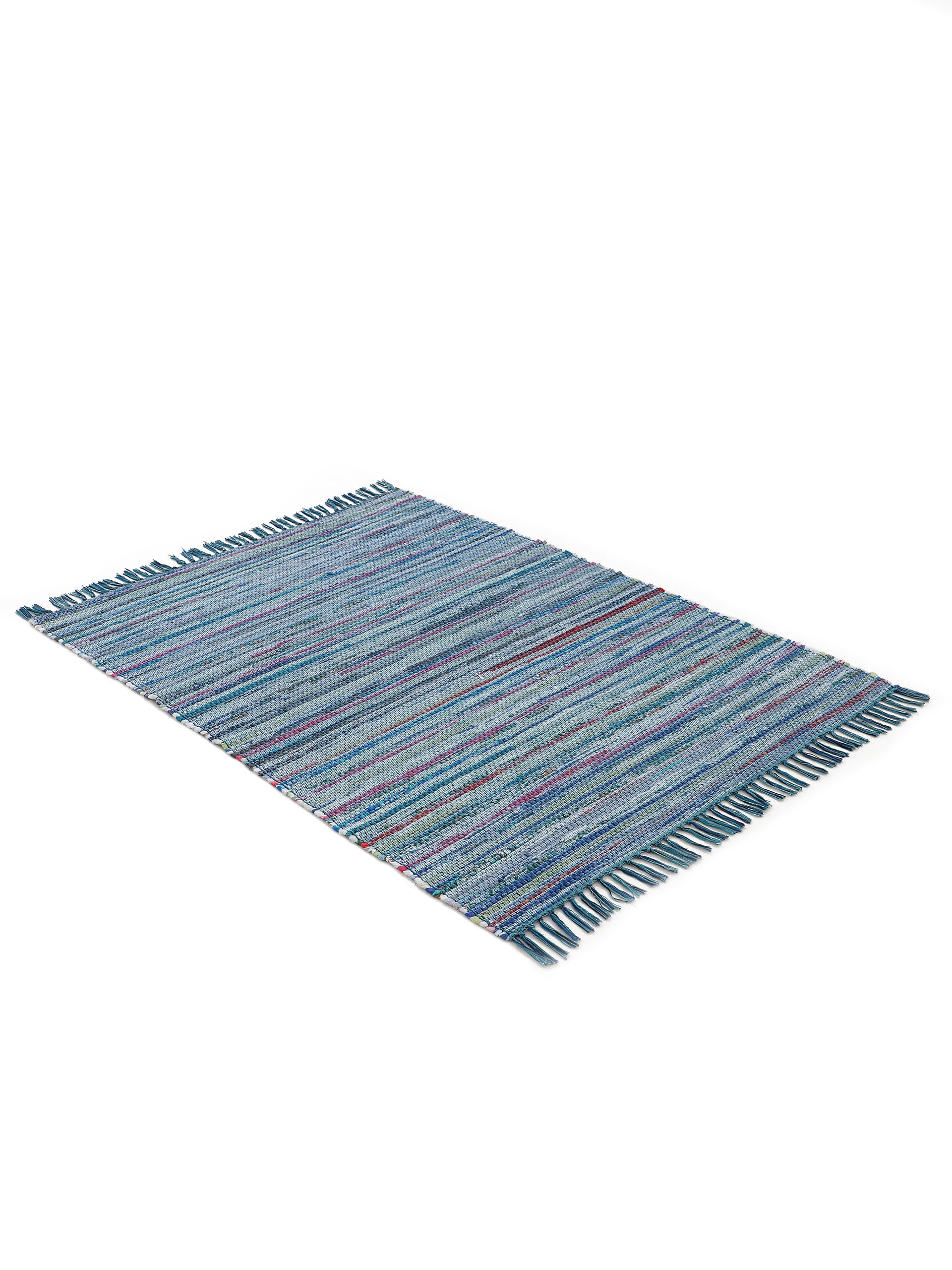
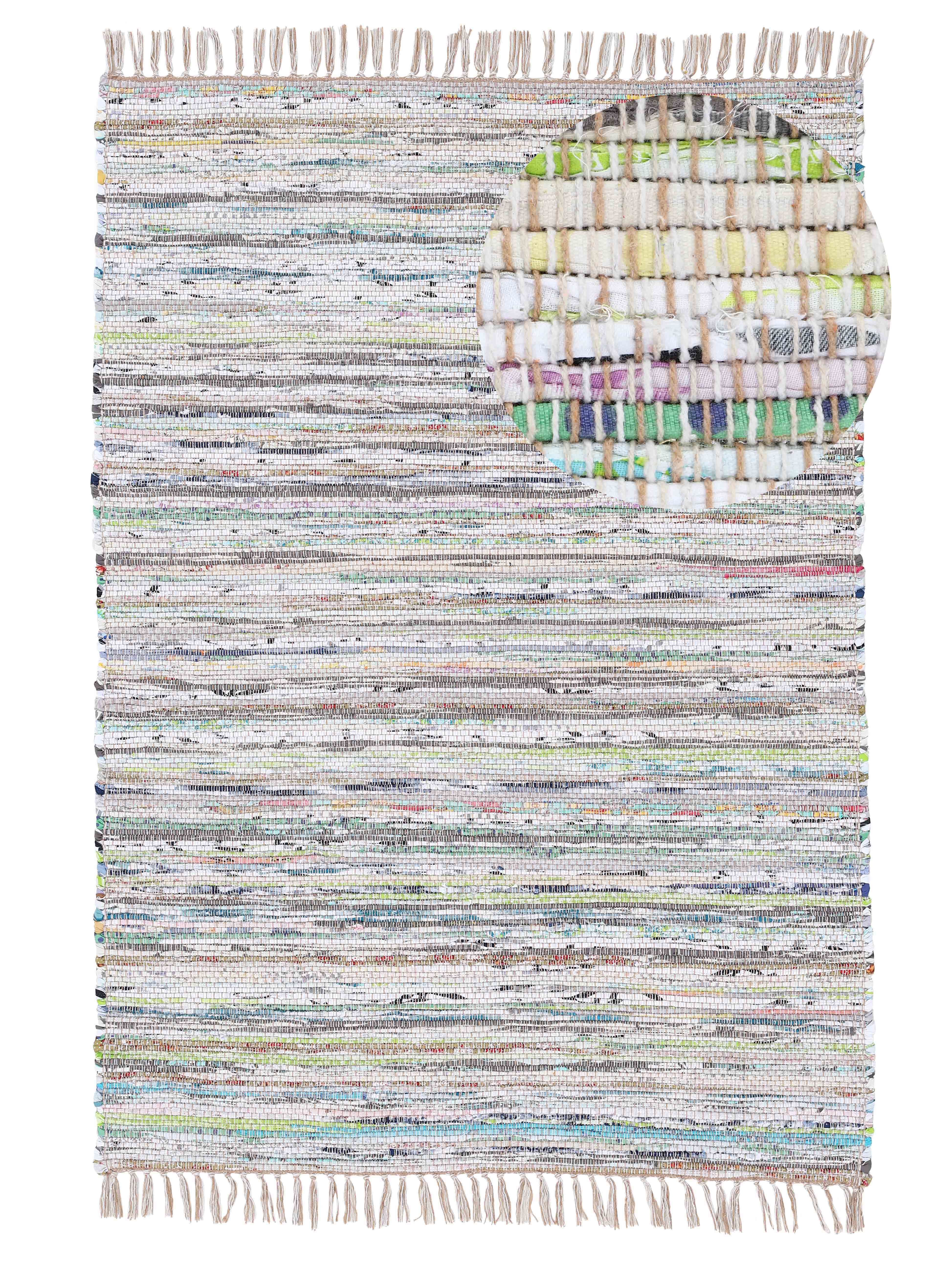
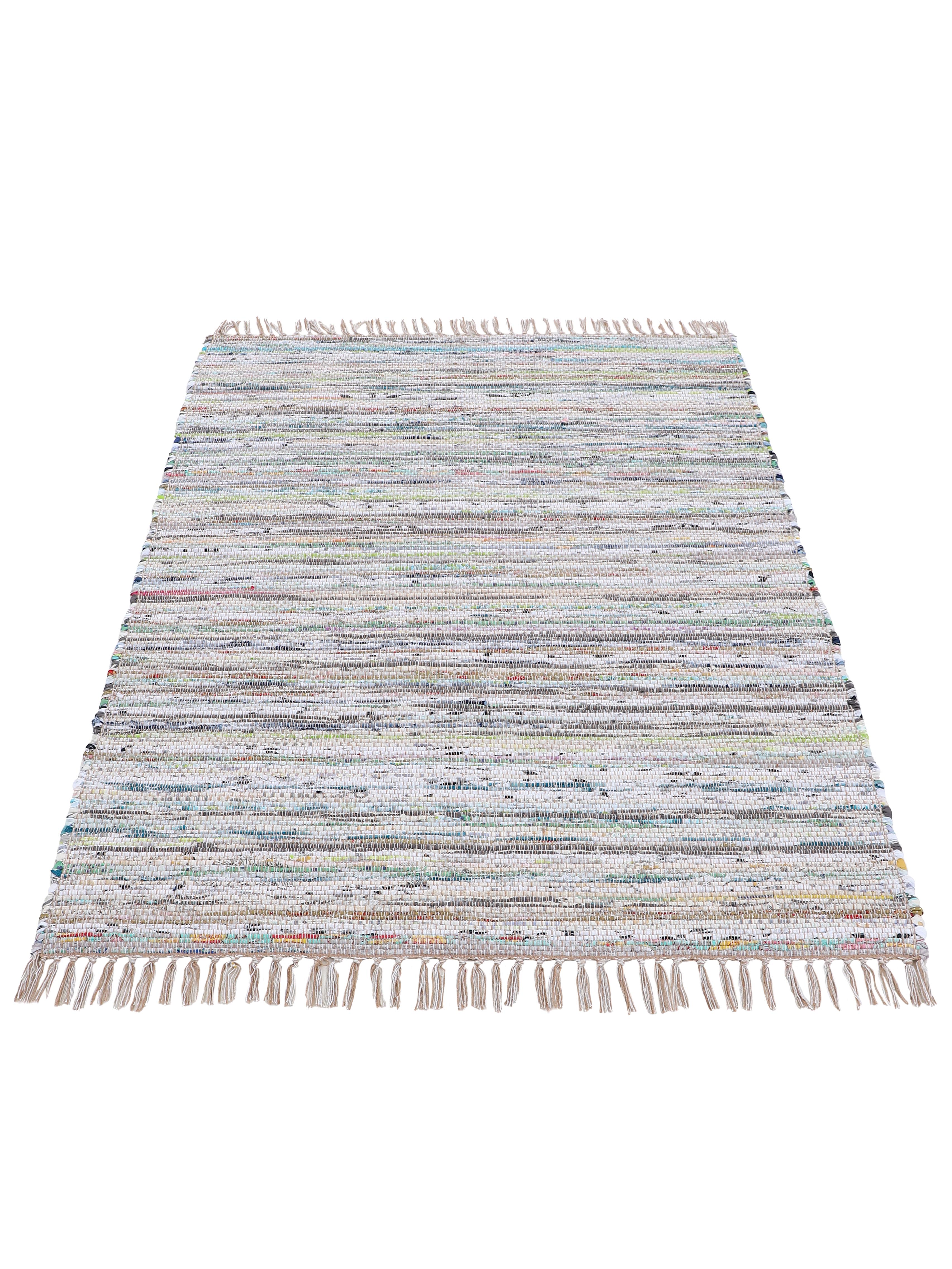
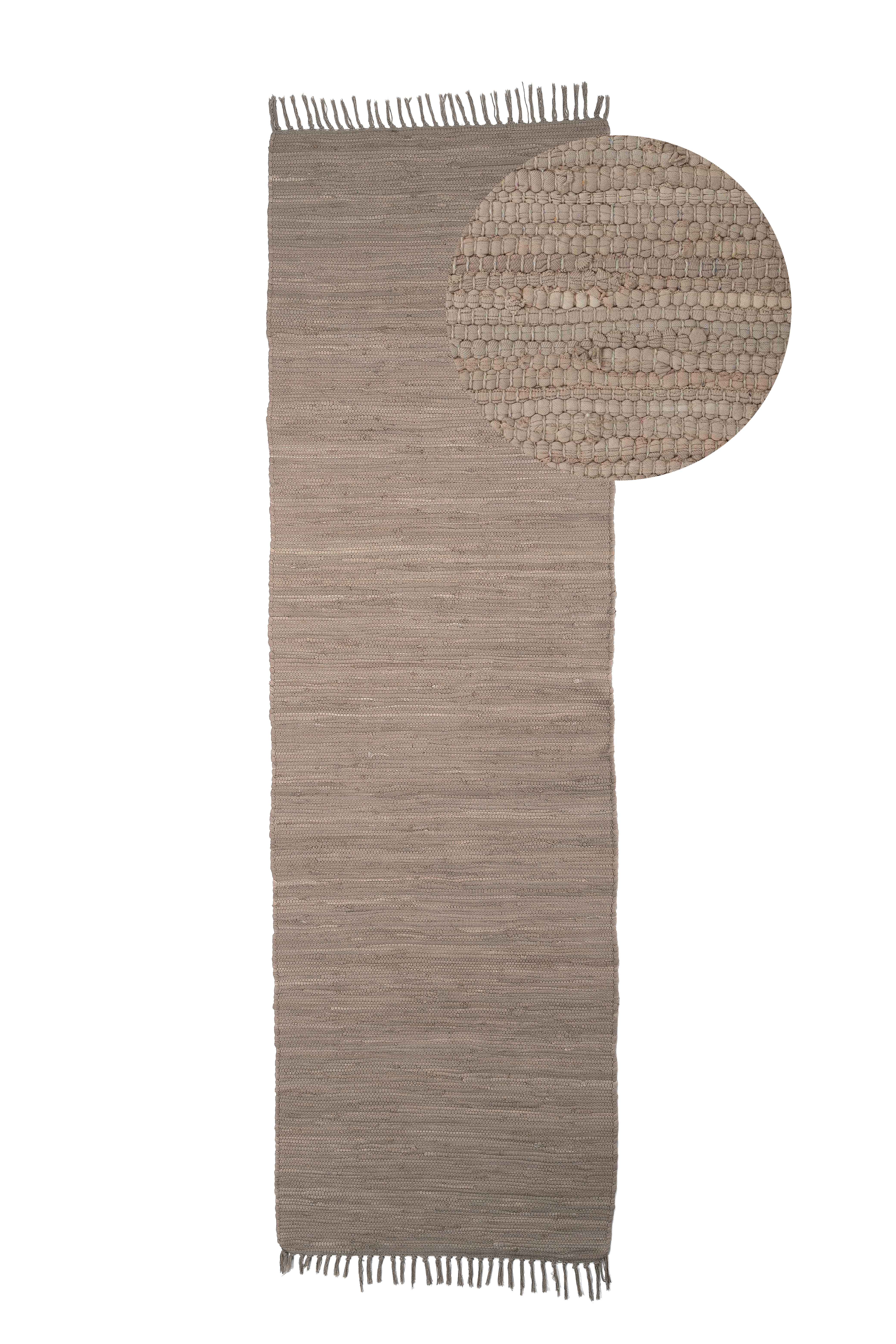
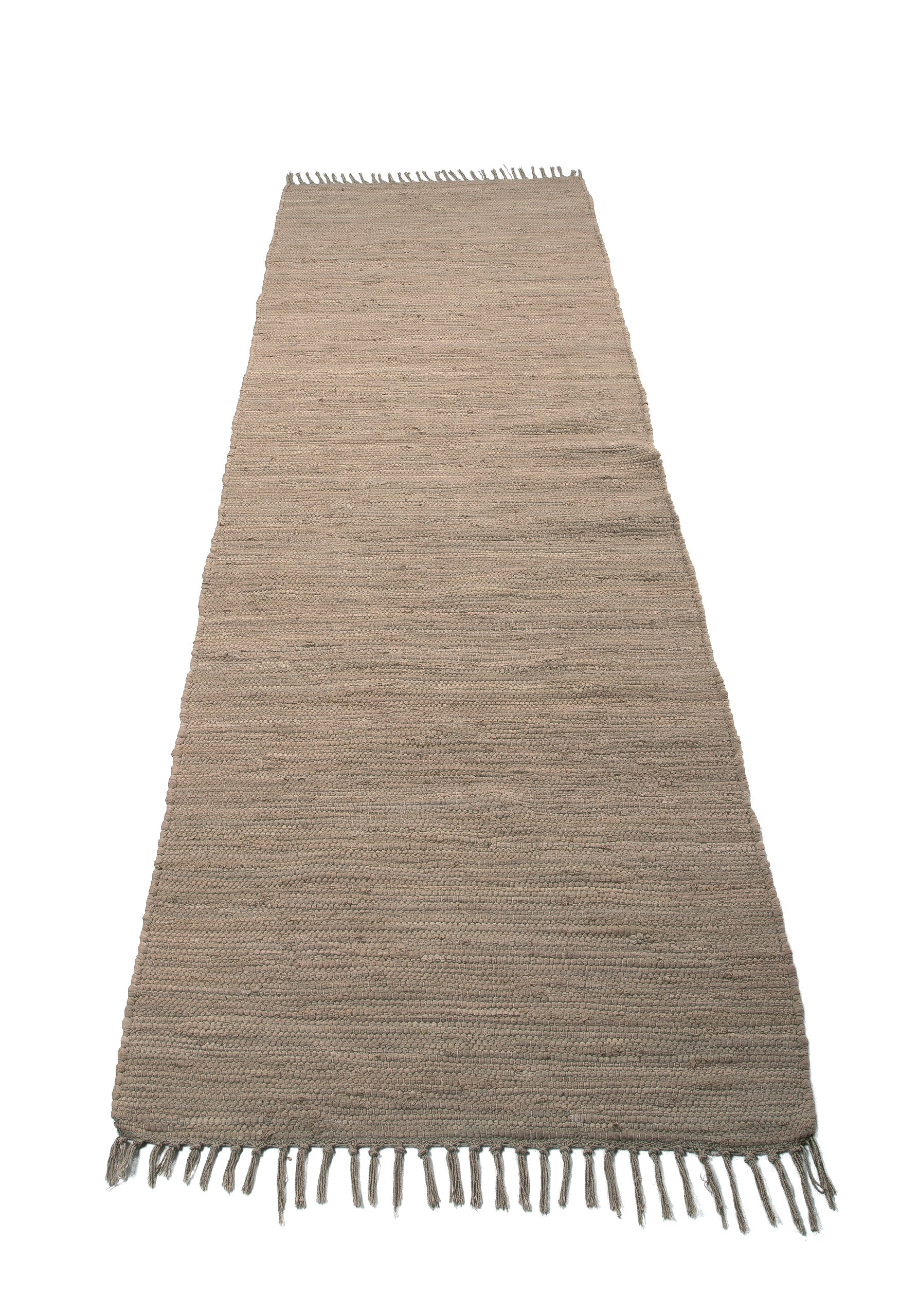
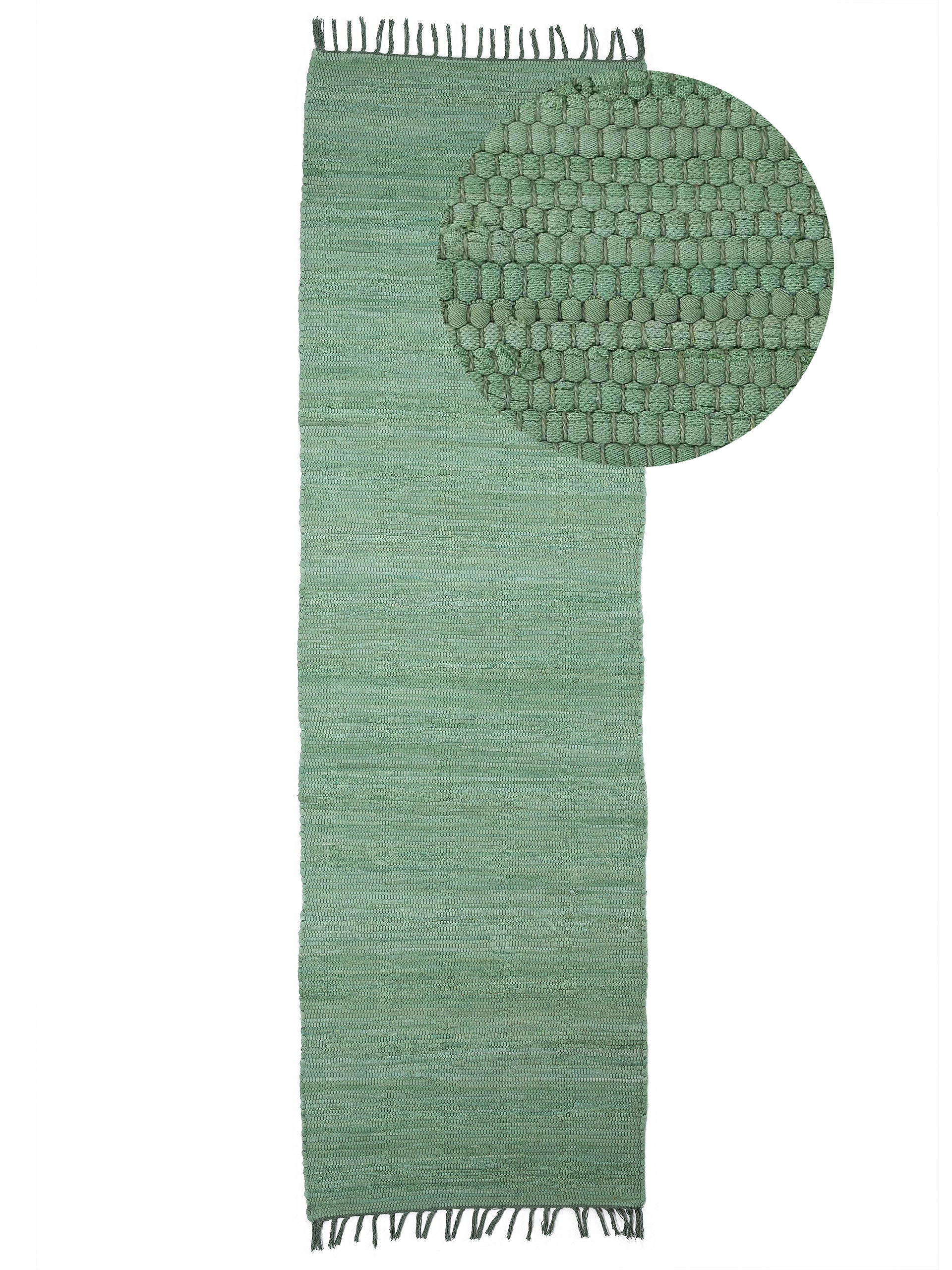
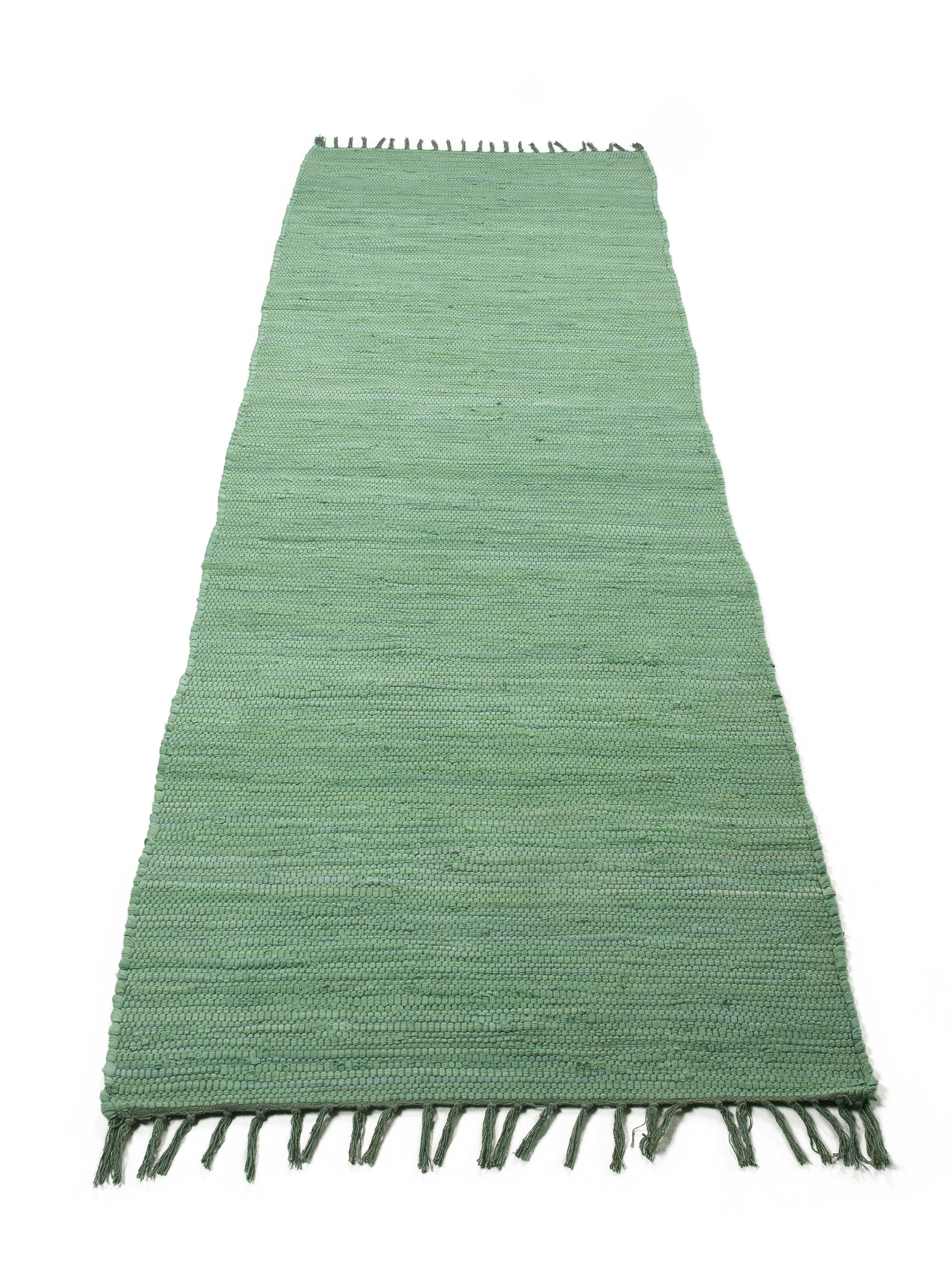
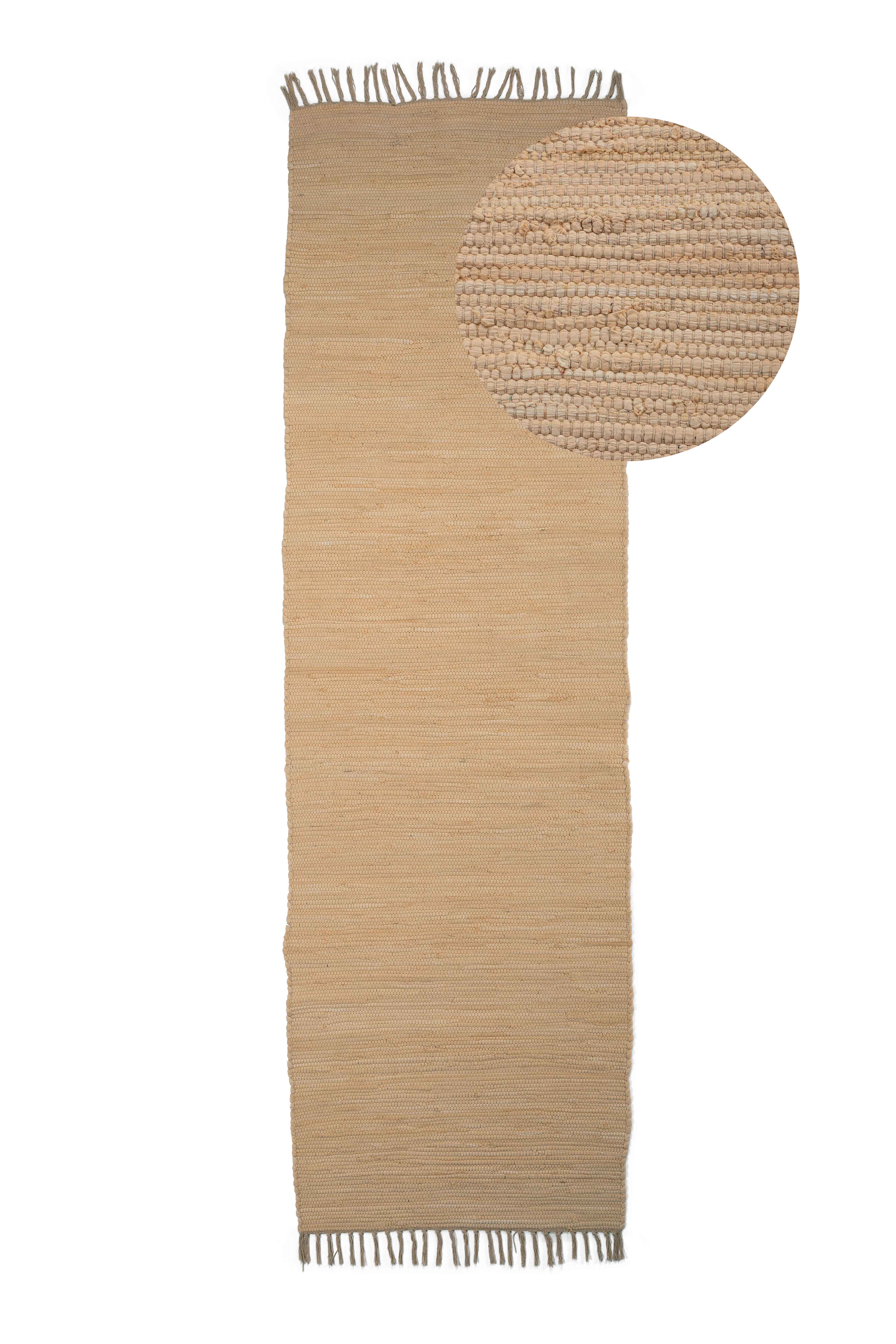
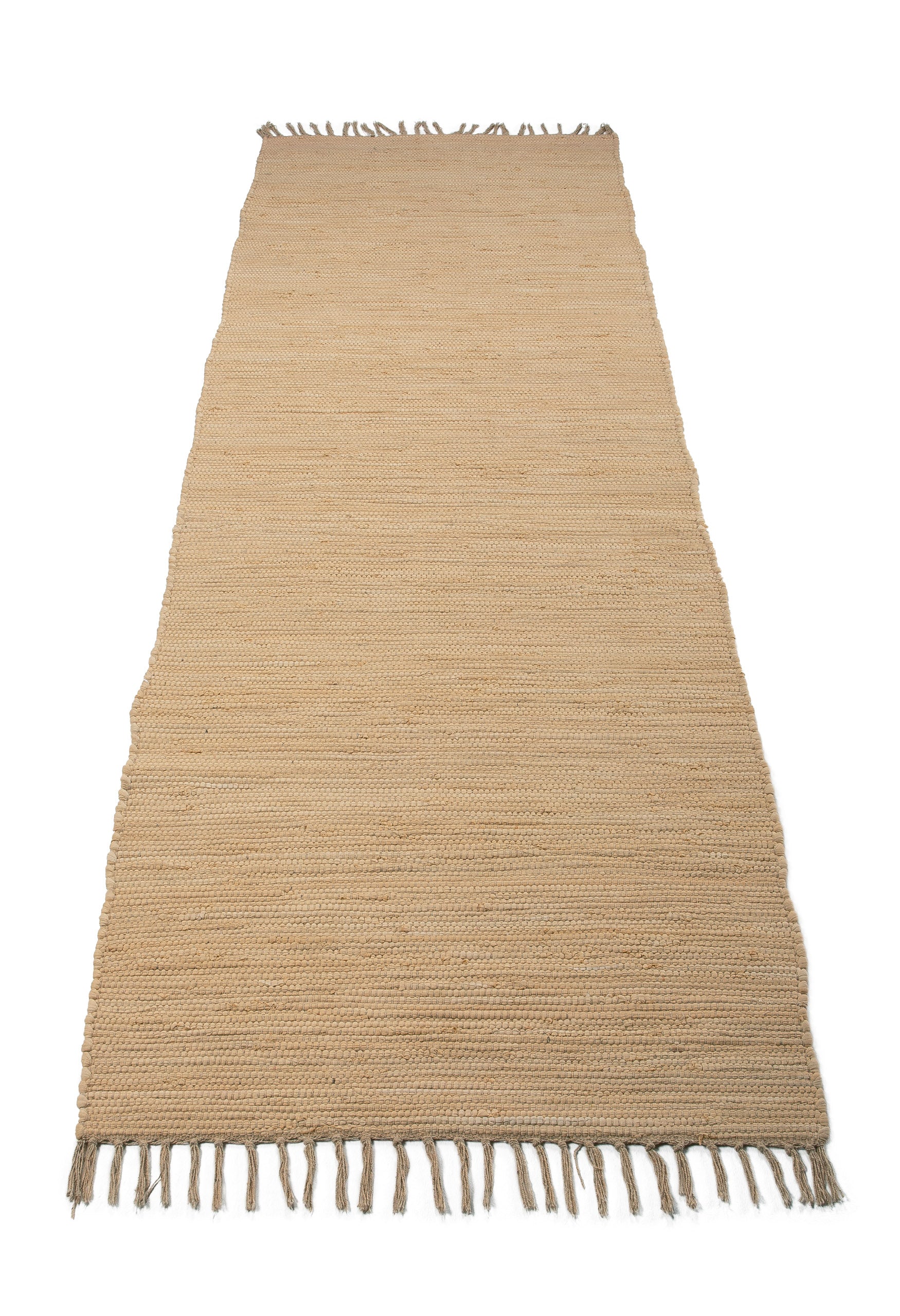
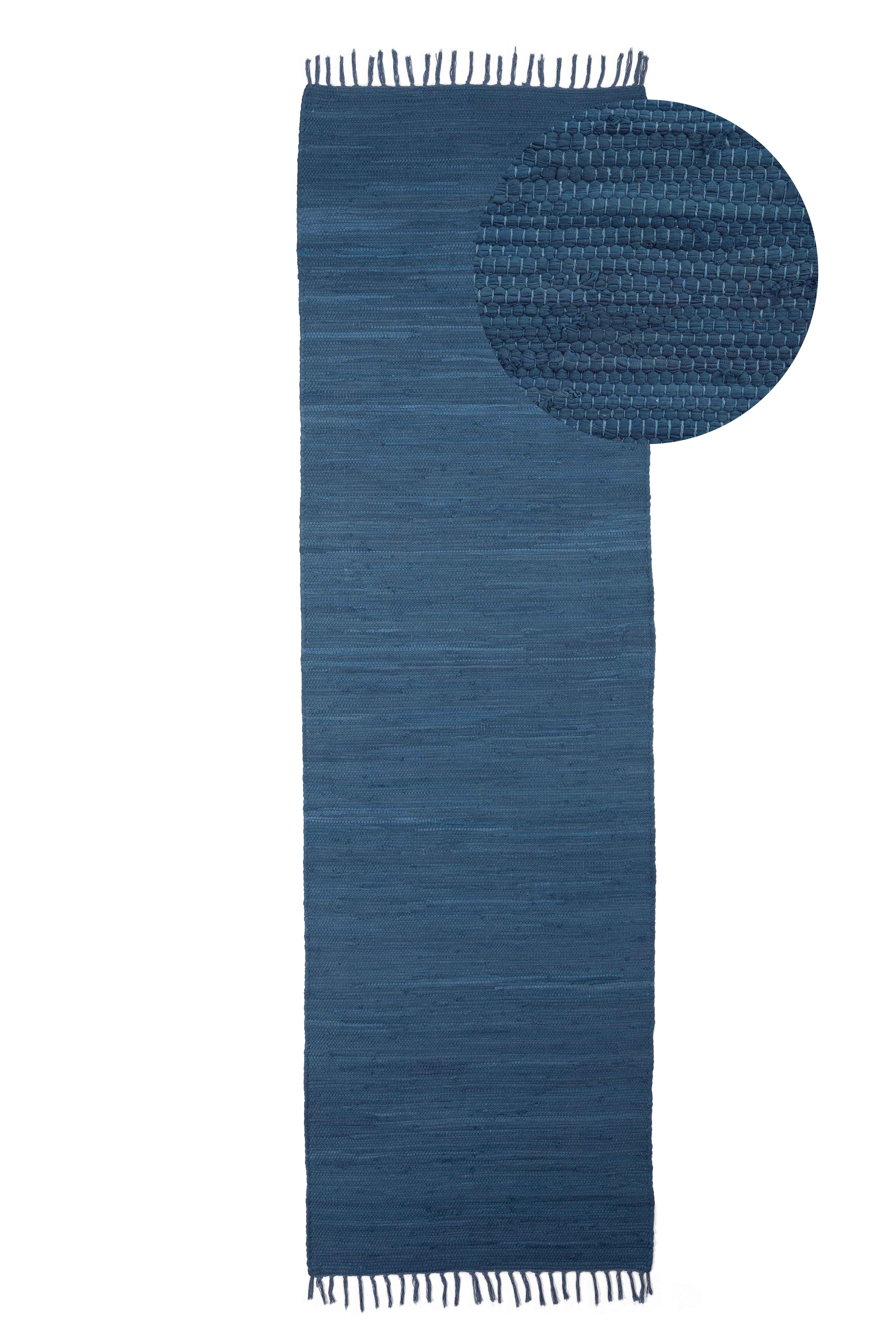
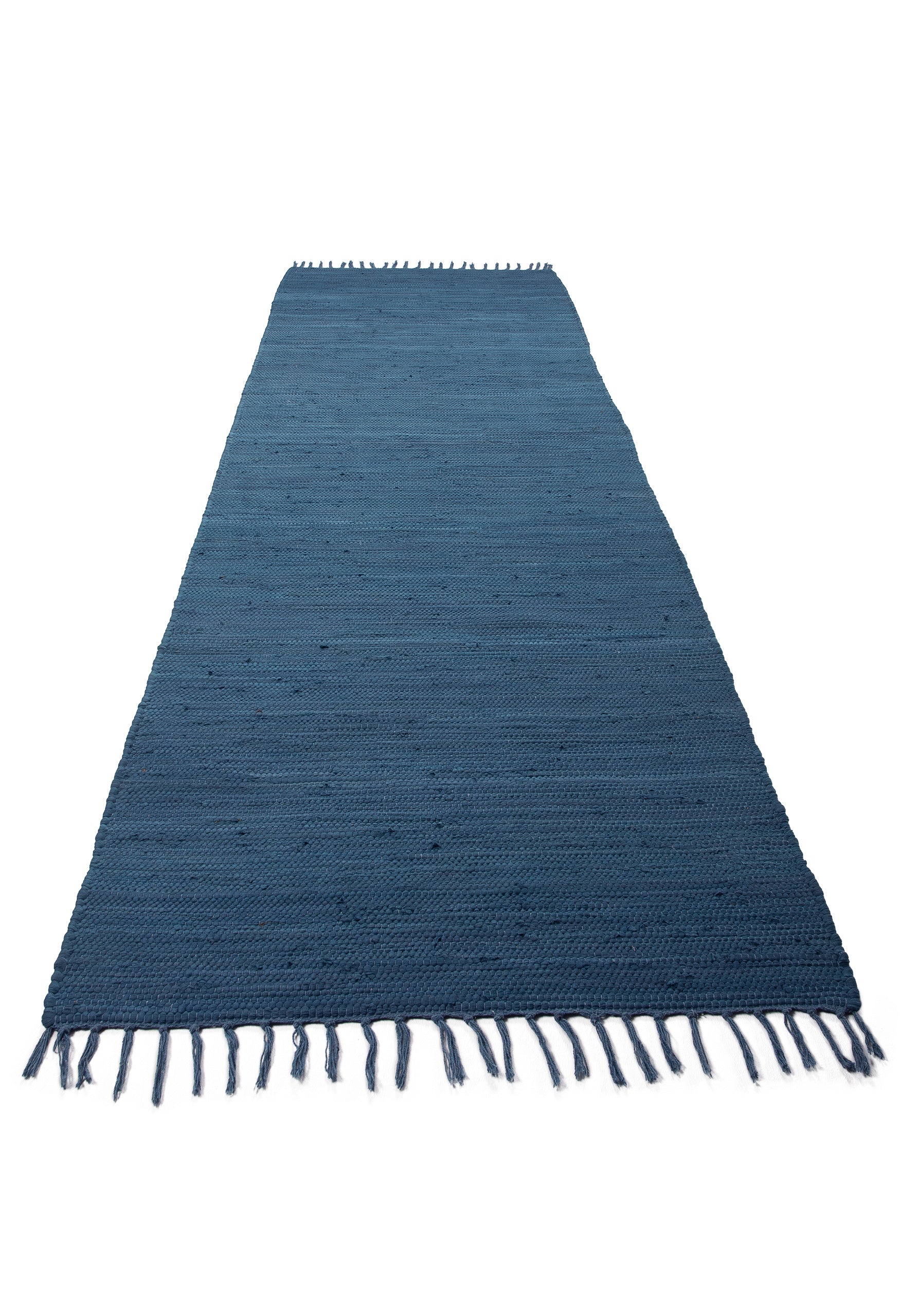
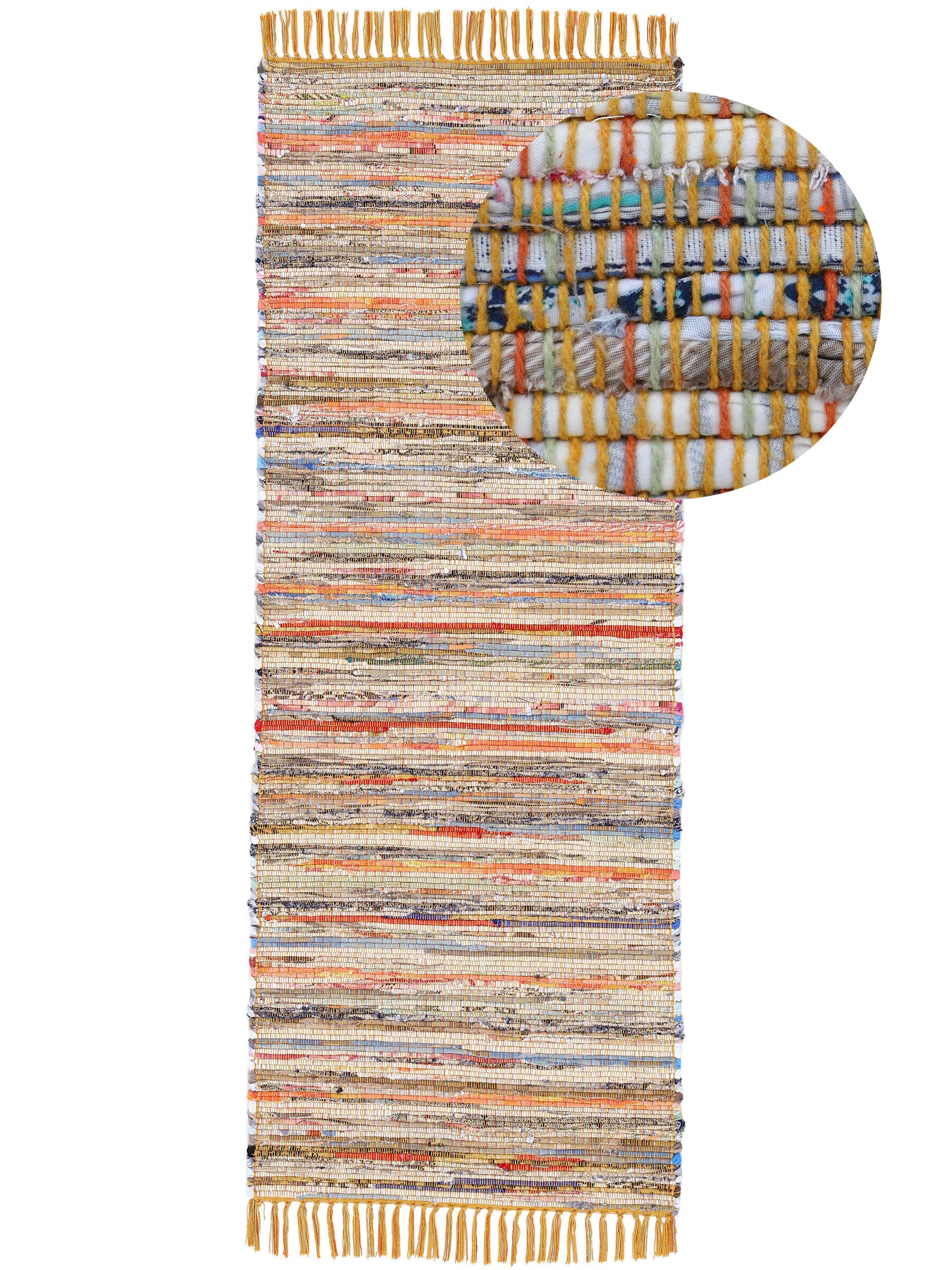
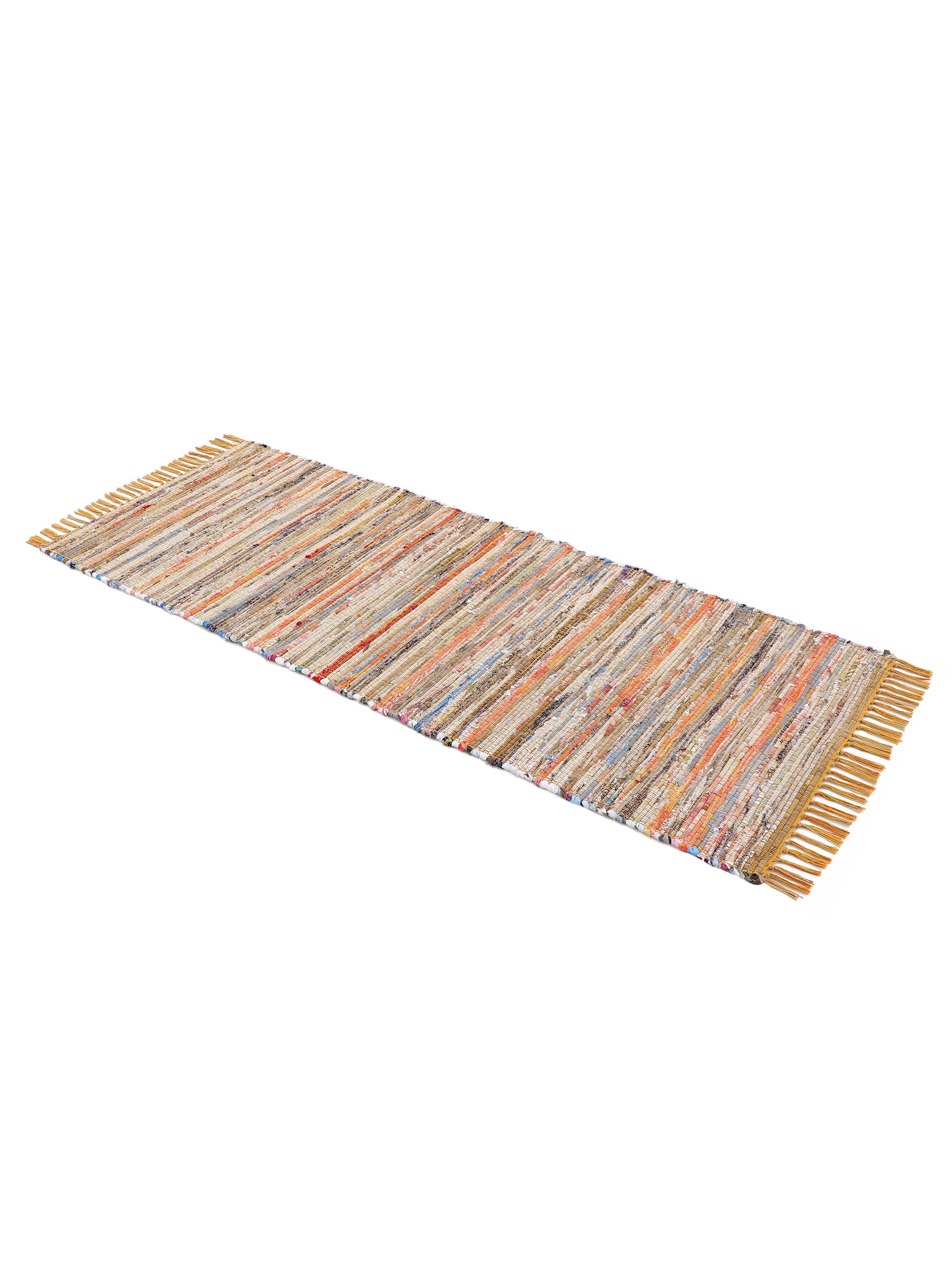
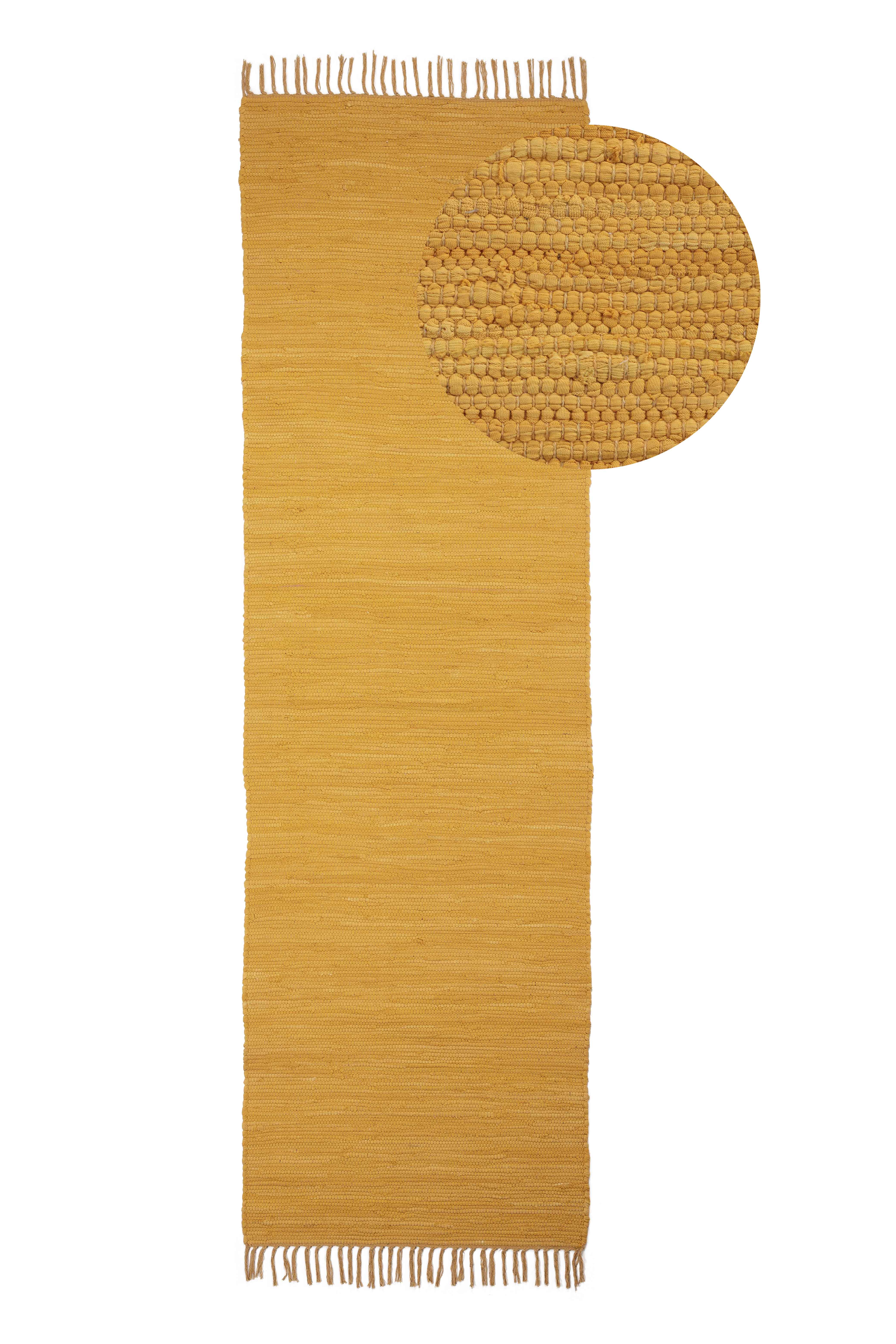
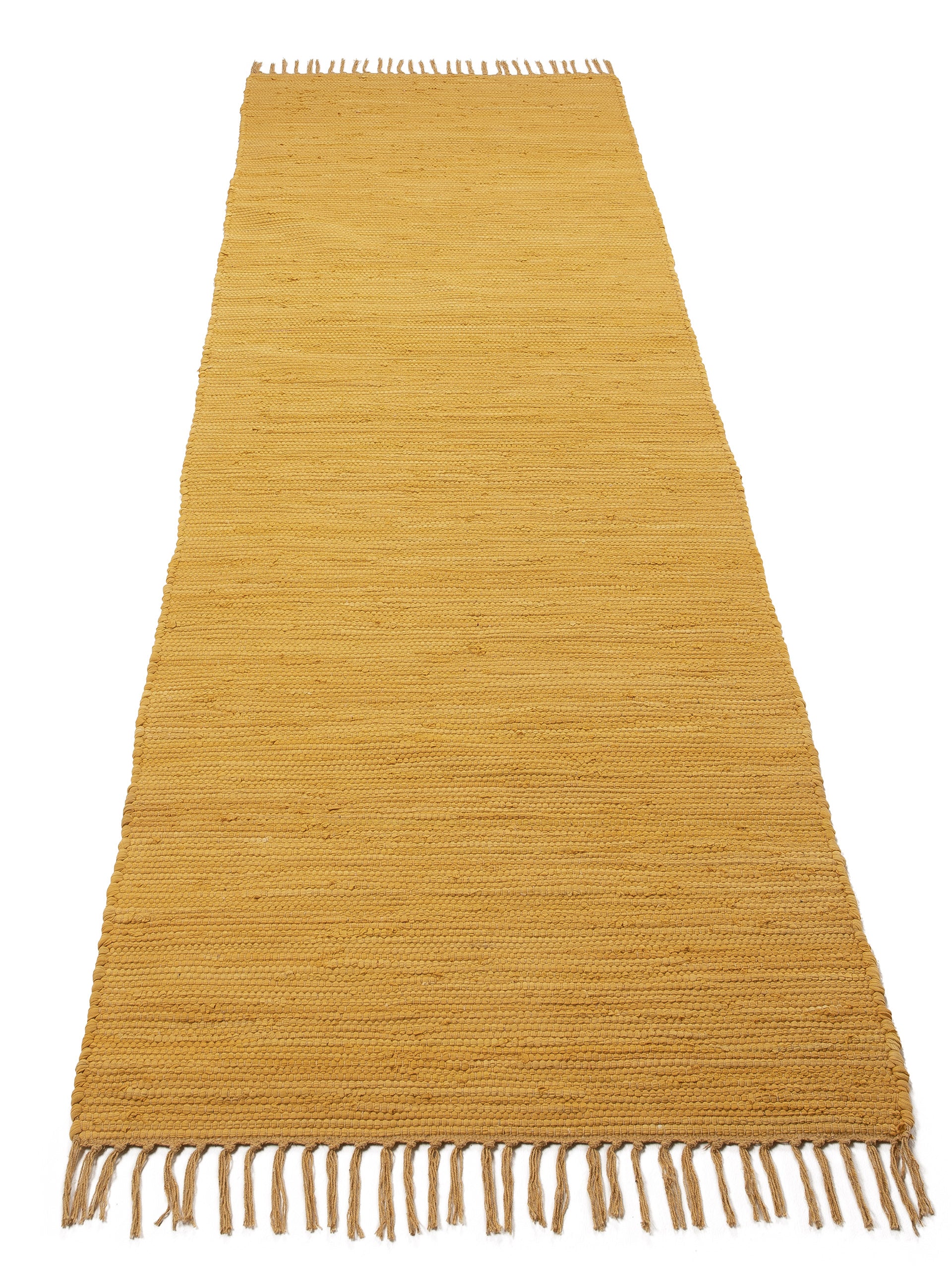
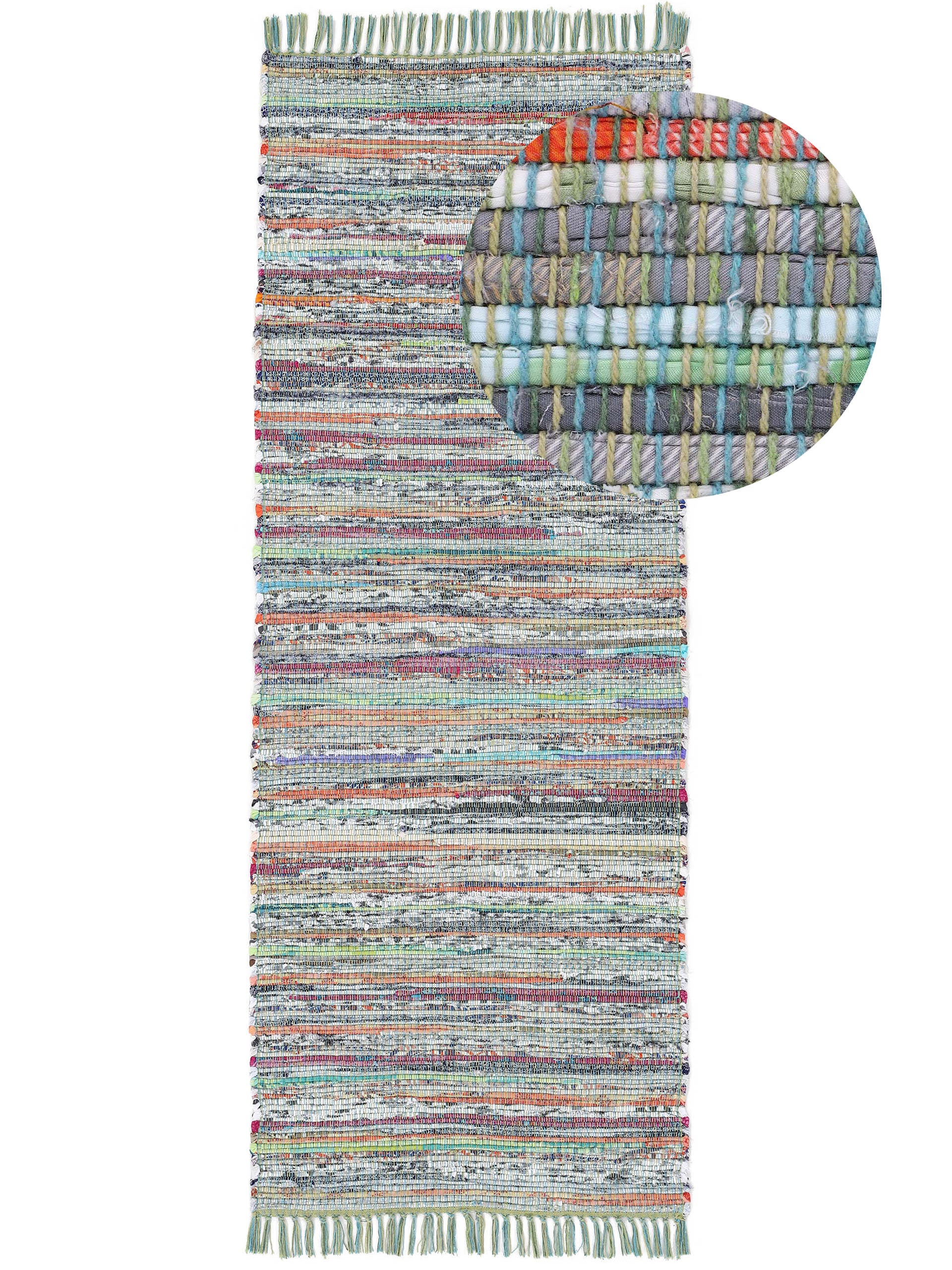
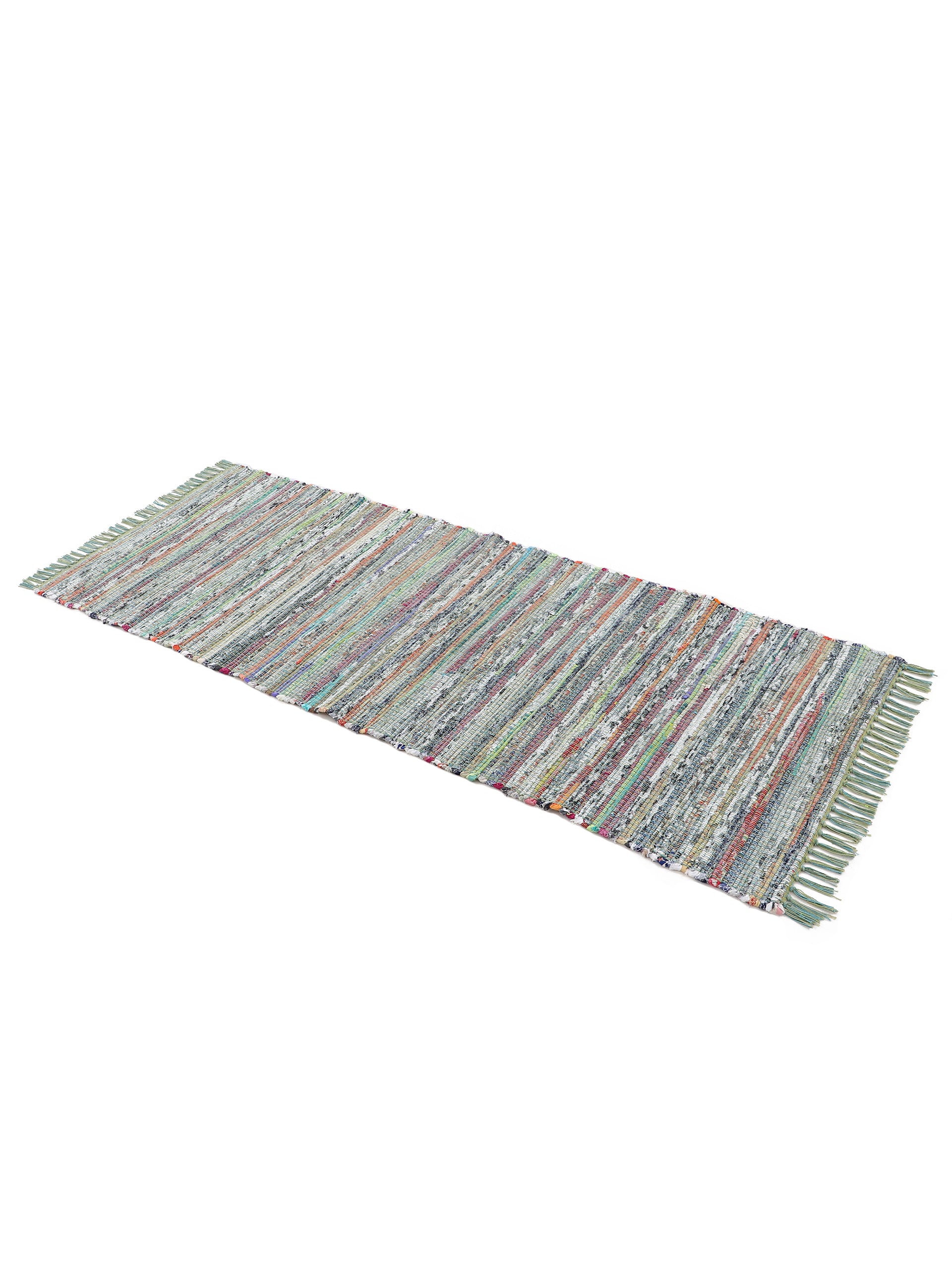
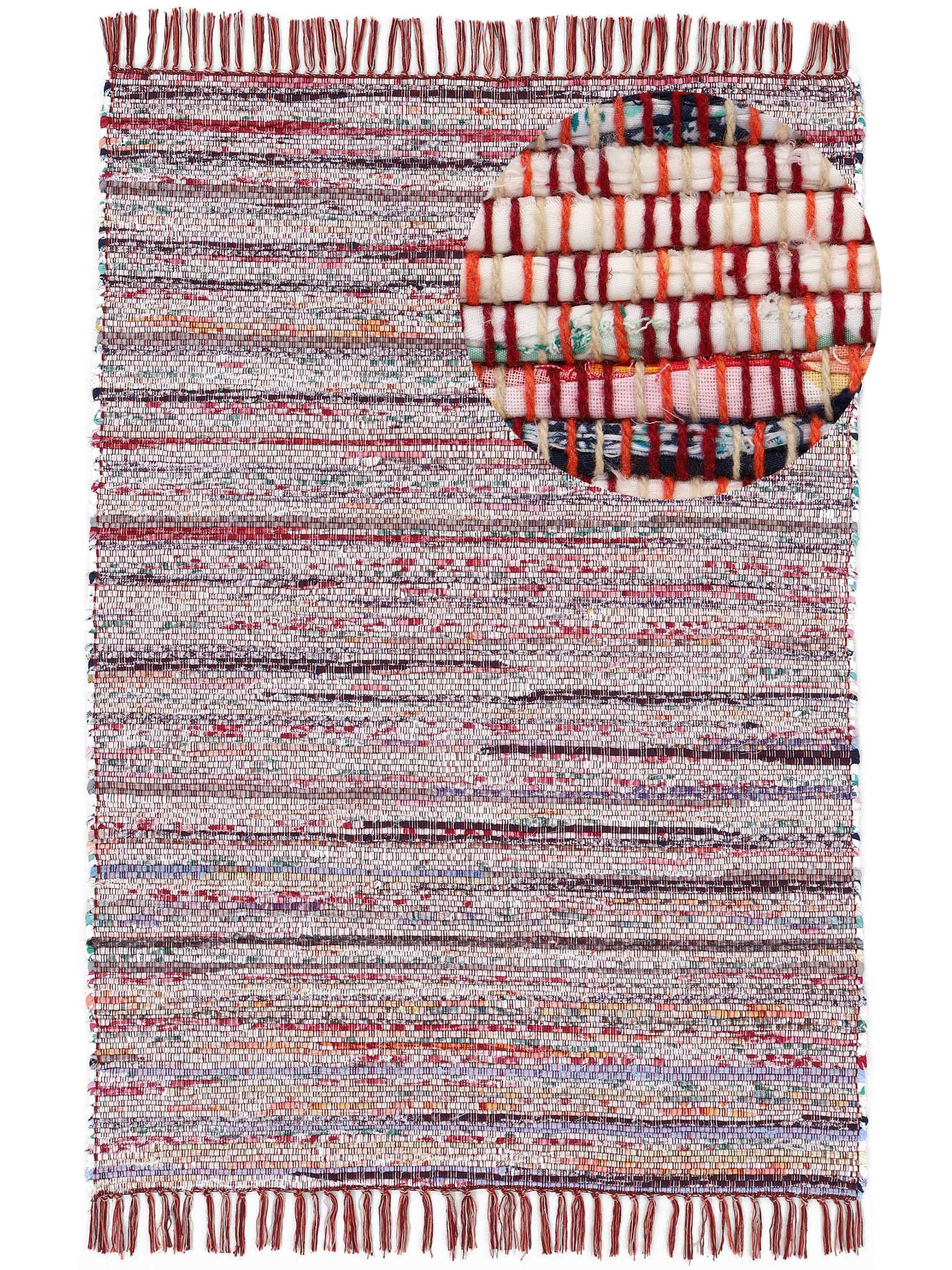
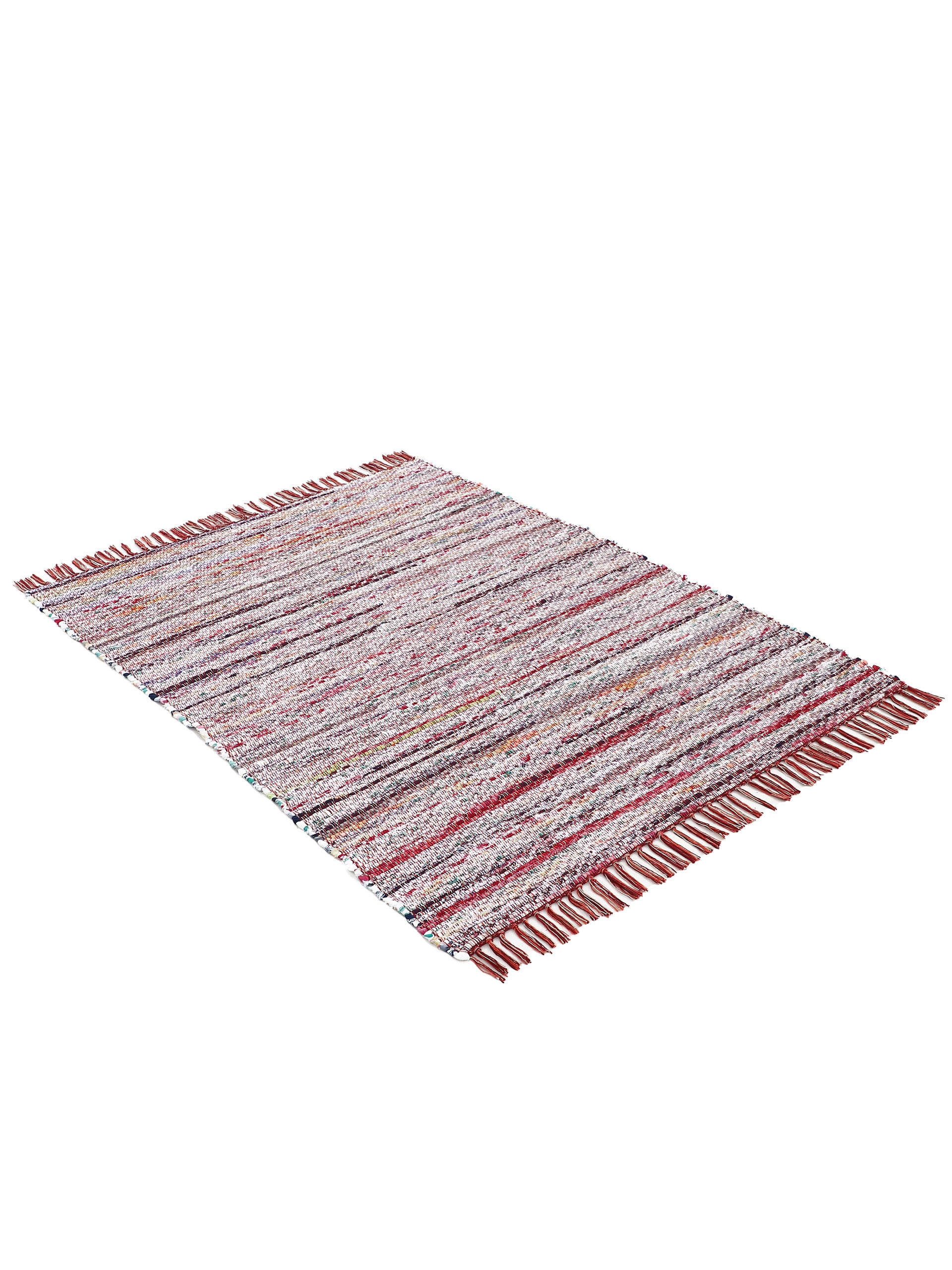
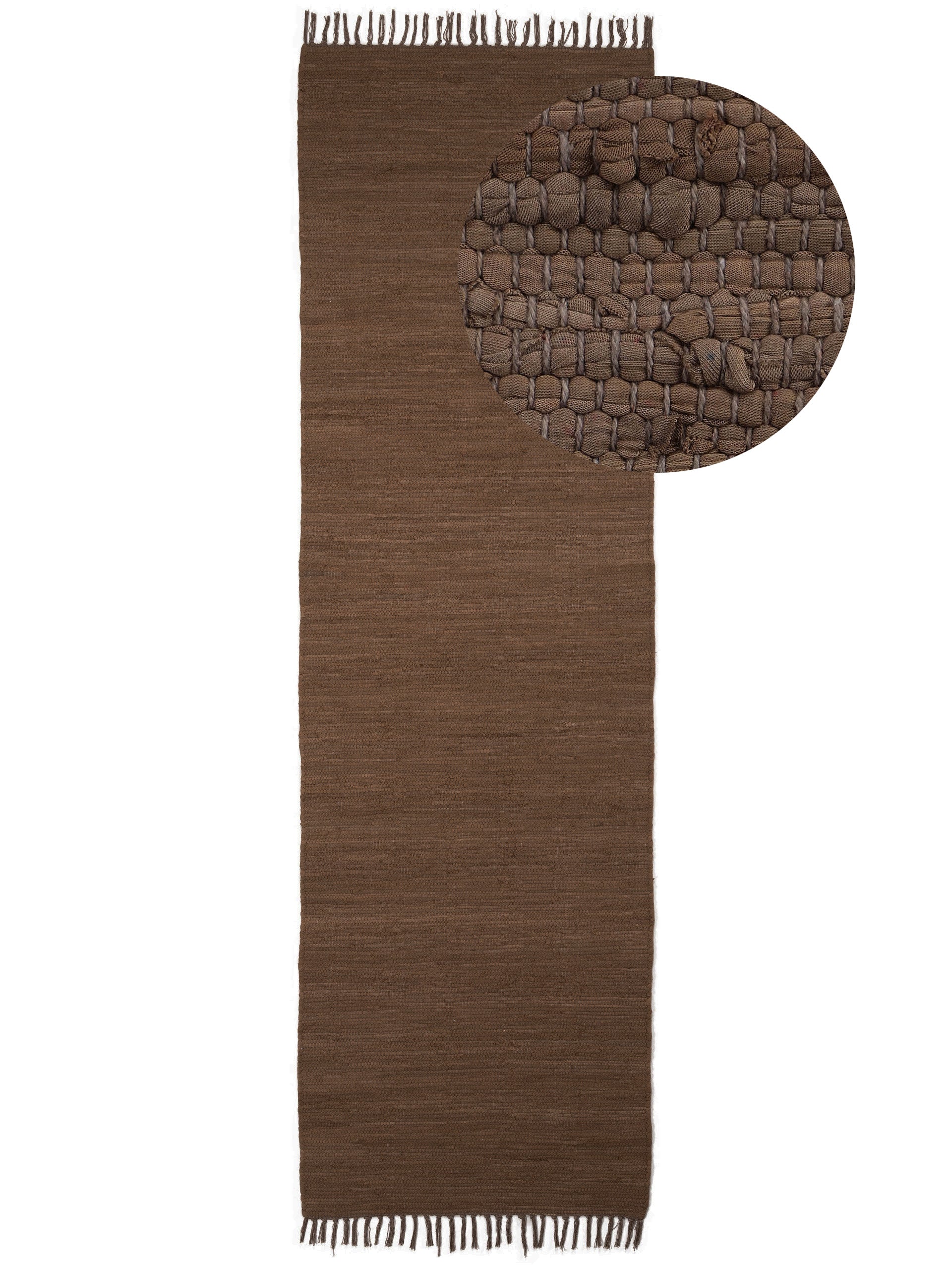
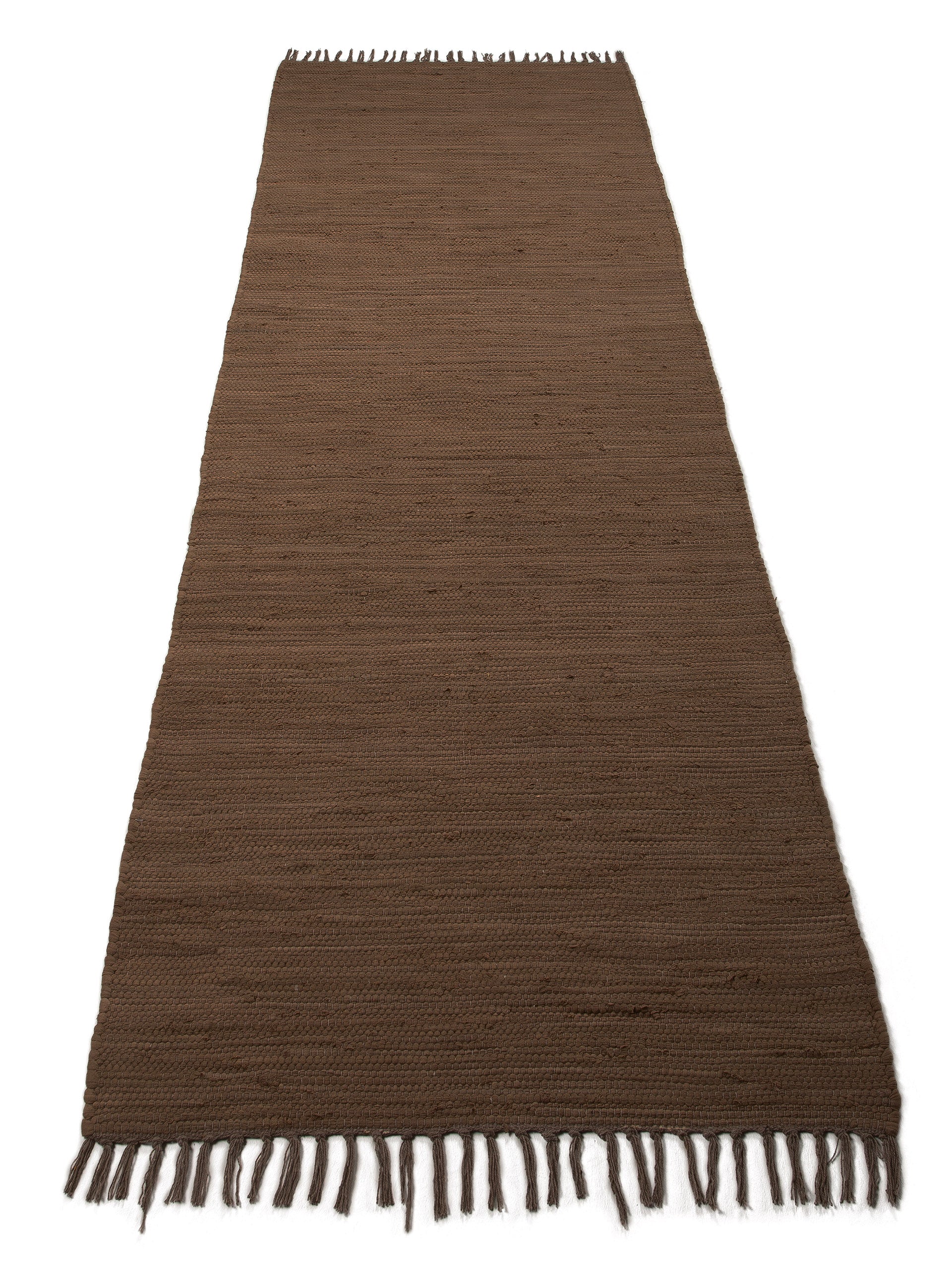
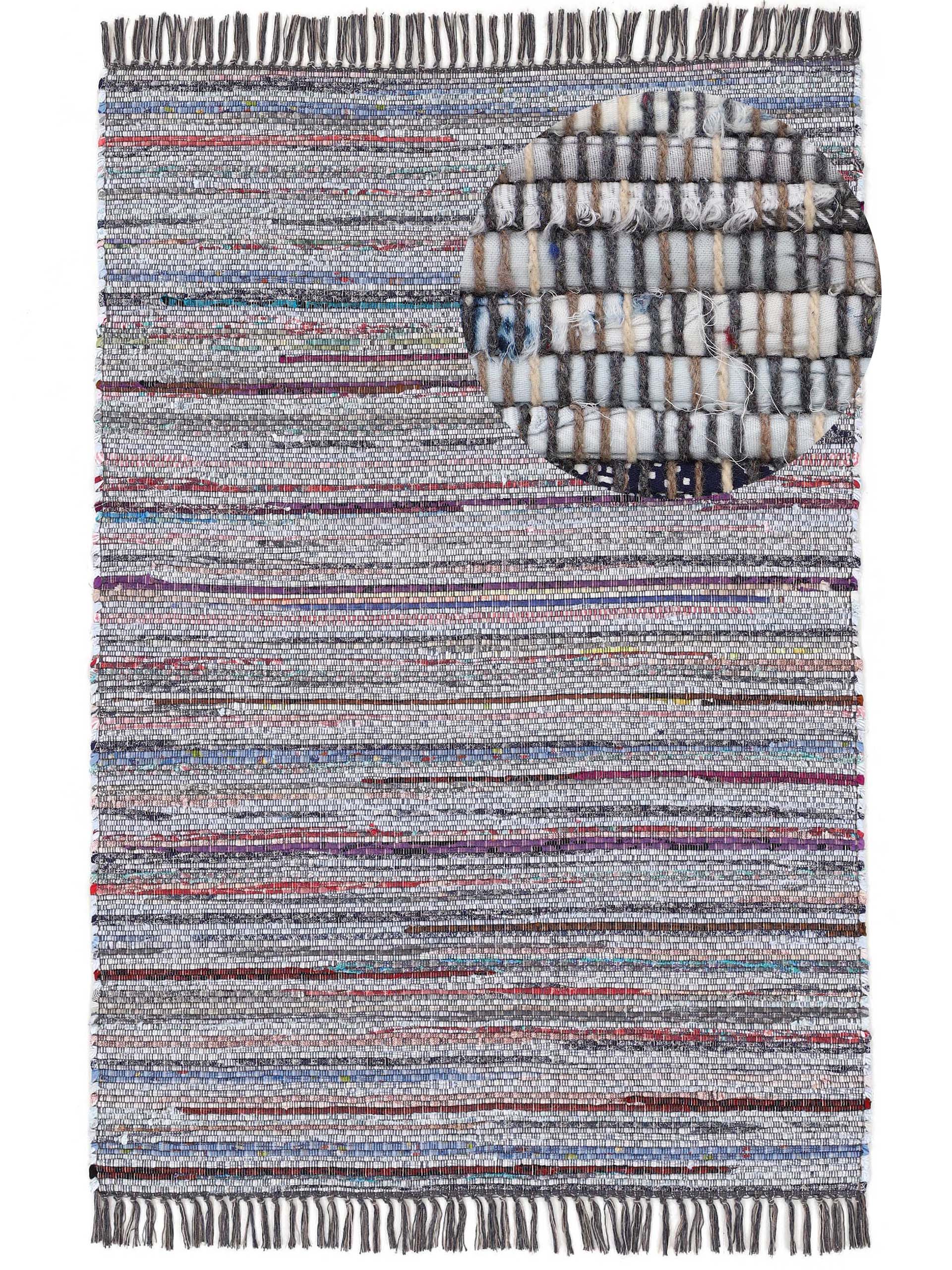
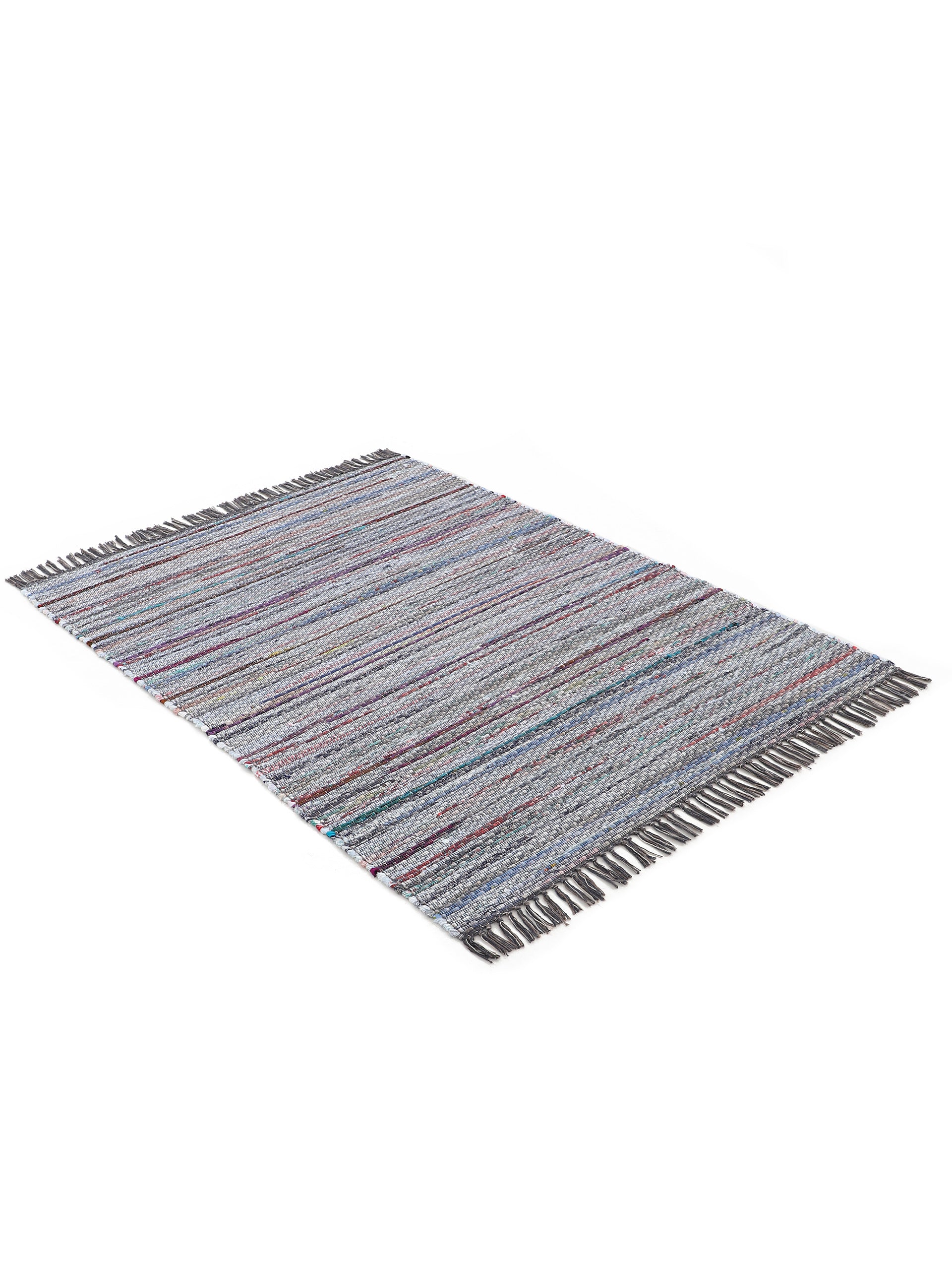
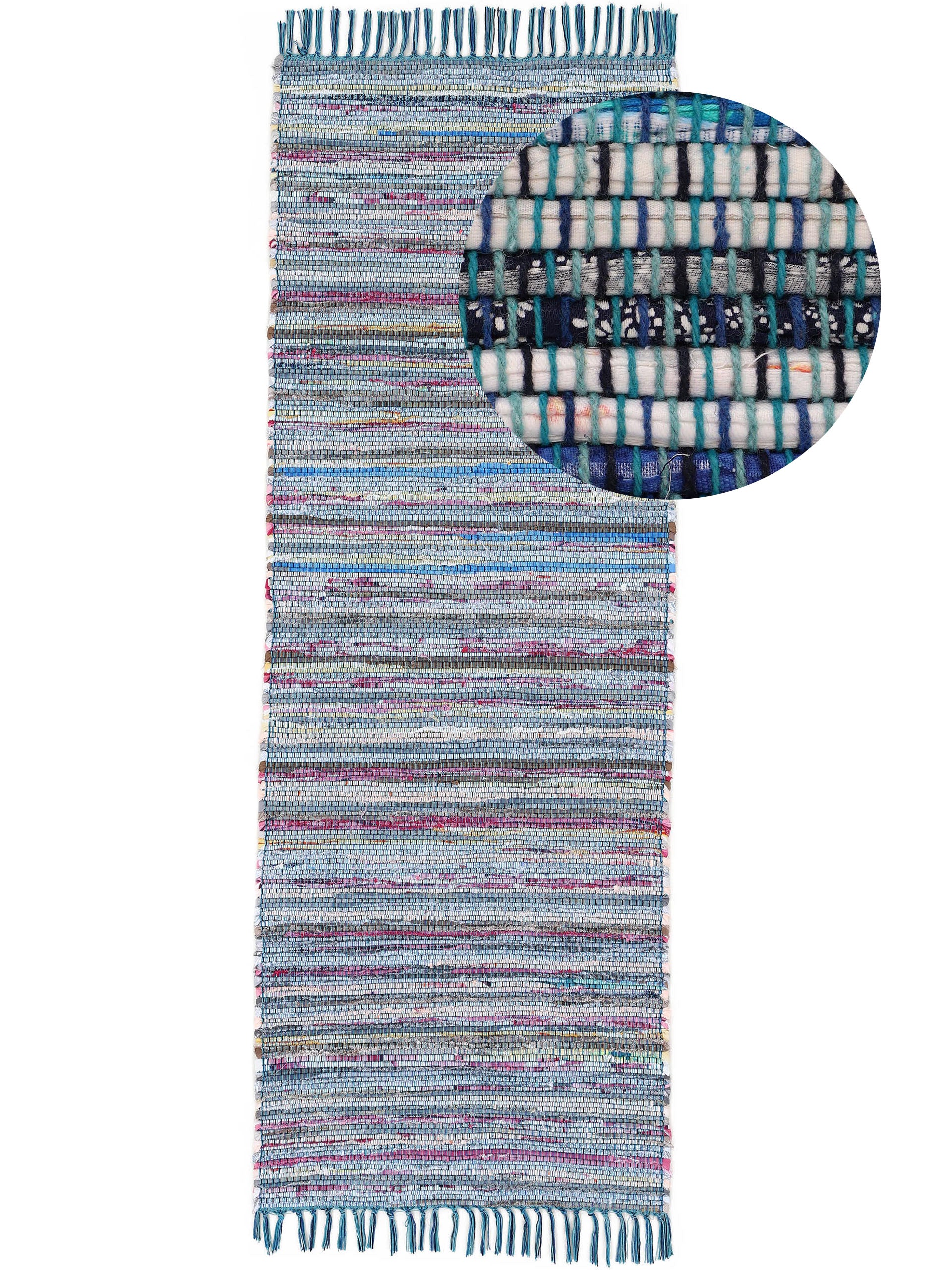
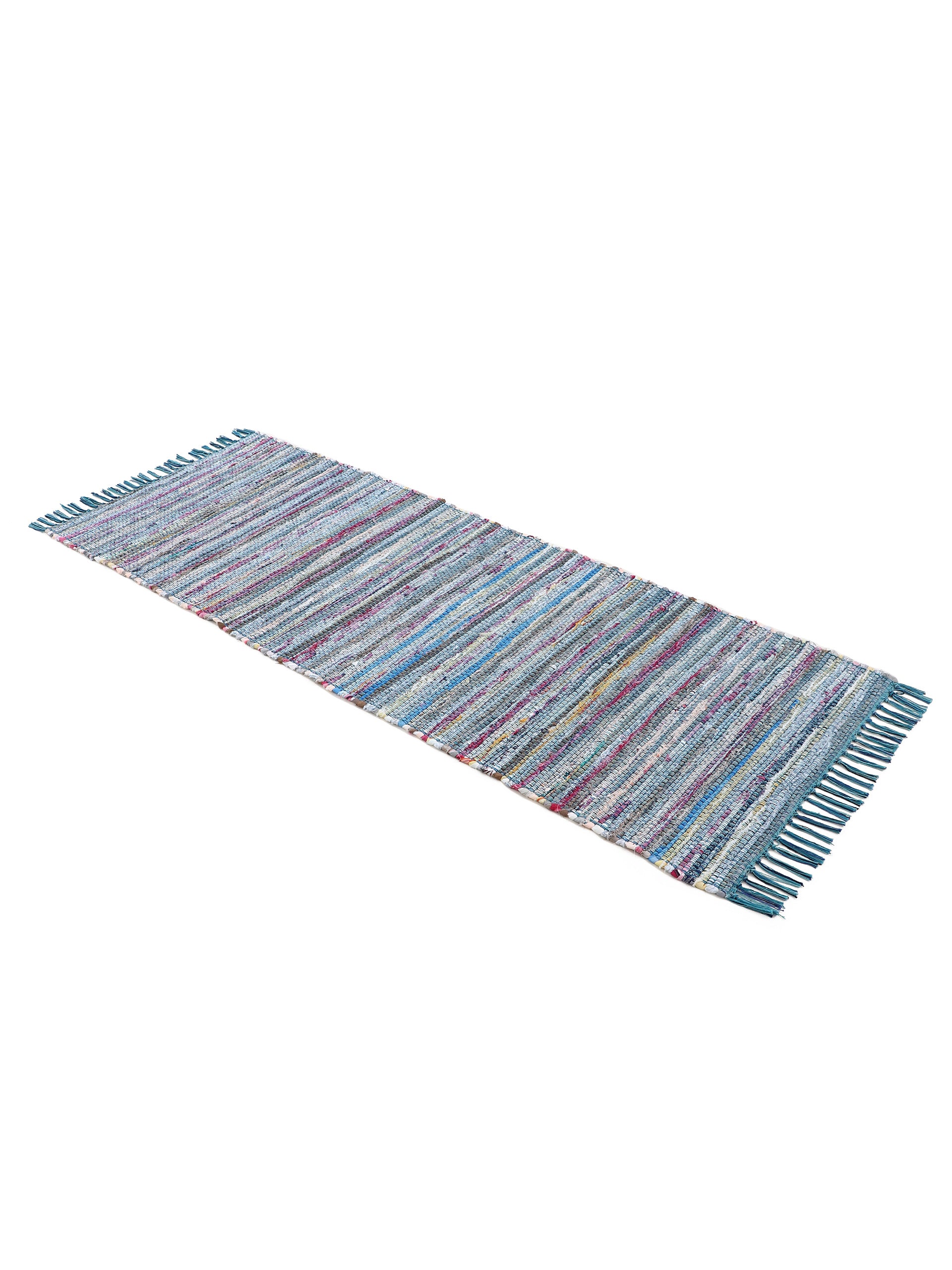
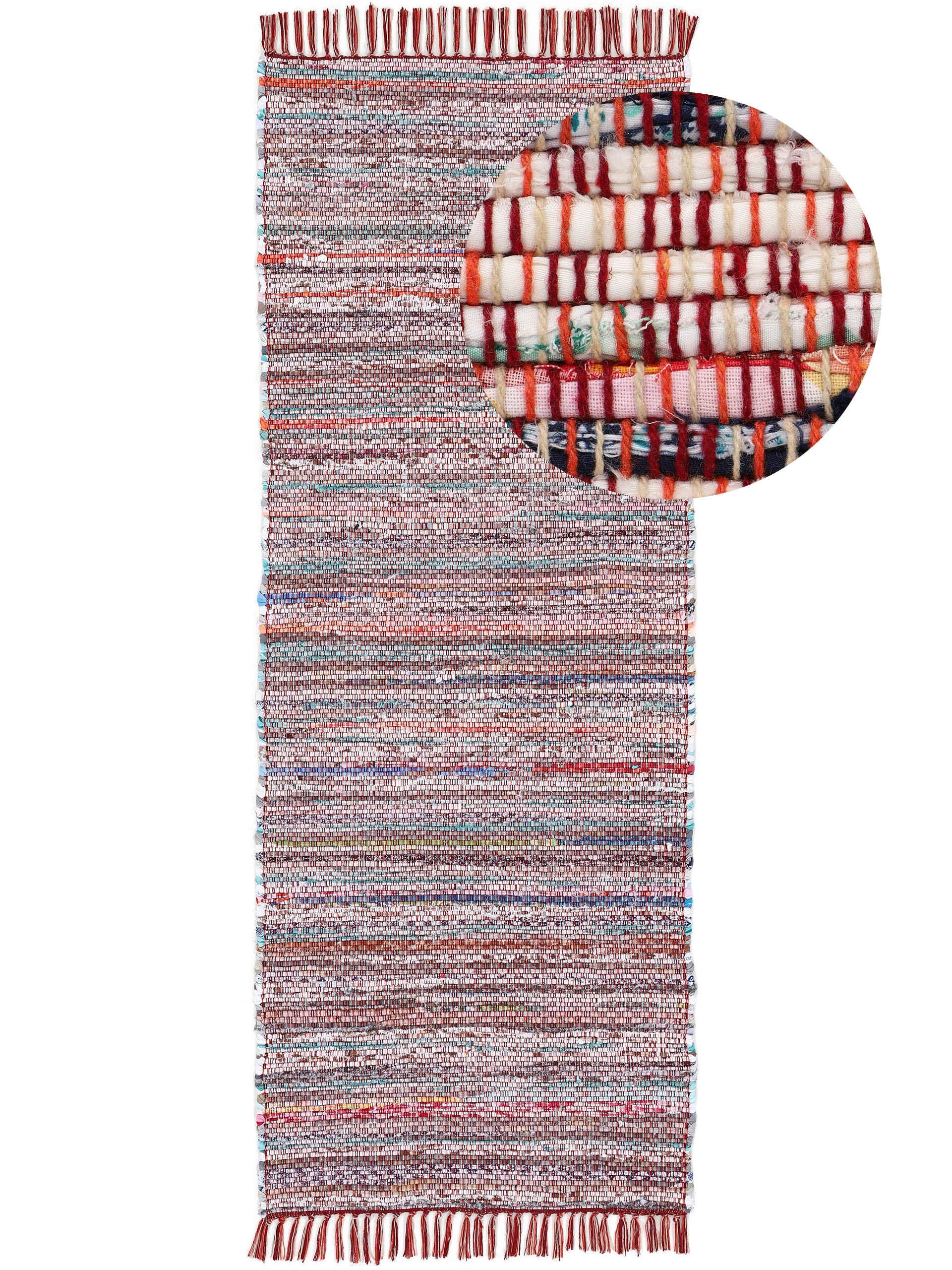
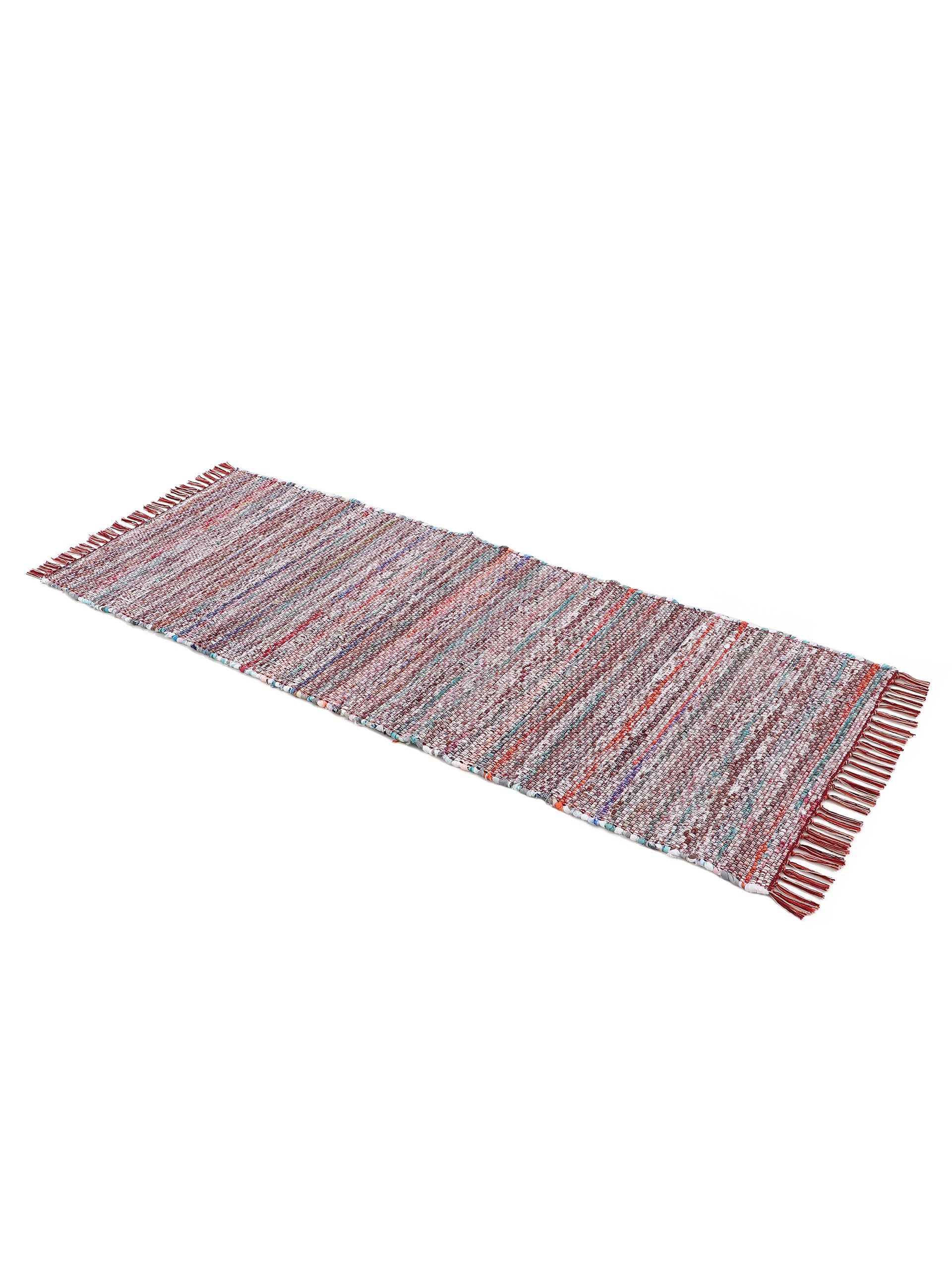
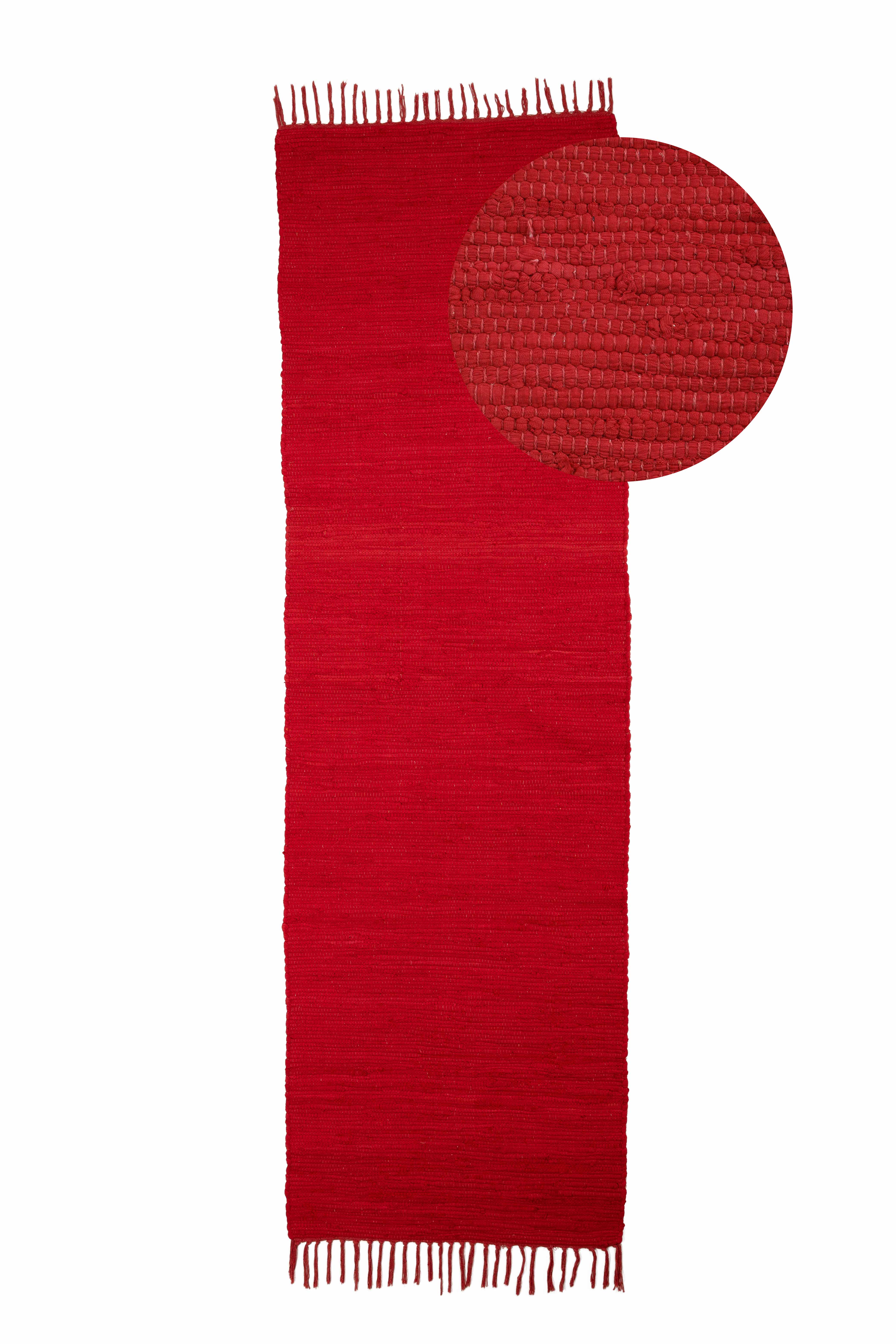
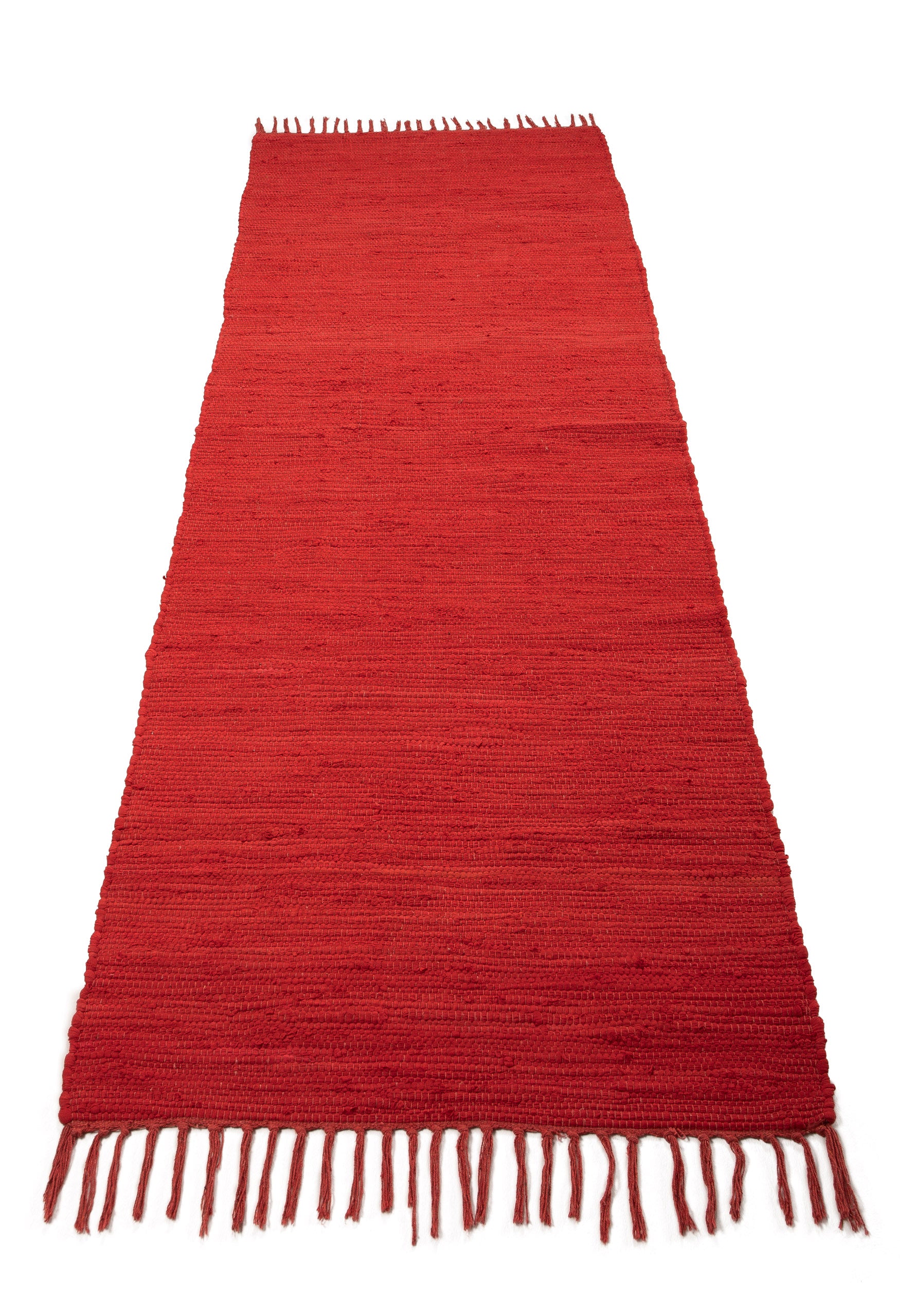
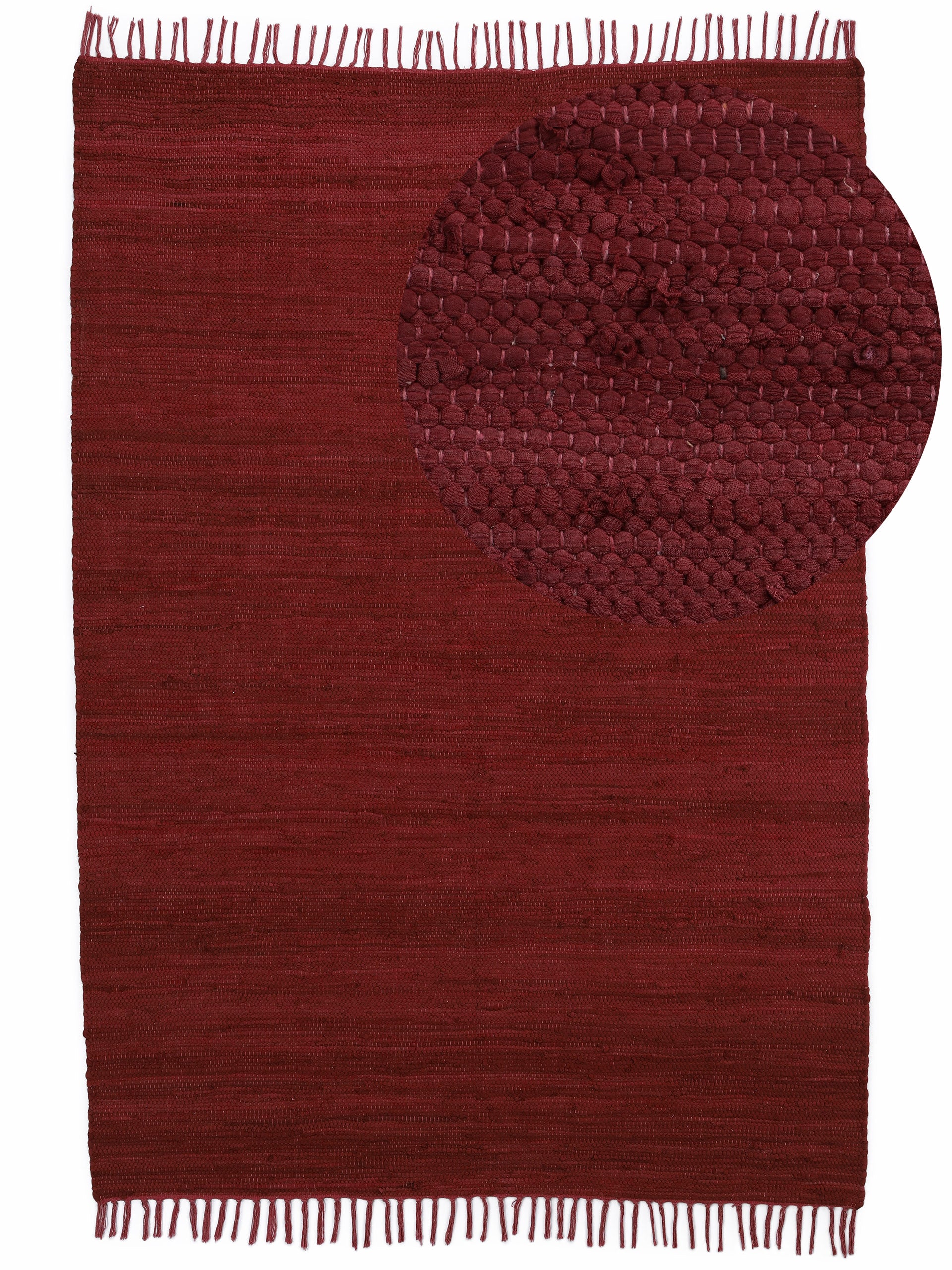
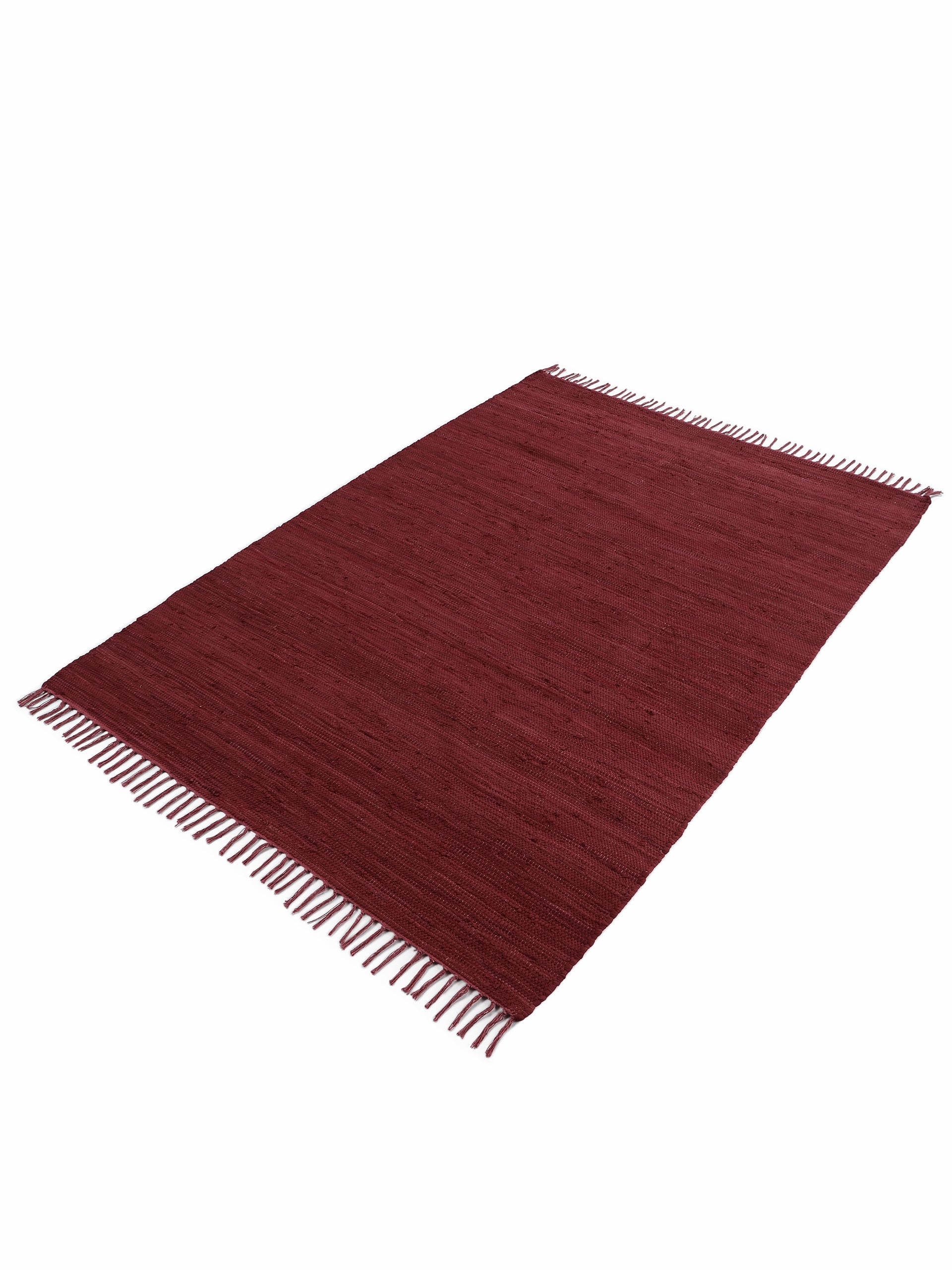
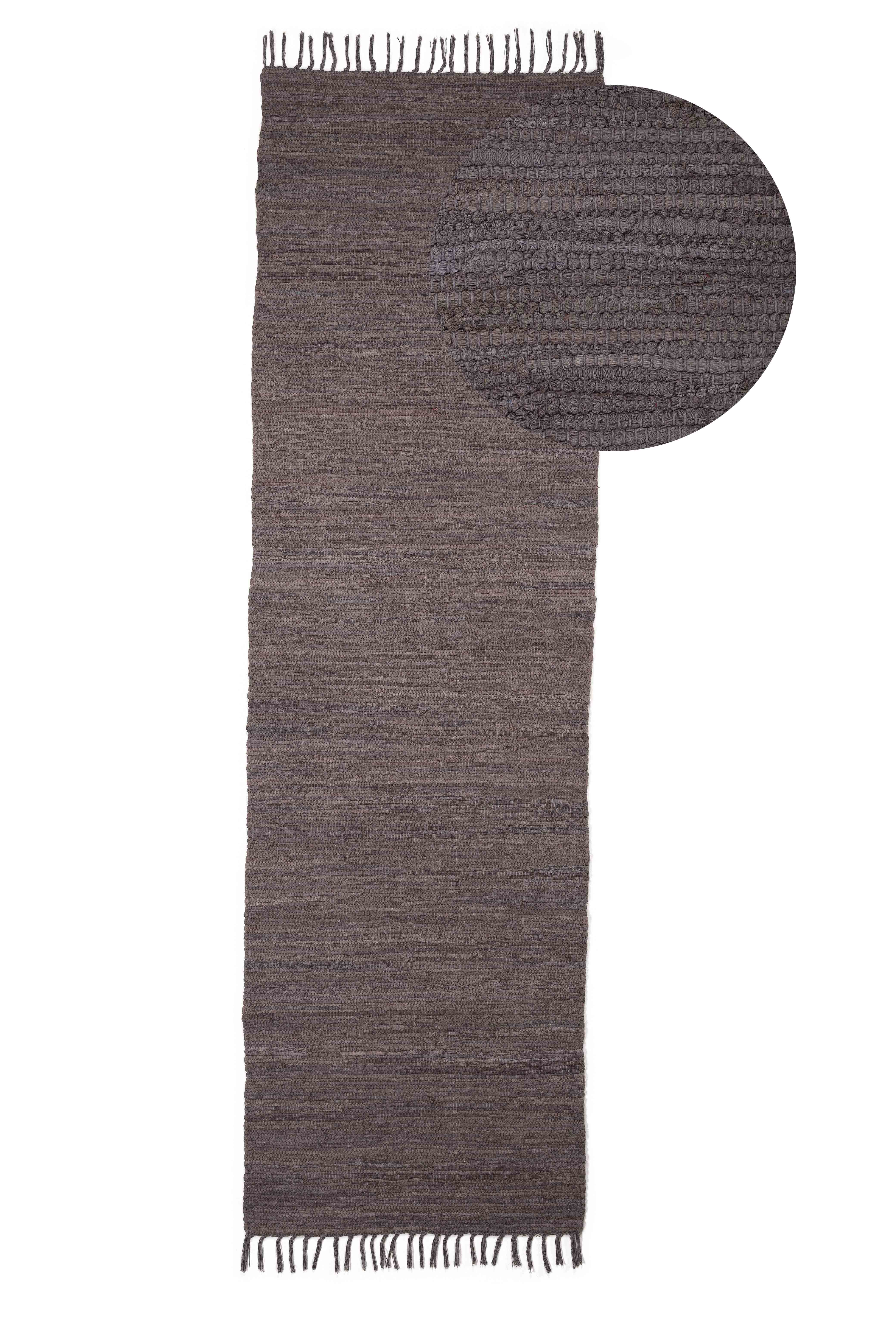
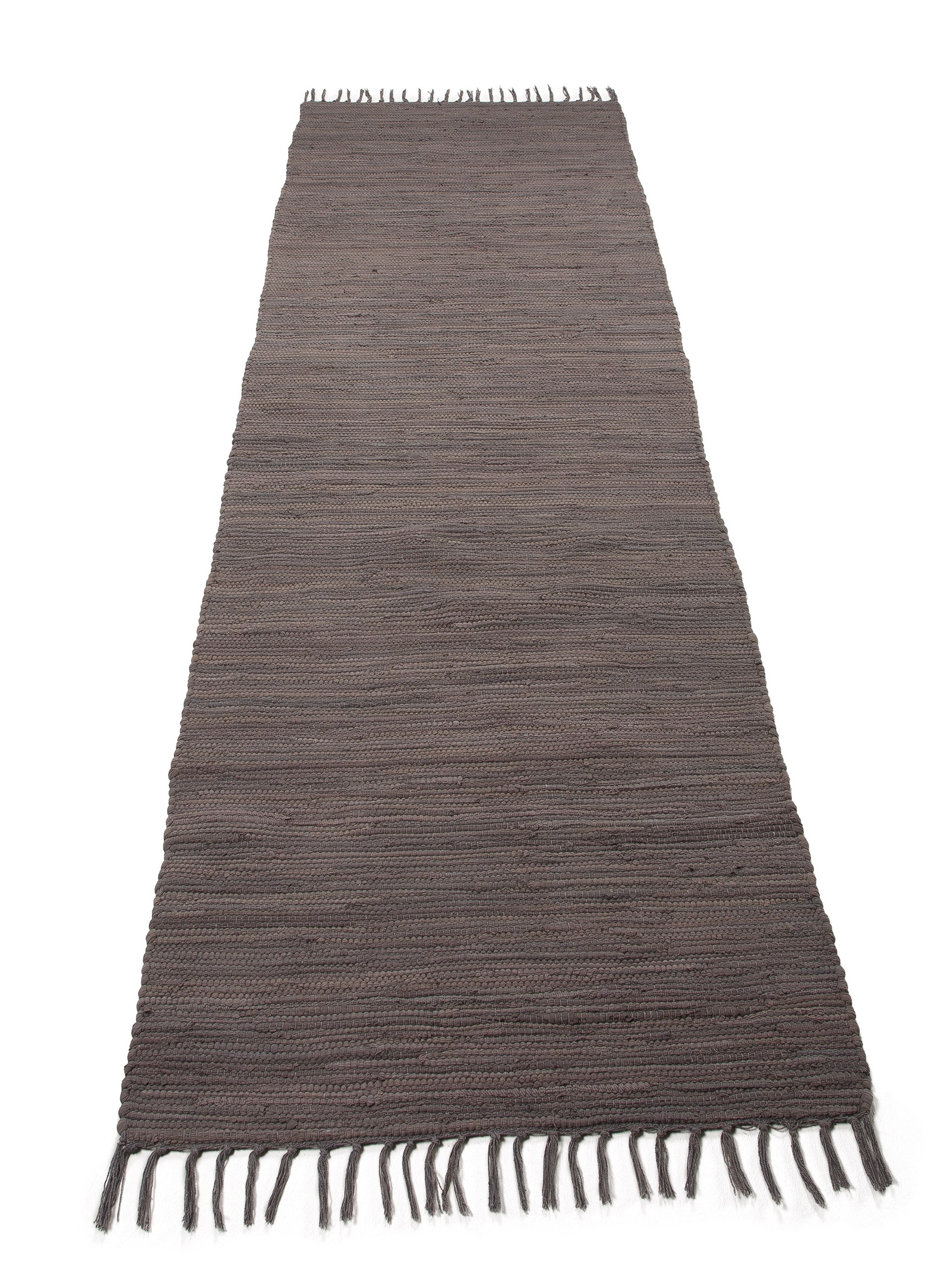
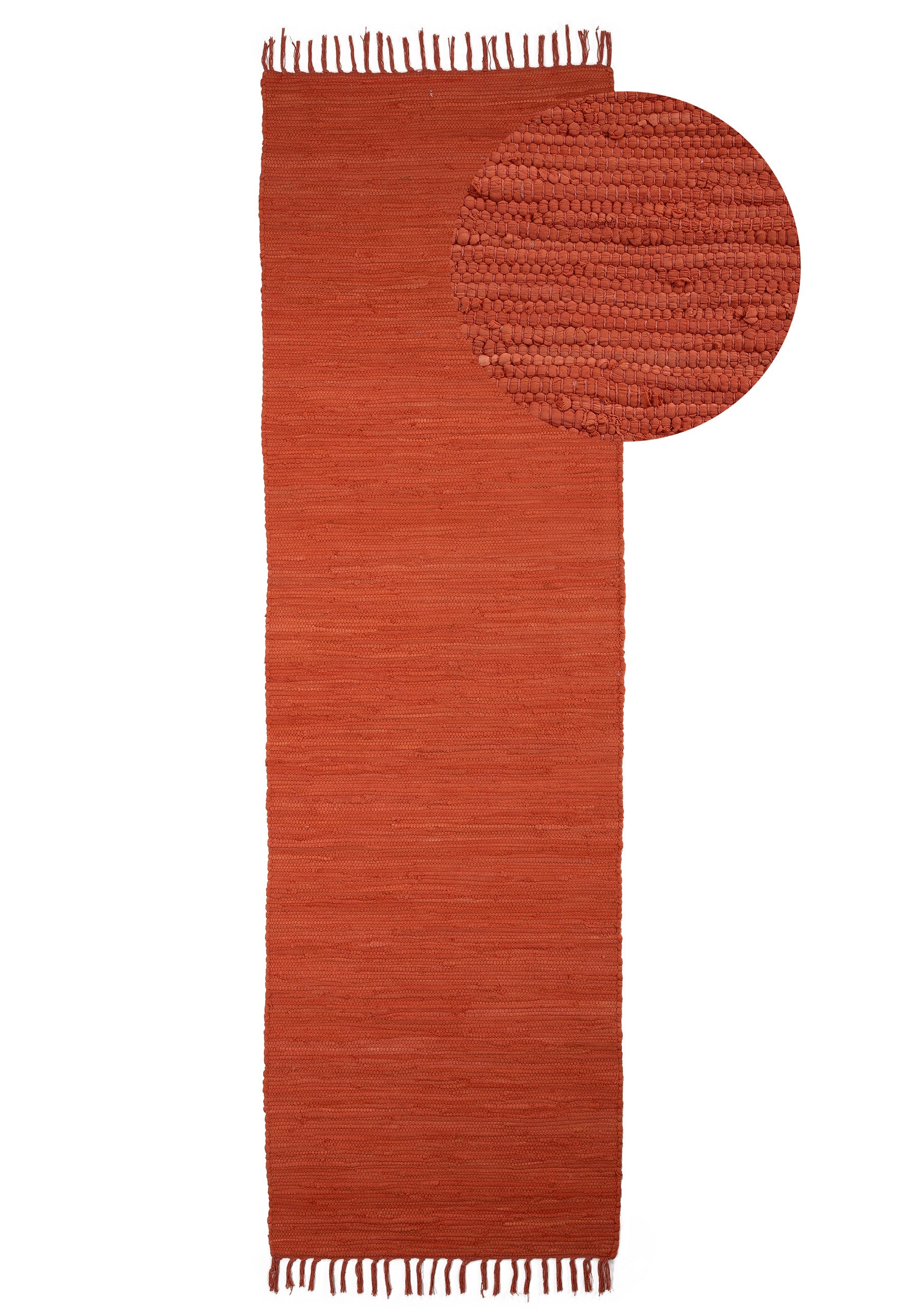
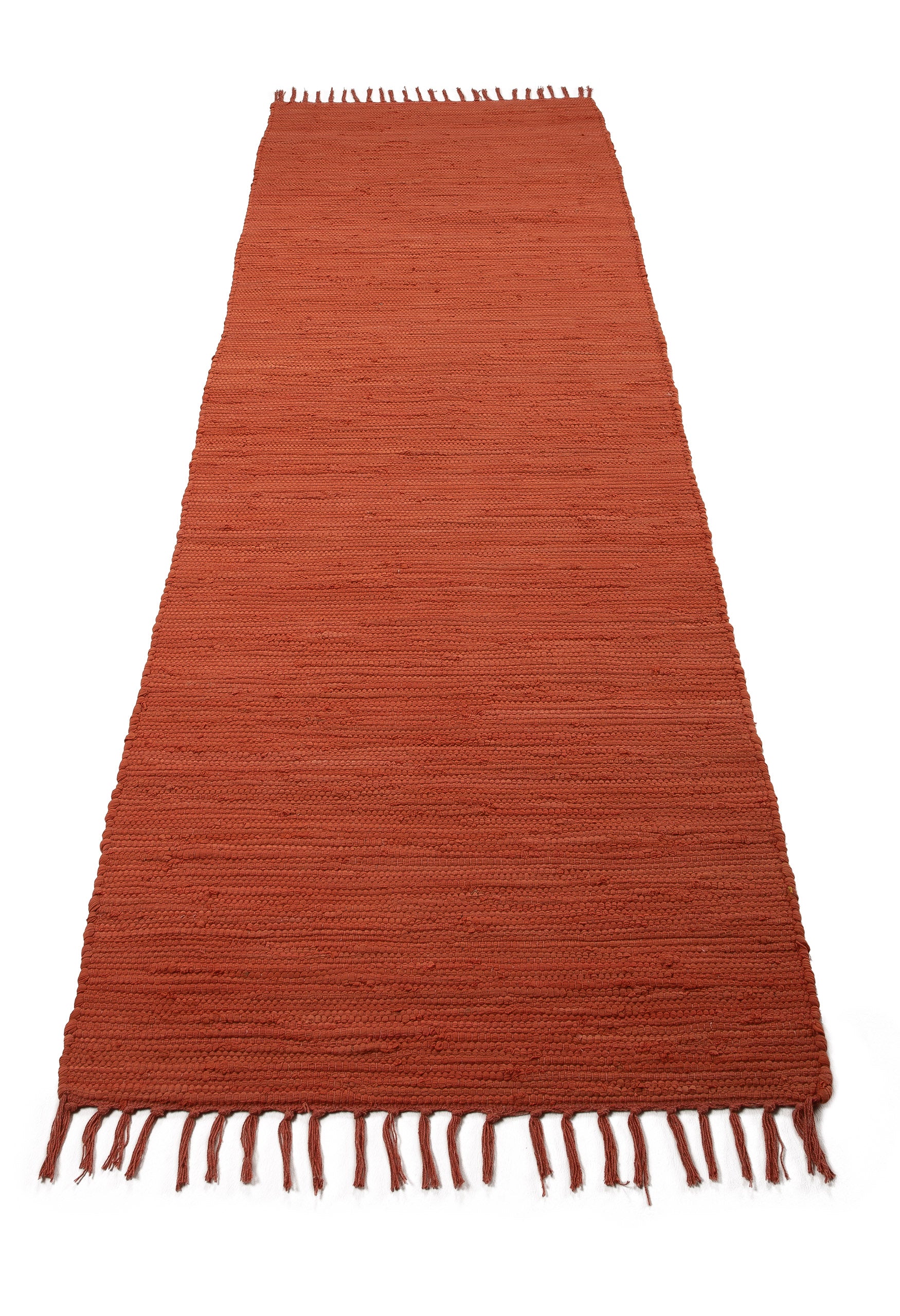
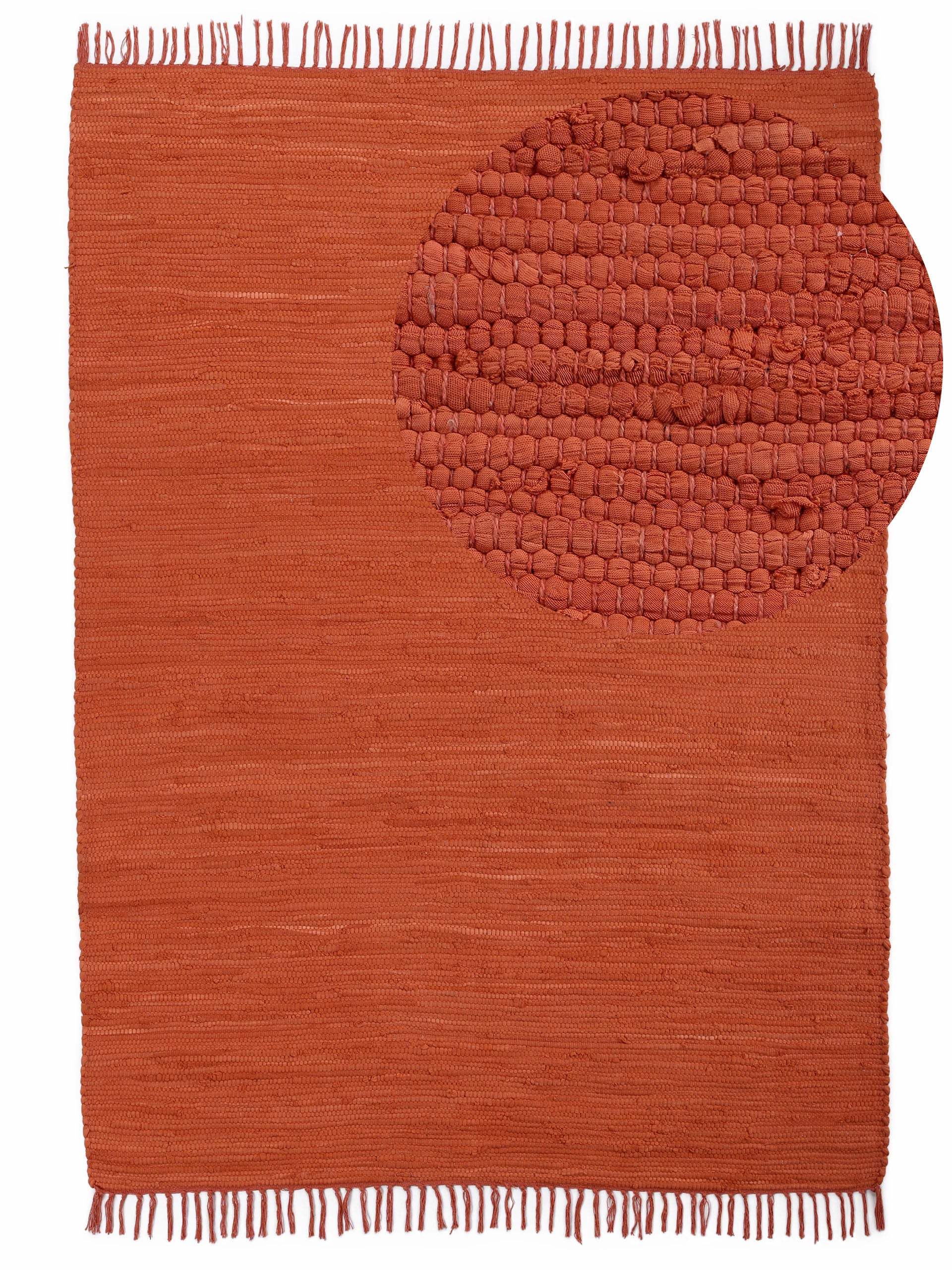
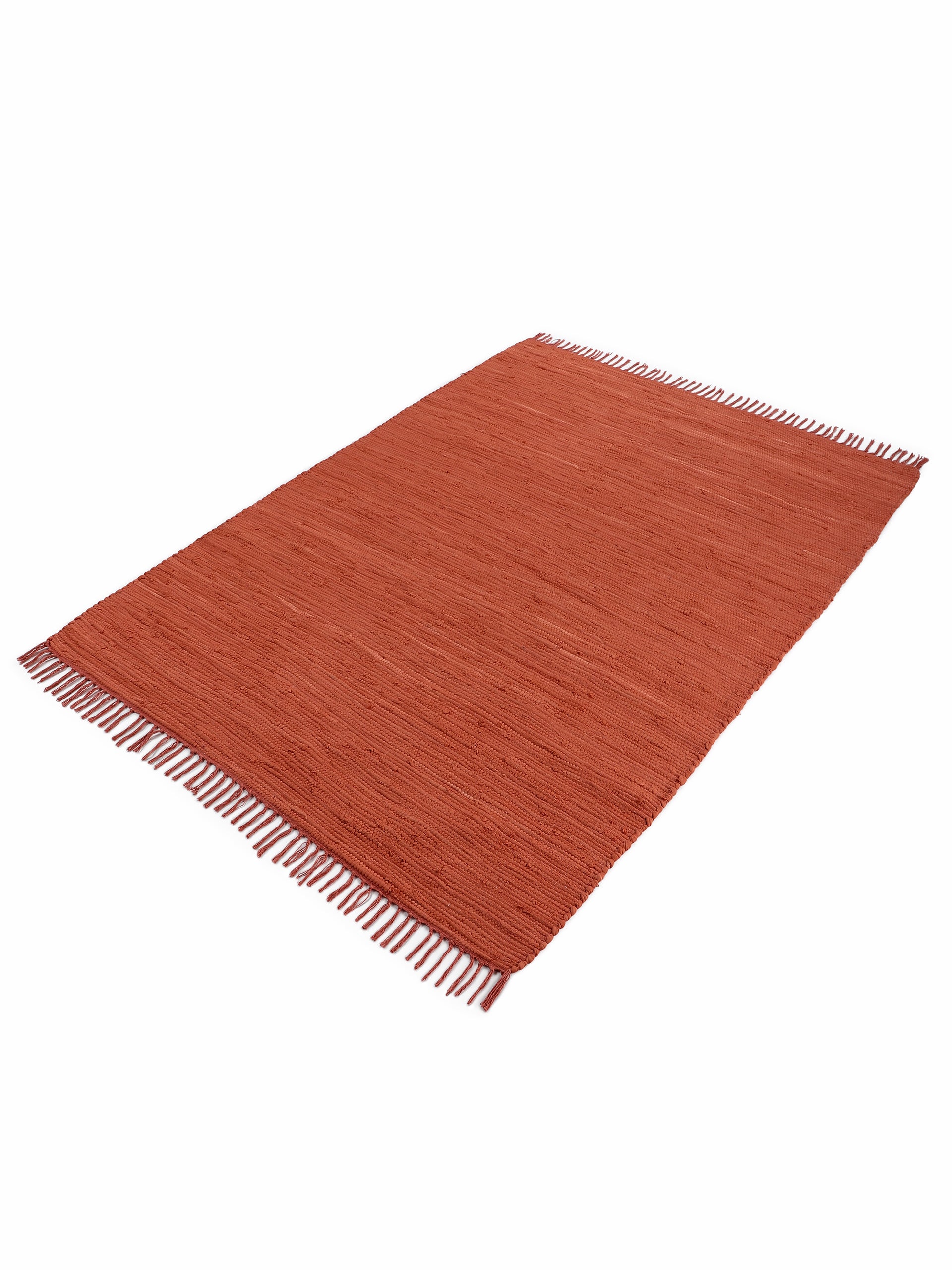
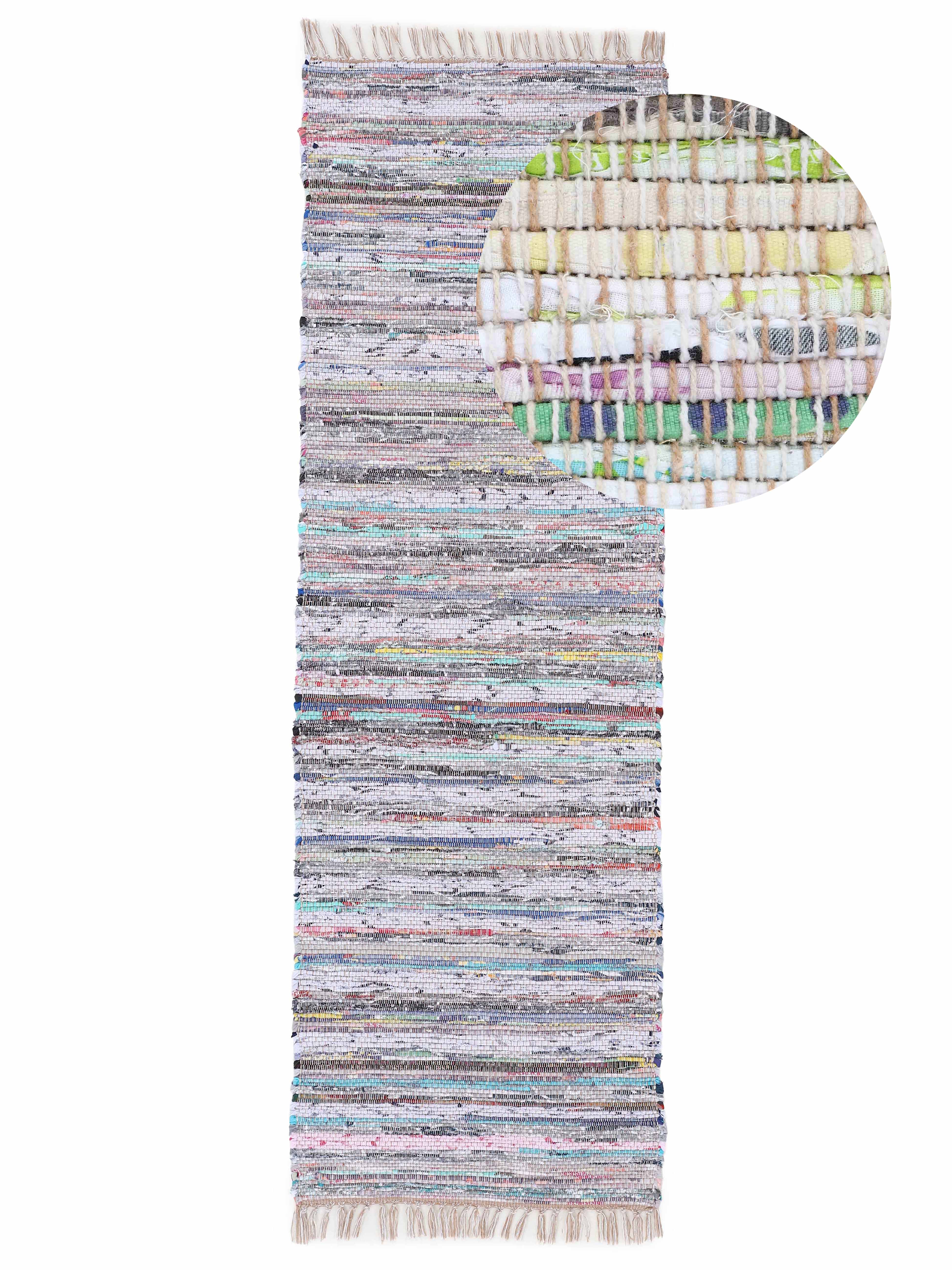
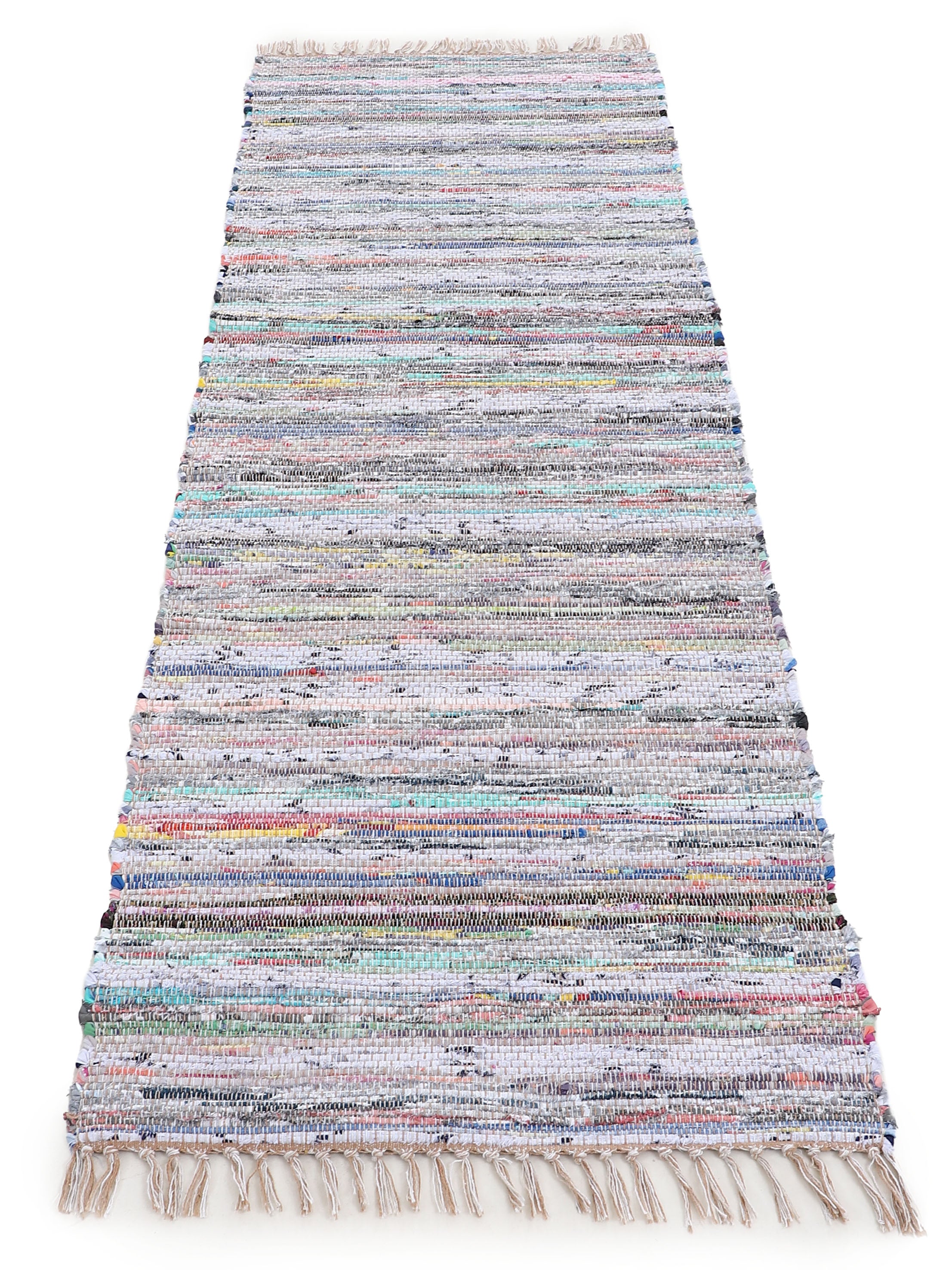
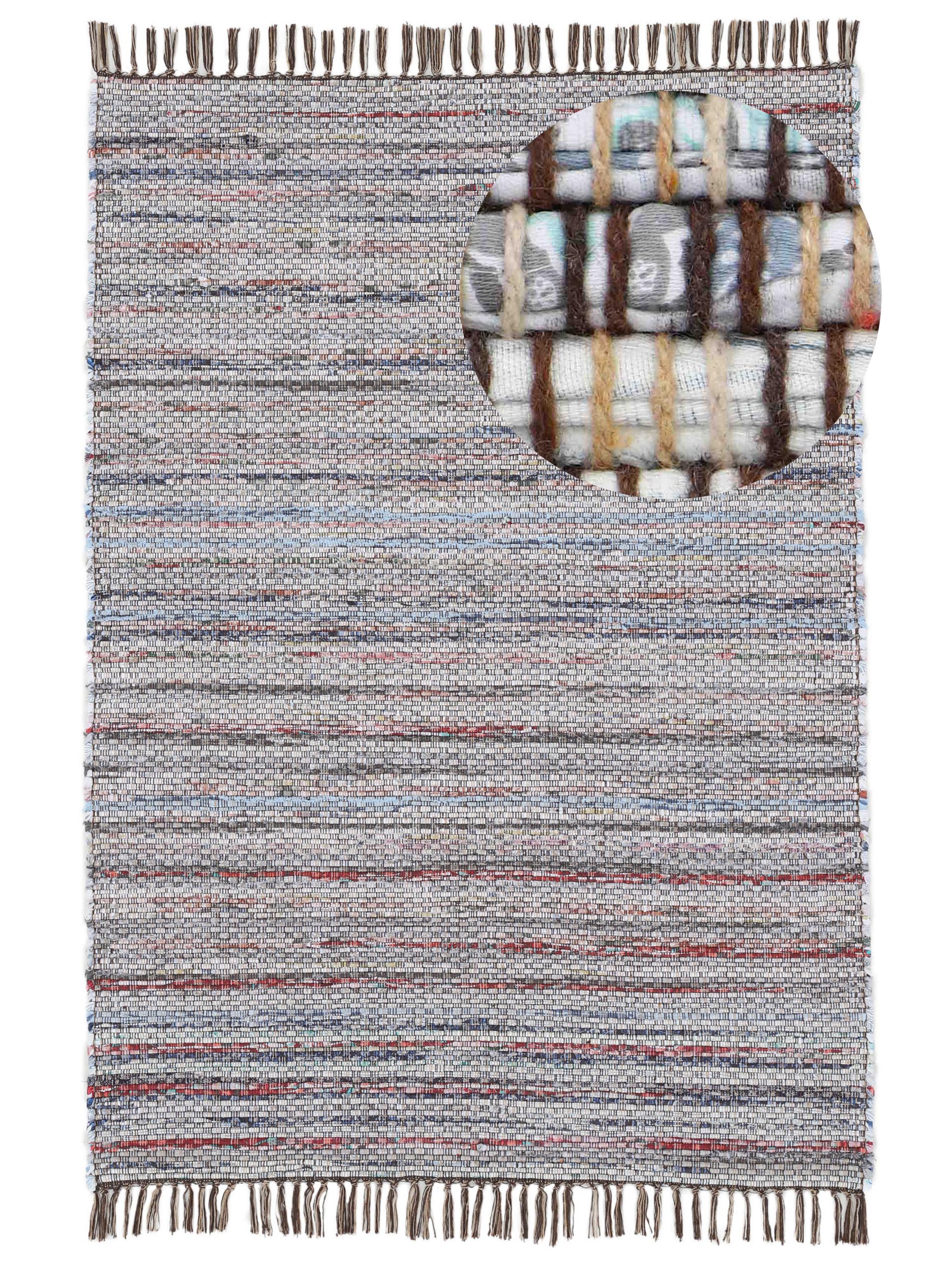
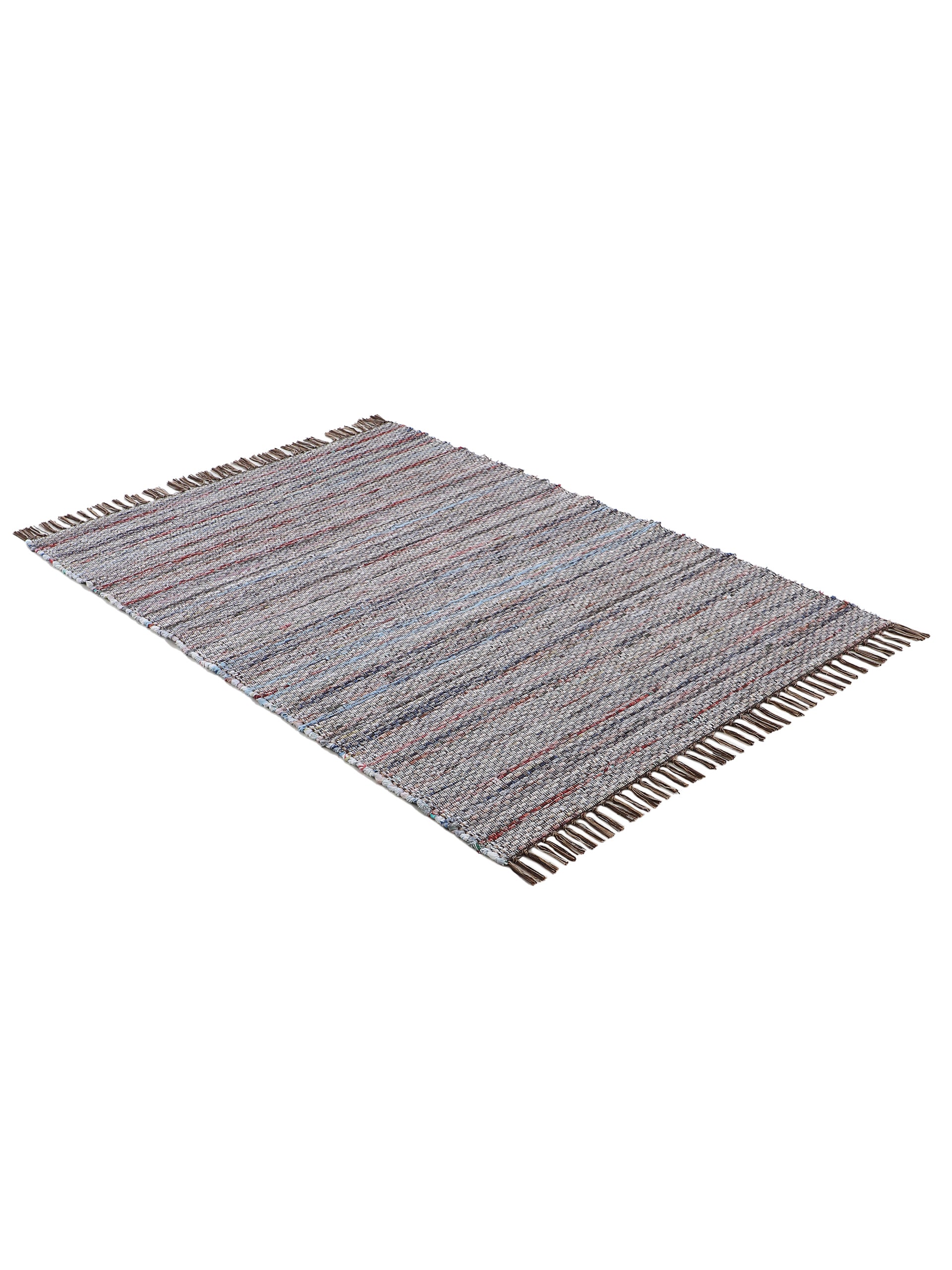
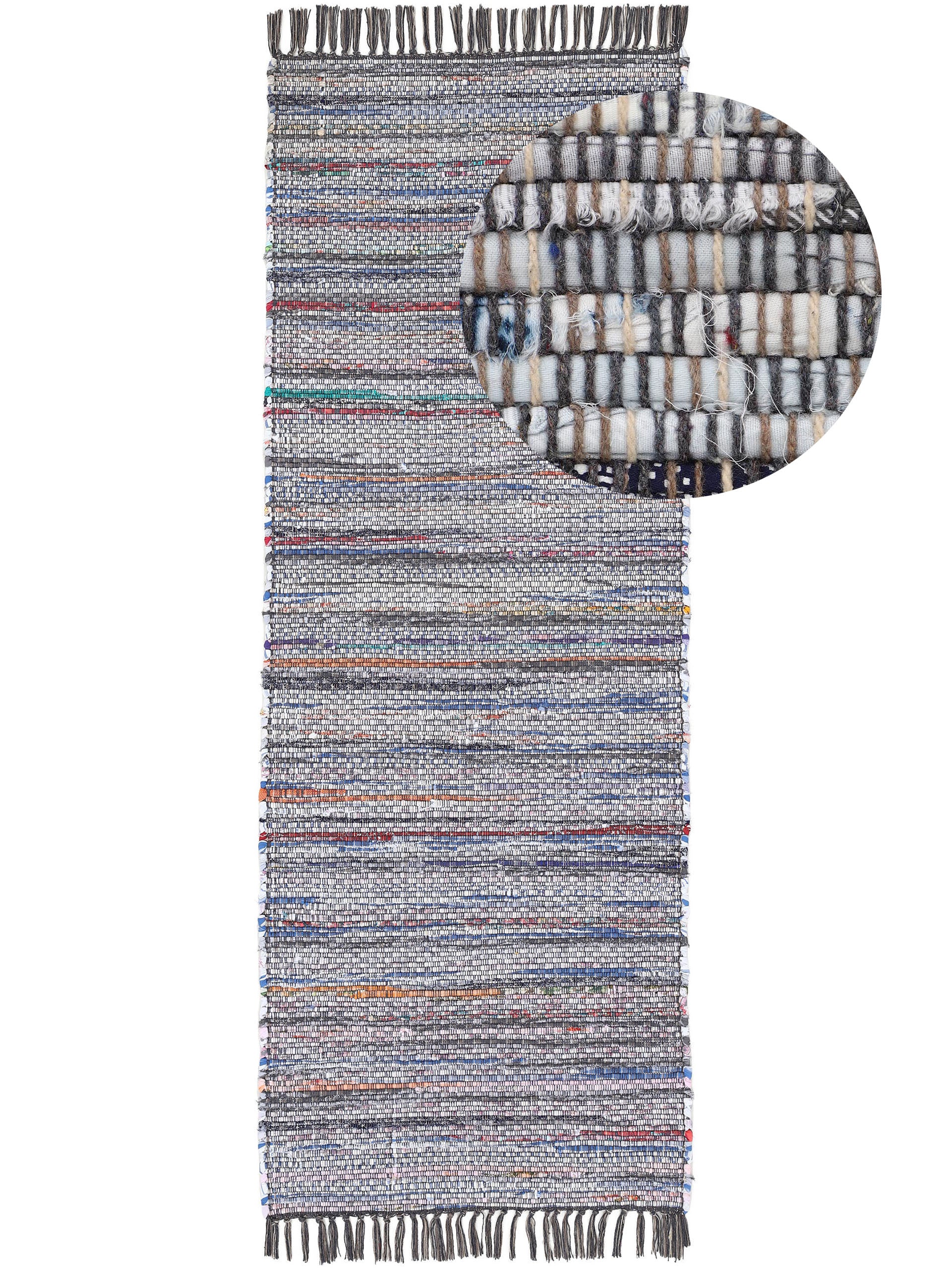
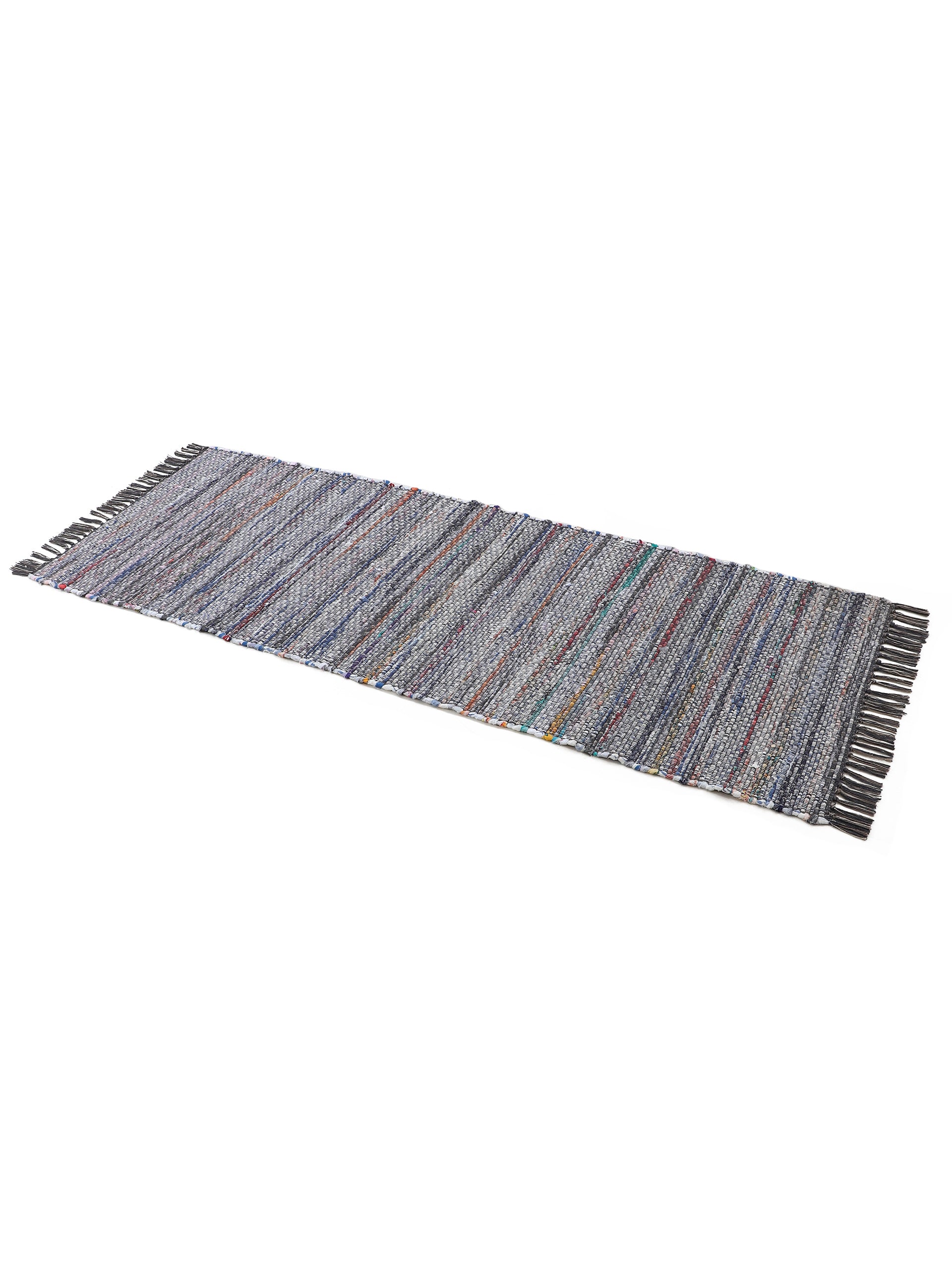
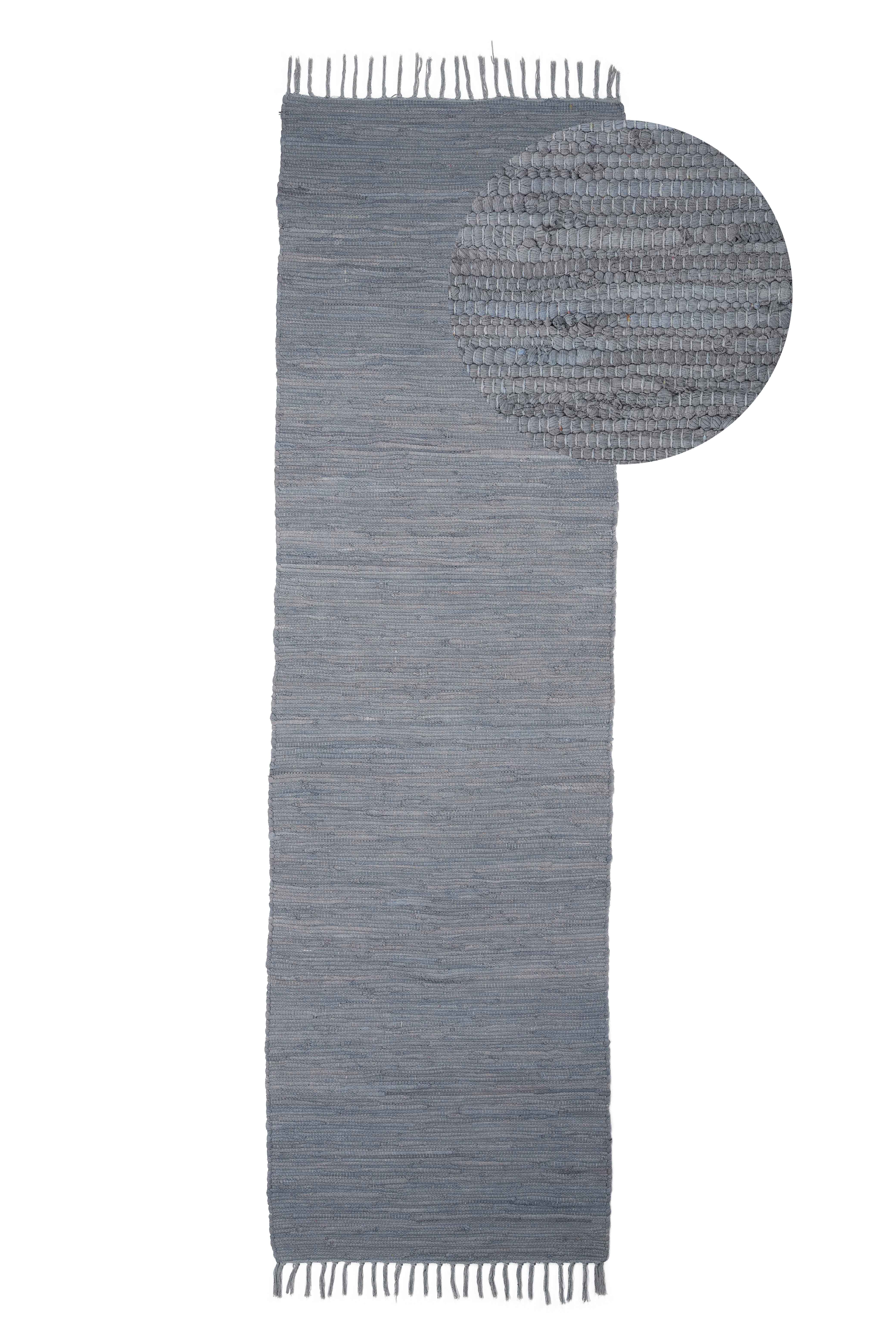
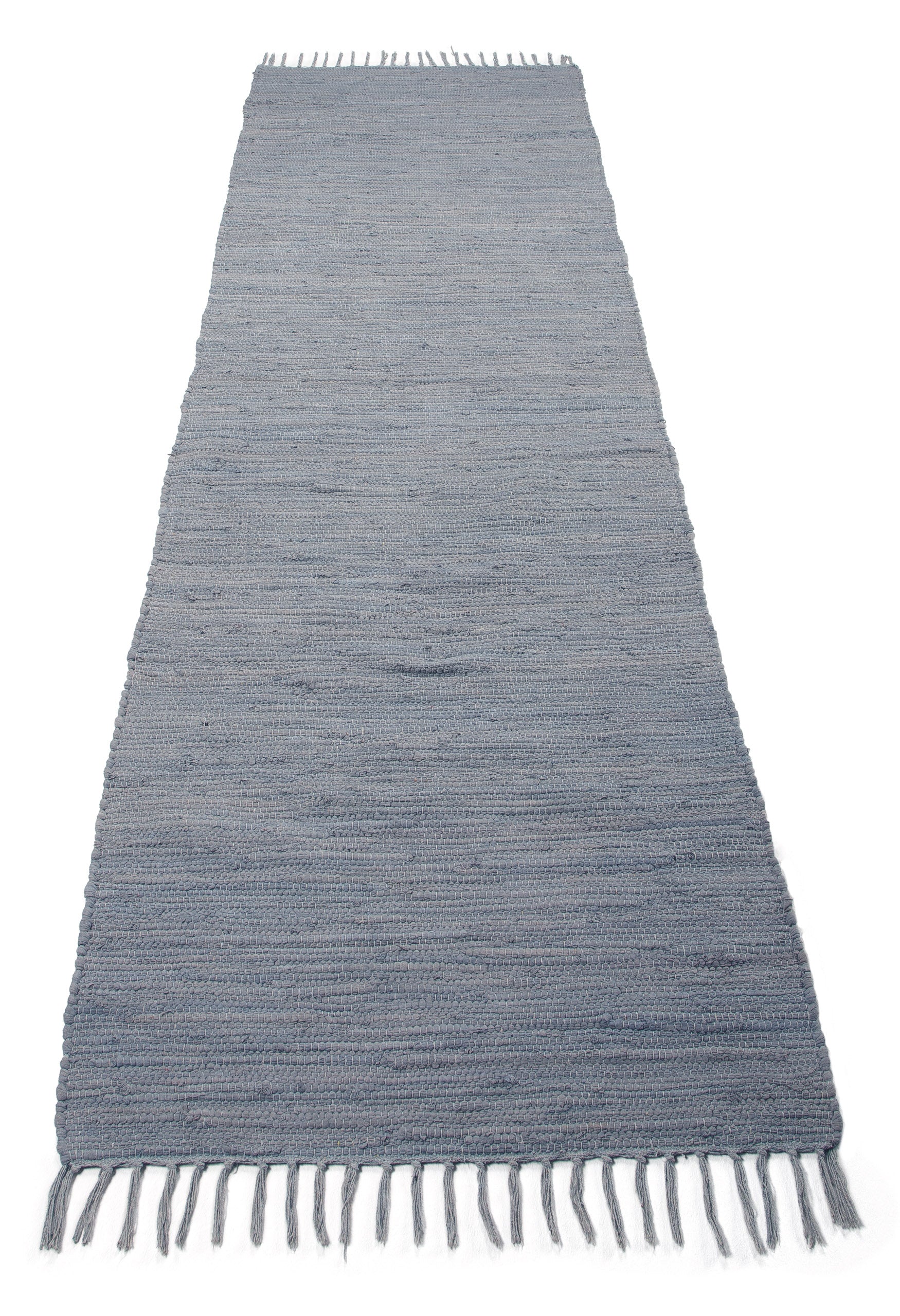
Flat and light, plain or patterned. Kilim rugs have no pile at all, because the thread forms the surface and the pattern at the same time. Ours are woven by hand from cotton, partly recycled, and lie very flat, so most doors swing straight over them.
They come as rectangles and as runners, often in the same colours. That lets you dress the lounge and the hallway in exactly the same shade.
How a kilim differs from a pile rug
In a knotted rug the fibres stand upright out of the base. Not here. Warp and weft draw the design directly, which is why it looks clean and graphic. Many of ours are modern kilim rugs in that sense, even though the technique itself is very old.
After classic ornaments with a medallion and a border? Then an oriental rug is closer to what you have in mind. For something thick and soft underfoot, a wool rug with real pile is the better fit.
Kilim runners and rectangles
Flat weave shows its strengths wherever people walk a lot and move chairs around. Chairs glide more easily. Crumbs stay on top instead of disappearing into pile. Here is how the formats divide up:
- Runners for long hallways and the kitchen
- Small sizes by the bed or the front door
- Medium sizes for the dining table or a reading corner
- Large sizes under a whole seating area
Measure the free length of your hallway first. Take a little off at each end so some floor stays visible and the runner does not bump into thresholds. A medium-length kilim runner rug fits plenty of hallways in terraced houses and flats, while a long Victorian corridor can take our longest.
Width matters too. Leave some floor on each side, so in a narrow passage the slimmer width is often wiser. The plain design also comes as a round kilim.
Colours and combinations
Red, orange, blue, black, grey, beige, green and brown are among the colours. Red or orange warms up a dining area and copes well with the odd spill under the table. Blue kilim rugs look fresher next to white furniture and pale wood. Prefer it understated? Then beige or grey.
Planning one for the living area? Our guide to living room rugs shows how big it should be under sofa and coffee table. A large kilim rug also makes a good flat base with a smaller, thicker rug on top. More strong colours in a single piece come with a colourful rug. In the next room a kilim gets on with a jute boho rug or a patterned vintage rug. Two loud patterns side by side, though, soon look restless.
Frequently asked questions
Does it slip on tiles?
Flat weave is light and can wander on smooth floors. An anti-slip underlay keeps it in place, especially a runner in the hallway.
How much looking after does it need?
Very little. Without pile, crumbs hardly settle, so normal vacuuming without a rotating brush is enough. Dab stains with a damp cloth.
Isn't cotton too thin for a living room?
It is not as soft as a pile rug. Many people use it as a flat base under the seating area and lay a smaller, thicker rug on top, so the kilim stays visible and it feels warmer underfoot.